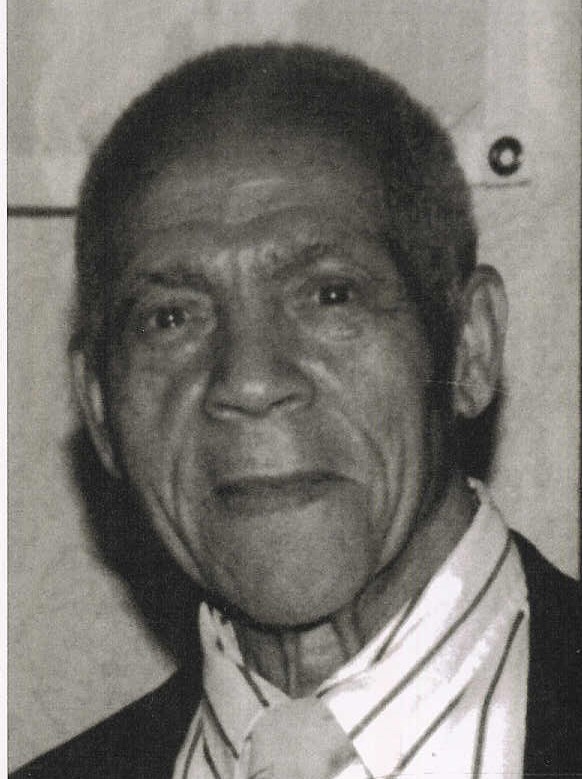
No one did more to develop Weightlifting in the US than Strength and Health magazine publisher, York Barbell Co. owner and multi-time Olympic Team coach, Bob Hoffman.
Appendix 4 – Selecting An Athlete And Selecting A Coach
Any thinking person who seeks a high level of achievement in a given field endeavors to maximize his or her access to the resources that will improve the probability of achieving success. In athletics the most important resources are clearly human. Athletes look for the best coaches to guide them to successful performance. Similarly, successful coaches look for talented and dedicated athletes so that they can work with the best “material.” While it is entirely appropriate for athletes and coaches to seek the best people to work with, the quest to find the perfect coach or athlete can become an obsession. The athlete with such an obsession grimly pursues the coach who has the “secret” that will unlock the door to championship performance. Some coaches shamelessly woo the athlete who has the ability to make the coach a winner and prove that coach is as good as any other.
When the coach or athlete spends too much energy in this kind of search, it diverts the seeker’s attention from the crucial task at hand. In the case of the athlete, that task is proper training. For the coach that task is learning and developing the optimal training methods for his or her athletes.
Many coaches who focus on learning about the sport they coach and communicating what they have learned to their athletes realize that the greatest joy in coaching comes through such a process. These coaches derive their primary satisfaction in coaching from seeing their athletes progress rather than from the levels of performance that their athletes achieve. Other coaches are more focused on the trappings of success: the number of championships their athletes have won and the international teams they have made. There is certainly nothing wrong with striving to compile the most outstanding record ever achieved by a weightlifting coach. The inspiration that a coach can gain from such a goal may drive that coach to heroic efforts which benefit both him or her and the athletes with whom the coach works. But some coaches are so concerned with scoring high on external measures of success that winning at any cost becomes their primary focus. These coaches may go to great lengths to recruit athletes to their teams so that they can win championships. They may even resort to unfair practices to get the job done. There is little doubt that a great recruiter can often outperform a great coach in terms of championships won (though not in terms of satisfaction gained from coaching or the appreciation that athletes will show them for their work).
Recruiting makes it possible for a relatively mediocre coach to have a winning team and for a terrific coach to have a mediocre record when it comes to producing winning teams (particularly in an individual sport like weightlifting). This does not mean that a good coach will never produce good athletes, quite the contrary. A good coach will always produce his or her share of champions. Indeed, you cannot truly reach the highest level of coaching unless you have worked with some top athletes (because only advanced athletes present the challenges that are needed to hone coaching skills to the ultimate degree). However, the good coach will not rely on recruiting for his or her success, but, rather, will focus on perfecting his or her skills and maximizing the performance of his or her athletes.
Athlete Selection
Different coaches apply different approaches to athlete selection. Some coaches go after the “finished product,” attempting to induce champions to join their clubs. In other cases recruiting takes place on the beginner level. Here the coach relies on various techniques of screening to identify athletes who are believed to have the greatest potential to become champions. Screening or selection of athletes has been virtually automatic for many years in sports that are popular among athletes. In these sports the coach has many more athletes who wish to be a member of the team than he or she can coach or use to field a team. The coach therefore selects from the athletes who are interested those who appear to have the greatest potential for success.
In sports that rely heavily on natural ability, such as sprinting and jumping, athletes who do not show any special aptitude for the sport at the outset are simply not going to reach a high level. For instance, speed can only be improved to a very limited degree by training. If an athlete does not display at least good running speed at the outset, he or she will not become a champion sprinter.
Coaches who are involved with sports in which developed qualities are the key to success have a much harder time selecting athletes on the basis of their inherent capabilities. How does one determine an athlete’s ability to be a marathoner or a champion bodybuilder by examining an untrained person? Training plays a huge role in the success of athletes in these sports. While a naturally muscular person with a high percentage of fast-twitch muscle fibers will have an edge in bodybuilding and a naturally lean person with a high percentage of slow-twitch muscle fibers may have an advantage in marathoning, so much is determined by the training that such athletes do and their reaction to that training that predictions of success at the outset are virtually impossible. Relatively skinny beginners have blossomed into Mr. and Ms. Americas, while relatively stocky athletes have become successful distance runners.
Success in weightlifting depends far more on training than it does on natural talents. I have seen athletes start their careers physically strong and then improve their strength very little. I have seen other athletes begin their careers in a weak and emaciated state and then go on to become champions. I have seen athletes who were flexible and grasped the way in which the lifts are to be performed almost as soon as they were shown the technique of the classic lifts who went on to be mediocre technicians. Other athletes who had flexibility limitations that prevented them from achieving correct positions at the outset, and/or who seemed entirely uncoordinated when they tried to perform the lifts for the first time, have gone on to become excellent technicians. Because of the vital role that desire and proper training play in an athlete’s progress in weightlifting, it is hard to predict an athlete’s future success on the basis of his or her beginnings. Predictions of an athlete’s success in weightlifting are particularly difficult because success depends on so many qualities (e.g.., strength, power, speed, flexibility, skill and determination). Any effective selector of weightlifters would therefore need to assess an athlete’s present ability and potential for future progress in each of these areas, something no one has been able to do to date.
Why have the selectors experienced such difficulty? The primary reason is that there are several major problems with the concept of screening tests. The first problem is that “tests test what tests test.” While scientists and coaches (and other people involved in choosing who is most likely to be successful in a certain role) have probably been developing tests for a wide variety of general human capabilities for thousands of years, the vast majority of such tests have been found to be extremely specific. Performance on one test has little or no correspondence with another test that supposedly measures the same quality.
For example, in the psychological realm, there are no truly effective general intelligence tests. I.Q. tests test specific verbal and mathematical skills that are used in academic environments. Such tests may indeed be good indicators of academic success, but they do not fully or directly assess intelligence (let alone define it).
Similarly, there are no general tests that can predict skill, strength or flexibility in any area of the body that is not tested. Even the areas of the body that are tested can only be tested very specifically (e.g., a test that requires concentric contraction of the muscles measures their concentric capacity but does not do a great job of measuring their eccentric capacity). Even if the selector could predict whether the athlete could ultimately perform at a high level in each of these areas, few athletes would score consistently on most of them. Even those who appeared to have better overall physical potential would still present the single biggest unknowns to the selector: will the athlete put 100% effort into becoming a champion, and will he or she remain in the sport long enough to reach his or her potential?.
The second problem with selection tests is that no test can measure the single biggest factor in an athlete’s success: desire. Sports history is filled with stories of athletes with modest beginnings who went on to become champions. In Bulgaria World Champions and world record holders Yanko Rusev, Naim Suleymanoglu (then of Bulgaria) and Antonio Krastev all fared relatively poorly on the standard tests that Bulgarians use to select athletes. Antonio once told me, “I can’t jump from the floor onto a low desk, but I can move under a snatch very fast.” And so he can.
Had the testers been given ultimate power, the world might have been deprived of one of the greatest clean and jerkers that it has ever seen (Rusev), the man who snatched the heaviest weight ever accepted as a world record in the sport of weightlifting (Krastev) or one of the greatest weightlifters ever to grace the weightlifting platform (Suleymanoglu). If these athletes had believed the testers, surely they would never have achieved the successes that they did. While those who support selection will argue that there are motivational advantages to telling a lifter that he or she has talent, they overlook the devastating effects of telling an athlete he or she has no talent, particularly when the grounds for making such a statement are shaky at best.
If their lack of reliability regarding what they claim to test and their failure to measure the most important factor in weightlifting success are not enough to discourage selection, the realities of modern weightlifting should suffice. In the United States, and probably soon in the rest of the world, the issue of selecting an athlete is no longer a major one. Selection implies the ability and desire to choose from among options. In the United States we generally do not have the luxury of choosing our athletes. Rather, they choose weightlifting, and we are happy to have them because they do.
Most coaches who truly love weightlifting for weightlifting’s sake do not have any great desire to choose athletes. They are coaching because they love the sport and wish to help others discover its wonderful virtues, not solely because they want to produce champions. Most coaches are truly motivated by the desire to help an athlete be the best he or she can be. That, after all, is the ultimate challenge and the ultimate satisfaction in weightlifting and in life.
One last point with respect to athlete selection needs to be made. It pertains to the total misuse of the process. Most coaches who employ testing may legitimately think that such a process saves them and prospective athletes a great deal of time and energy. Unfortunately, a small number of coaches (usually inexperienced ones who claim to possess a great deal more knowledge than they do) is preoccupied with the issue of selection. This preoccupation may be an indirect expression of a lack of confidence in their skills. To protect their egos, these coaches have convinced themselves that there is no difference between coaches, that all are equally impotent in their ability to build champions and that all coaches rely on the roll of the dice for selection. If talented athletes come to them, they will be successful; if not, they will be doomed to an unrewarded struggle. Unfortunately these beliefs often rub off on their athletes.
Coach Selection
The selection of a coach is a topic that has rarely, if ever, been covered in a text on weightlifting, yet in many ways it is a much more appropriate subject for consideration than the selection of athletes. The athlete always has the option of coaching himself or herself if the availability of high quality coaching in his or her geographic area is poor. Therefore, the athlete always has a choice (even if it is not to use a local coach or to use no coach at all).
There are two main sets of criteria in evaluating a coach. One set is objective and the other is subjective. When using objective criteria, the athlete merely evaluates whether the coach has the full range and necessary depth of coaching skills to take that athlete to the level he or she wishes to achieve. If not, the athlete may not be able to rely on that coach alone to achieve his or her objectives. This is not a condemnation of that coach; nor does it mean that that particular coach should not be accepted. All coaches have areas in which they are weaker than others.
The purpose of the athlete’s judging the coach in this way is to understand the nature and extent of the coach’s strengths and weaknesses. Then the athlete can find a way to compensate for the coach’s deficiencies. This can be done through supplementary coaching advice, by helping the coach to improve and/or self coaching in the areas in which the coach is deficient.
Subjective issues can lead to intractable clashes with the athlete even though they do not necessarily reflect a weakness on the part of the coach. For example, if a coach regularly criticizes an athlete and, at least in the athlete’s view, rarely employs positive feedback, the athlete may find the experience of working with that coach to be a negative one overall, even if the coach possesses considerable technical skill. In contrast, the same coach may be perceived by another athlete as constantly presenting challenges. The relationship that such an athlete finds with such a coach can be very positive. A reserved athlete may be uncomfortable with a bombastic coach, while an outgoing and emotional athlete may be uncomfortable with a coach who is quiet and low key. Often these differences in personality can be overlooked by both parties and a successful coach/athlete relationship can be formed in spite of them, but this is not always the case.
Obviously, the ideal situation is one in which a coach serves an athlete’s objective and subjective needs. When this is not possible, the athlete and coach may wish to subdivide responsibilities. For example, a give coach may have a good training facility and a good eye for technique problems. On the other hand, the coach may be weak in the areas of programming and motivating the athlete. In this situation the athlete may train with that coach and carefully heed the coach’s technical advice but ask another coach to write his or her training program. In addition, he or she may look to other athletes to provide encouragement and motivation in training. This kind of an arrangement has worked well for many athletes.
In another situation a coach may be wonderful in training but may not be at his or her best in competition. This coach may seek the help of other coaches at competitions but may perform all other coaching responsibilities.
How do you tell a good coach from a bad one? There are several things to consider. First, what kind of results has the coach gotten? Has the coach been successful in building champion athletes from day one? How many athletes has the coach brought from the beginning all the way along in their careers (coaches with large teams and/or very successful athletes may have actually coached the athletes they take credit for to a very limited extent)? What are the qualities of the lifters that coach has developed (excellent technique, performance consistency, healthy bodies)? Second, does the coach prescribe the same program for everyone and then put the athletes on autopilot, expecting them to perform the workout without deviation, regardless of results? Or does the coach individualize training programs for the needs of the athlete? Third, and least important, does the coach have some credentials in terms of education or coaching ranking conferred by some independent organization?
Having a formal education in some scientific area that is related to weightlifting (e.g., physiology of exercise or biomechanics) is useful, but the relationship between such knowledge and success as a coach is limited at best. Many credentials do not mean much, because they can be acquired in a number of ways. For example, the USAW has some international level coaches who are extremely knowledgeable and who have learned their trade through many years of unstinting effort in the gym. There are other coaches who have achieved such a level through the grandfathering of undocumented relationships with athletes and/or their availability to accompany athletes with whom they had no relationships on unimportant international trips. In contrast, there are coaches who have consistently developed some of the best athletes in the country who have never achieved the international ranking because of some formality that they have never gone through with the USAW.
This is not meant to be a criticism of the USAW, which has done many good things to foster the development of good coaches. Rather, it merely demonstrates that most ranking, credentialing and licensing systems are flawed and that they cannot be relied upon as the sole or even primary consideration when selecting a coach, a physician or any other professional.
Summary
In closing, it should be noted that while there is nothing wrong with athletes selecting coaches or coaches selecting athletes, both parties must realize that weightlifters and weightlifting coaches are both rare commodities in the United States. Moreover, most lifters and coaches are involved in weightlifting because they love the sport, and they are working to the best of their ability and in good faith. Therefore, we all should be careful about criticizing the abilities of any coach or athlete of good character and should welcome participants in either activity with open arms. Finally, athletes who change coaches should always remember the time and effort expended on their behalf by any coach who has helped them, or even honestly tried to do so; athletes should always be grateful for that help.
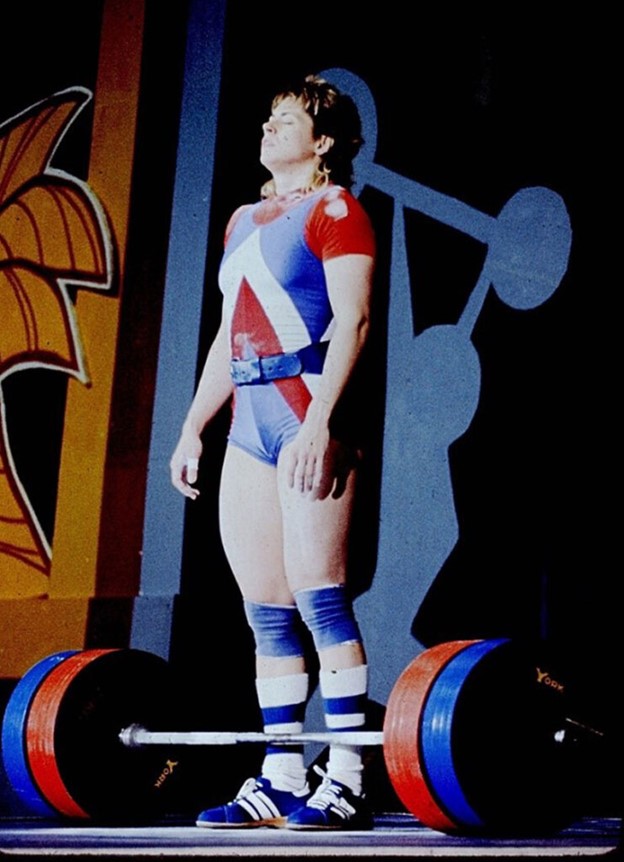
Former USFL football player and coach of 2 time Olympic medalist and Weightlifting World Champion Sara Robles, Tim Swords improved his 40 yard time by nearly 3/10 of a second after taking up Weightlifting.
Appendix 3 – Training On The Snatch And Clean And Jerk:
A Key To Athletic Excellence
Readers of this book will by now understand that weightlifters are unquestionably the strongest and most powerful athletes in the world. But their athletic abilities do not end there; they are amazingly accomplished in a number of other areas. They exhibit more joint flexibility than all other Olympic athletes, except for gymnasts. Elite Olympic style weightlifters can also run faster than all but the fastest sprinters and jump higher than all but the best high and broad jumpers. (For example, Yuri Vardanian, World and Olympic weightlifting champion, could reportedly high jump 7’ without any special preparation in jumping.) These abilities are quite amazing when you consider that Olympic style weightlifters do not train them extensively, if at all (other than the training that arises directly from their practice of the Olympic lifts).
The Unique Value Of Olympic Lifts For Athletes
The truly remarkable abilities of Olympic style weightlifters are certainly due in part to genetic qualities of these athletes and to their outstanding physical condition. However, they are also due in no small measure to the kind of training that weightlifters do: performing the snatch and the clean and jerk (C&J).
Almost any form of resistance training can improve an athlete’s strength, but the snatch and C&J are unique in their ability to develop strength and explosive power at the same time. And the benefits of practicing the Olympic lifts are hardly limited to developing strength and power. Here is a partial list of other added benefits:
1. The mere practice of the Olympic lifts teaches an athlete how to explode (to activate a maximum number of muscle units rapidly and simultaneously). Part of the extraordinary abilities of the Olympic lifters arises out of their having learned how to effectively activate more of their muscle fibers more rapidly than others who are not so trained (in addition to having developed stronger muscles).
2. The practice of proper technique in the Olympic lifts teaches an athlete to apply force with his or her muscle groups in the proper sequences (i.e., from the center of the body to its extremities). This is a valuable technical lesson which can be of benefit to any athlete who needs to impart force to another person or object (a necessity in virtually every sport).
3. In mastering the Olympic lifts, the athlete learns how to accelerate objects under varying degrees of resistance. This is because the body experiences differing degrees of perceived resistance as it attempts to move a bar with maximum speed through a full range of motion. These kinds of changes in resistance are much more likely to resemble those encountered in athletic events than similar exercises performed on an isokinetic machine (which has a fixed level of resistance or speed of resistance throughout the range of motion).
4. The athlete learns to receive force from another moving body effectively and becomes conditioned to accept such forces.
5. The athlete learns to move effectively from an eccentric contraction to a concentric one (through the stretch-shortening cycle, the cycle that is activated and trained through exercises that are often referred to as plyometrics).
6. The actual movements performed while executing the Olympic lifts are among the most common and fundamental in sports. Therefore, training the specific muscle groups in motor patterns that resemble those used in an athlete’s events is often a byproduct of practicing the snatch and C&J.
7. Practicing the Olympic lifts trains an athlete’s explosive capabilities, and the lifts themselves measure the effectiveness of the athlete in generating explosive power to a greater degree than most other exercises they can practice.
8. Finally, the Olympic lifts are simply fun to do. I have yet to meet an athlete who has mastered them who does not enjoy doing the Olympic lifts. While making workouts enjoyable may not be the primary objective of a strength coach, it is not an unimportant consideration in workout planning. Athletes who enjoy what they are doing are likely to practice more consistently and to be more highly motivated than athletes who do not enjoy their workouts as much.
Case Studies of Athletes Benefiting from Olympic Lifting
Other than the abilities of Olympic style weightlifters, is there any proof that practicing the Olympic lifts actually helps athletes? There is an enormous number of examples of athletes who have benefited dramatically from practicing the Olympic lifts. Presenting these cases would require a very large book. I will provide just three examples to make the point. I have chosen those particular examples because they come from athletes who participate in sports which would not normally be expected to benefit very much from ordinary weight training.
Steve Bedrosian recently retired at the age of thirty-nine after a very successful career as a professional baseball pitcher, most recently as relief pitcher for the Atlanta Braves. His career had very nearly ended five years earlier. When he was thirty-four, Steve lost some of the feeling in two of the fingers of his pitching hand. As a result he had lost the ability to pitch effectively and was forced to take a year off in an effort to rehabilitate his hand. Many baseball experts felt that after this kind of setback his career was over. It was at this point that he met Ben Green, athletic director at the White Oak Athletic Center in Newnan, Georgia (Ben’s accomplishments as a weightlifter and coach were discussed earlier in this book). Ben put Bedrosian on a program of Olympic lift training during his year off . After six months of such training, Bedrosian added eight miles per hour to his fast ball and was able to dunk a basketball (something he had often tried but had never in his life been able to do). Steve made a triumphant return to the mound during the 1993 season.
A second example is professional golfer Cindy Schreyer. She was introduced to the Olympic lifts by Ben Green in 1993. After approximately eight months of training, Cindy increased her drive by a full forty yards, a staggering improvement for a person already highly skilled at golf. Cindy won her first PGA tournament shortly after this dramatic improvement in her drive occurred..
Derrick Adkins was a sophomore at Georgia Tech when he began to work with Lynne Stoessel-Ross, then the school’s strength coach. Lynne has been a national champion and a national record holder in weightlifting and has represented the United States in the Women’s World Weightlifting Championships. She has a strong academic background in physical education, having earned a Masters degree in that field. She currently works as and educator and strength and conditioning coach in Lubbock, Texas. Derek had already reached the international level as a 400 meter hurdler when he began training with Lynne in 1990, having won the Atlantic Coast Conference championships and placed sixth at the World University Games. His best time was 49.53 seconds. In less than a year of training on the Olympic lifts, he shaved nearly a second off his already outstanding time (reducing it to 48.6 seconds). An injury sustained during an unfortunate running accident hampered his training for more than a year after that. However, after recovering from his injury and resuming training on the Olympic lifts, he reduced his time by another .9 seconds and went on to win the U.S. Nationals and the Goodwill Games. More recently Derek won the 1996 Olympic Games in Atlanta.
Needless to say, if a baseball player, a golfer and a hurdler have benefited so much from practicing the Olympic lifts, football players and other athletes who participate in sports in which power is acknowledged to play a more critical role can enjoy and have enjoyed even more direct benefits.
Only Dedicated Athletes Will Gain Benefits from Practicing the Olympic Lifts
In order to enjoy the myriad benefits that arise from training on the Olympic lifts, there is a significant price that every athlete must pay. He or she must commit to learning the requisite skills. Most weight training exercises can be learned in one session, and the athlete’s technique can be refined to the point where the athlete can train with little supervision (with regard to technique) in a few practice sessions. In contrast, mastering the Olympic lifts requires a deeper understanding of the mechanics of the movements (which are somewhat complex). Moreover, considerable practice under supervised conditions must take place before competency is attained. People who say that the Olympic lifts are dangerous are very wrong in most of their arguments, but they are correct in one very important sense. The Olympic lifts can be dangerous if an athlete does not learn how to perform them properly. An athlete who is not willing to learn proper technique is better off not practicing the Olympic lifts at all.
Teaching And Learning Weightlifting Technique
The processes of teaching and learning, in general and as they apply to weightlifting, are discussed at length in Chapter 2. A simplified sequence can be described as follows.
Before the learner attempts to perform a certain movement for the first time, he or she should be given the idea of the movement through the use of films, demonstrations and verbal descriptions of how to move and why. Once an understanding of the movement has been acquired, the learner is ready to attempt it. This can be done unassisted or through guided movement (the instructor physically assists the learner to move his or her body through the correct pattern of motion). A variation is to have the learner “walk through” (perform the movement at a slower speed or do only some aspects of the movement) while focusing on what he or she is feeling. (Asking for some explanation of what is being felt or experienced tends to cause the learner to focus more fully during the walk through.) In the case of the Olympic lifts, the beginner should do this with a broomstick or bar.
Once an athlete has a basic grasp of what is to be done, he or she can begin to learn the skill. There are two fundamental requirements for learning a motor skill (a skill of physical movement): practice and feedback about the practice. This means the person must consciously direct his or her nervous system through the required movement, and the person must experience feedback with respect to the success of that effort. At first the coach is the primary source of feedback, but ultimately performers themselves learn to supply much of their own feedback. This process can be facilitated by having learners give the coach performance estimates (the more multifaceted the better).
It is clear that mental practice (visualizing the desired performance) is very effective for beginners. It enables them to plan (i.e., anticipate their motion). Mental practice also helps the beginner to run through any cognitive elements involved in the task and to think through what might be done in a variety of circumstances. The evidence regarding the benefits of mental practice among more advanced athletes is more equivocal (though many advanced athletes are firm believers in mental practice).
Coaches often suggest that new skills be learned in parts. In order for such a process to be effective in learning the Olympic lifts, the learning sequence must have the following characteristics:
1. the segment practiced must be similar to the performance of that segment during the lift;
2. the sequence practiced must involve all activities that are being executed simultaneously during the actual task;
3. practice in parts must eventually be combined into the full movement;
4. the segments practiced must involve the most difficult or weakest (for that athlete) part(s) of the lift.
The Selection of Reps When Learning Technique
There are differences of opinion among coaches about what the optimal number of reps is for learning technique. Some coaches advocate the use of three to five repetitions, or more, and others believe that singles—doubles at most—are best for learning.
A reasonable principle to employ when deciding on the number of reps to use is to consider the load to which the lifter will be subjected. If a lifter is using a light bar to experiment with a particular aspect of technique (e.g., foot position in the split or balance in the low position of the snatch) there is no reason why the lifter cannot perform three to five reps or even more, as long as the athlete does not feel real muscular fatigue by the last rep of set and form is not deteriorating as the reps progress (which is generally possible only when an empty bar or stick is being lifted).
Once the lifter has gone past the early stages of learning, with its frequent need for experimentation and correction, two different approaches can be suggested for further perfecting technique. The first approach is preferred by the Soviets and the second by the Bulgarians (though neither uses one approach exclusively).
The first approach is to perform doubles with approximately 80% of the lifter’s maximum and three to four reps with 65% to 70% of the lifter’s maximum. Using this method, the athlete gets many practice efforts handling a weight that permits him or her to focus on proper technique and to “feel” a mistake.
The second method is to stress the use of singles with perhaps 85% to 90% of the lifter’s maximum. Singles permit the load to approach maximal levels more often, levels at which the patterns of movement, tempo and force application all resemble most closely those to be used in maximum efforts. Singles also permit greater precision in movement, the ultimate objective of technique mastery. Higher reps are certainly employed for warm-ups, for variety and in assistance exercises to stimulate muscle growth, but singles form the foundation for the advanced lifter while performing the classical exercises (the snatch and C&J).
Whichever version of training is used, the power versions of Olympic lifts permit higher reps because they are simpler and less strenuous than the competitive lifts. Simpler versions of the lifts (pulls and hang lifts) tend to permit higher reps to be performed, but reps in these exercises should never exceed five if any real resistance is being used.
Most lifters will find that a combination of approaches is quite effective, but some may favor one method over another. Great lifters have been produced using both methods.
The Selection of Weight When Learning to Lift
It is always appropriate to begin teaching the lifter how to perform the Olympic lifts with a stick or empty bar. There are some aspects of the lift that will be impossible to experience without a loaded bar, but some of the basic patterns of movement can be amply modeled with minimal resistance.
Once the athlete has grasped the basics of the movement with the empty bar, he or she can begin to add weight gradually. The perfect weight for learning provides the athlete with enough resistance to feel how the bar is responding to technique variations. If the weight is too light, the lifter cannot feel any resistance and hence any difference between efficient and improper application of force. At the same time the weight must be light enough so that the lifter does not have to worry about making the lift. Such worries force the athlete to put technique on autopilot and hope for the best, instead of permitting the athlete to focus on the process with the assurance that success will occur as long as he or she performs the movement correctly.
The correct weight is relatively easy for the experienced coach to see, but the newer coach may need guidelines. First, the weight should not be flying all over the place (e.g., way in front of the lifter on one rep, behind on another). Second, the lifter should not be able to perform more than five to eight reps with the weight (and the lifter should never do more than three reps with a weight that can be made for five reps and five reps with a weight that can be lifted for eight when he or she is learning proper technique. The athlete should look nearly as fresh on the last rep of the set as on the first. If there is a noticeable slowing down or a declining precision with later reps in the set, the weight is too heavy for that number of reps (so either the weight or the number of reps should be reduced).
The good news is that the athlete can improve his or he power with virtually any resistance in the beginning. It is not until later in the lifter’s training that heavier weights are needed in order to generate a training effect. Therefore, heavy weights in the beginning are both counterproductive to building technique and unnecessary for building strength and power.
It will generally take an athlete anywhere from several to a dozen or more workouts to exhibit basic technique in the Olympic lifts done in power style. It will take several months for the lifter to handle near maximum weights with sound technique, and such efforts should occur only on occasion (e.g., every two to three weeks). Any progression in weight should stop whenever the athlete’s technique begins to deteriorate. The athlete should return to a lower weight that can be lifted properly at that stage.
Again, this presents no problems in terms of the athlete’s enjoying the benefits of the Olympic lifts because improvements will come at first through handling only very modest weights.
The Importance of Gradual Conditioning for Weightlifting
The advice given in the preceding sections with regard to moderation in loading applies as much to the amount of weightlifting training that an athlete performs as to the amount of weight lifted per rep. The athlete must be permitted to adapt slowly to his or her weightlifting regimen. Extensive training at the outset is counterproductive both because it well not stimulate significantly faster improvements and because it exposes the athlete to unnecessary risk of injury. The overarching principle that should be used in setting up resistance training programs for athletes is that such programs are designed to assist the athletes in improving their performance in their chosen sport—they are not performed in order to make the athletes weightlifters. Athlete’s will receive approximately 80% of the benefit that they will get from weightlifting training out of the first 20% of the loading that they apply (e.g., if 10,000 reps of training per year were expected to yield maximum results for a given athlete, the first 2,000 reps would probably confer approximately 80% of the benefit of the 10,000 rep load. Naturally, with this much lower level of training effort, the athlete would have far more energy to practice his or her primary sport and would minimize the prospect that his or her weightlifting training, in conjunction with practice of the primary sport, would lead to overtraining or to an overuse injury.
So begin with a very low load (a few sets each of a handful of exercises) and add gradually as needed to arrived at the ultimate training level—which should be a relatively moderate overall load.
Following these guidelines will enable the athlete to gain the greatest benefit from his or her weightlifting training with the minimum of risk.
Teaching Technique
Now that basic principles of motor skill learning and repetition and weight selection have been addressed, let us look at some examples of their practical application in teaching an athlete how to perform the Olympic lifts. The Soviet, Bulgarian and USAW teaching sequences are discussed in Chapter 2. However, it has been my experience that none of these approaches is optimal for every lifter. When weightlifting is taught in classes, the teacher needs some unified approach (such as one of those already discussed). However, when a coach has the luxury of one-on-one or small group training, optimization of technique training occurs when the teaching sequence is individualized.
Individualization is best accomplished by considering several issues. One is the athlete’s current capabilities. It may be theoretically preferable to teach the snatch first (as many Soviet coaches argue), but a lifter who does not have the shoulder flexibility to hold the bar over head comfortably or who has a sore wrist is likely to have trouble learning to snatch first.
Another consideration is an athlete’s initial grasp of the lifts. Most beginners grasp one of the lifts more quickly than the others. Moreover, some athletes find it easier to perform different segments of the lifts than others. For example, I have seen athletes who pull more correctly from the below the knees than above their knees the first time they try. It seems sensible to use such information as a basis for planning the early learning sequence rather than to adhere to one prescribed sequence or another. If a lifter is able to perform a more complete movement better than a smaller segment the first time out, why follow the smaller to larger segment sequence?
The intelligent coach will select one reasonable teaching sequence as his or her basic method of teaching an athlete the Olympic lifts but will be flexible enough to modify the sequence for an individual athlete.
Basic Errors in the Lifts
Five basic kinds of errors can occur when executing the two Olympic lifts and their variations. They are errors of: balance, body positioning, relative muscle tension, timing, and effort. While these errors can occur at virtually any stage of a lift and in nearly any combination, almost every fault in weightlifting technique can be traced to one or more of these five mistakes. If you can learn to identify and address these mistakes, then you are well on your way to perfecting your technique or your coaching. These errors are discussed at length in Chapters 1 and 2.
Special Safety Considerations for the Olympic Lifts
The overall issue of safety in the gym is covered in Chapter 4 (as well as in Chapters 1 and 2, which discusses how to teach proper technique and Chapter 5, which discusses assistance exercises). Practice of the Olympic lifts can be quite safe when performed under proper conditions, but the opposite can be true when care is not taken. Therefore, all coaches should study Chapters 1, 2, 5 and 6, and talk to experienced weightlifters when they set up an Olympic lifting program. The coach should pay particular attention to the space requirements of Olympic lifting, the characteristics of a good platform, the care of the gym equipment and the athlete’s personal equipment. Athletes must also be taught how to miss, how to lower the bar and when and how to drop the bar.
Practice Enhances Safety and Makes Lifting Fun
Practicing the Olympic lifts or some variation of them will yield benefits that are virtually unattainable through any other method. However, the Olympic lifts require effort for the coach and the athlete to learn. The principles and tips provided in this chapter and in earlier parts of this book will help the coach and athlete to understand and apply the Olympic lifts, but there is no substitute for experience and for watching advanced performers of these lifts. There are many sources of video instruction available on the Olympic lifts, and the coach or lifter is who is interested in learning to perform them is well advised to study such instructional materials
Individualizing Technique for Each Athlete
It is important to individualize technique for each athlete. Individual athletes have different physiques and degrees of flexibility and are comfortable with different patterns of movement. Technique optimization is discussed at length in Chapter 1, but some of the more basic areas of technique individualization are discussed in this section as well. For further detail, please refer to Chapter 1.
Hand Spacing for the Snatch
Optimal hand spacing in the snatch is dependent on a number of factors, and there are trade-offs in the various grip widths. One simple technique for estimating a proper grip width is to have the lifter hold the bar with straight arms while pushing the chest out and pulling the shoulders back but not up. Next the lifter should bend forward slightly at the waist (with the back arched) and bend the thighs several inches. The lifter then adjusts the width of the grip so that the bar contacts the top of the thighs or the crease of the hips (the area where the most solid bar contact will occur during the pull of most lifters).
Once a reasonable starting grip width has been established, lifters will want to make modifications as needed. Some lifters will notice that with a normal snatch grip they will have difficulty maintaining an arched back when they lift the bar from the floor. Since a correct starting position is important, the lifter who finds himself or herself in this situation should either become more flexible or narrow the grip. Alternatively, an athlete may find that a wider grip enables him or her to hold the bar overhead more comfortably. Only some amount of experimentation and trading off of advantages will yield the optimum grip for that athlete.
Hand Spacing for the Clean
The common advice given to the beginning lifter with respect to grip width in the clean is that the grip should be “shoulder width.” This generally means a grip that is wide enough so that the inside of the hand is just outside the shoulders when the bar is resting on the lifter’s shoulders. Individual grip widths vary from approximately 16″ to 26″ between the insides of the hands (with most lifters being between 17″ and 22″), although some international level lifters have used grips that were even wider or narrower.
A narrower grip (up to the point of being shoulder width) generally makes it easier for the lifter to start the bar from the floor. It also tends to make bar contact with the thighs, and the body in general, steadier during the lift. Most lifters find it easier to place their elbows in a high position when they receive the weight on the shoulders in the clean with a narrower grip.
A wider grip generally enables the lifter to pull the bar slightly higher and to contact the thighs at a higher point during the pull (which some lifters prefer). In the end overall comfort and performance considerations will lead the lifter to the optimal grip for him or her.
Hand Spacing for the Jerk
Most lifters use the same grip for the clean as for the jerk (i.e., a width between 16″ and 26″, with most lifters using a grip in the 17″ to 22″ range). A narrow grip in the jerk generally places the shoulders and elbows in a stronger and more stable position. However, with a wider grip, the bar does not need to be lifted quite as high, and many lifters, particularly those with tight shoulders, feel that with a wider grip they can get the bar further behind their heads and rotate their shoulders to a greater degree (a position considered to be more stable by most lifters). As with other technique issues, the trade-offs between techniques will need to be considered and experimented with.
Foot Spacing for the Pull
The final explosion in the pull is like a jump in many ways, so it has been argued that placing the feet in a position that in conducive to jumping may well be the best position for executing the final explosion in the pull. This is generally a position in which the feet are approximately hip width.
However, some lifters will find it hard to assume a correct starting position in the pull with the feet so placed. Their flexibility and body proportions may cause them to round their backs, to raise the hips faster than the shoulders or to make some other important error in the start of the pull if they place their feet in a jumping position. If a lifter has trouble finding a strong and reasonably comfortable starting position for the pull, widening the stance and/or turning the toes out more than usual may help. Something may then be given up in the explosion, but it may be worth giving up in order to gain a correct and secure starting position.
Foot Spacing for the Jerk
Most lifters assume a foot position in the jerk that is similar to the one they use in the pull (i.e., usually about hip width, with a minor turning out of the toes). This position may promote application of maximum force during the explosion phase of the jerk, but some lifters will find this position ineffective.
For example, in the jerk some lifters have a tendency to lean forward at the torso when they are dipping with a jumping stance. This can often be corrected by shortening the lifter’s dip and asking the lifter to focus on a strictly vertical dip. Despite these efforts, the lifter may still persist in dipping forward. In such a case many lifters will find it easier to keep the back in an arched position and to dip straight with a wider and/or more turned-out foot position. If the lifter uses such a position, something may indeed be given up in terms of the power developed in the drive, but improved control over the direction of the drive may well make such a loss acceptable.
The Length and Speed of the Dip for the Jerk
Athletes generally lower the bar between 8% and 12 % of their height during the dip for the jerk. Athletes whose dips are at the longer end of this range tend to lower their bodies a little more slowly than those who have a dip at the shorter end of the range, and they take longer to reverse direction from the point at which they lower the body and bar to the point at which they commence the thrust.
Trial and error will help each athlete determine the best dip depth and speed for him or her. However, several guidelines will help make the process of optimization easier. First, the athlete should begin by dipping in a relaxed “free fall” kind of rhythm. The lifter should attempt neither to dip forcefully and quickly nor to resist the downward pressure of the bar; he or she should simply relax somewhat and let the dip happen. Second, the athlete must never dip so fast that the bar separates from the shoulders or deviates from the straight dip (a dip in which the bar moves in a strictly vertical fashion). Third, the dip should never be so low as to cause the lifter’s legs to quiver or wobble as they are bending or reversing direction into the thrust. The athlete should be able to reverse direction abruptly and to drive upward without any visible loss of control. Fourth, the upward drive itself must be explosive.
Some Other Important Areas of Technique
There are many important areas of technique, but several stand out for their importance to athletes who employ the Olympic lifts (or variations thereof) in their training. They are: assuming a correct starting position; correct positioning and applying maximal effort during the final explosion phase of each lift; moving under the bar rapidly after the final explosion phase; moving with the greatest possible speed consistent with maintaining control; maintaining a stable and balanced position during the dip and thrust of the jerk; and finding a focal point. Chapter 1 should be studied to assure that a proper grasp of these elements of technique is acquired.
Securing The Grip in the Snatch and Clean
Maintaining a secure grip while performing the snatch and clean is important. Dry hands which are free of oil and other lubricants are a must for practicing any variety of the snatch or clean. Weightlifters apply chalk (magnesium carbonate) to their hands before virtually every set of snatches or cleans to dry their hands and to increase the friction between their hands and the bar. Athletes who train on the Olympic lifts should adopt this policy.
Athletes who wish to strengthen their grips will find that practicing the Olympic lifts with the regular “overhand” grip (fingers wrapping around the bar from the front and the thumb alongside the fingers coming from the back of the bar) has a grip strengthening effect.
Some lifters attempt to perform the snatch, clean, jerk and any pressing movements they do with a “thumbless” grip. In the thumbless grip the thumbs go around the bar in the same direction as the other fingers (instead of in the opposite direction as in the regular grip). Advocates of this style feel that it makes their position stronger and more comfortable overhead and places more strain on the gripping muscles of the hand while the lifter is pulling. The thumbless grip cannot be recommended because it is far more likely that the bar will slip completely out of the hand when pulling with such a grip than with a normal grip. This can even happen while pressing or jerking with a thumbless grip (although it is very rare).
A special means of gripping the bar called a “hook” grip is the greatest method ever developed for improving a lifter’s ability to grip the bar securely. Consequently, it is used by virtually every lifter of high caliber. The technique of the hook consists of wrapping the thumb around the bar from the rear and then placing the first and second (and sometimes even the third) fingers of the hand around the thumb and the bar from the front of the bar. It is considered normal for the lifter to experience considerable discomfort, even significant pain, when first using this grip. Ordinarily the pain peaks just after releasing the hook. During or after the workout the lifter may also notice a discoloration on the thumbs (ranging from red to “black and blue”) which is caused by minor internal bleeding that may occur as a consequence of the pressure of the bar and fingers compressing the thumb against the bar. Both the pain and any discoloration will pass, typically after a few weeks. The only residual effect will be a more secure grip.
If the fingers develop a significant soreness that continues unabated from one workout into the next during this working-in process, the lifter should slow the breaking-in process. This is done by performing only some lifts with a hook or skipping a workout with the hook to allow the soreness to lessen. Many lifters find that wrapping a layer of surgical tape around the thumb before the workout lessens any irritation to the skin of the thumb. Illustrations of the various grips described above appear in Chapter 1.
Athletes who are engaged in sports in which grip strength is of little consequence (or who prefer to exercise their grips separately) may wish to use lifting “straps.” These straps secure the grip and permit the athlete to focus completely on working the leg, hip and back muscles without being limited by a fatigued grip. Straps are illustrated and discussed in further detail in Chapter 4.
When a lifter uses straps it is important to encircle the bar only once; the straps should not be longer than is necessary in order to wrap around the bar once (as shown in the illustration of straps that appeared earlier in the book). Wrapping the straps around the bar additional times makes it difficult to release the straps in the event of a missed lift (important in avoiding injury from a falling or bouncing bar). It is also important to make sure that the straps are in good condition and are strong enough to sustain the heaviest loads the lifter intends to use. Any strap that has even the smallest tear in any part of its stitching or material should be discarded immediately. Breaking a strap in mid-pull is at best a very unpleasant experience. At worst, breaking a strap can be dangerous. Therefore, never use a weakened or damaged strap.
The Proper Position for “Receiving” the Bar in the Olympic Lifts
When a bar is “caught” in any of the Olympic lifts, several rules apply. First, the lifter’s torso must always be rigid and vertical (a slight forward lean is generally fine as well, but no backward lean of the torso should be permitted). Second, the legs act as shock absorbers. They absorb the downward force of the body and the bar and should always “give” a little when the force of the bar is received. Third, the feet should generally be placed a little wider than shoulder width, with the toes turned outward somewhat. The feet should never be placed so wide that the lifter cannot comfortably lower himself or herself into the full squat position without moving the feet, but they are generally in a wider position than was employed by the lifter during the first four phases of the lift.
In the snatch and jerk the elbows should be fully extended while the athlete pushes up and tries to “stretch” the bar somewhat. Most lifters find it helpful to think of bringing the shoulder blades together somewhat. Proper tension in the arms and shoulders is essential for controlling the bar and protecting the joints of the shoulders and elbows. If the muscles are relaxed, the bar can be dropped unnecessarily (even after it has achieved the proper height and speed to be “caught” by the lifter in the low position).
In the clean, raising the elbows high and with substantial speed, as well as positioning the body as described above, are the keys to receiving the bar’s force effectively. The bar should be positioned well back on the shoulders, resting lightly against the neck.
Use of the Power Clean, Power Snatch and Power Jerk by Athletes
In the early chapters of this book, we explored both the elements of proper technique and how technique must be learned. Athletes who wish to train on the Olympic lifts as a means to improve athletic performance need not delve into all of the intricacies of technique development. A concentration on the basics will be sufficient. Moreover, most athletes will gain the majority of the benefits that are available from training on the Olympic lifts by learning three more simple versions of the competitive Olympic lifts that were discussed in Chapter 5, the power snatch, the power clean and the power jerk. Not only are these variations easier to learn than the classic Olympic lifts, but they also require less flexibility to perform than the competitive lifts.
The power styles of the Olympic lifts are learned relatively easily by most athletes. However, there are common and serious mistakes which must be guarded against by the coach. (The errors discussed below are in addition to those which were discussed in Chapters 1 and 2).
In the power snatch, the most common error is to “press the bar out” when it is nearly at arm’s length overhead. When a snatch is performed correctly, the bar should almost “snap” overhead. There should be no visible press-out with the arms. An athlete who is pressing out is either pulling too long and using the arms at the end of the pull (instead of “throwing” the bar with the legs, hips and back and then rapidly descending into a partial squat); not bending the legs sufficiently when catching the bar; using too much weight; or some combination of the above.
In the power clean the most common mistakes are: catching the bar on the upper chest instead of on the top of the deltoids (shoulders); not having the elbows up (which causes the force of the bar to be received by the wrists and arms instead of the shoulders, torso and, ultimately, the legs); leaning the torso back to catch the bar, a mistake which exposes the athlete to a heightened risk of lower back injury; not bending the legs sufficiently; using too much weight; and any combination of the other mistakes.
In the power jerk the most common mistakes are: pressing the bar out at the top of the lift (instead of having the arms “snap” to a full lockout position; leaning back while trying to catch the bar at arm’s length; not descending low enough in the squat; or some combination of the above.
A final mistake common to all three power style lifts is spreading the feet too wide in the partial squat position. Spreading the feet wide is a quick way to lower the body and thereby increase the amount of weight that can be lifted. However, a wide foot position is a major mistake for several reasons. First, it places great rotational strain on the hips and knees, which can lead to injury. Second, a wide stance can also contribute to muscle strains, particularly in the groin. Third, a very wide stance precludes the athlete from sinking into a deeper squat when that is necessary to control the bar. Finally, practice of such wide stance lifting practically precludes later learning of the full squat style of lifting, should the athlete ever choose to do so.
The Use of Partial Lifts
The power snatch and power clean from the floor can be performed effectively by most athletes with considerable practice. However, some athletes will find it extremely uncomfortable or even impossible to assume a correct starting position in the pull (the most common cause being a lack of flexibility). Athletes with this problem may wish to work on their flexibility until a proper starting position can be assumed. Other athletes may wish to forgo lifting the bar from the platform altogether. In either case such athletes can gain many of the benefits that accrue from training on the snatch and clean and jerk by doing partial versions of these exercises, either from the “hang” or from “boxes.”
When a lifter wishes to perform these lifts from the hang, he or she can deadlift the bar from the platform to the hang position. Alternatively, the lifter can remove the bar from a stand or block that has been set just below a finished deadlift position, step back from the stand and assume a hang position.
The two most common hang positions are with the bar held just below the knee and just above the knee (essentially the ends of the second and third phases of the pull, respectively). These starting positions tend to make the lift simpler (by removing stages of the lift), and they require less flexibility to assume.
The lifter can also lift the bar from special “boxes” which are placed on either side of the lifter under the plates of the bar. These variations of the Olympic lifts are discussed in Chapter 5, and the construction of the boxes that are used in performing lifts from the boxes is described in Chapter 4.
When performing these partial lifts, care must be taken by the lifter to position himself or herself in a way that mimics the positions that would be assumed at comparable stages in the full lift. Lifters, especially new ones, have a tendency to deviate from normal lifting positions when lifting from the hang or blocks. By far the most common deviation is for the lifter to have his or her shoulders further back than is appropriate (i.e., when pulling from below the knees, making the error of having the shoulders directly over or behind the bar, or when pulling from just above the knee, having the shoulders behind the bar).
Lifters who pull from a position with the bar above the knees enjoy the benefits of mastering the final acceleration stage of the pull (the stage in which the greatest power is developed). Pulling from below the knees enables the lifter to train the stretch-shortening cycle and the final explosion as the knees rebend and the lifter then explodes upward.
The Use of Pulls
Another Olympic lift related exercise is a “pull.” As was explained in Chapter 5, this is an exercise in which the lifter executes all but the fifth and sixth stages of the snatch and clean. The lifter simply performs the final explosion phase of the pull and then stops. Some lifters remain in a position with the body fully stretched at the end of the exercise, permitting the bar to rise up along the body (they then lower the bar in a controlled manner). Others lifters permit the legs to bend, or the legs to bend and the torso to incline forward somewhat as the bar reaches its maximum height.
Regardless of what is done at the finish of the exercise, many of the benefits that accrue from practicing the Olympic lifts are derived from pulls as well. Athletes who want to minimize any trauma to their bodies when they “catch” the bar in full squat of power position, yet who wish to gain many of the benefits of practicing the Olympic lifts, will find pulls to be very useful. Learning to pull is far easier than learning to power clean or power snatch (in fact, Bulgarian coaches use pulls as a means to teach their beginners the first four stages of the snatch and clean).
Athletes with knee or other joint problems may be able to perform a pull with little discomfort, even though a power clean or snatch might aggravate the injury. Athletes who simply are not willing to devote the effort necessary to learn the Olympic lifts may find that pulls are a valuable substitute. However, even pulls must be practiced and performed correctly.
If athletes intend to perform pulls exclusively, they will generally find it beneficial to use some sort of fixed device to measure the height of the pull (see the section on the height gauge in Chapter 4). Using a marker on the body as a means of measurement is not recommended because the marker can move (if the athlete touches the chest with the bar is it because the bar was pulled to chest level or because the chest was lowered by bending the legs or torso?).
Measurement is important because it is difficult for the athlete to know whether he or she is progressing unless the height of the pull is measured (this is unnecessary in the power snatch or clean because the exercise itself effectively measures the height of the pull). In this context, progress will occur both in terms of improvements in explosive power and in technique.
For athletes who are both unable to execute their lifts from the floor or to catch them overhead or on the shoulders, pulls from blocks or the hang position offer an avenue for obtaining some of the benefits of practicing the Olympic lifts. Pulls are discussed more fully in the chapter on assistance exercises.
Summary
Athletes can greatly benefit from practicing the classic weightlifting events and related movements. But the benefits outweigh the risks only if the weightlifting movements are performed correctly and if the loads lifted are gradually increased to the desired level. If an athlete is not willing to learn proper technique, or to progress slowly in terms of loading, he or she is better off not practicing these exercises. The good news is that heavy weights and many sets are not required to make good progress in the early months of training. Learn carefully, progress slowly and you will maximize the considerable benefits that can be derived from weightlifting training. Good luck and good explosiveness!
Karyn Marshall was the USA’s first female athlete to win a World Championship and the first woman in the world to C&J more than 300 lb. in official competition.
Appendix 2 – A Short Course In Anatomy, Physiology, Mechanics And Biomechanics
It is not necessary to be an expert in anatomy, physiology, mechanics or biomechanics in order to be a weightlifting champion or a successful coach. If you have read the rest of this book, you have learned a great many scientific principles which apply to the sport of weightlifting without delving very far into their formal underpinnings in the more general sciences of anatomy, physiology, mechanics and biomechanics. I have known many successful athletes and coaches who had no formal or informal training in any of these general sciences, although all are quite familiar with many of the weightlifting-specific scientific principles that were presented earlier in this book and have at least an intuitive grasp of the more fundamental areas of sport science. No doubt you can be equally successful without further pursuit of subjects like physiology and biomechanics.
However, athletes and coaches who have achieved outstanding performance without such knowledge have been successful despite a lack of training in these areas, not because of it. It is difficult to fully understand some of the most basic principles of weightlifting training and technique without a grasp of the scientific bases of sports performance, at least those which pertain most directly to weightlifting. Therefore, in order for an athlete to live up to his or her potential, he or she should know some of the key concepts in these areas. Such knowledge is even more essential for the coach and/or the athlete who is self-coached. Space constraints, the essential purpose of this book and the availability of books which cover sports science thoroughly make it inappropriate to address more than the basics here. Those interested in further developing their understanding of sports science and their analytical skills with respect to weightlifting may wish to go well beyond what is presented in this section. The Bibliography of this book offers suggested readings for those who do wish to build further on the foundation that this section provides.
The Interrelationship Of Anatomy, Physiology And Biomechanics
Weightlifting is primarily concerned with imparting force to a projectile called a bar (although receiving force from and sustaining force against a bar are also of great importance). Those who perform and analyze weightlifting are of course interested in how the application of force can be accomplished most effectively. The effective application of force to a bar (or anything else) is influenced by a number of factors, and many of these factors fall within the realm of different branches of the sport sciences.
For instance, general principles relating to the motion of a projectile, the application of force and the use of energy fall within the purview of mechanics, a subdivision of the science of physics. Biomechanics applies the principles of mechanics to the specifics of human movement. Anatomy tells us about the structure of the body, including the nature of the tools (e.g., levers) that the human body gives us for producing and moderating the effects of forces. Muscle physiology tells us how our muscles function in order to move the levers of our body (the bones) and produce force. We will examine each of these subjects separately in some detail.
In some cases the discussions of different disciplines will overlap. For example, in examining the bases of muscular contraction (an area of physiology), it is necessary to understand the ultrastructure of muscle tissue (an area of anatomy). Therefore, an aspect of anatomy will be discussed in the physiology section.
This point should serve to remind the reader that all of aforementioned disciplines, as they pertain to sport, are highly interrelated. In fact, a branch of scientific study called kinesiology has evolved as a result of the need to integrate biomechanics, musculoskeletal anatomy and neuromuscular physiology in order to understand the movement of the body. Therefore, you should always be mindful that what you learn in one part of this section of the book needs to be integrated with what you learn in another. Perhaps more importantly, what you learn in this section of this book needs to be integrated with what you learn in the others if its value is to be maximized in terms of weightlifting performance.
Physiology
Human physiology is a vast subject. Today we understand so much about the way that our bodies function that a person who spent his or her entire life studying physiology could probably not learn it all, and yet there is still a great deal that we do not know. In the discussion that follows, the focus will be on muscle physiology, the aspect of physiology that impacts most strongly on weightlifting. It is assumed that the reader has some basic knowledge of other areas of human physiology. If you do not, the Bibliography lists some resources for further study in this area.
Muscle Action as the Basis for Human Movement
Virtually all internally generated human movement is caused by what are conventionally referred to as muscular contractions. A number of researchers have recently argued that the term “action” is preferable to “contraction” because while a contraction implies a shortening, the term contraction is used to describe muscles that are shortening (concentric contraction), lengthening (eccentric contraction) or remaining the same length (isometric contraction). Physical movements of the kind used in sport are caused by the contraction of a specific kind of muscle, called skeletal or striated muscle (as compared with the cardiac muscle which powers the heart and the “smooth” muscles that support certain internal organs and functions of the body).
The Structure and Action of Skeletal Muscle
What we commonly refer to as a “muscle” is really a complex unit of contractile tissue that is surrounded by a connective tissue called the epimysium or fascia. Within the fascia are bundles of muscle cells called fasciculi, each of which is covered by a connective tissue sheath called a perimysium. Within the fasciculi are typically 100 to 150 muscle cells or fibers. Within those muscle fibers are bundles of units called myofibrils, which run the length of the muscle fiber. Inside the myofibrils themselves, arranged in series (lengthwise, end to end), are entities called sacromeres. A sacromere is the smallest functional unit within a muscle (i.e., the smallest entity that can contract).Fig. 50 depicts the progressively smaller components of the muscle.
Figure 50
While the mechanism of contraction is not fully understood, a rather well developed explanation of how muscles contract has emerged. Called the “sliding filament theory,” it has undergone considerable amplification and clarification since it was first advanced by Huxley several decades ago.
Sliding filament theory can be explained as follows. Within a sacromere are “strings” of protein called filaments, which come in two varieties, thick and thin. The thick filaments are made primarily of a protein called myosin, and the thin filaments are made primarily of a protein called actin. These actin and myosin filaments run lengthwise in the sacromere, parallel to one another. Myosin filaments are typically two to three times the thickness of actin filaments, but the actin filaments outnumber the myosin filaments by a ratio of two to one. Fig. 51 depicts a cross section of the sacromere that highlights the arrangement of actin and myosin fibers.
Hundreds of myosin molecules make up each myosin filament. Each myosin molecule is made up of two identical sub-units, each shaped somewhat like a golf club and arranged with the “shafts” of these golf club shaped units intertwined. Within a myosin filament, these molecules are arranged with the shaft portions parallel to one another but staggered lengthwise, so that the heads of different molecules are nearer or further from the center than the heads of other molecules.
Figure 51
The molecules are further arranged such that half face one direction and the other half face the opposite direction. The result is that the club-head-shaped portions of these molecules are at either end of the filament and the shafts shaped ends meet in the center of the filament. Therefore, the center portion of the myosin filament appears thinner and contains less protein than either end of it (see Fig. 52).
Figure 52
The club-head-shaped portions of the filament are referred to as its “cross-bridges.” On each cross-bridge there is a site at which it can bind to a corresponding site on an actin molecule and another site called the myosin ATPase site. This latter site is capable of binding with the chemical ATP (which is the only direct source of energy for muscular contraction) and breaking it down into adenosine diphosphate (ADP) and inorganic phosphate (Pi), yielding the energy which is utilized by the myosin cross-bridges during the actions that they perform during contraction .
Actin molecules are essentially spherical, each with a site at which it can bind with a myosin molecule. (At rest these sites are prevented from coming in contact with the binding sites on the myosin cross-bridges by proteins called tropomyosin and troponin.) The actin molecules are arranged like two strings of “pearls” twisted together to form an actin myofilament (Figure 53). These myofilaments attach at either end of the sacromere to a structure called the “Z-line,” a connective tissue which separates myofibrils from one another at their ends (really a disc-like structure), so that the Z-lines connect (without direct contact) the ends of actin filaments of adjoining sacromeres and help to maintain their orderly arrangement.
Figure 53
When viewed from the side, sacromeres appear to organize themselves into several segments or “bands.” The schematic diagram in Figure 54 depicts in conceptual, if not visually accurate, terms the arrangement of these bands.
Within each sacromere in a relaxed state (schematic (a) of Figure 54), there is a significant gap between actin myofilaments (called the H-zone or H-band). The H-band contains the central, non-cross-bridge portion of the myosin filament and may contain some of the cross-bridges at either end of the myosin filament. The areas called the I-bands contain only actin filaments. The areas called A-bands contain the entire length of the myosin filament and the portion of the actin filament that overlaps either end of the myosin filament. In the center of the A-band is an area referred to as the M-line, which is believed to serve the function of holding the thick myosin filaments together in a vertical stack (much as the Z-lines help to maintain the order of sacromeres) ;like the Z-line, the M-line is really three dimensional in nature.
During contraction the binding sites on the cross-bridges of the myosin filaments make contact with the binding sites of actin filaments. This releases the energy stored during the breakdown of ATP, causing the cross-bridges to perform a swiveling or stroking action toward the center of the sacromere, pulling the actin filaments closer to the center of the sacromere (schematic (b) of Figure 59). At the same time ADP and Pi are rapidly released by the myosin filament. This frees the ATPase site so that it can attach to another ATP molecule (which occurs at the end of the stroking motion). The new ATP molecule is split by myosin ATPase, creating energy for the myosin cross-bridge to “stroke” once again. The attachment of ATP to the myosin site occurs before the cross-bridge link between myosin and actin is broken.
After each successive stroke (a process which results from “reloading” or “recharging” the cross-bridge with an ATP molecule), the cross-bridge returns to its original position, where it contacts another site closer to the end of the actin filament. In order for a complete shortening of the sacromere to take place, this process of attachment, stroking, detachment and repositioning of the cross-bridges must take place repeated times. In many cases, , relaxation (a chemical reaction which covers the actin binding sites with the two proteins that interfered with actin/myosin connecting before the contraction) occurs before maximal shortening is achieved.
Figure 54
The attachment and detachment process takes place in an asynchronous fashion (i.e., with different cross-bridges in the same filament attaching at different times) so that there is a continual shortening of the overall sacromere. (If all cross-bridges went through the same part of this cycle at the same time, the actin filaments would slide back to their original position during the period of no contact between the actin and myosin filaments.) It should be noted that the result of this asynchronous action within the sacromere is a smooth contraction of the whole sacromere.
As a result of the contraction or sliding filament process, the H-band becomes much narrower and may even disappear as the actin filaments are brought closer to one another. In addition, the width of the I-band at either end of the sacromere decreases. Neither the actin nor the myosin filaments themselves changes in length during contraction. Therefore, the width of the A-band (which is equal to the length of the myosin filament) remains the same throughout the contraction.
Contractile machinery comprises approximately 80% of muscle-fiber volume. The balance of the fiber volume is comprised of tissue that supplies energy to the muscle or is involved with the neural stimulation of the muscle.
The Neural Basis for Muscular Action
Contractions of skeletal muscles are caused by impulses or “action potentials” that are delivered to the junctions between specific kinds of nerves (called alpha motor neurons) and muscles. Because the process of muscle contraction involves the combination of neural and muscular activity, it is often described as neuromuscular in nature.
An alpha motor neuron consists of a cell body (or “soma”) with numerous short projections called dendrites. The dendrites carry impulses to the cell body. Extending from one side of the neuron is a long projection called an “axon”, which connects the alpha motor neuron to the muscle fibers that it innervates. The axon is almost fully covered with a white, fatty substance called myelin. Myelin insulates axons from other axons and dendrites in the same nerve. Small gaps in the myelin covering are called the “nodes of Ranvier.” These breaks speed transmission of impulses along the axon as the impulses are actually able to “jump” from one node of Ranvier to another.
As the axon nears the muscle, it loses its myelin sheath and divides into many terminal branches. Each branch, or terminal, enlarges into a knoblike structure called a terminal button. That button fits into a small depression in the muscle fiber called the motor end plate), which delivers the contractile impulse to the muscle fiber itself. Figure 55 depicts an alpha motor neuron.
Figure 55
The speed with which the impulse travels along an axon is influenced by two primary factors: whether or not the axon is covered by myelin and the size (diameter) of the axon. Alpha motor neurons, which are large, myelinated (meduallated), neurons, can carry nerve impulses as fast as 120 meters per second. (Non-myelinated neurons that are very small carry nervous impulses at a speeds as slow—relatively speaking—as .5 meter per second.) There are no significant differences in speed related to gender, and these speeds remain relatively stable between the ages of twenty and forty, after which the speed begins to decline gradually.
One alpha motor neuron may control as few as several and as many as a thousand or more muscle fibers. However, each muscle fiber is innervated by no more than one neuron. The fibers controlled by a given motor neuron are distributed throughout the muscle.
All of the fibers stimulated by the same neuron tend to be similar in their physical, biochemical and ultrastructural characteristics, i.e., they are of the same muscle fiber “type.” (An explanation of muscle fiber types and their properties will be presented later in this section.) This suggests that innervation has an influence on the properties of muscles (indeed some experimental evidence exists to support this notion).
A neuron and the muscle fibers that it innervates are referred as motor unit, the smallest contractile unit that is under neural control. Motor units vary in the frequency with which they can generate impulses (i.e., in their “firing rates”). The motor units of small muscles reportedly fire at rates between nine and fifty pulses per second, while the motor units of larger muscles have a narrower range (from thirteen to thirty pulses per second).
An accepted principle of muscle action is that either all or no fibers within a motor unit contract. This is referred to as the “all or none” principle. While the all or none concept is generally true, some researchers have argued that under certain conditions an impulse delivered by given neuron may not activate all of the muscles it innervates. (A stimulus may not be of sufficient strength to activate some of the least irritable fibers in a motor unit because certain fibers may be compromised in their functioning by such factors as fatigue or limited circulation.)
Within a muscle, motor units vary widely in their maximum performance-potential and specific tension (the tension per unit of cross-sectional area that a muscle can develop).
When a muscle generates a sustained contraction of moderate or less than moderate effort, it avoids becoming fatigued by two forms of asynchronous recruitment of motor units (i.e., recruitment at different times). First, units that innervate the same types of muscle fibers will be recruited at different times, so that some are resting while others are working (this process is not possible at higher loads because more units are activated to contract simultaneously under the higher load). A second form of asynchronous recruitment of motor units occurs when fibers that are more fatigue-resistant are recruited before fibers that fatigue rapidly. It has been observed that during sustained voluntary contractions there is a dropout of active motor units and a recruitment of fresh fibers with similar but slightly greater thresholds of activation.
There is evidence that fatigue during fast and powerful activities may occur first at the neuromuscular junction. When neuromuscular fatigue occurs, the motor neurons cannot manufacture acetylcholine (a chemical which effectively transmits neural stimulation to the muscle) fast enough to maintain chemical transmission of action potential from the motor neurons to the muscles.
There is also a phenomenon referred to as central or psychological fatigue which occurs when the central nervous system (CNS) can no longer activate motor neurons. Fatigue, discomfort, boredom or lack of sleep may bring on CNS failure. The individual and combined influences of these mechanisms are not well understood.
The Chemical Basis for Muscle Action
While the preceding discussion of the neural basis for the stimulation of muscle contraction emphasized the “electrical” nature of that process (e.g., by discussing the effect of nerve impulses that are electrical in nature), chemical processes within nerves and muscles form the basis for the generation and transmission of electrical impulses. Therefore, it is now appropriate to discuss some key chemical processes that lead to muscle contraction. It should be noted that while the discussion focuses on activity within the muscle, similar processes occur within the nerve to maintain the neural activity there.
All living cells have the capacity to maintain the charged ions of different chemicals in a separate and electrically unbalanced state (ions are atoms that have greater or fewer electrons than electrically balanced atoms). In the case of muscle cells in their resting state, sodium ions (Na+) in the fluid outside the cell exist at a much higher level than on the inside (the opposite is true for potassium ions – K+). Overall, the outside of the cell is positively charged relative to the inside. This state of electrical imbalance is maintained in part by the permeability (or lack thereof) of the cell membrane (a covering that exists in some form around all types of cells) to Na+ and K+ ions and is referred to as a “membrane potential.”
As mentioned earlier, neurons and muscle cells meet at a point called the neuromuscular junction. There is a small space between the axon ending and the motor end plate at that junction, but it is too large for a direct transfer of the electrical impulse in the nerve to the end plate. Therefore, a chemical transmitter called acetylcholine (ACh) is required to accomplish transmission. When the terminal ending of the axon is simulated by a nerve impulse, it releases ACh into the gap between it and the motor end plate of the muscle, effecting transmission of the nerve impulse to the muscle. The mechanism of that transmission process is described below.
The release of ACh into what is referred to as the “synaptic space” between the motor neuron and special receptor sites on an area called the motor end plate of the muscle cell membrane triggers a change in the ion permeability of the muscle cell membrane. Sodium flows into the muscle cell and potassium flows out, the latter slightly later and more slowly (the amount and duration of this process, known as depolarization of the motor end plate, is determined by the amount of ACh released). As a result of this ion exchange, the inside of the cell becomes positively charged for a short time and the exterior becomes negatively charged, generating a small electrical current called an action potential. When depolarization occurs at the motor end plate, local current flow occurs between the depolarized end plate and the adjacent resting cell membrane in both directions. (The neuromuscular junction is generally located in the center of a muscle fiber, so impulses must travel outward from it in order to reach the entire fiber.) The action potential that is thereby transmitted throughout the fiber causes it to contract.
A contraction that is the result of a single nerve impulse is referred to as a “twitch.” Single twitches of a muscle fiber are too short and weak to be of any practical use, and they do not normally occur. Functional tension is generated by multiple twitches in the same muscle fiber and contraction by multiple muscle fibers.
An action potential lasts only one to two msecs (msecs), and it is not until approximately three msecs later that muscle contraction commences. That time interval is known as the latent period (during this latency period, the muscle is unable to respond to another contraction stimuli). It takes approximately fifty msec (from the time that a muscle commences its contraction) for the muscle to reach its maximum tension (this contraction time varies considerably with muscle-fiber type). It takes a slightly longer period for the muscle to relax, so that the overall time of contraction and relaxation is approximately 100 msecs.
It should be noted that the chemical ACh plays another key role in muscle contraction. When ACh is released into the muscle, it causes a chemical reaction that alters the two proteins that, at rest, cover the binding sites on the actin filament (points at which the myosin cross-bridges can attach). The cross-bridges then make contact (there is some debate within the scientific community over whether this contact is direct or is mediated in some way).
The entire process that links excitation to contraction is referred to as the excitation-contraction coupling process.
Muscle Fiber Types
All muscle fibers are not the same. At least seven different types of muscle fibers have been identified, and some researchers believe there may be even more. In humans, only three muscle fiber types have been detected in significant quantities: Type I (also known as slow twitch, slow-oxidative or red fibers); Type II A (also known as fast twitch, fast oxidative or white fibers); and Type IIB (a second variety of white or fast twitch fiber often referred to as a fast-glycolytic fiber). The differences between Type IIB fibers and Type I fibers are more significant than those between Type II A and Type I fibers.
Fast twitch (FT) fibers are better suited for anaerobic activity than slow twitch (ST). Relative to ST fibers, FT have a higher myosin ATPase activity rate (which results in a faster rate of energy release in the muscle). FT fibers shorten and relax more quickly than ST fibers, which enables the former to deliver more power than ST fibers with the same cross-sectional area. FT fibers also have a lesser degree of capillarization than ST fibers (which causes their paler or “white” color relative to ST fibers). FT fibers are larger in diameter than ST fibers because of the greater presence of actin and myosin in the FT fibers. ST fibers have more intramuscular triglyceride stores (a source of energy);more myoglobin (a substance which facilitates the use of oxygen to create energy—subject discussed in some detail later in this appendix—and gives these muscle fibers their red color); more aerobic enzyme activity; greater capillary density; and greater mitochondrial density than FT fibers. (Mitochondria are responsible for manufacturing approximately 95% of the ATP that exists in muscle tissue.) The characteristics of FT fibers make them highly sensitive to fatigue, so they are best suited for generating a large force over a short duration. Type II A fibers have good aerobic and anaerobic qualities, but Type II B are good anerobically and poor aerobically.
Fast oxidative (Type II A) fibers have high ATPase activity like fast-glycolytic fibers, but a high oxidative capacity like slow oxidative fibers. They can maintain a contraction longer than fast glycolytic fibers and contract faster than slow oxidative fibers. ST fibers have capacity for long-term, low-intensity work ,so they are better suited for aerobic activities.
Motor units appear to have homogeneous fiber types, but muscle fibers from different motor units are mixed within muscles. FT fibers have significantly larger neurons than ST fibers, so they are activated with more difficulty and only after ST fibers have been activated, but the speed with which nerve impulses move down their motor neurons is greater. FT fibers are typically brought into play either by the effort to move a heavy load or the need to move an object faster than is possible through the use of ST fibers alone. There is a positive correlation between a muscle’s recruitment threshold (the point at which it is activated to contract) and its twitch tension (the degree of tension that it develops with a single twitch).
It should be noted that the speed with which muscle fibers contract varies. The average contraction time (time from the onset of a contraction to the point at which maximum tension in achieved) of a skeletal muscle is approximately fifty msecs, but there is more than a threefold difference between the contraction time of the fastest and slowest muscle fibers. Therefore, while an FT fiber may be activated later than a ST fiber, the former may complete its contraction at the same time as a slower fiber because of the differences in contraction speed.
Although the general order of muscle fiber recruitment is influenced by fiber type, the order of recruitment of particular fibers within fiber types is influenced by the nature of the motion that is undertaken. In fact, fiber-recruitment order appears to be fixed for a particular movement. For example, the recruitment order of particular muscle fibers in the hamstring muscles may be different for a leg curl than for a leg press, even if the tension developed in performing both exercises is identical.
Most muscles combine all three types of fibers, the percentage of each being correlated with the type of activity for which the muscle is specialized. For example, a higher proportion of slow oxidative fibers are found in the back and legs (which often contract at low intensity for long periods in resisting gravity). In contrast, fast glycolytic fibers dominate in the arm muscles. The distribution of FT and ST fibers varies among individuals as well as muscles, with most people having a fifty-fifty split. However, there can be very significant differences in the distribution of muscles types, presumably making some individuals better suited to certain activities.
Factors Influencing the Force Produced by Muscles
Despite the “all or none” principle of motor units, graduations in the force (i.e., tension) generated by motor units can be achieved by differences in the rate at which nerve impulses are generated by the neurons in those motor units (their “rate of firing”). Single twitches of muscle fibers occurring in rapid succession lead to stronger levels of contraction until fatigue begins to occur. This phenomenon of successive single twitches resulting in stronger contractions is referred to a “treppe.”
The frequency of firing can also affect the tension generated by a muscle because of differences in the speeds of neuronal firing and muscle contraction. Specifically, an action potential and the latency (rest) period that must occur before another action potential can be generated is far shorter than the period of muscle contraction and relaxation (a few msecs for the former and more than 100 msecs for the latter). Therefore, as soon as a few msecs after a muscle is stimulated by a neuron to contract (i.e., well before the point of full or peak contraction from that impulse has even been reached), a new impulse may stimulate the muscle to contract again. As long as the new impulse arrives soon enough, it will stimulate the muscle fiber to contract before it has fully lost the tension generated during its previous twitch. This causes the muscle to achieve a higher level of tension than it did as a result of the first twitch.
The increasing tension that results from the muscle’s receiving a stimulation to contract before relaxation has occurred is called summation. Summation continues as long as impulses of sufficient frequency are received by the fiber, until the fiber reaches its maximum level of tension, a state called tetanus (this normal state of maximum tension should be distinguished from the pathologic state of tetanic contraction that can result from a tetanus infection). It has been reported that the forces developed in muscle fibers as a result of summation are as much as four times greater than the forces that can be generated by single twitches. (The phenomenon of summation can occur in an entire muscles as well as in single fibers if stimulation is sufficient to make all muscle fibers achieve tetanus simultaneously.)
Within the ultrastructure of the muscle, tension increases when the thin actin filaments within the sacromere are brought closer together as a result of greater cross bridge cycling. With tetanus the maximum number of cross-bridge binding sites remain uncovered so cross-bridge attachment and, consequently, tension development, are at their peak.
The force developed isometrically by muscle fibers appears to be relatively independent of the fiber type but closely related to the cross-sectional area of the muscle fiber. However, since slower fibers tend to have smaller diameters, they tend to exert lower levels of force. Moreover, since ST fibers have slower speeds of contraction (ST fibers require 90 msecs to 140 msecs to contract, while FT require only 40 msecs to 90 msecs), their power output tends to be lower even if they can exert force equal to that of a given FT fiber.
The physiological cross-section of a muscle can be estimated by dividing the a muscle’s volume by its fiber length. Overall muscle size varies with the size of the individual muscle fibers within it and, to a lesser degree, by the genetically determined number of those fibers.
In addition to the differences in force that muscle fibers generate as consequence of their size and the rate at which neurons stimulate them, graduations in force are achieved by differences in the number of units that are stimulated to contract at any given time. The more units that are stimulated to contract, the greater is the force that is developed. Normally the impulses that stimulate different motor units are not simultaneous (asynchronous). When a rapid and maximum effort is required, the impulses that travel to many or even all motor units may occur simultaneously. Finally, additional muscles may be brought into play to supply extra force under extreme conditions.
The firing rate of each motor unit increases gradually as effort increases while the recruitment of more units represents a greater change. Consequently, the rate of firing is probably utilized for more precise changes in force and the number of units recruited is more suited to extreme changes in force.
Even a relaxed muscle has some tension, or tonus, which is due to a baseline level of neural activity. Muscles used more often tend to have more tonus. Muscles used while held in shortened position develop tonus in that position (as do the muscles that oppose the action of those muscles).
All Muscles Have an Optimal Length for Generating Force
Apart from neuronal influences, the force with which a muscle fiber can contract is influenced by the length of the muscle fiber at the onset of the contraction. Each muscle fiber has an optimal length at which maximum force can be achieved (though that force may not be fully reflected externally, due to mechanical constraints). This optimal length occurs at the point at which there is maximum cross-bridge formation. When the muscle length is greater, the actin filaments cannot make contact with as many sites as when the muscle is at its optimal length. (At 70% more than the optimal length—which can only be achieved in a laboratory—there is no overlap of the myosin filaments by the actin filaments.)
When the muscle is at a shorter than optimal length less tension can be developed for several reasons. First, the chemical processes taking place within the muscle are so altered that fewer actin sites are uncovered (the reasons are unknown). Second, thin filaments from opposite ends of the sacromere overlap one another, reducing the number of actin sites exposed to the cross-bridges. Third, the myosin filaments touch the Z-lines, impeding further shortening. The most extreme forms of these reactions to muscle shortening occur only in a laboratory setting.
Under normal circumstances the optimal length of a muscle is its relaxed length. Moreover, under normal conditions, a muscle cannot achieve more than a 30% shortening or lengthening beyond its normal length (and these are the outside limits). At such extreme points, the ability of the muscle to contract is lessened by about 50%.
Activity within the ultrastructure of muscle tissue appears to have an effect on the muscle’s resistance to injury as well as the work it can perform. It has been determined experimentally that the amount of energy that can be absorbed by a muscle before failure is greater when a muscle is active than when it is inactive.
It should be noted that in practice differences in the mechanical resistance offered due to the position and nature of the body levers involved (i.e., bones and soft tissues being moved by the muscle’s action) are more influential in determining the force generated externally (the “strength curve”) for that part of the joint motion than changes in the lengths of the muscles that are acting. The resistance offered agonistic muscles (muscles that cause a lever to move) by antagonistic muscles (muscles that can pull the lever in the opposite direction) can have an important influence on the practical expression of strength as well. Consequently, a decrease in the resistance encountered by the muscles, a change that occurs as the as a joint angle increases, generally outweighs the decrease in the ability of the muscle to generate tension, with the result that the ability of the muscles to express its force externally increases. An example would be in the extension of the arm. More weight can be lifted at the end of the extension than at the beginning, even though the triceps muscles that are responsible for the motion are at a relatively weak point when the arm is nearly extended.
The Force-Velocity Curve
The maximum velocity of a muscle’s contraction occurs when there is no resistance (i.e., when velocity is constrained essentially by the maximum rate at which cross-bridges can be formed and broken). The maximum speed of contraction appears to be unaffected by the number of cross-bridges that are interacting with actin filaments at any given point in time (because, unlike strength, speed of contraction is relatively stable over a wide range of muscle lengths). In contrast, maximum force develops at zero velocity (i.e., during an isometric contraction). It is presumed that the force-velocity curve is caused by a slower rate of cross bridge stroking under loaded conditions. This relatively smooth relationship between force and velocity pertains to entire muscles (see Fig. 56, in which the vertical axis represents contraction velocity and the horizontal the force of contraction).
Figure 56
For single muscle fibers, the force-velocity relationship is more complicated. Instead of one smooth curve or relationship between force and velocity, there are two distinct curves located on either side of a break-point at approximately 75% of the muscle’s maximum isometric force (Figure 57). A muscle fiber begins to lengthen when the force applied to it reaches its maximum isometric force (i.e., an eccentric contraction begins). Only when the force applied to a muscle reaches approximately 40% to 50% more than the muscle’s maximum isometric force does the speed of the eccentric lengthening of the muscle become great. At forces less than the maximum isometric force, the muscle shortens (the smaller the percentage the maximum isometric force the faster the shortening). At the point of maximum isometric force, the force and velocity relationship becomes nearly flat, and there is little change in velocity with a fairly wide range of force change. This zone of stability is what gives muscles the capability to be relatively stable when loads are high, such as when you walk down stairs.
Figure 57
Differentiation in the kinetic properties of muscles extends below the fiber level because the maximum speed of shortening (Vmax) and force-velocity relation vary from one part to another along the same fiber. (Variations in Vmax within a fiber may be as large as among different fibers in the same muscle, with Vmax generally falling near the distal ends of the muscles, essentially the points furthest away from the body’s center.) A muscle’s ability to produce force declines quickly as a muscle shortens, but this depressant effect on the strength of contraction falls over time, so that after about a second, a muscle that has shortened to a certain point is able to exert about the same force as a muscle that began contracting at that point.
A fall in a muscle’s ability to produce force as a result of fatigue is associated with a much smaller decline in the muscle’s stiffness, so it is thought that the decline in force is due only partially to fewer cross bridges attaching. The major factor is believed to be a reduced force-output of the individual bridge (there is also a reduced speed of recycling of bridges during fatigue). All three of these effects are probably due, at least partially, to the accumulation of the breakdown products of ATP with continued muscle action.
The Arrangement of Muscle Fibers Within a Muscle
Muscle fibers can be arranged in a number of different ways within a muscle. There are two main kinds of arrangements: fusiform (longitudinal) and penniform. Fusiform muscles have their fibers arranged essentially parallel to the surface of the muscle and to the pull of the muscle when it contracts. Penniform muscles are arranged diagonally with respect to the pull of the muscle when it is contracted (Figure 10).
Fusiform muscles tend to have smaller cross-sections than penniform muscles. As a consequence, fusiform muscles generally contract with less force than penniform muscles. However, the arrangement of muscle fibers along the direct line of pull in fusiform muscles enables the overall muscle to shorten more rapidly and to a greater extent (in relation to their length) than penniform muscles.
Penniform muscles tend to have larger cross-sections than fusiform muscles, but their diagonal arrangement within the muscle causes them to give up some mechanical efficiency in terms of generating force. But less efficiency in generating force is more than offset by the greater number of fibers that can be brought into play by such muscles.
The Nature and Function of Connective Tissue
As s noted above, muscle tissue is infiltrated and surrounded by connective tissue (e.g., the epimysium which covers an entire muscle). The thickness and strength of these connective tissues that surround muscles and their component parts vary significantly from muscle to muscle. Such variations probably explain, at least in part, the different findings with regard to the physical properties of muscle tissue.
Most skeletal muscles merge into a connective tissue (called a tendon) at either end. It is the tendon that connects the muscle to the bone (at a juncture called the aponeurosis). The load that a tendon can sustain is influenced by the size and shape of that tendon, the speed with which any loading is applied to the tendon and any training effect that activity has had on the tendon. In normal activity, tendons are stressed at only a fraction of their limits, but very rapid and unexpected stresses (such as a slip while bearing a load) can overstress a tendon, causing it to rupture. This is one reason why proper conditioning, technique and equipment are so necessary for safe athletic activity.
Elastic Components of Muscle and Their Relation to Function
Muscles appear to have at least three interdependent elements which contribute to force generation: a contractile element (CE), a series elastic component (SEC) and a parallel elastic component (PEC). The CE functions through the sliding filament theory that was described above.
The series elastic component (SEC) is connected in series with the contractile element of the muscle (i.e., along the length of the muscle). It acts like a spring within the muscle in that its function is related to tension development in the entire muscle-tendon unit, particularly when the muscle shortens from a previously stretched position. It is believed that both the tendinous tissues of muscle and the cross-bridges of the muscle fibers themselves contribute to the SEC. The SEC is capable of receiving the energy delivered by the contractile element and/or external forces and then returning that energy.
The PEC is comprised of connective tissue and is believed to be a major source of the opposing forces encountered when trying to elongate a passive muscle. It runs parallel to the CE and/or its line of pull. One of the functions of the PEC appears to be preventing a non-active CE from being damaged when external forces exert a sudden pull on it. It is believed to be activated when a muscle stretched. The PEC is also thought to contribute to the resting tension or tonus that is exhibited by muscles.
When a person is standing or moving slowly, the contractile element is a key factor in the movement. At higher speeds, contractions are generally immediately preceded by lengthening (negative) work. As a result, the muscles are stretched, and energy is stored in the elastic and viscoelastic components of the muscle (then released during an immediate shortening contraction). This entire cycle is known as the stretch-shortening cycle (SSC).
The extent to which elastic (not total) length-changes in a muscle-tendon unit are due to changes in tendinous tissue length can vary from less than half to as much as 90%. At least part of this difference can be attributed to significant differences between muscles in the share of the total length of the muscle-tendon unit made up of tendinous tissue.
The extent to which tendinous tissues change in length is rather limited. Researchers have estimated that increases in the length of tendinous tissues at low force levels range from 2% to 4%. When the forces on tendons are low, a small change in force can have a relatively great effect on tendon length. As force levels increase, the relative change in tendon length decreases significantly. However, regardless of the degree or change in tendon length, tendons can return a significant share of the energy that is applied to them if the rate of change in the force applied to the tendon is high enough. It is interesting to note that at long muscle lengths, the loss of power due to loss of cross-bridge overlap (and the concomitant decline in contractile capability) that results from the lengthening of the muscle appears to be more than offset by tension from stretching passive connective tissue.
Potential energy stored in elastic tissues that have been stretched is released when the force being applied to the elastic tissues is decreased; the faster the decrease, the faster the realization of the potential energy. Stored tendon energy can cause high velocities and power output without imposing those same velocities on muscle fibers. Therefore, as a consequence of the action of the elastic components of muscle, at a given velocity of shortening of the muscle-tendon complex, the muscle fibers can shorten more slowly than the overall complex. For example, during the end of the vertical jump push-off, more power is delivered by the tendon than by muscle fibers of the gastrocnemius and soleus (because a lowering of muscular force at this point permits the release of elastic energy).
When an active muscle-tendon unit is subjected to large changes in force, the unit acts eccentrically and a concentric contraction immediately follows; the degree of energy return from the unit muscle-tendon unit is relatively high. Such a sequence is often referred to as the stretch-shortening cycle (SSC). During the SSC, changes in muscle length are very small during the stretching phase, even though there is a very sharp increase in force. This suggests that the conditions presented by this kind of activity favor the use of short- range muscle stiffness to activate the SEC.
Different forms of muscle action have different mechanical efficiencies, and the velocities of stretching and shortening influence these efficiencies. The loading conditions during the start of an action from a static position are different from those during an SSC. This difference apparently leads to different mechanical efficiencies (ME) for the actions that result.
The ME of concentric exercise decreases with increasing shortening velocity. The mechanical efficiency of eccentric muscular contractions tends to be quite high and generally increases when mechanical work increases. The mechanical efficiency of eccentric contractions is improved with an increasing stretch velocity. In concentric contraction, electrical activity within the muscle, energy expenditure and mechanical work all change proportionally during slow muscle actions as effort increases. As velocity increases, the relationships between these activities change. The initial force peak becomes higher with fatigue, and the subsequent reduction of force becomes more pronounced. In addition, the contribution of reflexive action to sustaining repeated stretch loads is improved.
During an isometric contraction, the total length of the CE and SEC is constant, but the CE shortens and the SEC lengthens. The effect of the SEC is that the build up of force at the lever takes longer than it would be if only the CE existed. As force falls, the length of the SEC declines as well. In situations where the CE force falls rapidly, the contribution to the shortening velocity by the SEC is much greater than that of the CE.
It is a well-known physiological principle that stretching a muscle (up to a point) before it is contracted increases the force that the muscle can generate. Part of the advantage of pre-stretching can be understood from the perspective of the elastic components of muscle (e.g., in the enhanced recoil after a pre-stretch of the muscle). However, another reason for the increased force of contraction that follows a pre-stretch lies in the reflexive characteristics of the neuromuscular system, a subject that is addressed in the next section of this appendix.
Proprioceptive Receptors
The brain receives information from the muscles that enable it to control the actions of those muscles on a subconscious level. This information is provided by two special kinds of sensory organs, called proprioceptive muscle receptors. One type of muscle receptor is the golgi tendon organ. These organs are made up of afferent fibers entwined within the bundles of connective tissue that comprise the tendon. (Afferent neurons carry impulses from receptors in the body to the central nervous system, the system comprised of the brain and spinal chord.) These neurons respond to tension in the tendons that is created by the muscles to which they are attached. When the tendons are stretched, they cause the golgi tendon organs to be stretched as well, causing the afferent fibers to fire (the frequency of that firing being directly related to the tension that is developed). This information is sent to the brain, and at the same time, by means of interneurons (special neurons that connect afferent and efferent neurons), to the efferent alpha motor neurons of that muscle, thereby inhibiting its action. (Efferent neurons receive information from the central nervous system.) The sensory neuron of the golgi tendon organ also connects with the antagonists (the muscles that oppose, i.e., have a pull opposite to that of the muscle which in generating tension in the tendon the golgi tendon organ is monitoring—the agonist) and can cause the antagonists to contract, opposing the action of the agonists. This combination of effects on the acting muscle and its antagonists helps to protect the tendon of the acting muscle from overly high and potentially injurious tension.
The second kind of muscle receptor is known as a muscle spindle. A muscle spindle is a group of specialized muscle fibers known as intrafusal fibers. These fibers are contained within spindle-shaped connective tissue coverings that run parallel to normal (extrafusal) muscle fibers. The central or control area of the muscle spindle is non-contractile in nature, but it is sensitive to being stretched, while its ends are capable of contraction.
Each muscle spindle has its own afferent and efferent nerve supply. The afferent neuron has two types of sensory endings. Both of these sensory endings terminate on intrafusal fibers (i.e., muscle spindles). They serve as muscle-spindle receptors that are activated by a stretch. The primary endings are wrapped around the central portion of these intrafusal fibers. They detect both the change in length that takes place in the muscle and the rate at which that change occurs. The secondary endings are arranged at the end portions of many of the intrafusal fibers and are sensitive solely to length.
Muscle spindles have an action which is virtually the opposite of golgi tendon organs. When a muscle is stretched, the afferent neuron endings send an impulse to the spinal chord, synapsing directly on the motor neurons that reside in same muscle, causing contraction of the muscle and other muscles which cause the same movement. At the same time other neurons inhibit contraction of antagonist muscles. This overall reaction, known as a stretch reflex, resists any passive change in muscle length, so that the optimal resting length of the muscle is maintained. The best-known example of such a reflex is the “knee-jerk” reflex in the patellar tendon. The stretch can be and is used in athletics to maximize muscle power-outputs (as when the foot is planted in jumping events).
The efferent neuron of a muscle spindle is known as a gamma motor neuron. Gamma motor neurons initiate contraction of the muscular end regions of intrafusal fibers. Simultaneous activation, or “coactivation,” of the gamma motor neuron system together with the alpha motor neuron system occurs when reflex and voluntary contractions and remove the slack from the muscle spindle fibers as the entire muscle shortens, permitting these receptor structures to maintain their sensitivity to stretch over a full range of muscle lengths. Gamma stimulation triggers simultaneous contraction at both ends of the intrafusal fiber, removing any slack from the central region. The extent of the gamma activity in a muscle being voluntarily contracted depends on the anticipated distance of the shortening that occurs.
The Influence of Hormones on Muscle Function
There are a number of hormones which are considered anabolic (i.e., have a muscle-building effect). Among these are growth hormone, insulin and insulin growth factors, testosterone and thyroid hormones.
The level of anabolic hormones appears to be affected in a positive way by resistance training. While mere elevation of these hormones has no discernible effect on strength and functional muscle growth, their presence, in combination with the stimulation of training, apparently has growth- and strength-building effects. Testosterone and growth hormones (the latter through the mediators of the insulin growth factors) appear to enhance growth, while insulin itself appears to protecting against the breakdown of protein in the body rather than to enhance its production. The effects of testosterone may be as much due to neural factors and to the influence of testosterone on the transition of muscle fibers from slower to faster as to any anabolic effect. The effects of thyroid hormone are secondary in nature (stimulating anabolism indirectly).
Certain hormones, such as glucocorticoids (particularly cortisol), are believed to have anti-anabolic or catabolic (i.e., muscle-wasting) effects. Both anabolic and anti-catabolic factors contribute to overall growth.
In a completely different category are hormones that appear to have an acute effect on performance (i.e., have an immediate and positive effect on strength), such as those from the catecholomines category (e.g., noradrenaline and adrenaline). Their role on muscle growth is not well understood, but through their ability to increase the strength of contractions, they may increase the stimulation from training (although the release of such hormones at too high a level and too often may have a negative effect on growth by fostering the development of an overstress condition).
The balance of anabolic and catabolic factors in the body is subject to change. Factors such as training, rest, general health, nutritional factors, aging and stress all have an influence. This is one of the reasons why a healthy lifestyle is so critical for the athlete.
Energy for Muscular Contractions
There is only one fundamental source of energy for muscular contraction: ATP. As was discussed in the section on the bases for muscular contraction, when an ATP molecule binds to myosin at the ATPase binding site, it permits the detachment of the myosin cross-bridge from the actin myofilament at the completion of the power stroke and the resetting of the cross-bridge in its original position, where a new connection to the actin filament can occur. The ATP molecule is then split by myosin ATPase, releasing energy for the power stroke of the cross bridge. The energy for the chemical process which reset the neuron for another stimulation of the muscle fiber is derived from the breakdown of ATP.
A very small amount of ATP is stored in muscle tissue, perhaps enough for as much as one to a few seconds of maximum muscular effort. Therefore, ATP must be supplied to the muscles on a continuing basis if activity is to continue. There are three means of generating ATP: the breakdown of phosphocreatine (PC); glycolysis; and oxidative phosphorylation (the citric acid or “Kreb’s cycle” and electron transport). The latter process requires oxygen in order to occur and is referred to as aerobic, while the first two sources of ATP, which do not require oxygen to occur, so are called anaerobic.
PC, like ATP itself, is stored within the muscle (a rested muscle contains about five times as much PC as ATP). When an ATP molecule releases energy, it is broken down into adenosine diphosphate (ADP) and phosphate (Pi). When PC is broken down, the resulting energy is used to recombine ADP and Pi into ATP. ATP can be formed within a fraction of a second from the breakdown of CP. ATP stores remain fairly constant early in contraction, while creatine phosphate stores become depleted. ATP and the PC used to replenish it are exhausted in thirty seconds or less of all-out work. Although PC stores cannot provide energy for long-term work, they have the advantage of being immediately available and yielding a larger power capacity than other energy sources.
Also stored in the muscle is glycogen, a sugar molecule whose breakdown produces energy for the formation of ATP and a substance called pyruvic acid, which is ultimately converted by the body to lactic acid . This process is called anaerobic glycolysis.
An accumulation of lactic acid in the muscles causes pain in nerve endings during exercise. (Lactic acid accumulation was once thought to be the source of delayed onset muscle soreness, the soreness which people often experience twenty-four to forty-eight hours after a bout of exercise, particularly when they have not trained for some time, but this has not proven to be the case.) A lactic-acid buildup also makes the interior of muscle cells more acidic, which interferes with a number of chemical processes of the cell, including ATP formation and the chemical process that exposes actin filaments and permits cross-bridging. These combined effects, along with energy depletion, are believed to contribute to muscle fatigue. (The intensity of a given exercise as well as the type of muscle fiber influence the actual onset of fatigue.) Consequently, the energy provided by glycolysis has limitations. However, glycolysis can produce more energy than ATP-PC (though not as much per unit of time). It is a major source of energy in all-out exercise bouts lasting one to three minutes.
The production of ATP can occur aerobically through the process of oxidative phosphorylation mentioned above. Through oxidative phosphorylation the body metabolizes carbohydrates, fats and proteins to create energy (protein is normally used for energy only during starvation and long, intense, exercise bouts). The body’s use of carbohydrates and fats is in large part determined by the nature of the activity that is being undertaken. Carbohydrates are utilized more extensively when work is intense; utilization of carbohydrates is nearly 100% at maximum work levels, assuming carbohydrates are available. The body uses fats as its primary energy source during activities of low intensity and long duration.
When the body metabolizes the carbohydrate glycogen using oxygen, the pyruvate released does not form lactic acid but, rather, through an extended series of chemical reactions called the oxidative phosphorylation, ATP, carbon dioxide (CO2), which is expired via the lungs and water. In order to be metabolized, fats go through a process called beta oxidation and then through the oxidative phosphorylation process, yielding, as do carbohydrates, water, CO2 and ATP.
The amount of aerobic energy that the body can produce depends on the amount of oxygen it can obtain and utilize in a given unit of time (which is typically measured in terms of the liters of oxygen per minute that the body can process). During exercise the amount of oxygen that the body processes is increased through faster and deeper breathing, a faster heart rate, the diversion of blood to the exercising muscles and hemoglobin releasing more oxygen to those muscles. In addition, some muscles have a large supply of myoglobin, a substance similar to hemoglobin (a molecule that binds with and transports the majority of the oxygen in the blood). Myoglobin can store small amounts of oxygen, but its most important role is in increasing the rate of oxygen transfer from the blood into the muscle fibers.
The aerobic method of energy production cannot produce enough energy for maximum efforts, but it can supply a virtually unlimited amount of ATP over time and is a very efficient energy source. (The breakdown of one glucose molecule by this aerobic mechanism yields thirty-six molecules of ATP as compared with only two molecules of ATP when glycolysis is the mechanism for supplying energy.) However, it should be noted that aerobic energy-production is the indirect source of anaerobic energy-production as well. On an intuitive level, the athlete can appreciate this by the heavy breathing that takes place after a bout of intensive exercise. This breathing is used to replenish ATP, PC and glycogen stores. The restoration of ATP takes place over several minutes. This rate of restoration is often explained by the concept of a “half-life” of restoration. It is estimated that half of the ATP depleted by an all-out bout of exercise is replaced in approximately twenty seconds. Half of the remaining half is restored in another 20 seconds, so that 75% of the stores are restored at approximately forty seconds, and virtually full restoration occurs within several minutes. The rate of restoration is slowed if activity which depletes ATP is undertaken during the restoration period. Therefore, sufficient rest between heavy bouts (e.g. sets) of exercise is needed in order to maintain performance at a high level.
The glycogen energy source is replaced while breathing gradually returns to normal after heavy exercise. During this process lactic acid converts back into pyruvic acid, part of which is processed through oxidative phosphorylation to create ATP. The balance is converted back into glucose by the liver (most of that glucose is converted to glycogen, which is stored in the muscles and liver). The half-life of lactic acid restoration is approximately twenty-five minutes. Light activity helps to remove lactic acid accumulation faster than rest (part of lactic acid is aerobically metabolized to supply some of the needed ATP to perform the light activity). Therefore, light activity is good between bouts of intensive exercise sets if rest periods are at least several minutes. (This presupposes that the activity being undertaken is one of sufficient duration to require energy from lactic acid in the first place.) Full restoration of the energy derived from this source can take several hours. The restoration of the glycogen stores utilized during extremely long exercise bouts can take days.
Part of the increased oxygen uptake that continues after exercise is attributable to the general metabolic influence of exercise. For instance, the release of certain catecholomines during exercise increases oxygen consumption, as does the increased rate of chemical reactions that takes place in the muscle as a result of the local increase in muscle temperature.
It must be remembered that each of the body’s three energy systems is in use at all times, with one or another of those systems being the dominant source of energy at any given point in time, depending on the nature of the activity that is being performed and the availability of various energy stores in the body.
Anatomy
Human anatomy is an extremely complex subject. However, the gross anatomy of the structures that cause athletic movement (the muscles, connective tissue, bones and joints) is far simpler, though still complex. In this section we will examine the basics of human anatomy as they pertain to athletic movement.
The Development and Anatomy of Human Bones
At birth most human bones are fairly soft or cartilaginous in nature. As a child ages, the soft tissue is replaced by bone through a process called ossification. Ossification takes place in certain areas earlier than others. For example, the skull ossifies relatively early in life, but most long bones do not complete the ossification process until the late teens. Ossification also occurs in some bony protuberances, such as the tibial tuberosity (the small protrusion at the top of the shin).
There are approximately 200 bones in the human body that are involved in movement. These bones are generally divided into four categories: long, flat, short and irregular.
Long bones are the key components of human limbs and digits. Their primary purpose is to serve as levers. The largest portion of long bones is the dense shaft or diaphysis. At either end of the bone are areas called epiphyses, which have a larger diameter than the diaphysis. The epiphyses have a more porous or spongy inner area than the diaphysis and then a thin outer layer of denser bone. In the area at the ends of the bone where their bony surfaces come in contact with other bones to form a juncture or joint, there is a thin layer of articular cartilage. The cartilage here serves to cushion the shock when bones are pushed toward one another and also reduces the friction between the bones. Except where cartilage is present, a fibrous membrane called the periosteum covers the bone. It functions as a place for muscles and their tendons to attach to the bone. The ossification of long bones begins in the diaphysis and progresses to the epiphyses. Special areas called the epiphyseal plates lie between the epiphyses and diaphyses of immature bones. These areas gradually ossify with age. (As a child grows, new cartilage is created which is ultimately converted to bone through the ossification process.) This process of ossification takes place in other areas of the epiphyses as well. (It also takes place in the other types of bones, but the sites and patterns of ossification are somewhat different.) Growth in the bone’s width and length continues until the ossification process is complete.
The scapula, ilia and ribs are examples of flat bones. These bones protect the internal organs that they at least partially cover. They also provide a large area at which muscles can attach. Their composition tends to be like that of the epiphyses (e.g., spongy on the inside with a denser outside layer).
The carpal bones of the wrist and the tarsal bones of the ankle are examples of short bones. These bones are composed of spongy bones with a thin outer layer of more compact bone. They have a more blocky shape than long bones.
The irregular bones are not paired like the long, short or flat bones. Examples are the pubis and the vertebrae. These bones have an irregular shape and typically serve particular purposes, such as protecting a certain area of the body or supporting the body.
Bones have three essential components: minerals (nearly half of the bone’s total volume, primarily calcium compounds) and organic matter (nearly 40%, primarily collagen). The remainder of the bone’s volume consists of fluid-filled spaces of various shapes. The organic factors give bones their strength, and the mineral components supply rigidity.
Anatomy of the Joints
There are three basic kinds of joints: diarthrodial (synovial), amphiarthrodial (cartilaginous) and synarthrodial. Diarthrodial joints permit movement in a variety of ranges and directions. Examples are the knee and shoulder joints. During their movement, diarthrodial joints are stabilized by a combination of factors. Their shape has a strong effect, with one end of the bone designed to fit into or to move smoothly along another. The ligaments that surround the bones hold them together so that movement in the correct groove is facilitated. Finally, the tendons and/or muscles that are in contact with the joint guide the action of the joint, maintaining the joint’s integrity.
Amphiarthrodial joints permit a relatively small degree of movement. Typically a layer of fibrocartilage separates the bones. When movement occurs, it occurs primarily through the deformation of the cartilage. Ligaments connect these rather tightly to one another. The joints between the vertebrae and the sacroiliac joints are examples of this kind of joint.
Synarthrodial joints do not move; the bones merely merge together at these joints, joined by fibrous tissue that is essentially a continuation of the periosteum. Cranial sutures are examples of synarthrodial joints.
The ligamentous tissue that encloses the joint forms what is called an articular capsule. The thickness of that capsule varies within the same joint and among joints. A synovial membrane within the joint secretes a lubricating and shock-absorbing substance called synovial fluid into the articular capsule.
Tendons connect muscle to bone. They are often enclosed by cylindrical sheaths of connective tissue that are lined with a synovial membrane.
Two other kinds of tissues serve to absorb shock and facilitate movement at the joint. One is a fibrocartilage pad that rests between the bones. Examples are the discs between the vertebrae and the menisci of the knee. A second kind of shock absorber is the bursae sac. These soft, pad-like tissues are filled with synovial fluid. Both the bursa sacs and the articular capsule contain a relatively modest amount of synovial fluid under normal conditions. However, in the event of an injury to the joint, the amount of fluid can increase several fold or more. A common example is “water on the knee.”
Directions of Human Movement
Scientists have adopted specific terms to describe human movement. Many of these terms are relative in nature. For example, the term superior is used by anatomists to describe some part of the body that is higher than or above something else. To say that your head is superior to your feet is true when you are standing, but not when you are lying down. Therefore, in the study of anatomy, a reference position to which all other positions are related has been established. This position, called the anatomical position, is used as a reference for understanding the direction of human movement. The anatomical position is assumed when the body is standing erect, facing the observer with the arms at the sides, palms facing forward. It is in relation to this position that anatomical movements and locations are described.
For instance, since the term superior means higher or above another structure, in the context of the anatomical position, the portion of the upper arm that is nearest the shoulder is said to be superior to the portion of the upper arm that is nearest the elbow. Inferior has the opposite meaning (in this case, the portion of the arm nearest the elbow is inferior to the portion nearest the shoulder). Lateral means farther from the mid-line of the body, and medial means closer to it. When the arm is raised sideways, it is said to be moving laterally; when it is lowered it is moving medially. Proximal means nearer to and distal means further away. Anterior is nearer to or in front of the body, while posterior is nearer to or behind the body. Finally, superficial means nearer the surface, and deeper means further away from the surface of the body.
Anatomically, all motions of the joints are measured from stipulated zero degree starting positions. For example, when the arm is completely straight, the elbow is said to be at the zero starting position (i.e., 00). At full flexion, the elbow is at an angle of approximately 1500. Movement from the zero starting position to the fully bent position is called flexion. Movement back to the fully extended position is called extension. When the arm continues its extension past the point where it is straight and moves until the arm goes past the zero position it is said to be hyperextending. (In many people, such movement is not possible without injury, but in some people a hyperextension of as much as 200 can be comfortably attained.
Movements are measured from Movements are also described in reference to three planes, imaginary flat surfaces, like thin boards, that pass through the body. The transverse plane is a horizontal plane passes through the body parallel to the ground (the mid-transverse plane divides the body into superior and inferior halves). The sagittal plane passes through the body from top to bottom, perpendicular to the ground, dividing it into right and left sides (the mid-sagittal plane divides the body into right and left halves, although right and left are not anatomical terms). The final plane, the frontal plane, is also vertical and perpendicular to the ground, but it divides the body into anterior and posterior sections (the mid-frontal plan divides the body into equal anterior and posterior halves).
Finally, movement can be described in terms of three axes that can be viewed as rods running through the center of the body. The transverse axis is like a rod running through the body from side to side. The anterior/posterior axis is like a rod running through the body from front to back. The longitudinal axis is like a rod running vertically through the body from top to bottom.
When movements are described, they often refer to the plane through which the body part is moving and the axis about which it is moving. Figure 58 depicts planes and axes.
Figure 58
General Kinds of Joint Actions
Joints can perform a number of actions. Many of these actions are quite universal in that they can be performed by a number of joints; others are functions limited to only one type of joint. The actions of joints and a definition of those actions are listed below.
Flexion: Flexion is a decrease in the angle between two bones or groups of bones. It occurs in the sagittal plane around the body’s transverse axis. Flexion occurs when the palm is raised toward the shoulder in the anatomical position. Here, when the lower arm is raised to a position parallel to the ground, the angle between the bones of the upper and lower arms has decreased from approximately 180o to 90o.
Extension: Extension is the opposite movement to flexion (e.g., the arm being straightened from a flexed position). Extension takes place in the same plane as flexion and around the same axis, but there is an increase in the angle between two bones when extension occurs.
Abduction: Abduction is moving away from the body’s (or body part’s) mid-line. Movement generally takes place in the frontal plane around the anterior/posterior axis. (Some examples of exceptions are the hands and feet, in which abduction takes place when the fingers and toes are spread apart.) Abduction occurs when the leg is raised sideways (laterally) from the anatomical position.
Adduction: Adduction is the opposite movement to abduction (e.g., the leg being lowered after having been raised sideways).
Elevation: Elevation occurs when body parts are moved to a superior position. Elevation occurs when the shoulder girdle is raised to a superior position.
Depression: Depression is the opposite movement to elevation.
Rotation: Rotation is a turning about the longitudinal axis. Rotation occurs when the head or trunk is turned from left to right or right to left. For the limbs, rotation is described as medial when the anterior surface of the limb is turned toward the mid-line of the body (inward or medially). Lateral rotation of the limbs is the opposite of medial rotation.
Supination: Supination is a special form of movement pertaining to the lower arm. In the anatomical position the arm is supinated (the palm is facing forward). The natural stance of humans is with their palms facing inward and to the rear. By rotating the forearm laterally (outward) from the natural position, the anatomical position is assumed.
Pronation: Pronation is the opposite of supination. Rotating the forearm medially (inward) from the anatomical position to a more natural position is an example of pronation.
Inversion: Inversion is lifting the (inner) medial border of the foot inward and upward.
Eversion: Eversion is the opposite of inversion. It consists of lifting the lateral (outside) border of the foot.
Dorsiflexion: Dorsiflexion is lifting the foot toward the shin (the starting or normal position of the foot is considered to be at an angle approximately 90o to the shin).
Plantarflexion: Plantarflexion is pointing the foot downward or rising on the toes.
In addition to the movements described above, there are also combinations of movements, such as circumduction (moving the joint in a circular direction). However, these terms merely describe some combination of simpler joint motions when they are executed in a specific sequence.
The Actions of Specific Major Joints
Joints vary considerably in their ability to move. Some joints are capable of only one basic kind of motion, while others can execute a variety of motions. The major joints and the movements of which they are capable are listed below. Types of motions are listed in the table that follows. The names of the motions have been abbreviated, but they appear from left to right in the order in which they were introduced in the preceding section.
Abbreviations of Headings: Flx = flexion, Ext – extension, Ab = abduction, Ad = adduction, Rotat = rotation, Elv = elevation, Dep = depression, Sup = supination, Prn = pronation, Inv = inversion, Ev = eversion, Dor = dorsiflexion, Pln = plantarflexion.
Abbreviations Within The Table: X indicates that both movements in the heading occur at that joint, H = hyperextension, Z = horizontal flexion, R = radial and ulnar flexion, and L = lateral flexion.
1. The scapula, or shoulder blade, can move if there is movement at the sternoclavicular articulation as well. The scapula can abduct, moving laterally, away from the spine, in conjunction with a movement known as a lateral tilt (adduction being the opposite movement). Elevation occurs when the shoulder blades are lifted (which occurs primarily in concert with the hunching forward of the shoulders). Upward rotation occurs when the arms are raised forward or to the sides and the scapulae are lifted, with the superior portion of the scapulae tilting inward and the inferior portion moving outward, creating an inward tilt of both scapulae from top to bottom. One final kind of motion, upward tilt, occurs when the shoulder joint is hyperextended.
2. In addition to flexion and extension (in which the arms are raised forward and upward about the transverse axis and down and back, respectively), the shoulder joint is capable of hyperextension (when the arm is moved rearward from the anatomical position) and horizontal flexion and extension. The latter two movements can be described in the context of the arm beginning at a point where it is held parallel to the ground and out to the side of the body and then moved medially, inward across the chest (flexion) and outward back to position at the side of the body (extension).
3. The shoulder can also rotate medially and laterally.
4. The wrist is capable of hyperextension (raising the posterior of the hand toward the posterior of the forearm in the anatomical position); radial and ulnar flexion (the outside—thumb side—portion of the hand raised to the outside of the forearm and the opposite side of the hand raised toward the inside of the forearm, respectively, in the anatomical position); as well as normal flexion and extension (raising the palm toward the anterior of the forearm and returning it to the anatomical position, respectively).
5. The vertebral joints are capable of lateral flexion to the left or right, as well as rotation to the left and right (when the head and/or shoulders turn to the right). Flexion is movement forward and down from the anatomical position, and extension is the return to that position.
6. The lumbarsacral joint permits pelvic tilt forward and backward.
7. The hip joint permits rotation medially and laterally.
Basic Muscular Anatomy
As was noted earlier in this section, there are approximately 600 muscles in the human body. However, there are far fewer muscles that have a significant effect on athletic movements in general and on weightlifting movements In particular. In this section we will limit our attention to depicting the shapes and locations of the major muscle groups that were identified above. Two illustrations of the muscles of the human body that most affect weightlifting performance appear in Figures 59 (a) and (b) Figure (a) shows the major muscles of the body as viewed from the posterior of the body. Fig. (b) shows a view from the front. By observing these muscles and relating them to their functions in joint action (see the discussion on pages 499-500), you should be able to gain a functional understanding of muscle anatomy.
Muscles Are Differentiated by Their Function in a Given Movement
A muscle that shortens, thereby causing a joint action is a mover or agonist for that movement. Some muscles are agonists for more than one action, and many have one or many actions on each of two or more joints that they happen to traverse. For example, the biceps brachii causes elbow flexion, radioulnar supination and several shoulder-joint actions. Muscles that are the most effective for a particular movement are often referred to as prime movers. Those which are less effective are termed assistant movers. Those muscles which assist the prime movers can vary according to the circumstances.
A category of muscles called emergency muscles are called into action only when exceptional force is needed. (Motor programs do not always activate all of muscles that can help to execute a particular movement; in fact, the opposite is the case, which is why motor skills must be developed.)
Antagonists have the opposite effect of the agonists of the same joint. (The hamstring muscles are antagonists to the leg extensors in the extension of the leg.)
Fixators or stabilizers support a bone, anchoring it in a given position. This provides a firm base from which a prime mover can exert its pull.
Synergists, or neutralizers, act to prevent or counteract actions of other active muscles that are unwanted. There are two categories of synergists: “helping” and “true” synergists. Helping synergists are two muscles that both cause a certain joint action. However, each has its own secondary action which is antagonistic to the other. An example of such muscles are the external obliques. These muscles act as spinal flexors while at the same time acting to cause flexion in their own direction. (Any actual flexion in either direction is counteracted by the actions of each oblique working against the other.)
True synergy only occurs in opposition to a muscle that acts across two or more joints. The true synergists act to preclude joint movement at one of the joints crossed by the multi-joint muscle by contracting statically. For example, when the fingers are closed to made a fist, a group of true synergists (the wrist extensors) act to prevent the muscles that flex the fingers from generating wrist flexion at the same time.
Skeletal muscles can also be categorized as spurt or shunt muscles. Spurt muscles impart the majority of their force across a bone instead of along it and thereby foster movement. Shunt muscles impart most of their force along the bones. This force has a tendency to stabilize the joints by pulling them toward one another. Many muscles act on more than one joint. In such a case the muscle is typically a spurt muscle relative to one joint while acting as a shunt to the other. A good example is the biceps brachii muscle. It serves as a spurt muscle at the elbow and a shunt muscle at the shoulder. There are even certain muscles that serve both functions at the same time (with certain fibers within the muscles acting as shunt muscles and other fibers acting as spurt muscles). In addition, the action of a particular muscle (or a portion thereof) as a shunt or spurt muscle is not fixed. The role of the muscle can change when the direction of movement changes.
Major Muscle Groups
Although the human body has approximately 600 skeletal muscles, there are only about seventy-five muscle pairs that are responsible for most skeletal movements and posture maintenance. The combination of muscles that causes a given movement at a particular joint is referred to as a muscle group. Such a group takes its name from the joint at which the movement takes place and the kind of movement it causes. For example, the muscles that are primarily responsible for flexion of the spinal column are referred to as the flexors. Those muscles are the external oblique, internal oblique and rectus abdominus. The following is an alphabetical list of the major joints of the body, along with the names of the major muscle groups which are responsible for the movements of those joints and the muscles that are considered to be the prime movers in those joints.
Figure 59
Ankle
Plantar flexors: gastrocnemius and soleus
Dorsiflexors: tibialis anterior, extensor digitorum longus and extensor peroneus tertius
Elbow
Flexors: brachialis, biceps brachii and brachioradialis
Extensors: triceps brachii
Hip
Flexors: illiopsoas, pectineus, retus femoris
Extensors and Hyperextensors: gluteus maximus, semitendinosus and semimembranosus
Flexors: flexor carpi radialis and flexor carpi radialis
Extensors: extensor carpi ulnaris, extensor carpi radialis longus and brevis
Abductors: flexor carpi radialis, extensor carpi radialis longus and brevis
Adductors: flexor carpi ulnaris and extensor carpi ulnaris
One-, Two- and Multi-Joint Muscles
Many muscles influence only one joint movement. That muscle contracts alone or in conjunction with other muscles, and there is a resulting movement or stabilization at a particular joint.
In other cases a muscle passes over two or more joints, acting on both whenever it contracts. Some multi-joint muscles, such as the group of muscles referred to as the hamstrings (the semitendinosus, semimenbranousus and biceps femoris), act to cause movement at the joint in opposite directions. (These muscles both flex the leg at the knee and extend the thigh at the hip.) Other multi-joint muscles cause flexion in the same direction at all of the joints that they cross (e.g., the flexors of the fingers).
None of the multi-joint muscles are capable of causing complete movement in both joints on which they act at the same time. One result of this limitation is that the contraction of one muscle group can cause another to contract (e.g., when the hamstrings act to extend the hip, they cause a contraction of the knee extensors).
The action of multi-joint muscles has been classified in two ways: concurrent and countercurrent. Simultaneous extension of the hip and knee joints is an example of concurrent movement. When this kind of motion occurs, the muscle groups lose tension at one end and gain it at another. (In hip and knee extension, the knee extensors lose tension in the knee area but gain tension in the hip area.)
In countercurrent movement, one of the multi-joint muscles shortens at both joints while its antagonist lengthens, gaining tension at both its ends. For example, if the knee is extended and the hip is flexed at the same time, a kick is executed.
The Influence of the Angles at Which Muscle Force Is Applied
The angle between a muscle and the bone to which it applies force has in important influence on the degree to which muscle contraction generates movement in the bone. The smaller the angle between the muscle’s line of pull and the bone to which force is being applied, the larger the movement in the bone. For instance, when the arm is fully straight, the angle between the elbow flexors and the radius and ulnar bones is small. At this point, even a small contraction of the elbow flexors generates a relatively large movement in the forearm. At the end of the curling motion, when the angle between these muscles is far greater, a given distance of muscle shortening results in a much smaller movement at the forearm.
From a mechanical standpoint, the most efficient angle for the application of muscle force to a bone is 90o. This is true because in such a case the force of the muscle is being applied fully to rotating the lever about the joint. At angles larger than 90o, at least some of the force applied by the muscle can pull the bone away from the joint, dissipating some of the efficiency of the force. At angles below 90 o, at least some of the force exerted by the muscle is used to pull the bone in towards the joint. This action of the muscle stabilizes the joint, but it increases the frictional force that is generated by the joint, lowering the efficiency of the muscle’s force.
Training Effects
Training has a profound influence on performance. Some portion of the training effect is attributable to learning. Another portion is due to changes that take place in composition of muscle tissue and its functional capabilities. But the effects of training are not limited learning to use muscles effectively or to changes in muscle tissue itself. Bone and connective tissue are capable of adapting to the imposed demands of training as well. While such changes generally do not have a significant direct effect on short-term performance, they do affect performance profoundly in the long term by influencing the ability to sustain stress without injury.
Training Effects on Muscle Tissue
Specific kinds of training can apparently cause a conversion among FT sub-types of fibers (e.g., Type IIB and Type IIA), but the available evidence does not suggest that Type I and II fibers are interconvertible. (Experimentally, the switching of motor neurons supplying fast and slow fibers has resulted in the gradual reversal of the speed with which the fibers contract.) It has been suggested that, on a practical level, the transformation from one muscle fiber type to another is impeded by a number of natural conditions. In the case of the transformation of slow twitch into fast twitch fibers, any transformation stimulated by training may be countered by the use of the trained muscles for postural reasons. (The low intensity and long- term kind of muscle action that is needed to maintain posture stimulates the slow-twitch qualities of the muscle, perhaps offsetting any stimulation for those muscles to transform into FT fibers.) The transformation of FT fiber types to ST is probably impeded by the fact that considerable effort is required in order to reach the threshold necessary to activate the FT muscles often enough to transfer them to a slower type.
Training appears to selectively hypertrophy muscle fiber types. Most of hypertrophy is due to increases in the diameter of fast glycolytic fibers. For example, one study of bodybuilders found that their Type II fibers were 58% larger than normal while their Type I fibers were only 38% larger. In weightlifters and powerlifters, hypertrophy is probably even more selective in favor of Type II hypertrophy (because of the emphasis of these athletes on low-repetition training). It should be noted that an increase in the diameter of the muscles fiber is caused primarily by increased synthesis of actin and myosin filaments, which leads to a greater opportunity for cross-bridge interaction and hence an increase in contractile strength.
Training with maximal and near-maximal weights may lead to the recruitment of the high-threshold neurons that are not normally within the realm of voluntary control (heavy training may also cause an increase motor unit firing rates). FT fibers (particularly type II B) are rarely recruited, but when they are, hypertrophy of them is relatively rapid. ST fibers appear to grow less easily. Partial splitting (hyperplasia) of muscle fibers (not myofibrils) is observed in surgically overloaded muscle but little evidence of such an occurrence in live human muscle exists. Nevertheless, hyperplasia through a lengthwise split of an enlarged muscle fiber may occur to some small extent with unusual levels of training stress.
Endurance training can increase the amount and size of mitochondria, the muscle’s ATP-synthesizing capacity, as well as capillarization within muscle tissue. Resistance training generally has no effect on the ratio of capillaries to muscle fibers, but capillary density within a muscle falls as hypertrophying muscle fibers comprise a greater share of total muscle. Bodybuilders who employ high reps in their training may be an exception to this rule (for these athletes the capillary density may not change).
It takes time for the influences of training to cause a change in the composition of muscle fibers. The half life of contractile proteins has been estimated to be seven to fifteen days. This is the time it takes for half of the contractile proteins to be synthesized (with synthesis taking place in FT fibers faster than it does in ST fibers). Therefore, the training effects on muscle tissue cannot begin to take widespread effect for several weeks.
Muscle fibers can adapt to stresses placed on them by increasing in length as well a girth (the former by adding sacromeres in series to the same muscle fiber). For example, the immobilization of muscles in a shortened position will result in a decrease in the number of sacromeres along the fiber in series (immobilization in the lengthened position has the opposite effect). It appears that length has a greater effect than tension on the number of sacromeres.
The Response of Muscle Tissue to Immobilization
It is well known that the immobilization of a muscle leads to atrophy (a decrease in the size) of that muscle. That atrophy is due in part to a decrease in the diameter of muscle fibers. However, a number of less obvious changes in muscle tissue typically take place during immobilization as well. For instance, when a muscle is immobilized in a shortened position, there is an increase in the ratio of collagen to muscle fiber; both decrease, but muscle tissue decreases faster. There is also a loss in the number of sacromeres in series within the muscle.
Electrical stimulation of an immobilized muscle can reduce the loss of serial sacromeres and minimize or eliminate the change in the ratio of muscle to collagen. Immobilization in a lengthened position also helps to reduce the loss of sacromeres and any change in the ratio of muscle to collagen. Atrophy is also mitigated by stretching (which can increase protein synthesis as well as the number of sacromeres is series). One study showed that stretching a muscle for fifteen minutes every forty-eight hours was enough to sustain the ratio of muscle to connective tissue at the same level. Stretching or stimulation alone showed signs of activation in slow fibers and the suppression of activity in the genes of fast fiber types. (Naturally, any of these activities might be dangerous to the tissues that were intended to be protected during immobilization so they should not be attempted without the permission and supervision of the physician who ordered the immobilization.) Once immobilization has been terminated, it takes several weeks for sacromere numbers to return to normal.
It should be noted that similar effects occur when a muscle is simply not used, , though they far less severe. Size decreases are partly due to reduction in the actin and myosin content of muscles that are used less often or less intensely.
After damage to a muscle, myoblasts (a small population of undifferentiated cells that reside close to a muscle’s surface) can fuse to form a large multinucleated cell that then assembles the structure of a muscle. When an injury is extensive, this process cannot replace all of the lost fibers, and the remaining fibers may hypertrophy in order to compensate for the net loss of muscle tissue.
Training Effects on Bones and Connective Tissue
The bones and connective tissues of the body respond to stresses from the loads that are placed on them. The quality and quantity of the loads determine the body’s response (e.g., an extreme stress can lead to an immediate fracture of otherwise healthy bone tissues, while a repetitive loading somewhat below that level can lead to stress fractures and stress at a still lower level can induce positive changes in bone tissue).
Electrical effects are probably responsible for the link between the mechanical deformation of bone tissue and that tissue’s cellular adaptation response to that deformation. Dynamic strain appears to have a greater effect than static on adaptation. The thickness of bones is affected significantly and positively by training in general, and by resistance training in particular. The bone density (mineralization) of weightlifters is the greatest of all athletes. However, particularly strenuous training by an athlete with an immature skeleton may delay collagen maturation in connective tissues, slow the rate of long bone growth and/or negatively affect bone mechanical characteristics. Training which begins prior to middle age and continues into an advanced age appears to affect positively bone mass and mineralization. The effects of training commenced at middle age or later are not fully known at this time but the prospects of a positive effect appear to be good.
Exercise increases the maximum load which the tendons and ligaments can withstand before they separate from bone tissue. Exercise also increases collagen synthesis, but this synthesis is matched by degradation as a result of the stress of the exercise. However, overload leads to an increase in the number of fibroblasts in the tendon (fibroblasts are cells that aid in the formation of connective tissue). Overall, there is evidence that this process of synthesis and destruction leads to the development of stronger connective tissue. Training also appears to maintain tendon strength and integrity with aging. Despite the fact that circulation within collagenous fibers is limited, cyclic compression of these fibers apparently enhances the synthesis of collagen and perhaps meniscal fibrocartilage as well.
Activation of the SSC seems to provide neural training and metabolic stimuli to muscular tissue, specifically the loading components related to stiffness regulation, especially in explosive type force production. For example, after plyometric training, subjects preactivated their leg extensors earlier, before the impact of the landing, adding to the possibility of increased power during the breaking phase.
Finally, different forms of exercise produce different patterns of neuronal discharge to the muscle fibers. As was noted above, neural stimulation has an influence on muscle structure.
Physics And Mechanics
Mechanics is the branch of physics that deals with forces and their effects on objects. Kinematics is the subdivision of mechanics that studies the nature of motion. Kinetics studies the causes of motion. Biomechanics is the subdivision of the science of mechanics that deals with the application of the laws of mechanics to living organisms. Knowing certain principles of mechanics can help us to understand a number of principles of optimal technique, such as how best to impart force to the movement of projectiles like bars.
On one level the principles of mechanics can be used to analyze a number of the most fundamental aspects of force delivery. For example, you can say that in order to lift a bar of a specific weight to a certain height, you must impart a force of x over a period y in direction z. At a more fundamental level you can say that certain levers (e.g., the bones of the legs and spine) must pass through the certain angles with a given angular velocity in order to impart the force necessary to lift a bar (assuming there is solid contact between the levers and the bar. At a still more fundamental level, mechanics can be used to determine the amount of force with which the muscles of the legs and back must contract, and for how long a period, in order for the levers comprised by the bones and joints of the legs and back to be moved at the velocity required to lift the bar in the appropriate way.
A discussion of some of the basic principles of mechanics follows. That discussion will avoid the mathematical aspects of mechanics, but will attempt to cover relevant concepts in sufficient detail so that the reader will be able to understand both the concepts and how to apply them to the sport of weightlifting.
Some Basic Definitions Used in the Science of Mechanics
We will begin our discussion of the laws of mechanics with some key definitions. These definitions are important because the science of physics uses certain familiar words in a special ways as well as some unfamiliar words.
Kinds of Motion
There are four basic kinds of motion: linear, angular, curvilinear and general. In linear motion (also referred to as translation), all parts of a body move the same distance in the same direction and at the same time. Examples would be a box being pushed along the floor or a bar being pulled from the floor.
In angular motion a body moves along a circular path around a central line that is perpendicular to the plane of the motion. An example would be when plates of a bar are being spun around the bar. Angular speed is measured in terms of the angle traversed by an object in a given time interval. Because of this means of measure, all points on the rotating object are moving with the same angular speed, although the points on the object that are further away from its center are moving through a greater linear distance and at a faster linear rate than points that are closer to the object’s center.
In curvilinear motion an object moves in a curved path but does not necessarily rotate as it does so. An example would be the movement of a ball swung on a string.
General motion is a combination of two or more motions. The combination might be motions of the same type (e.g., two angular motions) or of different types (e.g., an angular motion combined with a linear motion). General motions are the most common motions that we encounter. An example would be a weightlifter descending under a bar in the jerk. Roughly speaking, the lifter’s center of gravity and overall body are moving in the same direction, at the same speed and at the same time. The lifter’s legs are rotating about the hip joint as one is moved forward and the other rearward to assume a split position. On the leg that is being moved forward, the lifter’s foot is undergoing angular motion about his or her knee joint as the front leg is being bent in stepping forward and at the same time undergoing linear motion from the position at which it began (under the lifter’s torso) to a position well ahead of the lifter’s torso.
Scalars and Vectors
In the language of mechanics, motion can be described in two basic ways. One way is to consider only the magnitude of a motion and not its direction. An example of such a means of description is the term distance. Linear distance describes how far an object has traveled in a straight line, but not its direction. (An automobile that has gone one way between two cities that are 100 miles apart has traveled the same distance as an auto that has made a round trip between two cities that are fifty miles apart.)
Similarly, angular distances are measured by the number of degrees of angle through which an entity has passed. (For example, a pendulum that has swung forward 45o from its starting point, returned to its starting position and stopped, has traveled an angular distance 90o, as has a pendulum that has swung forward 90o and stopped at that position.) Any description of motion which is comprised only of a one- dimensional measure is termed a scalar quantity.
Another means of describing motion is to consider magnitude and direction. Linear displacement is a measure of motion that consists of a straight line between the beginning point of the object’s travel and its end point and an indication of the direction of that motion (e.g., 10 miles, north). Continuing the example of the automobile presented earlier, the auto that travels 100 miles north of its starting point and stops has undergone a displacement of 100 miles. In contrast, an auto that has traveled 50 miles north and then 50 miles south along the same line has undergone a displacement of 0 miles.
Angular displacement is the angle between an object’s initial and final positions. Continuing the earlier example of the pendulum, the pendulum that has traveled 45o forward and then the same number of degrees back has undergone a displacement of 0 o while a pendulum that has swung forward 90o and stopped has undergone a displacement of 90o. Descriptions of motion that include magnitude and direction are referred to as vector quantities.
Speed and distance are scalar quantities, while velocity, acceleration and displacement are vector quantities. Vector quantities have a distinct advantage over scalar quantities, in that the information they contain permits predictive calculations.
For instance, two vector quantities, such as the velocities of two objects before they collide, can be added to determine their combined effect, or the resultant vector. Consider a situation in which a bar is traveling at a speed of 2 meters per second vertically when it collides with the thighs of a lifter (which impart a forward horizontal velocity to the bar of 2 meters per second). The bar will move forward away from the lifter, at a 45o angle from the vertical at a speed of 2.828 meters per second. In a similar fashion, the horizontal and vertical components of a given vector can be calculated.
Speed. Speed in physics is defined as the rate at which a distance is covered. For example, linear motion (motion in a straight line) might be expressed as 50 mph or 30 meters per second. Speed is called a scalar quantity because it expresses a quantity in only one way. Speed measures only a rate of motion; no particular direction is implied. Since speed is by nature an average quantity (the distance that is covered by an object over a given interval), it technically has little to say about how fast an object is moving at any given point during the interval being considered. When scientists wish to address the speed of an object at a specific point in time and motion, they refer to its instantaneous speed (a term which is much closer to what most people mean when they talk about speed in conventional terms).
Velocity. Lay persons often use the terms speed and velocity interchangeably, but to physicists, velocity and speed have very different meanings. Speed is purely a rate of motion. Velocity is speed in a specific direction (e.g., 50 mph, north). Velocity is called a vector, or directed quantity, because it is described by its direction as well as the rate of motion. Since velocity is measured in the two dimensions of speed and direction, it will change if either the speed or direction of an object changes (an object traveling at the same speed that changes direction has changed its velocity). Both speed and velocity are used to describe linear motion, motion in a continuous direction.
Angular Speed and Velocity. When experts in mechanics speak about the rate of angular or rotational motion (movement in a circular path around a central line) they measure such motion in terms of the angular distance or displacement. For example, the speed of a rotating wheel might be described as 10o per second. While all points on such a wheel are moving through the same number of degrees of angular motion in the same interval, different points on the wheel are traversing different linear distances during the same period. Specifically, the further a point is from the center of the wheel, the greater its linear speed (the more distance it is covering in the same period).
Newton’s Three Fundamental Laws of Motion
During the 1600s one of the greatest geniuses in the history of science identified many of the most important laws of physics. His name was Isaac Newton. Newton single-handedly developed an astonishing number of physical laws that continue to serve as the basis of the science of physics to this day. Among his many discoveries and insights, perhaps the most influential laws that Newton conceived were his three laws of motion: the laws of inertia, acceleration and reaction.
Newton’s First Law of Motion: The Law of Inertia
The law of inertia (also known an the law of conservation of motion) states that a body at rest, or a body moving with a constant velocity in a straight line, will remain in that state until it is compelled to change its state by an external force acting on it. In short, all objects that are in motion have a tendency to remain in that same motion and all objects that are at rest tend to stay at rest. This tendency or property of objects is referred to as inertia.
The concept of inertia seems counter to our everyday experience, because we constantly encounter two forces that counteract the inertia of moving objects: friction and gravity. Friction acts to reduce the rate of motion of objects, and gravity acts to increase their rate of motion in the direction of the gravitational pull. However, in the absence of those two forces, objects once set in motion would remain in motion at the same speed and in the same direction (without the force of gravity, objects at rest, whether in space or on a solid object, would tend to remain in place).
Mass. The inertial property of an object is influenced by the number and type of atoms that an object contains. We measure an object’s inertia with a concept known as mass. A kilogram is a measure of mass. Mass is a constant property. Regardless of whether an object is located on earth, on the moon or in space, its mass, its tendency to resist a change in motion remains the same.
Weight. In contrast to mass, weight is a measure of the gravitational force that the earth (or another celestial body) exerts on an object. The force of gravity does vary with the body exerting it (e.g., the moon versus the earth) and the distance of the object on which the force is being exerted from the surface of the object which is exerting the gravitational pull. Therefore, objects may weigh six times more on the earth than the moon (as a result of the earth’s greater gravitational force relative to the moon), but the tendency of an object to remain in constant velocity motion (its inertia) is the same on the moon as on the earth (essentially because the makeup of the object’s atoms does not alter when its location changes). Moreover, even objects in space that are far enough away from the earth to be considered weightless still have the same tendency to remain at constant velocity as they did on the earth, the same inertia (they simply are not affected by gravity and inertia). Weight is a product of mass and gravitational acceleration (g) and is measured in pounds or newtons (which weigh slightly less than a quarter of a pound).
Since the gravitational force that the earth exerts on an object at any point on the earth’s surface is proportional to the object’s mass, there is a fixed relationship between the mass of an object and its weight at that point on the earth’s surface (although the relationship actually changes slightly over the surface of the earth, because not all points on the earth’s surface are an equal distance from its center). It is because of this relationship that we speak of converting pounds (a measure of weight) to kilograms (a measure of mass or an object’s inertia) and use kilograms as a proxy for weight, even though, at least to a physicist, a kilogram is a measure of mass. However, as noted above, the weight of an object will be one-sixth as much on the moon as on earth, while the mass of the object will remain the same. Therefore, while an object with a mass of 1 kg. weighs a little more than 2 lb. on the earth’s surface, it will weigh about a third of a pound on the moon’s surface, because of the moon’s weaker gravitational pull on an object with the same mass.
It should be remembered that although mass and weight have a fixed relationship to one another at any given point on the earth’s surface, they are really separate properties. That is, when lifting an object (e.g., a bar) from the earth’s surface, the force exerted on that object must be great enough to overcome both the weight of the object and its inertial tendency to remain at rest. (If the force of the upward lift and the weight of the object are equal, the object will not move; it will merely achieve a virtually weightless state in which motion up, down or sideways takes an equal amount of force, the force required to overcome the object’s inertia.) Ignoring any effects of friction, the act of moving a bar in a purely horizontal direction involves overcoming only the inertia of the bar and not its weight.
Perhaps we can come closest to directly experiencing the inertial property of an object on earth when we begin to push an object suspended from a string or slide an object on a nearly frictionless surface. For example, imagine the effort that it would take to push an object with a smooth surface across a surface covered with the slickest ice that you have ever experienced versus the effort that would be required to lift that object. The former gives a sense of an object’s inertia (although only an approximation, since there is still some friction even on the slickest of ice).
Newton’s Second Law of Motion: The Law of Acceleration
The law of acceleration states that, for bodies of constant mass, acceleration is proportional to the force that causes it and takes place in the direction that the force acts. What is acceleration and what is force?
Acceleration. Acceleration is the rate of change in velocity. It is normally expressed in terms of an amount of change in velocity that occurs in a given interval. For example, an object that falls toward the earth in a vacuum moves toward the earth 32 feet per second faster with each passing second (i.e., it is accelerating at a rate of 32 feet per second, per second, which is also expressed as 32 ft/sec2). Therefore, if the object falls from a resting position, it will have reached a downward velocity of 32 feet per second by the end of one second and 64 feet per second at the end of two seconds. Objects that are stationary and those that are moving at a constant speed, are both undergoing zero acceleration, because their rate of motion is not changing over time. Acceleration can be positive or negative (negative acceleration is often referred to as deceleration). Acceleration only occurs when a force acts on an object (in the example of acceleration in an object falling to earth, gravitational pull is the force that causes acceleration).
Any object that is moving in a curved direction is constantly accelerating, because it is always changing its velocity. (Velocity is a function or speed and direction, and from the perspective of a straight line, the direction of an object moving in a curve is continually changing direction .) Therefore, an object that is moving in a curved direction must have a force acting on it. In contrast, linear motion at a constant velocity can occur in a frictionless and gravityless world (such an object would not be accelerating because it would be moving in the same direction and at the same speed).
Force. Force is a quantity that has a tendency to change the motion (i.e., the speed or direction) of an object. Force will always cause a change in velocity (acceleration), unless there is an equal or greater force that resists the acceleration. For example, if an athlete tries to lift an object that weighs 200 kg. by applying a force equal to 100 kg., the object will not move because it will exert an equal and opposite force of 100 kg.. It is only when the upward force applied to the object exceeds 200 kg., plus the inertia of that object, that it will accelerate (i.e., move upward) from its resting position.
Without a force of some kind acting on a object, it can experience no acceleration. Force is a function of mass and acceleration (mass x acceleration = force). Therefore, if two objects of unequal mass are to be accelerated at the same rate, more force will be required to accelerate the object with the greater mass. If two objects with the same mass are to be accelerated at different rates, the one that is to have a greater rate of acceleration will require more force. Similarly, if the force applied to an object is increased, so must its rate of acceleration, and if an equal force is applied to two objects, the object with the greater mass will be accelerated less.
The actual reaction that a force creates results from the magnitude of the force and the direction in which the force is applied. A force that is directed through the center of a body (centric force) causes that body to translate (i.e., to move in a linear fashion). An example would be an upward force applied to the exact center of a boulder that was larger than the forces of inertia and gravity combined (such an upward force would cause vertical translation of the boulder).
A force that does not act through the center of an object is known as an eccentric force. Such a force causes translation and rotation at the same time. An example would be a person applying upward force to one side of a boulder. If that force is of sufficient magnitude, the boulder will rise and rotate at the same time.
A combination of two forces acting in opposite directions is known as a couple. An example of a couple would be a person pushing down on one side of a boulder while pulling up on the other side. In such a case the upward and downward translatory effects of the forces applied by the person to the opposite sides of the boulder would be canceled. However, the rotational effects of the forces applied would combine to yield a purely rotational force and, consequently, a purely rotational movement.
Forces can also be categorized by another measure of effectiveness. Static force acts on an object but does not produce motion because of the counterbalancing force that it encounters. Dynamic force is one that causes acceleration because it is not completely counterbalanced.
Newton’s Third Law of Motion: The Law of Reaction
The law of reaction states that for every force exerted by one body on another, there is an equal and opposite force exerted by the second on the first. In essence, there is always a pairing of forces, with those forces really being interactions between two objects that occur simultaneously or not at all. A force never acts in isolation.
The mass of each of two objects upon which equal forces are acting determines how much acceleration each experiences as a result of the contact with the other force. For example, if a baseball collides with the earth, the baseball and the earth exert an equal and opposite force on one another, which tends to accelerate the other in the opposite direction. However, the force received by the earth is insufficient to overcome its inertia, so that the earth’s position is unaffected (it undergoes no acceleration, no change in motion, as a result of the contact. In contrast, the baseball is accelerated significantly away from the earth’s surface because the force it encounters easily overcomes its inertia.
Newton’s Three Laws of Motion Have Implications for Angular Motion
Newton’s laws of motion, as described above, apply to linear motion. However, these laws all have counterparts that apply to angular motion. For example, Newton’s first law of angular motion says that an object in angular motion will tend to remain in motion as long as it is not acted on by some force. This is because rotating bodies have their own version of inertia which is referred to as their rotational inertia or moment of inertia.
An object’s moment of inertia is a function of its mass and the distribution of the mass around the axis of rotation. The greater the mass of the object and the greater its distance from the axis of rotation, the greater is the object’s moment of inertia. For example, the arm has a greater moment of inertia when it is extended than when it is bent (because in the extended position the mass of the arm is distributed further from the shoulder joint). Similarly, the extended leg has a greater moment of inertia than the extended arm because the mass of the leg is greater and the leg is longer (so that mass is distributed further from its axis of rotation- -the hip joint—than the arm is from its axis of rotation—the shoulder). An arm with weights held in the hand has a greater moment of inertia than an empty hand. Such an arm requires more force to move and more force to stop because of its greater moment of inertia.
The quantity of motion experienced by an object in angular motion is referred to as its angular momentum. Angular momentum is the product of the object’s rotational inertia and its angular velocity.
Torque is a measure of the eccentric force that causes (a torque produces angular acceleration). Torque is a function of the force applied to an object that is being rotated and the perpendicular distance from the point at which force is applied (the axis of rotation). Shorten the resistance arm and you reduce the torque.
Newton’s second law of angular motion states that the angular acceleration experienced by a body is proportional to the torque causing it and takes place in the direction in which the torque acts. Finally, Newton’s third law of angular motion states that for every torque exerted by one body on another, there is an equal and opposite torque exerted by the second body (if both bodies have the same axis). Examples of the latter are the dancer who moves the feet counterclockwise and the hands in a clockwise direction when jumping. This is because when a body is in the air, if the angular momentum of any part of the body is changed, the angular momentum of another part must also change so that the total remains the same.
Other Concepts of Motion
Momentum
While the force required to move an object at rest (ignoring the influence of gravity) is only that needed to overcome its inertia, the force needed to change the motion of a moving object is different. In order to stop the motion of a moving object, one must overcome the quantity of the object’s motion. That quantity is referred to as the object’s momentum. Momentum is a product of the object’s mass and its velocity. The faster an object is moving or the greater its mass, the greater its momentum. Therefore, if two objects are moving at the same velocity, the object with the greater mass has greater momentum. Similarly, if two objects have the same mass, the object moving with greater velocity has greater momentum.
The principle of momentum explains why when a larger automobile collides with a smaller automobile that is moving in the opposite direction, the occupants of the smaller vehicle tend to be more severely injured. Both vehicles are brought to a stop, but the larger vehicle is brought to a stop over a distance (which affords the occupants some opportunity to decelerate over time), while the smaller vehicle suffers a reversal of its direction (a much more rapid deceleration).
The law of conservation of linear momentum says that in any collision or interaction between two objects, the objects exert an equal and opposite force on each other for the same period and have equal and opposite changes in momentum. This means that if one object’s momentum increases by a given amount, the other object loses an equal amount. The combined momentum has not changed; it has only been transferred. (If we know how much one object’s momentum has changed, we know how much the other’s has changed as well.) However, in the case of the automobiles given above, the heavier auto had more momentum to begin with, so even though its loss of momentum was equal to that of the lighter vehicle, its change in motion was smaller.
Impulse
An impulse is the average force exerted by a body in a given direction. The impulse is a function of the net force and the time over which a force is applied. The following equation expresses the impulse- momentum relationship: Momentum = Mass x Velocity.
The left side of the equation is the impulse of a force (a force that acts for a finite period versus those which act continuously, such as gravity). The impulse momentum principle says the impulse force is equal to the change in momentum it produces. The pressure is the average load supported per unit of area. (Very large loads or forces can be harmless, depending in the area over which it is distributed.) That is why objects are decelerated over distances and why protective equipment distributes its force over a wider area.
Impact
Impact occurs when two bodies collide. Whenever an impact occurs, the bodies which come in contact either remain in contact or separate. The velocity at which any separation occurs depends on the velocity of the impact and the elasticity of the objects (elasticity is the property that causes a body to return to its original shape).
The elasticity of a given entity can be described by its coefficient of restitution (COR), a constant that expresses the relationship between the velocity of impact of that object and its velocity of separation after impact occurs. It is derived by dividing the speed of an object after a collision with its speed before the collision. An object with a high coefficient of restitution returns a large share of the velocity it had prior to impact. An object with a low coefficient of restitution returns only a small share of its velocity prior to impact. If an object moving in a purely downward direction were to impact with the hard surface of an immovable object and separate with the same speed at which it had been moving immediately prior to impact, it would be said to have a coefficient of restitution of 1 (the maximum, which has never been observed experimentally). Rubber balls, such as basketballs, have a fairly high COR (NBA basketballs have CORs in the .76 to .80 range), while a ball made of cast iron (such the shot used in shot putting) has a relatively low COR.
The velocity with which a basketball bounces when it impacts with an inelastic surface is influenced by the ball’s vertical force, any horizontal force component that the ball has when it impacts with the floor (including spin) and the friction of the ball against the floor.
When two free bodies collide (e.g., two basketball players jumping for a ball), the greater the velocity of player A prior to impact, the greater the velocity of player B after hitting player A. The greater the mass of player B, the less that player’s velocity will change as a result of impact. Finally, the greater the coefficient of restitution of player B, the greater will be that player’s force of separation upon contact with player A.
Work . Work is a function of the force applied to a body and the distance through which that body moves in the direction in which the force is applied. In terms of the science of mechanics, an athlete holding a weight overhead is performing no work, even though he or she is exerting considerable effort. When the object against which force is applied is raised, positive work is being performed. When such an object is being lowered, negative work is being performed.
Power. Power is the rate at which work is performed. It is determined by dividing the total work accomplished by the time it took to perform that work.
Energy. Energy is the capacity to do work. Energy can take many forms (e.g., mechanical, electrical and heat). Moreover, different kinds of energy can be transferred to one another. Mechanical energy can take several forms. It is the energy a body possesses as the result of its motion, of being pushed or pulled out of its normal shape or its position relative to the earth’s surface.
Kinetic Energy. Kinetic energy is the energy an object possesses because of its motion, which can be the energy of translation or rotation. The kinetic energy of an object is determined by the object’s mass and speed. Strain energy is the work capacity that results from that entity’s being out of its normal shape. (The timing of movements associated with the development of strain energy and its release have an important relationship to the technique of many sports, including weightlifting.) Potential energy is determined by an object’s position in relation to the surface of the earth. All things being equal, the farther an object is from the surface of the earth, the greater is its potential energy.
Virtually all work consists of transforming one form of energy into another. Lifting an object gives it potential energy (stored energy that can be later released). In an elastic collision, energy is transferred from kinetic to elastic and then back to kinetic. It is rare for kinetic energy that is turned in to elastic energy and then back to kinetic energy not to lose some of that energy in the process (energy that is “lost” has really been transferred to friction or heat). The coefficient of restitution is a measure of a object’s ability to return the kinetic energy it receives.
When an upward force is imparted to an external body (e.g., when a projectile is launched), the more the reaction force against the ground exceeds the weight of the object, the greater the upward acceleration will be. The longer the period and distance of acceleration, the greater the height that body will reach.
In jumping, an upswing of the arms just as the legs leave the ground transmits force from the shoulder muscles that are lifting the arms to the ground. This increases the launching force. Therefore, a faster upward thrust of the arms as a lifter splits in the jerk will cause the body to descend under the bar more quickly, and a fast and forceful rearrangement of the feet in the split-position stop will impart upward force to the bar (assuming that the arms and torso are in a position to transmit that force). This faster and more forceful rearrangement of the feet will place more stress on the body than a slower and less forceful movement, but it will also result in the athlete being able to fix the bar with the body in a higher position, which places less stress on the body, one of the many technique trade-offs in weightlifting).
Some Basic Principles of Levers
Torque is the principle behind a lever. A lever consists of a fulcrum (a pivot point) and a rigid object called a lever arm (the moment arm). The force that is applied to the lever arm of a lever is typically referred to as F and the force arm is referred to as FA. Gravity or some other force that opposes the action of the lever is referred to as R, and the resistance arm is referred to as RA. All things being equal, the longer the lever, the greater the torque it can exert.
There are three types of levers. A type I lever is one in which the force is applied on one side of the fulcrum and the resistance arm is on the other. The classic example is the seesaw. In the seesaw, the fulcrum is the point at which the seesaw pivots (the crossbar at the seesaw’s center). A child who sits on one side of the seesaw represents the resistance (R) and the length of the seesaw between the second child and the fulcrum represents the resistance arm (RA). An adult on the opposite side of the seesaw who wanted to raise that child up from the ground would represent the force (F) being applied to the lever and the portion of the seesaw between where the adult applies the force and the fulcrum at the center of the seesaw represents the force arm (FA).
If the child were to merely sit with his or her feet on the board the force required to lift the child would be equal to that child’s weight and inertia (seesaw riders normally sit with their feet on the ground rather than the board so that they can push against the ground to assist the person on the other side who is doing the lifting). If the child were to move closer to the center of board, he or she would shorten the resistance arm. This would reduce the force required to accomplish lifting the child. If the adult applied force to the lever at a point that was further from the fulcrum than the child on the opposite side, less force would be required to lift the child than if the distance of the adult and child from the fulcrum were the same.
When the force arm of a lever is longer than the resistance arm, it is said to create a mechanical advantage relative to the resistance arm. The greater the length differential of the force arm over the resistance arm, the greater the mechanical advantage of the force arm and the smaller the force needed to overcome the resistance. But a mechanical advantage comes at a price. A greater resistance can be overcome, but the distance moved at the shortened resistance arm is smaller than the distance moved by the lever arm. Pliers and crowbars are common examples of tools which assist workers by creating a mechanical advantage.
In a type II lever, the force arm and the resistance arm are on the same side of the fulcrum but the force is applied further away from the fulcrum than the resistance. Using our seesaw example, if the adult moved to the same side of the seesaw as the child but was positioned behind the child, he or she would be using a type II lever to lift the child. A wheelbarrow is a common example of a type II lever. In this case, the axle of the wheel represents the fulcrum, the load in the wheelbarrow represents the resistance and the force is applied to the handles of the wheelbarrow, which are placed behind the load.
In the type III lever, the force and resistance are also on the same side of the fulcrum. The difference between type II and III levers is that in the latter the force is applied closer to the fulcrum than the resistance. In the case of the seesaw, the adult would be positioned on the same side of the seesaw as the child but would be closer to the fulcrum than the child (i.e., between the child and the fulcrum). In such a case, the adult would be at a mechanical disadvantage in that he or she would have to apply a force greater than weight and inertia of the child in order to lift the child. The closer the adult was to the fulcrum, and the further child was away, the more difficult it would be to lift the child. However, for any distance the force arm was moved by the adult, the resistance arm would move a greater distance. Therefore, while a type III lever reduces the effectiveness of a force applied to it, it amplifies the distance over which force is applied.
This principle is of great importance in human movement. It enables muscles which are capable of exerting force over relatively short distances to cause skeletal movements many times larger (although rather large forces developed in the muscles generate much smaller forces at the ends of the bones upon which they act). Most of the muscles that are responsible for major body movements are in the type III category. One example is the biceps brachii, one of the muscles responsible for elbow flexion. In the case of arm flexion (such as when performing the curl), the elbow joint serves as the fulcrum, the radius and ulna form the bulk of the resistance arm, with the bar comprising the resistance. The biceps brachii is one of the four muscles responsible for elbow flexion. It attaches to the radius at a point near the elbow joint and is one source of the forces that are responsible for elbow flexion. The distance from the elbow joint to the point at which the biceps brachii attaches to the radius represents the force arm. This attachment point is far closer to the fulcrum than the resistance (as is the case for all four of the elbow flexors). The result is that a relatively large force generated by the elbow flexors is translated into a much smaller force at the end of the resistance arm, but a relatively short distance of contraction by the elbow flexors generates a large range of movement at the end of the resistance arm.
It is interesting to note that, technically, when the bar is being lowered in the curl exercise, the elbow flexors act to resist the force supplied by the bar. Therefore, the distance from the point at which the elbow flexors attach to the elbow joint is the resistance arm, and the distance from the elbow joint to the bar represents the force arm and the bar comprises the force. This is true for all eccentric actions.
The discussion of levers thus far has implicitly assumed that the force and resistance applied to a lever occur at an angle of 90 o to that lever. In such cases the lengths of the force and lever arms are simply the distance from the point at which force or resistance is applied to the fulcrum.
The muscles in the human body are not typically acting in a direction that is perpendicular to the lever arm. This does not change any of the principles of levers, but it does change the way in which the length of the true lever- and resistance-arms are calculated. For instance, the true force arm of a human lever is the length of a line perpendicular to the line of pull of the muscle that intersects with the fulcrum (represented by the joint around which motion is occurring), which is generally far shorter than would intuitively be assumed.
Given the nature of levers, it should not be surprising that under certain circumstances, one of the objectives of sports technique is to shorten the lever arm as much as possible so that the muscle tension required to perform a given movement is minimized. In other cases the objective is to maximize the lever arm so that any distance of muscular contraction is multiplied as much as possible. The result is that the movement in the lever arm will be great and the acceleration created by that lever arm will occur over a long distance. In fact, many sports rely on this principle of amplification of distance to enable the participants to launch projectiles great distances. The golf club, for example, effectively lengthens the arms of the player, thereby converting a relatively small distance of contraction of the muscles that move the club to a much greater movement of the club head, which causes the golf ball to travel a great distance.
The Concept of the Center of Gravity
The concept of the center of gravity bears some discussion here because it is not typically explained well in the literature of weightlifting (if it is explained at all). In such literature an object’s line of gravity is often mistakenly referred to as its center of gravity. In certain contexts these concepts are quite similar, but they are not the same. A line of gravity is essentially one dimensional, whereas the center of gravity is three dimensional. Lines of gravity are the focus of most weightlifting analysis (at least partly because they are much easier to determine). We will explain both concepts, beginning with the concept of the line of gravity.
As was noted in the discussion of anatomy, the body has three principle planes: 1) the mid-frontal plane, which divides the body into its anterior and posterior sections; 2) the mid-transverse or horizontal plane, which divides the body into superior (upper) and inferior (lower) halves; and 3) the mid-saggital plane (which runs the length of a body from top to bottom, dividing its right and left sides). These planes also represent the lines of gravity for the object in each of these dimensions, the line of gravity being the point at which the object would be balanced if it were supported there. In objects that are symmetrical in every plane and homogeneous in composition, such as perfect solid spheres or cubes, the location of these three planes can be easily calculated from the external dimensions of the object. For objects that have more irregular shapes (such as the human body) the determination of the object’s mid planes is normally done experimentally by finding where it balances objects in each of three directions.
For every position in which an object is placed, a line can be drawn through the object to a point where it would be balanced if it were supported at that point. This is referred to as the line of gravity for that position of the object. For example, consider a statue of a human. We could determine the mid-frontal plane of the statue by placing it on a sharp edge running side to side and determining the point at which the statue was balanced (i.e., had no tendency to fall forward or backward). Similarly, we could identify the statue’s mid-saggital plane by balancing it on a sharp edge that ran from the front to back of the statue perpendicular to its sides. If the statue were placed in a prone or supine position on the sharp edge, its mid-transverse plane could be found by determining its line of gravity in that position. The point at which all three of these planes intersect is the center of gravity of the statue.
The center of gravity of a bar is relatively easy to locate because of the essentially spherical and symmetrical nature of the bar. Since the plates and bar are round and evenly balanced, one line of gravity runs through the exact center of the bar (viewed from either side), dividing the front and rear portions of the bar. Another line of gravity runs vertically through the center of the bar when it is viewed from the front or back, dividing it into right and left sides. A third line of gravity runs horizontally, parallel to the ground, and through the center of the bar, dividing it into upper and lower halves.
The center of gravity (COG) of the lifter is far harder to determine than the COG of the bar, because the lifter’s COG is influenced by the position of the lifter’s body and the anatomical proportions of the lifter. For example, an average male standing in an erect (e.g., anatomical) position has a center of gravity at a point that is approximately 55% of his height, and an average female has a her COG at about 54% of her height, approximately in the middle of the body when viewed from the front of back and from either side. If a person raises his or her arms above the head, the center of gravity of that person will rise. If a person moves only his or her right arm laterally, that person’s center of gravity shifts to the right slightly. If a weightlifter strengthens his or her legs regularly, the mass of the athlete’s legs will tend to increase in relation to the lifter’s overall weight. In such a case the center of gravity of that lifter will be lower than it was at the outset of the lifter’s career.
Much analysis of weightlifting technique involves the vertical lines of gravity run through the lifter or the bar when both are viewed from the side. These lines represent the mid-frontal planes of the bar and the lifter (the lines that divide the front from the back, the anterior and posterior aspects, respectively). This emphasis is appropriate because the horizontal level of the line of gravity (the mid-transverse plane) is not as crucial as the vertical one in the performance of the lifts (although the horizontal line of gravity is of some significance in weightlifting and is crucial in other sports). Similarly, the vertical line of gravity of the bar and athlete from side to side (the mid-sagittal plane) is assumed to remain the same during the performance of a lift (although this is not always a valid assumption). Hence, there has been little, if any, analysis of the actions of either of the latter two gravity lines.
In addition to analysis of the movement of the mid-frontal planes of the bar and the athlete, the analysis of weightlifting technique concerns itself with the single line of gravity that runs through the lifter and the bar combined, that is, the point at which, if the lifter and bar were viewed as one entity, where the lifter and the bar would be in balance along the mid-frontal line of gravity. Many Eastern European weightlifting analysts believe that the lifter and bar should be viewed as one system, and they do so in much of their analysis.
From an analytical standpoint, the center of gravity is important because if the action of a force passes through the COG, the force produces a linear motion in that object. If the force is off center (i.e., is an eccentric force), it produces angular acceleration (change in motion) as well as linear motion. It is also important because the center of gravity has an important influence on the stability an athlete and the athlete-bar system.
To remain balanced, an object’s line of gravity must remain within the area of its base of support. An object’s base of support is generally the perimeter of the portions of an object that are in contact with the earth. For instance, to determine the base of support of a human standing upright, we could draw a line around the outside of the person’s feet and connect the distance between the person’s feet with straight lines (i.e., trace a straight line from the rearmost point on each heel and from large toe to large toe). The area within those lines would be the person’s base of support. (In reality, the base of support is slightly smaller than this, because the majority of a person’s support is produced by the area between the ball of the foot and the middle the heel ; the toes provide only limited support, as does the back of the heel.) Using this method, we can see that the wider the feet, the larger the person’s base of support would be laterally (i.e., from side to side). In addition, a person with longer feet would have a larger base of support from front to back.
The lower an object’s center of gravity in relation to that object’s base of support, the greater the force that is needed to upset the object. A simple example of this characteristic is the difference in the force it takes to upset the balance of a stick four feet long and one inch square when that stick is standing on end rather than lying on its side. If the stick is standing on end, it is extremely unstable, because the center of the stick (.5” from its surface) must remain over a narrow (1” square) base of support. Any movement in excess of .5” forward, back or to either side, brings the stick’s center of gravity outside that base. When the stick is on its side, its base of support is quite large, with the center of gravity being a full 2’ from either edge of the stick. Only a very large movement in the stick with respect to its length could cause it to become unstable.
Similarly, when a lifter is in a deep squat position, he or she has greater stability than when standing (even though the lifter may find it easier to sustain balance in a standing position because he or she is able to move his or her base of support more easily than when in a squat position).
Understanding the concept of the center of gravity will help the coach to identify the causes of an athlete’s or a barbell’s movement (e.g., the athlete is jumping forward) and how any inappropriate movements can be corrected.
The Motion of Projectiles
A projectile is a body that has been launched into the air. Once a projectile has been launched, it is acted on by air resistance and gravity (the former a negligible factor in weightlifting and the latter a critical factor). Whenever a projectile is in flight, its horizontal velocity (ignoring any effect of the friction contributed by air) is a constant throughout its flight. The horizontal distance the projectile travels is determined solely by the time it remains in flight before the pull of gravity returns it to the earth. Gravity exerts a constant downward acceleration on any projectile of 9.81 meters per second each second. A projectile that is rising rapidly loses speed at the rate of 32 feet per second.
The Action of Friction
Friction is a force which acts tangential to the points of contact that are made between two bodies opposing their motion. It occurs whenever one body moves, or tends to move, over the surface of another. The extent of friction experienced between two objects is influenced by the nature of the surfaces that are in contact (this is expressed as the coefficient of friction of that kind of surface) and the force that is holding the two surfaces together. The greater the coefficient of friction and the force holding the two objects together, the greater will be the resulting friction.
Athletes take various measures to increase and decrease friction, as appropriate for their events (or at least as they believe is appropriate). For example, magnesium carbonate placed on the hands increases the friction of the hands against the bar, thereby making the grip more secure for the weightlifter and gymnast. In contrast, lubricants applied to the thighs of weightlifters (though currently illegal) are used to reduce the friction between the bar and the athlete’s thighs during the pull. This not only enhances the force that an athlete can transmit to the bar during the pull; it also reduces the possibility of contact between the bar and the lifter causing an abrasion of the lifter’s skin . (On the down side, such lubricants can make the bar and/or platform slippery, one of the reasons the use of lubricants is prohibited.)
Summary
This appendix has provided more information regarding physiology, anatomy and mechanics than most coaches possess. Many coaches have been quite effective with far less knowledge of these branches of science. However, if you carefully connect what you have learned in this section with the practical information that has preceded it, you cannot help but improve your ability as a coach. Just as the actual practice of weightlifting will provide a coach with insights about the sport that could never be gained by merely reading about it or coaching it, knowing the science that underlies the principles of weightlifting technique and training can give a coach insights that mere coaching can never provide. Therefore, it is well worth the effort to digest this information.
Rudy Sablo worked tirelessly for many decades to develop and enforce the rules of weightlifting in the US and across the globe.
Appendix 1 – The Rules Of Weightlifting
2025 Edition Note: The 1998 edition of the Weightlifting Encyclopedia had a rules section that was extensive, as is the revision below. However, in 1998, that kind of lengthy presentation was needed because internet use was not as widespread then as it has become in 2025 and the documents describing the rules of the sport were not as readily available to anyone with a smart phone or computer, as they are today. So lots of details had to be covered.
Today, with the ease of access to the rules of the sport available so conveniently online, it is less necessary to enumerate all the rules in detail in book like this one. So instead of fully rewriting the 1998 version of the book’s rules summary, we are presenting a shorter version (in certain sections) here, and providing links to the online resources that will help assure your understanding of the rules is up to date whenever you access it. However, this change in the book’s scope has not necessarily reduced the space in the book devoted to the rules, because a number of new rules and officials have been added to the sport (as compared with simply changed) so more space is needed just summarize what has occurred in these new areas.
It should be noted that as this edition of The Weightlifting Encyclopedia is being published, the sport of weightlifting is likely on the eve of some significant rule changes (e.g., it appears that the bodyweight categories may change again and be somewhat smaller in number than the 10 categories there are today for men and women).
Why cover the rules as extensively as we do below? Many athletes, and even some coaches I know, seem to say, “I’m not going to worry about the rules, I’ll just do good clean lifts and let the referees worry about the rules.” Unfortunately, people with such an attitude are exposing themselves to unnecessary disasters that can arise out of a failure to pay attention to the rules. During more than fifty years of involvement in the sport of weightlifting, I have witnessed national and international level coaches make unbelievably basic errors with respect to the rules. These mistakes have actually cost athletes championships and /or team spots, a terrible tragedy.
My advice is to pay attention to the rules so that such things do not happen to you or your athletes. Besides, by learning the rules thoroughly, you may begin to appreciate the admirable logic, fairness and downright elegance that have been built into the rules of weightlifting by the many wise people who have contributed to the sport over the years. Yes, there are occasional inconsistencies and/or oversights in the rules, and sometimes they do not seem to be fair. But, overall, weightlifting rules are a wonderful achievement, still another reason to admire this sport of strength so much.
Before learning the technical rules, it is useful for the athlete and coach to understand the possible sources of rules that can affect a given competition. While the “rule book” is adhered to quite closely in the vast majority of circumstances, it is helpful to get a sense of who might influence those rules and in what respects.
The Organizations Which Govern Weightlifting
At least six organizations influence the rules of weightlifting competition in any country in the world. They are (roughly in order of their overall influence): the International Weightlifting Federation (IWF); the individual National Weightlifting Federations (USA Weightlifting in the US); the International Olympic Committee (IOC); the Olympic committees of individual nations (e.g., the USOPC in the US); the World Anti-Doping Agency (WADA) and the affiliated International Testing Agency (ITA,) and the Major Event Organizers and organizing committees of specific competitions.
The International Weightlifting Federation (IWF)
Located in Lausanne Switzerland, the IWF is the organization that governs the sport of weightlifting internationally. It was founded in 1905. The IWF is recognized by the International Olympic Committee and the General Association of International Sports Federations) as the international governing body for all sports involving weights lifted on a bar. The mission of the IWF is to organize and control weightlifting internationally, to develop friendship and cooperation among nations, to assist in the development of national federations, to resolve disputes among national federations, to set up the rules of weightlifting, to control international events, to supervise continental and regional federations and to verify all world records in the sport of Weightlifting.
The IWF does not permit any political or religious demonstrations at its events and is committed to making no distinction between continents, countries or persons on the basis of gender, race, color, religion or politics. English is the working language (English is the language used in the IWF’s publications and at meetings, and whenever a dispute arises with respect to the rules of the IWF, the English text governs.) Within the IWF, there are six “continental” federations: Weightlifting Feberation of Africa, Asian Weightlifting Federation, European Weightlifting Federation, Oceana Weightlifting Federation, Pan-American Weightlifting Feberation. Each of these continental federations holds its own championships and has distinct representation in the IWF, but most of the day-to-day operations in the sport of weightlifting take place at the IWF level or within the national federations.
The IWF Executive Board oversees the operations of the IWF, with its Congress participating the control of the overall rules that govern the sport. Each member country and Continental Federation is represented in the governance of the organization. The Congress typically meets annually at the World Championships and, every four years, generally around the time of the Olympic Games, there is an Electoral Congress, which elects the officers of the organization and its Executive Board.
The IWF has eight Commissions , which oversee such things as Development and Education, Gender Equity, Governance and Anti-doping. It also has three standing committees that carry out many of the functions of the IWF. The committees are:
Technical Committee. This committee appoints officials for the World Championships (the Executive Board does this at Olympic Games), considers questions regarding the technical rules, prepares courses and exams for referees, sets policy on the equipment used in competitions and proposes modifications to existing rules.
Coaching and Research Committee. This committee advises the Executive Board on the licensing of coaches, and seeks to foster research in sports science related to the sport.
Medical Committee. This committee safeguards the health of the athletes, advises competition organizers on health matters, supervises medical services and facilities at competitions, fosters anti-doping policies control, appoints doctors on duty, fosters sports science related to the sport.
At any international competition, the IWF has direct and complete control over the running of the competition. The IWF also controls the domestic competitions of its national federation members to a significant extent. If the way in which a national federation operates (e.g., the way in which it administers the eligibility of athletes or conducts competitions) conflicts with the norms established by the IWF, that national federation faces the prospect of sanctions from the IWF. Such sanctions range from fines and suspensions to expulsion from the IWF. While the IWF recognizes that local conditions (e.g., the availability of officials and equipment) may make absolute compliance with all of its standards impossible, it does require reasonable adherence to its rules if the results of competitions within a given national federation are to be recognized as official and if the athletes of a given nation are to be permitted to compete internationally at IWF events.
Today the IWF has more than 190 nations who are members of the organization or in various stages of gaining membership, an impressive number. All things considered, the IWF is a remarkable example of what can be accomplished through the peaceful cooperation of nations. With rare exceptions, the IWF has managed to recognize the diverse interests of many people and to fuse a worldwide coalition of people who are dedicated to the advancement of the sport of weightlifting. The current address of the headquarters of the IWF is: IWF Secretariat, which is located in the Maison du Sport, Av. De Rhodaine, 54, 1007 Lausanne, Switzerland. Its telephone number is 41-1-216013227 and the e-mail is iwf@iwf.sport.
The National Weightlifting Federation of Each Country
Each country that is a member of the IWF has a single organization that is recognized by the IWF as the national governing body for weightlifting in that country. In the United States the organization recognized by the IWF as the sole governing body for weightlifting is the United States Weightlifting Federation (USAW).
Since the IWF recognizes the USAW as the governing body of weightlifting in the United States, it looks to the USAW, as it would to any national governing body, to give permission to its athletes who wish to compete internationally. Competing internationally without the permission of the athlete’s national federation can expose an athlete to suspension by that federation. Before going on to describe the other three organizations that can affect weightlifting rules, let us take a closer look at the USAW.
The Organization Of USA Weightlifting (USAW)
The USWF was incorporated in 1979 (and started doing business as the USAW in the 1990s), but it had a prior history for more than fifty years as the Weightlifting Committee of the Amateur Athletic Union. (A law called the Amateur Athletic Act of 1978 resulted in many sports governing bodies in the United States becoming autonomous.) The mission of the USAW is support United States athletes in achieving excellence in Olympic and world competition and to support, promote and educate a diverse and inclusive community and the use of the barbell in the United States, seeking to maintain certification by the United States Olympic & Paralympic Committee (USOPC) as the governing body for weightlifting in the US.
It’s day to day operations are under the direction of its Executive Director (ED), who is overseen by the USAW’s Board of Directors. Their office is at 1 Olympic Plaza, Colorado Springs, CO 80909, telephone 719.8667.4508 and their e-mail address is usaw@usaweightlifting.org (website usaweightlifting.org).The ED is overseen by 12 member Board of Directors, who represent certain constituencies such as athletes, coaches and officials.
Part of it’s duties are to cooperate with WADA and USADA in their Anti-Doping work and to support the SafeSport Code that protects athletes from various forms of abuse, most especially minors. The Board appoints one of its members as the Chair, another as the Vice Chair, while the ED selects the Corporate Secretary. These three make up the Officers of the organization, although additional officers can be appointed.
Locally, the sport is governed by Weightlifting State Organizations (WSO). In some cases a single WSO oversees multiple states, in other cases WSOs govern only one state, and in at least one state there is more than one WSO (California North Central and California South). Athletes are assigned by default to the WSO in which they have their primary, but they can elect to be members of a different WSO, subject to certain limitations,
More information about the organizations, governance can be found at: usaweightlifting.org/governance.
The USAW has an annual assembly, to which all individual and organizational members are invited.
The USAW follows the rules of the IWF closely in conducting their events, however, some allowance is made for conditions and national and local events. These are explained at the USAW website at the link:
This is the organization that controls the Olympic Games. While the IOC tends to have little effect on the rules of competition for weightlifting, it can influence the structure of weightlifting competition in the Olympic Games in a very general but important way. The IOC determines what events will be held at each Olympic Games, how many medals will be awarded in each event, the maximum number of athletes that will be permitted to represent each country in the various events, the doping or drug control policies that will be employed with respect to competitors in the Games and the definition of an “amateur” athlete that will be used for purposes of the various events in the Games. (Amazingly, the definition of an amateur is not identical for all sports, although the use of the word amateur is rapidly disappearing.)
Since the Olympic Games represents only one competition in four years, many people might be surprised to learn that the IOC’s influence is important in all non-Olympic weightlifting events. However, such an influence becomes understandable when you consider the enormous prestige that is associated with being an “Olympic” sport. This prestige has led the IWF to treat the Olympic Games as the most important event on its international calendar of events (although the annual World Championships that are held by the IWF are considered to be of virtually equal importance by most weightlifting aficionados). Consequently, the IWF does not wish to stray too far in its rules for other competitions from the event that is held at the Olympic Games, lest such straying cause observers to conclude that the sport is not the same as the Olympic one or cause competitors to develop techniques that cannot be used in the Olympic Games. However, one major difference between eligibility for, and structure of international competitions other than the Olympics and the Olympics themselves. The biggest difference is that (as of 2024, the World Championships had 10 bodyweight categories for each gender, while only five such categories were contested at the 2024 Olympic Games (largely because the IOC wants to control the number of competitors in the Olympic Games overall.
The Olympic Committee of Each Country
These are the organizations that are charged by each nation with fielding that nation’s Olympic Team. (The Olympic Committee of the United States also fields a team for the Pan American Games, a competition which includes North, Central and South America.) In the United States this organization is called the United States Olympic Committee (USOC). This organization affects the USAW in three major ways. First, it must approve the means that the USAW proposes for the selection of the Olympic Team. Second, the USOC oversees certain procedures that affect an athlete’s eligibility for competition, such as the “doping” (drug control) procedures that are employed before and during competitions. Third, the USOC provides limited financial support to many of the sports governing bodies in the United States (including the USAW). As a result, while the USOC has little direct influence on the way competitions are organized by the USAW, the USAW is always mindful of the USOC’s spheres of control, and it wishes to be closely aligned with the rules of the USOC.
The Organizing Committee of a Particular Competition
The rules of the IWF and of the national federation under whose auspices an event is held (if the event is not an international one) are overwhelmingly dominant in the operation of any competition. However, the governing bodies of the sport, recognizing the limited resources of many of the organizations that hold events, do permit some latitude in the interpretation of the rules for some events. For example, in the United States it is permissible for the organizing committee of the competition to forbid the competitor from letting go of the bar before it reaches the floor and once the lift has been completed. (The IWF rules permit the lifter to let go of the bar once it passes the waist.) The purpose of this flexibility is to permit the meet organizer to protect the facility, where necessary, from any damage that might result from unnecessary dropping of the weights. IWF rules require the use of an electronic scale to weigh the athletes and bar before the competition. In competitions below the national level, organizing committees are often permitted to use mechanical scales (though such scales are expected to be accurate).
A Word about Amateurism and Eligibility
The concept of amateurism (competing and training without financial reward) has been controversial virtually since it was introduced more than a century ago. Over the years many tragic stories have unfolded because of an athlete’s failure to protect his or her amateur status. Today it is accepted by most sports authorities that the notion of amateurism has become virtually meaningless. In recognition of this, most sports governing bodies have relaxed or eliminated their standards regarding amateurism. The IWF rulebook no longer refers to amateurism, nor does the USAW make any references to it. The USOPC refers to amateur but that term is widely understood as referring to competitions for which payments by organizers are not made.
USAW Member Code of Conduct
Members of the USAW are expected to abide by its code of conduct, which can be found at:
In essence it requires all members to abide by all USAW, USOPC, USADA, US Center for SafeSport & International Weightlifting Federation rules, selection procedures, funding procedures, codes of ethics, codes of conduct, international codes of conduct and safety guidelines. Members are expected to respect each other without regard to race, religion, national origin, age, civil status, veteran status, marital status, language, social condition, mental or physical ability, sexual preference or gender identity.
Members may not use offensive language/gestures or non-consensual physical contact as a response to the referees/jury/officials decision as an expression of frustration and/or self-admonishment. They may not engage in any form of discriminatory, verbal, physical or sexual harassment/abuse, fraud, stealing, deception or dishonesty related to USA Weightlifting events or activities. They may not disrespect, intimidate or embarrass other members, teammates, athletes, coaches, officials, spectators, sponsors, volunteers, Board of Directors, Committee members, Athlete Advisory Council Representatives, USADA and/or USA Weightlifting and National Office staff in person, electronically, and/or through social networking venues (i.e. Facebook, Twitter, blogs or websites, etc.).
They may not participate in any non-consensual sexual contact or advance or other inappropriate sexually oriented behavior or action directed towards any member by a coach, official, athletic trainer or other person who is in a position of authority. They will respect and not cause damage to private or public property of others while at an event sanctioned by USA Weightlifting or at a designated USA Weightlifting facility. They will not sell or distribute any substance on the World Anti-Doping Agency (WADA) list of banned substances. They will not knowingly misrepresent competitive achievements, professional qualifications, education, experience, eligibility, criminal record or affiliations of one self or another member. They will not misrepresent the nature or extent of an injury in order to decline an invitation to participate in or withdraw from a competition, training camp or other similar activity. Will not use illegal drugs in the presence of teammates, athletes, coaches, officials, volunteers, spectators, sponsors and staff of USA Weightlifting and/or at any USA Weightlifting event or activity. They will not commit a doping violation as defined by the International Olympic Committee (IOC), World Anti-Doping Agency (WADA), the United States Anti-Doping Agency (USADA), the United States Olympic and Paralympic Committee (USOPC) or the International Weightlifting Federation (IWF).
Disciplinary action for violation of any provision in the Code of Conduct may include a reprimand; suspension from competition participation, withholding of Direct Athlete Support payments; imposition of fines (including with respect to reimbursement of expenses incurred by USAW); removal from team; and/or termination of memberships with USA Weightlifting.
The USA Weightlifting Ethics Committee shall be responsible for investigating and recommending for action any violation of the Code of Conduct, and will ensure investigations are conducted by disinterested parties.
USA Weightlifting prohibits retaliation against any complainant by the organization or any member of the organization but works to insure the rights of anyone accused of a conduct violation. While any accusation is being investigated, no one may contact any in connection with the complaint until it has be adjudicated.
The Technical Rules Of Weightlifting
Now that we have identified the organizations which can affect the rules of the competition, let us look at those rules in some detail. It should be noted that while every effort has been made to interpret and summarize the technical rules of weightlifting accurately, the athlete and coach should never rely on the interpretations in this book, both because they are only the author’s interpretation and because rules change from time to time. Always consult the official rules and the officials for a given competition for definitive interpretations.
In the presentation of the rules that appears below, IWF rules are always explained first. Where the USAW rules are different, those specific differences are noted in the appropriate places.
The Competitive Lifts
The IWF recognizes two events, which must be done in competitions in the following order: a) the two hands snatch (snatch), and b) the two hands clean and jerk (C&J). The overall winner of any weightlifting competition is the athlete who lifts the highest combined amount of weight in the snatch and C&J (i.e., the heaviest weights successfully lifted in each event are combined) . This combined score is called the “Total.” While awards are given at major competitions for each event as well as the Total, recognition in the sport of weightlifting goes to the athlete who lifts the greatest total weight in competition. When a weightlifting aficionado speaks of the “World Champion” in weightlifting, he or she is speaking about the winner in the Total.
Because there are two events in weightlifting competitions, and the ultimate scoring of the competition is dependent on the highest amount of weight lifted by the athletes on a combined basis, a weightlifting competition is often referred to as a biathlon.
In the snatch, the bar is pulled in one explosive motion from the floor to full arm’s length overhead. In order to make the lift easier to perform, athletes typically bend or spread their legs quickly while the bar is rising in order to catch the bar at arm’s length. The combined attributes of great strength and blinding speed are needed to accomplish this challenging event effectively.
In the clean and jerk (C&J), the bar is also lifted to full arm’s length overhead. However, although it is considered one event, the C&J is really two lifts that must be completed one immediately after the other. In the clean, the bar is raised (pulled) in an explosive motion from the floor to a point of rest approximately at the level of the shoulders. (it may not touch the chest before stops at its final position, which may be on the chest itself, the clavicles (or shoulders) or above the shoulders as long as the arms are in a fully bent position (with the bar resting on the hands in the latter case.) If the bar has been lifted in one continuous motion to a level of the shoulders or below, it may not be moved from the original position at which it made contact with the chest or shoulders in preparation for the second (jerk) part of the overall lift. However, if the bar was originally cleaned to a position above the shoulders, it may be lowered to the shoulders, but no lower. After the clean but before the jerk, the lifter may unhook the thumbs if a hook grip was used in the clean (a “hook” grip is explained later in this appendix), and/or change the width of the grip. In order to make the lift easier to perform, athletes typically bend or spread their legs quickly while the bar is rising in order to catch the bar on the shoulders.
The second part of the C&J, the jerk, consists of bending the legs and then extending both the arms and the legs to bring the bar to full arm’s length over the head in one explosive motion. In order to make the lift easier to perform, athletes typically bend or spread their legs quickly while the bar is rising in order to catch the bar at arm’s length. Since the athlete is lifting the bar in two stages in the C&J, heavier weights can be lifted in the C&J than in the snatch.
As a practical matter, bending and/or moving the legs to catch the bar is a required aspect of the snatch, the clean and the jerk. Aside from being sound practice from an efficiency standpoint (the bar does not have to be lifted as high if the body is quickly lowered), it is virtually impossible for the bar to be lifted in a continuous motion (i.e., without a significant and visible change in speed) unless the body is quickly lowered just before the lift is completed and just as its upward velocity is slowing down.
Shared Characteristics of The Snatch and the C&J
The snatch and the clean and jerk share a number of characteristics in terms of the requirements for correct performance. For example, in both the snatch and the clean and jerk, the bar is placed horizontally in front of both legs (i.e., the plates or discs on both sides of the bar rest on the platform at the same level as the bottom of the lifter’s feet). The bar is gripped with the palms down and the fingers encircling the bar from the palms to the tips of the fingers. The thumbs may be placed at virtually any position on the bar. For example, they may follow the direction of the rest of the fingers or may encircle the bar from the other side in a direction opposite to that of the rest of the fingers. In addition, the thumbs may be placed under the fingers (the latter position is called a “hook” grip, a method of gripping the bar which is discussed in detail in the section of this book on technique). As the bar is lifted from the floor in both the snatch and the clean, it may slide along the legs and lap at any point.
Both the snatch and jerk are considered completed when the bar has reached its fullest extent or arm’s length overhead, the legs are straight and the lifter is motionless in a position where the bar, trunk and feet are on the same line. (If you were directly above the athlete looking down, you could see that the bar, the lifter’s trunk and the lifter’s feet were all parallel.) Once this position has been achieved, the referees will give the lifter both a visible and audible signal that the bar may be returned to the platform. The clean part of the C&J is considered completed when the feet are on the same line, the legs are straight and the bar and lifter are motionless. The lifter may attempt to jerk the bar any time after such a position is reached.
As was indicated earlier, in order to make the lifts easier for the athlete, it is permissible for the lifter to lower the body by bending the trunk and legs and/or moving the feet. This typically involves the lifter’s going into a full squat (i.e., deep knee bend) position with both feet flat on the floor. Alternatively, some lifters lower their bodies by jumping one foot forward and the other backward, while bending the front leg into a squat like position and keeping the back leg straight, or nearly so, with the weight of the back leg balanced on the toe. (The position resembles that of a fencer, except that the front leg is bent into a deeper position, and the back leg is balanced on the toe, with the foot parallel to and to one side of the front foot0. This is called a split position.
Once an athlete has reached the lowest point in his or her squat or split position and has caught the weight, he or she may recover to a full standing position with the feet in line (i.e., if you were observing the lifter from either side, one foot would not be in front of the other), in his or her own time, taking as many attempts to rise from the lowered body position as he or she wishes. Rocking, bouncing, twisting and moving the feet are all permissible in an effort to straighten the legs and put the feet in line. The only limitation on the movement of the feet while lowering and recovering from the lowering of the bar is that the feet may not travel outside the confines of a designated lifting area called the “platform.”
General Rules for All of the Lifts
A number of general rules apply to both the snatch and the C&J.
1. Any snatch or clean which reaches the height of the knees is considered an attempt, even if the lift goes no further than that position. (If the lifter decides not to make that particular attempt before the bar reaches the height of the knees, he or she can replace the bar on the platform and try the lift again, time permitting.) Only one attempt at jerking the bar is permitted after each clean. Any perceived failed attempt at jerking the bar (e.g., lowering the body or bending the knees) will be considered an attempt. In addition, the lifter may not deliberately oscillate the bar to gain an advantage in the jerk (i.e., both the bar and the lifter must be motionless before the start of the jerk).
2. When the bar is lowered from arm’s length after the referee’s signal, it must travel in front of the lifter and cannot be dropped. Under international rules, the lifter may release his or her grip once the bar has passed the level of the waist. In domestic competitions, releasing the bar once it has passed the height of the waist is only permissible if rubber bumper plates are being used and then only if the meet director permits it. (Otherwise both hands must remain on the bar until it is returned to the platform.) In addition, the bar must be replaced within the confines of the platform (i.e., the plates of the bar must touch down within the confines of the platform). It is permissible for the bar to bounce or roll outside the confines of the platform area, after the plates have touched the area inside.
3. If the athlete cannot, due to an anatomical limitation, fully straighten his or her arm(s), this fact must be reported to all three referees and the jury before the start of the competition). They will then interpret lifting the bar to “the fullest extent of the arms” rule in the context of that lifter’s ability to extend the arms with no weight.
4. The use of grease, oil, water, talcum, cream or any other lubricants on the thighs is prohibited, and the athlete may not arrive in the competition area with any substance on the thighs. (“Chalk”—magnesium carbonate— may be applied to any part of the body in view of referees.) Most lifters at least touch their thighs with the bar when they are lifting the bar in the snatch or clean; many lifters slide the bar along, the thighs or hips; lubrication helps during this process, perhaps unfairly. However, the main reason for prohibiting the use of lubricants is to protect all lifters from having to perform with a slippery bar and/or on a slippery lifting surface. If an athlete has been called to the platform and a lubricant is detected, the athlete will be required to remove the lubricant before making his or her attempt with that weight; the clock continues to run during this period, which means the remaining time the athlete has for making an attempt may expire before the lubricant can be removed, causing the forfeiture of that attempt. Therefore, using a lubricant is a risky business.
Incorrect Movements for All Lifts
In addition to the incorrect movements mentioned above, the following movements are not permitted in either lift.
1. Pausing, even briefly, during the raising of the bar to arm’s length in the snatch or jerk (during the raising of the bar to the vicinity of the shoulders in the clean). This prohibition includes the motion called “pressing out,” which invariably involves a momentary slowing or stoppage of the bar’s upward progress and maintaining the body in a stationary position while using the arms and shoulders to raise the bar. all lifters push or press out on the bar as it goes overhead in the snatch or jerk, but when either lift is timed properly, the body is being lowered while the bar is still going up (as a result of momentum that has developed earlier in the lift). Therefore, the motion of the arms is so fast that there is no visible “press out,” and the lift is considered to be correctly performed.
2. Touching the ground with any part of the body other than the feet (e.g., the knee in the low split position, the buttocks in a deep squat position). Some officials have even argued that if a part of the lifters attire (other than the shoes) makes contact with the ground, the lift is not good. This requires some judgment. Clearly a lifter’s buttocks (which are usually covered by a lifting suit) cannot make actual contact with the ground; only the lifting suit can. But what if the lifting suit is very loose fitting and does make contact with the ground? You are at the mercy of an official’s judgment and ability to see the difference between your buttocks and the suit. The moral of this story is to see that your costume is close fitting.
3. Incomplete extension of one or both arms in the snatch or jerk: the bar must go in one continuous motion to arm’s length on both arms at the same time. It must remain in that position until the completion of the lift.
4. Rebending the arms once the bar has been lifted to arm’s length at any point prior to the down signal. (Once bar has gone to arm’s length, it must stay there.) It is permissible to turn the arms at the shoulder in an effort to control the bar overhead, but no unlocking of the elbows is permitted. (Inexperienced officials sometimes have trouble differentiating between these two kinds of movement, but generally there is no problem in this area.)
5. Leaving the competition platform or touching any area outside the competition platform with any part of the body before the complete execution of the lift.
6. Dropping the barbell from above the shoulders.
7. Failing to replace the entire barbell on the competition platform.
8. Failing to the face the Centre Referee at the beginning of the lift.
9. Releasing the barbell from an incomplete position.
10. Touching the barbell with one’s footwear. If this happens before the attempt the referees must signal “no lift”. If the barbell is touched by the athlete’s foot after a successful lift the referees will not reverse their decision but will give the athlete a warning (if the athlete repeats the action on a later lift that lift will be judged “no lift.”
11. Failing to finish a lift with the feet and barbell in line and parallel to the trunk.
12. Failing to extend the knees at the completion of the lift.
Incorrect Movements Particular to the Clean and Jerk
In the clean, resting/placing the barbell on the chest at a point before its final position is not permitted. In catching the bar on or above the chest or shoulders, no part of the elbow or upper arm may touch any part of the athlete’s thighs or knees (e.g., when the athlete catches the bar in a deep squat position, the elbows can be in close proximity to the knees). The reason for the rule is to prevent the athlete from using the knees or thighs to lift or support the bar and to protect the athlete from incurring an injury to the wrist (which can result when a lifter does not strive to keep the elbows well up while he or she is in a low squat position).
In the jerk, any apparent effort at the jerk which is not completed (e.g., lowering the body or bending the knees). Any deliberate oscillation of the barbell of the barbell to gain advantage (the athletes must become motionless before starting the jerk).
Participants in the Competition (or Classes of Competitors)
Deeply rooted in the sport of weightlifting is the concept of competition among athletes who have an equal opportunity for success. Consequently, differences in the physical size, sex and age of competitors are recognized by having weight classes and separate competitions for males and females as well as for athletes who are younger or older than the prime competitive ages (i.e. very roughly twenty to thirty-five). However, athletes who are older or younger and women are often permitted to lift in “open” competition (i.e., competitions that are not specifically limited to competitors of a certain type or to residents of specific geographic areas) if they are able (in terms of their lifting ability). Participation in Senior World Championships and Olympic Games is restricted to those competitors who are age sixteen or older. To be eligible for the Junior World Championships, athletes may not be older than twenty nor younger than fifteen. The IWF has a special way of defining age, which is described later in this explanation of the rules.
The Weight Classes
Physical size in weightlifting is measured by body weight. On an international level and within most national federations (including the United States), the body weights of competitors and the weights that they lift are recorded in kilograms (abbreviated as “kg.”).
The weight classes used in weightlifting competition have been changed a number of times over the years. As of year end 2024 they were: for women (Junior and Senior – in kg.): 45,49, 55, 59, 64, 71, 76, 81, 87 and +87; for the men 55, 61, 67, 73, 81, 89, 96, 102, 109,+109. Certain competitions, most notably the Olympic Games in 2024, limited the bodyweight categories to, for the women – 49, 59, 71, 81, +81, and for the men – 61, 73, 89, 102, +102.
The IWF has announced that beginning in June of 2025, the bodyweight categories will be reduced to eight, for both men and women and will be as follows, in kg., for Junior and Senior athletes: women – 48, 53, 58. 63. 69, 77, 86 and + 86 while for the men the categories will be – 60, 65, 71, 79, 88, 98, 110 and + 110.
No athlete can compete in more than one weight category during any competition, even if it is held across several days. In addition, it is required that competitions be held in order of the weight classes, lightest to heaviest. This allows a competitor who is over the weight limit in a given class to compete in the next higher one, assuming he or she has met the performance qualifications in that higher weight class. For example, if the qualifying total for a given men’s competition is 230 kg. for the 67 kg. class and 250 kg. for the 73 kg. class, an athlete who has totaled 250 kg. in the 67 kg. class can compete in either class. It should be noted that while an athlete who makes a total in one weight class is presumed to be capable of making that same total in a heavier weight class, it is not presumed that an athlete who has made a total in one weight class will suffer a specific degree of performance reduction if he or she moves to a lower weight class—so if an athlete has totaled 250 kg. while lifting in the 73 kg. class, it is not assumed that he or she can make 230 kg., or any other total, at 67 kg.).
Age Group Competitions
There are generally four kinds of age group competitions: Youth, Junior, Senior and Masters. Youths are 13-17 years of age, Juniors 15-20 and Seniors 15+, with ages calculated by year of birth. Internationally Masters have broken away from the IWF so conduct their own international events without the involvement of the IWF.. Nationally, the USAW still holds Masters events. Masters compete, nationally and international, in five year age brackets beginning at 35 to 39.
The way in which age is measured in weightlifting competition is special. Ages are defined as the age of the competitor on January 1 of any year. For example, those lifters who are classified as Juniors in any given year are those athletes who are age nineteen or younger as of January 1 of that year. This kind of measurement may seem to be strange, since at a Junior competition held late in the year many competitors may have an actual age of twenty. However, in many countries of the world ages are still only recorded in an approximate fashion (e.g., by year, or by year and month), and IWF officials, who are expected to verify age prior to international competitions were having great difficulty obtaining the exact age of competitors. As a consequence, in an effort to make the lives of its officials more pleasant and to avoid wrangling over the date of a particular competition within the year, the IWF has adopted this standard for all age related competitions.
Junior and Youth Competitions Internationally and in the US
Junior lifters have the same weight classes, nationally and internationally, as older athletes. For Youth aged athletes, the IWF adds and 49 kg. category for the men but deletes the 109 kg. category and uses 102+ as the top category. Similarly, for the women, the first category is 40 kg. and the last is 81+.
The USAW uses the IWF bodyweight categories for it National Youth Championships in the 16-17 year old age group. However, it has a 14-15 year old age group as well, and in that age group 44 kg. and 49 kg. bodyweight categories are added at the lower end of the men’s bodyweight categories and the highest bodyweight category is +89 category. For the women in the 14-15 year old age group, the bodyweight categories begin with 36 kg. and 40 kg. and end with the + 76 kg. category. For lifters who are 13 and under, the men’s categories start at 32 kg. and 36 kg. and end at + 73 kg. while the women begin at 30 kg. and 33 kg. and end at +64 kg.
Team Competition and Scoring
Although weightlifting is primarily an individual sport, a team element of the competition is recognized at most competitions. Each athlete may score a certain number of points for his or her team on the basis of placement in the competition.
Internationally, at World and Continental Championships and competitions at Continental, Regional and other organized Games (such as the Pan American Games), a country may enter a team with as many as 20 athletes of each gender in a competition, but only 10 of each gender may actually earn team points. No more than two athletes from any one team may represent than team in a given bodyweight category, but can be otherwise the country/team can have lifters in any weight category represent it.
If the policy for team scoring at any event differs from the norm, it should be stated in the entry blank for the competition or, at a minimum, at the time of the drawing of the lots prior to the competition. Team placement is based on points earned by each athlete representing a given team, using the following team point allocation.
Athlete Placement
Points
Athlete Placement
Points
1
28
14
12
2
25
15
11
3
23
16
10
4
22
17
9
5
21
18
8
6
20
19
7
7
19
20
6
8
18
21
5
9
17
22
4
10
16
23
3
11
15
24
2
12
14
25
1
13
13
Equipment Used in Weightlifting Competitions By Athletes
There are essentially four kinds of equipment in use at weightlifting competitions: the barbell, the competition platform where all lifts are performed, the personal equipment used by the individual competitor and the system jointly used by the athletes, coaches, officials and spectators to follow the flow of the competition. We will examine each one some detail.
The Barbell
The bar has three basic components: the bar; the discs which comprise the bulk of the weight of the overall bar in most cases (they are usually called “plates” in the United States); and the moveable or “outside collars” of the barbell (often simply called the “collars”). The discs come in a variety of weights and are round. They have a round hole in the center just large enough so that the plate can fit on the bar.
The bar itself consists of a round steel bar with several components attached to it. At either end of the bar there are “sleeves.” A sleeve is a hollow piece of round metal similar to a pipe. Its inside diameter is larger than that of the bar (so that it can fit over the bar). The plates that are placed on a bar actually rest on the sleeve. Between the outside surface of the bar and the inside surface of the sleeve, there is usually some sort of bearing (a mechanical device whose purpose is to enable the bar to turn freely in the lifter’s hands when the bar is being lifted). Free movement of the bar facilitates the lifting of the bar. (Too much freedom can cause the plates to spin rapidly around the bar while it is being lifted, causing a gyroscopic effect and making the bar more difficult and even dangerous to lift; this is a rare circumstance.). A fixed pair of “collars” inside the sleeves on either side of the bar keep the weight plates loaded on the bar from sliding inward. A removable set of outside collars permit the desired plates to be loaded onto the bar, after which the collars are tightened against the barbell’s sleeve to prevent the plates from moving outward during a lift. The athlete grips the bar between the inside collars (and may actually touch with the outside of the hand the insides of the collars.
The bar has several roughened (or “knurled” areas). These areas of knurling help the lifter to grip the bar, or to keep the bar from sliding on the chest when it is cleaned.
Specifications For The Bar:
The use of separate men’s and women’s bars, with different specifcations, began officially in 1997 (a bar with the specifications of today’s men’s bar had been used for men and women prior to 1997). The use of a gender specific bar is currently required at all competitions.
The bar(s) used in competition must meet the following overall specifications (women’s specifications are shown is parentheses where they are different):
a) Weight: 20 kg. (15 kg.); a kilo equals 2.204622622 pounds, so the men’s bar weighs just over 44 lb.—the simple way to convert kilos to pounds is to double the kilos and add 10%, so one doubles 20 kg. to reach 40 and adds 10% (4) to reach the weight of the bar in pounds (44);
b) Length: 2200 mm (2010), which is just over 86.5” with a tolerance of plus or minus 1 mm;
c) Diameter of the bar: 28 mm (25 mm), which is just over 1.1”) plus or minus .03 mm on the smooth (non-knurled) part of the bar; d) Diameter of the sleeve: 50 mm (just under 2 “) plus or minus .2 mm;
e) Distance between the inside collars: 1310 mm (just over 51.5”) plus or minus .5 mm;
f) Width of the inside collar, including the collar of the sleeve (whether in two pieces or one): 30 mm (1.18 “) plus or minus 1 mm;
g) Knurling: In order to facilitate the grip and the positioning of the hands on the bar, the bar must be knurled. The latest IWF rulebook does not specify the positioning of the knurled and smooth parts of the bar, but the prior IWF rulebook and the current USAW rulebook indicate that for the men’s bar they are to be arranged as follows (beginning with the inside edge of the inside collars): a smooth area just inside each inside collar measuring 5 mm, then knurled areas on either side measuring 190 mm each, then smooth areas of 5 mm each, then knurled areas of 245 mm each, then smooth areas of 150 mm each and finally one knurled portion at the center of the bar measuring 120 mm (there is no specific mention of such requirements for the ladies’ bar).
While the IWF insists that these measurements be adhered to, it is not uncommon for a bar that does not precisely meet these specifications to be used in competitions, even to be approved by the IWF. (Officials in weightlifting competitions are absolute sticklers about the weight of the bar being lifted— it must always equal, if not exceed, the weight announced—but there is often some latitude given in terms of some measurements, especially regarding the width of the knurled and smooth sections of the bar.) Therefore, the wise lifter always measures the bar he or she will be lifting in a competition to assure that his or her grip width will be the same as in training.
Specifications For The Plates. There are strict specifications about the weight, size and color of the plates that are used in competitions appear below:
Weight of Plate (in kg.)
Color
Diameter
Width
25
Red
45 cm
6.7 cm
20
Blue
45 cm
5.4 cm
15
Yellow
45 cm
4.3 cm
10
Green
45 cm
3.5 cm
5
White
23 to 26 cm
2.65 cm
2.5
Red
19 to 22 cm
2.3 cm
2
Blue
15.5 to 19.3 cm
2.2 cm
1.5
Yellow
13.9 to 17.5 cm
2.0 cm
1
Green
11.8 to 16 cm
1.9 cm
.5
White
9.7 to 13.7 cm
1.6 cm
It is required that all discs have a clear indication of their weight. The 450 mm discs must be covered with rubber or plastic. (This is to protect the surface on which the lifters are performing from the shock of the bar being dropped; generally such rubber or plastic is an inch or more thick around the outside diameter of the plate, where most of the impact of dropping the weight is concentrated.)
The minimum weight that can be loaded on a bar under the IWF rules is 26 kg. for the men (the 20 kg.bar with a .5 kg. plate and a standard collar (for the women the minimum weight is 21 kg. using the women’s bar).
It is permissible to use 2.5 kg. or 5 kg. plates that measure 450 mm in American competitions through the national level. Such plates must comply with the IWF’s weight tolerances for a regular 5 kg. plate and the size tolerances for any 450 mm plate. If such plates are not furnished by the organizer of the meet, but are brought to the competition by an athlete or coach, the plates are impounded by the officials to be weighed. Once the officials have approved these plates, if they are used by their owner, they must also be available to any other competitors who wish to use them during the competition. If the owner should refuse their use to others who require them, the attempts of any athletes who used the plates are forfeited. Obviously, the purpose of this rule is to prevent a lifter who owns a set of 5 kg. plates from gaining a competitive advantage over one who does not (the lifter who lifts on plates with a larger diameter does not have to lift the bar as far and does not have to bend down as far to reach the bar—which are generally advantages).
The Collars. Outside collars are placed on the bar for every attempt that is made with the bar in competition. The combination of inside collars built into the sleeve of the bar and outside collars locked tightly on the bar for each attempt prevents the weights from shifting during the attempt and assures that the bar will be in balance. Each of the collars weighs 2.5 kg. Therefore, the men’s bar and collars alone weighs 25 kg. (or a little more than 55 lb.), while the women’s bar and collars along weight 20 kg.. Whenever the weight on the bar is announced in competition, it includes the weight of the bar and the collars. In the USAW, “spring collars” are permitted up to the point where regular collars can be placed on the bar. For example, when a female athlete is attempting the minimum of 21 kg. that is permitted in competition, it would consist of the bar and .5 kg. plates with spring collars – the minor weight of which is not included in counting the weight on the bar.
Loading The Bar In Competition
In competition, the bar is always loaded in a very specific way. The heaviest plates possible are always used first in loading every weight For example, if a male lifter requests 105 kg., the bar will be loaded with a pair of 25 kg. plates first and then a pair of 15 kg. Another rule is that the heaviest possible plate that can be loaded and still not exceed the weight to be loaded is always used first, then the next heaviest set of plates that can be loaded without exceeding the weight desired is loaded, etc., until the desired weight is achieved. In our example, a weight of 105 kg. could have been achieved by loading a pair of 20 kg. plates and two pairs of 10 kg. plates. However, the rule of loading the heaviest possible plates in succession would have been violated.
The final rule in loading the bar is that the plates must be placed on the bar in such a way that the referees can read the numbers indicating the weight of each plate. Most plate made today have numbers on both sides of the plate, but if plates with numbers only displayed on one side of the plate are used, the first set of plates on the bar are loaded so that the numbers indicating their weight are turned in to face each other. The next set of plates loaded on the bar, and every set of plates loaded thereafter, are loaded so that the number that indicates the weight of the plate faces out.
The Platform
The third piece of competitive equipment is the platform. All lifts in competition must be executed on the platform. As indicated earlier, both the lifter and the bar must remain within the platform’s confines while the lift is being made. No one but the lifter is permitted on the platform while a lift is being attempted. Between attempts, the only other people permitted on the platform are the loaders (to load the bar to the necessary weights and to clean the platform or bar as required) and the officials (to check on the condition of the platform or the bar if there is a reason to believe that either is not functioning properly).
The platform must be square, measuring 4 m on each side. When the floor around the platform is similar in coloring to the platform, its top edge of the platform must have a different colored line around it that is at least 150 mm in width (so that the lifter can easily see when he or she is at the edge). Internationally the platform is made of hardwood, domestically hardwood or smooth plywood is typically used. The platform’s height must be 10 cm (just under 4”).
On a practical level, there are three additional considerations involved in creating an acceptable platform. First, the platform must be absolutely flat. Nothing should ever protrude from the platform’s surface. While lifting heavy weights, lifters almost invariably move their feet in order to lower their bodies to catch the weight overhead or on the chest. If the platform is not flat, the athlete can catch a foot with disastrous consequences. Proper weightlifting technique and conditioning make the sport very safe, but when a lifter is handling heavy weights and moving quickly, a sudden severe twist or stop, which would generally be caused by an uneven platform, can result in a serious injury.
A second requirement is that the platform not be too smooth (i.e., slick). A slippery platform can be just as dangerous as one that is sticky or has something protruding up from it. That is why the rules permit covering the platform with a non-slippery material. To be safe, most lifters step into the rosin box that is generally at the base of the box in which chalk is supplied to the lifters.
A final practical requirement is that the platform be level. Lifters train on level surfaces and they generally have a heel on their shoes in order to assure balance and proper positions while lifting. Even if a platform is off by a small amount, it could affect substantially the performance of the athletes.
In the United States, it is difficult to obtain materials for the platform that are in metric dimensions (e.g., wood that measures 4 m). Therefore, platforms are often oversized, with a border of tape or paint to mark the platform’s boundaries. Under such conditions the outer boundaries of the platform are always the outside edge of the tape or painted line. The lifter’s foot and/or the bar may not be placed outside the outer edge of the paint mark or tape.
The Lifter’s Costume
There are very stringent rules in weightlifting competition concerning the athlete’s uniform. So stringent are the rules that there is an official whose primary responsibility during the competition is to assure that no part of any lifter’s costume is inappropriate.- the Technical Controller (TC). Moreover, when an element of the costume is found to be illegal, the officials may require that the athlete remove the offending piece of his or her uniform while the time that the athlete has been given to complete his or her attempt is counting down. This can be unnerving (if not disastrous) to the athlete, so any equipment that might raise a question on the part of the officials (rightly or wrongly) is to be avoided (if you are uncertain it is wise to ask the TC beforehand, so that anything that needs to be changed can be attended to before the clock begins to run on a lifter).
There are four primary reasons for the strict enforcement of the lifter’s dress code. First, the referees need to see the limbs of the body very clearly in order to judge the performance of the lifts properly. Second, the officials want to be sure that no athlete obtains any unfair advantage over his or her competitors by virtue of some supportive capability beyond what is specified in the description of the uniform below. Where no written rules exist with respect to some aspect of a lifter’s uniform, some examples of acceptable equipment are given. Where there is no specific rule regarding a portion of the uniform, the lifter is well advised to emulate what is widely accepted. When a lifter deviates from accepted standards, there is always a chance that an altercation of some sort may develop with the officials (who are only human and who may be confused and frustrated when some unusual item appears). Third, every effort is made to protect the health and safety of the athletes in competition. Parts of a lifter’s costume that could be used as a means of support could also present a danger to the athlete. The rules pertaining to the athlete’s costume are formulated in part with this kind of protection in mind. Finally, the officials want to assure that the athletes present a relatively aesthetic appearance to the audience. The following items are the required and/or permissible parts on a lifter’s costume.
Required Equipment: Every athlete is required to wear a lifting suit and shoes in competition:
Lifting Suit aka a Costume or Singlet. Every lifter is required to wear a one-piece lifting suit that is one piece, collarless, does not cover the elbows or knees.
Optional Parts of the Outfit – in addition to the required costume, the lifter may wear a unitard, t-shirt, shorts, socks, belt, bandages, sticking plasters, tape, gloves, palm guards, undergarments, jewelry/accessories, hair adornments and head gear. If a belt is worn, it must be outside costume and can be no wider than 12 cm. Bandages are non-adhesive wraps (usually made of gauze, medical crepe, neoprene/rubber or leather. One piece elastic bandages, neoprene/rubberized kneecaps, patella protectors that offer free movement can be worn on the knees but they may not be reinforced by buckles, straps, whalebone, plastic or wire. Bandages may be worn on the inner side of the hands and may be attached to the wrists but not the bar. Any bandage worn on the trunk must be worn under the costume. No bandages, tape or substitutes are allowed within 10 cm. of the elbow area (5 cm. above and 5 cm. below the elbow). Sticking plasters are small adhesive bandages usually made of woven fabric, plastic or latex rubber with an absorbent pad, to protect small wounds. They can be worn on the fingers and thumbs but must not protrude in front of the fingertips or be attached to the barbell. Tape is made of rigid cotton or rayon known as athletic tape, medical tape or sport tape. It can also be elastic therapeutic tape (Kinesio tape), which is an adhesive elastic cotton strip of any color. Like sticking plasters, tape may be worn on the fingers and thumb but must not protrude in front of the fingertips and be attached to the wrist, but never the bar. Tape may be worn under any part of the athlete outfit except the elbow area. Gloves may only cover the first knuckle of the fingers. If a sticking plaster/tape is worn on the fingers there must be a visible separation of it and any palm guard or glove.
Only one unitard (which can be one ore two pieces) can be worn under the costume and it must be tight fitting, collarless, may be of any one color (no pattern or design permitted). Only one t-shirt may be worn under the costume and it must be collarless and not cover the elbows, Only one pair of shorts may be worn under the costume and they must not be longer than the costume. They must be tight fitting and not cover the knees. A t-shirt and shorts may not be worn instead of the costume. Hair and any items worn on the head are considered part of the head (so if the bar touches them it will be judged a no lift). Personal electronic devices are not permitted (with the exception of medical equipment such as hearing aids}. The IWF limits manufacturer’s identifications on garments (such as patches on logos) no larger than 500 cm2.
Athlete Bibs – Athletes are required to wear bibs (e.g., patches) which are pinned on one leg of the athlete’s costume (on the side) with four pins. They can measure between 100 and 150 cm2. They must have numbers running from 1 to 18 to correspond to the numbers assigned to the lifters in a given session.
Other Official Equipment of the Competition
In order for the officials of the competition to properly supervise it, they require certain equipment. At major international competitions such as the Olympic Games, World Championships, Continental or Regional championships (e.g., the Pan American Games), the following equipment is required.
Electronic Light System
All major competitions are conducted using an electronic light system with four major components.
1. Three Sets of Decision Lights. Each set of decision lights has three white and three red lights placed horizontally in front of (but well away from) the platform (the lights arranged in a way that reflects the placement of the three referees who adjudicate the lifts). White lights signify a good lift and red lights no lift (the majority of the three referees prevailing). Another set of decision lights is placed so that the competitors are able to see it and the final set is placed so that the audience can see it. The decision lights are designed so that they only light up once all three referees have made their decisions with respect to a given lift. Once two of the referees have made a decision, the remaining referee receives an intermittent audible signal from his or her control box, signifying the need to make a decision. After the down signal is given but before the decision lights appear, the referees have three seconds to reverse their decisions (this gives the referees a chance to alter a decision when they have signaled “down” by pressing their white lights only to see the lifter return the bar to the platform in an illegal manner, e.g., by dropping the bar.) The decision lights appear only when all three referees have made their judgment and the aforementioned three seconds have passed.
2. Three Referee Control Boxes. Each of these switch boxes must have two push-buttons, one connected to that referee’s white decision light and the other to that referee’s red decision light. In addition, each box must be capable of generating an audible signal to the referee (such a signal is used by the jury that oversees the performance of the officials to signal a referee that they wish to discuss something with him or her).
3. One Control Panel. This panel is placed on a table in front of the jury. It includes a small set of lights that are similar in appearance to the decision lights, except that each light goes on as soon as a referee has made a decision, instead of lighting after all three referees have made their decisions regarding a lift (as the full-sized decision lights normally do). In addition, the control panel has a device that permits the jury to signal one or more of the referees to come to the jury table.
4. One Down Signal. This signal device emits both an audible signal (normally a loud buzzer) and a visible one (normally a light) which tell the lifter that the bar should be returned to the platform. The down signal must be placed on a stand in front of the platform so that the lifter can easily see it while the lift is being performed.
5. Jury Control Unit – This unit has five green and five red lights. Each jury member has a device with a red and a white button. When a jury member presses either the red or white button the green light illuminates. The red or white lights only illuminate once all the jury members have made their decisions.
At local events where no decision lights are available, referee decisions are presented using white and red colored paddles or similar devices, with the center referee signaling the lifter to put the bar down by raising then lowering one hand and simultaneously clearly and loudly saying “down”.
Scale
The official scale which is used to weigh the competitors must have a capacity of at least 200 kg. and must be precise to at least 10 g. The actual bo dy weight registered must be recorded, to an accuracy of 50 g. At major international competitions, a second scale identical to the first must be placed near (but not in the same room as) the official scale. This helps the lifters reliably control their body weights before they go to weigh in officially. A third scale is also supplied in the training area for the competition (this is necessarily required in the US).
Clock
At IWF competitions there must be an electronic clock which can: count “down” from at least fifteen minutes to zero; indicate ten second intervals or less; give an automatic audible signal thirty seconds before the end of a lifter’s allocated time to make on attempt; and display time simultaneously in the competition and warm-up areas as well as in front of the lifter who is making an attempt. The clock must be operated by a qualified official or automated system.
Forms
The following forms must be available for the running of the competition: a weigh-in list, competitor cards, competition protocols, a certification of the weight of the bar that will be used in the competition, record protocols, passes for the warm-up area and challenge cards.
Attempt Board
The attempt board is used to keep officials, athletes and the audience aware of the progress of the competition. It displays the name of the lifter who is currently making an attempt, the weight that is being tried and what attempt number that represents (i.e., first, second, third or fourth attempt outside the competition for a record). The attempt board must be constructed so that it is easily readable and placed so that it is easily seen.
Scoreboard
The scoreboard must be prominently placed in the competition area. Its purpose is to record and display results in specific weight categories (i.e., classes). It must have the start or “lot” numbers of each competitor; the competitors’ names in order of lot number; the body weight of each competitor; the athlete’s country (in international competitions) or club (in national or local competitions); spaces to display the three attempts made by the athlete in each of the lifts (shown in a way that enable the observer to determine whether each attempt was a good or no lift); the total made and the place obtained by the athlete.
Record Board
The record board is also placed prominently in the competition area. It displays the current records in the category and at the level of competition being contested, and sometimes higher level records. For example, at the World Championships the record board would show the current world records in a given weight class since there are no higher records. However, at the U.S. National Championships the record board might show the meet record (the highest lift ever recorded at that championship), the American Record (the highest lift ever recorded by an American) and the World Record. The record board also shows the name and country of the record holder. (In national or local competitions it might show the club of the record holder.)
Warm-up Area
A warm-up area near the competition area must be provided for the competitors. It must be equipped with chalk, platforms and barbells appropriate for the number of competitors. It should have loudspeakers that are connected to the competition announcer. There should be counterpart of the scoreboard, time clock and official’s decision lights in the warm-up area, so that athletes and coaches can follow the progress of the competition
Video Playback Technology (VPT)
At major international events, video playback technology is available to the Jury, wherein they can review and lift after it has been completed. This can be used by the Jury to judge the performance of one or more referees on a given lift, or to respond when a challenge card has been presented on behalf of an athlete. Then the Jury can either support the decision of the referees or overturn it.
The Structure Of A Competition
All competitions have at least four major phases: the Technical Conference and drawing of the lots, the weigh-in, the competition itself and the victory ceremony. At major international championships there is also an opening ceremony and a closing ceremony. Each of these phases will be described below.
Verification of Final Entries Meeting (Before the Competition Begins)
This meeting is generally held one day before the first day of most major international competitions (and national events as well). Here the final list of athletes who will represent a given nation (or Club at National events), including their names and category they intend to compete and their ID is verified. The competitors entered in a given category can be placed into one or more groups, based on their entry totals.Those with the highest totals are placed in the “A” session or group, those with the next highest totals in the “B” group, etc.) Then lot numbers for each athlete are drawn. Such lot numbers are ultimately used to determine order of the weigh-in (lower lot number finst). In local competitions (domestic competitions that are not national championships), lot numbers are generally drawn fifteen minutes prior to the beginning of the weigh-in for the first group of competitors. (Sometimes it is done fifteen minutes before the weigh-ins of each group of competitors who will lift together.)
In national and international championships each weight category, or sub-group thereof, generally lifts separately. At non-championships or at local competitions, different weight categories often perform at the same time, but separate scores are kept on the competitors in each weight category, so that athletes actually compete only against those in their own weight category.
The Weigh-In
The weigh-in is the period during which athletes are weighed in order to establish their official body weights for a given competition. The weigh-in begins two hours before the competition starts in the categories for which the weigh-in is being held. It lasts for one hour. If an athlete does not weigh-in at or below the bodyweight limits of the category in question (not higher or lower) the athlete is not permitted to compete in the category for which the weigh-in is being conducted.
Weigh-ins are held in private, with one athlete weighed at a time, and the body weights of all of the athletes are disclosed only after all athletes have been weighed. Competitors must weigh in in their costume (singlet). Males are weighed by male officials and females by female officials. Competitors are called in order of their lot numbers (any athlete who misses his or her turn is entitled to be weighed next after his or her return to the weigh-in area). There typically several officials present at the weight-ins at National and International events, but there could be as few as one at a local competition. All athletes must wear their weightlifting costume while weighing in. They may not wear shoes or socks or other garments. If they are overweight by up to 250 grams wearing their costumes they will be counted as having made weight (i.e., they will be considered to have weighed the class limit). However, any athlete who makes weight with the costume on will not have 250 grams deducted from their weight.
Each competitor must provide proof of identity in the form of a passport or other picture ID card at the weigh-in. Junior lifters who have any expectation of breaking any age- group records should always have an original birth certificate with them; photocopies are not acceptable as proof of age. An athlete can only weigh in once, unless his or her body weight exceeds or falls below the limits of the category (in which case he or she may be reweighed as many times as necessary, up until the end of the weigh-in period, in order to achieve a body weight within the prescribed limits). As a practical matter, reweighs are generally only permitted once every competitor has been weighed at least once. Because many athletes are anxious to eat and ingest fluids immediately after they weigh in (so that they will have as much time as possible to absorb what they have ingested) and because officials often have much to do after the weigh-in, athletes may sometimes feel rushed during the weigh-in process. They should cooperate with the officials and realize that dispatch is often necessary.
After the time limit on the weigh-in expires, lifters whose body weights are too low for the category are eliminated. Athletes whose body weights exceed the limit are permitted to compete in the next weight category if three conditions are met. First, the athlete must equal or exceed any qualifying standard (a minimum total made in official competition) that is required in order to lift in the next higher category. Second, the athlete’s body weight must fall within the body weight limits of the next category when the weigh-in for that category takes place. Third, in an international competition there can be no more than one competitor from that athlete’s country entered in the higher category in which the athlete wishes to compete. As a general rule, an athlete who makes a total in a given weight category is expected to be able to equal that total if he or she performs in a higher weight category. However, it cannot be presumed that the athlete’s total will go up if the athlete competes in a higher weight category.
Once an athlete has been weighed, the athlete, or the athlete’s representative, is required to tell the Competition Secretary what initial attempts in the snatch and C&J are planned. (The athlete or coach is permitted to change these first attempts twice after making their initial declaration.) Two changes in second and third attempts are also permitted once a competitor officially provides such attempts.
20 KG Rule
Since athletes are permitted to lift in a competition, and/or are placed in a given session on the basis of their Entry Total, they are required to declare and maintain first attempts that are no more than 20 kg. less than their entry totals. The first attempts planned by the athlete are recorded, along with the athlete’s body weight, on a weigh-in sheet. They are ultimately transferred to the competition card for that athlete. All athletes are required to having starting attempts in the snatch and clean and jerk combined that are no less than 20 kg. below their entry total. For example, if and athletes declared on Entry Total of 200 kg. and submitted starting attempts of 80 kg. in the snatch and 100 kg. that athlete would be permitted to proceed. However, if while warming up the athlete decided to reduce his or her opening attempt in the snatch to 75 kg. that athlete would be required to increase his or her starting attempt to 105 kg., so the minimum required total in the starting attempts would be maintained at 180 kg.
Start Number
After the weigh-in has been completed, all athletes will be assigned a Start Number for that session. That number is based on the lot numbers of the athletes in that session. So if the lowest lot number of any athletes in the session is the number 10, that athletes will be assigned start number 1. If the next highest lot number of an athletes in that session as 27, that athletes will receive start number 2, and so on.
Warmup Room Passes
At national and international competitions, athletes are permitted to have three warmup room passes (one for themselves and two for coaches helping them). If there are two athletes from one team, a total of four passes will be permitted. , five passes are permitted (three at domestic competitions).
The Presentation
Typically fifteen minutes before the beginning of the competition in each group or category, all of the athletes line up in order of lot number and march onto the stage or the area in front of the platform that will be used for the competition. Each athlete is then presented to the audience. Once all of the athletes have been introduced, they leave the platform together to warm up and a 10 minute countdown clock is started. At this point, the officials of the competition are introduced. The first lifter of that session will be called to the platform once the 10 minute countdown has finished.
The Chief Marshall and Marshal’s Table (and local competition exceptions)
The Chief Marshall oversees the progress of the competition, largely through the work of Marshals positioned at a table that is backstage, adjacent to the competition and warmup areas. The Marshals sit at a table upon which the competitor’s cards prepared at the weigh-in sit. These cards resemble index cards. They have the athlete’s name on them (and generally the athlete’s body weight and lot number as well). They also have spaces to record each of the three attempts an athlete requests on each lift. If an athlete or coach wishes to change the amount of weight requested for an athlete’s next attempt, that coach approaches the marshal’s table, notes the change on the appropriate space on the athlete’s card and initials it. At this point the Marshal communicates the change to to the appropriate other officials (especially the Announcer, who must be aware of the change so that the correct order of lifting can be maintained and announced to other officials, the loaders who load the barbell to the appropriate weight, the other competitors and the audience. Athletes/coaches have the right to change the weights they request twice from their initial request, providing that the weight requested fits within the rules of the competition (e.g., the weight on the bar can never be reduced once a lifter has made and attempt at that weight).
The Competition and the Speaker (Announcer)
An announcer is appointed for each session. That announcer’s job is to tell the audience and everyone else the name of the next lifter appearing to the platform, which country/club the athletes represents (if any), the amount of weight that lifter will be attempting, what attempt number that is for the lifter in question (i.e.., a first, second or third attempt). In the US, as a courtesy, announcers often announce the next athlete up in the order as “on deck”.
During the competition the bar is loaded with progressively heavier weights, beginning with the lightest weight to be attempted in the competition in that session on that lift. The weight on the bar can never be reduced after at least one lifter has either actually attempted to lift the bar or has been called to the bar and has thirty seconds or less remaining on the clock to make his or her attempt. The only exception to this rule is when some kind of error by the officials has caused a lifter to miss taking an attempt at the proper time. Reducing the bar is never permitted as a result of a mistake by a lifter or the lifter’s coach. Therefore, it is the responsibility of the lifters and coaches to follow the progress of the loading of the bar and to be ready to make an attempt when the weight he or she has chosen is on the bar and that athlete has been called to the bar. (An athlete is only entitled to be called to the bar once for each attempt he or she has requested.) Only multiples of 1 kg. can be asked for during the competition. And if a lifter or coach makes no request after an athlete has made an attempt, it will automatically be assumed the athletes wants the minimum increase of 1 kg. (the amount can be changed if clock has not wound down to 30 seconds or less before the athlete requests the change).
One minute (sixty seconds) is allowed for an athlete to make his or her attempt with a weight once he or she is called by the speaker to the bar. This call does not take place until the bar has been loaded to the weight requested by the lifter, the bar has been positioned properly on the platform by the loaders (generally at the center of the platform with the bar parallel to the front edge of the platform) and the loaders have left the platform. It should be noted that the lifter or coach can request that the bar be placed to the front or rear of center; such a request should properly be made of the Technical Controller, the official responsible for seeing that the bar and platform are positioned and working properly during the competition. An attempt in this context means that the bar has been raised at least to the height of the athlete’s knees by the time the clock has run down to zero. If, following his or her attempt, an athlete requests another attempt and is called to the platform next, that athlete is given two minutes (120 seconds) to make his or her attempt. If another athlete is called first in the order, the athlete waiting to repeat will only have 60 seconds to begin his or her lift.
For all attempts, there is a warning buzzer when the clock has counted down to thirty seconds remaining. No changes in weight are permitted after the thirty second warning, and the athlete cannot take more than the remaining 30 seconds to begin his or her attempt (get the bar at least to the height of his or her knees). Therefore, once the clock has reached the point where there are 30 seconds remaining, the lifter has used one of his or her attempts, regardless of whether he or she actually attempts to lift the bar during the time remaining.
In international competitions between individuals or teams in which athletes in different weight categories are competing at the same time, competitors may lift alternately (with the lifter attempting the lighter weight starting first and the same order being maintained throughout the competition on that lift).
Once the speaker has announced (at the request of the athlete or the athlete’s coach) that a competitor has decided to decline an attempt or to withdraw from the competition, the decision cannot be reversed. During any competition held on a raised platform or stage, no one but the jury, officiating referees, speakers and technical officials (e.g., the Technical Controller, the official operating the clock), medical staff and competitors in the specific group or category are permitted around the platform or stage.
The Order of Calling the Lifters for Their Attempts in the Competition
During the competition lifters are called to the platform to make their attempts in a very orderly fashion. A thorough understanding of this ordering method is essential if an athlete is to time his or her warm-ups so that he or she will be at a peak when called to the platform.
Four factors are considered in determining the order of competitors. They are, in order: the weight on the bar (lower weights first), the number of the attempt (i.e., first, second or third – lower numbers first), the differences between the previous weights attempted by each lifter and the current attempt (the lower the previous attempt the sooner the lifter waiting goes) and the athlete start number (athletes tied in every other respect go first if they have a lower start number).
In all weightlifting competitions sanctioned by the IWF or USAW, there is at least a ten minute break between the snatch and C&J. This period allows the competitors to warm up for the C&J and enables the officials to take a break.
If an athlete does not make any attempts in the snatch (the first lift contested), that athlete is permitted to C&J. Any individual awards and/or team points attributable to that athlete’s C&J will count. Similarly, an athlete who has no score in the C&J, but who has had at least one successful attempt in the snatch, is eligible to receive any appropriate individual award or team points on the basis of his or her performance in the snatch. However, any athlete who fails to make a successful snatch or C&J cannot receive any individual awards or score any points toward the total (even in the unlikely event that the weight lifted by an athlete in the snatch or C&J alone was greater than a total made on both lifts by another athlete).
When two or more competitors lift the same weight in either lift or the total, the athlete who succeeded first with the weight is question is placed higher in that lift.
The Officials of the Competition
I have heard the comment more than once that there are more officials than athletes in some competitions. While this is rarely the case, a rather large number of officials is required to run a weightlifting competition properly. However, athletes and coaches should remember that virtually every official present at any competition is a volunteer. Most officials receive little of any remuneration for the act of officiating (although the travel and room and board expenses of some officials are paid for at some major events). The USAW pays officials from $5 to $20 for sessions they officiate at during National events, certainly not a king’s or queen’s ransom.
Although the officials may appear cold and menacing to some athletes, they are all dedicated to a single proposition: that athletes are entitled to a fair and expeditiously run competition. Lifters and coaches would do well to remember this fact the next time they become frustrated with the officiating at a particular meet. Criticism, where appropriate, need not be withheld, but it may never be communicated to the referees during the competition, with the exception of using the “challenge” provided to athletes at major competitions, The athletes receives one such card during the weigh-in for the competition. Should that athlete (or the athlete’s coach) think there was an inappropriate call by the referees, they can submit their challenge card to the competition’s jury “if there is one). If the jury agrees with the challenge, the decision against it can be reversed and the challenge card is returned to the athlete for use at a later attempt in that session. If the jury decides against the challenge, the card is not returned and no further challenges or permitted by that athlete during that session.
After the competition, once the officials have stepped down from their official responsibilities, most are willing to discuss their decisions freely (though they are not required to do so). Such discussions can often help a lifter to clear up a misunderstanding with respect to the rules and to prevent a repetition of such a misunderstanding.
There are generally two or more layers of official authority to oversee the competitions. This multi-level approach assures the proper application of the rules.
Officials at international competitions can be easily identified by their required dress. The referees, doctor on duty, jury members and Technical Controller must all wear a blue jacket with an IWF badge on the pocket (at national championship events or below, the officials are expected to substitute the emblem of their national federation), a white shirt, an IWF tie and gray trousers. The Competition Secretary and timekeeper generally wear similar attire as well. In very hot weather, with the permission of the jury, the jacket may be removed. The uniform of the continental federations may also be worn at Continental Championships, and at the Olympic Games only the official uniform of the Olympics may be worn. Since the referee’s uniform is quite formal, it is often modified at competitions below the national level. Nevertheless, as will become obvious as the description of officials proceeds, it is always easy to spot referees by virtue of their location and functioning at the competition.
In a broad sense the scorekeepers, scoreboard attendants, loaders, timekeeper (the person who operates the official clock that times each lifter’s attempt), announcer and marshalls are all officials of the competition. However, when the rules speak of officials, they are generally referring to officials who can and do exercise considerable judgment during the competition, as contrasted with those who administer the event (the six categories of officials that were mentioned above). There are five categories of officials who render judgments at most major competitions: jury, Competition Secretary, Technical Controller, referees and doctor on duty. When there are not enough officials present to fill all of the required positions, certain functions are combined to assure that all important tasks are attended to there are always three referees, however.
Jury
The jury is the highest level of authority at weightlifting competitions. Its function is to assure that all technical rules are followed, with a particular emphasis on the performance of the referees. The president of the jury is able to signal one or more of the referees durinhhhg the competition, via the referees control box, to come to the jury table. After warning a referee of some mistake in officiating during the competition, the jury may, by a unanimous vote, replace a referee who is making what are considered to be incompetent decisions. The impartiality of referees cannot be questioned, but if a mistake is made involuntarily during the competition, the referee is given an opportunity to explain it.
At major international competitions all members of the jury must be Category I international referees (the highest category in the world). All members of the jury must be from different countries. Before Olympic and World Championships two juries are appointed to serve on alternate days. At Olympic and World Championships there are five members of the jury, one of whom is appointed president of that jury. Reserves may also be appointed.
After the competition jury members submit opinions of each referee’s performance on forms that are collected by the Technical Controller (TC). The results are summarized and registered by the TC and the General Secretary of the IWF.
When a decision contrary to the technical rules has been made by the referees, the jury can, by a unanimous vote, grant an additional attempt to the athlete. Despite its level of authority, the jury can never reverse the decisions made by a referee, although they can relieve a referee of his or her duties if they feel that it is appropriate to do so. In addition to granting an extra attempt to the athlete when the decisions of the referees are subject to question, the jury and Competition Secretary (in conjunction) may grant an extra attempt to the athlete when there has been an error in loading the bar or if the weight has been incorrectly announced. For example, if the bar has been loaded evenly on both sides and to an increment of 1 kg., but is lighter or heavier than requested by the lifter, the lifter may accept a successful attempt and be credited with the weight actually lifted. If the lifter refuses to accept an improperly loaded or announced weight, the competitor is automatically granted another attempt with the weight originally requested. It the bar is not loaded evenly, there is a change in the bar (e.g., some plates come loose and change position during the lift) or the platform becomes disarranged, the competitor/coach may request an additional attempt (which request the jury may agree to grant). If the bar is not loaded to an increment of 2.5 kg., another attempt is automatically granted.
Regardless of the conditions at the competition, it is the responsibility of the athlete and coach to follow the progress of the competition and to be ready to lift when appropriate, even if there is a failure on the part of the speaker to call the athlete to the platform at the proper time. However, when the warm-up area is so far from the platform and communications between the speaker and the warm-up area are so poor that the competitors and their coaches cannot reasonably follow the progress of the competition and the speaker fails to call the competitor at the proper time, the bar can be reduced in order for the competitor to take his or her attempt with the weight actually called for.
The jury must be located in a position where the jury members’ view of the lifter is clear and unobstructed (yet is similar in vantage point to that of the referees). Typically their position is between the chief referee and either side referee and somewhat further away from the platform (so that they can easily observe both the lifter and all three referees). Before the competition the referees’ cards and those of the TC are placed on the jury table. After the competition it will be noted on the TC’s and referees’ cards (referred to as “licenses” by the IWF) that they officiated in that competition. This is important to the referees because they must referee in a certain number of competitions each year in order to maintain a current referee’s license.
Competition Secretary
A Competition Secretary (CS) is appointed for all competitions. The CS is responsible for the running of the competition in cooperation with the jury and the TC. At World Championships, the General Secretary of the IWF (GS) is the CS. The CS verifies the list of competitors and, if necessary, divides them into groups according to the best results they have supplied. The CS also draws lots for each competitor at the Technical Conference, records the body weights of each athlete during the weigh-in and issues warm-up room passes for the personnel who will assist each athlete during the competition. During the competition the CS supervises the order of the lifting and registers any new records made during the competition, including any records made on extra attempts.
Technical Controller
The Technical Controller (TC) is appointed to assist the CS in supervising the running of the competition. In international competitions the TC must hold a Category I international referee’s card. At World Championships the Technical Committee appoints the TC, and at the Olympic Games the Executive Board appoints them (two per category). In other international games or tournaments, they are appointed by the official IWF delegate. The TC attends the weigh-in to assist the CS in verifying the identity of athletes, as well as registering the names and body weights of the athletes. The TC is responsible for checking all of the competitive equipment (e.g., platform, bar, scales, electronic referee lights, clock, warm-up room and other facilities) as well as the costumes of the athletes and officials. The TC also assures that only the accredited number of team officials accompany athletes near the competition area. The TC is responsible for seeing that while the athlete is on stage, no one (including the TC) is seen in that area by the audience and/or any TV cameras. The TC controls the cleaning of the platform and bar, if required. He or she also assists the Doping Commission, if requested. At the end of the competition, the TC collects the referee inspection forms from the jury and gives them to the CS for recording.
Referees
The main task of the referees is to adjudicate the lifts done during the competition. Every referee at international competitions must hold an IWF referee’s card issued to him or her at the national federation’s request. No referee may officiate outside his country without an IWF license.
In order for a referee to receive an international license, he or she must have first been a national referee for at least two years and must be proposed by his or her national federation. (The USAW will only propose the promotion of referees who are considered to be “active” within the USAW; “active” means that the referee is officiating in at least two USAW competitions a year.) The referee also must have a complete knowledge of the IWF technical rules and must demonstrate that knowledge in an exam organized by the IWF or in an IWF authorized exam organized by the national federation.
There are two categories of international referees, Category II and Category I. Category II international referees are permitted to officiate at international tournaments, regional games and continental championships. Category I referees are permitted to officiate at all events that Category II referees are able to officiate in, as well as the Olympic Games and the World Championships. Category I referees are also able to serve on the jury or act as a TC at international competitions.
A chief and two side referees are appointed to each category or group at all competitions under IWF rules. Before the competition referees ascertain, under the guidance of the TC, that the competition equipment is in order and that the competitors weigh in within the limits of the category during the weigh-in time.
During the competition the referees ascertain that the weight on the bar agrees with that announced by the speaker. They also assure that no one but the lifter touches the bar during the execution of a lift and that only the lifters or loaders move the bar to a new position on the platform prior to making an attempt at a lift. If the TC asks the loaders to move, adjust or clean the bar or platform, the clock is stopped until the loaders finish. If the lifter moves the bar to a position where the view of a referee is impaired, that referee may move to a point where the lift can be observed correctly, after which the referee returns to his or her normal position in order to render a decision. The referees also assure that any record disks available for use during the competition are on the chief referee’s table.
Electronic lights are used at major international competitions. If there is a malfunction in these lights or they are unavailable, the chief referee gives a “down” signal by saying “down” and at the same time motioning downwards with the arm. White lights signify a decision of “good lift” and red lights signify a decision of “no lift.” Small white and red flags can substitute when lights are not in use; the appropriate flag is raised to signify the referee’s decision. (When flags are unavailable, the referee gives a “thumbs up” signal for a good lift and “thumbs down” for no lift.) When there are no decision lights to generate a down signal, the side referees signify their recognition of a fault during the course of a lift by raising either hand. If two referees agree that a fault has been committed, the chief referees gives both the visible and audible down signal. Where there is no TC, the referees must do the TC’s job as well as their own. Referees may not receive any documents concerning the progress of the competition and must abstain from any comments on any lift. In addition, they must not attempt to influence the decisions of other referees during the competition. After the competition the referees sign the official score sheets of the competition, protocols, record certificates, etc., and collect their referee cards (which have been noted and signed by the jury president).
At World Championships or Olympic Games, two referees from the same country may not judge the same category. Three months before the World Championships, each national federation may submit names of two Category I referees. The Technical Committee selects from this list of referees. The number of referees to be selected is based on the committee’s knowledge of the extent of the program of the championships. National federations are advised of the appointment or non-appointment of their candidates. The referees selected are assigned to categories or groups by the Technical Committee at the site of the championships before the competition begins. Referees for the Olympics are selected by the Executive Board, based on names submitted by the national federations six months prior to the Games.
Timekeeper
At all international events a timekeeper must be appointed. The timekeeper must be a Category I or II referee.
Doctors on Duty
At major international competitions, doctors are appointed to be on duty in each body weight category. These doctors are to be present from the weigh-in to the end of doping control for that category. They are expected to know and to use available medical facilities, to cooperate in taking samples for doping control, to be prepared to render care for injury or illness, to cooperate with team doctors and to advise coaches, officials and athletes on the possibility of continuing the competition after injury. The doctors authorize the application of additional plasters or bandages during the competition. At World Championships there are to be two doctors on duty at the same time (if necessary, team doctors may assist doctors on duty). At the Olympic Games only IWF appointed doctors can be doctors on duty, two per category.
At all World Championships and the IWF World Cup competition, primary medical care of all competitors and officials for any disease or injury that occurs during the event must be furnished. A properly supplied medical room must be made available at the competition. Primary care should also be available twenty-four hours a day. The cost of such care must be borne by the organizing committee for the event (though the organizing committee can arrange for reimbursement from the insurer of any competitor or official whom it treats). When there is any doubt about whether the injury or illness for which treatment has been requested actually commenced during the event, treatment must be provided initially, and the issue can be brought to the attention of the IWF Medical Committee for further consideration (the competition organizers are not expected to bear the cost of treatment for chronic medical conditions, or those which existed prior to the event).
This aforementioned procedure is recommended for continental championships and games as well. At national events there is often a doctor on duty during the competition hours. If there is no doctor available, procedures to evacuate the athlete to a nearby medical facility are arranged.
Opening, Victory and Closing Ceremonies
At World Championships there are typically Opening and Closing Ceremonies, which are described to the participating teams ahead of time.
All competitions have Victory Ceremonies after each session of the competition (only after A sessions where the number of lifters in a given bodyweight category exceeds the number that can be accommodated in a single session for that category. During such a ceremony, the three medal winners and officials presenting medals march to the area of the platform. The speaker announces the name, country and result of the athlete who received the bronze medal (who mounts the appropriate step on the podium). The speaker then announces, in succession, the silver then the gold medalist. The national anthem of the champion is then played, while the national flags of the medalists are raised (in the same positions, right to left, as the winners on the podium). The medal bearers, athletes and officials, in that order, then walk out. The victory ceremony is to be carried out with due solemnity, with the participants marching in and out to music and interacting with each other and officials in a sportsmanlike manner.
Doping Control
Doping control, or drug testing, is recognized by all governing bodies of amateur sport as the key to maintaining a positive image for sport and assuring that all athletes compete on a level playing field (i.e., guaranteeing that no competitor has an unfair advantage due to the use of performance enhancing drugs). With regard to the sport of weightlifting, the IOC, IWF, USOC and USAW all delegate their doping testing to independent organizations that conduct the drug testing, in order to assure it is fairly and expertly conducted.
At national events, and out-of-competition in the US, the testing is done by an organization named USADA. Internationally it is conducted by the International Testing Agency, with oversight from by WADA. may all conduct drug testing both in and out-of-competitions. Doping controls are always part of major international weightlifting competitions, and virtually all national championships (i.e., Senior, Junior, American and Collegiate) and other designated competitions.
Doping control can be performed by urinalysis or blood analysis. Doping control personnel obtain the needed samples and assure their safe transport to the laboratory. A variety of doping and other officials may be present during the sample taking. The athlete is always permitted to be accompanied by a representative of some kind. Women take samples from women and the same is generally true for the men.
Athletes are informed in writing, sometimes on the entry and sometimes via a letter or form, of the requirement that they be tested. At a competition there are generally escorts who accompany an athlete immediately after the competition to an area provided for doping control. In international and national competitions there is a provision for athletes to attend a press conference prior to reporting for testing. In the United States the athlete is permitted to attend the press conference for 60 minutes before reporting to the testing area. Analysis of the sample is carried out in a laboratory approved by the organization that is conducting the testing.
The governing bodies take the issue of drugs in sport very seriously. Therefore, when there are patterns of abuse in a given sport, the IOC reserves the right to implement sanctions against the entire sport. Similarly, when a number of athletes from a particular nation are found to be positive on their drug tests, the IWF may take action against the entire national federation. For example, the IWF may fine or suspend any national federation which has three or more athletes who test positive for any banned substance in one year.
The actual list of banned substances has grown over time; several hundred are listed by the IOC today (and many more substances in the same classes of drugs are being banned, even if they are not specifically listed). This list is frequently updated. The major classes of banned substances are: central nervous system stimulants, anabolic steroids (which includes the natural hormone testosterone), narcotics, beta blockers and diuretics. While these may appear to be fairly “heavy” drugs, some relatively innocuous ones appear on the list, including many over the counter medications like cold remedies and even some health foods (e.g., certain herbs). To be safe, athletes should visit the websites of the organization(s) who will be testing them to be sure they are up to date with respect to what is banned and not. They should be very wary of supplements that claim to be clean as there have been quite a few instances over the years where company’s making such claims have produced products that have caused athletes to come up positive on tests.
In the US, USADA maintains a toll free “hotline” to answer any questions you might have about the acceptability of a particular substance. The current number is (800) 601-2632. They also have much written material on their website usada.org.
The USAW has a special out-of-competition drug testing program which requires that the top ranked athletes in the United States be subject to drug testing with no advance notice (those who wish to compete internationally must apply to be part of this drug testing program at least 6 months prior to the competition in which the athlete intends to qualify for an international competition) The athletes in this program are simply summoned by USADA to be tested, or are approached by a testing crew and asked to submit a sample immediately. Athletes are required to provide their “whereabouts” at school, work, the gym, etc. so that USADA can appear without notice to request a sample, Of course they also test at all national events.
Gender Identity and Testing
Gender identity rules are in a state of flux nationally and worldwide, so it is best to keep up to date on present rules by contacting the USAW.
Adaptive Competitions
The USAW and its predecessor organizations have permitted various degrees of adaptations for athletes for many years. For instance, a lifter named Anthony Vega earned medals and more than one Senior Nationals lifting with no fingers (only a thumb) on one hand. Another named Art Ehman competed at a national level while being blind and having to be led to the bar in order to perform his lifts. There were no formal rules about such things at the time, but the organization used common sense to make accommodations and then marvelled at what they saw.
Today, the USAW has a formal program of adaptive lifting the permits lifters to compete at the national level. Because specifics vary with the kind of adaptation needed, anyone interested is this kind of lifting should contact the USAW for guidance.
The Procedures for Creating World and Other Categories of Records
The IWF recognizes three kinds of world records: Youth, Junior and Seniors (the latter of which may also be set by Juniors and Youth age athletes) in each of the weight classes. Similar categories of records are also maintained on the national level (they are called American Records). Records in all of the aforementioned categories are recognized individually in the snatch, clean and jerk and the total. World Records (WR) are only ratified by the IWF when they are set at World Championships, international competitions and national championships that are included on the IWF Calendar of Events for a given year and which provide for doping control. Any record must exceed the previous on by at least 1 kg.
At the Olympic Games or Continental Games, Olympic or Continental Records (i.e., records for that competition) in both individual lifts and the total can be attempted.
For United States records, all referees who judge them must be at least National Level referees (except that one referee may be a referee undergoing testing to become a National Referee).
Qualifying to Lift in Various Competitions
Because weightlifting is a measurement sport (i.e., performance is measured by objective means), the procedures for qualifying to lift in various events are quite straightforward. For example, for competitions up to the national level conducted by the USAW, there are qualifying totals (minimum totals that lifters in each weight class must achieve in order to qualify). Typically, a qualifying total must have been made within a year of the event in question and no later than approximately one month before the event in question (a performance made in that same event the prior year is generally counted). In addition, all totals must have been made in events sanctioned by the USAW. The totals do not change much from year to year and are always announced at least two or three months prior to the event (often much earlier).
To compete in a USAW sanctioned event, an athlete must be a USAW member. To enter a particular competition, the athlete must complete an entry form provided by the meet organizer (typically online through the USAW). The athlete completes the entry, signs it (in the case of a minor, the signature of a parent or guardian is required) and submits the entry, along with the required fee. Although some meet directors accept entries as late as the day of the competition, most have a cutoff date that is anywhere from one to three weeks before the event. National events allow entries fairly close to the event but generally charge more for entries that are not submitted at least a month or so before the event.
To qualify for international events, US athlete must are selected by pre-published objective criteria. Any qualifying total in a competition which has drug testing (in a given year, the specific competitions to be used for selection purposes are announced on the USAW website. In addition, it is generally required that an athlete has been participating in the USAW’s out-of-competition drug testing program for some extended period (e.g., at least six months0 prior to the date on which the qualifying total was performed.
For many years there were no established standards for selecting athletes to represent the United States in international competitions like the World Championships or Olympic Games (or, if there were, the athletes were never told about the standards in advance). The athletes were simply told that a “tryout” would be held on a given day. The athletes then did their best to impress the selection committee on that day. The selection group, after viewing the event, would sit down together to pick the team. Often standards were established as the selection meeting progressed. One member of the committee might say, “athlete A should go because he is younger and has greater long term potential for our country than athlete B.” Then another selector might counter, “athlete B should go because he is older and this may be his last chance to represent the United States, while athlete A will have his chance again next year.” Still another selector might say, “athlete C should go because although he has not performed well today, he has a history of having done well in the past.” Finally, another selector might say, “I do not feel sure who we should select, why not have another tryout?” Needless to say, such discussions made for very long selection meetings. Far worse, they led to frustration and bitterness on the part of the athletes, who never knew what the selectors might be looking for on a given day.
Today, after many long battles to make selection standards more objective, the situation is far better. The USAW now generally selects athletes for international competitions in an exemplary manner, one that other sports would do well to emulate. Minimum qualifying standards are normally announced months in advance. Contingency plans for what will happen if too few lifters qualify are also announced. There is often more than one qualifying event, so if a particular athlete who is superior happens to be injured or otherwise indisposed on the day of a tryout, he or she may be given another chance (but all lifters know on what basis this will be done). Are the current methods perfect? No. Do the selection people occasionally modify standards for unusual circumstances? Yes. But the pre-announced standards tend to be more objective and all-encompassing with each passing year.
Summary
As can be seen from this discussion, the rules of weightlifting can seem fairly complex at times. Nevertheless, those rules, which have arisen through many years of trial and error, are designed to make the sport as fair as possible. Do not be intimidated by the rules, but do not ignore them either. Championships have been tragically lost by athletes and/or coaches who were ignorant of the rules. Get to know the rules, and they will become just one more tool to assure weightlifting success. As a first step in that process, become a member of the USAW. As a member, you will be able to participate in the USAW’s activities such as rules and coaching clinics. You will also receive Weightlifting USA, the official publication of the USAW, which will keep you informed regarding current rules, USAW policies and procedures. So join today by going to the USA Weightlifting website, contacting them via e-mail an info@usaweightlifting.com or calling (719) 578-4508.
The person ever to win 4 individual medals in 4 separate Olympic Games (one at age 40), Norbert Schemansky came back from two major back surgeries to set this World Record at 38 years of age.
Chapter 11 – Preventing And Dealing With Injuries And The Use Of Restorative Methods
Injuries are the scourge of sport. At a minimum, they cause discomfort, which, apart from its obvious drawbacks, can have a negative influence on technique. More serious injuries can lead to a loss of training time. These losses of training time can greatly decrease an athlete’s chances of success. In some cases, injuries can end a career (or even a life). Avoiding injury is therefore one of the cardinal rules for achieving championship performance.
Training for high level athletic performance and competition itself present certain inherent and sport-specific risks to athletes. Risk cannot be reduced beyond this level with our current level of knowledge. In comparison with many more popular sports, weightlifting is a relatively safe sport. While statistics in this area are far from complete, the incidence of serious weightlifting injuries appears to be significantly lower than in sports like football, basketball, gymnastics and wrestling.
In all of my years in the sport of weightlifting the severest injuries I have heard of include one coronary that occurred during a competition (in a lifter in his mid-forties who had a heart condition of which he was previously unaware), one spinal cord injury that resulted in partial paralysis (which appeared to be the direct consequence of the lifter’s foot being caught on a faulty platform) and a few losses of finger tips (the latter when the fingers were positioned between a weight rack and a bar when the bar was lowered in an uncontrolled fashion to a weight rack or simply dropped on such a rack). Severe strain of major muscle-tendon units occur on occasion, as do elbow dislocations. Less serious joint and muscle injuries are much more common, but the frequency and severity of such injuries is lower than in many other sports. When you compare this list to the numerous head injuries, spinal cord injuries and compound fractures that occur in some of the more popular sports, the risk of weightlifting appears far smaller.
Despite weightlifting’s safety record, the general public, and even many of those who train with weights or coach athletes who do, regard Olympic style weightlifting as the most dangerous of the weight sports. This is a somewhat surprising view considering that deaths caused by the bench press are reported with regularity, yet few people regard bench presses as unsafe, and many practice them with little or no instruction or supervision.
The risks inherent in any sport tend to be far lower than the actual incidence of injury. Weightlifting is no exception to this rule. The percentage of weightlifting injuries that are preventable is very high. In my opinion, weightlifting’s relatively moderate injury rate could be reduced by at least two-thirds, and perhaps more than 90%, if proper precautions with regard to supervision, training, safety practices and equipment were followed. In addition, if injuries were treated properly and promptly, the entire problem of injuries would be still smaller.
The main purpose of this chapter is to teach you how to prevent injury and to minimize the severity and negative effects of injuries that do occur and to help you recuperate more effectively from training so that your risk of overtraining and injury is reduced. The reader should recognize that I am not a medical professional and I cannot give medical advice. You will find a listing of some very fine books on sports medicine in the Bibliography. If you sustain an injury, I urge you to confer with the appropriate medical professionals immediately. This chapter is not intended to substitute for their advice.
What I will attempt to do in this chapter is to tell you what I have learned about injuries through hard experience during more than thirty years of training for competitive weightlifting and a longer period of training with weights. While much of the advice that I will offer would be considered “mainstream,” I will sometimes say things that are at odds with the views of the medical establishment. These opinions are based on my own experience and are merely offered to the reader for informational purposes.
Although we will discuss many kinds of injuries, the reader should not be led to believe that these are necessarily everyday occurrences in weightlifting. If you are around any activity for more than thirty years, you see many mishaps and injuries.
Preventing Injuries
The old adage, “an ounce of prevention is worth a pound of cure,” certainly applies to sports injuries, though it might better be expressed as a gram of prevention being worth a kilo of cure. Pain, inconvenience, lack of function, loss of training time, destruction of technique and serious health risks are all reasons to avoid injuries. If these negative aspects are not enough to encourage coaches to treat this subject seriously, moral concerns over the well being of athletes and concerns over legal liabilities certainly should.
The importance of safety in teaching technique, in developing training plans and in a wide variety of other areas has been stressed throughout this book. Chapters 2 and 5 presented a number of important safety guidelines. We will not attempt to repeat those guidelines here. Instead, we will focus on other measures that can be taken to assure the safety of athletes. However, before we address some of those issues, let us look at one important preventive measure that should be taken even before an athlete enters the gym.
Having a Check-up Prior to Commencing an Activity
A check-up with a physician, preferably one who is knowledgeable regarding sports, is an important precaution before participation in any sport. A doctor can screen an athlete for any serious risk factors, answer questions and concerns that he or she may have about a particular activity and establish a “baseline” measure of the athlete’s condition before he or she undertakes an activity. If the physician fully understands the activity in which the athlete intends to participate, he or she may be able to make recommendations that will enable the athlete to avoid injury.
The prospective athlete should be aware, however, that the advice offered by a doctor may be have limited value for at least two reasons. First, the doctor may not fully understand the nature of the activity the athlete intends to undertake. This is especially true of weightlifting. Many physicians are no more aware of the nature of competitive weightlifting than the general public. They do not understand the distinctions between the various weight sports. They also do not understand the techniques of weightlifting or the adaptations that the body makes to the activity. Consequently, a very good doctor may not make sensible recommendations regarding weightlifting. This is not to say that a physician’s advice should ever be ignored; anyone does this at their own peril. But it does suggest that athletes and coaches should educate the physician about their sport and understand that the physician’s advice is based on his or her own understanding of that sport and the athlete’s condition. That advice must then be carefully judged by the athlete (or, in the case of a minor, by the athlete’s parents) and the coach.
A second consideration regarding doctors is that many of them are conservative by nature. The first rule followed by any physician is to “do no harm” (and malpractice worries make that rule even more important for physicians today than ever before). Cautious doctors may never recommend an activity of a vigorous nature for fear that if injury occurs during such an activity their patients may try to hold them responsible in some way.
The coach should encourage his or her athletes (and parents, where appropriate) to understand the sport and the risks of participation before they begin. Weightlifting may be a relatively safe sport, but participation in any vigorous sport can result in injuries, and athletes need to understand that. Once they do, they can make their own decisions regarding participation.
Some organizations which deal regularly with the issues of exercise safety, such as the American College of Sports Medicine, have developed guidelines for safe participation in moderate activity without having medical clearance. However, since competitive weightlifting is strenuous by nature, these guidelines do not apply. A check-up, or at least a discussion with your family physician about participation in weightlifting, is a prudent precaution for every fledgling weightlifter.
Safety Is Enhanced by Proper Coaching
Good coaching is one of the most important ways to prevent injury. Sensible training programs are the foundation of good coaching. Training programs must be tailored to the level of ability, condition, physical and mental limitations (if any) of each athlete. The implementation of the program should then consider the athlete’s condition and external conditions on any given day, so that appropriate modifications can be made. Training for athletic competition often involves pushing athletes to levels which exceed their previous bests. But this should not take place every training session and should never be attempted when the athlete is fatigued, impaired by injury or illness, mentally unprepared or limited in some other way. In addition, athletes should never be pushed beyond their legitimate limits.
Fatigued and overtrained athletes are prone to injury. When a coach observes signs of fatigue or overtraining, he or she should act to correct the situation, particularly when the fatigued or overtrained state is severe enough to compromise the lifter’s technique or ability to perform to a significant extent.
Another important foundation of good coaching is teaching proper technique. The coach should always emphasize sound technique first, including how to miss (see Chapter 2). Proper technique is not only efficient; it is also generally safer than poor technique.
Proper workout design is nearly as important as the proper design of the overall training plan when it comes to preventing injuries. A proper warm-up is essential. Lifters who attempt heavy lifts when they are “cold” are running an unnecessary risk of failure (if not outright injury). Exercises requiring considerable skill (such as the classic lifts) should generally be prescribed early enough in the workout so that the athlete is not in a fatigued state when they are being practiced. (This is especially important if the athlete is going heavy that day, which is one of the reasons for the guidelines for exercise order provided in Chapter 6.).
One final and very important aspect of injury avoidance is being reasonable in terms of weight selection when practicing and competing. This does not mean that the lifter must be overly cautious or afraid to attempt new personal records. A willingness to extend yourself is one of the true keys to progress in weightlifting. Being reasonable does mean that the weight attempted on any given day should be within or only slightly beyond the lifter’s capabilities. Assessing capabilities requires consideration of the lifter’s current physical and mental conditioning, his or her skill level and readiness on a given day.
The lifter’s overall condition dictates that lifter’s potential at that time. It is evaluated on the basis of the athlete’s recent performances in the classical lifts as well as the assistance exercises. For example, if the lifter can typically power clean 85% of his or her squat clean and that lifter has recently power cleaned 127.5 kg. , a 150 kg. clean is a reasonable projection. Alternatively, if the lifter always seems to lift 5% more in competition than in the gym, and he or she cleans 142.5 kg. in the gym, a 150 kg. clean in competition is again possible. Perhaps the lifter will do even better. On a day when the lifter feels really wonderful, a 155 kg. clean might be possible. But 170 kg. is surely not within the realm of possibility for that lifter at that time, and attempting such a weight would be foolish.
The lifter’s readiness on a specific day is another important consideration. Our lifter with a 150 kg. potential in the clean may well have a day on which 130 kg. presents a challenge. On another day, 140 kg. may look good but 150 kg. is simply not reachable. On still another day 150 kg. will be achieved and on a truly great day an additional 5 kg. or even 10 kg. more may be possible. The coach will get to know how an athlete looks when near maximums are being reached, and the lifter will know how he or she feels. The coach can supply valuable external feedback to the lifter, and the lifter can supply valuable internal feedback to the coach. As an example of the latter, many lifters have the ability to regulate their output of effort so that they can make a given weight, but it will not look easy. Then they can add considerable weight to the bar and lift it with the same apparent degree of effort, merely by increasing their focus and arousal level. Only the lifter knows his or her internal mental state, and it is important for the lifter to be able to monitor and judge that state. The lifter must come to know how to distinguish great courage from wishful thinking.
The final consideration with respect to judging a lifter’s readiness for a given weight is that lifter’s degree of skill. Mature and skillful lifters are able to make large increases from one attempt to another without suffering a breakdown in technique. Less experienced and less skillful lifters and those who get so excited when they attempt a heavy weight that their technique deteriorates may not be able to make large jumps in weight. For beginners and intermediate lifters, the fundamental rule is that increases should be gradual (no more than 10% at a time when the lifter is at 80% of maximum or beyond and often less than 5%). In addition, no increase in weight should be permitted unless the lifter is performing the current weight with correct technique. Moreover, if an increase results in a significant breakdown in technique, a lesser weight should be taken next and then any increases should be made more gradual than they were the first time around.
Two Major Causes of Injury Only Athletes Can Control
Regardless of what the coach does to assure safety, athletes are generally the biggest contributors to their own injuries. The two most common of these causes are fighting mis-positioned lifts and failing to concentrate on what you are doing.
Fighting A Lost or Mis-positioned Lift
One of the most common and completely preventable causes of lifting error is fighting to make a lift beyond the point where correction is reasonably possible. I have witnessed many examples of this, but I’ll offer only two.
I knew one national level lifter who suffered a severe ankle sprain when he tried to recover from the low squat position in the clean after both knees had fallen to the platform and while the weight was still on his shoulders. He should have dropped the bar forward as soon as there was one knee touch. With two knees down, the appropriateness of “dumping” the bar was obvious. Attempting to rock back to normal squat position was ludicrous, as this athlete soon discovered. Fortunately, he recovered fully from the incident, but I am sure that he regards that incident as one of his most foolish.
Another lifter I knew had a long and outstanding career in the sport (including many national titles, a silver medal in the World Championships and three Olympic teams). This lifter effectively ended his career when he fought to press out a snatch that was guaranteed to be turned down by the referees had he been able to press the bar to arm’s length. The attempt to save the bar resulted in a torn triceps muscle that was never properly reattached. He continued in a heroic effort to resume his previous level of performance, but he was never able to accomplish this. His mistake had ended his career.
The athlete must learn when a weight can reasonably be saved and when it cannot. There is no point in fighting the latter kind of lift, especially in training. It may look impressive to bystanders when a lifter twists and turns, struggles and squirms to save a lift that is unbalanced, outside the lifter’s base of support or not cleanly lifted. But a lifter is wrong to use this kind of performance to demonstrate a fighting spirit. Struggles against maximum weights are part of the drama of weightlifting, but when the bar is grossly mis-positioned, struggling is a major mistake. A lifter who heeds this advice is likely to have a far longer and more rewarding career than one who does not.
Lapses in Concentration
Lapses in concentration are a major cause of injury. A lifter may have good technique and good equipment and follow sound safety practices, but if he or she lets his or her concentration lapse, the risk of injury rises dramatically. Concentration is a learned skill. Lifters should always be urged to cultivate this skill. Loss of concentration due to distractions or other causes can cause problems. But most problems occur when the lifter has not learned to focus on the exercise at hand for the full duration of its performance. The lift is not over until the bar is at rest on the platform or on the support from which it was removed. The majority of the accidents I have observed in the gym over the years can be attributed to the athlete permitting his or her attention to drift to something other than the safe completion of the lift. For instance, a acquaintance of mine has been lifting for approximately thirty-five years. He has trained vigorously for most of that time and is quite knowledgeable regarding the sport (having achieved the status of an international referee). This lifter has broken his foot twice in training because he was talking as he was unloading the bar and dropped a plate on his toe. He would be the first to tell you that neither accident would have occurred if he had been concentrating on what he was doing.
Understanding Injuries
There are two basic categories of injuries: acute and overuse. Acute injuries are caused by a single incident. Examples include dropping the bar on a part of the body or losing your footing on a slippery surface while lifting and spraining a knee as a result. Most acute weightlifting injuries are avoidable. Proper technique, appropriate equipment, proper supervision and safe lifting practices all serve to minimize the incidence of acute injuries.
Overuse injuries result from repetitive forces that lead to the destruction of a small number of cells (also known as “micro-trauma”). In general, the body can adapt itself at the cellular level to physical demands, but the adaptation process takes time. Any sudden change in demands imposed on the body can result in a breakdown of tissue that exceeds the body’s ability to repair itself. If the complete repair or replacement of the cells damaged by micro-trauma does not have sufficient time to take place, permanent injury can result. The destruction of even a small number of cells per incident of micro-trauma has a cumulative effect.
The causal factors of overuse injuries are generally divided into two categories: intrinsic and extrinsic. Intrinsic causes include the athlete’s anatomy and physiology. Examples of extrinsic factors include an overly ambitious training regimen, improper technique, environmental stressors or some combination of these factors. The dividing line between extrinsic and intrinsic causes is not always clear. For instance, a gradual increase in training volume may lead to an injury in one athlete and not another. What is the cause here? Intrinsic or extrinsic? The answer is that overuse injuries are caused by the interaction of intrinsic and extrinsic factors. Therefore, overuse injuries that are addressed early enough can often be overcome by altering the training, technical and/or restorative activity of the athlete.
In some cases, there is also a fine line between traumatic and overuse injuries. An athlete may take a false step and incur a back injury as a result. The immediate reaction is to blame the wrong step and classify the injury as a trauma. The reality may be that the lifter had unduly fatigued his or her back with prior overtraining and/or the use of a technique which placed an unnecessary strain on the back, predisposing it to injury. Along comes the misstep and the lifter interprets the entire incident as one of those “freak” accidents that sometimes befall athletes. While the lifter who has such an “accident” needs to analyze the reason for a technical mistake or misstep in order to assure that it does not occur again, time should also be taken to consider the possibility that prior overuse may have contributed to the injury. If that is believed to be the case, the lifter should work to correct that problem as well.
A similar mistake can be made in analyzing the cause of other injuries that have a rapid onset. A fairly typical case is one in which an athlete walks into the gym, begins to warm up and suddenly sustains a strained muscle. The easy conclusion would be to blame an inadequate warm-up or some minor technique fault in the lift during which the injury occurred. These may well have been the sole causes. However, a more likely scenario is that the lifter had actually sustained an injury in a prior workout which had thus far gone unnoticed. When new strain was placed on the body during the later workout, the full blown injury actually appeared. It is important to analyze each injury carefully, searching out all of the contributing factors. If a likely cause is discovered, the athlete can make appropriate corrections. If the lifter is fortunate, the injury will never recur. Should the injury recur despite those precautions, the lifter may need to strengthen the preventive measures that he or she took prior to the injury or to reexamine the original hypothesis regarding the cause.
Genetic and Acquired Predispositions to Certain Injuries
Two athletes can train in exactly the same way, live the same lifestyles and be exposed to the same stressors, yet one will develop an injury and the other will not. One reason is that athletes vary in their genetic makeup (one of the “intrinsic” factors alluded to earlier). Some athletes have inherited sturdier constitutions and have much more room for error. Evidence suggests genetic predisposition to certain kinds of injuries. In some cases this evidence applies to specific injuries (e.g., Achilles-tendon ruptures) and in other cases it is related to the body’s overall tendency to have degenerative reactions to stress.
Athletes also differ because of the environmental influences to which they have been exposed. Proper training strengthens the body’s reserves against injury, so an athlete who has been properly trained will have better resistance to injury than one who has not. In contrast, an athlete who has had previous injuries to a given area of the body, or one who trains improperly, may be more susceptible to injuring that area of the body in the future.
An example that might fall into either of these categories would be an athlete who had done extensive stretching. If he or she had stretched areas which were more likely to be injured due to a limited range of motion, he or she would now be more resistant to injury than an athlete with the same genetic makeup who had not practiced such stretching. In contrast, if stretching had been performed by the athlete in an improper way, it could have resulted in laxity in the athlete’s ligaments, which could actually make the athlete more susceptible to injury.
Psychological Characteristics that Can Predispose an Athlete to Injury
Athletes who emphasize mental toughness in their approach to sports can predispose themselves to injury by overestimating their invincibility and minimizing real injuries until they have worsened to a relatively severe level. While mental toughness is a characteristic of virtually all top athletes, it must be properly channeled. A healthy athlete must be determined to perform at his or her best, whatever the competitive conditions, but only as long as he or she is healthy. Minor injuries that pose no potential for serious complications need to be ignored, even if they present significant pain (i.e., pain which is disproportionate to the risk).
In contrast, an athlete who has a serious injury, or the precursor of one, must act immediately to avoid further damage. All athletes must believe in their invincibility on one level. If the risks of injury are too firmly in mind, an athlete will not be able to concentrate on performance. But false confidence must not lead to inappropriate techniques or cause the athlete to ignore reasonable safety precautions or warnings of injuries.
The Body’s Fundamental Reaction to Injury
To a certain extent, the body reacts differently to each injury. The area injured, the condition of the athlete prior to injury, the cause of the injury and a number of other factors all interact to determine the exact nature of the injury. Nevertheless, virtually all injuries which involve vascularized tissues (i.e., tissues with a blood supply) generate a fundamental kind of response called the inflammation-repair process. The body has a similar response to infection, thermal injury and chemical injury. The purpose of this response is to localize the injury, remove damaged tissue and begin the repair process.
The body’s response to trauma occurs at the cellular level. Cell necrosis, which arises out of direct damage or hypoxia (lack of oxygen to the tissue involved,) triggers the inflammatory response. Interestingly, the degree of the body’s inflammatory response is not highly correlated with the degree of damage generated by the injury.
Different kinds of tissue repair themselves in different ways. Tendons, ligaments and cartilage rely on the migration of reparative cells (e.g., fibroblasts and macrophages) to the injury site in order for the repair process to proceed. Bones and muscles, which are more amenable to repair than tendons, ligaments and cartilage, have resident pluripotential cells (called “myoblasts” in muscle and “osteoblasts” in bone) which facilitate the synthesis of new tissue.
The inflammation-repair process has three basic stages: inflammation, acute vascular inflammatory response and repair regeneration and, remodeling regeneration. The vascular response occurs immediately following the injury. There is a brief period of vasoconstriction (contraction of blood vessels) to control bleeding. Within minutes vasodilation (expansion of blood vessel’s diameter) causes blood and cellular debris to contribute to swelling and the eventual formation of a hematoma (blood clot). Virtually concomitant with this vascular response, the body activates a substance called “clotting factor XII” in the plasma. This has the effect of increasing clotting, capillary permeability and edema (swelling) and attracting inflammatory cells, such as leukocytes (white blood cells) and macrophages to the injury site. Other processes taking place in the injured area serve to increase inflammatory activity even further. (This latter stage of the inflammatory response is believed to be unnecessary, or at least exaggerated, and is the target of today’s more advanced anti-inflammatory drugs.) This additional inflammation and accompanying edema creates a zone of secondary injury which envelopes the primary injury site. Inflammation is indicated by heat, swelling, redness and pain at and near the site of the injury. However, there are conditions which generate pain without any discernible inflammation and conditions which generate inflammation unaccompanied by any significant level of pain.
From two days to six to eight weeks after soft tissue injuries, another category of cells called “fibroblasts” emerge at the injury site and aid in the repair of the wound and in the formation of collagen. Collagen is made up of large protein molecules that comprise a major share of bones, tendons and ligaments. (A similar process takes place in bony tissue, with cells called osteoblasts serving the same purpose as fibroblasts do in the soft tissues.) Capillarization (the formation of tiny new blood vessels) brings a blood supply to the new tissues. The collagen which forms in the early stages of this second phase of the inflammation-repair process is immature (e.g., quite soluble and relatively weak). Its strength increases at the latter stages of this phase of repair. In addition, substances called “myofibroblasts” cause a contraction of the wound (one reason for the reduction in soft tissue flexibility after injury).
The third and final phase of the inflammation-repair process sees the repaired tissue begin to approximate normal tissue as closely as possible. The biochemical profiles within the cells return to normal levels at this time as well.
Chronic Inflammation
There are times when inflammation does not follow normal patterns. Inflammation can be disproportionate to the magnitude of an injury or can be caused when relatively minor stresses are applied to a particular tissue, leading to atrophy and degeneration of the tissues involved and to a chronic state of inflammation.
Non-steroidal anti-inflammatory drugs (NSAIDs) are often used to interrupt the chronic inflammation pattern. However, these drugs are not meant to be long term treatments for inflammation. Some research that is beginning to appear in medical journals suggests that NSAIDs may interfere with the normal healing process. They also do not seem to positively influence it in the long term. Although, therapeutic modalities such as cryotherapy, thermotherapy, ultrasound and electrical stimulation all appear to reduce inflammation and promote healing, none of these therapies is fully understood. Exercise is by far the most powerful therapeutic modality for restoring damaged tissue to normal functioning.
Psychological Reactions to Injury
Athletes who have a serious injury generally pass through several psychological phases in reaction to that injury. At first the existence of the injury is denied or at least not fully grasped. Then the athlete becomes angry and/or frustrated over the injury. This is generally followed by a period of depression. Eventually there is acceptance. Finally, the successful athlete begins the comeback process. The length and severity of each stage varies with the athlete and the circumstances, and some stages may overlap with others. Certain stages of this typical l sequence may be virtually non-existent in some athletes or in certain cases.
A coach or other advisor who understands these phases can attempt to support the athlete as is appropriate. In addition, he or she will not be surprised by what may seem to be curious reactions to the obvious (e.g., an athlete’s denial of an obvious injury). The wise coach learns to flow with these stages, to offer help as needed at each phase and to facilitate the athlete’s movement toward the final and most productive psychological stage, the one in which dedication to come back develops.
Specific Kinds of Injuries
There are many kinds of sport injuries, but the vast majority are musculoskeletal injuries which fall into a category called “soft tissue” injuries. Soft tissues are essentially those which surround the bones (e.g., skin, muscles, tendons, nerves and blood vessels). In addition, there are other kinds of injuries or ailments that affect athletes (e.g., fractures and syncope) and we will address some of these kinds of injuries as well.
Two Soft Tissue Injury Categories
There are two general categories of soft tissue injury: closed and open. Closed injuries involve damage to soft tissues without a break in the skin. Open injuries are all of those in which the skin is damaged.
Open Injuries
The four main types of open injuries are abrasions, lacerations, avulsions and punctures. Abrasions occur when the uppermost (epidermal) layer of skin and a portion of the lower (dermal) level of skin have been scraped or rubbed away. Lacerations are cuts, many of which extend beneath the level of the skin into and blood vessels, nerves and muscles. Avulsions occur when the skin is torn rather than cut. Punctures occur when a pointed object penetrates the skin (sometimes penetrating deep into the soft tissues).
The treatment for all minor injuries of the four types described above involves cleansing with soap and water, the application of an antiseptic solution or ointment and the application of a sterile gauze. Wounds that go beyond the level of “minor” because of the pain associated with them, the depth of the wound, or the surface area affected should always be referred to a physician.
Blood vessel injuries can occur whether injuries are open or closed. Injuries to very small blood vessels (capillaries) are generally not serious and can usually be handled by the body’s natural defenses. Bleeding and swelling that result from damage to capillaries can be minimized through the application of ice and compression to the injured area. Damage to larger blood vessels, though not common in athletics, must be controlled immediately, as described in the later section on “First Aid.” Severe bleeding is life-threatening. A person in whom severe bleeding is observed or suspected must receive immediate medical attention.
Whenever an injury has caused a blood loss, it is important for the protection of others using the equipment and facilities that the blood be cleaned up immediately. This can be done with any appropriate disinfectant (a common recommendation is the use of a solution that is one part bleach to one part water).
Closed Injuries
Closed injuries fall into the following categories: sprains, strains, nerve injuries and blood vessel injuries.
A sprain occurs when a ligament is stretched or torn but the joint which the ligaments supports is not completely dislocated. A strain is a rupture in a muscle or tendon. Because strains involve the muscle-tendon unit, they are characterized by pain only when the athlete actively moves or exerts force against resistance. Sprains are painful even when the joint at which they occur is moved passively., Moving an injured joint to test for pain upon passive motion can be risky, however, and is not recommended without medical supervision.
Strains vary in severity with the extent of the damage to the tendon or muscle. Both mild and moderate strains are characterized by spasming and pain at the injury site and sometimes a loss of strength. The difference between the two is a matter of degree. Both will heal in time (the mild strain in days and the moderate strain in weeks). Severe strains involve complete avulsion of all or part of a muscle. They are generally quite painful, frequently manifesting themselves as deformities which can be observed and/or felt when the area is palpated (examined with the fingers). Severe strains often result in a loss of function This loss of function is not always visible because synergistic muscles or other muscles in the same muscle group can permit the athlete to continue to move despite a severe strain.
Sprains are also graded by their severity. Mild sprains are characterized by stretching of the ligament without an actual loss of continuity in the fibers of the ligament. Moderate sprains involve some actual tearing of the ligament, generally accompanied by some degree of abnormal laxity in the joint. Severe sprains are characterized by an abnormal range of motion and an inability to use the limb normally because of the pain and/or the position of the joint. Severe sprains involve the complete avulsion of the ligamentous fibers. In all cases in which severe strains or sprains are even suspected, the areas involved should be immobilized, and prompt medical treatment should be sought.
A delay in medical treatment for severe strains and sprains reduces or eliminates any likelihood of a full recovery. I have known a number of high level strength athletes whose careers were ended by a delay in treatment of a severe strain. In some of these cases the athlete denied the extent of the injury and did not seek treatment until surgical repair was ineffective. In other cases the athletes were so strong and the muscles that surrounded the injured areas were so well developed that the doctors who examined them pronounced the damage to be “minor” and not requiring surgery for a full recovery. Examinations of weightlifters should be performed by medical people who are used to examining and treating athletes with significant hypertrophy.
Injuries to Cartilage
Cartilage is a tough elastic and smooth substance that is generally situated between and at the ends of bones. Cartilage contains no blood, nerve or lymph supply. Synovial fluid lubricates the movement of cartilage and cancellus or soft bone tissue beneath the cartilage helps to absorb shocks that are applied to cartilage and, ultimately, to bones. Cartilage does not normally repair itself well but is replaced after damage by fibrocartilage (which is not as strong or durable as normal cartilage). The knees are probably the joints of the body that are most prone to cartilage injuries, but such injuries are not uncommon in the hip and shoulder areas and can occur in any joint.
Nerve Injuries
The human body has a complex nervous system which consists of two subsystems: the central nervous system (the brain and spinal cord) and the peripheral nervous system (the nerves that innervate the muscles and the nerves that send information from the body to the brain). Blows to the head or spine and fractures and dislocations of the vertebrae can result in damage to the central nervous system. Such damage can be life-threatening and/or can lead to paralysis. Consequently, athletes who suffer head and/or neck injuries, especially those which result in a loss of consciousness or any sensations of tingling, numbness or paralysis in the limbs, should be treated as if cervical damage has occurred.
Damage to the peripheral nervous system generally occurs as a result of deep lacerations, severe sprains and dislocations and fractures of bones other than those of the skull and vertebrae. It should be noted that injury to nerves can also occur when there is severe or repeated compression. Damage to the peripheral nerves can be assessed by checking for motor function and sensation distal to the injury site (further away from the spine). If any evidence of nerve damage is discovered, the athlete should be immediately referred to a physician.
ContusionS
A contusion is a soft tissue (e.g., skin, muscle and/or tendon) injury caused by pressure (usually a blow or collision). Contusions often result in obvious “black and blue” marks in the skin where the injury occurs, but internal contusions (which typically result from a soft tissue being compressed against a bone beneath it by an external force) can lead to less visible (though normally painful) damage.
Fractures
Any break in the continuity of bony tissue is considered to be a fracture. Fractures that involve penetration of the skin by bony tissue are called open fractures. All other fractures are considered to be closed. Open fractures often result in greater blood loss than closed fractures, and they expose the bone to the external environment. Therefore, as a group, open fractures are considered to be more serious than closed fractures.
Within the category of closed fractures are displaced and non-displaced fractures. Displaced fractures are generally characterized by some sort of deformity in the involved limb. Non-displaced fractures show no external evidence of their existence, other than pain, and X-rays are needed to diagnose such fractures.
Special categories have been created for fractures with certain characteristics. Comminuted fractures involve the fracture of the bone into more than two pieces. Stress fractures result from repetitive stresses, such as running. Weak or diseased bones can suffer fractures when they are exposed to stress well below the level that would normally be required in order to sustain a fracture. Fractures that occur under such conditions are referred to as “pathologic fractures.”
Two kinds of fractures are associated only with children: greenstick and epiphyseal. In greenstick fractures the separation of the bone runs lengthwise through only a portion of the shaft of a bone. In epiphyseal fractures the “growth plate” is damaged. (See Appendix II for a further discussion of epiphyseal tissue.)
Tenderness at a certain point in the bone, deformity, inability to use the limb, swelling, discoloration (“black and blue”), exposed bone tissue, grating upon movement and unusual motion beyond the point where a limb would normally go are all signs of fracture and should be further investigated. Grating and unusual movement should never be tested for as they can cause further damage.
Dislocations
A dislocation is an injury to the joint in which the ends of the bones that are normally in contact at the joint are no longer in such a position. A fracture-dislocation occurs when, in addition to dislocation, one or more of the bones that normally meets at the joint is fractured near the joint. Most dislocations and fracture-dislocations are associated with a sprain of the ligaments that stabilize the joint. The signs and symptoms of a dislocation are: deformity of the joint, swelling, pain at the joint that is worsened by any attempted movement and loss of normal joint motion.
Tendinitis and Related Conditions
Tendinitis is an inflammation of the tendon due to overuse. Tenosynovitis is inflammation of the synovial sheath that surrounds a tendinous tissue.
Bursitis
Bursitis is the inflammation of the bursa sacs (sacs comprised of two layers of joint lining tissue with a thin layer of synovial fluid in between). Bursa sacs generally exist where a tendon would otherwise generate friction by contact with a bone, or where there would tend to be friction between skin and bone. During the inflammation, the amount of fluid in the bursa sac increases. Over time the walls of an irritated bursa can thicken and the nearby tendon can degenerate or become calcified.
Myofascial Pain
Myofascial pain is also known as fibromyalgia. It is a muscle response that can result from a trauma. The condition is characterized by the formation of myofascial “trigger points,” which are cord-like or nodular and are associated with muscle spasms. Trigger points are often quite painful, especially when pressure is applied to them. There is a school of thought which says that this kind of condition and its resulting pain comprise much of the pain that athletes suffer (particularly when it is a response to chronic injury). Deep-fiber massage techniques have been used to break up these spasming areas. Direct injection of analgesics and anti-inflammatory agents are also used by some practitioners to treat this disorder. In order for such treatments to work, they generally must be accompanied by rehabilitative exercise and a restructuring of the athlete’s training and/or technique to prevent a recurrence of the condition.
Syncope
Syncope is a transient loss of consciousness. I have never witnessed complete syncope in weightlifting competition or training. The reports of such occurrences in athletes lifting weights have generally been associated with serious medical conditions, such as heart disease, manifestations of which may have been brought to the surface by strenuous activity.
Weightlifters do occasionally suffer a near loss of consciousness during overhead lifting. The cause is not entirely understood, but it probably involves one or both of the following mechanisms: a) a reduction in the blood supply to the brain when pressure is placed on the carotid arteries, b) intrathoracic pressure increases as a result of performing the Valsalva maneuver (holding ones breath against a closed glottis), and, c) pressure on the carotid sinus, which can slow the heart rate (this latter theory was offered to me by a friend, avid weight trainer and eminent surgeon, Dr. Herbert Perry). Such pressure can develop when the bar is held incorrectly at the shoulders. It most commonly occurs when the bar has been lifted to the shoulders in the clean. In this position, it is possible for the bar to place considerable pressure on the anterior surface of the neck. In virtually all cases, this phenomenon occurs when the lifter is recovering from the clean, or shortly after he or she has done so. On one or two occasions I have also seen this kind of reaction occur as a lifter struggles to hold a weight overhead while holding his or her breath for an extended period (almost certainly a result of cause “b”.
Generally, the lifter senses a weakness and simply drops the bar forward. Often the lifter’s body will shake and generally exhibit a loss of muscular control ( which in many cases returns within seconds) and the lifter walks away. On other occasions the lifter will slump to the floor and display weakness and lack of muscular control for from several to perhaps ten or fifteen seconds. During this period the lifter is normally conscious but is often unable to speak for a very brief period and exhibits considerable muscular tremor. Recovery to near normal functioning is generally rapid. Indeed, I have seen lifters return to the platform within minutes of such an episode and succeed with the same weight that caused the episode.
I have experienced this phenomenon a number of times over the years. It is a strange sensation, because you maintain full awareness of what is going on but cannot control body tremors or sometimes speak to those around you, although you can clearly see and understand the concern on their faces. Within a few seconds, the episode is over. In every case that I have experienced the bar was mis-positioned on my neck and the onset of weakness was very rapid.
On rare occasions a lifter can very nearly lose consciousness and fall (generally backward) with the bar on his or her shoulders. As long as the bar remains in the area of the lifter’s neck, there is enough space between the bar when it is resting on the platform and the lifter’s neck to prevent any injury to the athlete. (Indeed, one of the reasons for the large diameter of the plates used in weightlifting competition is that the distance of the bar from the floor generally protects the lifter from injury.) The only potential for injury is be if the bar bounces toward the lifter’s head or chest, or if the lifter’s arms are somehow positioned between the bar and the floor when he or she falls. In the handful of situations in which I have seen such a thing, there has never been such an injury. In fact, the likelihood of a bump on the back of the lifter’s head appears greater than damage from the bar.
To protect against any injury when a “fainting” spell occurs, the lifter should drop the bar forward and then go down on one knee as soon as any sensation of weakness is felt. Ordinarily a lifter can feel this coming on and can move away quite easily. The way to prevent this kind of problem is to learn proper positioning of the bar on the shoulders and sound technique. When this is done, the likelihood of this affliction occurring is quite remote. Those who experience this problem will need to experiment with bar positioning in order to prevent its recurrence.
Dealing With Injuries
Should you incur an injury, you must first minimize the damage through first aid and then, where appropriate, seek professional treatment. When the professional treating you agrees, the rehabilitation process must begin. That is the athlete’s job, with the help of the coach and health professional where appropriate.
A basic pattern for rehabilitation is associated with any injury which causes a break in training. First, the athlete must restore the function of the injured area. Then that area must be reconditioned to withstand the specific demands of the sport. During this process the fundamental nature of the injury has a direct bearing on the way in which it is handled.
In the rehabilitation of acute injuries, the focus is on getting the athlete back into his or her previous regimen. The injury was an “accident” (i.e., it was not linked to an inherent weakness or training overload). Its causes are to be avoided in the future, but recurrence is unlikely.
Overuse injuries are a direct result of the athletes’ pre-injury training and physical state. Therefore, the athlete cannot merely return to the status quo. Otherwise, it is quite likely that the injury will recur. Some change in technique, training, restorative techniques or some combination of these is needed to prevent the same overuse cycle from being activated once again.
Sometimes the change is a simple matter. If the cause of the injury was a sudden or significant increase in the volume and/or intensity of the athlete’s training (the former being much more likely), the athlete can probably resume his or her earlier level of training, and the injury will not recur. If the increase in load was inadvertent, this may be an acceptable solution. If the increase in training load was considered critical to the athlete’s continued progress, the coach can devise a new plan that is different in any of several respects. One difference could be the rate of advancement to the new load. If that rate is made more gradual the second time around, the athlete is likely to tolerate it better. Another change that can be made is to give the athlete more opportunity to rest between periods of applying the desired load. A third approach is to use a somewhat smaller load, one that is effective in eliciting a training response, but is not as demanding as the level achieved before the injury.
Another means for reducing the “effective” load is to address the stress on the injured area from the standpoint of mechanics. For example, the athlete might have a tendency to “crash” into the bottom position in the clean (since the bar is permitted to build up considerable downward speed before the lifter catches it at the shoulders). When the lifter’s load of cleans was below a certain level, this error in technique did not result in injury. When the load of cleans was raised, the athlete’s knees simply could not take it. Correcting this technique flaw will enable the athlete to handle a greater load without injury. Alternatively, the lifter may be lifting with shoes that have a higher heel than the lifter requires to assume proper lifting positions. In this case a lower heel might reduce the strain on the lifter’s knee, permitting the athlete to train at the desired level.
The options open to the athlete and coach for dealing with overuse injuries are limited only by the coach’s imagination. The one approach that is destined for failure is a return to the combination of training regimen, lifting technique and restorative patterns that led to the injury in the first place.
This is an important consideration when the lifter has even minor overuse injuries. Pain that is moderate, comes on suddenly, and then goes away quickly is generally not a cause for concern. It merely signals the body’s response to a new stress. What should never be ignored is a pain in a soft tissue that lasts through several workouts. When it appears that in injury is becoming progressively worse (even if very gradually), it is time to act, before the problem becomes chronic. The solution is not simply to take an anti-inflammatory medication or apply some liniment and go on.
The First Key to Injury Management: First Aid
A detailed exposition of the general principles of first aid is beyond the scope of this book. There are many useful sources of information in this area, the most well known of which is the Red Cross. The Red Cross has local chapters across most of the United States. Most chapters offer training in first aid procedures, and the Red Cross has numerous publications that deal with first aid. There are many other excellent sources of information in this area as well. I encourage all athletes and coaches to become familiar with first aid procedures, including CPR. A knowledge of first aid can be useful in the gym, but its value extends far beyond that into everyone’s daily lives.
Most states have “Good Samaritan” laws which protect people who respond to an emergency, as long as they act in a way that a reasonable and prudent person would. This would include not moving a person unless his or her life is threatened, asking a conscious victim for permission before providing care, checking for life-threatening emergencies before rendering further aid, summoning professional emergency care and continuing to provide care until more highly trained personnel relieves you. When you are assisting an injured or ill person, you should always use common sense and do the best you can; you should not attempt to render care beyond your level of training. Coaches and others who supervise athletes may actually have a legal responsibility to intervene on behalf of an injured athlete under certain conditions. That is why coaches should be knowledgeable in first aid techniques.
In evaluating any injury, the Red Cross suggests three steps. The following is a brief summary of their recommendations, but the Red Cross should be consulted for training in the application of first aid techniques.
1. Check the scene. Check the scene for signs of danger. If either the person injured or the person seeking to render first aid are in danger of further harm, all reasonable efforts should be made to deal with that continued risk. If the person is in the street, this will probably involve stopping traffic. If the person is in the gym, it will probably mean halting all activity in the area and removing any threats to the injured person. If the potential first aid giver would be in danger if he or she began to render aid, he or she is not be expected to commence first aid until that danger had been removed. If this is impossible under the circumstances, the would be first aid giver should move on to the next step in the first aid process.
In checking the scene, the first aid giver should make an assessment of what happened, determine how many victims there are and whether any bystanders can help. An injured person should never be moved unless he or she is in imminent danger of life threatening injury by remaining where he or she is, unless a person who may be more seriously injured is blocked by this person or unless proper care cannot be administered where the person is (e.g., the person is in need of CPR but is on a surface which precludes the administration of CPR). When a person must be moved, avoid any twisting or bending of the victim, particularly of the head and spine and any other apparent areas of injury (e.g., a broken bone).
2. Call for help. You should call the local emergency number (generally 911) or arrange for that number to be called, by asking a specific bystander. He or she should be ready to give the emergency service dispatcher the exact location of the injured person(s), his or her name, the telephone number of the phone from which the emergency call is being made, what happened, the number and condition of the victim(s) and what care is being rendered at present. If the emergency number in your area is not 911, or if some other emergency procedure is in place at your facility, that emergency procedure should be posted prominently in the workout area.
If you are unable to elicit any assistance in calling for help and are capable of rendering urgent first aid (such as pressure to arrest severe bleeding), the Red Cross recommends that you render such aid for about a minute while you think about the location of the nearest phone. Then make the call as quickly as possible and return to the victim.
3. Care. Even a basic guide to first aid for life-threatening conditions is well beyond the scope of this book. The following conditions are considered to be immediate threats to life: choking, lack of breathing, lack of a pulse and severe bleeding. These conditions require immediate attention as they can lead to loss of life within minutes if left untreated. Whenever an injured or sick person is conscious, you should introduce yourself, tell the person how much training you have and how you plan to help (in the case of a child, get approval from a supervising adult). If the condition is serious, permission is generally implied if a supervising adult is not present. Once you agree to render first aid, you should continue to provide it until you are exhausted or help arrives.
First Aid for Fractures and Dislocations
First aid procedures for fractures and dislocations are similar. Assuming that an athlete’s vital signs have been evaluated and are stable and any open wounds have been treated, fractures and dislocations should be splinted. Only if there is an immediate threat to an athlete’s life should the athlete be moved before a splint is applied. Splinting reduces pain and movement, prevents the bones from doing any further damage to the soft tissues and reduces the likelihood that the bone will either restrict blood flow distal to the injury, or that excessive bleeding at the site of the injury will occur. If you do not know how to apply a splint. you should wait for someone who does before moving the victim.
First Aid for Sprains and Strains
When uncomplicated strains and sprains occur, the recommended treatment is represented by the acronym “RICE. ” (“Uncomplicated” means only a strain or sprain, i.e., there are no other injuries to the athlete.) RICE stands for: rest, ice, compression and elevation (which are not necessarily applied in that order). Rest means stopping activity to protect the athlete from the possibility of further damage and to treat the injury.
Compression can be administered in a number of ways, the most common of which is probably the application of an elastic or “Ace” bandage, which is wrapped firmly, not tightly, around the injured area.
Ice is applied to the injured area to minimize internal bleeding, swelling and pain. Ice is generally applied for periods of twenty to thirty minutes every one to two hours. This process should continue for from twenty-four to seventy-two hours (depending on the severity of the injury). A small number of athletes have significant negative reactions to treatment with ice. Nerve damage and frostbite are the most common of these effects. To prevent such reactions, the athlete should be monitored regularly. Particular care should be paid in situations where major nerves are relatively close to the surface of the skin. The peroneal nerve that is located in the posterior of the knee and the ulnar nerve that is near the surface of the posterior of the elbow joint are two examples of nerves that are susceptible to nerve damage when ice is applied because of their proximity to the skin’s surface.
Elevation (raising the injured area above the level of the heart, if possible) is another method, used in conjunction with compression and ice, to reduce inflammation and bleeding into the damaged tissues.
The Second Key to Injury Management: Proper Diagnosis
Many athletes have wasted considerable time unsuccessfully treating an injury that was misdiagnosed. Today’s doctors often rely on technology, such as MRI, to diagnose injuries accurately, but not every injury merits a diagnostic procedure that can cost $1,000, and even such spending may leave the problem improperly diagnosed. Diagnosis is as much a problem of logic as of technology. If the doctor is skilled at applying diagnostic logic and the correct information about the onset and symptoms of the condition is reported to the physician, the probability of a correct diagnosis is greatly enhanced. Analytical thinking in combination with up-to-date technology is critical to diagnostic success.
Soreness Versus Injury
One of the most common areas of misunderstanding among beginning athletes involves distinguishing soreness from injury. Exposing muscles to unaccustomed stresses often results in a response by those muscles that is referred to as “delayed onset muscle soreness” or DOMS. DOMS is an apt term for this phenomenon; the athlete seldom feels much during a workout, but a very significant level of discomfort can be felt twelve to forty-eight hours later .
The cause of DOMS is not completely understood, but it is generally accepted today that DOMS is symptomatic of minor (and perhaps beneficial) structural damage to muscle tissue (not a build up of lactic acid in the muscle as was once believed). In fact, the presence of a particular enzyme (creatine phosphokinase, CPK) during such soreness is evidence of some breakdown in the muscle tissue, albeit to a far lesser degree than when an actual injury occurs. (The level of CPK is far smaller during a period of DOMS than after an actual injury.)
What is not understood is why there is a delay in muscle soreness (strains, after all, are typically evident as soon as they occur), and why the condition is not worsened by activity (soreness generally diminishes after activity). Clearly there is some fundamental difference between muscle soreness and muscle strains. How do you tell the difference? The pain from strains tends to be localized and is more often in the tendon, or the juncture between the tendon and the muscle, than in the muscle itself. Moreover, strains feel worse with activity, while DOMS generally subsides gradually as activity is undertaken. DOMS can be worked through, while strains cannot.
Another differentiating factor is that strains often occur in the overtrained athlete, while DOMS ordinarily does not. On the contrary, DOMS occurs in the athlete who is returning to activity after a layoff or making a significant change in the training load or in technique. Strains can occur for these reasons as well, but they tend to arise even more often in an environment of fatigue.
The Third Key to Injury Management: Proper Treatment
Once the exact nature of an injury has been determined, a treatment plan must be formulated. Initially the treatment will probably focus on minimizing the swelling, bleeding into the wound and inflammation (e.g., the RICE treatment described earlier). Once the injury has been stabilized, there will generally be an effort to mobilize the injured area in a safe manner (ultimately restoring it to its full range of motion) and to reduce any residual inflammation. This is generally accomplished through some combination of rehabilitative exercise (including stretching), and the application of therapeutic modalities (such as ultrasound and muscle stimulation) and sometimes through the use of anti-inflammatory medications. Once range of motion and strength have been restored to the muscle, the gradual return to activity commences.
The details of these steps will vary significantly with the individual and the injury. For a sprain of moderate severity in a joint that can be easily stabilized, activity may begin soon after the injury. When a tendon is actually torn, it can take a year for its full strength to be restored. In such a case, vigorous activity will be curtailed for an extended period, and the return to activity will be very gradual indeed.
During the entire process, the advice of the health professionals who are rendering treatment should be followed. The athlete should provide input and ask questions about the rehabilitation process, but the right professional should be able to do much to make the rehabilitation process as short and effective as possible. The right professional is one who knows his or her business and understands and has dealt with your kind of condition.
Unfortunately, some professionals do not provide the kind of guidance people need. They may say something very general, such as “do what you feel you can.” This kind of advice is rarely specific enough. Yet even when pressed, some professionals are simply not able to articulate more detailed advice. They may know how to deal with a rehabilitation issue when they see it but be unable to provide advice prospectively or in terms of principles. This is particularly true when the athlete has reached a point of reasonably full function and now wishes to resume his or her training.
It is wise for weightlifters to develop a network of health professionals who can support them as needed. Orthopedists, physiatrists, chiropractors, physical therapists, nutritionists, sport psychologists, massage therapists and other health professionals can all be of help to the athlete, and the help they can provide goes well beyond treating injuries into the realm of preventing them. Health specialists who have worked with athletes have all seen the results of improper technique, unsound training methods and unsafe practices. It is good to benefit from their insights before a problem develops.
The difficulty in selecting appropriate professionals lies in determining whether they really have the knowledge that is needed. Professional credentials are important, but no credential guarantees competence or specific knowledge of your condition and sports activity.
Ideally, the health specialists you use should have experience with athletes, preferably athletes in your sport. They should at least have experience with your kind of problem. An orthopedic surgeon may be brilliant when working with knees but only mediocre with shoulders. Such a specialist may also be great with the scalpel, but tend to over-prescribe surgery and be weak in the areas of prevention and conservative treatment. Another orthopedic specialist may have the opposite strengths and weaknesses.
Do not be afraid to ask specialists about their experience in the area of your concern. Make your goals and concerns clear to them. (The approach may be very different if your goal is to return to competition for as many years as you can and not. merely to get around comfortably in retirement.) Discuss what they propose to do. Ask about the risks and benefits. Ask about alternative treatments and their risks and benefits. Ask for references from people who have had the procedure. Go to a medical library and do a little reading. The more you know, the better equipped you will be to make a judgment about the best treatment for you. It is important to bear in mind that when you have surgery, there is often only one chance to get it right, so the surgeon (and the procedure) must be selected carefully.
It is always a good idea to line up your network before you need it. When you are injured and in pain, you will be less likely to select the correct professional or to make the right decision about your course of treatment than when you can do so at leisure and with a cool head.
Avoid the Knife Whenever Possible
We have grown up in a generation that reveres the skill of the surgeon. Many of us to look to the surgeon the way we look to a mechanic. We expect the surgeon to rebuild, replace or reshape so that we can go on with what we want to do. There is no doubt that surgeons can work wonders, but the cases in which athletes are better than new for the experience of major surgery are rare indeed. Unfortunately, a significant number of surgeons believe that they can fix nearly anything, and this attitude is often communicated to naive patients. It must be remembered that surgeons do not earn what they consider to be a reasonable living unless they perform surgical procedures. A combination of true belief and economic incentives can make it nearly irresistible for some surgeons to recommend surgery.
Even the most medically necessary and the best planned and executed surgeries have their risks and failures. And the downside can be severe indeed. Therefore, it is wise for the athlete to avoid surgery whenever possible. Whenever a more conservative treatment is available, it is generally a wise idea to try it first.
There are important exceptions to this rule. One is the case of a complete avulsion of a muscle, tendon or ligament. When this kind of injury occurs, surgical repair is a must and the need for it is urgent. The probability of success in repairing a complete avulsion declines in a matter of days and plummets after a week. I have known many athletes who postponed surgery for such injuries and who have never been the same. In contrast, athletes who had the problem attended to quickly have made very successful recoveries more often than not.
Surgery must also not be avoided when a delay is likely to result in further damage. One example is the development of a bone spur (a bony outgrowth) in the shoulder. Such a spur can rub against the rotator-cuff tendons as the shoulder moves, actually cutting them. Over time the simple spur, which could have been removed arthroscopically at one point, causes a tear in the rotator-cuff tendons ,a far more severe problem than the spur alone.
The need to differentiate between injuries that require immediate surgery and those which do not underscores the importance of asking the kinds of questions that were discussed earlier. Only by understanding what will happen if nothing is done will the athlete be able to make the proper judgments. When in doubt (and even when you are not), get a second opinion and even a third. Doing so will increase your chances of a correct diagnosis, enable you to hear a prognosis from more than one person and give you more choice with regard to who will treat you. Also, it is important to talk to people who have had the treatment to determine how they feel about the result. Often the patient is a better judge of success than the doctor.
Training Through and Around an Injury
While an athlete is having an injury treated he or she may wish to inquire whether the injury can be “trained through” or whether training in the normal way will make the injury worse or delay the healing process. How do you determine whether further activity is likely to cause further damage or hinder the healing process? The first step is to ask the health professional who is diagnosing and/or treating you his or her opinion. In traumatic injuries of moderate nature, continued activity may be perfectly appropriate as long as the activity has no danger of further damaging the injured area (i.e., the traumatic event can be prevented from recurring). In the case of strains that are moderate or worse, continued activity will prevent the healing process from taking place. The stretching or contracting of an injured area may continually irritate the injured area. Athletes often have difficulty distinguishing tendinitis from a minor strain that can heal even with continued activity.
A rule of thumb that I have found useful is to have the athlete warm up thoroughly and progress to heavier weights. An injury that can be trained through will not get worse as weight is added. (Pain may increase somewhat from the lighter to the heavier sets, but then it will level off and may actually lessen with the heavier weights.) Such an injury will also not become more painful as the reps in a given set proceed. If the pain does worsen at heavier weights or with each passing rep, a rest must be taken in order for healing to occur.
Another important indicator of whether continued activity is safe is the post-workout experience of the athlete. If the injury has not worsened a day or two after a particular activity has been undertaken, or, preferably, it has gotten better, there is reason to continue. If, in contrast, the pain or other symptoms of the injury have worsened, the liniment is only a masking agent, and continued activity is contraindicated.
Aids to Training Through Injuries
There are essentially three approaches to training through injuries: to tough it out by training through the pain; to treat the pain with analgesics, anti-inflammatory agents and/or a variety of agents that reduce pain; or to provide mechanical support to the injured area. These approaches are not necessarily mutually exclusive.
The Errors In “Toughing It Out”
Toughing it out means continuing to train in spite of the pain as long as you have medical approval (which means the injury isn’t likely to worsen as a result of training). The main advantage of this approach are that you can maintain your physical condition in spite of the injury.
The main disadvantages of toughing it out are twofold. First, as my friend and former National Superheavyweight Champion Jerry Hannan, used to say, “the problem with pain is that pain hurts.” And Jerry had a point. No one likes pain.
But there is an even more important reason to avoid pain. An athlete in pain will generally not perform as well and may begin to make unconscious changes in his or her movement patterns in order to minimize the pain. This can have disastrous effects on technique, and many an athlete has suffered permanent damage to his or her technique by training through an injury.
Treating Pain with Analgesics and Anti-Inflammatories
Athletes who want to train through injuries generally do so with the assistance of analgesics or anti-inflammatory agents.. If the pain is non-functional, training under the influence of an analgesic is not the worst thing in the world, as long the analgesic does not affect the athlete’s alertness or coordination.
Today more athletes who want to train through the pain use anti-inflammatory agents than analgesics. In the early days of sports medicine, physicians often relied on corticosteroids, such as cortisone, to treat inflammation. Over time, research began to suggest that long term use of cortisone preparations had a number of undesirable side effects. Moreover, the direct injection of cortisone into an injury site (such as an injured tendon) could cause a weakening of that tissue and thereby lead to a far more severe injury.
In recent years, non-steroidal anti-inflammatory agents (NSAIDs) have become increasingly popular for treating chronic and acute joint and related pain. Tens of millions, if not hundreds of millions, of people worldwide have been able to return to activity on a relatively pain free basis because of these drugs. Athletes have also benefited from the development of these drugs.
While the side effects of NSAIDs are far more mild than those of corticosteroids, they can still be serious, particularly when these drugs are used on a long term basis. Ulcers and related gastrointestinal disorders, as well as damage to kidney function, are just two examples of the negative effects of NSAIDs. With respect to the use of NSAIDs by athletes, the jury is still out to a certain extent. It is as yet unclear whether the use of NSAIDs, on balance, prevents or causes injuries. They clearly reduce pain and permit continued training and competition. There is no doubt that unnecessary inflammation is reduced when they are used. But there is the possibility that prolonged use may have a negative effect on the integrity of injured areas, particularly if continued training leads to progressive micro-trauma and to severe injury at some point.
It is my belief that relying on NSAIDs over the long term is not a good idea. Apart from side effects (the incidence of which tends to grow with the term of use), the use of NSAIDs permits many athletes to employ lifting techniques and training methods that are inappropriate for them by putting off the consequences. Had the NSAIDs not been used, the athlete and coach would have been forced to address these issues earlier and to treat the cause rather than the symptoms of the condition.
If lifting is causing the wearing away of cartilage in an athlete, should the situation be masked until an athlete has no cartilage at all by age thirty? What if an athlete develops a reaction to NSAIDs at twenty-five? What will that athlete do when age causes joint pain without strenuous activity? What is left in the physician’s arsenal? To my way of thinking, having an athlete live on NSAIDs (i.e., use them long term) is akin to having a person daily re-infect an area and then rely on an antibiotic to treat the infection. The day will come when the antibiotic will be ineffective. At that point, the real trouble will begin.
All athletes will sometimes overdo things a little. In such cases, a substance that clears up temporary inflammations may be used to good effect if it is used in conjunction with modifications of training, technique and restorative measures designed to prevent a recurrence of the problem. Treating a symptom without treating the cause is a mistake of major proportions.
Topical Applications to Treat Pain
Many athletes like to apply liniments or other substances to the skin to ease the discomfort of aching muscles and other minor aches and pains. There is no doubt that liniments can reduce local pain sensations. How this is accomplished is not fully understood. The application of “hot” liniments results in skin irritation, which leads to an increase in the blood supply to the area. This generates a sensation of heat. The heat thus developed does not penetrate below the skin, so liniments are not actually “warming up” the muscles through any kind of increase in blood flow to the muscle. Nevertheless, the feeling of warmth in the area does result in a reduction or modification of any pain sensation in that area of the body and therefore may reduce muscle tension and any spasming that is occurring in the muscle.
As was noted earlier, a reduction in the sensation of pain can have both positive and negative aspects. If such a reduction results in an athlete’s engaging in an activity that causes further damage, it is of course a negative. If the pain was causing the athlete’s to favor the injured area (i.e., by contracting muscles that are not normally brought into play or inappropriately modifying technique to avoid pain), then reduction in pain has had a positive effect .
Certain kinds of pain are non-functional. Pain can be disproportional to the injury and can linger on after healing has occurred. When it is appropriate for an athlete to work through the pain (i.e., when it is unlikely that continued activity will cause any damage to the athlete) substances that minimize discomfort can be helpful.
Mechanical Aids to Training Through Injuries
In weightlifting parlance, “wraps” are strips of fabric with some kind of elastic material interwoven. They are generally quite strong and have a significant elastic pull when they are stretched. They are most often used to support the knees (a shorter and thinner version is often used to support the wrists), but they can be used to support and/or compress virtually every area of the body.
Lifters are divided in their opinions regarding knee wraps. Some athletes almost never use them (i.e., only on rare occasions to support acutely injured areas). Others athletes never attempt a heavy squat or C&J without them. There is no question that an athlete who is properly wrapped can squat more than one who is not. Powerlifters are quite aware of this difference, and no serious powerlifter would think of competing without knee wraps. There is also no question that the application of compression to an injured area can lessen the discomfort produced by that injury. In addition, wraps can provide extra warmth to the knees (which offers a number of benefits).
On the other side, wraps restrict a lifter’s range and speed of motion. They can also place added strain on a joint in its most completely flexed position (the same way an object placed on a hinge can break a it). They may also reduce the training effect of the squat exercise in a certain range of motion because of the extra support they supply in that range.
It is my opinion that the disadvantages of wraps generally outweigh the advantages when used on a daily basis. If an athlete has no injuries to speak of and is using wraps merely to improve performance in an exercise like the squat, the use of wraps is generally best avoided. A healthy lifter will gain strength through a greater range of motion by training without wraps and will avoid the possibility of damage as well. Any added ability to stand up from a low squat position that is gained through the use of wraps is probably offset by the speed lost in the descent under the bar as a result of wearing the wraps. (If the lifter is able to gain control of the bar at a slightly higher position because of speed in the descent, it will enable that lifter to recover more easily.)
Even when an athlete is in pain, there are some strong arguments against the use of wraps. First, masking the pain may disguise the symptom of an injury sufficiently for the athlete to do further damage. Second, we do not know how wrap masks pain. Does the painful area actually receive some added mechanical support, or does the diminution of pain occur merely because the wrap interferes with nerve impulses?
Some elite level athletes who feel that the added support, warmth and power that is derived through the use of wraps more than offset any of their disadvantages. Those who believe wraps actually do provide needed support for injuries will come down on the side of using them, even perhaps as an injury prevention measure.
There is at least one situation in which the knee-wrapper school is probably correct. It was suggested to me by Ben Green. Ben recommended the application of a knee wrap to my upper thigh in order to compress the area in which I was experiencing discomfort from an old groin injury. This particular injury was acting up in a way that told me (based on past experience) that I was going to have to lay off for a time in order to permit the injury to heal. By modifying my workouts somewhat and applying the wrap, I was able to continue my training for several weeks (at which time the pain went away). Although I had suffered this injury on a number of occasions, I had never been able to train through it before. Ben has reported similar success with himself and a number of other lifters with whom he has worked, so this approach is clearly worth investigating.
A similar treatment for the knee would involve wrapping only the quad tendon (if it were sore) or only the patellar tendon. The latter procedure is often employed for patellar tendinitis or “jumper’s knee.” This technique involves the use of a thin layer of wrap or a brace specifically designed for this purpose. The wrap is generally applied just above the tibial tubercle. This kind of wrap presumably supports the patellar tendon perhaps, by altering the mechanics of the pull on it. This combination of effects provides pain relief for some athletes and may reduce mechanical stresses on the tendon, thereby facilitating healing.
Training Around an Injury
In my judgment it is very important for athletes who cannot train through an injury to train around it as much as possible (i.e., to perform activities as close to those of the athlete’s sport as they can without aggravating the injury). Remaining in training at some level has several benefits. One is that the athlete maintains at least some level of conditioning (or even improves upon it) during the break from normal training. In the case of a weightlifter, this might mean breaking a squat record while treating a shoulder injury. The time away from normal training may actually permit the athlete to improve upon a lagging area while another area rests.
Another benefit of continued training is that it maintains at least some of an athlete’s overall ability to withstand training. A body that rests completely during an injury will lose not only function in the injured area but also some overall functional capacity as a result of inactivity.
Still another benefit of training around an injury is that activity which increases movement and blood flow into the area without irritating the injured area can actually promote healing and contribute to the rehabilitation process. Some trainers believe this is the single most important benefit of exercising while injured. Naturally the athlete must be careful not to aggravate the injury as he or she is training around it.
The final major benefit of continued training of some kind is psychological. The athlete who has a training regimen is likely to feel much more in control of his or her destiny than one who sits back and worries about when the injury will heal.
The only real limits that exist with regard to training around an injury lie in the creativity of the coach and athlete. Let me give you some personal examples. When I sliced a finger to the bone while doing an auto repair, the wound required a number of stitches to close. The doctor cautioned against bending the finger significantly for several days to avoid tearing the stitches. Since I had a heavy snatch workout scheduled for that evening, I created a splint for the damaged finger to prevent it from bending. With the splint I was able to maintain the finger in a straightened position. Using straps, I was able to snatch up to 95% of my best snatch at the time despite the mishap with my finger.
On a number of occasions, I have had injuries to an oblique muscle that made pulling, and especially squatting, quite painful. By wrapping a full size bed sheet, folded in thirds, tightly around my torso, I was able to squat with very heavy weights without irritating the injured area (although breathing during the squat was not easy).
In other cases, supporting the injured area is not enough. Exercises themselves must be modified. For example, squatting with a hip belt can work the legs without placing any strain on the upper body. Shrugging lying face down on an incline bench can provide exercise for the muscles of the upper back when the lower back is out of commission. J.C. Hise shrugs (shrugging with a bar on the shoulders) can exercise the trapezius muscles when the hands or arms cannot hold a bar for pulls or shrugs. In almost every case, where there is a will there is a way. The phenomenon of an injured athlete walking into the gym and merely watching others train should almost never happen.
It should be noted that all of these examples involve training around an injury rather than through it. When you train through, you continue to use the injured area. When you train around an injury, the injured area is not used during training; rather, it is taken out of the action by a mechanical aid or change in exercise.
There are exceptions to the general advice that injuries be trained around. Some injuries are to areas that are involved in so many movements that training, even on different exercises may aggravate the injured area. For instance, I had a groin pull that precluded my doing full squats or any lifting from the floor. I decided to train around the injury by doing partial squats and pulls from above the knees. It turned out that the combination of exercises that I performed did not worsen the condition. Unfortunately, performing this group of exercises absolutely prevented the injured area from healing. The result was an injury that lagged on for several months, when several weeks of more complete rest would have permitted complete healing in a matter of weeks and a much more rapid return to a full training load.
Similarly, there are times when an illness or injury places such systemic strain on an athlete that all of his or her resources are required merely for the healing process. In such cases medical advice must prevail. However, the athlete should work carefully with his or her physician to assure that a return to activity will be as rapid as possible.
Rehabilitative Exercise
No matter how skilled a surgeon, how complete a rest, how therapeutic a modality or how effective a drug, nothing takes the place of exercise in facilitating the recovery from an injury. After healing has taken place, the injured area must literally be remodeled so that it can withstand the rigors of training. In addition, the overall conditioning level of the athlete must be restored. Neither of these two important steps can take place without rehabilitative exercise.
Sometimes what is needed for rehabilitation is merely the same exercise which the athlete was prohibited by the injury from performing. (It should be added slowly to the training, as discussed earlier in this chapter.) In other cases special exercises are needed to strengthen, condition and restore the flexibility of the injured area. The advice of rehabilitation specialists should be sought when exercise of this nature is planned. However, the athlete must also consider the demands that will be placed on the area by weightlifting. Any program of rehabilitation must be designed with the ultimate need to perform the classical lifts in mind.
Returning to Training After an Injury
Once the health specialist has approved a return to training, you should move ahead without delay. In addition to following the advice of your health advisers, it is helpful to follow a number of principles when returning to training and competition. First, the comeback should be gradual. Very roughly speaking, comeback time should be equal to the time lost from training. If the injury interrupted training for three weeks, it should take three weeks get back into shape. This is far from a hard and fast rule. The time required for a complete comeback is affected by the what occurred during the break in training. If the athlete was in a cast for several weeks, it will generally take more than several weeks to come back. If moderate activity was possible during a training break of three weeks, it might take less than three weeks for the athlete to return to a full level of training.
A second rule is that the athlete should never do as much as he or she is able at the outset. My experience has been that an athlete who is left to do as much as he or she can may perform quite well on the first day because of being well rested. He or she may actually be surprised by the level of performance achieved. Unfortunately, while the injured area is fully rested, it is not fully rehabilitated and reconditioned. As a result, training at or near full capacity may overload the injured area, causing a reinjury shortly thereafter.
A much more sensible approach is to begin at something near the 50% level (even lower if the injury has lasted more than three weeks) and add approximately 10% per week to the program (i.e., 60% in the second week and 70% in the third week). It is important that both volume and intensity be increased gradually. A de-conditioned area of the body is out of condition with respect to both its functional ability and its ability to recover from a workout. Therefore, the reconditioning process needs to move ahead in carefully planned stages that are adjusted to the reactions of the athlete.
Larry Mintz, former National Champion in both weightlifting and powerlifting, had a very simple program that he used to come back from the numerous and serious injuries that he suffered during his career. He would always begin with the empty bar (e.g., 20 kg.). In an exercise like the squat (where his performance capabilities were typically in the 225 kg. to 260 kg. range), Larry would add approximately 20 kg. per workout until he neared his pre-injury level, then he would begin to go heavy only once a week (he typically squatted two to three times a week). Under this kind of program it would take Larry from several weeks to two to three months to approach a near normal level of performance. Using this kind of program he was never injured during a comeback, and he always returned to his previous levels of performance quite successfully.
Do Not Test The Injury
Injuries vary considerably in terms of their healing time. The nature of the injury and the age of the athlete are the two major variables in this area. Very minor injuries to young athletes can heal effectively within a few days. The same injury might take weeks to heal in a master lifter. Major injuries can take from several months to a year or more to heal fully. All injuries require a minimum of time for the injury itself to be repaired. Therapy and other forms of treatment can speed up the healing process, but nothing can eliminate the time required for the healing process.
In this context, distinctions must be made between injuries and dysfunction and between healing time and time away from training.
Certain phenomena can lead to muscle dysfunction but not cause injury (i.e., significant damage to tissue). For instance, an athlete can develop a simple cramp in a muscle. The cramp may be painful. It may absolutely preclude any effective use of that muscle for at least the duration of the cramp. Nevertheless, if the cramp goes away rapidly, it may be possible to resume general activity immediately. Activity that directly stresses the muscle that cramped should probably be halted for a day or two. (Severe cramping may be symptomatic of, or a cause of, muscle damage, and more rest will be required when such damage occurs.)
Similarly, an athlete who makes a misstep while lifting can damage the ligaments of the knee. If the damage is minor, and care is taken to protect the injured area, it may be possible to resume activity very rapidly because normal training activity will not aggravate the injured area.
When a tissue that actively participates in an activity is damaged, the case can be completely different. If an athlete actually strains a muscle unit that is actively used during training, the injury cannot be trained through (i.e., that muscle cannot be stressed during the healing process). Any stress placed on the muscle will simply preclude the healing process or will delay it dramatically.
The simplest illustration of the time required to complete the healing process is what happens when you sustain a minor cut. The cut occurs, then there is bleeding, then there is inflammation. A scab forms at the wound area, it hardens and eventually falls away from the wound. This leaves an exposed area that is still not fully healed. If the cut was shallow, any visible evidence of the injury eventually disappears. If the cut was deep, a scar remains. In either case, the entire process takes time. Any interference with the healing process will slow or even halt its progress. Try to move the injured area and/or separate the skin at the wound site, and bleeding will continue. Rub the scab as it forms or before it heals to a certain point, and another will have to be formed in order to replace it. Subject the area under the scab to friction as soon as the scab has fallen away, and it will not heal as quickly as if it were left undisturbed. In a similar way, muscle-tendon injuries take time to heal. If the athlete stretches the muscle-tendon unit or requires it to contract beyond a certain threshold, the area will not heal quickly or properly.
It has been my experience that injured athletes are anxious to determine when an injury has healed sufficiently for training to resume. However, the very process of testing itself can further damage a muscle-tendon unit that in undergoing the healing process.
If you do not test, how do you know when training can safely resume? There are no surefire methods for determining when an injury has healed, but there are several guidelines. First, a judgment of expected healing time needs to be made at the time of the injury, based on its nature. My experience has been that athletes in their late teens to mid-twenties require about three weeks to recover from a moderate strain sufficiently for training to resume. In such cases pain during light activity disappears within a few days. There is then a temptation to resume heavier activity. If the athlete does so, pain will recur when the activity level reaches the area of 50% to 75% of maximum. Unfortunately, when pain is experienced once again, it is the sign of a slight reinjury. If the athletes continues to add weight in hopes that he or she can work through the pain, further injury will occur, often enough to start the healing clock all over again.
Apart from projecting the healing time required, the second major tool for the coach and athlete who are feeling their ways after an injury is to make the comeback gradual in nature. There is evidence to suggest that during the healing process muscles and tendons are at or near their weakest point immediately after pain disappears. The major portion of the healing has taken place, but the area needs to go through a sort of toughening process in order to prepare itself for normal activity. Much like a cut over a joint that must be moved at a certain point to assure that the area heals with sufficient flexibility, an injured muscle or tendon appears to respond favorably to moderate stress as the healing takes place. Too little stress and the injured area will not adjust itself properly to the stresses to come, too much stress and the area will not have a chance to heal. If the comeback is gradual, it will stimulate the necessary adaptations on the part of the injured area, but it will not step over the line into creating detrimental stress.
The third major strategy for regulating the comeback is to be aware of the way in which the body is adapting to the comeback stress. The way to work out this issue is to apply some stress and then watch for the body’s reaction. For instance, let us assume that a lifter has injured a vastus lateralis muscle (one muscle of the quadriceps group). He or she has rested the muscle for ten days and feels no pain during light activity. The athlete decides to begin squatting again and works up to 40% of his or her pre-injury maximum for five repetitions on his or her first day back.
The athlete notices some discomfort on the third rep, and it worsens slightly on the fourth and then again on the fifth rep. The following day the athlete notices some soreness in the area. A day later, when the athlete squats again, he or she notices the same level of discomfort with the same weight, and the discomfort worsens with 55% of maximum. This scenario suggests that full healing has not occurred. Continued training at progressively higher intensities is likely to cause further damage, ultimately beyond the point of the initial injury. Unfortunately, further rest, perhaps three weeks this time, will be required.
In contrast, consider a slightly different case. The athlete rests for three weeks instead of ten days. During the first workout the athlete goes up to 25% of maximum. A very slight discomfort is felt on the lighter sets that were used as a warm-up, but the discomfort does not change with the heavier weight. Very little discomfort is felt the next day; in fact, the area feels a little looser and more functional than it did before the first workout. During the second workout less discomfort is experienced than during the first. By the time the athlete has reached 55% of maximum for five reps (in perhaps the fourth workout), the injured area feels ” as good as new.)
Observe the difference in the two approaches. In the second method, 55% of maximum was not reached until about four weeks after the injury (as compared with two weeks in the first example). In addition, several preparatory workouts were used to “coax” the injured area into condition. In my experience, the second method is far more successful than the first. Whichever method is used, the athlete must pay attention to what the body is telling him or her. Failure to do so can convert a minor injury that should take a lifter a few weeks out of his or her way to an injury that wastes months of the lifter’s time.
The Importance Of Mirrors, Video Cameras and Monitored Training When Returning to Activity
When an athlete is coming back from an injury or even trying to train through one, the input from mirrors, video cameras, training mates or coaches can be critical. There is a tendency for the injured athlete to favor the injured area. This can lead to technique errors that can cause injuries to other areas or to a decline in performance.
A mirror can be a valuable training asset as it permits the athlete to receive immediate visual feedback on his or her body positions. For example, let us assume that a lifter is coming back from a knee problem and is using the squat as a primary rehabilitation exercise for the knee and for the leg muscles. This lifter may have a tendency to shift his or her body away from the injured knee. Alternatively, the lifter might not permit that knee to travel forward over the toe in the squat position (while the healthy knee does assume such a position). A mirror can give the athlete immediate feedback about such behavior. More importantly, the lifter can use the feedback from the mirror to enable him or her to assume the correct position and then feel what the correct position is like. Videos and training mates can help in this regard, but they cannot give the same degree of immediate and precise feedback.
The drawback of the mirror is that the lifter will find it difficult use the mirror when he or she is moving fast. This is where the training mates, coaches and video camera can be used to good effect. Training mates and coaches offer the advantage of being able to view a lifter’s technique from many angles and to compare what they are seeing to what they have seen in the past. They can also provide feedback instantaneously, so that the lifter can make immediate adjustments.
Videos necessarily provide more retrospective analysis than the feedback of coaches and fellow athletes. However, they have the advantage of permitting slow motion analysis and more objective comparisons with past performances than the human eye (if the lifter has a video library of pre-injury lifts).
Using all of these tools in combination will enable a lifter to resume successful activity as quickly and in as trouble free a manner as is possible. Therefore, the lifter should avail himself or herself of each one.
Common Injury Sites
Wrist
Wrist injuries are among the most common experienced by lifters. Because the wrist supports the entire weight of the bar in the snatch and jerk and part of the weight in the clean, it is placed under considerable stress during lifting. Generally, the wrists adapt to that stress over time and are easily able to support the loads encountered. Occasionally, traumatic injury to the wrist occurs when a lifter fails to get his or her elbows up in racking the bar in the clean. Broken wrists are not unknown (although they are virtually unknown among lifters who keep the elbows up). When a break occurs, it most often happens in the scaphoid bone, which is below the base of the thumb.
When a break occurs, it must, of course, be treated by a physician, who will place it in a cast. Once the cast is removed, the lifter will gradually be able to return to training, and recovery is generally complete (as is the lifter’s dedication to keeping the elbows up when cleaning).
For more chronic kinds of injuries, lifters generally apply an elastic and cloth wrap (the “Ace” type bandage), a wrap made purely of heavy fabric (such as that used by boxers) or a leather wrist wrap that is somewhat akin to a belt. My preference is for the latter type of wrist support. It can be easily tightened when taking a lift and loosened thereafter. The support offered is substantial, particularly if the wrist support is placed high enough to be in contact with the base of the hand. Naturally, if the support is placed too high, it will inhibit wrist flexibility. This may be desirable when doing an overhead lift, so that the wrist is not placed in an extreme position and is well supported, but a wrist that is not flexible can affect performance in all of the lifts, most particularly when an athlete is “racking” a clean on the shoulders.
One other fairly common injury to the wrist is the ganglion cyst. When a ganglion occurs, the joint capsule has herniated, and a clear fluid fills one area of that joint capsule, causing a bulge. The bulge can be rather large and fairly hard to the touch. Sometimes the ganglion disappears spontaneously, at other times it requires surgical removal. If the ganglion is not painful and does not restrict the athlete’s range of motion, there is no particular reason (other than aesthetics) to treat it. Before considering surgery for this condition, an athlete should consider two remedies used by a number of physicians and others to treat this condition: deep massage and a blow to the ganglion with a blunt but relatively hard object. Massage therapists who use deep massage techniques have been able to disperse the ganglions of a number of people I know. The process can be somewhat painful, but it can help some people.
The best way that I can describe the second method is through the experience of female athlete of my acquaintance. She had a ganglion and mentioned it to her doctor during an office visit. The doctor said, “let me look into this.” He picked up a large medical book and suddenly smashed the spine of the book against the ganglion. It disappeared as if by magic. (I had a similar experience when a large ganglion that I had for years suddenly deflated when I was doing a particularly strenuous set of snatch pulls and the material of the straps I was wearing pressed against the ganglion with significant and sudden force as I exploded into the finish of the pull.)
Hand Injuries
By far the most common hand injuries among lifters are skin avulsions of the calluses that develop at the base of the fingers. The irritation of gripping the bar causes the callus to form. When it becomes thick, it is likely that the shearing force of the bar when it is gripped will cause the callous and the upper layers of the underlying skin to avulse from the lower skin layers in that area.
There is typically moderate bleeding and pain when such a tear occurs. If not treated immediately, the tear can become more severe. Proper treatment involves cleansing the wound, trimming away the excess skin, applying an antibiotic and covering the injured area with a sterile dressing. Subsequently, the area should be treated with an antibiotic ointment that keeps the area moistened as well as clean. The hand should remain mobile during the healing process so that the new skin accommodates the full range of motion.
As with all injuries, prevention is a better approach than treatment for torn calluses. Proper prevention involves removing the excess skin of the callus on a regular basis. This is easiest to do when the skin has been wet for some time (such as after a shower or bath). Most athletes use an emery board, emery cloth or pumice stone for this purpose. Some use a single edged razor blade to cut off the excess tissue, but this method cannot be recommended. Using a razor blade always presents the risk of incurring an unintended laceration. A callus razor is specially designed to remove only a thin layer of skin at one time and is a much safer choice than a regular razor blade.
It is important for athletes to be able to continue their training during such injuries, but it is also important to protect the injured area. Most of the taping procedures used by trainers are not suited to this purpose. Nearly thirty years ago a training partner of mine, Dr. Theodore Ritzer (today an eminent cardiologist), developed a taping technique to address this problem. I have modified the technique substantially, and, in my experience, it is by far the most effective taping technique for this kind of injury. Karl Faeth, trainer to many United States World and Olympic weightlifting teams, who spent his own time and money to be there for US athletes before the USAW could afford to pay for trainers to accompany its teams abroad, subsequently adopted the technique and used it with great success for many years.
The technique utilizes a piece of 1″ surgical tape that is double the length of the athletes hand plus 4” to 6″. A hole is cut or torn in the center of the length of tape, and the finger at the base of which the injury exists is threaded through the hole until the tape is snugly against the base of the finger. (The sticky side of the tape runs along the lifter’s palm and the back of the lifter’s hand.) The last 2” to 3″ on either end of the tape are applied to the wrist, leaving enough slack on either end to permit the hand to move freely about the wrist without disengaging the tape. Finally, a length of tape is wrapped around the wrist to secure the two ends in their position on the wrist. This taping arrangement protects the injured area well and generally lasts for the duration of a workout. This method was not legal in competition for many years and so a more conventional taping method— tape wrapped around the hand— was used for competitive attempts. Recent revisions in the rules of competition now appear to permit using my taping technique. A number of lifters use a “liquid bandage” such as “Nu Skin” to treat this problem. “Nu Skin” is painful when applied, but it does form a protection layer over the injured area.
Another common problem is discomfort in the thumb when a lifter learns the “hook grip” (see Chapter 1 for a full description). During the process of becoming accustomed to this grip, it is not uncommon for the athlete to experience considerable pain (particularly immediately after the bar is released after a lift). The longer the lifter holds the hook and the heavier the weight, the more profound the discomfort. The athlete may also experience discoloration in the thumb (redness or “black and blue” marks). This is not unusual and does not present a problem unless there is significant swelling of the thumb as well, or the discoloration process continues at the same level from workout to workout. If either of these symptoms persist the lifter is overdoing it or (in extremely rare cases) may have actually done some significant damage to the thumb (something I have neither seen nor heard of, but which is at least theoretically possible). This discomfort can be mitigated by limiting the initial practice with the grip to just a few lighter sets and then gradually increasing the work load performed with the hook. In addition, most lifters find it helpful to wrap a single layer of tape around the thumb (with at least 1/2” of overlap in the ends of the tape, so that the tape can adhere to itself and thereby be more securely affixed to the thumb). This layer of tape (often two layers of 1″ tape placed side by side with a small overlap so that most of the thumb is covered) reduces the pain from the hook grip. It also protects the skin of the thumb from tearing or splitting when this grip is used extensively during a workout.
A common sense rule needs to be applied in adapting to the hook. If the hook is used too infrequently or for too short a period, the toughening process will not take place (or at least not fully). If it is used too much without letting the thumb toughen, the thumb will not have a chance to adapt. A good basic rule is that the athlete is proceeding too fast if any significant discomfort remains from one workout to the next. (Since a typical beginner is only training every other day or three days a week, the properly conditioned thumb should have adequate time to heal between workouts.)
The final hand problem that occurs with any level of frequency in weightlifting is direct damage from the bar. One example is when a lifter drops the bar from an open hand immediately before it hits the floor. In such a circumstance, the bar can rebound sharply and sprain a lifter’s finger(s). If the hand is kept on the bar but the wrist is placed over the bar when it hits the platform, the wrist can be sprained. There are three preventive measures that you can take to avoid this problem. The lifter can lower the bar slowly and softly, so that no significant rebound occurs. The lifter can release his or her hands from the bar when the bar is far enough from the floor so that a rebound will not cause contact with the hands. Finally, the lifter can make sure that the grip is loose and that the hand and wrist are well behind the bar when it contacts the floor. In this case, any rebound will tend to be straight up, and the lifter’s hands will be out of harm’s way. If the latter technique is used, the lifter should make an effort to slow the bar’s downward progress at the beginning of the lowering process, so that the full force of a drop from arm’s length will not be realized. (A very sharp rebound can slap on snap the hand or wrist that is positioned to the rear of the falling bar fairly smartly if the full force of a drop is permitted to be generated.)
Injuries to the Arm and Elbow
Injuries to the arm are not common in weightlifting, and elbow injuries are only a bit more frequent. Of the arm injuries that do occur, the most frequent are biceps or triceps strains. The biceps strains appear almost exclusively in lifters who bend their arms prematurely or excessively in the pull. (The arms are properly used to help the body move rapidly under the bar once the squat under has begun, not to pull the bar upward during the earlier stages in the pull.) This injury occurs in lifters who use their arms inappropriately because they are attempting to lift with the arms at a time when the force that is being applied to the bar can only be withstood by the larger muscles of the legs, hips and back. (Biceps pulls are not uncommon among power lifters who bend their arms while deadlifting.) The only triceps injuries that I have ever seen resulted from a lifter’s trying to press out a snatch that would never have passed the referee’s scrutiny (because of the extent of the pressout). Therefore, a lifter should never press out or try to “save” a lift if the bar is significantly out of position and lower than is necessary to execute a clean lift.
Elbow injuries occur almost exclusively in the squat snatch position and then only to lifters who have elbows which hyperextend (continue to bend backward after the arm is fully straight). Lifters with this kind of “armlock” find it relatively easy to hold weights overhead once they have reached arm’s length, but the hyperextended elbow does make them more prone to injury in that area. Such lifters should be careful not to overextend the elbows in the snatch and jerk as they lock out (particularly with light weights). They should never fight a snatch that is out of position, especially if they feel any stretching or discomfort in the elbow or the bar is too far to the rear. Finally, such lifters will find it useful to strengthen the muscles around the elbows, so that the joint is stabilized as much as possible. These lifter must also be very careful about finding a stable position in the snatch. Too wide a grip may place too much of a strain on the elbows as the angle between the lifter’s arms and the bar grows smaller. On the other hand, a grip that is too narrow causes the lifter to twist the shoulder and elbow somewhat, making it more subject to injury. Often a minor change in grip width will significantly reduce the strain on the elbow joint.
It is particularly important to avoid elbow injuries in young athletes, because such injuries can damage the growth plates of the maturing athlete’s arm, causing permanent problems with the joint and its maturation.
When an elbow does dislocate, rapid reduction of the dislocation is necessary to prevent permanent instability and reduce the likelihood of nerve and vascular injury. However, the reduction must be done by someone skilled in this area, and fractures at or near the elbow joint must be ruled out. Restoring mobility to an elbow that has been dislocated is a difficult process. Such an elbow injury rarely recurs, as a joint once injured does not normally return to the hyperextended position which first predisposed the lifter to the injury (except when the ligaments have not fully healed after the injury and no longer stabilize the joint properly, a very rare occurrence).
Lifters occasionally suffer nerve entrapments in the infraspinatus and supraspinatus muscles that surround the largest nerves in the arm. Surgical decompression and intensive therapy are sometimes needed to treat this condition, but more conservative forms of treatment are often successful.
Back Injuries
Spinal cord injuries are quite rare in weightlifting. I know of only one, and it reportedly occurred because an unevenness in the surface of the lifting platform caused the lifter’s foot to become caught while he was moving under a jerk. The bar fell on the lifter, causing the lower spinal cord area to be traumatized by the bar and its force.
A much more common problem is low-back pain, which is caused by overstress on the muscles and/or ligaments that surround the spine. Such an injury generally causes a sharp pain when it occurs. The condition normally worsens over the ensuing hours, typically reaching a maximum level of discomfort twelve to twenty-four hours after the injury.
Low-back injuries can be quite painful and debilitating. However, if they are not accompanied by serious damage to a disk (which is usually the case), the problem tends to be more painful than serious. The symptoms of this problem are treated with ice, analgesics, spinal manipulation and, later, with any of a full complement of therapeutic modalities like ultrasound and electric muscle stimulation in order to break the considerable spasming of the lower-back muscles that typically accompany this injury. Subsequently, stretching and strengthening exercises are often performed. When the acute stage of muscle spasming is taking place, the athlete may find that his or her body is stooped over and pulled to one side (the most common kind of spasming occurs on one side or the other of the spine). If the lifter remains stationary for an extended period of time, particularly if he or she is sitting in a chair, the spasming will tend to increase markedly when the lifter tries to stand up.
I have had the misfortune of apparently inheriting a back that is very subject to this kind of injury (my father had a similar problem). My first lower-back injuries occurred as a child, long before I ever began lifting weights. I have tried virtually every treatment known for the problem. Spinal manipulation has been the most effective means of alleviating the acute pain of such an injury; therapeutic modalities have been somewhat less effective, and muscle relaxants have been almost worthless. Conventional static stretching of the lower back has helped on certain occasions, but at other times (especially when the pain was most severe), seemed to make the pain, and even the condition, worse.
There was a point in my competitive career when my back problem become so severe that I thought I was almost certainly finished (this was at age twenty-one). Over a period of a few weeks, I injured my back five times. Initially, reinjury only occurred when I tried to resume training, but later, minor things, like lifting a light sack of groceries, caused a recurrence. Spinal manipulation and other techniques offered temporary relief, but then another flare-up would occur. Static stretching seemed to have no effect.
Fortunately, I discovered a treatment technique which lengthened my competitive career dramatically. It has served me well in the more than twenty years since I discovered it. (interestingly, Tommy Kono independently found a similar approach to treating lower-back problems—which he described in the June/July 1974 issue of Strength & Health Magazine).
I present the technique not because I recommend it (it would make most orthopedic surgeons and rehabilitation specialists cringe in horror), but because it emphasizes the need for injured athletes to “find their own way” when conventional and even unconventional wisdom has nothing to offer.
I was near the peak of my career at this time, having cleaned a weight within 7.5 kg. of the world record in training several months before. All of my dreams of weightlifting success seemed to fade away as I could barely accomplish the activities of daily living. I was working in a health spa at the time and was extremely depressed over my latest episode of back pain. I literally could not touch my kneecaps with my hands without serious pain and spasming. Desperate would be too moderate a word to describe my condition. Then I did something “stupid” that turned out to be a career saver for me. In frustration, I decided that I was going to stretch my back forcefully to make it loosen up. In an effort to accomplish this, I lifted a 50 lb. bar from a rack with a clean grip and attempted to lower the bar without hesitation to as low a position as I could in a stiff-legged deadlift. By the time I got near my knee caps, I was in agony, but I continued to lower the bar to kneecap level and then returned to a standing position. Then I lowered the bar again, determined to go further than the previous rep. I did get about 1″ further, but only with the same amount of pain as I had experienced on the first rep. I went on to do ten reps, and on the last one I managed to reach the mid-shin level. I then stood up and replaced the bar on the rack.
At this point a strange thing happened. I felt a release of the tension in the lower back and a sense of mobility and relaxation that I had literally not felt there for months. What a relief! Within about thirty seconds, the stiffness and pain returned, but I seemed to be on the right track. A few minutes later I did another set, this time reaching near my shoe tops with the bar (its small plates permitted this). The pain was virtually the same as on the first set, but I was going further.
This time it took perhaps two minutes for my back to seize up again after the set. I repeated this process for several more sets, and by the end of my session my back remained relaxed for about twenty minutes and did not resume its full stiffness for several hours. The next day I could hardly walk from the soreness that had developed in my hamstrings from stretching the lower back so strenuously, but my back condition was dramatically improved. I continued to treat the back with several sets of stiff-legged deadlifts for the next couple of days, by which time my pain had practically disappeared. By the third day I resumed training and within a week was back at it nearly full force. My back problem was essentially cured.
In the years since, my injury has recurred, but the same treatment has always had the same effect. I now include stiff-legged deadlifts with an empty bar at the beginning and end of almost every workout. As long as I do them without fail, my back rarely troubles me. If I slack off my deadlifts for some reason, my back soon provides me with a “friendly” reminder that I had better not neglect it. Over the years a number of other lifters of my acquaintance have tried this “treatment,” and most have had success.
Ordinarily, stiff-legged deadlifts would be considered perhaps the worst exercise for an athlete with an injured back. My explanation of its effectiveness for me and others who have tried it relates to the way in which the movement is executed. I perform the exercise with the head down, the bar so close to the body that it virtually touches the legs, the abdominals flexing lightly to support the weight and the weight very light (e.g., 20 kg.). In addition, I perform the descent into the low position at progressively lower levels with each rep. The pace is smooth but not explosive or jerky; neither is it very slow. I come up almost immediately after reaching the low point on each rep (though not explosively and there is no “bouncing”). This methodology seems to stretch the muscles of the lower back and help them to relax their spasm, while it (at least in my case and for others who have used this exercise) does not seem to damage the ligaments, disks or vertebrae of the spine. (Static stretching seems to transfer the stretch from the muscles to the ligaments as the position is held, and, at least in my case, makes the condition worse.)
I am not recommending this exercise to anyone. Anyone with an injury should follow conventional medical wisdom first. If conventional treatment does not work, some athletes may want to explore other approaches (the ones with the lowest degree of risk should always be tried first). In the event that such treatments fail, some athletes may want to explore other areas if they have a plausible treatment method and are willing to accept the risk of injury that may arise out of unconventional treatments. I was willing to take the risk and it worked out for me. In your case it might not, and you could be far worse off for the attempt.
It has been my observation that the stiff-legged deadlift and other exercises which stretch the lower back are not useful during the first twenty-four hours or so after the onset of an acute episode of lower-back pain (i.e., before the pain and spasming appear to have peaked and stabilized somewhat). At such a time, the entire area seems to be too unstable for the athlete to attempt to “retrain” the muscle so that is does not remain in a condition of spasm. I have had the experience of trying to do my stiff-legged deadlifts shortly after the onset of an acute episode and have done more harm than good.
The exercise described above should never be attempted when the athlete is experiencing numbness, tingling, pain radiating away from the injured area or any loss of sensation. These phenomena are symptoms of “disc” problems, and any extreme form of motion during a period when a disc may be injured can worsen the condition substantially.
Discs are structures that separate the vertebrae. They follow the shape of the vertebrae. They have cartilaginous outer and inner walls, with softer tissue between the walls. The disk can be damaged by stress in a way the causes the cartilage wall (particularly the inner one) to break, permitting the softer substance within the disk to “leak” into (press against) the spinal cord itself. Alternatively, the broken cartilage itself impinges against the spine, causing the pressure there as well. In either case, such pressure can lead to terrific pain and can compromise the functioning of the nerves of the spine. In my experience, non-weightlifters experience this problem more often than weightlifters (who, through proper conditioning and the use of good technique are well protected—though not immune—from traumatic disc injuries).
If the damage to the disk is not severe, conservative treatment can cause the disk to assume its natural shape, and normal functioning can continue. Surgical intervention may be required in more severe cases. Such intervention can range from the injection of an enzyme which dissolves the tissue which is impinging on the spine to the surgical removal of the damaged material, the complete removal of the disk or the “pinning” together of the vertebrae between which the disk was positioned before its removal. The results of such surgery range from virtually complete recovery to lifelong disability, so this kind of surgery should not be undertaken without careful thought.
Injuries to the neck and upper back also occur occasionally among weightlifters. The only kind of neck injury that I have encountered in weightlifters is similar to, but generally less severe, than the musculoskeletal low-back pain. Rather suddenly, the lifter experiences a sharp pain in the neck. The onset typically takes places when lifting with the head or neck twisted or flexed to one side or the other. (This is one reason why lifter should always look straight ahead and never turn or tilt the head sideways while lifting.) On other occasions, the lifter awakens with stiffness and pain in the neck. The pain generally increases when the lifter turns his or her head to one side or the other. Heat and anti-inflammatories can help to relieve this problem, but in my experience, the most effective treatment is manipulation followed by range of motion exercises.
A second condition that occurs occasionally is a strain in the thoracic region of the back. The muscles involved can vary, but generally the rhomboids and/or trapezius muscles near the spine are affected. The onset is typically sudden, with the lifter feeling a sharp pain, most often while the arms are over the lifter’s head. The pain is often worsened with deep breathing, turning or lifting the head and raising the arms over the head. Fortunately, the pain is usually far worse than the condition. If the lifter does not perform exercises that worsen the pain, the injury typically heals itself within a few days.
A third condition that is only rarely reported in weightlifters is “spondylolysis,” a stress fracture of one or more vertebrae. It is not a very common occurrence among weightlifters, but it does happen on occasion. Such an injury can be difficult to detect by X-ray, so often a bone scan is required. When the diagnosis is confirmed, rest is indicated. Stretching and abdominal work are often recommended once the injury has healed enough to withstand the stress of these exercises (the former to relieve any tension that may have contributed to the injury and the latter to create better support for the spine and prevent a recurrence). Any athlete who develops this condition would be well advised to evaluate his or her techniques, as some modifications that will reduce the stress placed on the spine during lifting may well be possible and appropriate.
Spondylolisthesis is a forward displacement or slippage of one or more vertebrae. While it is reported only rarely in weightlifters, the most frequent site of its occurrence is at the juncture of the fifth lumbar vertebrae and the sacrum, but can occur elsewhere. Prepubescent athletes and athletes early in puberty are most often afflicted by the problem. It generally results from chronic lower-back strain (which should rarely occur as a result of training because athletes at this age should not be subjected to training of an intensity or volume that can cause it). Treatment is normally conservative, but care must be taken to avoid re-instituting the stresses that caused the problem, at least not before the athlete has had an opportunity to better prepare for such stresses the second time around.
Finally, fractures of the spinous processes can occur while weightlifting (and doing many other things). They result primarily when a lifter accidentally drops a weight on his or her back or when a lifter carelessly replaces the bar at shoulder level behind the neck after doing a behind the neck jerk or similar exercise. Such an injury, while painful, rarely leads to any instability in the spine, and an athlete is often able to continue to train as the pain permits. However, the decision to continue training should never be made until after a thorough diagnosis that assures the lifter there is no danger to the spinal cord as a result of continued activity.
Prevention of lower-back pain should take several forms. First, the back should not be subjected to sudden and severe changes in the loads it is subjected to. Such changes can occur as a result of technique modifications, the addition of exercises that load the lower back and increases in the training load from existing exercises that stress the lower back. A second measure is to strengthen the lower-back muscles specifically, with such exercises as hyperextensions and deadlifts. These measures can be useful, but the athlete who employs them must be careful to assure that these exercises are not merely adding to a load that is already causing excess stress. In such a case, the “cure” will worsen the condition.
A third measure is to assure that the lower back is not being unduly stressed by faulty technique. The most common example is the athlete who fails to retain the natural arch in the lower back (or loses this arch at some point during the lift). Once the arch is lost (particularly if this occurs when the back is in a position of significant stress) the ligaments of the back are vulnerable to injury on the micro or macro levels. The most dangerous positions for this to occur are at points when the lifter is applying great stress to the lower back. (For instance, as the bar is taken from the floor in the pull, as the bar passes the knees, or when the lifter is fighting through the “sticking point” in the squat.)
A fourth measure is to stretch the lower back, hamstring and illiopsoas muscles. The purpose of stretching the lower-back muscles is to remove any unnecessary tension in that area. Such tension can itself place pressure on the spine. In addition, this tension can predispose the back to injury, either by fatiguing the back muscles (which makes them more vulnerable to strain) or by predisposing them to the kind of spasming that leads to an actual injury. The hamstrings are stretched because tension and shortness there can pull the back out of its natural position, particularly when the athlete is moving, predisposing the lower back to injury.
The purpose of stretching the psoas muscles relates to their function. These muscles normally act as hip flexors. However, they can cause hyperextension or flexion of the lumbar spine under certain conditions. Consequently, if these muscles lose their flexibility or generate abnormal tension, they can worsen or even cause a back condition. Because the psoas is a primarily a hip flexor, any exercise that extends the hip will stretch it. One example is the split position, in which the psoas is stretched on the side of the leg, which is placed posteriorly. An even simpler way of stretching the psoas is to straighten the leg and let the pelvis tilt slightly rearward while standing. This exercise has the advantage of being so simple that it can be done at any time of day.
A fifth measure is to strengthen the abdominal muscles and all of the muscles which surround the spinal column. Conditioning of these muscles strengthens the entire muscular “girdle” which supports the spine and protects it from injury.
Finally, the lifter should not overlook the importance of an appropriate bed and sleeping positions in the prevention and treatment of back problems. A lifter who sleeps on his or her stomach may find that this brings on or worsens back pain. A lifter’s mattress should be firm and supportive (you do not want a bed that sags in the middle like a hammock, particularly if you sleep on your stomach), but a hard bed is generally not desirable either. Mattresses that were “as hard as a rock” were the fashion for a number of years. But now health professionals realize that a bed that is too hard can impair circulation and cause the spine and other joints and limbs to fall out of alignment while the person is sleeping. In order to avoid this, the upper layer of the bed should give enough to conform to the body’s contours and offer contact and support to the entire body. (A layer of foam rubber on top of a more conventional and reasonably firm bed is often used today to deliver a combination of give and firmness.)
Shoulder Injuries
Serious shoulder injuries are not very common in weightlifting, but the incidence has been on the rise in recent years. It is the contention of some coaches that this increase in the injury rate can be attributed, at least partially, to the failure of many of today’s lifters to practice shoulder strengthening exercises, such as overhead pressing movements. Up until 1972, when the press was eliminated from weightlifting competition, weightlifters practiced pressing extensively. At that time serious shoulder injuries were extremely rare. Perhaps the correlation is simply a coincidence, but I doubt it. I believe that most lifters would benefit in terms of performance and injury protection if they practiced more pressing.
Of the injuries that do occur, dislocations are occasional, and damage to the rotator cuff muscles and tendons also occurs. More often than not, these kinds of injuries result when a lifter attempts to save a lift that has drifted out of position. The awkward position of the weight places an unusual strain on the shoulder, and damage results. Such injuries can also occur when an athlete’s shoulder joint is unstable (e.g., the glenoid capsule into which the humerus normally fits is shallower than normal). This predisposes such a lifter to a shoulder injury. Finally, lifters may be predisposed to such injuries because activities in which they have previously engaged (e.g., sports in which repetitive shoulder strain occurs, such as baseball pitching or handball playing) have damaged the shoulder joint.
A more common occurrence for the lifter is a sore shoulder, which tends to be an overuse injury. The athlete may have added exercises or repetitions in exercises that affect the shoulder, and resulting in overuse, or a change in technique may have increased the stress on the shoulder. Such a problem can be addressed by reducing the training load and/or modifying technique.
Shoulder injuries can be very slow to heal. One reason is that everyday activities can place stress on the shoulder joint. Even carrying something at your side can place a strain on the shoulder joint. Amazingly, even sleeping can trigger, exacerbate or irritate shoulder injuries. This is because many people have the habit of sleeping with one or both arms over their heads. An arm placed in this position for long periods can place serious strain on the shoulder joint.
I learned this the hard way when a slight shoulder injury turned into a long term problem that always seemed to be worse in the morning. Eventually, it struck me that when I woke up with my arm over my head, the problem was far worse that day. The healing process was facilitated when I began wearing a long-sleeved nightshirt to bed. Before retiring, I would pin the sleeve of the arm with the sore shoulder to the bottom of the shirt so that I could not pick up my arm while I slept. (Immobilization of any limb during sleep can aid in the healing process if you discover that sleep patterns are adversely affecting an injury.)
Many athletes who have shoulder problems find that certain exercises aggravate the shoulder joint. In my case it is dips. Performing dips on a parallel bar, or even supporting myself from such bars, places a strain on my shoulders that they cannot long endure. While many lifters used to swear by dips as an assistance exercise for the press, I know several who had career ending injuries from doing that exercise with heavy resistance. A number of lifters I have known have also injured their shoulders and/or pectoralis muscles doing bench presses.
Knee Injuries
Knee injuries (particularly of the overuse type) are fairly common in weightlifting. Many sports medicine experts would not be surprised by this statement because they have been taught that full squatting (which weightlifters practice with great regularity) is very dangerous for the knee joint.
I have yet to find someone who has sustained a knee injury from performing full squats correctly. (I have known some athletes who have hurt their knees doing partial squats and many who have inflamed their knee joints while performing heavy leg extensions.) There is no evidence that the ligaments of lifters who perform full squats are “lax” (i.e., have been loosened by that activity). In fact, there is some evidence that squatting may improve the congruity and stability of the knee relative to one that has not been trained by full squatting. (Squatting is beginning to gain some popularity in sports injury rehabilitation programs.) In addition, there is considerable evidence that ligaments become stronger with training, both because of adaptive changes in the composition of the ligament and because of changes in the architecture of the ligament (e.g., alignment of the fibers of the ligament with the stresses that it must withstand). Moreover, evidence is accumulating that “open kinetic chain” exercises (where the body is fixed and a limb moves, as in leg extensions) are far more stressful to the joints than “closed kinetic chain” exercises (where the distal end of the limb is fixed and the body moves, as in squatting).
Most weightlifters who do sustain knee injuries attribute them to an accident while lifting (e.g., catching a foot or twisting a knee) or to overstress. It is important to evaluate all knee injuries as soon as they occur. Serious acute knee injuries tend to be accompanied by considerable swelling in a relatively short period. When examinations are delayed beyond fifteen to twenty minutes, diagnosis can be hampered by such swelling.
It must be realized that the fundamental means which a lifter uses to impart force to the bar in the snatch, clean and jerk is the jumping motion with a heavy load. In addition, fixing a weight in the snatch or clean involves receiving considerable force in the low squat position. Even fixing a weight in the power snatch, power clean or jerk involves a sudden stop. All of this strain placed on the knee and the muscles that support it makes the knee joint susceptible to sprains and strains (with the latter being far more common than the former).
Tendinitis in the quadriceps and/or patellar tendons is perhaps the most common knee problem experienced by lifters. Overuse leads to irritation of the tendon. This can be a particularly difficult problem because of the constant use of this area during nearly any form of training on the competitive or related lifts. Perhaps the most conservative treatment for this problem is icing the tendon after the workout. A number of lifters have found that this treatment alone provides relief in a relatively short time, particularly if the workouts are modified to reduce any additional irritation to the tendon. This does not mean that training must necessarily stop altogether. Rather, the lifter must identify the positions and exercises that are the most irritating and reduce or eliminate them. For instance, the lifter may find that squats present no problem but that cleans do worsen the condition. In such a case, cleans can be eliminated for a time, and clean pulls and squats can be continued. This will maintain and even increase the lifter’s strength, while permitting the inflamed tendon to heal.
Other treatments for the condition include stretching the quadriceps muscle group. There are two theories behind the stretching treatment. Each theory argues for a different approach to stretching. The first premise is that a low level tension in the quadriceps muscles is created by hard training. That tension is relieved by relatively gentle stretching. The relaxed state induced by the stretching enables the tendon to rest more fully and this causes or reduction in the inflammation of the tendon. The second theory is that lack of flexibility in the muscle-tendon unit leads to micro-trauma when extreme positions are assumed in the squat (i.e., low positions in which great pressure is placed on the tendon as the bar is fixed in the snatch and clean). If the muscle-tendon unit is stretched to assume a greater resting length, trauma to the tendon will be relieved.
I find the first theory more convincing than the second. Many lifters I know have noted that their tendons are irritated at least as much by movements that do not involve extreme positions (such as power cleans) as by movements that do. They have reported relief using gentle stretching that merely relaxes the quadriceps group.
Some lifters who have had the most flexible quadriceps muscles imaginable (i.e., athletes who could touch their buttocks to the floor quite easily in a full squat position), have had serious injuries to the quadriceps unit. Why would these highly flexible athletes suffer such injuries if flexibility were a protective element? This is not to say that flexibility is not important or that some athletes may indeed have an increased injury risk because of lack of flexibility. However, flexibility is clearly not a panacea.
For the athlete who wants to try stretching as a treatment for tendinitis of the quad or patellar tendons or other tendons, several cautions should be followed. First, a stretching program which relaxes the tendon should be attempted before one that seeks to increase the lifter’s range of motion. Second, the lifter should warm up thoroughly; stretching a “cold” tendon can be a bad idea (particularly if the lifter is trying to increase its range of motion). Third, every effort should be made to stretch the muscle rather than the tendon itself (a tendon which is already inflamed can be further irritated by efforts to stretch it). This is not easy (and some would argue that it is not possible), because the muscle and tendon are connected, and stretching one necessarily involves stretching the other. However, the emphasis does seem to vary with the position in which the leg is placed when the athlete stretches. Generally, if an athlete kneels on the floor and then sits back towards his or her heels, the stretch will tend to be felt most in the tendon. If, in contrast, the athlete curls the heel of the opposite leg part of the way toward the buttocks while standing on one leg and then reaches behind to grasp the ankle of that leg in order to stretch it, more pull will be felt in the quadriceps area. This is particularly true if the athlete pulls the ankle rearward while doing the stretch (as compared with pulling the heel towards the buttock). By experimenting with the different angles of pull, the lifter can find the one in which the stretch is felt most in the belly (middle) of the muscle.
Athletes seeking a relaxing stretch will often find that stretching to a point where there is some stretch and no discomfort and then holding that position for thirty to sixty seconds will provide a greater degree of relaxation than assuming a more extreme position. Others find that repeated stretches of much shorter duration (e.g., AI stretching) are far more effective. (Chapter 3 describes such stretching methods.)
The athlete must also pay careful attention to the effects of the stretching session. If the tendon feels more irritated after the session, then perhaps that method of stretching is not beneficial for that particular condition. As with all forms of training, the exercise used and its intensity and frequency need to be monitored in order to achieve the desired purpose most effectively.
Knee wraps are employed by some lifters to “treat” tendon pain. Some of the pros and cons of using knee wraps were presented earlier in this chapter.
Doctors often prescribe NSAIDs to treat this problem. If the inflammation is a one-time occurrence with a specific cause, the athlete can generally benefit from this kind of treatment. However, for truly chronic pain it is important to look at the fundamental causes rather than merely treating the symptoms with NSAIDs or any other palliative measure.
Injuries to the meniscus also occur occasionally as a result of a technique error that is made while the lifter is resisting the downward force of the bar (e.g., from the mis-positioning of the foot while catching a heavy clean). If the injury is minor, conservative treatment is sometimes effective. When the injury is more severe, arthroscopic surgery can be an effective treatment, and an athlete is often able to resume very limited training within a few weeks. Weightlifters should recognize that coming back from a meniscus injury in weightlifting is not as simple as coming back from such an injury in a sport like running, in which the knee is not put through its full range of motion. Comebacks are generally quite successful, but doctors who tell you that you will be back at your full level of activity in three weeks have probably never tried any squat cleans after having such surgery.
Young athletes sometimes develop a condition called Osgood-Schlatter’s disease. This a growth disorder at the site of the tibial tuberosity. The problem presents itself as swelling, tenderness and pain in the patellar tendon at that site. The condition tends to improve with maturity, but it can be quite a problem for some lifters, and it warrants careful medical monitoring and attention so that it does not become a long term problem.
Chondromalacia patella is another condition that can affect the knees of lifters. This injury involves a deterioration of the cartilage of the under-surface of the patella where it is in contact with the femur. The onset of chondromalacia is generally somewhat gradual (the lifter feels it progressing over at least a series of workouts). Typically, the athlete feels pain and/or stiffness and pressure in the area under the patella. The pain is normally worsened when the lifter is in a full squat position or taking a weight from the floor in the clean or snatch. My experience has been that conservative treatment is more effective in treating this condition than surgery. Few lifters, if any, have come back from surgery on this area.
Some years ago, I developed a fairly serious case of chondromalacia patella. Two surgeons recommended surgery but a third told me that if he (or anyone else) operated, it was unlikely that I would every lift heavy weights again. Instead, he recommended that I try an arch support in my shoe to alter the position of my feet t. More important, he recommended that I change my way of squatting to keep my shin nearly vertical when I squatted. (This involves sitting back with the squat rather than permitting the knee to travel well forward of the foot in the squat position.) I also avoided or temporarily eliminated the classic lifts and anything else that seemed to irritate the knee (deadlifts with a close or frog-leg foot position bothered my knee). This conservative method of treatment took nearly a year to lead to a complete recovery. That is an awfully long time. But some people I know who had the surgery at the same time that I began my more conservative treatment never came back from the surgery. While my performance never reached pre-injury levels, there were other reasons for that. (My knee healed almost completely over time.)
It has been my experience that a lifter’s shoes can have a significant influence on knee problems. Some years ago a major shoe manufacturer came out with a new model of weightlifting shoes that looked great. Many lifters bought them, but within a year’s time I saw several of those lifters suffer a complete quad-tendon rupture (something I had never seen in all of my years of lifting). Two of my friends suffered the same injury wearing these shoes. I bought a pair, and within few days I experienced a sharp pain in my quad tendon while doing relatively light snatches. When I changed back to my old shoes, the pain went away, and it has never returned in that way. Were the shoes responsible? If so, why were these shoes a problem? No one knows for sure. The manufacturer has long since discontinued them. Perhaps it is just a coincidence that just after distribution of these shoes stopped, the incidence of quad-tendon rupture fell precipitously, to the point where it is once again rare in the United States.
The real point of the story is that when a lifter changes his or her shoes, it takes time to get accustomed to them. Unless you are sure they are identical to the ones you have been wearing, do not begin using them full time all at once. Wear the new shoes for a few warm-up sets and then do the rest of the workout with the old shoes. Over a period of a week or so, work up to doing one exercise with the new shoes. Over a period of several weeks, phase them in to the entire workout. This process is particularly important when the height of the heel on the new shoe is different from the old shoe.
Generally, lower heels place less stress on the knees but more stress on the hips, back and shoulders (the latter when one is snatching). But this is not universally true. Some knee conditions improve when a lifter wears a higher heel.
As long as the lifter acclimates to a new shoe gradually, he or she will rarely encounter any serious problems. However, if knee pain has its onset shortly after new footwear has been introduced, the effect of the new shoes is worth investigating.
Pubic Bone Bruise
In the modern style of pulling, the bar often comes into vigorous contact with a lifter’s thighs or hips. In the latter case, contact with the body at the level of the pubic bone can actually cause a bone bruise in that area. This rarely occurs with heavy weights, as the speed of the lifter and the bar are simply not enough to generate very hard contact. But when lifters are warming up, the contact can be very hard indeed. For most athletes, the solution to this problem is to widen or narrow the grip slightly, so that severe contact exactly on the point of the bone is avoided. Caution must be exercised to assure that the use of a slightly different grip does not cause the lifter to damage his or her technique in any way.
Some lifters who make violent contact with the pubic bone protect the area with some form of padding. The rules of lifting are somewhat vague in this area. Wearing any supportive device under the lifting costume is clearly prohibited by the rules. However, it is not clear whether a pad which protects the pubic area (e.g., a sponge or folded handkerchief) is supportive. Therefore, an athlete who wears a pubic pad should be aware that he or she might be challenged by an official in competition.
Should an injury occur, a combination of padding and a slight grip change can permit the lifter to continue to train. For most lifters, a rapid restoration of old technique patterns will occur as soon as the injury is healed and the old grip is resumed. The greater risk is generally in the athlete’s continuing to train in pain. Such a process may cause further damage and will almost certainly be injurious to the lifter’s technique. In an effort to avoid pain, the lifter is likely to slow the explosion down, bend the arms or do something even worse from a technical standpoint. The net result may be some permanent damage to technique. This is why training in pain is a major mistake for most athletes and why training around the pain makes so much more sense.
Groin Pull
The groin pull is a fairly common injury among weightlifters. It can arise either as a result of overuse or a sudden slip. The latter most often occurs when the lifter is in or is moving into the split position. If the lifter’s back foot does not land on all of its toes, it can twist toward the inside edge of the foot. In this position, much of the strain on the back leg is taken up by the ligaments of the knee and the adductors of the leg (as compared with the quadriceps and hip flexors, which absorb most of the strain when the foot is correctly positioned on the toes). Such a position places the groin and knee at risk. Many groin pulls have occurred as a result of this position.
The other major cause of a groin injury is overuse. The athlete must realize that the adductor muscles are strongly activated during the back squat and the pull from the floor. When the athlete is increasing the load on these exercises significantly, there is always the risk of overstressing the adductors. This is especially true when the athlete has added or increased the load of deadlifts, pulls, deadlifts or lifts while standing on a raised platform (especially when they are done with a snatch grip). When these kinds or changes are made and the back foot turns in the jerk the risk of a groin injury increases substantially. Because the adductors are involved in so many movements, a complete rest is sometimes needed in order to clear up a difficult groin injury (along with taking steps to reduce the causes of overuse once the athlete does recover from the injury).
Abraded Shins
It is not uncommon for an athlete to abrade his or her shins with the bar while pulling. In a sense this can be viewed as a result of a technique error because when an athlete pulls correctly the bar only grazes the shins. Nevertheless, it is not uncommon for athletes, even those with good technique, to abrade the shins occasionally, particularly if they are training with a bar that has a sharp knurling. Wearing full sweat pants generally protects and athlete from abrasions. When they do occur it is important to treat the abrasion as one would any such injury.
In terms of recovering from the injury, it is important to give the shins extra protection while they are healing. A band aid applied to the injured area that is covered with tape is generally more than enough protection. Coupling the bandage with wearing full sweatpants should definitely be sufficient. If it is not you definitely need to take a look at your pulling technique. Constant abrasions are evidence of attempting straighten the back too early in the pull and of having the balance too far to the rear during the start of the pull.
Injuries to the Ankle and Foot
Injuries to the ankle are quite rare in weightlifting. Since most ankle injuries in sport result from twisting the foot or ankle while running or jumping, this should not be surprising. Despite the relatively low incidence of ankle injuries, some weightlifters are comforted by the perception of ankle support afforded them by a high- top athletic shoe, but many (if not most) prefer the freedom of movement that is available from a low-top shoe.
Naturally, supportive taping for the ankle should be considered if an ankle injury occurs, but care must be taken not to restrict the movement of the ankle that permits the knee to move forward over the foot while squatting. Restrictions in this area can cause uneven positioning of the legs and consequent changes in positioning in other areas of the body. This can result in injuries to those other areas.
The only injuries to the foot that occur often enough in weightlifting to be worth mentioning are the result of a lifter’s dropping the bar or a plate on his or her foot. In one very unusual case, an athlete dropped a jerk behind himself, failed to step forward out of the way and kept the rear foot on its toes. In this case the heel of the foot was high enough for the bar to make contact with it. The result was a broken bone in the lifter’s foot, which was painful and cost that lifter valuable training time. It could have been entirely avoided by the lifter’s getting out of the way as the bar fell.
The more common injuries occur as a result of a plate falling off a bar that is supported by a rack or the a lifter dropping the plate while his or her foot is directly under the plate. In all instances these injuries are the result of carelessness or faulty equipment. Weight training is a relatively safe activity when it is practiced with care, but no activity is completely safe if a participant becomes careless. The athlete should avoid dropping any weight, especially when there is anything underneath it (e.g., a plate, a foot, another lifter), and should always pay attention to what he or she is doing when handling any weight.
Non-Surgical and Post Surgical Treatments for Injuries
There are a wide array of techniques for treating injuries without surgery or following surgery. The most important form of non-surgical treatment—exercise—has already been discussed. In this section we will examine a variety of non-surgical or post surgical treatments for injuries. Medicine has developed many therapies (also known as modalities) to assist in the healing of injuries. A complete description and analysis of these modalities is beyond the scope of this book. There are many texts which ably describe the full range of therapeutic tools, their mechanisms of action (at least as far as they are understood today) and the ways in which they are used. In this section we will merely touch upon the major categories of modalities.
Massage
Massage has been used by athletes for thousands of years. There is no doubt that sore and aching muscles are comforted by massage. Other soft tissues, like tendons, can also respond favorably to massage. Massage can be divided into at least two categories: massage that is designed to improve circulation, remove metabolic wastes, etc., and massage that is designed to break the pain cycle.
The former type is more common. Most of this kind of massage is performed by the masseur’s full hand and generally consists of stroking and light “percussive” techniques. Such massage generally produces relatively pleasant sensations. It causes no harm (unless it is applied to an injured or infected area), and it does appear to promote the healing process. Athletes who have access to massage are therefore wise to take advantage of the opportunity. Athletes who are not as fortunate may be able to utilize mechanical substitutes, such as vibrators and whirlpool baths. While probably not as effective as skilled human hands, these modalities can achieve positive results.
Massage that is designed to break a pain cycle is an entirely different animal. It is generally relies on the application of considerable pressure to specific areas in which pain is mostly deeply experienced. The pain which results from such treatment can be excruciating. Practitioners of this kind of massage use thumbs, knuckles, elbows and even foreign objects to apply pressure to areas of the muscle and/or tendon that are regarded as responsible for an athlete’s pain and disability. The theory behind this form of massage is that pain is often non-functional. It can persist after any injury, and the pain itself can cause non-functional muscle contractions (.e.g., contractures) which themselves cause pain, leading to still further pain causing contractions. By applying pressure to the “trigger points” of pain, the contractures in these muscle-tendon areas are broken along with the cycle. (Otherwise, contractures can lead to changes in circulation and metabolism, which lead to further contractures, which impact circulation and metabolism in a vicious circle.)
Many athletes swear by these painful treatments. My experience has been that they can be useful under certain circumstances. Therefore, athletes who are experiencing chronic muscle pain may find such massage worth a try, particularly if alterations in training loads and technique and careful stretching have already been explored in an effort to address the problem.
Massage directed at breaking the pain cycle is best administered by trained professionals who specialize in this kind of treatment. However, some athletes will find that they are able to self-treat if the location of the injured area lends itself to self-treatment and the athlete receives the proper training.
Spinal and Joint Manipulation
Chiropractors, osteopaths, physical therapists and other medical professionals use spinal manipulation, and, to a lesser extent, manipulations of other joints to alleviate a variety of musculoskeletal ills. On the basis of my experiences, and those of other athletes who I have known, I have no doubt that manipulation can be very useful for treating certain kinds of conditions, particularly back and neck pain. No one, including its practitioners, fully understands the mechanisms through which manipulation works. The most common explanation is the theory of “subluxations,” which essentially says that minor misalignments of the joints, especially the spine, can cause pain and loss of function. Manipulation presumably realigns the area in which the subluxation exists and thus corrects the condition.
Some practitioners carry the theory of subluxations much further. They attribute virtually every human ill to pinched nerves which result from subluxations. To many true believers, germ theory and other explanations for disease which have been scientifically demonstrated to be true can merely be ignored. These extremists even ignore evidence that is provided by their own theory. For example, subluxations of the spine have been blamed for disorders of the eyes, even though the nerves of the eyes travel directly to the brain, with no involvement with the spine. The errors made by the manipulation extremists do not alter the effectiveness of this treatment in certain circumstances, however.
Manipulation is clearly contraindicated for people with certain vascular problems, fractures of the bones that are being manipulated and some with “disc” problems. Reputable practitioners of manipulation are aware of these limitations and do not proceed when they exist. Patients should also be wary of manipulators who claim cures for such ills as cancer, infections and the like.
Because of their aversion for the use of drugs and surgery, many chiropractors and osteopaths have become very knowledgeable in areas of injury treatment that practitioners of surgery and/or drug therapy never bother to explore, but this is not universally true. Therefore, health practitioners need to be judged as individuals and not solely on the basis of the degree or license that they hold.
Cryotherapy (Cold Therapy)
Most therapeutic modalities use thermal energy to change the temperature of injured tissue and thereby facilitate the healing process. In the case of the application of cold, the purpose is to minimize damage to injured tissue.
When tissue is injured, much of the damage that occurs (particularly in the surrounding areas) results from oxygen deprivation (circulation that has been compromised by the injury leads to a lack of oxygen in the area). The application of cold reduces the temperature near the injury site and slows the metabolism in that area, reducing the area’s need for oxygen and hence the damage that is done to it. The application of cold also causes vasoconstriction, which reduces the severity of the body’s inflammatory response. Finally, cold tends to reduce pain (by reducing the excitability of nerves) and spasming at the injury site. Ice massage, the application of ice packs, immersion in cold or ice water and spraying with vapocoolants (such as flouro-methane) are all means to generate cooling of the tissues.
Because of its analgesic properties, cryotherapy is often combined with exercise during the rehabilitation process, because therapeutic exercise can be undertaken with less pain after or during the application of cold. However, such exercise should only be performed under supervision, because the presence of cold can mask protective pain and permit the athlete to exceed his or her capabilities. But when used properly, cryotherapy can be helpful in permitting an athlete to work through non-functional pain (such as when breaking adhesions, scar tissue that inhibits motion) to restore function.
Thermotherapy (Therapeutic Heat)
There are a wide variety of therapeutic modalities designed to generate heat within the injured area. In order for therapeutic heat to be useful, it must cause an increase in molecular activity. When the level and penetration of heat is too small, it will not lead to any improvement in the healing process. If the heat is excessive, actual damage to tissues can occur. The action of heat and the relative benefits of heat from different sources are not fully understood. The benefits of heat include improvements in tissue and joint flexibility, reductions in pain and spasming, reductions in swelling and cellular debris in the injury area and an increase in the blood flow in the area.
Thermotherapies include: moist heat packs, whirlpool baths, infrared radiation, fluidotherapy, contrast baths, shortwave diathermy, microwave diathermy, continuous electromagnetic energy ultrasound and phonophoresis. All of these therapies have their strengths and weaknesses, but some are clearly more effective than others. However, effectiveness can be offset by lack of availability and the athlete needs to balance these considerations. If the athlete can apply moist heat packs several times per day but can only travel to a therapist for ultrasound treatment once a week, the former treatment (though less effective than ultrasound) will prove to be more effective for that athlete. In most cases a combination of therapies will work more effectively than any single one.
Electrotherapy
While not used as widely as thermotherapies, electrotherapies are gaining in popularity. Electrotherapies involve the conduction of an electrical current through a particular tissue or group of tissues. Electrical impulses vary in shape, direction, amplitude and duration. Their primary effects are to modulate pain and to stimulate contraction of muscles. The mechanisms of pain relief are complex, but it is sufficient to say that electrical current can be very effective in controlling pain, which has an associated benefit of assisting the muscle to relax and freeing it from the pain/contraction cycle that was discussed earlier in this chapter. The stimulation of muscle contractions can avoid atrophy in muscles that have not been exercised, pump blood and other fluids through the muscle, strengthen muscles and reeducate them to contract after injury or surgery. Perhaps the most common form of electrical device for pain control is the transcutaneous electrical nerve stimulator (TENS).
A more experimental use of electrical current is in the stimulation of the healing process in bone and soft tissues. Here the electrical current is of a very low level that cannot be detected by the senses, but it alters the electrical activity in individual cells. This kind of device used for this purpose is referred to as a microcurrent electrical current neuromuscular stimulator (MENS).
Low Power Lasers
Lasers have long been used in certain types of surgery and other medical treatments that typically involve the destruction of unwanted tissue. Today the use of lower power lasers is being experimented with in hopes that they will be able to stimulate collagen synthesis, destroy microorganisms, increase vascularization and decrease inflammation and pain.
Acupuncture and Acupressure
Acupuncture is founded on the premise that there are a series of “meridians” that run through the body. Points on these meridians are associated with pain in various areas of the body. By inserting needles into these points, pain can be relieved in the related areas. The Chinese, who developed the practice, believe they have identified thousands of these points.
There is evidence that these points do have some different characteristics than other areas in the body (e.g., electrical resistance is lower at acupuncture sites than other areas of the body), but there is no evidence that the explanation the acupuncturists have posited are accurate. However, there is significant clinical support for the idea that the pain reducing effects of acupuncture are real (whatever their cause).
Acupressure is the application of massage techniques to the points that have been identified by acupuncture (and generally pinpointed by the therapist as a source of pain). Pressure is applied to the appropriate area with a finger, elbow or other probing device. The degree of effectiveness of the treatment is generally positively related to amount of discomfort that it causes. Relief generally lasts for at least several minutes to several hours, and many athletes have reported a relatively permanent form of relief after one or a series of treatments.
Therapeutic Uses of Flexibility Training
Thus far we have focused on the use of flexibility training to permit the lifter’s body to assume functional positions in executing the snatch and C&J. There is at least one additional purpose for doing stretching exercises. That reason is therapeutic.
Sports medicine specialists have found at least four major reasons for an athlete to practice stretching. First, stretching can be used to restore the flexibility to a muscle that has been restricted in terms of its motion and/or been damaged in some way. If a joint has been immobilized (e.g., placed in a cast), it loses strength, size and flexibility rather quickly. After the cast is removed, the athlete often needs to work just as hard to restore the range of motion to the joint and muscles involved as to restore the strength and size of the muscles. This requires flexibility training.
A second reason for stretching is to break up the spasming that is caused by certain types of injuries or muscle malfunctions. If a muscle is damaged, it will tend to spasm, and that spasm is part of a protective mechanism. It is not appropriate to stretch a muscle that has been damaged until sufficient healing to the damaged tissue has taken place. Premature stretching ruptured muscle or tendon fibers can undermine or preclude proper healing and thereby prolong the recovery process. However, a muscle that has gone into a state of spasming after an injury will tend to remain in the spasmed state (or at least a state of abnormal tension)longer than necessary. In fact, muscle tension can generate pain, and that pain tends to foster the continuation of the tension, creating a vicious cycle of pain, tension, more pain and more tension.
When sufficient healing has taken place, stretching will help break up any spasming, interrupt the pain/spasm cycle and restore the muscle to its normal level of functioning.
It has been demonstrated that stretching exercises can relieve muscle soreness and cramps. When a stretching stimulus is applied to a sore or spasmed muscle, the symptoms tend to be relieved faster than through pure rest. The mechanism of this relief is not well understood, but the effectiveness of the procedure has been well established on a practical level. Similarly, stretching the muscles of the lower-back often helps to relieve the lower back pain that arises from spasming muscles and serves to prevent the recurrence of this pain. Proper stretching for this condition can be more effective than medication (i.e., muscle relaxants) in controlling unwanted muscular tension.
A third therapeutic reason for stretching is to relieve tendinitis. A number of athletes and sports medicine specialists have reported that the careful and sustained stretching of a muscle that is attached to a tendon exhibiting the symptoms of tendinitis tends to relieve the symptoms of the tendinitis for many sufferers. When stretching to relieve tendinitis, care must be taken to assure that the force of the stretch is felt in the muscle and not the tendon; stretching that is felt at the site of a tendon can make the tendinitis worse. The athlete will need to experiment with the position of the joint and the effort applied to the stretch in order to attain a stretch that is felt in the muscle and not the tendon. Most often this occurs when the muscle is stretched only to the point of a slight tension followed shortly by a sense of relaxation and then the relaxed state is maintained without attempting to increase the range of motion. Here again, no one seems to fully understand the mechanism involved in stretching the muscle attached to the ailing tendon, but this technique does help many people. (It is believed that such stretching lowers the degree of resting tension in the muscle and that in turn relieves unnecessary stress on the tendon.)
It should be noted that when stretching for therapeutic purposes, the type, frequency and intensity of the flexibility training that is applied should be guided by two considerations. The first and most important consideration is the advice of the physician, physical therapist or other health professional who is treating the injury. A second consideration is the response of each individual to any flexibility training. While health professionals have access to research and practical experience that helps them to prescribe effective exercise programs, the unique needs of each individual need to be considered as well. People heal at different rates and have different pain tolerances, and different interpretations of instructions.. Consequently, responses to exercise therapy need to be observed and considered in making prescriptions. The patient’s input and analysis are therefore critical.
A fourth therapeutic reason for stretching is to restore the original length of muscle tissue that has shortened in response to overuse. Overuse of any muscle group can cause the muscles of that group to assume a shortened position in their resting and active states. This shortening can lead to weakness, discomfort and a greater potential for injury. Regular stretching can help relieve these symptoms (though the athlete would be well advised to treat the cause of the overuse condition as well as the shortened condition of the muscle itself). An example of this is the shortening of the psoas muscles that can take place during the process of training. This shortening can lead to an accentuation of the curvature of the lower back (i.e., lordosis). Stretching the psoas muscles (by lying on your back and flattening the arch of your back, then lifting one knee up while other is flat in floor) can relax the psoas muscles and take the pressure off the lower back..
It is interesting to note that clinicians have discovered that stretching several times a day can prevent capsular contraction but that overdoing it can worsen the condition. This finding offers both a further therapeutic application of stretching and further evidence of the importance of exercise dosage in relation to the results obtained. It explains why one arthritic patient might complain that stretching made them worse, another might notice no significant improvement and still another might obtain significant relief through the use of stretching exercises.
One final therapeutic benefit of stretching is psychological rather than physiological. Stretching can contribute to a relaxed mental as well as muscular state.
Food Supplements and Derivatives
Nutritional aids to recuperation and adaptation have already been discussed in Chapter 10. In this section we will briefly touch on some nutritional approaches which some athletes believe have been of benefit to them in dealing with injuries
Promoters of “health foods” are always claiming that they have discovered “the cure” for a wide range of illnesses and injuries. Laboratory and clinical support for such claims is often scarce, and many of these treatments have little or no value, but some may be of help to some athletes under certain conditions. Since most of these treatments are relatively safe, there is little harm in trying them (as long as their use does not result in the avoidance of more proven approaches). It is worth mentioning a few substances in this context simply to give the reader a sense of what is out there.
It must be remembered that there is an entire medical and drug industry that benefits solely from the use of prescription drugs and especially brand name drugs that are under patent protection. There is no financial incentive for these companies to promote the used of natural alternatives which cannot be patented. This does not mean that there is a “conspiracy” to destroy the health food industry, but it does mean that some very worthwhile therapies may not be heavily promoted because it is difficult to make a profit selling them.
As an illustration, in just one area, the treatment of joint injuries, several athletes I know have reported success with a specific substance after experimenting with many others that they found to be of no value. I know several athletes who feel that a dietary supplementation of manganese has helped them with joint problems that they had been experiencing for some time (tendinitis in particular). Karl Faeth, trainer for many United States world and Olympic weightlifting teams, reports that his arthritic joint pains virtually disappeared when he added cod liver oil to his dietary regimen. Giselle Shepatin, many time National Champion and American record breaker swears by the use of a pine bark derivative called “pycnogenol.” The use of the enzymes bromelain and papain (pineapple and papaya derivatives, respectively) to treat injuries has been accepted by many in the medical community for years. There is some evidence that grape seed extract can be helpful is this regard as well. Finally, the “popular” health literature in recent years has been promoting the use of glucosamine and chondroitin sulfate as two agents that can relieve joint pain and possibly help to regenerate soft tissues.
There are even some externally applied non-traditional restorative and/or therapeutic methods which some athletes believe have been of value to them. For instance, a number of athletes have reported relief from soft tissue injuries through the use of natural “poultices” (e.g., tincture of arnica or linseed oil poultices). Practitioners in a wide variety of natural-medicine disciplines have their own formulas for treating athletic injuries, and most of these treatments can do little harm as long as they are not substitutes for clearly needed treatments like casts or surgery.
Herbs, vitamin and mineral supplementation and a variety of food derivatives may work for some and not others. You will find some books which discuss natural remedies for a wide variety of afflictions in the Bibliography.
Mental Factors in Treating Injuries
Chapter 7 discusses a number of techniques that can be used by the injured athlete to maintain performance. Mental rehearsal is just one example of a method that can be used by an injured athlete.
A more controversial approach to applying the mind’s power in sport is the use of positive affirmations and visualization to promote healing. Some people believe that visualizing recovery will actually improve the athlete’s self-healing powers. They argue that direct physiological reactions to thought aid in healing. Others believe that the proper mental attitude improves the functioning of certain bodily systems so that healing may be promoted in an indirect way.
A more certain effect of visualization and similar techniques is that the athlete’s anxiety declines because he or she believes that something positive is being done for the injury. An athlete who is becoming confident that he or she will make a successful comeback is more likely to do the right things in terms of treatment and rehabilitation.
“Chronic” Conditions That Go Away
When I was in my very early twenties, I developed rather severe bursitis and general inflammation in my knees. It came on as a result of overuse but then persisted over an extended period (even after a layoff and careful comeback). I became quite concerned and began to wonder how much longer I could continue my training with such a painful condition. Visions of my knee joints turning to “powder” at the age of twenty-five danced in my head. When I mentioned the problem to my friend, many time national champion, American record holder and silver medalist at the World Championship, Phil Grippaldi, his response surprised me. He told me that he had had such a condition for some time several years earlier. It came upon him rather suddenly, remained for several months and then just disappeared, never to return in anything like its initial severity. My problem lasted longer than Phil’s, but one day it did indeed go away, and it never returned in anything like its previous severity.
Over the years, I have noticed a similar phenomenon with respect to other injuries. No matter how intractable an injury may seem, it can suddenly go away as quickly as it arrived. However, in my experience, this is most likely to happen when the athlete is willing to experiment with changes in training methods and lifting techniques. An injured lifter is often changing a number of variables at the same time when suddenly an effective combination comes along.
Spontaneous remission is far rarer. Such remission never occurs with respect to a strain of a major muscle group. Strains simply require rest in order to heal. This rest must be followed by or coordinated with a period of careful reconditioning.
My advice to any lifter afflicted with a chronic problem is to keep training around the injury and experimenting with treatment. Eventually, the right combination of treatment and training modification is likely to be developed. Virtually no injury should ever be accepted as permanent.
On the other hand, no injury should ever be ignored or masked with anti-inflammatory agents while the lifter continues with his or her training unabated. Such an approach to injury has the potential to turn a chronic injury of manageable proportions into a career ending tragedy.
It should be remembered that many lifters have gone on training at some level for years while nursing a particular problem and then discovered a solution to it. A lifter should neither give up prematurely nor delay addressing an injury in any way.
Restorative Measures
While some athletes are as attentive to recuperating from their workouts as they are to the workouts themselves, they are clearly in the minority. Many athletes train hard but fail to get adequate sleep and rest. Others have an improper diet or a highly stressful life outside of sport. Some athletes abuse drugs or alcohol.
Part of what it takes to be a great athlete is a feeling that you are virtually unstoppable, that achievement of your goals is inevitable. Because of this attitude, some athletes say, “I can drink all night, or dance all day or drive my car at 100 miles an hour because when the chips are down, I will always come through and avoid disaster.” Unfortunately, while confidence is generally a great virtue, it is absolutely destructive when it is taken to an irrational level.
One area in which smart athletes gain an edge over their competitors is in the careful use of restorative methods. Restoration takes place on several levels. During the workout it takes place between reps and sets as the pause between lifts permits the body at least partially to rebuild its energy stores. Athlete recuperate from their training at different intervals, depending on the capability that is being restored (e.g., the majority of ATP stores are replenished within minutes of the end of a heavy set of exercises). In the hours immediately after the workout (and, if the workout was very long and strenuous, in the days that follow it), the body further replenishes its energy stores. (Glycogen stores require several hours or even days in order to be fully restored following a very long and exhaustive exercise session.) Proper nutrition and adequate rest between lifts and workouts, facilitate this process, and these issues have already been covered in earlier chapters. However, there are still other levels of restoration that need to be addressed.
A third level of restoration involves the adaptation that the body makes to training stress. Tissues are broken down in training . Those tissues and a variety of waste products need to be removed from the muscles and other tissues, and the body must deploy healing agents to the cells that will enable them to remodel in a way to enable them to better tolerate similar stresses in the future. (In this sense it is impossible to separate training from restoration because a training session can be both depleting and restorative.)
A fourth area of restoration takes place within the athlete’s nervous system. Both the athlete’s volitional and automatic nerve functions can be temporarily diminished following intense training, so the nervous system also requires time to recuperate.
Perhaps the most powerful restorative method available is a regular and well balanced schedule. Training at one hour on one day, and at a very different hour on another, sleeping at odd hours, eating irregularly and other such changes in the daily schedule place significant stress on the athlete and are therefore to be avoided.
Dietary agents (which have already been discussed in Chapter 10), a variety of mental and physical activities and a number of externally applied agents are believed by some to be restorative. The effects of some have been better documented than others, but we will mention a significant number here in order to convey the range of things that are used in the hope of improving restoration processes.
In terms of externally applied treatments, there are steam rooms and saunas, hot and cold alternating showers, bathing in mud or mineral water and being swatted by birch branches. All of these techniques are believed to stimulate the removal of wastes from the body and/or to facilitate the relaxation that is itself a means for improving recuperation.
On a psychological level, there are a number of methods which are believed by some to restore function. Simply sleeping and relaxing are perhaps the most popular measures. Socializing, enjoying various forms of entertainment, pedagogical sessions, eating in pleasant surroundings, hypnosis, autogenic training, going outdoors, hiking in naturally beautiful areas, lying in flotation tanks and listening to certain kinds of music or the sounds of nature: all can be psychologically restorative. Research regarding the use of these modalities is rather limited, but on an intuitive level we recognize the need for relaxation and change when it comes the brain and the rest of the nervous system. Most athletes will need to experiment to see which methods seem to benefit them most. Many athletes will find that any one method loses at least some of its beneficial effect after a while. Consequently, for these athletes, alternating techniques will often be beneficial.
The athletes and scientists of the former Soviet Union and its allies devoted significant attention to the use of restoration methods. They employed electrostimulation with a variety of amplitudes, frequencies, intensities and duration to facilitate recuperation (rather than restricting the use of these therapies to injured athletes, which is the typical practice in the West). They used barometric pressure chambers to reduce the pressure to a specific area of the body (e.g., an injured limb), which is believed to increase circulation and tissue temperature and thereby stimulate recuperation in that area. Larger chambers were used to permit athletes to breathe oxygen under pressure, another measure that is believed by some to facilitate recuperation. Most high level teams had masseurs who worked on athletes daily to help restore function to tired and aching muscles.
Because these methods were used so widely, specific protocols were often developed for their use. For instance, one author spoke of taking a sauna for ten minutes, moving to progressively higher benches in the sauna over a period of minutes (the higher you go, the hotter it normally is). The athlete was advised to remain in a horizontal position during most of the stay in the sauna but then to place the legs in a vertical position for the last two to three minutes, presumably to prepare the athlete to walk out comfortably (i.e., without feeling lightheaded). Sauna temperatures of just under 200o Fahrenheit were generally recommended.
In addition to formulating specific guidelines for the employment of restorative methods, Soviet coaches also factored them into the developmental process and the training schedule. For instance, local healing measures (such as massage) might be used more during the competitive phase and more general recuperative methods (such as the sauna) might be used more heavily during the preparatory phase of training. Similarly, showers and massage might be used after the morning workout (indeed massage might be used during the workout), but more fatiguing methods, like the sauna, might be reserved until after the last workout of the day. Some authors have even suggested that restoration methods not be applied immediately after very heavy training for fear that these measures might in some way interfere with the training effect the strenuous workout was designed to create.
The stage in an athlete’s career might influence the kinds of methods to be used in the restoration process of specific athletes. Beginners would clearly need more instruction on the principles of weightlifting, while more experienced lifters might focus on the more physical and psychological aspects of restoration. Author and coach Medvedyev has even suggested that recuperative methods be assigned a volume across the training year (e.g., 8.5 to 166 hours for a particularly modality and .5 to 2.5 hours of restorative activities a day, 10 to 12 hours a week).
Some would argue that athletes who employ optimal training methods and technique should not need massage or any other restorative technique in order to train and compete effectively because their training schedule will include adequate time for recuperation. However, such arguments are not completely convincing. If an athlete could recuperate from training more rapidly, he or she could presumably adapt more often within the same time period than another athlete who is not employing special recuperative techniques. In addition, training is seldom so perfectly structured that in athlete can be injury and pain free at all time. There will be occasions when even the best-laid plans result in an athlete’s overdoing it somewhat. When slight excesses do occur, restorative techniques can be a vital mechanism to help the athlete return more quickly to normal levels of training.
Finally, it should be noted that some athletes who have reduced their training loads to the minimum level at which progress can be sustained or conditioning can be maintained and who have developed the least stressful techniques available, may still develop rather persistent aches and pains as they age (physiologically and in terms of their years in the sport). For such athletes, various restorative measures may be able to lengthen their careers significantly.
Summary
Weightlifting is a relatively safe sport. Proper training methods, sound technique and adherence to safety rules greatly reduce any risk of injury. The athlete who avoids injury takes an important step toward top performance. When injuries do occur, they must be treated promptly and effectively in order to minimize any loss of training time and function. The causes must also be analyzed in order to minimize the chances of a recurrence. A proper approach to the issues of injuries will help an athlete to have a long and healthy career.
Bob Bednarski used proper diet to increase his bodyweight from 198 lb. to more than 250 lb. and lift the greatest weight ever lifted overhead up until that time – a 220.5 kg. C&J in 1968.
Chapter 10 – Nutrition And Weight Control
Discussions of nutrition in sport are generally full of facts and fallacies. Debates regarding the merits of various nutritional theories and ergogenic aids abound. Research in nutrition is advancing at a rapid pace and some of its findings have been able to resolve many of the controversies that have existed for years. Nevertheless, there are still many “gray” areas in the subject of nutrition, areas in which the facts are not fully understood. In this chapter, we will try to present some important nutrition facts, explode some fallacies and delineate some of the gray areas.
As is so often the case whenever approaches to performance enhancement are debated, there are at least two different schools of thought regarding nutrition. There are those who believe that most people, and even hard training athletes, receive perfectly adequate nutrition on virtually any diet. Their position is that “too much fuss is made about diet, almost any diet will do.” Many outstanding athletes subscribe to this view. Indeed, I have known world class athletes who have performed at astonishing levels on diets consisting of little more than beer and fatty processed meats. Other athletes make incredible claims regarding the importance of diet, estimating that diet is responsible for as much as 80% of athletic success. Not surprisingly, many such athletes have an interest in selling a particular kind of food supplement that they argue is “essential” for success.
The reasonable approach for most athletes lies somewhere between the extremes. Athletes who have truly poor dietary habits are probably undermining the strenuous training that they do. Athletes who take every supplement known to readers of “muscle magazine” ads are probably doing little more than making supplement manufacturers successful.
There are a number of important and basic nutrition rules that apply universally and should be followed by all serious athletes. However, as has been stressed throughout this book, there are individual differences among athletes. We vary in terms of our genetic make-up, in the environmental influences to which we are and have been exposed and in the way in which we respond to what we experience. These individual differences influence the nutritional needs of athletes as much as other needs.
Some athletes appear to have very limited nutritional needs. They can prosper on intakes of certain nutrients that could lead to a deficiency in others. It is possible that their digestive systems are especially effective at extracting needed nutrients from the foods they consume. Perhaps their bodies adjust very easily to large swings in the availability of certain nutrients. Perhaps these athletes train at levels that are easily handled by their bodies, and, therefore, their nutritional needs are modest. Perhaps stresses that can increase nutritional needs (e.g., smoking and emotional stress) are not significant in the lives of these athletes, again minimizing their nutritional needs. Whatever, the reasons, these athletes might not benefit significantly from improvements in their dietary regimes (though a better diet surely would not hurt their performance and might well improve their overall health).
Other athletes may fall on the opposite side of the spectrum. They may not assimilate certain nutrients very well, their ability to adjust to variations in nutrient levels may not be strong, their training may stimulate substantial changes in their bodies and they may be affected by various stressors that increase their need for certain nutrients. These athletes will certainly benefit from special attention to their diets. Indeed, an improvement in diet may make the difference between achieving their athletic goals and not doing so.
Still other athletes have allergies or manifest other forms of intolerance to certain foods. Symptoms such as skin rashes, indigestion, diarrhea, asthma, nasal congestion or rhinorrhea (runny nose) and even joint pain can result when some athletes ingest certain foods. Even some nutritionally outstanding foods are not well handled by some people; when this occurs, athletes should adjust their diets accordingly. In some cases, this will mean changing the way in which a food is prepared (e.g., a raw version of a food may cause intolerance problems while the cooked version is well assimilated). In other cases it will mean that a certain additive or supplement is needed to aid digestion. (For example, people with lactose—milk sugar— intolerance generally lack a digestive enzyme called lactase; when lactase is added to their milk, they have no difficulty in digesting it.) Finally, some athletes must avoid certain foods altogether.
Over time an athlete who experiments carefully with his or her body will come to know his or her needs, including ( to a certain extent) dietary . But while an athlete is learning, , a reasonable approach would be to provide the nutrients that the body needs and to err on the side of a little too much rather than too little.
At the very least, this means consuming a well balanced diet, perhaps taking a modest vitamin and mineral supplement and carefully balancing the intake of so called “macronutrients,” such as proteins and carbohydrates. For certain athletes (e.g., for those who must increase their lean body mass), it also means selective manipulation of dietary variables.
For athletes who want every potential edge that nutrition may provide, there are many nutritional supplements that cam be helpful, at least to some athletes. In the balance of this chapter, we will attempt to address nutrition from the standpoint of athletes who are conservative with respect to nutrition as well as those who wish to be more aggressive.
Even those athletes who tend to ignore nutrition because they feel fine consuming whatever they now eat should realize that sound nutritional habits set the stage for lifelong health and therefore should be a primary concern of every athlete. With any luck, an athlete’s career will span more than a decade and perhaps more than two (for athletes who compete as “masters,” that career might span half a century or more). Sound nutrition cannot help but maximize the length of both career and life.
As with maintenance of personal equipment and mental preparation, the primary responsibility for proper nutrition rests with the athlete. The coach can help to build technique, strength and flexibility but he or she cannot supervise an athlete’s diet. Only the athlete knows what he or she is consuming and what his or her true body weight is. Therefore, it is the athlete’s responsibility to monitor progress in these areas.
Our discussion will begin with an examination of the basic facts and principles of sound nutrition. Later in the chapter we will focus on some aspects of nutrition that help weightlifters reach ideal body weight and minimize body fat and discuss the use of nutritional supplements to facilitate lifting performances.
The Essential Nutrients
It is important to understand the nature of the nutrients that are available to the body. There are more than fifty substances that are required by the human body. These essential nutrients can be grouped into six major groups: carbohydrates, fats, protein, vitamins, minerals and water. Although we will be examining many of the nutrients in these categories individually, it is important to bear in mind that nutrients work synergistically. This means that they act on a combined basis in the body and that they can interact with one another to have effects which are greater than any one nutrient could achieve on its own. Similarly, the lack of one important nutrient in the diet can limit the effectiveness of others that are present.
Carbohydrates
Carbohydrates are perhaps the most important nutrient for the production of energy. There are four basic carbohydrate categories: monosaccharides, which include glucose (the main carbohydrate in the body), galactose and fructose (fruit sugar); disaccharides such as sucrose (table sugar) and lactose (the most common carbohydrate in milk); polysaccharides, which consist primarily of starch (potatoes, beans, corn, bread, spaghetti and rice) and fiber; and fiber (which is found in most fruits, vegetables and whole grains).Carbohydrates in the first three categories are important sources of energy for the human body, particularly for the bodies of athletes. Carbohydrates in the fourth category, fiber, are the only ones that humans cannot digest to yield energy,) yet they appear to have an important role in the human diet. Dietary fiber deserves some special attention because it is so often absent or limited in American diets. There are two kinds of fiber: water soluble and insoluble. Insoluble fiber acts primarily in the large intestine, where it absorbs water and produces soft stools. Insoluble fiber is believed to play a role in preventing irritable bowel syndrome and diverticular disease. (Whole grains, particularly the bran portion of those fibers, are good sources of insoluble fiber.) Soluble fiber is found in such foods as apples and citrus fruits. (This kind of fiber has been associated with reductions in serum cholesterol and protection against colon cancer.) Nutritionists recommend that twenty-five to fifty grams of fiber be consumed every day. It is estimated that the average American consumes only 40% of that target level. Carbohydrates which can be used for fuel differ in their effects on the body. Some release their energy more easily and directly than others. Some have a more profound effect on blood sugar levels.
The most common means for categorizing carbohydrates is to place them in one of two classes: simple or complex. Simple carbohydrates fall into the first two of the carbohydrate categories mentioned above. Complex carbohydrates include carbohydrates in the third and fourth categories. Nutritionists have long used the classifications of simple and complex carbohydrates to explain at least certain aspects of the behavior of different carbohydrates in the body (e.g., simple carbohydrates are digested more rapidly than complex ones).
Another system of classifying carbohydrates, the “glycemic index.” has emerged in recent years. The glycemic index is an indicator of how much a specific quantity of a particular food raises the blood sugar level in relation to some “reference” food (generally white bread or glucose). While glycemic indices are regarded as fairly accurate, variations occur within certain foods (e.g., the degree of ripeness of a banana can affect its glycemic index). Diabetics find the glycemic index of great value because they can use it to anticipate how particular meals are likely to change their blood sugar levels. The table below provides a list the glycemic indices of some common foods.
Food
Glycemic Index
Whole Meal Rye Bread
89
Whole Grain Pumpernickel Bread
68
Macaroni
64
Rice (instant, boiled 1 minute)
65
Brown Rice
81
Corn Flakes
121
Porridge Oats
89
Oatmeal Cookies
78
Water Biscuits
100
Baked Russet Potato
116
Yam
74
Baked Beans (canned)
70
Chick Peas (dried)
47
Chick Peas (canned)
60
Soy Beans (canned)
22
Apples
52
Bananas
84
Fructose
26
Sucrose (table sugar)
83
Honey
126
Milk
44
Potato Chips
77
Lipids
Lipids are a group of fat or fat like substances that are insoluble in water. There are three basic kinds of lipids that are of significance in the diet: triglycerides, phospholipids and cholesterol. Triglycerides make up more than 90% of lipids ingested and are the primary non-carbohydrate source of energy in the diet. They generally yield energy more slowly than carbohydrates and are therefore considered to be a “slow burning” source of energy. Phospholipids generally make up a very small portion of the lipids ingested (approximately 2%). Nevertheless, they serve an essential role in the emulsification of triglycerides (which aids in their absorption by the body) and in facilitating the interaction of water soluble and non-water-soluble substances in the body. Cholesterol serves a vital role as a precursor of a number of important hormones, as part of nerve tissue and in the creation of the bile salts, which play a vital role in digestion. (Cholesterol can have negative effects on the body as well, some of which will be discussed shortly.) The body typically manufactures significantly greater amounts of both phospholipids and cholesterol than are ingested in the diet, but the composition of a person’s diet can affect the amount of these lipids that the body manufactures (this is particularly true of cholesterol).
Triglycerides can categorized in at least two ways: by the length of the carbon chains that make up various fatty acids or by the categories of saturated and unsaturated fats. The length of the carbon chain that makes up a fatty acid is inversely related to its melting point and solubility. True short fatty acids are not part of a normal diet, but medium-chain fatty acids are found in such foods as milk, coconut oil and palm oil. Medium-chain fatty acids are absorbed by the body more quickly than long-chain fatty acids. Some research has suggested that medium-chain fatty acids are not easily converted by the body into body fat and that a diet unhealthfully high in medium-chain fatty acids may aid in fat loss.
Saturated fats are solid at room temperature and are derived primarily from animal sources (although vegetable sources of saturated fat include coconut oil and cocoa butter). Saturated fats tend to raise serum cholesterol levels (and the risk of heart disease) and appear to be risk factors in certain forms of cancer.
Unsaturated fats exist in a liquid form at room temperature. At least two fatty acids (linoleic and linolenic acids) are known to be essential to human nutrition and must be consumed regularly. These fats appear to pose less of a health risk than saturated fats, although some health experts believe that a high intake of unsaturated fats increases the risk of some kinds of cancer and certain other diseases.
The consumption of fat (especially in saturated forms) in the American diet is believed to be excessive. It is widely recommended that calories from fats comprise no more than 30% of the diet, and many nutritionists recommend an even lower level. It is generally recommended that one-third of this 30% be from saturated fats. Another third should come from polyunsaturated fats (sunflower, safflower and corn oil are good sources), and the remaining third should come from monounsaturated fats (olive, almond and canola oils are all good sources of these fats). If any of these unsaturated fats have been hydrogenated (e.g., converted into margarine), most of their value as unsaturated fats has been lost, and they behave much like saturated fats in the body.
Before leaving the subject of dietary lipids, a brief discussion of a related topic, serum cholesterol, is in order. Cholesterol has become a household word, one that most people fear. People often use the word cholesterol in discussing both dietary and serum (blood) levels of cholesterol, but there is a distinction. Dietary cholesterol typically accounts for only a third of the serum cholesterol levels of the body (the rest is manufactured by the body). Therefore, the mere control of cholesterol intake will not control cholesterol levels. Moreover, the association between dietary cholesterol and serum cholesterol appears to be weaker than was originally surmised. Instead, the serum cholesterol level and the level of triglycerides in the blood appear to be far more closely associated with the dietary level of saturated fats than with the dietary intake of cholesterol.
The interest in cholesterol initially arose when an association between total serum cholesterol and heart disease was discovered. It is now understood that the relationship between high density lipoproteins (HDLs) and low density lipoproteins (LDLs), or total cholesterol, is more important in predicting heart disease than total cholesterol levels. The higher the ratio of HDLs to either the LDL or total cholesterol, the better (a ratio of four or greater is considered to be a cause for concern, while ratios of three or below is considered good).
A number of studies have linked exercise to reductions in serum cholesterol and lipids, but the results in this area have not been universal. A more consistent result of exercise is in increase in HDL relative to LDL (considered to be a highly favorable response). While most studies conducted in this area have looked at aerobic exercise, evidence is mounting that weight training has the same effect.
Proteins
Proteins serve a fundamentally different purpose in the body than carbohydrates and fats. Although they can be an energy source, proteins contribute to the growth, rebuilding and repair of the tissues of the body. Consequently, proteins are often referred to as the “building blocks” of the body. These building blocks are of particular interest to those who are engaged in a training process (especially one that stimulates muscle hypertrophy), because proteins furnish the raw material that is used in the adaptation process.
Proteins are comprised of compounds called amino acids. More than twenty amino acids are used by the body for protein synthesis within the body. At least eight of these amino acids (isoleucine, leucine, lysine, methionine, phenylalanine, threonine, tryptophan and valine) are considered “essential” or “indispensable” for adult humans. At least three other amino acids may be essential for optimal functioning; we know that infants require histidine, and adults may require it in small amounts, while there is some evidence that arginine and taurine may be needed under certain circumstances. The body appears to be incapable of manufacturing the essential amino acids, at least in significant amounts. The body is clearly capable of creating the non-essential amino acids needed by the body out of the essential ones.
Many foods contain proteins, but not all foods are good sources of dietary protein. The percentage of protein contained in some foods is far lower than in others. (For example, a cake may contain egg whites— a very good source of protein— but the egg white may represent such a small percentage of the total calories that the cake would have to be considered a poor overall source of protein.) Another factor affecting the protein value of foods is the presence of all of the essential amino acids. Some foods, such as unsweetened gelatin, contain a high percentage of protein but lack one or more of the essential amino acids. Such proteins cannot be fully used by the body for one of their most essential functions, building and restoring tissue. Foods which contain all of the essential amino acids are said to contain “complete” proteins.
While the presence of all of the essential amino acids in foods may technically make a protein “complete,” the body’s ability to effectively utilize the protein in those foods depends on the amino acid balance (the ratios of the essential amino acids to one another) found in those foods. In order for the body to fully utilize all of the amino acids present in a food, these amino acids must exist in a very specific relationship to one another. The closer the amino acid balance in a given food approximates that perfect relationship, the higher the “quality” of the protein.
In severe cases of amino acid imbalance, the presence of one amino acid in excess of others can actually depress the growth rate or even lead to protein toxicity. (Methionine and tyrosine are the most toxic of the amino acids, and threonine is the least toxic in this context.) In these cases, the addition of another amino acid can significantly improve overall protein utilization. Finally, actual protein toxicity can occur when an excess amount of one or more amino acids exists.
Another factor influencing the body’s ability to utilize ingested protein is their “bioavailability” (the degree to which the body is able to utilize them). A food may contain a certain amount of protein with amino acids in a certain relationship, but the body may not be able to absorb all of the proteins present. This may be because a given food contains chemicals which inhibit digestion of certain proteins. Food processing procedures (such as cooking) can also influence the degree to which proteins can be used by the body. For instance, heating proteins in the presence of certain sugars (like the heating of milk protein with milk sugar) can make lysine (one of the amino acids in milk) “unavailable” during the digestive process. Similarly, severe heating of any protein or severe treatment with an alkali can make lysine and cysteine unavailable. Finally, processes that can take place in stored foods can influence the availability of some proteins. For instance, certain kinds of oxidation can cause a loss of methionine.
Measuring the Quality of Proteins
Several indices have been developed to measure the overall biological values of proteins. Perhaps the oldest index involves measuring the constituent amino acids in a given food and grading the protein on the basis of the essential amino acid found in the smallest concentration in relation to animal or human needs. The problem with such an index is that it does not recognize that even foods completely lacking in one essential amino acid can promote slow growth and that foods vary in terms of their bioavailability.
In order to overcome these limitations, scientists have developed methods of evaluating the actual biologic effects of proteins on animals. Perhaps the oldest approach of this is the “protein efficiency ratio” or PER. The PER is derived from feeding proteins of various kinds (but equal in terms of the percentage of total dietary intake from protein) to young and growing animals. The scientists then observe the reactions of the animals in terms of weight gain per gram of protein eaten. A gain of 3 grams in body weight for each gram of protein eaten would yield a PER of 3.0, while a gain of .5 gram would yield a PER of .5. The main problem with the PER measure is that it tends to understate the value of lower value proteins. For example, in one study, casein had a PER of 2.8, while wheat gluten had a PER of .4. This suggests that casein is 7 times better than gluten in terms of protein quality. In reality, without any protein at all, the animal would actually lose body weight. Therefore, even a relatively low quality protein like gluten has a very positive effect in terms of arresting weight loss, and it actually contributes to a weight gain. Consequently, the true biological value of gluten relative to no protein at all makes it closer to casein in terms of its value to the body than using the PER measure would suggest.
An index called “biologic value” is currently the most widely accepted measure of protein quality. It measures the nitrogen (N) intake of proteins ingested and the output of N in the urine and feces and compares them with the same outputs on a zero protein diet. Any difference in the values of the N excreted in the zero protein diet and the amount excreted in the diet with a particular protein is presumed to be the amount that is not absorbed by the body. If equal amounts of two proteins (A and B) are ingested, and protein A does not increase the N excreted but protein B does, then protein A is considered to be superior to protein B.
Still another way to measure the quality of proteins is to compare the protein in the bodies of a group of animals after being fed a certain protein with the protein present in the bodies of a group of animals fed no protein. The protein gain in the bodies of the group fed the protein is compared to the amount of protein that they ingested, and the resulting proportion is called the net protein utilization (NPU). This gross measure has the advantage of reflecting the digestibility factor of proteins in that if two proteins are of equal value, and one is digested more effectively than the other, the better digested protein will have a higher NPU. Naturally, this also means that it will impossible to separate the influences of digestibility and inherent quality from one another if this measure is used exclusively.
Source
NPU
Eggs
94
Maize
51
Milk (human)
87
Milk (cow)
82
Millet
44
Rice
59
Soy
65
Wheat
48
The above table lists the NPUs of some fairly common protein sources. Meat, fish and poultry have NPUs that are higher than any of the common vegetable sources of protein, but they are not as high as the values of eggs or human milk, which makes the NPU rankings similar to the PER’s.
The FDA has reportedly adopted a standard of protein quality called the Protein Digestibility Corrected Amino Acid Score (PDCAAs) for rating the quality of proteins. As its name suggests, this standard considers the amino acid profiles of various proteins and their bioavailability. The problem with the FDA’s application of PDCAAs is that the highest permissible value will reportedly be , and that value will be the equivalent of soy protein. Therefore, even if egg, milk or some other form of protein is of superior biological value, it will not merit a higher rating.
It is not uncommon for manufacturers of protein supplements to select the protein quality measure on which their supplement performs best and then to claim the superiority of their supplement on the basis of that score. Buyers of such supplements should judge their value with this in mind.
It must be remembered that, regardless of the protein quality measure that is used, the profile of a diet that is optimal in terms of protein has significant individual variations. For example, there is evidence to suggest that growing children require more well balanced essential amino acids than adults. Overall protein needs are believed to decline with age, but the decline in the need for essential amino acids is more pronounced. Individuals of the same age and sex differ with regard to their overall protein requirements and their requirements for individual essential amino acids; these requirements may vary significantly within the same individual under different conditions.
Vitamins
Vitamins are one of the six categories of nutrients that contain no calories and are therefore not direct sources of energy. Vitamins are substances which the body needs to carry on its metabolic processes effectively. Inadequate amounts of specific vitamins lead to deficiency diseases, and excessive amounts of specific vitamins can have toxic effects (some vitamins, such as vitamins A and D, are far more likely to have such effects than others).
There are thirteen nutrients which are conventionally categorized as vitamins (various writers have argued for the inclusion of additional substances in this category). The thirteen accepted vitamins are: A, D, E and K (the fat soluble vitamins which can be stored in the fat deposits of the body), thiamin (B1), riboflavin (B2), niacin (B3), panthotenic acid (B5), pyridoxine (B6), biotin, folic acid, cyanocobalamin (B12) and C. The B vitamins and vitamin C cannot be stored by the body and therefore need to be consumed on a daily basis.
Minerals
Minerals are a second category of nutrients that contain no calories and are therefore not direct sources of energy. Minerals fall into two categories: macro and micro. The former are needed in large quantities on a regular basis. The macro-minerals are: calcium, chloride, magnesium, phosphorous, potassium, sodium and sulfur. Micro-minerals include: chromium, copper, fluoride, iodine, iron, manganese, molybdenum, selenium and zinc. This latter category of nutrients are needed in only very small amounts. (There is evidence that the minerals arsenic, boron, bromine, fluorine, germanium, lead, nickel, silicon, tin and vanadium are required in extremely small amounts as well.) It is believed that an adequate supply of most of the micro and macro minerals is obtained from diets that might be considered relatively poor from the standpoint of the presence of other nutrients. The only minerals which generally raise concerns with respect to the potential for deficiencies are calcium, iron (especially in female athletes), iodine, zinc and magnesium.
Nutritionists generally agree that one macro-mineral is consumed in excess in the typical American diet: sodium (commonly referred to as salt). Many foods contain substantial amounts of salt, and many people add salt to their foods as well. It is recommended that salt intake be no more than 1 gram per 1000 calories of food consumed (assuming a reasonable caloric intake). Nutritionists have established standards for the amount of various vitamins and minerals that should be consumed daily for optimal health, referred to in the US as the RDA. The table below shows the RDAs of key vitamins and minerals, along with a possible “athlete dose” for those engaged in strenuous training.
Water and the Importance of Maintaining Proper Hydration
Although it is perhaps the single most important nutrient in the human diet, the importance of water is often overlooked by athletes. Nutritionists often recommend a dietary intake of six to eight glasses of water a day. (Virtually any fluid counts as “water” as far as the body’s requirements for hydration, but substances other than water have different effects on the body.) However, the temperature and humidity of the air the athlete is training in, the mass of the athlete and the strenuousness of the activity can all affect an athlete’s need for fluids. A hard training athlete can easily lose two gallons of water in a day through his or her lungs, skin and urine.
Maintaining the proper level of hydration is important for all athletes, but it is typically less of an issue for weightlifters than many other kinds of athletes. There are several reasons for this. For one thing, weightlifting training, particularly low repetitions with significant rest between sets, does not raise body temperature and metabolism as much as aerobic activities. Another factor is that weightlifting is an indoor sport. Because workouts often take place under temperature controlled conditions, the dehydration that can arise in extremely hot temperatures is generally not a problem faced by weightlifters. Finally, water is normally available at the workout site, and rests between sets provide ample opportunity for fluid replacement. Therefore, weightlifters generally find maintaining hydration to be relatively convenient.
Naturally, when a weightlifter faces the prospect of training in high temperature and humidity (particularly when temperature and humidity are both in excess of 70o Fahrenheit and 70%, respectively), in areas where no fluids are readily available, or after dehydration has already occurred as a result of weight loss, special care must be taken to avoid dehydration.
Some research has suggested that dehydration of as little as 2% of body weight is enough to negatively impact the cardiovascular and thermoregulatory systems and may have a negative effect on endurance. (It appears that larger reductions are required in order to affect strength, but reactions to dehydration vary with the individual, and some athletes may react negatively to small fluid losses while others continue to perform well after substantial losses.) Regular consumption of fluids (particularly water) during the entire workout, well before the sensation of thirst is experienced, is the key to avoiding dehydration.
After an athlete has intentionally dehydrated (e.g., when making weight), special efforts must be made to rehydrate through a conscious effort to consume fluids. Fluids with carbohydrate concentrations of 80 g to 100 g per liter of fluid are emptied from the stomach faster than plain water and so facilitate rapid rehydration, but if fluid replacement is more important than energy replacement and extensive amounts of fluids are needed in order to maintain or restore proper hydration, more diluted solutions are preferable in order to avoid excessive carbohydrate consumption. Guzzling water is not a sound approach to rehydration because it can lead to significant gastric discomfort (though consumption of up to 600 ml of fluid at one time may speed gastric emptying). Persistently sipping water at the rate of approximately 100 ml to 200 ml every ten to fifteen minutes is generally the most appropriate way to rehydrate.
Meeting Nutritional Requirements
Now that we have discussed the essential nutrients, we will look at how much of each is desirable (other than water, which we have already dealt with) and how to assure that you are meeting your requirements. For this purpose, nutrients can be divided into two broad and not necessarily mutually exclusive categories: nutrients which are the building blocks of the body’s various tissues and/or help it to carry on its chemical activities (vitamins, minerals and proteins) and those which supply the body with energy (carbohydrates, fats and proteins). Proteins serve as both a building block and an energy source for the body but are typically more important as the raw material for growth and repair. We will begin by looking at recommended dietary intakes of vitamins and minerals.
RDAs, U.S. RDAs And The Vitamin and Mineral Requirements Of Athletes
Nutritional scientists have worked for many years to establish recommendations with regard to the daily intake of nutrients. Organizations concerned with public health in a number of countries (including the United States) have developed “recommended dietary intakes” for their populations. The World Health Organization of the United Nations has done this as well.
In the United States. the Food and Nutrition Board, a committee of the National Research Council of the National Academy of Sciences, has developed Recommended Dietary Allowances (RDAs). These RDAs have been designed with the objective of meeting the needs of the vast majority of the population. This was done by first estimating the needs of the average population. Variability in the need for each nutrient was then considered and statistical techniques were employed to project levels of each nutrient that would satisfy the needs of 90% of the population. A further increase was then made in the recommended nutrient levels to allow for individual inefficiencies in the absorption of nutrients. The net result of these steps was to reach a level of nutrient intake sufficient to meet the needs of 98% of the population (with a significant margin of error for the majority of the population). In order to make RDAs more accurate, specific RDAs have been developed for more than a dozen different populations, based on considerations of age and sex (e.g., infants under the age of six months, adult males aged nineteen to twenty-four).
RDAs should not be confused with U.S. Recommended Dietary Allowances (U.S. RDAs), which are derived from, but not identical to, the RDAs. U.S. RDAs have been used by the U.S. Food and Drug Administration in nutritional labeling.
While RDAs have been established for many nutrients, information regarding others was regarded as insufficient to establish specific RDAs. For many such nutrients, ranges of intake that are considered safe and adequate have been established. All RDA recommendations are expressed in terms of daily intakes, but it is not considered essential for the intake of each nutrient to meet such a standard each day, as long as the average daily intake of these nutrients does meet these standards over time.
There is a great deal of misunderstanding regarding RDAs. While they have been designed to meet the needs of the majority of the population, even the staunchest advocates of RDAs admit that they are not meant to be used as individual recommendations. They are public health tools which in reality say that if the overall population receives these levels of nutrients, then the overall population will not suffer from nutritional deficiencies. So concerned were scientists about the misinterpretations of recommended dietary intakes that the concept of RDAs replaced a previous concept that was regarded as less clear.
Prior to the advent of RDAs, nutritional standards called Minimum Daily Requirements (MDRs) were employed in the United States. The use of the term MDR was regarded as inappropriate because the levels of nutrients described were not guaranteed to meet the minimum needs of each person in any population. The more flexible concept of RDA merely says that the RDA of each nutrient is expected to meet the needs of most of the population.
There are a number of known conditions which affect nutritional needs. For instance, pregnancy and lactation increase the need for calcium, protein, iron, vitamin D and other nutrients, and post-menopausal women may have a greater need for calcium than younger women. A high protein diet leads to the excretion of more calcium than usual, so there may be a need for additional calcium in the diets of those with high protein intakes. In short, there are many factors which can affect the need for various nutrients.
This distinction should not be lost on athletes. First, high level athletes, particularly hard training weightlifters, may not fit the category of the general population from a nutritional standpoint. They are subjecting their bodies to unusual levels and kinds of stress. Such populations are not addressed by the RDAs. Second, individuals, hard training or not, may have needs that are very different from those addressed by the RDAs. Studies performed on athletes do not suggest that doses of vitamins well in excess of the RDAs help performance, but individual differences may still make intakes in excess of RDAs useful for particular athletes. Of the nutrients studied, thiamin, riboflavin, vitamin C, vitamin E and iron (for female athletes) appear to be the nutrients that are the most likely to be needed in increased amounts as a consequence of training. As a reference, Table 3 displays the 1989 versions of the RDAs for males aged 19 to 24. This population segment has been selected because its values are the highest, overall, in the RDA tables, at least among the RDA categories that are most likely to apply to athletes (some of the RDA’s for pregnant women are higher, but most pregnant women will not be competing in weightlifting.) The 1989 RDAs were the most current at the time this was written.
A number of writers and researchers in the area of athletic nutrition recommend that athletes (and even non-athletes) take much higher dosages of vitamins and minerals than those recommended by the RDA. Their logic is that the special stress of training creates special energy, rebuilding and growth needs. The ranges presented attempt to summarize the recommendations that have been made by some of the most popular of these authors.
Where “none” appears in a Table 3 column it means that the writers feel that no specific supplementation is required in this area because even a poor diet provides adequate amounts of this nutrient. See the Bibliography for some suggested reading in the area of vitamin and mineral megadosing.
When the evidence is considered insufficient by the creators of the RDA to formulate a specific RDA but they believe that a specific nutrient is required in some significant quantity, a Recommended Safe And Adequate Daily Dietary Intake (RDI) is often constructed; the recommendation is presented in a range instead of a specific number.
The issue of bioavailability (a measure of the amount of a given nutrient that can be absorbed from a specific food) was discussed earlier in this chapter in the section on proteins. The concept of bioavailability also applies to vitamins and minerals. Two foods may contain equal amounts of the same nutrient, but one may yield much more to the body during the digestive process. For example, only about 10% of the iron consumed is absorbed, with iron from animal sources being absorbed at a far higher rate than that from vegetable sources. The variations in the bioavailability of nutrients explain why erring on the side of extra nutrient intake appears to be a sensible practice, up to a point.
Nutrient Toxicity
Just as there are minimum requirements for optimum functioning, there are levels of nutrient intake that can impair functioning. It may be sound advice for an athlete to err on the side of extra nutrients, but that error too great, the risk of reaching a level of actual toxicity can become very real. In nutrition, as in almost everything else, there is such a thing as too much of a good thing. Fat soluble vitamins are the nutrients most likely to cause toxicity, and among them doses of at least ten times the RDA are needed to cause toxicity.
Energy Supplied by Proteins, Fats and Carbohydrates
Proteins, carbohydrates and fats are the only nutrients that supply the body with energy. The amount of that energy is almost universally measured by the kilocalorie, which is generally referred to as a calorie. A kilocalorie is the amount of fuel raise the temperature of a liter of water by 1o Centigrade.
The average person burns approximately 1700 to 2200 calories a day, but every person has their own rate of energy expenditure (metabolic rate). A number of factors affect the metabolic rate. Total body mass, activity level and lean body mass all affect the metabolic rate (the higher the body mass, lean body mass and activity level, the higher the metabolic rate). Lean body mass is more directly related to caloric expenditure than total body mass, so one strategy for losing body fat is to increase your metabolism by increasing muscle mass. Since increased muscle mass is generally desirable for weightlifters, this is a doubly desirable result.
Activity level also has an important influence on metabolic rate. Increasing activity level causes the body to burn more calories during training, and the level of caloric expenditure can remain higher for a number of hours following activity, burning still more calories. In addition, vigorous exercise speeds the movement of food through the digestive tract, and this speed of movement may decrease the absorption of certain nutrients, which may further contribute to weight loss.
Proteins, carbohydrates and fats are not equal in terms of the amount of energy they yield. Protein and carbohydrates each supply approximately four kilocalories of energy per gram. Fats supply nine kilocalories per gram, more than twice the energy yield of carbohydrates and proteins. This is one of the reasons that low fat diets are often recommended as a means of losing weight.
The Special Protein Needs of Athletes
For many years athletes believed that you ate muscle to build muscle. Strength athletes almost universally accepted the notion that meat (which generally consists of the muscle of animals), and plenty of it, was needed to enhance performance. There was much myth and some sense in this view.
Clearly, a pre-game steak (a meal that is relatively high in fat and protein) is not beneficial to athletes, particularly those who are involved in endurance sports. There are a number of reasons for this. Fat requires more oxygen than carbohydrates in order to be metabolized. Digestion of protein generates certain byproducts that are believed to hinder performance. Neither proteins nor fat are converted to energy as efficiently as carbohydrates.
For years modern nutritionists maintained that athletes required no more protein in their diets than the average person (the RDA for males aged nineteen to twenty-four is 58 grams per day) and that their only legitimate need was for increased calories, which were best provided by carbohydrates. Today research appears to support what many athletes have believed for years: that extra protein does seem to be of value for athletes, particularly those who are interested in building strength and muscle size. Nutritionists are slowly accepting the notion that extra protein may be beneficial to athletes in special situations (i.e., when muscle tissue is being broken down and built up as a result of intense training).
How much protein does an athlete need? Typically, prescriptions are related to body weight. Standard nutritional recommendations for the general public typically range of from .75 gram to .90 gram per kilo of body weight. This recommendation assumes that the average person uses a little less than .5 gram of protein per kilo of body weight per day. The recommended dietary allowances are in the .75 to .90 range because it is assumed that the quality of protein ingested will not be perfect (in terms of its composition and bioavailability) and that there is a need to provide for individual differences with regard to protein needs.
Recent research suggests that hard training athletes may want to establish target levels of 1.5 to 2.0 grams per kilo of body weight (perhaps even more for the athlete who is training very hard and seeking to facilitate hypertrophy). This level of protein intake appears to have little chance of doing any harm (unless an athlete resorts to a diet that is high in fat as well as protein). For athletes who are already at the limits of their weight classes in terms of muscular body weight, the 1.5 to 2.0 range indicated above, or even less, may be perfectly adequate. Not surprisingly, individual differences need to be recognized. Some athletes who consume as much protein as was suggested will neither feel well nor perform well. Athletes who are growing very fast may find that even more protein is needed. Each athlete needs to monitor his or her own reaction to protein in order to devise a dietary plan that will work. In addition, the same athletes may have different needs during different periods in their athletic lives. When the athlete is moving up a weight class and training to encourage muscle growth, more protein may be needed. When the athlete is training less rigorously or is maintaining his or her body weight, protein needs will tend to decline.
In most cases, the hard training athlete will be able to achieve needed protein levels without altering the percentage of protein in the diet (12% to 15% of calories is generally considered to be a good target range). This is because the athlete who is training very hard is typically ingesting more calories than one who is not. Consequently, the protein intake per kilo of body weight is automatically higher than it is for an athlete with a lower caloric intake. The exception to this rule may be the weightlifter who is training very intensely but with a relatively low volume of exercise. In this case, the caloric requirements of the athlete may not be very much higher than the caloric requirements of a relatively sedentary person. This weightlifter may need a higher than normal percentage of protein in his or her diet in order to achieve adequate levels of protein intake.
Dietary Assessment
There are several ways an athlete can assure that his or her diet is adequate. The most sophisticated is to plan a specific diet from scratch by analyzing the nutritional content of various foods and then combining them to assure adequate intake of each nutrient. There are a number of guides available today that provide information on the vitamin, mineral, protein, fat and carbohydrate content of various foods (see the Bibliography for further information in this area).
Another approach is to monitor your intake of food over a period of time to determine what you are already obtaining through your diet and then to make adjustments to the diet as appropriate. It is normally recommended that you monitor the diet for one week, or at least two weekdays and one weekend day.
In order to properly monitor your diet, it is necessary to determine the quantity of each food that is being consumed. This can be done by measuring the quantity of the food ingested, by reading the food labels or by closely estimating the quantity.
ADA Dietary Exchange Lists
While the ideal means for monitoring diet is to know the nutritional content of every food that is eaten regularly, a shorthand way to gain an approximate idea of dietary content is to make use of “Dietary Exchange Lists.” These lists have been created by the American Dietetic Association and the American Diabetes Association. In an effort to enable those who must manage their diets carefully (particularly diabetics) to make simple substitutions among foods, a series of rough food equivalencies have been developed. Foods with similar protein, fat, carbohydrate and caloric contents are grouped together. If a dieter knows the identity of a reference food and the other foods that can be considered “equivalents,” it is easy to achieve a target dietary content with a wide variety of foods. There are six exchange categories: milk, vegetables, fruit, bread (starch), meat and fat.
The list that follows provides some common dietary exchange items in the category of “milk.” Full dietary exchange lists are available from the organizations mentioned above and in many books on nutrition. (See the Bibliography for further information.)
A Partial List of Milk Exchanges
Skim & Very Low Fat Milk: 1 cup of skim milk, 1 cup of non fat yogurt, 1 cup of low fat buttermilk
Low Fat Milk: 1 cup of 2% milk, 1 cup of low fat yogurt (these constitute one milk and one fat exchange)
Whole Milk: 1 cup of whole milk, 1 cup of whole-milk yogurt, 1/2 cup of evaporated milk (counts as one milk and two fat exchanges).
Four Basic Food Groups
Nutritionists generally recommend that a wide variety of foods be eaten. One way to get a proper balance of foods in their lives is to eat foods from each of the four food groups every day. The four groups are: 1) meat, fish and poultry; 2) milk and milk products; 3) bread and cereal; and 4) fruits and vegetables. Two daily portions of the foods in the meat and milk categories are suggested, while four daily portions of foods in the cereal and vegetable categories are recommended.
The concept of food groups is rather shallow because a person could eat a very poor diet while obeying the guidelines. (For example, you could eat four servings of high fat ice cream, two servings of french fries and two avocados and theoretically meet the guidelines despite having a very high level of dietary fat.) It is wise to t eat low fat varieties of the foods in these groups (particularly in the meat and dairy areas). Whole grains are preferable to processed grains because they generally contain more vitamins, minerals and fiber. You should avoid all foods prepared in ways that add calories from fat (e.g., by frying). At least one dark green vegetable and one fruit high in vitamin C should be eaten each day.
Nutritional Density
Nutritional density is a concept that has been introduced to make people aware that the same apparent volume of different foods (e.g., 100 grams) can have very different amounts of important nutrients. In some respects, foods which deliver large amounts of essential proteins, vitamins and minerals per 100 grams can be considered desirable because the person who consumes them gets a great deal of nutrition for the caloric value. (Densities also consider the fat content of foods, the single biggest factor in determining their caloric content.)
Some diets use the concept of density differently. They argue that the lower the density of a food (at least in terms of the caloric and fat density), the better. If a person consumes a similar volume of apple cake and fresh apples, that person will receive fewer calories from the apples, yet may feel as full. Consequently, a person who is seeking to lose weight may find it easier to do so if he or she focuses on foods with a large volume and a relatively small caloric value. In contrast, the hard training athlete who requires a large caloric intake may wish to ingest high density (though not necessarily high fat) foods.
Special Topics In Diet And Nutrition
The Ergogenic Application of Ordinary Foods and Nutrients and Special Ergogenic Substances
As has been noted in the earlier discussions of meeting nutritional needs, many people believe that athletes have special nutritional requirements because of their training. It should be reiterated that training should be distinguished from exercise. A person who engages in a routine form of exercise for the pleasure or benefits of that activity but does not attempt to increase the volume or loading of that exercise is not training in the sense in which most athletes and coaches use that term. Athletes are generally trying to improve their ability to function by stressing their bodies at progressively higher levels in order to force the body to make adaptations. In the case of weightlifters, most are trying to build functional muscle tissue (contractile proteins). Therefore, their form of activity is special. It may well be that this special form of exercise generates special needs for some or all nutrients. Research has not fully answered this question. While the jury is out, many athletes feel that it is a good idea to assure that they are getting extra amounts of the nutrients that their bodies require in order to assure the best possible growth from their training: hence the popularity among athletes of taking high doses of certain vitamins, minerals and proteins.
As long as these athletes stay well below the toxicity levels of the nutrients they consume, this extra nutrition should pose no problem. However, athletes should be aware that individuality works both ways. An athlete may have an individual requirement for certain nutrients, but he or she may also have a lower threshold for the toxicity of certain nutrients. Therefore, megadoses of nutrients are probably not a good idea. A sensible approach is to take some extra amounts of nutrients that are likely to have a positive effect and to monitor your response. If there is no response, the nutrient was probably in sufficient supply before the dosage was increased. If there is a positive response, the dosage can be maintained or raised to see if more is indeed better in this circumstance.
Scientific research in recent years has confirmed that intense exercise leads to the creation of substances called “free radicals” in the body. Free radicals are molecular fragments that damage the tissues with which they make contact. Certain nutrients help to minimize free radical damage. They include vitamins A (and Beta Carotene, a substance from which the body makes vitamin A at the rate of one unit of vitamin A for every six units of Beta Carotene), C, E, ubiquinone (also called. Coenzyme Q10), the mineral selenium and the amino acids L-glutathione and cysteine. The amounts of the vitamins A, C and E and selenium that were presented in the “athlete’s dose” of nutrients earlier free radical damage. Coenzyme Q10 dosages between 30 mg and 60 mg are often recommended, and amounts of 1 g and 2 g of glutathione and cysteine, respectively, have been recommended by some writers. While the antioxidant or anti-free-radical advocates were considered crackpots for a number of years, a growing number of people in the medical profession are beginning to embrace the importance of nutrition in this area, so athletes would be well advised to pay attention to what is going on with respect to antioxidant nutrition.
Although the importance of consuming proteins with a balanced amino acid content has already been explained, there are some nutritionists who recommend taking one or a group of amino acids to accomplish specific ends. For example, some writers have suggested that ingesting a dose of the branch chain amino acids (BCAAs) before and after the workout can be beneficial. (The branch chain amino acids are leucine, isoleucine and valine.) BCCAs make up a disproportional share of the proteins in muscle tissue and are depleted during exercise to a greater extent than other amino acids. The logic of pre-workout ingestion of BCCAs is that these amino acids may spare the BCCAs found in the muscle tissue. (Some studies have shown improvements in performance with pre-workout ingestion of BCAAs; thirty minutes to two hours before training is generally recommended.) Ingesting BCCAs shortly after training helps replace BCCAs lost from the muscle during exercise.
Amino acids such as arginine, glycine and ornithine have all been shown to increase the body’s production of growth hormone (sought after by strength athletes because of its anabolic effects). Unfortunately, injections of these substances have a more potent influence on growth hormone than oral dosage. In addition, the health risks of ingesting large amounts of these amino acids are not known.
Lactic acid builds up in muscles that are being exercised, and when it reaches a certain threshold, it inhibits muscular contractions. The ingestion of certain substances (e.g., sodium bicarbonate and sodium phosphate) to combat the build-up of acid has been shown to increase endurance, even in some short and high intensity events. Unfortunately, sodium bicarbonate in high doses causes diarrhea in many athletes, and both sodium bicarbonate and sodium phosphate contain sodium, large doses of which cannot be recommended.
Some athletes use a substance called carnitine in hopes that it will build their endurance, but it can have little effect on weightlifters. Ginseng (and a similar compound, eleutherococcus) and caffeine are believed by some to improve performance, but the former is illegal under USOC rules, and excessive doses of caffeine are also illegal, as is ephedrine (and herbs that have it, such as Ma Huang). Moreover, these substances could be expected to help endurance athletes more than weightlifters.
Trimethylglycine (TMG) and Dimethylglycine (DMG) have been identified by some writers as substances that enhance the delivery of oxygen to the muscles. The results of studies in these areas have been uneven. Inosine and creatine phosphate have both been cited as substances which can improve an athlete’s endurance. A number of athletes that I know believe that these substances have helped them, but research has yet to confirm any positive effects.
Boron is a mineral that has been virtually ignored by nutritionists until recent years. It is believed that it serves an important role in the formation of certain hormones. Most people’s diets probably contain adequate amounts of boron. But some sports nutritionists recommend supplementation in the range of 3 mg to 6 mg a day. Some claims have been made for the anabolic effects of larger dosages of boron, but they have yet to be supported by serious research.
GLA or gamma linolenic acid is a substance that the body needs in order to utilize the essential fatty acid called linoleic acid. Normally, gamma linolenic acid is created by the body from linoleic acid. However, older people suffer a decline in their ability to produce gamma linolenic acid, so some nutritionists recommend that older athletes supplement their diets with GLA.
D.L.Phenylalanine (DLPA) is believed to facilitate the release of endorphins by the body. Endorphins are the body’s natural pain killers, producers of a natural high. Supplementation with DLPA may make an athlete with chronic pain more comfortable during training, but the question is whether DLPA masks the pain so that the athlete does more than he or she should.
There is some evidence that certain forms of fats have beneficial effects on health, though not necessarily on athletic performance. In particular, the fish oils, eicosapentanoic acid (EPA) and docosahexinoic acid, have been cited as doing everything from preventing inappropriate blood clotting to easing the pain of arthritis. There do appear to be positive health effects that are worth investigating. Monounsaturated fats, such as those that are found in olive oil, are also believed to have positive effects on health, including controlling serum cholesterol levels.
Anabolic Steroids and Their Risks
There is little doubt that anabolic steroids can improve short term muscle size and strength. On both a scientific and empirical basis, the demonstrations of steroid effectiveness when used in conjunction with proper diet and exercise have been substantial. Despite their effectiveness in enhancing short term strength gains, the serious American athlete does not even consider using them for several reasons.
First, they are illegal in weightlifting competition. Athletes who are found guilty of steroid use face a four-year penalty from the USAW for a first offense and lifetime suspension for the second. Testing now takes place at all major competitions in the United States before any American team leaves on a trip to an international competition and (for our top athletes) randomly throughout the year, upon forty-eight hours’ notice. It is not practical for an athlete to attempt steroid usage, even if he or she is unconcerned about the health risks, his or her long term career in weightlifting or the moral issues of using steroids when other athletes are not.
Second, there are significant health risks associated with steroid use. While wild claims about steroid “causing” brain tumors and virtually every other ill known to mankind are unsupported by any scientific research, significant health risks have been identified. Use of anabolic steroids has been associated with elevated cholesterol levels, hypertension, serious degenerative changes in the liver and a number of other health problems. Some data also suggests that the long term use of anabolic steroids may increase risk of certain cancers and may make the tendons more subject to career threatening injuries.
For women, the negatives are even greater. Such side effects as a lowering of the voice, growth of new and coarser facial hair and other “masculinizing” effects of steroids are irreversible. (The extent of these effects is greater when an athlete uses testosterone as opposed to an anabolic steroid.) For most women, such physical changes are highly unwelcome.
Third, the use of steroids (other than under a physician’s care for specific medical conditions) is a felony. An athlete who would not dream of using illegal recreational drugs could acquire a criminal record through mere possession of steroids.
Fourth, there are moral implications. Because most athletes, at least in the United States, are clean, the athlete who uses steroids maintains an unfair advantage over his or her opponents.
Finally, on a very practical level, it can be argued that the use of anabolic steroids actually impedes rather than supports long term progress. There are several reasons for this. Steroid use cannot be continued indefinitely. Whether because a test is imminent or for health reasons, use must stop at some point. When it does, a large share of the improvements that are sustained through steroid use are lost. This has obvious physical consequences, but the psychological consequences can be far worse. An athlete who uses an external aid for his or her strength necessarily becomes dependent on that aid. When it is not available, the athlete faces a major problem. If he or she believes that the drug is responsible for his or her success, the athlete’s confidence will be greatly eroded when the drug is withdrawn. Many athletes whom I knew during the boom years of steroid use found it virtually impossible to be serious about training when they were not using drugs. In my view, this greatly undermined the effectiveness of their training when they were not taking steroids.
The opposite problem arises when the athlete ignores the effect that steroids may have had on performance. Such an athlete often attempts to maintain the very same volume and intensity of training as when he or she was using the drug. This results in overtraining and often in overuse injuries as well. The steady progress that an athlete can make year round, when steroids are not used, can make up for the larger, shorter term gains that a steroid user can enjoy.
The Time Factor in Nutrition
Just as training takes time to generate performance changes, so changes in diet often do not manifest themselves immediately. A dehydrated athlete may notice an improvement in performance within hours after rehydration has begun. Positive changes from other areas of dietary improvements may take weeks or months to manifest themselves. For instance, in the case of a sustained increase in the protein intake of an athlete whose body was deficient in protein, it will be some hours before the body begins to utilize it, several weeks before the increase is reflected in physical appearance and performance and several months before the full effects are manifested. This is because while the body is destroying and synthesizing protein constantly, the body requires several months to replace the majority of its proteins.
Therefore, an athlete who make appropriate dietary changes must give them a fair trial period before drawing a conclusion about their effects. While modifications in nutritional regimen need to be given time to work, the benefits of such changes certainly need not be accepted “on faith” forever. True improvements in nutrition (as opposed to mere changes in diet) should show results.
Eating Disorders
The primary reason for eating is the necessity to ingest certain nutrients on a regular basis. Two other important reasons for eating are that people enjoy eating and eating can be a positive social experience. As long as the amount and type of food consumed are appropriate, there is certainly no reason not to enjoy what we eat. Unfortunately, some people use food in an unhealthy way (apart from eating foods that are in themselves bad for the body). These people either chronically overeat or undereat; both of these behaviors can be deleterious to health and even life threatening.
Obesity
Chronic overeating leads to obesity. Obesity has a number of definitions, but perhaps the most widely accepted one in the United States is a body-fat level of 25% or more in males and 32% or more in females. (Body fat is now used instead of height and weight as the primary means for identifying obesity, because it has been recognized that extra weight can be attributed to additional muscle as well as additional fat.) Obesity has been linked to a number of serious health risks, such as hypertension, blood lipid levels and glucose tolerance, as well as to a number of health conditions, such as heart disease, arthritis and certain cancers.
A number of reasons have been cited for obesity, including low activity levels, lack of knowledge or concern over caloric intake, early feeding patterns, hormonal problems (which are probably quite rare), variations in the way the body adapts to reduced caloric intake and other hereditary factors. However, no case of obesity can resist dietary treatment if that treatment persists for a long enough period of time, and an appropriate diet is maintained thereafter.
Body-fat levels can increase through an increase in the number of fat cells a person has or an increase in the size of those cells. The number of cells is not believed to increase in mature persons, so any gains in their body fat are attributable to a hypertrophy of their fat cells (the fat cells of obese people may be two to three times the normal size). Studies suggest that the periods during which a person is most susceptible to an increase in the number of fat cells are during the last trimester of pregnancy, during the first year of life and during the adolescent growth spurt. Exercise during the growth years appears to depress the growth of new fat cells.
Weight loss is attributable solely to a reduction in the size of fat cells. The number of cells cannot be reduced by dieting. Therefore, controlling the number of fat cells that a child develops appears to be important in avoiding obesity. Obese people can have five to six times the normal number of fat cells (which of course predisposes them to obesity).
In a sport like weightlifting, obesity presents an insurmountable obstacle to success in all weight classes other than the unlimited body weight classes, because an obese athlete would be giving up too much in terms of lean body mass to other athletes of the same body weight. Some successful weightlifters in these unlimited classes have been obese or nearly so, but they are the exception rather than the rule. A number of athletes have used a combination of diet and weightlifting training to overcome obesity, and a number of athletes have reported that the practice of weightlifting has led to a far more dramatic decrease in body weight than the caloric expenditures that have been traced to weightlifting training would suggest.
Anorexia and Bulimia
Anorexia and bulimia are two eating disorders which are believed to be on the rise in the United States. They are particularly prevalent in young athletes who are in sports that can involve or benefit from a restriction in body weight. Since weightlifting is one such sport, these disorders can be a problem for weightlifters. Fortunately for weightlifting, most athletes and coaches recognize that in increase in lean body mass is generally desirable in terms of the long term performance of an athlete and therefore do not artificially restrict solid bodyweight growth. Nevertheless, weight restrictions do exist, so coaches and athletes should be aware of anorexia and bulimia.
Anorexia is an obsessive focus on body weight which manifests itself in extreme attempts to reduce caloric intake and/or to expend energy (e.g., through exercise or pharmaceutical intervention). It is believed that the vast majority (approximately 90%) of anorexics are women. The incidence of anorexia in the overall population is believed to be extremely small (perhaps 1 in 10,000 to 100,000), but in selected groups the rate of occurrence can be quite high (e.g., 1 in 100 in middle class adolescent girls and as high as 5 to 20 per 100 among ballerinas).
Bulimia is also an obsessive focus on body weight, but, in contrast with anorexia, bulimia manifests itself through binge eating followed by a variety of techniques to offset the binge (e.g., vomiting, fasting, the use of laxatives and diuretics). These behaviors can have extremely negative effects on health. Burning of the esophagus and other areas of the upper digestive tract with stomach acid is a common result of vomiting. Mineral depletion and severe electrolyte imbalances can result from the use of diuretics and laxatives, particularly when they are used for a long time.
The incidence of bulimia is believed to be much greater than anorexia. Bulimics tend to be somewhat older than anorexics, and a higher percentage of men suffer from this disorder than from anorexia. Some studies have shown that as many as 30% of female and 15% of male athletes who are in sports in which weight control is important are bulimic. One study reported that as many as 75% of female gymnasts who were told that their body weights were restricting their performance resorted to techniques of weight control that are associated with bulimia. Because weightlifting is a sport in which weight control is important, bulimia is a potential problem. Coaches should be aware of this and should counsel athletes regarding the risks of bulimic behaviors.
Fasting and Short Term Reductions in Food Consumption
Many old time strongmen believed in the value of fasting occasionally (often one day a week). They believed this practice permitted the digestive system to rest and cleanse itself. More modern athletes, particularly in Eastern Europe, have also experimented with fasting or temporarily reducing food intake. The theory behind this practice is that a sudden and temporary reduction in caloric intake will cause the body to absorb nutrients more effectively after the fast.
Determining Your Ideal Body Weight
One key to weightlifting success is increasing your functional lean body mass or muscle mass. (“Functional” in this context applies to the ability of this increased mass to enable the athlete to generate greater strength and power.) Increasing muscle mass is one of the most important ways to foster strength and power development. However, muscle mass, as it is currently defined, is not necessarily directly related to strength, because the ultrastructure of muscle (and the performance related factors therein) is affected by the kind of training that developed the muscle mass, not merely the mass itself.
The ratios of various components in the overall muscle tissue of bodybuilders and weightlifters tend to be different in a number of respects, primarily because of differences in training methods. As a result, a mere increase in the external diameter of an entire muscle does not have a strict correlation with an improvement in strength. In fact, the correlation may be surprisingly low. However, when the nature of the training that leads to an increase in muscle mass is appropriate (i.e., it leads to an improvement in the functioning of the contractile elements of the muscle), such an increase will generally lead to an increased potential for performance. Therefore, weightlifters will benefit from an increase in muscle mass that was “honestly” attained through strength training. But how much of an increase in muscle mass (and body weight) is appropriate?
There has long been a search for the “ideal” height/weight for weightlifters. In fact, many coaches will look at an athlete and say something like “he will be a 91 kg. lifter some day,” judging by the lifter’s height and approximate level of maturation. A number of studies in Eastern Europe over the years to have tried to determine the relationship of height to weight in various weight categories. Such studies usually looked at elite athletes, calculated the average height of athletes in each weight class, presented a range which encompasses most athletes and then suggested that this was the ideal range. There is some value in such information in that it can give the athlete and coach guidance in terms of which direction (a bodyweight increase or decrease) is likely to yield the best results for that athlete. But these are only guidelines. Individual athletes may lift better if they are outside the normal range of height for a given weight class. In fact, some of the best weightlifters have competed in weight classes that would generally be regarded as outside the normal range for athletes of their height.
Yuri Vardanian, one of the all time great lifters from the former Soviet Union, was taller than most of his competitors in the old 75 kg. and 82.5 kg. weight classes. Many would have thought that he was too tall for either class. When Yuri increased his body weight toward 90 kg., he continued to be outstanding, but not as much as at 82.5 kg.. Similarly, Naim Suleymanoglu, arguably the outstanding lifter of the 1980s and certainly one of the greatest lifters of all time, is shorter than most of his competitors. Although he was outstanding in the old 52 kg., 56 kg. and 60 kg. weight categories, Naim was at his best in the latter class, in spite of the fact that at approximately 5’ in height, he was shorter than many competitors in the lowest of these classes (52 kg.) and much shorter than his competitors in the class in which he was most outstanding (60 kg.).
How does an athlete find his or her ideal weight class? First, the athlete should realize that while most athletes find a “perfect” weight class for them, other athletes may be competitive in either of two weight classes or, on rare occasions, in more than two. Therefore, for many athletes, the ideal body weight is really a range, a range that may change somewhat over time. However, the importance of an athlete finding his or her best Bodyweight range must be emphasized. Many athletes spend considerable time (even a whole career) at the wrong body weight, with quite negative effects on their results.
In order to estimate his or her ideal range, the athlete must take into account present conditions and undertake careful experimentation. Important present conditions include the athlete’s current age, height, gender, body-fat levels, total training time (how long he or she has been training seriously), total time at their current body weight, recent rate of progress, dietary habits and current lifting strengths and weaknesses. Because these considerations can affect the appropriate body weight for a particular athlete, let us examine each one.
Height: Although height is not a perfect predictor of ultimate Bodyweight category, it does form a basis for a target range. Clearly, the athlete who is 5‘ tall should not plan to be in the 99 kg. category and the athlete who is 6’ tall should not expect to compete at 59 kg.. The table below summarizes Roman’s recommendations regarding the relationship of body weight and height. (It is based on research regarding the heights and weights of elite level Soviet weightlifters in the old ( pre-1993) body weight classes):
Table 4
Bdwt. Category
Ht. Range (cm)
Ht. Range (inches)
52
142-148
55.9-58.3
56
146-152
57.5-59.8
60
152.5-157.5
60-62
67.5
158-162
62.2-63.8
75
162-166
63.8-65.4
82.5
166-170
65.4-66.9
90
169-173
66.5-68.1
100
172.5-176.5
67.9-69.5
110
175.5-179.5
69.1-70.7
110+
180-192
70.9-75.6
The information in this chart should only be used as a guide. All along the way, whether increasing or reducing body weight toward the estimated category, the athlete should be monitoring the situation carefully in order to determine whether the expected optimization in performance is occurring. The blind pursuit of a bodyweight goal is senseless. If the direction is correct, performance should reflect this relatively quickly. If the lifter is increasing his or her body weight, a gain of a few solid pounds should manifest itself with some strength gains. If, in contrast, fat is being lost, performance should remain relatively stable (unless too much bodyweight is being lost, or it is lost too quickly).
Age: An athlete must take into account his or her age as well as height when Bodyweight class estimates are being made. One reason is because age has a relationship to ultimate height. The athlete who is thirteen is not going to remain at his or her current height as he or she matures. Therefore, the athlete’s likely adult height must be considered. One of the biggest mistakes that athletes and coaches make with young athletes is to have then remain at too light a body weight for too long because there is little competition for the athlete at that body weight. Young athletes need to grow. Holding their weight back may actually prevent them from reaching their full height, but it will most assuredly prevent them from reaching their full muscle mass and strength potentials. Naturally, if a young athlete is carrying significant adipose tissue (fat), it may be appropriate to avoid a weight gain until the athlete becomes leaner at the same body weight.
In the case of older athletes, the age factor suggests that a lighter weight class may be appropriate as the athlete ages. Since loss of muscle mass becomes evident in many athletes by the time they reach their late forties or early fifties, it makes sense for the athlete to consider reducing his or her body weight at this time. Certainly such a weight loss makes sense for athletes in their sixties or seventies. The athlete who competes at seventy in the same weight class that he or she did at thirty is almost certainly carrying significantly more body fat than at that earlier age.
Gender: Individualization in the process of determining an athlete’s ideal body weight should enable the athlete to adjust to any differences that can be attributed, at least in part, to gender. Nevertheless, it is useful to understand some of the tendencies that are related to gender so that a more accurate “fix” on a target body weight can be made. Women’s physique differs from men’s in ways that can influence the determination of an ideal body weight. First, women tend to have somewhat different relationships between performance and height. One consideration is their height in relation to their weight class. Women tend to be taller that men in the same weight class. This is because while their body fat percentages tend to be higher than men at the same body weight, their muscle mass tends to be smaller at the same body weight. More important, their muscle mass tends to be smaller at the same height. Therefore, they are taller in the same weight class. Another consideration related to gender is that women mature faster than men in most physical ways. For instance, a woman’s mature height is achieved at an earlier age than a man’s. A fourteen-year-old woman may not get much taller as an adult, but a male is likely to. Therefore, projecting the future weight class of a young woman is often easier than projecting the future weight class of a young man of the same age.
Bodyfat Levels: An athlete who carries substantial body fat should consider losing weight. Athletes differ with respect to the level of body fat that enables them to perform well. Some athletes can function very effectively with body-fat percentages as low as 5%. Others will feel weak at such a level and may feel more comfortable carrying 10% or even more. (Athletes in higher weight classes tend to carry higher levels of body fat with greater success, partially because the relationship of body weight and performance falls off after about 100 kg. in men, and at a much lower level of body weight in women. For men the level of lifting is not very much higher at 108 kg. than it is at 91 kg., and the level of lifting at 120 kg. is not very much higher than at 108 kg.. In the higher weight classes it appears that a modest gain in muscular body weight, even if there is a gain in body fat as well, leads to high enough performance to make the gain worthwhile. In lighter weight classes, changes in body weight tend to lead to more profound changes in performance.
Clearly, athletes (other than superheavyweights) who carry excessive levels of body fat are lifting against other athletes with larger lean body masses. They are thereby giving away a significant body weight advantage to those athletes. In addition, they are required to move their own body mass, which consists of a higher amount of non-functional tissue. The solution is to reduce their body fat while maintaining their muscle mass and to compete in a lower Bodyweight class. Alternatively, they can increase their muscle mass while reducing their body fat, so that they can lift in the same weight category but with a higher lean body mass.
Total Training Time in the Sport and Time Spent At Your Current Body Weight: These factors are important because after a time it appears that performance improvements become very difficult at the same body weight. A Soviet study done a number of years ago suggested that after seven to ten years of training, the only athletes who continued to improve significantly in terms of absolute performance were those who gained body weight. (Superheavyweights had the longest improvement curves.) Presumably, most of the neural and muscular training effects that can take place at a given body weight have occurred after a few years. The only way the athlete can make meaningful improvements after that (putting aside technique improvements) is to increase muscle mass and body weight (assuming the athlete was lean to begin with).
It is important to note that this assumes that the athlete’s training has enabled him or her to gain maximum performance out of existing lean body mass. For many athletes this is a somewhat dubious assumption. In many athletes, progress stops because that athlete has reached the maximum performance of which he or she is capable using particular training methods. Different methods might well yield better results. In addition, athletes at any level of achievement often reach a point at which their level of performance meets their needs. Better performance would be valued by such an athlete, but not enough to for that athlete to make any substantial new efforts. Such an athlete may have decided that performing at a certain level is satisfactory and then entered into a training mode that maintains performance but does not focus on improvement. This can occur either because the athlete has no serious competition or because he or she does not believe that performance at a higher level is a reasonable possibility.
In contrast, an athlete who is making an all out effort to progress, who has a low body-fat percentage and who has been at the same body weight for some time may do well to investigate a weight gain as a way to begin progressing again. If no progress has been made after a careful six-month effort to gain solid body weight (and at least several pounds of muscular body weight have been gained), the body weight increase was probably not a good idea.
Recent Rate Of Progress: This is an important factor in Bodyweight decisions because an athlete who is improving steadily at his or her current body weight rarely needs to consider a change in body weight. The old adage of “leaving well enough alone” applies. There is no particular need to explore weight gains if good progress is currently being made. However, as was noted above, if an athlete has been at the same body weight and lifts for an extended period, the possibility of increasing lean body mass should be considered. This is particularly true if a variety of training methods and technique improvement strategies have been exhausted and the athlete has sincerely been putting forth a maximum mental effort.
Dietary Habits: An athlete’s dietary practices should be examined to determine whether an improvement in diet might enhance progress. A sub-optimal intake of protein, carbohydrates, vitamins or minerals could be hindering training and the adaptation that is taking place as a result. An excessive intake of fats, sugars, alcohol, certain drugs and sodium or of overall calories could be supporting an unnecessarily high body weight or undermining progress in some other way. All of these possibilities should be ruled out before other options are considered. In cases where the diet is found to be inappropriate, a change can lead to increases in muscle mass, reductions in body fat, more training energy and better overall health (all of which can occur without any change in gross body weight).
Current Lifting Weaknesses And Strengths: This is another factor which can influence the decision to modify body weight. An athlete who has a serious strength deficiency is likely to find a careful weight gain to be very beneficial. For instance, an athlete who is strong technically but is often unable to stand up from the low position in the clean is a prime candidate for a Bodyweight increase. Increases in body weight generally yield disproportionate gains in squatting strength relative to strength gains made in other areas of the body. Many athletes who have had consistent difficulty standing up from their cleans have remedied the problem through a weight gain.
Mark Cameron, one of America’s greatest lifters in the old 100 kg. and 110 kg. categories (the first and still the only non-superheavyweight American to C&J more than 500 lb.) was a case in point. Mark was a pretty good lifter at 75 kg., but he regularly pulled in weights with which he was unable to stand. By the time Mark reached the 82.5 kg. category, he was an outstanding junior lifter, and the occasions on which he was unable to arise out of a low clean position were diminishing. When Mark grew into the 90 kg. category, he rose to national prominence on the senior level and was rarely, if ever, “pinned” in the full squat position. At 100 kg. and beyond, Mark reached a level of national dominance and medal contention at the World and Olympic competitions, and at this point, he generally stood out of his cleans quite easily.
In a contrasting case, my old training partner, Joe Gennaro, reduced his body weight precipitously to become one of the top lifters in the United States. Joe, pound for pound one of the strongest men I have ever known, began his lifting career as a superheavyweight. He placed second in the 1966 Teenage Nationals, weighing approximately 230 lb. at a height of approximately 5’4”. The following year Joe reduced his body weight to 165 lb.. It was a drastic and rapid weight reduction, and Joe lost a great deal of strength in the process. But through dedicated training he was able to increase his strength to higher levels than he had possessed when he was 65 pounds heavier. He later increased his body weight to 181 lb., at which point he was truly one of the strongest men in the world in his day. Had Joe remained in the superheavyweight class he never would have been competitive as a senior lifter.
In summary, every individual athlete has a body weight range in which he or she is most effective. For some athletes that range is rather large. These athletes become competitive at a certain body weight and then, as their weight increases, increase their performance along with competitive standards. For every athlete, however, there is a point at which added body weight does not yield improved results, and another point at which a reduction in body weight results in disproportionate strength losses. Between these two extremes is the athlete’s optimum body weight range.
Reaching premature conclusions regarding optimal body weight must be avoided. That range may be somewhat flexible. An athlete who has gained weight improperly (e.g., too quickly or with too great a gain in body fat) is likely to conclude that no benefit came from the gain. However, a more careful weight gain probably would have yielded far better results. Similarly, the athlete who has reduced through a crash diet and with limited training may have noted a precipitous fall in strength, a decline which might be counteracted after the athlete trains for some time at the new body weight. Finally, an older athlete may find better relative performance in a lower weight class, because of an age related reduction in muscle mass.
Once an athlete has reached his or her ideal body weight, that weight should be carefully maintained. Binge eating and crash dieting are neither healthy nor performance enhancing.
Minimizing Bodyfat
For most weightlifters (i.e., all but the superheavyweights), minimizing body fat is an important issue. Since there are weight classes in weightlifting competitions, weightlifters strive for maximum functional muscle mass and minimum body fat, so that they do not have to compete with athletes who have the same gross body mass but a greater lean body mass.
Standard height and weight tables that apply to the general public are virtually worthless for the weightlifter, primarily because such charts do not take into account the muscle mass that weightlifters develop through their training. Of course, there are some people who claim the right to ignore standard heighten and weight guidelines because they have so much muscle when in reality their claim to extra muscle is wildly inflated.
Visual inspection of your body can be a useful method for recognizing changes in body fat levels, if these inspections take place under consistent conditions. However, the only precise way to measure body fat is to remove chemically all of the fat from the subject’s body. Unfortunately, this requires that the subject be dead, an obvious drawback. Considering that drawback, several other approaches to assessing lean body mass include a skinfold test, underwater weighing, electronic impedance and some other means of assessing body fat in a direct or indirect manner.
Underwater weighing is considered the most accurate technique, but even it (and other similar methods) has the drawback of relying on statistics that were accumulated from populations that may not closely resemble the weightlifting population. Nevertheless, reasonable estimates can be made using this or the other techniques mentioned. Perhaps the greatest value of these methods is in helping the same person to measure progress over time. For instance, if an athlete loses 10 lb. pounds of body weight and his or her skinfolds remain essentially the same, this is not be considered a favorable sign. In contrast, a similar weight loss with a corresponding decrease in skinfolds suggests that the loss was primarily in body fat and not muscle.
Body fat can be important in certain circumstances; it insulates the body from the cold, protects the internal organs against trauma and supplies energy when food is unavailable. Most of these purposes are not significant in countries in which weightlifting is popular today. Exposure of the internal organs to trauma is not an everyday concern. Energy can be stored in the refrigerator instead of the waistline. A wide range of clothing is available to offer insulation from the cold (not to mention central heating, which precludes the need for insulation altogether).
Excessively low levels of body fat do present at least two other risks. One problem is that extremely low body-fat levels in women have been associated with amenorrhea (the absence or suppression of menstruation). Another problem, one that affects both men and women, is that as the body’s fat stores decrease, the body is more likely to utilize its lean body mass (muscle) for energy and other metabolic purposes. Reducing body weight nearly always results in a loss of some lean body mass; the lower the percentage of an athlete’s body fat, the more likely it is that this will occur.
Diet can have an important effect on both muscle mass and body fat, primarily because of its influence on the balance of caloric intake and expenditure. If an athlete wishes to decrease his or her body fat level, caloric expenditure must exceed intake. This can be accomplished by reducing caloric intake, increasing caloric expenditure or some combination of both. A rule of thumb that is used by nutritionists to explain the relationship of body fat and caloric intake is that one pound of fat equals 3500 calories. If someone wants to lose 1 lb. of fat, they must generate a caloric deficit of 3,500 calories.
It is likely that the distribution of calories among carbohydrates, fats and proteins (as well as overall caloric intake) has an influence on body composition. For instance, a reducing diet that minimized protein could be expected to result in a greater loss of lean body mass than one which maintained a reasonable level of protein intake. Some athletes seem to react favorably to a diet that reduces fat intake more than anything else while others seem to benefit from a low carbohydrate diet.
The average person burns approximately 1700 to 2200 calories a day (a person’s size and activity level materially affect this figure). It is generally recommended that caloric intake not be reduced below 1200 calories a day (which yields a negative caloric intake 500 to 1000 calories a day for the average person). For the athlete, a negative caloric balance of these proportions may be achieved at a much higher level of caloric intake because of the extra calories that an athlete expends during and after exercise (exercises burn extra calories from minutes to hours after activity ceases). There are two primary reasons for not creating a caloric deficit larger than 500 to 1000 calories. One reason is that balances which are much lower are likely to result in significant loss of lean body mass and actually pose a health risk to the dieter. The other reason for not reducing calories precipitously is that doing so can cause a reduction in the body’s basal metabolism rate, which may offset, to a certain extent, the reduction in calories in the diet. (This is less likely to be a problem among hard training athletes than among more sedentary individuals, partly because a large share of the athletes caloric expenditure is not affected by a change in the athlete’s basal metabolism rate.)
Most health authorities agree that the ideal weight loss goal is no more than 2 lb. a week, and a slower rate of weight loss is often recommended.
Diuretics (which are illegal under IOC, USOC and USAW rules), laxatives, rubber suits, saunas, vibrating belts and the like do not produce a permanent or healthy weight loss. Most of these techniques (other than vibrators, which simply make you feel better) merely dehydrate the athlete, which hurts performance, and, in cases of extreme weight loss, can result in serious illness or even death.
For the average, non-training person, merely reducing caloric intake is a relatively poor way to lose weight. It has been estimated that from one-third to one-half of the weight loss achieved solely by dieting consists of a loss of muscle mass. So a person who merely diets will become smaller overall, but the percentage of body fat that they carry may not change very much. Consequently, the person with a “pear” shape simply becomes a pear of smaller circumference, but the basic shape changes little, if at all. This is particularly true of the person over thirty, who is beginning to lose muscle mass as part of the aging process.
Exercising while dieting reduces the loss of lean body mass by as much as one-half or more. If a dieter exercises at a level of intensity sufficient to stimulate muscular hypertrophy, he or she will lose more fat than muscle during the weight loss process and may be able to avoid an overall loss of muscle mass altogether or even experience significant muscle hypertrophy, at least in certain areas of the body. Depending on the nature of the exercise performed and the diet undertaken, the net effect of diet and exercise may be a reduction in fat and an increase in lean body mass (muscle).
Some people fear that an increase in exercise will increase their appetite, offsetting any advantages they may gain from exercising while dieting. Studies have shown that light to moderate exercise over an extended period has no effect on appetite. More severe exercise conducted for a short period of time appears to suppress appetite.
During prolonged exercise, fatty acids extracted from the body’s fat stores are used for energy (through a process called lipolysis), and the utilization of these stores can persist for a significant period after the cessation of an exercise bout. (Therefore, the effect of exercise on the reduction of body fat may go beyond what would be predicted on the basis of the extra caloric expenditure that took place during the exercises.)
In the case of a weightlifter who is training properly, stimulation toward hypertrophy (or at least the maintenance of muscle mass) is occurring continually. Therefore, a weightlifter may safely lose weight merely by decreasing caloric intake. Nevertheless, even for the weightlifter, increasing the energy expenditure through a certain amount of aerobic exercise may be more beneficial than merely cutting calories. However, there are limits to the benefits of aerobic exercise for weightlifters. Our current understanding of muscle physiology, as well as practical experience, tells us that extensive aerobic exercise beyond a moderate level will interfere with hypertrophy and strength improvements. Safe limits appear to be somewhat above the level of aerobic exercise that is required to maintain aerobic fitness (i.e., three weekly sessions which result in the maintenance of a target pulse rate for twenty minutes). On the other hand, training for distance running and similar endeavors appear to be out.
Athletes who lose substantial body weight (more than 10%) often notice the following pattern. During the early stages of weight loss, the rate of loss is rapid, and the effect on strength is small. This is one of the reasons that rapid weight loss prior to competition (primarily due to dehydration and a reduction of the volume of food in the athlete’s digestive tract) often results in little diminution in performance. As the process continues, weight loss becomes slower, and the athlete often begins to notice a reduction in strength as the loss of body weight mounts. This decline in strength can become precipitous for athletes who are losing substantially more than 10% of body weight. Athletes have described this phenomenon as the “bottom falling out.” Fortunately, this is a temporary phenomena for the athlete who persists. After strength bottoms out at approximately the point where weight loss stops (or shortly thereafter), it stabilizes and then begins to move in the direction of previous levels. Although strength may not actually reach those levels (that depends on how much body weight, especially lean muscle mass, was lost), athletes who stick with a sensible training program report a remarkable recovery of strength after some period of time (typically several months). Athletes who become discouraged too early may regain weight too soon or give up training in disgust when a little more persistence would have led to success.
Gaining Muscular Bodyweight
Many young athletes need to gain muscular bodyweight in order to reach their potential in weightlifting. There are four keys to this process: adequate caloric intake, adequate intake of protein, a training stimulus sufficient to stimulate growth and avoidance of activities that tear the body down.
In order to gain weight the athlete must take in more calories than he or she expends. Calories can be increased by consuming a greater quantity of food and/or increasing its caloric density. Athletes who are trying to gain weight may need to eat in a way that would not be encouraged for the average person. This is not a license to eat candy bars and donuts all day. But most athletes will find that an increase in dietary fat (through increased milk consumption or and increase in fish and vegetable oils) will aid in the weight gaining process.
Protein has already been discussed at length, so we will not repeat that discussion here, but the athlete should be reminded that complete proteins are the building blocks for muscle tissue and particular attention must be paid to getting adequate protein when the weight gaining process is under way.
Exercise must be if sufficient volume and intensity to facilitate weight gains. Exercise creates the demand for muscle tissue and food supplies the needed material. Training hard without adequate nutrients may improve performance but it will not increase muscular bodyweight. Eating more without training hard will simply increase your bodyfat.
Measuring what you eat is at least as important when you are trying to gain weight as it is when you are trying to lose it. If you want to gain weight you may have to eat when you are not hungry simply to raise your caloric and/or protein intake sufficiently. This does not justify pure gluttony—weight must be gained slowly if it is to be truly effective. A gain of one or two pounds should be held for a while (at least a few weeks) in order to get the most out of the increase. Once a performance improvement has been noted, a little more weight can be added. Bloating up all at once will not yield the desired results. Sudden and dramatic weight gains are possible for bodybuilders who are “pumping” their muscles with high reps. But they are generally developing the kind of “showy” muscle that will be of limited help to the weightlifter, who needs every pound of bodyweight to be fully functional in terms of increased strength and power.
Finally, the athlete who is working to gain weight should minimize the stresses of life outside of training and get plenty of rest. In the earlier chapter of this book on mental preparation it was noted that when Paul Anderson was training for maximum improvements he would rather ride than walk, would rather sit down than stand and would rather lie down than sit up. Similarly, it was mentioned that former Mr. Universe, Reg Park, said that he made the greatest gains in muscular bodyweight in his life when he stayed in bed all day and got up only to train. These are extreme cases but they make the point that the body has only so much energy to support life and adaptation, Frittering that energy away with unnecessary activity, late nights out or mental stress will prevent the athlete from reaching his or her full potential, whether he or she is trying to gain weight or not.
Eating To Perform Well In Training And In Competition
Eating well is important for athletes at all times, but special approaches to eating can improve an athlete’s performance in training and in competition. It appears that the effectiveness of certain nutrients in meeting the body’s needs is determined not only by what you eat, but also by when you eat.
Eating in the Days Before the Event
It is advisable for the athlete to build up his or her energy stores prior to a competitive event. For the weightlifter, consuming a diet relatively high in carbohydrates the day before the event should be more than sufficient (this may not be possible for the athlete who is making weight).
Athletes who participate in endurance sports often engage in a special kind of diet and exercise regime designed to deplete the bodies glycogen stores and then to permit the body to overcompensate before the event. This process is called “carbohydrate loading.” Carbohydrate loading is not believed to be beneficial for weightlifters because weightlifters do not expend a great deal of physical energy during competition. Moreover, carbohydrate loading tends to cause the athlete to retain additional water along with the extra energy stores. This additional weight will tend to slow an athlete down. Decreased speed of movement and increased body weight are both bad developments for weightlifters.
The Pre-Game Meal
It is generally recommended that the pre-game meal for athletic events consist primarily of a mixture of complex and simple carbohydrates but be low in protein and fat. Protein is harder to digest than most carbohydrates and generates more metabolic wastes. Fats are harder to digest than carbohydrates and require oxygen to assist in the digestive process. Fats also slow the rate of gastric emptying, the opposite of what the athlete desires. (Athletes generally want rapid digestion of their pre-game meal so that they do not feel full or bloated during the event.)
The pre-game meal is not as much of an issue in weightlifting as in other sports. This is because the competition itself does not require a great deal of physical energy, because foods and liquids are relatively easy to consume during the event and because weightlifters do not process a great deal of additional oxygen as a result of the competitive lifting process.
As was suggested in Chapter 8, a meal that the athlete feels comfortable with is probably more conducive to high performance than one that has been scientifically created for competition but with which the athlete does not feel comfortable.
When one eats and the amount that is consumed can be as important as what one eats. For example, I cannot eat for at least two (and preferably three or four) hours before a training session or competition. If I do, my stomach is very uncomfortable during the competition or training session. In contrast, I know other lifters who feel ready to lift after finishing a full meal. Each lifter must experiment to determine the best approach for him or her. It is best to work this out well before any competition, so that unpleasant surprises do not arise during the competition itself. When in doubt, it is generally advisable to have an empty stomach rather than one that is too full.
Dehydration is not normally a problem for weightlifters because most competitions are conducted in climate controlled conditions. If conditions of high temperature and humidity do exist, or the athlete has dehydrated to make weight, consistent fluid consumption should begin immediately after the weigh-in. The athlete should not rely on a feeling of thirst to precipitate fluid intake. Rather, fluids should be ingested at the approximate rate of 100 ml to 200 ml of fluid every ten to fifteen minutes, at least until the athlete’s normal body weight has been regained (or the high temperature/humidity conditions cease).
Eating During the Event
Under conditions of forced rehydration, there will be a need to urinate frequently. Therefore, it is important to know the location and availability of restroom facilities and to provide ample time during warm-ups for any necessary visits to those facilities.
During the event it is important to maintain hydration and to occasionally supply the body with some carbohydrates (e.g., 25 g to 50 g every thirty minutes or so). This can be accomplished most easily by ingesting a cup of fluid that has a 6% concentration of carbohydrates every fifteen to twenty minutes. In this way both fluid and energy needs are satisfied at one time and in a form that is easy for the body to assimilate. A solution that is less than 5% carbohydrates will not supply significant energy, and one that is more than 10% carbohydrates can result in cramps, diarrhea and nausea, none of which is welcome at any time, but all of which are problematical during a competition. Solutions that are high in carbohydrates will also slow the process of gastric emptying. (Most fluid is absorbed in the body by the small intestine, so any delay in the process of gastric emptying is undesirable.) Sodium in concentrates of 10 m/Ml to 30 m/Ml speeds the absorption of fluids, and a fluid temperature of 6o to 12o Centigrade hastens the speed of gastric emptying. Cold fluids also help the athlete to reduce his or her body temperature in hot weather.
Fructose is absorbed and metabolized more slowly than other simple carbohydrates, so it may help to prevent the development of hypoglycemia (low blood sugar) during the event. Glucose polymers (complex carbohydrates that are digested more slowly than simple sugars) are considered by many nutritionists as an ideal muscle fuel during and after exercise. A mix that has a small amount (less than 10%) of fructose and a balance of more complex carbohydrates appears optimal.
Consumption of 50 g to 100 g of carbohydrates per hour of exercise is believed to delay the onset of fatigue. This is best done by sipping a solution with 5% to 10% concentration of carbohydrates during training, so that you are meeting fluid and carbohydrate needs simultaneously.
Post-Game Meals
There are two primary nutritional concerns immediately after an event is over: rehydration (if needed) and the replenishment of carbohydrate stores. Some research suggests that volumes of fluids in excess of 800 ml per hour cannot be effectively absorbed. Therefore, when fluid loss exceeds that level or dehydration has occurred prior to the event, replenishment of fluids lost during exercise must continue after the exercise or event is over.
Meals that are relatively high in both simple and complex carbohydrates are optimal for the replacement of carbohydrate stores. Because the body (particularly the muscles) has a great need for carbohydrate replenishment following exercise, it is believed that the replenishment of muscle glycogen (energy) stores is facilitated when carbohydrates are consumed as quickly as possible after exercise .Some protein intake assists the body in the repair of tissue that has been torn down during a particularly strenuous bout of training or competition.
Summary
Great performers in all walks of life agree that excellence is built upon attention to detail. Proper nutrition is one of those details, one that should never be overlooked. Training stimulates the body to rebuild itself to perform at a higher level. Sound nutrition supplies the body with the raw materials that it needs for the rebuilding process. Nutritional management also permits the athlete to modify his or her body weight and body composition as is appropriate, a true key to weightlifting success. Therefore, training without giving proper attention to nutrition is nothing less than foolish. On the other hand, relying on miracle foods for strength and Bodyweight gains is no less foolhardy. You need to use the right bricks in the right way in order to build the perfect house, but more bricks will not make the house more perfect: so it is with nutrition, restoration and the body.
No matter how careful or genetically gifted an athlete may be, it is likely that her or she will face the prospect of on injury some day. The next chapter deals with preventing, treating and training around injuries.
The only overall World Champion produced by the US in the 1990s, Robin Byrd-Goad celebrates her victory at the 1994 World’s Championships.
Chapter 9 – Special Training Considerations For Women, Masters And Young Athletes
It should be evident to the reader by now that the underlying theme throughout this book has been that athletes need to be treated as individuals. There are a great many principles that apply to all weightlifters, but the application of those principles must be carefully individualized if each lifter is to achieve his or her true potential. If this focus on the individual athlete is maintained, any differences in the needs of athletes of different ages or sexes will be addressed almost automatically. If this focus on the individual athlete is not maintained, generalization with respect to the influences of age or sex on athletes will do very little to enable the coach to adjust the training of particular athletes in any useful way.
For example, it has been noted that the “average” woman has wider hips in proportion to the rest of her body than the average man. This difference causes the femur (thighbone) to angle in more from the hip to the knee joint in the average woman than in the average man. If this inward slant goes beyond a certain point, it is thought by some researchers to make the knee joint less stable. While this anatomical difference between men and women may be of some interest to the coach, it is of little value in the real world. This is because coaches coach not the average man or woman (there is no such person) but, rather, individual athletes who happen to be men or women. Among those individual athletes, there may be some women who have a femur angle that is sufficient to destabilize the knee. But there are men who have this same anatomical configuration as well and many women who do not. What is of real interest to the thinking coach is the contention that an excessive inward slant of the femur toward the knee joint may destabilize the knee. This possibility will alert the coach to watch for such a characteristic in all athletes, male or female, and to pay particular attention to the issue of knee stability in any athlete, male or female, who exhibits this characteristic.
In this chapter, we will examine same of the special concerns and needs of women, younger athletes and more mature athletes. But it should be remembered throughout that we are dealing with statistical tendencies, not immutable laws of nature. As a result, the coach needs to be aware of the issues and how to deal with them, but he or she should not necessarily expect them in all cases. We will begin our discussion with an examination of women in weightlifting, then proceed to the special needs of children and conclude with an examination of the needs of more mature athletes.
Women And Weightlifting—A Great Match
Among the trillions of cells in the human body, only those of the reproductive organs result in physical differences between men and women. There are no significant sex related differences in any of the other organs of the body. For example, a pathologist cannot look at the heart or brain of a human and determine the sex of the body. There are no differences in structure, and any differences is size are related to body mass of the person (i.e.., the size of the heart of a man and woman with the same overall body mass is approximately the same).
The reproductive organs indirectly influence the appearance of males and females by producing certain hormones (testosterone in males and estrogen in females) which are responsible for the development and maintenance of “secondary sex characteristics.” These characteristics include, but are not limited to, muscular and skeletal development and the arrangement and consistency of hair on the body. In terms of skeletal differences, women tend to have shorter, smaller and less dense bones, narrower shoulders, proportionally wider hips and “true” pelvis space (the space inside the pelvis) and smaller joints (except for the knee joint). Women also tend to have more pelvic tilt than men, with the consequence of a greater incidence of lordosis (an excessive curvature of the lower back) and resultant backache. The average woman has a slightly lower center of gravity than the average man, but that is more a function of height and body type than sex.
Women also have, on average, less muscle mass, more subcutaneous body fat (22% to 26% in young adult women and 13% to 16% in males of the same age), with extra deposits in the breasts, hips and buttocks. However, differences in the percentage body fat tend to be smaller among men and women in the same sport than in the general population.
Men and women also differ in their rate of maturation. Women tend to become physically mature earlier than men. For instance, women typically reach their full height and weight (an average of approximately 5’4 1/2″ and 123 lb.) at age eighteen. Men continue to grow for about another two years, growing approximately 5″ taller and weighing approximately 35 lb. more.
Women’s bodies generally consume less energy. Part of this is due to the average differences in body size (larger bodies require more energy). Part of the difference in energy consumption arises because women generally have slightly lower basal metabolism rates than men (37 kilocalories per square meter of body surface per hour for women and 40 kilocalories for men). But this difference is probably due, at least in part, to the smaller lean body mass of most women relative to men of the same size (the metabolism rate increases in proportion to lean, or muscular, body mass).
Note that all of these differences exist between the average man and woman, not between a particular man and woman. Although women are generally shorter than men, particular man may be shorter than a particular woman. He may also have a greater percentage of body fat and be weaker than a particular women. That is why information regarding the average characteristics of a population is interesting but not especially enlightening to people who have to deal with individual athletes (which is virtually all of us).
Strength Differences Between Men and Women
Not surprisingly, research on strength has revealed that males are stronger, on average, than females. A similar conclusion has generally been reached by anyone who has observed men and women in everyday life. However, what is far more interesting is the equalities in strength that exist between men and women when comparisons are made with certain qualifications.
For example, there is no difference in the nature of muscle fibers. (Since muscle fibers grow with use, men typically have larger fibers because they have a greater tendency to use those muscle fibers.) There is also no difference in the distribution of muscle fiber types (i.e., fast versus slow twitch). Not surprisingly, given the similarity in muscle structure between the sexes, strength differences between men and women decrease when appropriate adjustments are made in the data being compared. For example, when differences in body mass are considered, the difference in strength levels diminishes considerably (i.e., the average body mass of men is greater than that of women, but strength differences between men and women with the same body mass is relatively small). Moreover, when lean (muscular) body mass is considered, the differences grow even smaller. (Women tend to have a higher percentage of fat in their bodies than men, so when straight body mass is compared, we are comparing athletes with different muscle masses.) In fact, when the strength of muscle with identical cross-sections is compared, the differences between men and women virtually disappear.
The most important implications of recent research are that the potential for women to hypertrophy and to gain strength with training appears to be similar to that of men. Differences in the apparent level of training response between men and women suggested by some early studies have now been attributed by some scientists to the crudeness of the experimental methods employed. For example, measuring the girth of limbs did not take into account a reduction in subcutaneous fat accompanied by a gain in muscle mass that may have produced no change in limb girth although hypertrophy occurred. The average woman may indeed begin at a lower level of strength and muscle mass than the average man (due in part to hormonal differences between men and women, e.g., in testosterone levels), but her potential for proportional improvement in strength is probably quite similar (i.e., the potential is very great) .
The implications of all of this are that, over time, women’s performances in weightlifting are likely to grow much closer to those of the men than they are today. The women weightlifters of today have an opportunity to build on what the pioneers in women’s lifting have already accomplished. What a wonderful opportunity for women embarking on their weightlifting careers today!
Other Physiological Differences Between Men and Women
Women undergo cyclic changes in their bodies as a result of their menstrual cycles. Premenstrual changes can include an increase in body mass and changes in such indicators as blood glucose, body temperature (an increase after ovulation, higher than average level during the luteal phase with a fall to normal levels at menses), heart rate (which increases during any period of temperature elevation) and breast size. While these changes occur to at least some degree in most women, the extent to which they occur varies considerably from woman to woman.
Approximately 50% of women regularly experience some degree of discomfort during menses and as many as 10% suffer incapacity for one to three days. The most discomfort/disability tends to occur between the ages of twenty and twenty-four, with symptoms tending to increase after the onset of menstruation and to decline gradually in the mid-twenties and thereafter. Do these monthly cycles in women’s bodies cause performance changes? Most of the scientific literature suggests that these changes do not affect such physiological markers as maximum oxygen uptake or heart rate during exercise. Many women experience a greater degree of perceived effort in achieving the same performance during menses. However, in studies of elite athletes, as many women reported improved performance during menses as reported diminished performance. This may be due to higher than average motivation in these athletes or to the fact that women who have more moderate reactions to menstrual cycle are more likely to take up sport. It may also be due to a positive effect of exercise on PMS (a condition which has been reported anecdotally but which has not yet established by research).
Severe dysmenorrhea (painful menses can affect performance negatively. Primary dysmenorrhea (pain without macroscopically identifiable pelvic pathology) can often be treated very effectively with prostaglandin inhibitors (e.g., aspirin or ibuprofen). These drugs counter the elevated levels of prostaglandins which are thought to contribute to primary dysmenorrhea (by causing intense contractions of the uterus that lead to a diminished blood supply and resulting discomfort). The most successful treatment for PMS is an oral contraceptive (which contains progesterone and estrogen). However, many women find oral contraceptives unacceptable, because of the temporary infertility that they cause and/or because of their side effects. It has been argued that for women who need to control their menstrual cycle for a specific event, progesterone withdrawal (to bring on menstruation well before a major competition) is superior to delaying the cycle through the use of estrogen and progesterone, because a high concentration of these hormones can remain in the body during the event and possibly lead to fluid retention. Moreover, such hormonal manipulation should be limited only to important events because of the general inadvisability of tampering with natural body cycles.
There is little in the scientific literature to suggest that vigorous activity has negative physiological effects (although it may be extremely uncomfortable) during menstruation. For certain women, intense or prolonged training sessions may not be a good idea during this time in their menstrual cycles. Nevertheless, regardless of the results of scientific studies and surveys, the principle that was identified at the outset of this chapter needs to be followed. Individual physical, mental and emotional responses to menstruation differ from woman to woman. Therefore, the training and competitive efforts of each individual athlete must take into account her reactions. Some women may need to cycle their training in order to take into account their feelings during various phases of the menstrual cycle.
At an IWF sponsored seminar in the late 1990s, a Chinese coach, Wenyuan Cao, indicated that while some of the women on the Chinese weightlifting team (which currently dominates women’s weightlifting) train right through the menstrual cycle, others do indeed follow a training cycle that includes a significantly reduced training load during the first two days of menstruation. In addition to the intensity of the workout being lower and the load smaller, certain exercises, such as pulls from the floor and squats, are avoided. For the next two days the load is gradually increased, so that by the fifth day after the onset of menstruation, normal training has been resumed. Women who feel a diminished capacity to train during their menstrual cycle should make a point of emphasizing this to their coaches (whether those coaches are male or female).
Although some sport specialists have argued that women might damage their reproductive organs with the strain of athletic effort, there is no evidence of such a phenomenon (at least as long as the natural pelvic support offered by the body has not been seriously damaged by childbirth or some other phenomenon. Even in those cases, reports of any difficulty are minimal, if not non-existent, but a problem is at least possible. Actual experience has shown that the reproductive organs of males are more prone to sports injury than those of females.
The Relationships Between Training and Amenorrhea
Amenorrhea is the absence or suppression of menstruation. Training stress, weight loss and low body fat have been associated with amenorrhea, but these relationships are not consistent across all studies. To the extent that relationships do exist, they may reflect the effect of strenuous training on hormonal levels. For instance, the suppression of gonadotropin and female sex hormones has been linked to strenuous training.
It has been noted that when amenorrheic athletes reduce their levels of training and restore a normal caloric intake, menses typically resume within two months. It should be understood that the relationship between amenorrhea and athletic participation has been found in activities in which caloric expenditure is very high. Weightlifting training does not generally fit this profile (unless an athlete is training very hard for several hours a day). Even under such training conditions, the likelihood of amenorrhea occurring is probably small, unless the athlete is seriously restricting her diet as well as training very hard. Poor diet is also a known factor in amenorrhea (e.g., vegetarian athletes and those who severely restrict their diets are more likely to be amenorrheic than women who have a more normal diet and amenorrheic women are more likely to have zinc and iron deficiencies than women with normal diets). Psychological stress may be a contributing factor as well, but there is no scientific evidence of stress causing amenorrhea at this time.
To the extent that strenuous training affects the menstrual cycles of some women, it also seems to affect the various phases unevenly. For example, many athletes with apparently normal menstrual cycles may in fact have a short luteal phase of the menstrual cycle, which results in infertility. Moreover, this condition may progress to actual amenorrhea.
Amenorrhea is not something that should be ignored. Even if serious medical causes have been ruled out, amenorrhea itself has serious effects. Osteopenia (mineral loss from bones) is perhaps the most serious effect. Reduced estrogenic activity resulting from exercise that is too strenuous can lead to a failure to maximize bone density during the maturation process. In addition, such conditions as uteritis, atrophic vaginitis and endothelial atrophy have all been associated with amenorrhea. Some athletes may welcome amenorrhea as a convenient birth control method, but it should not be assumed that amenorrhea offers absolute protection against pregnancy. Pregnancies can and do occur in women who are amenorrheic.
Therefore, whereas amenorrhea is an unlikely consequence of even the most strenuous weightlifting training, any occurrence of it should be addressed by a health professional immediately. And if that health professional believes that the athlete’s training may be the cause, the training load should be reduced.
Associations between diet and amenorrhea or eumenorrhea have been shown in a number of studies. For example, 82% of amenorrheic runners were vegetarians while only a small percentage of eumenorrheics were. Amenorrheic runners had a zinc deficiency (iron?).
The Effects of Athletic Activity on Menarche
Many young athletes experience late menarche (i.e., a late onset of menstruation). This is particularly true for those athletes who engage in sports which require a large energy expenditure and/or a low level of body fat and for athletes who restrict their diets significantly. This is not surprising when you consider the effect of these same factors on some women who are already menstruating. This kind of problem does not appear to be common among young women weightlifters, but those who artificially restrict their body weight to remain in a certain weight class are at risk (still another reason why this practice should not be encouraged in young athletes). Again, if it appears that an athlete is experiencing menarche, it is appropriate to consult with a physician to determine the cause and address it accordingly.
Pregnancy and Training
While most women who are in serious training for any sport choose to avoid pregnancy until their careers are over, some women do choose to bear children at some point during their athletic careers. These women are naturally concerned about their safety and that of their fetuses during training and competition.
Most of the work that has been done in the area of studying exercise and pregnancy has been done in endurance sports, such as running. The results of those studies have not yet led to the establishment of clear guidelines for exercise during pregnancy. The American College of Obstetricians and Gynecologists has taken what is considered by many to be a very conservative (and perhaps arbitrary) position with regard to pregnancy and exercise. They recommend that any strenuous activity undertaken by pregnant women not exceed fifteen minutes in duration, that exercise in a supine position not be undertaken after the fourth month, that the maternal heart rate not exceed 140 beats per minute, that the athlete’s core temperature never exceed 38o Celsius (just over 100o Fahrenheit) and that activities which involve executing the valsalva maneuver be avoided altogether.
Many medical and sport science personnel who have been seriously involved in athletics take a more individualized and less conservative approach to exercise and pregnancy. They argue that the athlete’s own level of discomfort is the best guideline for training modification. It should be noted that some researchers have argued that lack of activity may be the major cause of certain complaints associated with pregnancy, such as postpartum back pain. Experts agree that any symptoms such as vaginal bleeding or hypertension should be addressed immediately. As a general guideline, they argue that there should be no restrictions on activity for at least the first three to four months of pregnancy. In the fifth and sixth months, a reduction in activity is recommended, and only light activity is recommended in the last three months. It should be noted that many women have competed at high levels not realizing that they were pregnant with no apparent damage to the fetus.
The timing of the return to activity should be guided by the same rules that apply to any return to activity after a layoff. There should be a gradual return to previous levels of training volume and intensity with intermittent “unloading” weeks to give the body a chance to adapt and recuperate as it returns to top condition. A number of women have performed at record levels within a year or less after delivery. Most women can return to competition within five to six weeks after an uncomplicated delivery. C-sections will both sideline the athlete longer and contribute to a reduction in abdominal strength (at least in the short term).
It is not a good idea to take anti-inflammatory medications such as ibuprofen or aspirin while pregnant, as these medications can have an adverse effect on the fetus. Similarly, X-rays of the abdominal area during the early stages of pregnancy present a risk to the fetus. Some writers and medical personnel discourage swimming in the later months of pregnancy on the theory that the cervix may be partially exposed to the water at this stage.
With regard to weightlifting, no research on the effects of training during pregnancy exists. However, many time national champion, national record holder and World Championship medalist Sibby Flowers has competed while pregnant and returned to record breaking levels after delivering a healthy child. While the anecdotal evidence supplied by one person hardly provides a scientific standard for recommending training during pregnancy, a brief summary of Sibby’s experiences may be of great interest to readers.
Sibby discovered that she was pregnant in June of 1990, shortly after she had conceived. She continued training normally for the next two months and then, worried by her physician’s apprehensions, discontinued her training in August and September. She resumed training at the beginning of October and continued to train through the early part of December. During this period she avoided exercises which caused strain in the abdominal area and avoided becoming overheated. She employed full squats with gradually diminishing weights during this period (lifting approximately 100% of her C&J in the earlier part of this period and reducing to approximately 70% by the time her training ceased in mid-December). She also gradually reduced the depth of her squats as the size of her abdomen began to interfere with her ability to descend comfortably into the full squat. Presses were employed during this period to maintain upper-body strength, and dumbbell shrugs were employed to work the upper and middle back while avoiding any contact of the bar with the abdominal area. Sibby did not train at all in January and February. By that time, her body weight had increased a total of 56 lb., from her pre-pregnancy training weight of 102 lb. to 158 lb. Much of this weight gain was attributable to an unusual amount of water retention (when she was released from the hospital three days after her delivery, Sibby had lost 30 lb.).
Sibby delivered her baby via C-Section on March 3,1991, and began a very mild program of exercise within two weeks. By the third week after the delivery she was doing calisthenics, including sit-ups. Eight weeks after giving birth she lifted in the U.S. Nationals in the 48 kg. class (her body weight class prior to pregnancy had been 44 kg.). She managed lifts of 47.5 kg. and 60 kg., taking second in the competition and qualifying for the 1991 Olympic Festival, where she would have an opportunity to qualify for the World’s Championships and 44 kg.. She had a harder time making weight there than ever before but managed to do so after a great struggle. At the Festival, she placed second with lifts of 50 kg. in the snatch and 62.5 kg. in the C&J. This qualified her for the World Championships, which were held in November of that year. At the World, Sibby broke American records in the snatch and total and placed second overall, only eight months after delivering her healthy baby boy, a remarkable performance and a tribute to Sibby’s tremendous courage and desire to return to the platform. By the time her weight class was changed from 44 kg. to 46 kg., Sibby had raised the American records to 65 kg. and 80 kg.. Today, with the advent of the new weight class, she has already moved her personal bests even higher, and she expects to continue to do so in the future. Pound for pound, Sibby is in all probability the world’s strongest mother (not to mention one of the world’s nicest).
Sibby did report an episode of pain in her knees between the Nationals and the Olympic Festival. This pain was generalized in nature and quite uncharacteristic for her. It is known that during pregnancy certain hormonal changes increase flexibility in the pelvic area and perhaps in other joints as well. Sibby reported a feeling of joint laxity following her delivery, and she feels that this may have contributed to her bout of knee pain. It is of course possible that there were other causes of her pain, such as a return to vigorous training after an extended layoff. However, the issue of joint laxity merits further investigation. In the interim, coaches should be aware of the possibility of post-pregnancy joint laxity causing a problem.
Psychological and Social Conditions that Can Influence Women Who Are Weightlifters
While the physical differences between men and women are not sufficient (at least is most cases) to justify significant differences in their training, some women find that a commitment to a sport like weightlifting feels unusual. Because many cultures have not historically valued strength and muscular development among women, some women and men are still uncomfortable with women’s weightlifting.
However, the world is changing quickly and for the better. Models and actresses who are the role models for so many young women are becoming far more muscular. Today, women’s bodybuilding and fitness and strength shows are often more popular than their counterparts with male competitors. Women’s weightlifting, which had its international debut about a decade ago, has become popular throughout the world, with approximately forty nations now being represented at the Women’s World Weightlifting Championships each year. And it appears likely, that women’s weightlifting will soon be an Olympic event, even though the organizers of the Olympics are mightily resisting the inclusion of new sports (whether males or females compete in them). (Men’s weightlifting has of course been part of nearly every modern Olympic Games since their inception in 1896.) In the United States, one of the pioneers in women’s weightlifting and the first country to hold a Women’s World Weightlifting Championship (in 1987), the National Weightlifting Championships features nearly as many competitors in the women’s division as in the men’s division. (Editor’s note: Women’s Weightlifting in fact debuted at the 2000 Olympic Games).
The challenge of getting stronger and more powerful, of developing the technique, flexibility and courage to lift great weights overhead is obviously as powerful an urge for women as it is for men, as it should be. Therefore, no one, man or woman, should feel the least bit self-conscious about wanting to become a weightlifter. On the contrary, men and women should feel proud to have chosen such a wonderful sport, one which can offer them a lifelong challenge and a lifetime of strength fitness to meet both the extraordinary and the daily challenges of living.
A Few Closing Words on the Differences Between Men and Women
At various times it has been argued that women can train harder or less hard than men. It has been said that women are more flexible than men and that they are more emotional. And these alleged differences only scratch the surface of those that have been claimed. However, other than differences in their reproductive systems, very few of the differences that have been reported have also been proven. Even when researchers have uncovered strong tendencies, they are merely tendencies and as such are far from universal. Since coaches do not coach tendencies or averages, they would do well to concentrate on individual athletes and their needs (and not project needs on the basis of gender alone). This does not mean that coaches should ignore differences between men and women, but, rather, that the focus should be on the individual athlete and his or her needs. It may be that the average woman is more likely than the average man to turn their knees in when they squat (placing extra strain on the ligaments of the knee). But whether a man or a woman does this, the coach must intervene to teach proper technique. It may also be that women are more flexible than man and that the typical woman therefore needs less flexibility work before she begins lifting. But every beginner, whether a woman or a man, needs to be tested with respect to his or her flexibility, and wherever there are deficiencies, they need to be corrected.
The same principles apply to all the characteristics of athletes. If a particular athlete has a smaller waist or smaller joints than is normal, it may be appropriate for that athlete to spend extra times with remedial exercises to strengthen these areas. If an athlete is so weak in the upper body that he or she can pull weights overhead in the snatch or drive them overhead in the jerk but has difficulty holding them there, that athlete’s upper body needs to be strengthened. Such a need may be more likely to arise in a female lifters, but some females will require little in the way of additional strengthening in that area while some males will require much work. All weightlifters, regardless of gender, require individualization in terms of technique or training methods if they are to be as successful as they can be.
Weightlifting And Children
For decades, if not centuries or even longer, mankind has feared lifting heavy weights. Folklore regarding hernias, becoming musclebound and a host of other alleged risks has kept many who were interested in weightlifting at a “safe” distance. If parents and educators fear anything more than weightlifting, it is children who lift weights. Nearly hysterical fears regarding “stunted” growth, crippling joint injuries and even psychological damage have curdled the blood of many parents and adults who are responsible for children in any way. Yet the evidence suggests that such fears are wildly exaggerated relative to the real risks. Weightlifting is a far safer sport than most people think. Moreover, its risks, appear to be significantly smaller than those of more popular children’s sports (such as football, basketball, soccer and gymnastics), at least on the basis of what has been observed in the United States. (The information from Eastern Europe, where weightlifting is far more popular than in the United States, appears to support a similar conclusion).
In many countries in Eastern Europe, physical education is far more structured than it is in the United States. Young children are observed for signs of the physical, emotional and psychological qualities that are believed to indicate “potential” for specific sports. Children who exhibit what is perceived to be unusual potential are channeled into sport specific preparation programs. The ages of children who are channeled into specific sports vary from locality to locality and from sport to sport. In weightlifting, the starting age for actual weightlifting training is generally between nine and eleven (although some countries select athletes as young as six or seven or as old as fourteen or fifteen). During at least the first six to twelve months of training (several years in the case of athletes who begin training at a very young age), the emphasis is on general physical conditioning and learning the basic technique of the two competitive lifts with a stick or light bar. Once a base of conditioning has been achieved, basic strength and technique development exercises are added to the program. Over the next one to three years, the young athlete’s training becomes more and more sport specific and more and more intense. Therefore, somewhere between the ages of twelve and fourteen, most athletes have reached the stage of serious specialization and a limited focus on competitive results.
None of the Eastern European countries has thus far reported any ill effects attributable to such early specialization, and many have made claims of favorable effects on the health of athletes who undertake rigorous sport training as compared with their more sedentary counterparts. Of course, since only the best physical specimens are chosen for these programs, the evidence may be biased. In addition, a number of aspects of the Eastern European sports programs have been shrouded in secrecy and there is always the possibility that suppressed reports of damage to young athletes will ultimately come to light. However, the anecdotal reports of the many émigrés who have come to the United States and other western countries from Eastern Europe in recent years seem to support the notion that there are no apparent ill effects from early and carefully controlled sport specialization. In considering the possibility of hidden adverse effects on children it should be noted that while there is always an incentive to suppress information on illegal or advantageous practices (such as doping), there would seem to be little to gain by damaging youth. Few athletes excel at very young ages (this is particularly true in weightlifting). Therefore, if sport preparation were really dangerous to the health of young athletes, there would be little advantage in continuing the practice, since the pool of healthy mature athletes would ultimately be reduced.
A number of medical and professional organizations in the United States, such as the American Orthopedic Society for Sports Medicine and the American Society of Pediatrics, have acknowledged that resistance training can have a positive effect on children (e.g., generating an increase in muscular strength and endurance). However, sports medicine specialists and coaches emphasize the need for careful workout planning, proper exercise technique and selection and adequate supervision. Most of these organizations discourage participation competitive events such as weightlifting and powerlifting and training with maximum resistance until an athlete has reached a certain level of physical maturity (e.g., The American Academy of Pediatrics suggests a “Tanner stage 5”, which the average teenager reaches at approximately 15, regardless of sex but with significant individual variations). There have been many real world exceptions to this guidance (e.g., three time Olympic champion, Naim Suleymanoglu was setting World’s Records at 15 and up until now, having won the 1996 Olympics at approximately age 30, has reported no ill effects from such early training).
Studies on prepubescent children that have lasted as long as six months have not been able to document a hypertrophy response to resistance exercise. Substantial strength gains documented in a number of these studies appear to arise out of training the nervous system to put forth stronger voluntary muscular contractions. Therefore, having prepubescent athletes exercise for the purpose of generating hypertrophy appears to be a questionable practice.
Growth and Maturation
When working with younger athletes, it is important not only to appreciate the different rates at which different athletes mature but also to realize that maturity takes place at differing rates in different parts and systems of the body. By understanding these issues, the coach is in a better position to adapt his or her training to the needs of young athletes.
More than sixty years ago, R.E. Scammon identified four growth curves for the human body. He developed these curves to depict the differences that exist in the maturation process in four general areas of the body. The most all encompassing curve, which he termed the “general” maturation curve, subsumed such characteristics as weight, most external dimensions of the body and most internal organs. This curve is characterized by rapid growth during a child’s early years, a steady (but much slower) growth rate in the later years of early childhood and another dramatic growth spurt beginning in puberty, with growth slowing once again in the later teen years. In contrast, the curve which describes the maturation of the nervous system shows a rapid growth throughout the years of childhood, but then flattens out well before puberty, exhibiting only gradual growth through the teen years. Scammon’s “genital” curve (which encompasses most primary and secondary sex characteristics) exhibits a rapid growth in the first few years of life, then a relatively flat period, followed by explosive growth at the onset of puberty. Finally, the “lymphoid” curve (which includes the lymph gland, thymus glands, the appendix and tonsils) grows throughout childhood, peaking between the years of eleven and thirteen (where it reaches a level approximately double that of adulthood), after which it subsides.
While some of the specific features of Scammon’s curves have been brought into question by later research, the general principle that various systems of the body mature at different rates cannot be ignored. As a consequence, the knowledgeable coach must take into account the maturation process both in terms of the each athlete and in terms of the in the various characteristics of the athlete.
The maturation process is further complicated by the gender of the athlete. Gender influences the maturation process in different ways. For instance, females tend to mature faster in the area of motor performance. In contrast, males experience a more or less linear growth in strength until the ages of thirteen to fourteen, after which there is a spurt in strength development over the next several years. Females continue the linear growth in strength until the ages of sixteen or seventeen, after which growth in strength is negligible. The spurt in strength made by males at puberty is believed to be caused by the increased production of testosterone.
Power development appears to approximate strength development. An example is performance in the broad jump. Females improve linearly until about the age of twelve; from that point progress halts, and some regression often occurs. In boys, there is linear growth in performance until about the age of thirteen, at which point there is a spurt in performance.
Girls tend to be more flexible than boys at all ages.
Maturation is assessed in a number of ways. For example, the shape of bone, the degree to which cartilage has been replaced by bone and the union and/or fusion that occurs at the epiphyses are all indicators of skeletal age. The pattern of pubic hair and the development of the breasts and genitalia are indicators of maturation. Still further indicators are gross measurements and the percentage of adult height that has been attained. Finally, there are dental indicators of maturation, such as the presence of baby teeth and the degree to which calcification of the teeth has occurred. These indicators tend to correlate with one another, but the correlation is not perfect.
The knowledgeable coach can use these indicators in several ways. First, they can suggest to the coach the physical age of the athlete as compared with his or her calendar age. Second, they suggest the sequence of activities in which young athletes should structure their training. Since athletes mature more fully and quickly in the area of motor skills than with respect to strength, it is appropriate to stress skill development rather than heavy weights with young athletes. This emphasis fits well with other areas of maturation (e.g., cartilage which has not fully matured into bone is believed to be mere susceptible to injury than the bone structure that will ultimately develop).
Exercise Prescriptions for Children
There has been a concern within the medical community for many years regarding the practice of strenuous forms of athletics by young athletes. There is special concern with respect to prepubescent athletes and those in the early stages of pubescence. Most of this concern centers around the possibility of damage to growth centers and of outright traumatic injury. While conclusive evidence has not been developed in Western Europe and the United States, it appears that practice of weight training and weightlifting is relatively safe (more so than other sports, such as basketball and football, about which parents and medical authorities appear to have fewer concerns). In Eastern Europe, where the sport of weightlifting has been practiced by athletes as young as ten or eleven for many years, sports medicine authorities have generally detected no reason to restrict the activities of these athletes (as long as well established principles of employing proper technique and gradually increasing the training load over a period of years are followed). (Edtior’s Note: Since the original edition of this book was published, support for weightlifting has only grown in the sports and medical communities. For instance, in the November 15, 2021 edition of Sports Health, in an article titled “Weightlifting for Children and Adolescents”, the authors concluded “If Weightlifting training and competition are age group appropriate and are properly supervised, the sport can be substantially safe and efficacious.”
In order to err on the side of caution, sports authorities such as the American Orthopedic Society for Sports Medicine, the American Academy of Pediatric Medicine and the National Strength and Conditioning Association have taken the position that weight training is acceptably safe if the young athletes follow certain guidelines. Among those guidelines are recommendations that are intended to limit the training stress that is applied to young athletes. For instance, one recommendation is that young athletes should never use weights in excess of what they can handle for at least six repetitions.
Unfortunately, recommendations of this type are rather arbitrary and may be inherently dangerous. The six-rep guideline appears to be based on the assumption that weights which an athlete can lift for at least six reps are well enough within that athlete’s capabilities that an injury is unlikely. However, an athlete is at least as likely to hurt himself or herself on the sixth rep of a maximum set of six as on an attempt with a single rep maximum. This is because by the time the athlete has reached the sixth rep of an all out set, considerable fatigue has set in. Under such conditions, motor control deteriorates and stress is more likely to be transferred from muscle to connective tissue than when the muscles are “fresh.” Neither of these conditions is conducive to safe exercise. A more reasonable standard would be that young athletes should never attempt weights that they cannot perform comfortably and that they should avoid high reps altogether on the Olympic lifts. They should never perform more than five reps in any Olympic or related lift, and reps this high should only be performed with weights that permit the last rep to be performed crisply and rather easily.
Research in Eastern Europe suggests that younger athletes can gain strength with far lower intensities than older athletes. In fact, high intensities appear to be counterproductive in terms of generating strength gains in youngsters (not to mention the threat of injury that they pose).
Injuries to athletes (young or old) usually result from pushing too hard and employing improper technique. Pushing too hard can occur either when athletes compete against their peers (particularly when these athletes are not well matched in terms of size, sex, maturity and experience) or when overzealous coaches and/or parents push athletes to their limits and beyond. Therefore, giving children or their supervisors the license to push to the maximum as long as the weight can be handled for six or some other number of repetitions can be at least as dangerous as permitting them to try single rep maximums.
In attempting a single rep maximum, errors and accidents can occur as a result of unrealistic expectations, fear, over-excitement, technical errors (which are more likely to occur with maximum weights) and the sheer stress of a maximum effort. But these same factors can contribute to failure in the later reps of a six-rep maximum attempt as well. And, as noted above, on such a late repetition there is the additional and significant risk factor of muscular and nervous system fatigue. Most bodybuilders use fairly high repetitions (six or more) in most of their training, and injuries among body builders on the later reps of high rep sets are not uncommon.
In training young athletes (and athletes of all ages) it is important to emphasize proper technique and gradual progression. The coach should never push or permit the young athlete to attempt any all out maximum, regardless of the number of repetitions. No attempt should ever be made at a weight that may be beyond the athlete’s limit on a given day, irrespective of how much an athlete may have lifted in the past. It should be emphasized to the young athlete that the true measure of his or her success is technique perfection and gradual conditioning to the demands of high level performance, the foundation of all subsequent performance. Moreover, as was indicated in the earlier chapters of this book, research in Eastern Europe suggests than young athletes actually experience faster strength gains when they exercise with moderate loads than when they lift heavy loads.
Great care should be taken never to overtrain the young athlete. Patience should be exercised in eliciting the body’s adaptive capabilities. Young athletes require their energy for growth and maturation as well as sports improvement. Exhaustion may divert such energy. In addition, an overtrained athlete is prone to injury and illness, both of which are to be especially avoided in young athletes. Finally, there is evidence (though it is not directly related to weightlifting) that heavy physical exercise over a sustained period can cause damage to growth cartilage, with resulting bone deformation, pain and/or disability. Joint pain should never be ignored in any athlete and this is doubly true in young athletes.
All young athletes should be carefully supervised in order to assure that proper training methods are applied, to teach them proper technique and to prevent their attempting lifts that are beyond their capabilities. Finally, all young athletes should be taught how to handle situations in which misses occur. As was noted in Chapter 2, one of the first things any lifter should learn is how to handle a miss safely. Once that is learned, the chances of any subsequent injury are greatly reduced.
As has been emphasized throughout this book, the coach should pay attention to the physical and mental characteristics of the athlete. While the maturation process takes place in all young lifters, the rate and precise character of the maturation process varies substantially from athlete to athlete. Athletes who are psychologically, emotionally or physically unprepared for weightlifting training should not be permitted to engage in such training regardless of their age. Those who are ready should not be arbitrarily restrained (though they should be rationally managed). That is, they should never be pushed, and their training should always emphasize proper technique and careful conditioning, but if the athlete demonstrates an ability to tolerate a little more (not necessarily heavier) training, there is no reason to discourage or forbid it, as long as the increase in training is gradual, periodic and carefully monitored.
Although it has long been feared that bone growth would be inhibited by weight training, there is a growing body of evidence that weight training has positive effects on bone growth. Little or no evidence developed in the United States suggests any negative effect of resistance training (or other exercise) on the growth of bones, and considerable evidence now suggests that bone density is improved through resistance training. Similarly, long term studies performed in Eastern Europe (at least those that have been widely reported in the West) do not indicate that resistance training adversely affects bone growth.
It is important to note that the “growth cartilage” of children is particularly susceptible to injury from trauma. This growth cartilage is located at three primary sites: the growth plate of long bones, the point of tendon insertion onto a bone and the joint surfaces. Severe damage to the growth plates prior to their ossification (late in puberty) is believed to interfere with further bone growth. Any or all of the growth cartilage sites can be damaged by a single trauma or by repeated smaller traumas (microtraumas), with damage (e.g., fractures) to the growth (epiphyseal) plate being perhaps the most common type of joint injury in children. Low levels of stress stimulate epiphyseal growth, but excess stress may suppress the development of epiphyseal cartilage and consequent endochondral ossification.
Growth plate fractures have been reported as a result of weightlifting by children. However, the majority of these injuries have occurred among unsupervised athletes who were lifting near maximal weights. Recent studies involving closely supervised resistance training among children suggest that the injury incidence among such children is quite low. While no serious research has been done in the United States with respect to weightlifting or powerlifting among children, work done in Eastern Europe suggests that with close supervision and carefully applied training loads, weightlifting is a relatively safe activity for young athletes (as long as the emphasis is on skill development and maximal and near maximal efforts are absent or strictly limited).
As has already been noted in earlier chapters, frequency, duration and intensity of training are the key variables which can be manipulated to manage the stress that is presented by training. However, these are certainly not the only variables with which the coach needs to be concerned, particularly as pertains to injury prevention and management in young athletes. In this area, technique and the selection of exercises require careful attention as well.
Adaptations in the functional performance of pre-pubescent athletes as a result of training appear to parallel those of adults. However, as was noted earlier, the ability of prepubescents to generate muscle hypertrophy appears to be significantly smaller than that of adults. Research on adults suggests that resistance training increases bone density and helps to prevent certain kinds of injury, but no such effects have yet been documented in children. (There has been very little research in this area at all.)
When training with children is being conducted under conditions that are not climate controlled, special care should be taken. Children have less resistance to short term changes in temperature, and they adjust more slowly to changes in climate. Therefore, this fact should be taken into account in all activities in which children participate.
Dietary restrictions are far more problematic in children than in adults. Children require adequate nutrition for growth and development. Dietary restrictions in order to remain in certain weight classes are definitely contraindicated. Some coaches who are anxious to push their athletes to high performance and/or to score team points encourage artificial weight control. This kind of behavior can undermine the athlete’s growth and development and, hence, the athlete’s long term potential.
It should be noted that the potential for increasing an athlete’s muscle mass is never greater than during the athlete’s late teens and early twenties. Consequently, artificially restraining increases in muscle mass during this period undermine the fulfillment of the lifter’s potential in a way that can never be overcome.
It is important for coaches to realize that increases in the height and weight of young athletes during puberty may outrun increases in strength. Flexibility may also fail to keep pace with rates of bone growth. In addition, it will also take time for many young athletes to adjust their motor skills to changes in body mechanics that occur as a result of growth. Therefore, young athletes may undergo stages of increased awkwardness during the maturation process.
Adults who engage in large training volumes tend to suppress the effectiveness of their immune systems and therefore can be more susceptible to infections. This has not yet been studied extensively among children, but because infectious diseases often affect the young (and the elderly) more profoundly than adults, special care should be taken to avoid training loads that could adversely affect the immune system. Similarly, increases in cortisol (which are associated with stress) can stimulate collagen synthesis in the short term, but prolonged treatment with related compounds (gluccocorticoids) restrains it. This suggests that overstress may negatively impact collagen growth and synthesis.
Some of the keys to safety and effective training for youngsters are:
1. Never permit the very young athlete to attempt a maximum or near maximum weight;
2. Teach proper technique and require that such technique always be employed;
3. Inculcate a desire to learn proper technique at the outset;
4. Convey the message that overall progress will actually occur more rapidly if the athlete trains with lighter loads than if he or she trains with heavier ones;
5. Emphasize that lifting without proper supervision in unacceptable and that weights are not toys;
6. Develop an understanding in the athlete that competition and attempting heavy weights at this stage are unimportant. What is important for the athlete is to lay a foundation of sound general physical preparation and perfect technique, so that championship weights can eventually be lifted (this is the method used by the champions).
In summary, the following guidelines should be followed when training prepubescent athletes in the sport of weightlifting:
1. The training of young athletes should emphasize the development of general physical qualities and not overemphasize weightlifting.
2. Training should be limited in volume and intensity. (Beginners neither require nor benefit from excessive loading, and in children the risks of such loading make it even more important that moderation be stressed.)
3. The training load should be only gradually increased, and the increase should be cyclical in nature, so that there is an overall increase but high and low loads are interspersed throughout the training process.
Athletes should be carefully evaluated and monitored to identify those at increased risk for injury or those who have any negative reaction to training (e.g., delayed menarche). The biological, psychological and emotional age should be considered along with the chronological age in planning the training. In sports which have a relatively high incidence of certain kinds of injuries, athletes should be monitored and examined frequently to assure that no injury is being incurred. This is particularly important for those who have a physical characteristic which places them at increased risk. Careful instruction in technique and modification for individual needs are required in order to develop skills that are both safe and efficient for that athlete.
When training young athletes, the emphasis should be on the development of a love for the sport and for training. Such a foundation will carry a lifter much further than any physical capabilities that are developed through early training.
Weightlifting And The Mature Athlete
While weightlifting has not yet been widely accepted as an activity for more mature athletes, its popularity has grown dramatically over the past decade. Weightlifters participating longer and at higher levels than ever before as our understanding of the training process improves. Contrary to popular beliefs, you are never too old to begin or continue resistance training. Quite the contrary. The older one gets the more essential it becomes to train if one wants to maintain a satisfactory level of functioning. However, in order for one to cope with the aging process one must understand it.
Losses in Physiological Functioning with Aging
With aging come a number of physiological changes which influence an athlete’s performance in training and competition. For example, the body’s ability to regulate homeostasis (the maintenance of a relatively stable state within the body) declines. As a result, more time is needed to adjust to changes in activity levels, and more rest is needed to perform the same tasks. With aging, muscle fibers are lost (up to 30% of fibers may be lost by age eighty), and this loss occurs to a greater extent in white than in red muscle fibers. The remaining fibers lose tension, generating myofibrils, which leads to a reduction in muscle fiber diameter. (“Fast twitch” fibers atrophy earlier than “slow twitch” fibers.) There is a lower absolute maximum aerobic capacity and strength level as an athlete grows older, but most of this change can be explained by the change that is occurring in lean body mass. This loss of lean body mass may be the result of reduced synthesis of new muscle proteins, a loss of motor neurons (which contributes to atrophy) and reduction in the synthesis of acetylcholine (which reduces efficiency of muscle contractions).
The percentage of body fat in men tends to increase dramatically with aging, nearly doubling from age twenty-five to age seventy-five. Part of this change is due to in increase in fat deposits, but most of it is probably due a loss of muscle tissue. Women begin with a significantly greater percentage of body fat, but the change with aging is far smaller (approximately a 33% increase in the percentage of body fat), probably because they have less muscle mass (as a percentage of body mass)to lose.
Basal metabolism drops 1% to 3% each decade from age three through age eighty. After age thirty, this reduction in the metabolic rate is believed to be primarily due to the normal decline in lean body mass.
The losses in aerobic and anaerobic power that occur with aging are far smaller among people who exercise vigorously than those who do not. For instance, research has revealed that cardiovascular fitness and a number of other markers of aging are similar in highly trained women who are in their seventies and untrained women in their twenties. Therefore, it appears that many aspects of the general decline that is normally attributed to aging are due at least as much to a reduction in activity as to aging itself. It is believed that the gradual decline in skeletal and cardiac muscle tissue can be reduced by at least 50% if the athlete continues to exercise vigorously.
Exercise produces less of an absolute training effect in older athletes (although the rate of improvement experienced by older athletes can rival that of younger ones). Hypertrophy, strength increases and other physiological adaptations to training are still possible in older athletes with proper training. However, because the older person is starting with lower levels of physiological functioning, the absolute levels of performance he or she can expect to achieve are not a great as those of the younger athlete. But the greatest joy in training is improving and that is possible for healthy athletes of any age.
Training and the Mature Athlete
Weightlifters and other athletes often lose their commitment to their sport as they grow older (although this has probably been less true of weightlifters than most other athletes). However, with the advent of “masters” competitions for athletes who are considered to be too old to be truly competitive in the open divisions of their sports (typically athletes 40 and older, but younger in some cases) and the current fitness rage, many more athletes stay with their sports to rather advanced ages. (In the sport of weightlifting, masters competitions begin at age 35 and proceed in five-year age brackets, e.g., 35 to 39, 40 to 44, and these brackets continue through the 80’s or even later, depending on the organization governing the event).
The human body tends to undergo significant changes during the aging process. But, perhaps to an even greater degree than in the process of maturation (which can vary from individual to individual), the rate and nature of the aging process differs, at least in some respects, from person to person. The complex effects of aging make training the older athlete a challenging process. The athlete who has responded in a certain way to training for many years can gradually find himself or herself reacting in quiet different ways as he or she ages. Some athletes will respond to those changes by redoubling their efforts, in hopes that extra effort will help them to outpace the aging process. Other athletes merely accept what they see as an inevitable decline and lose their commitment to continued progress. The more successful athletes will search for training modifications that will compensate for the effects of aging. In effect, the challenge of aging can trigger an entire new wave of creativity to address the altered responses to training that are brought on by aging. On the basis of my experience and that of others I have observed, it is clear that many lifters can perform far better than they think they can and for far longer if they make appropriate adjustments in their training. On the other hand, failing to heed the warnings that the body is providing about how it is being affected by aging can lead to unnecessarily shortened careers, or at least make those careers far less pleasant.
Physiological changes due to aging lead to slower recuperation from training and slower recovery times from injuries and inflammations, decreased flexibility, stiffening of the joints and muscles in between bouts of activity and a greater likelihood of developing a wide variety of health problems. Increases in the time needed to recuperate from a heavy workout can be dealt with by performing heavy workouts less frequently. (As I indicated earlier in this book, in my younger days I could recuperate from a heavy squat workout in a week, while today I need ten days to recover from the same level of training stress.) Slower recovery times can be overcome by an increased use of therapeutic modalities and other restorative methods, but the most practical way of dealing with slower recovery rates is to plan your training even more carefully, so that overtraining and consequent overuse injuries are avoided.
Exercising care to avoid overtraining and fatigue prior to a competition is particularly important for the older athlete. Joints and muscles do not recuperate as rapidly from a maximum effort, particularly in the classic lifts. Consequently, the athlete must complete his or her heavy sessions further in advance of the competition than a younger athlete. Added rest will benefit the older athlete’s nervous system as well as the athlete’s muscles since many older athletes find it more difficult to get “up” to lift, and find their nervous systems take longer to recuperate from a maximal effort than it did when they were younger.
Mike Huszka, who tied for first and lost to the great Alexander Kurinov on bodyweight at the 1963 World’s Championships (Mike represented the Hungarian team at that time but emigrated to the US in the late 1960’s) has performed at a higher level for a longer time than virtually any other athlete in weightlifting history (he has also been a coach of some of the US’s best lifters).
As a many time World Masters Champion and often the winner of the “best lifter” title as well, he has learned to adapt his training to the to changes that aging has imposed on his body. In a recent article in International Olympic Lifter magazine, Mike provided his advice on preparing for a competition as a Master lifter.
First, Mike suggests that an athlete must be fully recovered from his or her workouts prior to the competition by the day of the competition. According to Mike, arriving at such a state is dependent on what the athlete has done during the two weeks before the competition.
Huszka does not go above 70% of maximum in the classic lifts during the last two weeks before the competition. In his strength and power exercises, Mike uses between 80% and 90% of his maximum two weeks out of the competition, applying 80-100% effort on each lift. He feels that by performing his lifts with the greatest speed possible gives him a positive last minute training effect. The week before the competition, weights on the power exercises are reduced to 70% of maximum. During that week Mike performs power snatches and power cleans, military presses and squats with no training on the classic lifts at all. He does a significant amount of stretching before, during and after his workouts and continually massages his muscles during his workouts.
His last workout before the competition is three days out. During that workout he lifts only 40 kg. for 4-5 singles focusing on speed. Mike emphasizes that after 45 years in competition he knows what he can do and does not have to prove himself in training. For instance, he knows that if he can power snatch 70 kg. for 3 reps in training he can start with 90 kg. in the competition. Naturally, a good diet, appropriate supplementation, rest and relaxation all play a role in competition preparation.
It is interesting to note that Tommy Kono has advocated some training techniques that are similar to Mike’s for older athletes. Tommy has indicated that toward the end of his competitive career, which came in his late thirties, he often rested from the classic lifts altogether for two weeks prior to competition, training on bodybuilding exercises instead. According to Tommy, these exercises maintained his strength but gave his nervous system a well needed rest and made him very hungry to lift at the competition.
I have had similar experiences in my training and, even relied on pulls and squats to maintain my strength before successful competitions when I was younger (heavy classic lifts took a great deal out of my nervous system so pulls and squats maintained the strength and power while giving my mind a rest).
Perhaps the most extreme case of using pulls and squats to prepare for a competition comes from Ben Green, who in addition to having coached some of the US’s best athletes has been one of the top Master lifters in the world. Ben snatched more than 300 pounds for the first time in his life when he was 42 years of age. He had been training for about a quarter of a century to achieve that goal. Making a lifetime personal record at 42 (when one has trained since ones teenage years) is a remarkable enough achievement, but it is even more so when one considers that Ben snatched more than 60 kg. only once in his preparations for his record breaking performance. Instead he relied entirely on pulls to a height gauge in his snatch training.
Ben was unable to perform the classic lifts in training because of two knee injuries that he sustained while in college (they were unrelated to weightlifting). These injuries caused his knees to swell up whenever he did the competition lifts (or anything else stressful on the knees) so Ben was forced to develop his unique approach to training in order to continue to compete.
While Ben hardly advocates his program for other athletes, with enormous thought, dedication and courage, he arrived at a means for coping with his limitations. That is why Ben is one of the finest coaches in the US and why lifters flock to him for advice. If he figured out a way to perform at such a high level with few of the tools that are available to most athletes, imagine what he can do with athletes who have no such limitations.
Decreases in flexibility that normally occur with age can be dealt with by paying more attention to performing mobility exercises. A tendency to lose elasticity in the muscles and joints between sets can be dealt with by performing gentle mobility exercises or other light activity between sets of exercises with the bar. Health problems can be dealt with by seeking the advice of a health professional who is familiar with the challenges of activity for adults with health problems. Any athlete with arthritic, cardiorespiratory, neuromuscular, endocrine, metabolic or psychological disorders should exercise special caution when engaging in resistance training, and this is particularly true for the older athlete.
The older athlete is more prone to such disorders than the younger athlete and he or she may be unaware that such a problem exists. Therefore, the older athlete should have a thorough physical before beginning or continuing any strenuous exercise program. Should a limiting condition exist, a special program needs to be developed by a health professional who is trained in dealing with patients who have medical problems.
Summary
Women are just as strong, pound for pound of muscular body weight, as men, and they are just as capable of achieving success in weightlifting when they are matched with competitors who have similar lean body masses at same body weight (generally, other women). The desire to be strong and physically well developed is as “natural” for women as it is for men, but certain genetic differences between men and women (e.g., lower testosterone levels in women) will prevent most women from achieving the same degree of muscular development as most men. Therefore, women weightlifters will not look like men, but, rather, like strong women with firm and shapely muscles. There are no physical differences related to gender that make it inappropriate for women to lift heavy weights (except during pregnancy).
Athletes of any age and gender can enjoy and benefit from the practice of weightlifting. Pre-pubescent athletes should never train with heavy weights for medical (avoiding injury and any interference with growth) and practical reasons (young athletes improve their strength with light weights more quickly than they do when they lift heavier weights). Technique, safety and the development of overall athletic qualities should always be stressed with young athletes, and they should always be carefully supervised in their training.
Resistance training is more important for older people than younger people because only through such training can older people retain much of the strength and muscular development that they had in their youth. However, older athletes need to exercise more care in their training. Older athletes do not recuperate as quickly from their training. They are more subject to injury and slower to heal when they are injured, so they must be especially careful in observing the rules of proper programming. No one is too old to begin training, but no one can or should make up for years of inactivity by a sudden increase in activity. Older athletes need to go through the developmental process of training every bit as much , if not more so, as young athletes. Middle-aged and elderly people should only begin resistance training with the approval of their physicians. Those with health problems must adapt their training to their physical limitations with the help of the appropriate health professional.
Weightlifting has something for everyone, regardless of age or gender. Who, whether male or female and regardless of age, does not want to be strong and have well developed and shapely muscles? You can have all of that and more through proper training. You need only apply intelligence and effort to the training process. A discussion of achieving top performance in weightlifting would not be complete if it did not cover the nutritional needs of athletes in general and weightlifters in particular. That is the subject of the next chapter.
An intimidating competitor, Vasili Alexseev set more World Records and won more World and Olympic Superheavyweight championships combined than any other athlete in weightlifting history (2025 update – from the 1970s until 2024).
Chapter 8 – Performing In Competition
Gaining strength, developing proper technique and cultivating a well trained weightlifting mind are all critical steps in building the ultimate weightlifter. However, the weightlifter who seeks to demonstrate his or her ability in competition and to receive official recognition for his or her achievements needs to learn special skills to prepare mentally, physically and strategically for competition. These skills are not necessarily developed solely by general weightlifting training. Rather, their development requires special attention.
Similarly, coaching an athlete in a weightlifting competition is very different from coaching an athlete in training. A coach can be very effective in the gym but relatively ineffective at competitions, and vice versa. As with the development of any skill, mastering the ability to coach an athlete in competition requires knowledge and practice. The purpose of this chapter is to provide the coach and/or athlete with the requisite knowledge for fostering high performance in weightlifting competition. It is up to the athlete and the coach to do the practice.
I ask that the athlete who is reading this chapter for his or her own information bear with the constant references to the “coach.” Knowledge of the principles and practices discussed here is just as valuable for the athlete as the coach. Choosing one perspective (in this case the coach’s) at the outset and maintaining it throughout made it easier to write the chapter with clarity, consistency and economy.
The Phases Of Competition Coaching: Pre-, During and Post-Competition
Competitive coaching can be broken down into three phases: pre-contest (from several months before the competition to the weigh-in); the competition itself (from the start of the weigh-in through the athlete’s last C&J); and post-competition. (This last period begins after the outcome of the competition has been determined and can last from several hours to several weeks, depending on how long the coach and athlete are in contact after the competition.) Each phase has different requirements, and all three are essential if an athlete is to derive every bit of benefit from each competition.
The Pre-Contest Phase
A coach should have three major objectives during this phase. First, the coach needs to understand the conditions that will exist at the competition and get to know the lifter and his or her competitive needs. (The coach who handles a lifter in training as well as the platform has an advantage here.) Second, the coach must help the lifter perform at the very highest level possible on the day, in the context of that lifter’s needs and objectives. If defeating the other participants (or at least as many as possible) is a major goal, the coach should find out as much as possible about the legitimate competition (i.e., the competitors who are within striking distance of his or her athlete) and then help the athlete to establish the proper framework in which to turn in the best possible performance against those athletes.
While the objective of defeating as many competitors as possible may seem to be automatic, this is often far from the case. In some competitions it may be appropriate for a lifter to ignore his or her competitors. A lifter may find himself or herself far better or worse than the other lifters in the meet. In that case, true competition is not possible, but a high performance by that athlete is possible. An athlete may have legitimate objectives in a given competition that have nothing to do with other athletes (e.g., making all six attempts, breaking personal records, developing the ability to concentrate fully in front of an audience). Of course, winning is the usual objective, but if the most successful coaches in every sport have one thing in common, it is their emphasis on performing well rather than winning. (Although Vince Lombardi was famous for his comment that winning in the only thing, his true emphasis with his athletes was on excellence and performing at their very best, as he knew that victory would surely flow from such a focus.)
Understanding the Primary Conditions of The Competition: The Rules of Weightlifting
Do you know which organization is recognized by the International Weightlifting Federation and the U.S. Olympic Committee as the national governing body for competitive weightlifting in the United States (and is probably “sanctioning” any competition your athletes are entering)? Do you know that you may not be able to join that organization (the USAW) on the day of a competition (though that is usually possible)? Do you know that you must enter a national level competition several weeks before it is held? Do you understand the way in which the competition will be carried out and what your athletes must wear when they compete? Do you know all of the infractions that can cause the referees to rule no lift?
The answers to all of these questions are in the rulebooks and/or Weightlifting USA, the bimonthly magazine published by the USAW. You must know the rules in order to be an effective coach. Appendix I provides a fairly extensive explanation of the USAW’s rules, and every coach and athlete should study it carefully. Then you should send for a USAW rulebook and join the USAW as a coach, so that you receive the Federation’s magazine regularly. Untold heartache and ill will in the sport of weightlifting have been caused by ignorance. Do not let your athletes be added to the long list of those who have learned the rules the hard way.
The rules of weightlifting are a marvel of comprehensives, economy and fairness. They have been carefully designed and modified over many years to make competitions run as smoothly and equitably as possible. But the best of rules are not perfect, and they certainly cannot overcome ineptitude on the part of those who enforce them. While most officials at USAW sanctioned competitions, especially on a national level, are highly competent, errors are occasionally made. But the few errors that go against an athlete are eventually matched by errors that are to his or her benefit. And it must be remembered that all officials of the USAW are volunteers. They perform their duties year after year because they love the sport, and they deserve your respect even when you do not agree with them.
Once you know the rules, you should teach your athletes those that pertain to performance of the lifts, and you should emphasize them even more before the competition. For example, lowering the bar before the referee’s signal or dropping the bar after the signal are causes for disqualification of a lift. If I had a nickel for every time I saw this at a competition, especially one for new lifters, I would not be rich, but I would certainly be able to retire sooner.
Making a mistake in putting the bar down is an unnecessary and unnerving way to lose a lift. All lifters should practice lifting with mock referee signals during pre-competition training, and someone should remind the lifter to wait for the signal once the lift is at arm’s length. Have the lifter put the bar down carefully, with both hands on the bar. (As the bar nears the platform, make sure that the wrists are positioned behind the bar—not directly above it—so that if the bar bounces, it will not jam the wrists.) Help the lifter develop the mental strategy of saying: “It was rough to get it up there so I’ll savor the moment with it overhead for just a little while.” The lifter will not go wrong with such an attitude as long as he or she does not make a habit of holding the bar overhead for an unnecessarily long period after receiving the down signal. Faulty replacement of the bar on the platform is just one example of a foolishly lost attempt. Knowing the rules will help prevent many other mistakes as well.
Getting to Know the Lifter
Getting to know the lifter is the first step in the pre-competition coaching phase. This is a particularly important process for the coach who has been appointed or requested to handle an athlete in a particular competition when he or she does not normally coach that athlete. For an athlete’s personal coach, a much more abbreviated process is sufficient, but the process should not be ignored, no matter how well a coach knows an athlete. When “understanding” is totally implicit, there is always a great risk of being incorrect.
The earlier and more completely a coach gets to know a lifter, the better. Ideally, this is an ongoing process that spans the lifter’s career. More often than not on the international scene, where one or two coaches serve an entire team, the process takes place over several weeks or months before the competition.
Tommy Kono is the best coach I have ever seen in this regard. When he is selected as a team coach, he immediately begins the process of getting to know his athletes. He solicits information about each athlete on special forms that he has developed for this purpose. Tommy contacts not only the lifters, but also their coaches. He begins a dialogue with the team, corresponding with them regularly. His communications combine inspiration, coaching advice and information about the trip and the destination. Tommy makes himself available by phone and/or written correspondence to all team members well ahead of the event. In addition, he tries to meet and work with as many of the lifters as possible prior to the competition. For example, he generally attempts to organize a pre-competition camp for the team. Once with the team, Tommy is all business. He is there for the team members at all times, giving as little or as much assistance as necessary. All of this is not surprising when you consider that Tommy has always been a thinking lifter and coach; with eight World Championships (including two Olympic Gold medals) and many international coaching assignments, he has “been there.”
For a variety of reasons, circumstances can prevent any meeting of the coach and the athlete before the weigh-in. In such situations, it is possible to conduct an abbreviated version of the familiarization process described below after the weigh-in but before the lifter begins to warm up.
There are several components to the process of getting to know the athlete.
1. Begin building trust by showing respect. The proper role of a competition or “platform” coach is to help the athlete achieve his or her goals. This is particularly true when a coach is functioning solely as an athlete’s competition coach (e.g., when the coach is serving an international team of athletes, most of whom he or she does not know). There is often a temptation for the coach to impose his or her values and judgment on the athlete. Coaches tend to like to take charge, and they are used to having their commands obeyed. In most cases this autocratic streak arises out of a sincere desire to help the normally younger and less experienced athlete. But in other sad cases, an autocratic style is the result of lack of confidence or outright egomania on the part of the coach. Such a coach would do well to remember that the bond of longtime friendship, respect and admiration that should exist between athlete and coach is born of mutual respect for individual values and sovereignty. Respecting other people’s values (as long as they do not entail the initiation of force against others) is a prerequisite for such a relationship. Reasonable people can and do disagree, and the athlete has only one career, while the coach, at least vicariously, has many.
For example, if the coach feels that the greatest honor that a person can receive is to represent his or her country, but the athlete merely wants to do his or her personal best, the competition site is not the place to discuss or attempt to resolve such differences (if they need to be resolved at all). The coach should be there for one purpose and one purpose only: to help the athlete achieve his or her best performance in the context of his or her goals. Differences in opinion about those goals can and should be settled at another time and place. Nothing will ruin an athlete’s chances of success more completely than a challenge to his or her core values on the day of the competition or in the days and weeks immediately before it. Values are at the root of all motivation. Failure to grasp this concept has probably caused more of our poor international performances over the last twenty or thirty years than any other single cause (although I am happy to say that at least some of our coaches have learned their lessons in this vital area).
2. Observe the athlete. This step is both first in the familiarization process and the only one that must continue throughout the competition. Does the lifter appear to be physically, psychologically and emotionally fit to compete? The coach must be careful here to make evaluations within the context of that lifter. For example, for some athletes, 8% body fat can indicate a lack of condition. For other athletes, 12% body fat may represent the peak of lifting fitness. Some lifters can appear to be intense and focused when they have just withdrawn into a private mental turmoil. Others can seem to be nervous when they are “just right” for competition. The coach must learn how each lifter looks, talks and behaves when he or she is in varying stages of readiness. A coach who accomplishes this has taken one major step in the direction of effective competition coaching. When you know where your lifter is, you can make the crucial decisions about whether he or she needs to be brought up or down (in terms of arousal level) and whether his or her focus is correct. (All of this assumes that the lifter agrees and responds to external manipulations, which is not always the case.) In addition, observations of overall preparedness and the lifter’s warm-up attempts help you to advise the athlete in the areas of technique, weight selection, etc. Observation is clearly one of the coach’s most powerful tools.
However, observation has significant limits, particularly when you do not know a lifter very well. For example, I have known lifters who get so worked up in the warm-up room that all of the weights they lift look very light. Then, when they get on the platform, they are too exhausted to perform. I have known others who exude confidence prior to the competition and right up through the warm-ups and then wither on the platform. Still others look tired and slow or sound so negative that you want to give it up. Then they go out and deliver a stellar performance. Even when you know a lifter quite well, you can be mistaken on a given occasion. So, observe your lifter carefully, but do not become overconfident in your ability to predict performance on the basis of pure observation. Observation is an important tool, not a source of omniscience.
3. Interview the athlete. Discuss feelings, desires, goals, past successes and training prior to the competition. Use open-ended questions (questions that require explanations) instead of questions that can be answered with a simple yes or no. For instance, “can you tell me about the most important things that you’d like to accomplish in this competition?” is much better than, “do you want to win today?” Open-ended questions elicit more information and encourage a free flowing dialogue. Once a question has been answered, it is important to probe, requesting clarifications and elaboration.
Pose different scenarios and discuss what could or should be done in these situations. Psychological research has shown that people often think they are more certain of what they want or think than they really are. For example, if you ask a lifter if he or she wants to go all out, the answer might be yes. However, if you present a specific situation in which a famous lifter far above your lifter’s ability shows up to compete, the athlete might be happy with personal records or taking second. Only proper questioning will reveal a clear picture of the athlete’s values. Failure to clarify values is probably the single greatest cause for unnecessary suffering in competition. Starting with 25 kg. more than what is necessary to win and missing three times is not a problem if winning is not all important to that lifter in that competition. He or she is merely faced with the technical challenge of discovering what went wrong. If the lifter puts winning first, he or she would be very disappointed by an avoidable loss.
It should be noted that many, perhaps most, coaches will disagree with what has just been said. They will argue that “you always make a total first” or “you always go for the win first.” It may be true that this is desirable for the majority of athletes, perhaps even more athletes than would ever admit it. But such principles are not immutable; they are not true for all athletes at all times. The purpose of careful questioning and discussion is to clarify the lifter’s values and objectives, so that appropriate decisions can be made during the competition.
4. Review all known facts about the athlete. Gather and evaluate all of the information you can about that athlete’s past performances. However, remember that while history can be very useful in making projections about the future, it does not necessarily determine the future. Therefore, gather information but do not form premature hypotheses.
5. Develop a preliminary idea of what can conceivably be accomplished at the competition and with what degree of certainty. Is winning reasonable? Placing? Making records? Making personal records? Improving the lifter’s rate of success? Understanding these issues, along with the athlete’s objectives, is the basis for formulating a strategy for that athlete in that competition.
6. Develop a strategy. The strategy must take into account the athlete’s goals, his or her condition, the competition and the overall environment of the competition. The strategy should be a flexible plan of how to get the lifter from the warm-up room to where he or she wants to be after the competition.
7. Get to know the lifter’s special needs. All athletes have psychological, emotional, physical and technical needs. Learn what a given lifter needs to see, hear and feel in order to be totally prepared to perform at the optimal level. Certain cues usually help. These may range from a technique reminder to an exhortation, a slap or simple silence. Learn what the cues are, and make sure they happen in the right sequence at the right time.
Making Weight
Every sport has its unpleasant aspects. For marathoners, its the potential for hitting the wall and the risk of dehydration. For skiers, it is the other skier who ventures out on a slope that he or she is not ready to ski (and who thereby endangers the competent skier). In weightlifting it is making weight.
It is the rare lifter who does not find himself or herself with the need to make weight at one time or another in his or her career. Making weight is somewhat unpleasant at best and sheer agony at worst, but there are some steps that can be taken to make it a more certain process and to minimize the discomfort the lifter experiences. The first rule is: do not try to reduce if you are too far away from the weight limit. Lifters vary in their ability to reduce their body weight. I have known lifters who could reduce their body weight by nearly 7% within the last few days before the meet, with little negative affect on their performance. But such lifters are rare indeed. Most athletes will notice a significant reduction in performance with a short term weight loss in excess of 5%, and some will be relatively intolerant to much of a weight loss at all. Research in the area of exercise physiology tends to support these informal observations. When weight loss through dehydration is overdone, it can lead to severe cramping and other very unpleasant symptoms and can actually become life threatening. Dehydration alone can pose a health threat, but changes in electrolyte balances can actually lead to heart arrhythmia (life threatening irregularities in the contraction of the heart muscle). When your heart cramps, you are in major trouble!.
There are essentially four ways to lose body weight: lose muscle size, lose fat, reduce the food and/or liquid in the body’s gastrointestinal and urinary systems and dehydrate. Obviously, losing muscle size is undesirable for to a weightlifter in most instances. Muscles lift weights, and you need all of the quality muscle you can get. Virtually all methods of losing body weight can result in some degree of muscle loss, but the objective is to keep such a loss to a minimum (and careful training and diet will usually accomplish this). A diet adequate in protein and the stimulation of training will go a long way toward preserving muscle mass.
Losing fat is unquestionably the best weight loss alternative for the athlete. Fat lifts nothing, and a leaner athlete is generally more effective than one who has a higher percentage of body fat. Losing fat without losing muscle requires a long term strategy because quick weight losses are almost totally the result of dehydration. In fact, sudden and significant changes in diet can make the body more resistant to weight loss (as the body automatically reduces its metabolism rate to offset the drop in caloric intake). A combination of increased aerobic activity, reduced caloric intake (primarily by reducing the intake of fat in the diet) and careful training (in effect, to tell the body that muscle mass must be maintained) are all crucial accomplish loss of fat.
However, once body fat is reduced to its minimal level, the only way to lose further weight (without reducing muscle mass) is to is to resort to the last two means (emptying the gastrointestinal and urinary systems and/or generally dehydrating the body).
There is a practical way to reduce ones lean body weight by approximately 5% the week of the meet. Beginning on the Monday before a Saturday competition, monitor the diet to assure that no extra or unnecessary calories are taken in. The diet should be “tightened” a bit on Wednesday, so that on Wednesday and Thursday the overall caloric intake is 10% to 20% below normal. Beginning on Friday morning, the athlete should substantially reduce the quantity of food eaten (to less than 50% of normal). This serves to reduce the food in the body’s digestive system and furthers the overall weight loss process. Watching the diet during the week and reducing the food intake on the day before the competition can cause the athlete to lose from 1/2% to 2% of his or her body weight.
Some lifters resort to laxatives at this point in an effort to clear the large intestine. This practice cannot be advised for several reasons. It is often difficult to predict the effects of a laxative. It is easy to take too much or too little. The effects of a laxative are difficult to modify. Once the laxative is taken, it will run its course. In contrast, more direct forms of dehydration can simply be controlled by stopping the process. Finally, a portion of the bodyweight reduction that results from a laxative comes from dehydration anyway, so it makes more sense to control hydration in some more direct and effective way.
Another bad idea is cleaning the lower intestine by an enema. Practitioners of this technique often forget that the large intestine can absorb water as well as expel it; a dehydrated lifter may simply absorb water. Some argue that just the right saline concentration in the enema solution will preclude water absorption, and they may be right, but, there are better ways to accomplish a similar result.
Still another solution to the quick weight loss problem is the use of diuretics. Apart from the health risk that can arise from diuretics (e.g., over-dehydration, a loss of potassium), it is now illegal to use them prior to and during competition. Admittedly, many lifters found them to be quite effective in the past, but that is a moot point today.
Today, the most practical means for losing the last few pounds of body weight, are to limit the intake of fluids and increase the loss of water from the body by increasing the process of perspiration. Reducing fluid intake can be torture for some and just unpleasant for others.
An increase in the rate of perspiration can be achieved by increasing activity or by exposing the body to heat. Increased activity is generally not a good choice for the lifter, because it can lead to muscular fatigue. Body temperature (and hence perspiration) can be elevated by reducing the effectiveness of the body at eliminating body heat. This can be accomplished by insulating the body so that body heat cannot be dissipated (e.g., by wrapping the body in a blanket) or by exposing the body directly to heat through the mechanism of a sauna or steam room. The difference between a sauna and a steam room is essentially one of humidity; the latter has a higher humidity level. At any given temperature, the body will perspire more at a higher level of humidity. This is why a person can tolerate a much higher temperature in a dryer climate.
Why is the body sensitive to humidity? The reason is an indirect one, The body cannot react to humidity. Rather, it relies on perspiration as a means to cool itself. The evaporation of that perspiration helps to regulate body heat. In a higher humidity, perspiration does not evaporate as quickly, so the body responds by sweating more (as though the reason that cooling has not been sufficient is that perspiration has not been sufficient). The body’s system has in effect been “fooled” by the higher humidity. Therefore, the choice between a sauna and a steam room may be more a matter of personal preference than effectiveness. The rate of weight loss is generally faster in a steam room, but the lifter may not be able to tolerate the heat of the steam room for as long a period. Eastern European lifters generally favor the sauna, which may be for cultural as well as effectiveness reasons.
A Bulgarian technique called “boiling” can be highly effective. I heard about boiling through Ben Green. Ben was a nationally ranked Olympic lifter for many years as well as a World Masters Champion in weightlifting. He has coached many national and international level weightlifters in his career, including several Olympians. He learned the boiling technique from Bulgarian coach Angel Spassov. The advantages of this method is that it is effective and convenient and requires no special equipment. The technique consists of submerging a lifter in a bathtub filled with hot water. Only the lifter’s head remains out of the water. The water should be as hot as the lifter can tolerate it but not so hot that it burns the lifter’s skin (though the skin will become very flushed during the boiling process). The lifter generally remains in the water for fifteen to twenty minutes (never beyond the point where the water cools off and the lifter is not sweating profusely or so long that the lifter begins to feel faint or light headed). For the sake of safety, the lifter should always be accompanied while being boiled. At the end of this period, the lifter is immediately wrapped in blankets to retain the heat that has been generated in the bath (the entire body, including the head, should be covered at this time). The body will continue to perspire in an effort to cool itself. If the boiling process is carried out in an effective manner, it is not unusual for the lifter to lose up to 1 kg. in thirty minutes.
Whether an athlete elects to use the sauna, a steam room, boiling, a combination of warm clothing and a heavy blanket or a reduction in fluids is a matter of preference and time constraints. Dehydration by fluid deprivation takes longer to work than the sauna or steam room. It is generally agreed that the less time the lifter is at the reduced body weight the better. Therefore, temperature generated weight loss is likely to be more effective than limiting fluids. However, each lifter is different, and each will have to find the proper blend of techniques.
As a lifter gains knowledge and experience about making weight he or she will become more proficient at it. Often the lifter will develop an almost uncanny ability to know where his or her body weight is. Nevertheless, frequent checks at the scale are always a good idea to monitor progress in this regard and to assure that the athlete does not overdo it.
One last point regarding making weight. If that is an important issue (and it is for most lifters), scout out the location of the scale(s) and other equipment ( e.g., steam room). upon arrival at the meet site, If possible, get some help from someone who has already weighed in and immediately weigh in on the alternate or back-up scale to see if that scale has the same readings as the official one.
Even the best of plans can fall short when the pressure is on. No emergency measure can replace having an athlete at the target body weight before he or she goes to weigh in, but some quick fixes can get your athlete where he or she needs to be in a crisis. Urinating and defecating are two obvious ways of eliminating the last few ounces of body weight. Expectorating (spitting, into a cup please!) can also help. A quick rubdown with a dry towel can blot up the last bits of moisture, as can drying hair (hair absorbs moisture). When an athlete is very close to the necessary body weight and time is short, cutting the athlete’s hair can do the trick. A car with the heater turned up or a hot shower can serve as a proxy for a sauna. Some lifters have even used a finger down the throat (though this technique cannot be recommended because of its health risks, and I have never known a lifter who has used it and performed his or her best).
Electronic scales prevail at major competitions today, and lifters are sometimes required to stand in a specific spot on the scale. With a mechanical scale, the lifter may find that standing in one place on the scale or leaning in one direction may have a slight influence on the scale’s reading, enough help him or her make weight. There is nothing illegal about this (unless the referees have stipulated otherwise), and minimizing your reading is your prerogative. However, it is risky to rely on such a technique for making weight.
Preparing for Drug Testing—Don’t Assume That You Are Ready
Most athletes know enough not to use anabolic steroids. Apart from the fact that steroids are banned from competition, there are a host of other reasons not to use them (many of which are addressed in other sections of this book). But today’s drug testing at major weightlifting competitions covers many drugs other than anabolic steroids. Some such drugs (e.g., amphetamines) are obvious ones to ban because they may give one athlete an unfair advantage over another, but other banned substances are not as obvious. Beta blockers (which are normally used to calm the nerve impulses to the hearts of people with heart conditions), diuretics (“water pills”) and some over-the-counter cold medications are examples of banned substances that have unpleasantly surprised many athletes. Even more surprising to many is the incidence of banned substances in many “herbal” preparations. Athletes who are completely committed to never using drugs and ingesting only “natural” substances may consume herbs that end up causing them to be suspended.
Ignorance is not regarded as an excuse by sports governing bodies, and the list of tragic cases of athletes who have been severely penalized for innocently ingesting banned substances unfortunately grows longer every year. The only way to combat this problem is to educate your athletes regarding banned substances and to remind them of this issue well before any competition in which they may be tested. Both coaches and athletes should become very familiar with the drug testing rules so that something unfortunate will never happen to them.
The coach must stress that the athlete should ingest no banned substance or any substance of uncertain origin or content (and should not listen to anyone other than doping control experts from the USOC, IWF or IOC). When there is any doubt, do not take the substance.
Dietary Considerations Before a Competition
We have already discussed the issue of dieting to make weight at competition. The issue of eating to maximize energy in training and competition will be discussed is some detail in Chapter 10. However, apart from considerations of making weight and consuming the nutrients that are optimal from a nutritionist’s standpoint, there are practical considerations to assure that the athlete will be comfortable and focused on performing well during the competition (because poor or unusual dietary factors will distract the lifter). In my experience, there are three considerations that should determine a lifter’s competition diet: 1) his or her normal dietary habits and inherent rate of digestion; 2) the degree to which the athlete’s normal diet has been altered in order to make weight; and, 3) the amount of time available to the athlete after weigh-in and between the snatch and the C&J.
It is often a good idea to minimize any differences between what the athlete normally does and what he or she does on the day of the competition. A well balanced diet that is higher in protein and lower in fat than the typical American diet is generally a good idea for a lifter. However, if that is not the athlete’s normal diet, the day of the competition is not the day to begin experimenting. Theoretically, a diet that is lower in fat and protein and higher in complex carbohydrates is best for competition, but such a diet should be experimented with before competition day.
The content of the diet is perhaps less important than the timing of food ingestion. Some people actually say they feel better lifting on a relatively full stomach. I prefer not to eat for several hours before competing, as a full stomach seems to sap my energy and gives me an uncomfortable feeling when I lift. Various eating intervals should be tried to learn what is most agreeable for each individual athlete. However, you should be aware that the content of the athlete’s diet will affect his or her rate of digestion. Fats are digested most slowly, protein more quickly and carbohydrates most quickly of all. Therefore, a meal that is high in fat may feel as if it is sitting in the stomach for many hours, while a meal that is mostly carbohydrates may take only an hour or two to be digested. This is why the interval between the weigh-in and the competition and the interval between the snatch and the C&J can be significant. For instance, if there are only a few competitors in a weight class, the time between the snatch and the C&J may not permit the athlete to eat much of anything. On the other hand, if there is likely to be an hour and a half between an athlete’s last snatch and when he or she begins to warm up for the C&J, some light eating may very well be in order after the snatch has been completed. If an athlete has really starved to make weight, it may be very important for the athlete to eat before a competition in order to regain his or her energy. If the athlete has been able to eat normally going into the competition, the effect of food hours before a competition will be less significant, so in such a situation it is probably better to err on the side of eating less than normal.
It is a good idea to experiment with the many athletic specialty drinks that are available today as an energy source during competition and workouts. While some of these drinks are not much more than water, sugar, flavoring and color, others offer a balanced mixture of simple and complex carbohydrates that can really assist the performance of some athletes. There is no substitute for reading the labels and experimentation. While some athletes can drink these preparations straight, many will find that cutting the drink with an equal volume of water makes it more beneficial and helps to prevent dehydration as well. In fact, dehydration will affect performance far more than lack of food. For this reason, the lifter should drink fluids at regular intervals (e.g., six to eight ounces per hour) rather than relying on the sensation of thirst (which may not be felt until significant dehydration has occurred).
Packing the Competition Bag
Successful meet preparation requires packing the gear that may be used by an athlete in competition. Many veteran lifters have bags that contain a seemingly unlimited number of items. They have often assembled these bags after being caught without something necessary at a crucial time. They are truly prepared.
You should not rely on the athlete to pack every item that he or she may need at the competition. Prepare two packing lists, one for the athlete and one for you. Between the two lists you should have every item on the following list (and anything you can think of that may help). Before you leave for the competition venue, make sure either you or the athlete has every item on the list.
I have found the following items to be useful.
1. Lifting Suit and T-Shirt. Many lifters like to pack two, in case one becomes soiled, damaged or perspiration soaked during the meet.
2. Lifting Shoes. Most athletes like one pair of athletic shoes for the general warm-up and lifting shoes for lifting. Some even have two pairs of lifting shoes (one for the snatch and one for the C&J). Still others bring an extra pair of shoes; this precaution is almost never necessary, but it is not a bad idea.
3. Extra Shoe Laces. The best practice is to change them before the meet if they even have small signs of wear and to have an extra pair. When the lifter is pulling those laces tight under stress, they will often break.
4. Lifting Belt. If the lifter wears one, make sure the leather or other material from which it is made is in good shape and that any stitching is sound.
5. Straps. It is not advisable to warm up with straps, but having a pair can be helpful when the warm-up is long or the skin of the hands has been torn up before the event. (And the lifter may want to train after the event.)
6. Wraps. Bring a set of all permissible wraps and extras of the ones that the lifter normally uses. (Even a wrap that he or she normally does not use can become necessary in the event of an injury.)
7. Chalk and Rosin. You might be surprised how many warm-up rooms run short. Occasionally the athlete will not like the chalk provided in the warm-up area, having his own can be a pleasure in such a situation. Rosin helps to keep the soles of the shoes from slipping on a platform that is too smooth or slick.
8. Sweats. Even if the lifter does not normally use them, having sweats will be useful if the competition site is cold.
9. A Long Robe Or Blanket and a Towel. Robes and blankets are easier to get on and off than sweats and warmer when that extra warmth is needed (whether because the arena is cool or to make weight unexpectedly). Towels have obvious uses.
10. Fluids and Electrolytes. Do not depend on their availability at the meet site. The ingestion of fluids is important in training, but the stress of a long competition and the dehydration that may precede it make fluid intake even more important. You should have fluids with and without carbohydrates so that the lifter can meet his or her fluid requirements under a wide variety of conditions. Electrolytes help to replace the minerals that have been lost during any pre-competition weight reductions.
11. Reminder Notes. A reminder list that provides technique pointers, suggestions about what the lifter should be thinking, a record of warm-ups and motivational sayings can be a meet saver. This list assures the athlete that nothing important will be forgotten.
12. Personal Items. Some athletes use certain item to calm, focus or inspire them during a competition. These can range from audio or video tapes to pictures or “worry beads.” These items should be in the competition gear. Ideally, the athlete will not rely on anything but his or her own mind to prepare for the competition, but when a lifter uses an external aid it is important for it to be there, and the only way to assure that is to put it on your packing list.
13. Chewing Gum. Gum assists in expectorating when making weight.
14. Tape and Tape Spray. Tape can be used on the thumbs and anywhere else the lifter might need it during the competition. Tape sprays help tape to adhere better or be removed more easily.
15. Surgical Scissors. These are used to trim tape, bandages and torn calluses (even hair to make weight).
16. Tweezers. These are used to remove splinters and help trim torn calluses.
17. First Aid Kit. Tearing skin on the hands can occur occasionally, even if the lifter cares for his or her hands properly. Since some other kind of cut, abrasion or bruise may occur, the kit should include ointment with an analgesic (e.g., xylocaine). A callous board can also be useful. If one is going abroad, a prescription pain killer is a good idea in the unlikely event that a painful injury arises while you are abroad (bring the prescription and check local laws first to make sure the drug isn’t illegal in the country your are visiting).
18. Chemical Or Other Ice Packs and Liniment. In the event of any strain or sprain, it is important to have cooling agents. Ice applied in combination with compression becomes a valuable first aid measure. Cold sprays can be helpful in the short term when ice is unavailable.
19. Smelling Salts. These are used to clear the head when and if necessary (some lifters find they provide a psychological boost before a lift). However, some recent medical evidence suggests these can be a very bad idea for someone with a heart condition.
20. Assorted Survival Tools. A compact “mess kit” (knife, fork, spoon, plate, cup and bottle and can opener) plus safety pins, pen, paper and calculator can all come in handy. A number of non-lifting medical items (e.g., anti-diahrreals) can also be helpful for travelers, particularly when they are going to foreign countries, but be aware that local laws may forbid certain drugs.
21. Unitard. When this book was first published in 1998, lifters were not permitted to wear any garments that covered their entire arm or leg (lifting suits could extend part way down the thighs and t-shirts part way down the arms). Today, the rule permitting the use of a unitard (one or two pieces) permits the lifter to wear a garment that covers nearly their entire body. The emergence of this kind of garment was initially driven by the religious beliefs of some athletes who would not have been permitted to appear publicly in a standard singlet which bared so much of their skin. But once the unitard was accepted for religious reasons, it was decided that all athletes should have access to it. Were I competing today in any serious way, I would absolutely wear a unitard. Wearing such a piece of equipment has many benefits, but here are three of the main ones. First, it enables the lifter to stay warm while they compete. Before the advent of the unitard, many lifters warmed up in, and stayed warm between attempts in, a sweatsuit, now a good unitard can keep the lifter warm from warmups to the platform (and if it doesn’t a blanket can be added). Second, covering one’s shins and thighs reduces, if not eliminates, the incidence of skin abrasions generated in those areas through contact with the knurling on the bar. Third, wearing an arm covering helps referees to judge arm lock more objectively, as they are simply observing the outline of the arm to determine whether the elbows are bending or not. When looking at an athlete’s skin, one can be deceived by the movements in arm muscles into thinking the arm is moving when it fact it has not done so. For all these reasons and others, I highly recommend the use of this piece of equipment in every competition.
Traveling to and Adapting to the Competitive Environment
It is important for the lifter to become acclimated to the competition environment as quickly and as fully as possible. The first step is to get the athlete there. Make sure you leave early when you go to the airport and competition site. Plan to arrive at the site well before weigh-in. Make alternative travel plans. Professional travelers think nothing of booking more than one flight, or even more than one means of transportation (plane, train, auto, etc.) but be sure to notify the alternative means of transport as soon as you have made a final decision on how to proceed.
The complete weightlifter must be a professional traveler. Planning the trip—scheduling, packing, selecting transport and accommodations— must be done with care. While the champion may be resilient, there is no point in creating unnecessary stress. A trip should be planned well in advance. Find out about the city and state or country to which you are traveling. If you are making an international trip, seek out the assistance of the team manager (if there is one), other athletes, or any one else who has been there. (Better still, find someone who lives there and is very familiar with conditions in the United States as well.) Get data on food and water, travel options and things to watch out for. Your local health department can normally supply this kind of information. If not, numerous travel books and other materials provide this information.
Two strategies are generally preferable when traveling a substantial distance or to very different living conditions. One is to come in as late as possible, the other is to arrive several days before the competition. The advantage of a late arrival is that the stress of travel will probably not have taken real effect (because there is usually a short lag in such effects). Performance at a higher altitude is generally best immediately after arrival or after five to ten days of adjustment. The time required to overcome jet lag depends on how many time zones have been traversed and in which direction, but its effects are not fully experienced immediately. Jet lag can be shortened considerably with some very specific dietary and sleeping pattern manipulations. (see Overcoming Jet Lag by C. Ehret & L Scanlon for further information.) A late arrival also reduces the likelihood of exposure to bad food or water and to extreme temperature conditions.
An early arrival enables an athlete to adjust to changes in the time zone, climate and altitude. There is also ample time to get to know local conditions firsthand and to visit the lifting venue. All of this can be an advantage. When arriving early after a long trip or a trip to an important meet, plan to arrive at least thirty hours ahead of the weigh-in. The expense of early arrival is its major disadvantage. A less common disadvantage is having more time for performance to collapse (under the rare circumstances in which conditions are so poor that adaptation is almost impossible, at least over the course of a few days or weeks). In the case of travel, as in the case of virtually everything else in lifting, everyone is a little different. One athlete will thrive on late arrival, and another will find is stressful. One athlete will become bored sitting around a site, while another athlete will find the travel interesting and restful. The athlete should be permitted to do what is best for him or her, even if it creates inconvenience or added expense; the value of success is priceless.
Here are some helpful tips for the lifter.
1. Try to bring some familiar things along on the trip. Something as simple as a well worn robe or familiar music can be extremely comforting in a strange place. If you are visiting a foreign country and bring something that requires electric power, make sure it will work under the voltage conditions there. (Inexpensive electricity converters are readily available.”
2. Do not drink the water, do not brush your teeth with it and do not wash or rinse food with it unless you are absolutely sure that it is safe. This is not an issue in the United States, but when traveling abroad, it often is; if you are unsure, do not drink it.
3. Enter the competition early and document your entry. The reason for an early entry is to assure that the entry has been sent on time and received. I have seen athletes train hard for a meet, send in an entry and travel all of the way to the competition, only to be unable to lift because their entries were never received. Make sure this does not happen to you. Send all entries certified mail, return receipt requested. In addition, you should bring a copy of the entry so that you have further evidence that you entered. Minors should take at least one of three further steps. First, bring a second original entry (signed by a parent) to the competition. Second, call the USAW National Office (or meet director) to confirm that the entry has been received. Third, send a stamped, self-addressed envelope with a confirmation letter signed by the meet director, stating the entry has been received and is complete. These extra steps for the lifter who is a minor go beyond demonstrating that the entry was made on time. They also assure that the meet director has parental consent required for the athlete to compete.
4. Pack early and have a list. No matter how often you travel, there is always the possibility of overlooking something. Experienced travelers pack early enough to discover and replace missing items, and their lists assure that nothing vital is forgotten.
5. Carry critical items on board the carrier. Airlines and other common carriers are generally pretty good about getting your luggage to where you are going. However, there are occasional losses (temporary or permanent). Losing anything can be annoying, losing a favorite and irreplaceable item can be maddening, but losing your lifting shoes is a virtual disaster.
I vividly remember an incident that took place at my first Senior Nationals in Chicago in 1969. The airline managed to lose the luggage of one of my training partners, Gary Hanson. Gary had been a National Champion several times. He was in shape to win still another title, but when he arrived in Chicago, his luggage had not. Gary lost his lifting shoes, belt and suit. He managed to remain reasonably calm, and after some desperate scrounging around, to borrow some equipment that was adequate, although he didn’t look like a fashion plate when he mounted the platform. It was a tribute to Gary’s experience and character that he maintained his composure and went on to win the meet. If he did not learn a lesson, I surely did. I will never trust critical items to an airline or anyone else.
When you arrive at the site, check the following conditions.
1. The Platform. It can be smaller or larger than standard. In either case, the officials should be persuaded to draw a line around the platform indicating the official size. I have see lifters lose lifts at National Championships because they stepped over a line they did not know existed. Platform height can tell you if a lifter needs to be on his or her way there a little sooner. (a 5’ elevation can result in a lifter needing a little more time to prepare to lift after he or she has mounted the platform, particularly if that lifter is very large.) The surface of the platform can provide traction or be slick. (In the latter case, get out the rosin you have undoubtedly brought along or get someone to clean things up before your lifter begins.) An early survey of the platform’s surface can also help to identify problem areas( softness, unevenness) and whether or not the platform is level (if you brought your level). These things can be corrected before the competition begins, or perhaps the bar can be placed in a position that avoids the bad spots. Its too late when the athlete has tripped, slipped or unnecessarily lost his or her balance.
2. The Arena. How far is it from the warm-up room to the platform? The farther it is, the earlier the lifter will need to head for the platform, and the more you will need to bring along (for example, fluids, blankets, a chair). Is access too restricted? Too narrow an entrance can mean you need more time to get out to the platform and that you cannot sit there awaiting a lift. What is the temperature like? Do you need a blanket or a fan? Scout out a private place for your lifter to relax and to concentrate between attempts. Be aware that conditions can and do change before and during the competition. Think about what gap between attempts will make it reasonable to return to the warm-up area and what circumstances will preclude such a return. Help the lifter to spot points to focus on during the snatch, clean and jerk. It is usually a good idea to have the lifter come out to the platform to find his or her focal points and to become familiar with the surroundings before the competition begins. The main exception to this rule is the lifter who gets too nervous when he or she is exposed to the arena beforehand.
Pay particular attention to the warm-up area. Just before the warm-ups begin, set up a place that the lifter can call his or her own (with a chair, blanket, fluids, etc.) for the duration of the competition. A familiar spot (albeit a temporary one) can help the athlete psychologically and the coach (e.g., so that you do not have to look for your athlete when you come back from counting attempts).
3. The Barbell. Does it have the same dimensions as your training equipment? (Even the same brand can vary at times.) Is it smoother or rougher? (More or less tape or chalk may be needed if the difference is significant.) Will the bar on the platform be loaded with the same plates as the warm-up bars? (This is particularly important for athletes who are lifting weights that can affect the height of the bar from the floor, or where 25 kg.. plates can feel very different from 20s, 15s and 10s loaded randomly.) Is the bar bent? If so, get it replaced, or at least have the lifter pull with the inside of the bar bent upward. When the bar does not turn freely, there is nearly always a portion of its circumference through which turning is smoother. In such a case, the lifter should be sure to position the bar so that it will move freely when the bar is turned over as the lifter executes the squat under.
It is important to have the lifter check the bar before the competition for another reason. Lifters who do not check the bar before the competition often do so immediately before they lift. When a lifter waits to check the bar for the first time, there is little likelihood that some kind of coping mechanism can be introduced to remedy any unexpected discovery. Tardiness in examining the bar is somewhat foolish, but as long as the lifter confines the contact of the hands to the portion of the bar which he or she will grip, better late than never.
The real problem arises when the lifter touches the bar in a place other than the one where his or her grip is to be placed during the lift. This is because some lifters use a lubricant on their thighs when lifting (although it is technically illegal). That lubricant can be transferred from the lifter’s thighs to the bar during the lift, making the bar slippery where contact was made. Should the lifter touch such a spot, some of the lubricant can be transferred to the lifter’s hand and can negatively affect the lifter’s grip. It is bad enough if this happens as a result of a lifter touching the bar where he or she actually grips the bar to lift, but it is a tragedy when this occurs as a result of touching the bar in an unnecessary place. Interestingly enough, the lifter’s grip is rarely affected if the bar is touched only where necessary, because the thighs of the other lifters will rarely have touched the bar at the same point.
While it is important to gain some understanding of, and control over, the competitive conditions, you need to prepare your lifter for the human conditions that he or she may encounter at the competition.
Pre-Competition “Head Games”
Some athletes love to engage in behavior that they believe will “psych-out” an opponent. On balance, it is probably best to avoid such “head games.” Weightlifting is one sport in which competitors can almost ignore each other completely without affecting their chance of winning. Psychological games can easily divert a lifter’s attention from the real task at hand: lifting as much weight as in humanly possible on that day. Nevertheless, a knowledge of some basic ploys will enable the coach and the athlete to avoid being drawn in by an opponent’s behavior.
The first principle to keep in mind in psychological warfare is that efforts to destroy an adversary imply respect for that opponent. If an opponent did not feel your athlete had a chance of winning, he or she would not attempt to achieve a mental victory. That fact alone should bolster your athlete’s confidence. Moreover, the athlete who engages in psychological warfare is often its greatest victim. This is the psych-out artist’s own fears and uncertainties convince that person of the efficacy of such emotions in defeating others. Just knowing that the competitor who is waging psychological warfare feels that an edge is necessary in order to assure victory over your athlete should give your athlete added confidence.
Here are some popular ploys in psychological warfare.
1. “I’m in great shape”: This is usually based on a foundation of prior competitive performances, training performances, and/or warm-up room performances. This image can be further augmented by announcing a high starting attempt (then dropping it back to a more reasonable level later). The object of the game is to convince opponents that they have no chance. It is certainly true that such a method can work. The initiator of such an effort risks tiring himself out with all of his or her fussing. Failing to unnerve an opponent with these tactics can be unnerving in and of itself. In addition, having to drop back a starting weight after setting it at an artificially high level can give opponents an unwanted morale boost.
2. “I’m in Poor Shape”: This approach is less draining on the person who carries it out than the “great shape” approach. This “poor shape” approach is often augmented by submitting a low starting attempt but jumping the start up later. This method can, of course, lull an opponent into a false sense of security. On the other hand, giving the appearance of being in poor condition can give an opponent just the psychological boost he or she needs to overcome self-doubt and perform well.
3. “I’m uncertain”: This approach has two variations. The athlete either claims not to know whether he or she is in shape or suggests that perhaps he or she will not lift today. This approach is often supplemented by showing up at the weigh-in at the last minute. This technique can unnerve opponents and can cause them to suffer mood swings. Of course, the surprise can often end up being on the one who utilizes this ploy.
4. “I’m aggressive and intense”: Here the athlete roars around the warm-up room looking as if he or she were possessed. This can make an opponent wonder why he or she is not as intense. Fortunately, the bar is not influenced by such behavior, and a savvy opponent may be inspired to rise to the occasion instead of folding his or her tent early. In addition, acting out such a role can be tiring.
5. “I’m relaxed and confident”: Here the athlete exudes an aura of confidence and/or friendliness. The opponent may then wonder, “why is he or she so relaxed and confident?” Moreover, who wants to beat such a nice gal or guy? Again, the bar is not cognizant of such behavior and it may backfire. For instance, the opponent may conclude that a laid back person is not be much of a threat and that nice guys finish last.
6. “Us against the world”: This clever ruse manifests itself in a variety of ways, but its purpose is twofold. First, it is intended to undermine the opponent’s confidence by identifying an apparently insurmountable obstacle to performance. Second, it enables the perpetrator to gain the confidence of his or her victim. The lifter might say: “The platform is slippery; how do they expect us to lift on it?” A comment like that can undermine an opponent’s confidence and lull the opponent into thinking of the other athlete as a comrade rather than a competitor. Finally, it implies that something beyond any athlete’s control is affecting everyone, making a lower standard of performance acceptable to all.
The keys to overcoming psychological warfare are to understand it and to avoid engaging in it, either as an initiator or a victim. If you understand it, you will not be intimidated. If you avoid engaging in it, you reduce the risks and save yourself some energy in the process.
The Actual Competition
There are two fundamental elements to coaching during the actual competition: helping your lifter perform as well as possible and helping your athlete to place as high as possible in the competition. The first element is taken care of by timing the athlete’s warm-ups, helping him or her in selecting weights, maintaining a focus on the strategy planned, providing the proper cues and continuing to help the lifter adapt to the environment. The second element is taken care of by observing your athlete and the opponents and by utilizing the rules of the game effectively to achieve an optimal outcome against the competition.
Determining the Number of Warm-up Attempts
The number of warm-up attempts required to perform effectively on the platform is a highly individual and situational issue. The lifter’s physical condition, emotional state and habitual warm-up patterns will all influence the structure of the warm-ups. The situation that exists at the competition can have an influence as well.
Overall, there are two general (albeit weak) tendencies with regard to warming up. One tendency is for lifters to warm up too little rather than too much, particularly in the snatch lift. The second tendency is for a lifter to require more warm-up attempts in the snatch than the C&J.
Researchers in the former Soviet Union found that most lifters performed best in the snatch after several maximum attempts. While the research would have to be far more extensive before the findings could be regarded as conclusive, the results of this single study will strike many coaches and athletes as being intuitively sound. We have all witnessed the phenomenon of a lifter progressively improving during successive attempts with a heavy weight, or warming up a second time and performing better the second time around. (We have all witnessed the opposite phenomenon as well, although not as frequently.) Generally, if a lifter is not overtrained, grossly out of condition, or using significant nervous energy when warming up, it is hard to r warm up too much (the greatest risk is probably tearing a callus).
There are at least four reasons why a lifter’s performance in the snatch seems to benefit from an extensive warm-up, especially relative to that needed for the C&J. The first reason is that athletes tend to develop less muscular fatigue with lighter versus heavier loads (e.g., in the snatch versus the C&J). A second reason is that more motor precision is needed to perform a snatch than a C&J, and precision tends to improve in successive trials. Third, the pressure on the athlete tends to be greatest during his or her first attempt on the competitive platform. An extra warm-up or two can give the lifter a little more confidence and take the nervous “edge” off (although burning off excess nervous energy by lifting is not as effective as learning to control that energy). Finally, the snatch is performed before the C&J in competition, so the body is already warmed up by the time the C&J begins (unless there is a significant break between the snatch and the C&J). We may not have a full scientific explanation for the need to warm up, but most lifters seem to benefit significantly from a thorough warm-up.
I am not a recommending that a lifter automatically extend his or her snatch warm-ups or that the warm-up period be any longer than is necessary to achieve top performance. It is merely a suggestion that if the effectiveness of a particular warm-up method has been less than desired and the warm-ups are conventional in length (i.e., consisting of five to nine sets), the lifter should probably consider a more extensive warm-up as a first effort at a remedy.
What guidelines can be given for the length of the warm-up? As with the range of training techniques that can generate strength gains, the amount of warming up that is necessary varies widely. Former World Champions Bob Bednarski and Pete George had two of the most limited warm-up approaches ever used in high level weightlifting competition.
Pete George often warmed up with 60 kg. when his planned starting attempt was approximately 100 kg. higher. Pete argued that the need for a warm-up was basically mental and that a thorough warm-up with a light weight prepared the body sufficiently for heavy attempts, while avoiding fatigue. (Pete’s skill at mental preparation was legendary.) Bob Bednarski’s warm-up habits were perhaps even more unusual. In 1968, when Bob did his immortal 486 lb. World Superheavyweight C&J record, he performed only one C&J of 325 lb. in the warm-up room. Bob then took his first attempt at 425 lb. and jumped directly to the historic 486.
About a year and a half later, Bob gave perhaps an even more amazing demonstration of warm-up brevity. Weighing in under the 110 kg. limit, he made a 217.5 kg. training C&J, a lift that exceeded the world record at the time. What made his lift so incredible is that Bob did not intend to C&J at all that day. He entered the gym planning to do only a few cleans. He took three or four attempts to arrive at 200 kg., which he cleaned relatively easily. In view of the easy clean, Bob decided to jerk the weight as well. The jerk attempt resulted in a miss, but that did not phase the indomitable Bednarski. He merely loaded the bar to 217.5 kg. and clean and jerked it handily!
I do not relate these examples to advocate such limited warming up. Few of us are as courageous or as talented as Pete George or Bob Bednarski. Moreover, these outstanding lifters might have performed even better had their warm-up methods been somewhat more conventional. But their stories do illustrate that very limited warm-ups can be effective for at least some lifters.
As was noted earlier, too brief a warm-up is more likely to be a problem than too much of a warm-up. While rare lifters like George and Bednarski perform exceedingly well with very limited warm-ups, I have never known nor heard of an advanced lifter who could lift his or her maximum without warming up (although I have known a number who have tried and come reasonably close). Among those who could perform at a very high level without warming up, I have never known one who said they felt better without any warm-up at all. Therefore, it is fairly clear that at least some warming up is preferable, if not absolutely necessary.
At the other extreme are lifters who employ warm-ups that would virtually exhaust the average lifter. For example, I have seen lifters perform competition warm-ups that included a long, hot shower, half an hour of stretching and calisthenics, five or six sets of snatches with the empty (20 kg. ) bar and a gradual progression using sets of three to five reps until the lifter reached approximately 75% of maximum. This was followed by a progression to the lifter’s starting attempt in 5 kg. increments.
Is there such a thing as warming up too much? Absolutely. A lifter who warms up excessively can reach a point of physical fatigue. Perhaps more importantly and more likely, such a lifter runs the risk of exhausting the nervous system and becoming emotionally fatigued. Under contest conditions, nervous energy is at a premium. Because emotions tend to heightened during competition, performing the same number of warm-ups as a lifter would in a typical training session can use up far more energy. Lifters who warm up less in competition than in training seem to sense that.
Two rather bizarre examples of approaches I have witnessed illustrate the two most common ways in which warm-ups can be excessive. One case was that of a lifter who suffered from a severe lack of confidence. He had “bombed out” of a number of competitions and was determined not to let it happen again. Since he felt unable to predict his competition performance on the basis of his training lifts, his plan was to warm up early and to try his opening attempt in the warm-up room. He reasoned that by so doing he would be sure of what he could do that day. While most lifters find that going all of the way up to their starting attempt in the warm-up room is both tiring and unnecessary, some lifters do find this approach effective. Unfortunately, this lifter had some trouble making the weight he intended to open with in the competition, so he lifted it several times just “to be sure he could do it.” Finally, when he was sure, he confirmed that he would open as originally planned. That is when things began to unravel for this lifter. It seems that he had warmed up too early. As a result, he had to wait quite a while before being called to the bar. Consequently, he rested and warmed up again. By the time he got back up to his opener again, he was a little off and missed. Obviously upset at this turn of events, he attempted this weight several more times with mixed success. By the time he was called to the platform for his opening attempt, he was completely unnerved. His missed first attempt destroyed what little confidence he had left, and two more misses followed in close succession. While much of the blame for this lifter’s unfortunate experience undoubtedly lies with mental failure on his part, excessive warming up played a major role in the entire episode.
The hazards of excessive warming up are not limited to the mentally weak or inexperienced, as the story of multiple World Champion and world record holder will illustrate. This great champion from Eastern Europe was lifting in a meet in the United States. during the early 1980s. At this competition, he opened his C&J’s within 10 kg. of the existing world record and lifted it quite comfortably. He then called for an attempt at the world record on his second attempt. Since there were only a few attempts between his first and second attempts, he probably could have simply rested between attempts. Instead, his coaches directed him to take a warm-up with 20 kg. less than his opener, which he did without much difficulty. This was clearly a judgment call by the coach, who was trying to balance the risk of his lifter’s cooling off and of tiring himself unnecessarily. If ten experienced coaches had been faced with the same decision, five would have probably gone each way.
But this is not the end of the story. As soon as the lifter completed his warm-up, he was directed by his coach to take still another warm-up, this time with 10 kg. less than his opening weight. That struck me as excessive, both in terms of the weight being lifted and the short rest between warm-up attempts. I could tell by the lifter’s expression that he agreed with me. The coach apparently caught his athlete’s expression and motioned for the lifter to go ahead. As the lifter approached the warm-up bar, he was called to the competition platform for his second attempt, which gave him 1.5 minutes to get out to the platform and begin his world record attempt. Upon hearing the announcement, the lifter paused and looked up at the coach, obviously expecting the coach to rescind his previous order. Seemingly oblivious to what had transpired, the coach reiterated his order to take the warm-up. Now he and the lifter began to exchange some words of disagreement (all of this while the clock was running on the lifter). Finally, with about a minute left on the clock, the disputed warm-up was taken. The lifter then hurried out to the bar to make his attempt, which was unsuccessful due to an elbow touch.
The lifter was given a three minute rest, as he was to follow himself on the competition platform. I thought that with three minutes he might make his third attempt. But the coach was apparently not finished yet, He made the lifter go backstage and take still another warm-up. (If he was not warm after shouldering a World Record, I do not know how his coach came to believe that a warm-up with a lighter weight would make him so.) By the time the lifter got back to the warm-up area, performed his warm-up, and returned to the platform once again, he was clearly getting tired, and he missed again. Would this athlete have made a record if he had not been required to take those extra warm-ups? We will never know for sure. World records, after all, are as rare as they are wonderful. But surely those extra warm-ups did not help the lifter’s chances for success.
What are some guidelines for warming up? The first principle is that the warm-up pattern should at least resemble the lifter’s habits in training, except that while the lifter may vary reps in training, competition warm-ups should almost always be singles (except for the very early sets in the warm-up series). The athlete should experiment in training with different numbers of warm-up attempts and with differing rest periods between warm-up attempts. One of the fastest and surest ways to create muscular fatigue is to take too little rest between warm-up attempts. On the other hand, speeding up the warm-up tempo can hasten the warm-up process. The lifter must find his or her proper balance.
Most lifters will probably find that five to seven sets with weights 50% of maximum and above will be about right and that two to four minutes between attempts is a comfortable pace. The last warm-up should generally be 5% to 10% below the opener (toward the lower end in the snatch and the higher end in the C&J). Older lifters (i.e., 35 and above) and those with sore joints may require more warm-up attempts with lighter weights (up to 75%) before going on. Novices and those who are modifying their technique in some way may find that a longer warm-up, one with more sets and more gradual increases than the norm, is helpful. Even taking as much as the opener for the final warm-up, particularly in the snatch, may be helpful. This approach may also help athletes who have high anxiety levels when they prepare for their opening attempts. (This strategy can work against the lifter if he or she misses when warming up and then worries about the miss; other lifters feel more comfortable whether they miss or succeed in the warm-up room because they have at least “felt” their opening attempt there.) Those with well established technique and a tendency to burn up a lot of energy in the warm-up room should experiment with a shorter warm-up.
Warm Up Physically, But Let the Emotions Warm Up More Slowly
The importance of warming up physically without getting too emotional was brought home to me by a young boxer who trained at Lost Battalion Hall when I was a teenager. Although he and I rarely spoke, we developed a deep and mutual respect for one another on the basis of one simple shared value: total dedication to our sports. We both came early to practice and left late. We both relished the drills that no one else seemed to want to do. When a blizzard kept everyone else away from the gym or a summer heat wave made it sensible to shorten the training session, we were there doing every last exercise. He became the best conditioned boxer in the entire program, and my lifting steadily improved. Slowly and methodically, we were becoming hot young prospects in our given sports. Then one day he stopped coming to the gym.
When I asked the boxing coach what had happened I received both a shock and a valuable lesson. The boxing coach told me that my young boxing friend had a serious weakness; he could not go the distance (i.e., fight effectively for the full duration of the boxing match). After two or three terrific rounds, he would become utterly exhausted and fall victim to the onslaughts of his opponents. He had became so distraught and frustrated over this problem that he quit the sport. I was astonished at this revelation. I even argued with the coach. How could my friend tire so quickly? He was in such fine condition. Yes, the coach said rather sadly, this young athlete was very well conditioned, but nonetheless, he tired quickly in competition. Why? He was unable to control his emotions. He became so excited early in the fight that all of his nervous energy was quickly depleted. Even the vast amount of conditioning work that he performed could not prepare him for that kind of stress. Apparently, training does not expand the capacity of the adrenal gland (or at least not to the same extent that it improves other capabilities).
I reflected on what the boxing coach had told me for days. Becoming fatigued during a competition (which consisted of three lifts in those days) was something that I sometimes experienced and had been unable to explain. In terms of work done, my workouts were generally more arduous than a competition, yet I rarely felt anything near the level of fatigue in the gym that I did after some competitions. What was worse, I sometimes felt exhausted going into a competition, even thought I had reduced my training prior to the competition in an effort to conserve energy. Obviously, the real need is to conserve nervous energy before and during the competition, Since there is some relationship between the expenditure of nervous energy and the amount of physical work that is done, it is useful to avoid warming up too much. However, an even more important method of conserving energy is emotional control, a subject that has already been discussed at length in Chapter 7.
Timing Warm-ups
Timing warm-ups is one of the competition coach’s most important functions, yet it is one of the functions most frequently botched (and I have seen some of the top coaches in the world do it). In planning warm-up timing, it is best to write down all of the lifter’s planned warm-ups, including stretching, free-hand exercises, meditation. etc.. Then the coach should back into the warm-up attempts. That is, he or she should determine the lifter’s probable starting attempt, and then ask the athlete how many attempts on the platform he or she wants to elapse between the last warm-up and the opening attempt. (Most experienced lifters know this.) Some lifters may like as little as one attempt. (This is rare with today’s one minute rule, because in most situations lifters only have to make their competition attempts; until a few years ago, two minutes were permitted.) Others prefer several attempts to catch their breath and get mentally prepared. Most lifters prefer two to four attempts (since the average time span between competition attempts is 1 to 1.25 minutes, two to four attempts equals two to five minutes). A lifter who “wraps” the knees or uses other protective/supportive equipment—tape, wrist wraps, etc.—will tend to be at the longer end of the range.
The advantage of linking warm-up attempts to the attempts taken on the competition platform is that if the competition attempts take more or less time than was expected, the lifter’s warm-up timing is adjusted almost automatically.
Attempts can be converted to minutes, if necessary. As was indicated earlier, each attempt on the platform generally averages approximately 1 to 1.25 minutes (plus or minus fifteen seconds). The actual times vary from competition to competition and at the different times during the same competition based on such factors as the experience of each athlete; the pace set by the announcer, the leaders and the expediters; the distance from the warm-up room to the platform; and how tightly packed the competitors are in terms of proximity of weight attempts. As the competition unfolds, you can adjust the 1 to 1.25 minute estimate based on the actual progression of events.
It must be remembered that the timing of warm-ups can also be dependent on the availability of equipment. If there are several lifters on each warm-up platform, then each athlete may have to wait longer between warm-ups than is preferred (unless it can be arranged for that lifter to work on two warm-up platforms at once). If this is the case, adjustments may need to be made in warm-up timing.
Some coaches try to time warm-up attempts by counting the number of lifters taking any number of attempts before their lifter or weight then on the bar (keeping warm-up weights at the level of the competition bar). Unfortunately, knowing the number of lifters starting before your athlete is next to worthless, since each competitor can have from one to three attempts (the latter if he or she misses twice with a weight that is lower than the weight your lifter is attempting and elects to take a third attempt with that weight). Using a one minute average time per attempt and twenty competitors (none of whom jump their starts up), there can be from twenty to sixty minutes before your lifter starts. Tracking the weight on the bar can be even more misleading than counting the number of lifters. The bar can take thirty minutes to move up 5 kg., or a few minutes to jump 25 kg., depending on how many attempts are being made with a given weight.
Only counting attempts offers anything of real value in terms of timing warm-ups (although even that exposes your athlete to fairly wide fluctuations in timing). Counting attempts accurately is a simpler process than many people think. Nevertheless, it does take some skill and practice to master. In weightlifting competition, each lifter is permitted to take three attempts in each lift. The competition begins with the bar loaded to the lowest weight called for by a lifter and then is raised to the next weight that has been called for once all of the lifters who wish to attempt a given weight have had an opportunity to attempt that weight.
Except in rare instances, even high level lifters have no more than a 10-15 kg. difference between their first and last (third) attempts. Male athletes in lighter weight classes and women rarely have more than a 10 kg. difference between their opening attempts and their third attempts because 10 kg. is as large an increase in weight (on percentage basis) as 12-15 kg. is for high level male athletes in the heavier weight classes. Consequently, it can be assumed that any lifter starting at least 12 kg. lower that your athlete will complete all three attempts before your athlete begins. (Remember that few lifters plan to jump 12 kg., and even fewer make the first two attempts that will enable the plan to be carried out.) Similarly, anyone opening with more than 7 kg. less than your athlete can be expected to take two attempts before your athlete starts. Anyone who starts 2kg. to 5 kg. lower t will surely take at least one attempt before your athlete (unless they change their starting attempt, which some coaches have a habit of doing). When two lifters start with the same weight, the attempt number (those taking their first attempt at a given weight go before those taking a second attempt at than weight), who went first on their prior attempt (if both took the same weight on their prior attempt) his or her prior attempt, and the “start ” numbers drawn before the competition determine the lifting order (if everything else is equal those with lower lot numbers go before those with higher ones .
Getting an initial count in the relatively conservative manner described above makes sense because it is better to be warmed-up a little early than not to finish a planned series of warm-ups. It is far easier and far safer to extend the warm-up sequence than to shorten it.
When you formulate your count of the minimum number of attempts your athlete is likely to have, you should also make an estimate of the maximum number of attempts. This is done by assuming that every lifter who starts before yours (except one who starts with the same weight) will take all three of his or her attempts before your lifter begins. Knowing the range from maximum to minimum (assuming that no one jumps or withdraws from the competition) lets you begin to focus in on what is likely to happen while still being mindful of what could happen.
In the United States, at local events, it is typical for the announcer to have one index card on his or her table representing each competitor. At National and International events there is a Marshall’s Table where the card arrangements are carried out.
Each competitor’s card will display that lifter’s lot number and body weight and will have a place to show all of the attempts that the lifter makes. These cards are generally arranged in vertical rows, by the order of the competition (i.e., the lifter going next is at the bottom of the row and the lifter with the highest announced attempt is at the top of the row). When there are too many competitors to display in one row of cards, the cards may be sub-divided into two or three vertical rows. Coaches frequently check the cards as the competition progresses, modifying their count of attempts by estimating the number of attempts each lifter whose card precedes their lifter’s will take before their lifter is called to the platform. For lifters who have not yet started, you can use the system described above. For lifters who have taken one or two attempts, you need to make an adjustment in your counting methodology. However, in most cases you are best guessing as most attempts are subject to change for a variety of reasons.
Generally, any athlete can be expected to jump no more than 5 kg. between the second and third attempt in the snatch and no more than 7 kg. in the C&J. Therefore, any athlete taking a second attempt with jumps less than 5 kg. in the snatch or 7 kg. in the C&J can be expected to complete his or her third attempt before your athlete goes. Naturally, anyone taking a third attempt with any weight below your athlete’s will go first.
In international and national competitions, there may be an “attempt board” in addition to the index cards. This board lists each lifter’s name, body weight and attempts called for and taken. During the course of the competition, a person stationed at the board notes changes in attempts and the outcome of attempts (generally putting a line through missed attempts and checking successful ones – sometimes computerized competition systems do this instead) . These boards can be used to count attempts, but the coach must scan the entire board, mentally noting which lifters have completed which attempts.
As was outlined above, when athletes are taking the same weight on a given attempt, three rules establish the order of attempts. In order of priority, these rules are as follows.
1. Attempt Number: Those athletes taking first attempts go before those taking second attempts with the same weight. Similarly, athletes taking second attempts precede athletes taking third attempts. If two athletes are taking the same weight on the same attempt, then the next rule applies.
2. Distance From Last Attempt: The athlete who makes the biggest jump from his prior attempt goes first. For example, let us assume that two lifters, A and B, are taking a second attempt with 100 kg.. Lifter A started with 93 kg. and lifter B started with 95 kg.. In such a case, lifter A will go first. If two lifters are attempting the same weight on the same attempt number and both lifters took the same weight on their previous attempt, the final rule applies.
3. Start Numbers (in local meets Lot Numbers): The lifter with the lower start number precedes the lifter with the higher lot number.
During the competition, the range between your count of the maximum and minimum number of attempts will tend to narrow in terms of absolute numbers. Nevertheless, timing becomes more critical as your athlete’s turn approaches. For example, you might check the count again at 24, 18, 13, 9, 6, 4 and 2 attempts. At each checkpoint, try to establish a new maximum and minimum range as well as a “best guess.” Have a warm-up strategy planned for either extreme of the range as well for your best guess. It has been said that success is 1% inspiration and 99% perspiration. In counting warm-up attempts, this ratio certainly applies. Knowledge of how to count attempts accounts for a small (though critical) part of the coach’s success. The rest is attributable to the coach’s willingness to get up from his or her chair and count.
When the athlete has warmed up too soon or is waiting between first and second or second and third attempts, a good rule of thumb to follow is that no more than five minutes should pass between attempts at the bar. If a lifter lacks confidence or looks too relaxed, an extra warm-up with the last planned warm-up weight may make sense. If everything is proceeding according to plan, something in the area of 80% to 85% of maximum is probably a good bet (anything lighter may have too different a “feel” for the lifter to adapt to when going to the platform, and anything heavier may cause fatigue or a miss and undermine a lifter’s confidence). If a long (ten minutes or more) delay is anticipated, alternating 60% to 75% weights with 80% to 85% (or higher) weights can extend the warm-up period without creating undue fatigue. An experienced, confident and well coordinated athlete may be able to use weights that are 50% of maximum or less, but this is the unusual athlete, typically one who has used this method before.
Should your lifter be called before he or she is ready, there are three alternative responses: squeeze in an extra warm-up as your lifter is called; forget the last warm-up; or jump the lifter’s attempt upward to get more time. Each approach has advantages and disadvantages.
Taking the extra warm-up can be a key to the necessary preparation for some lifters. On the other hand, taking an attempt and then moving to the competition platform can leave an athlete fatigued enough to lessen his or her chances of success on the platform. In addition, if the athlete is nervous about the situation, he or she may miss the last warm-up, leaving him or her both tired and worried. A general rule of thumb is that if you are caught relatively early in the warm-up process (when the lifter would normally have taken at least two or more additional warm-ups) and the lifter will have at least ninety seconds after the last warm-up to take his or her first attempt, it is a good idea to risk the extra warm-up attempt, particularly in the snatch.
Forgoing the last warm-up assures that the lifter will be fresh, though possibly quite worried and lacking some of the coordination necessary to lift maximum weights. Overall, however, this second approach is better if the lifter would not be able to recover significantly from the warm-up attempt or is so close to an optimal warm-up that forgoing the last attempt will not cause a major problem.
Jumping the opener avoids the hazards of the first two approaches (unless jumping still means the lifter is next and the loaders are very fast in changing the weight), but it can be devastating if the athlete is either not in good enough condition to raise the start or if he or she experiences excessive apprehension because the start has been raised. Naturally, the best solution to this dilemma is to make sure that your minimum attempt estimate is both accurate and as current as possible. One sign of a developing problem is when a number of athletes with higher lot numbers have listed openers 2.5 kg. to 5 kg. below that of your athlete. Since jumping openers is fairly common, attempts can suddenly evaporate in this kind of situation (just as they can easily multiply with unexpected misses).
Planning the Jumps Between Attempts
A general philosophy with respect to the size of the jumps that your lifter will take on the platform should be formulated before the competition begins. Large jumps (e.g., 7 kg. or more between the first and second attempts and 5 kg. or more between the second and third attempts) can work well when you have an athlete in uncertain condition, one who is not confident about opening attempts, one for whom 5 kg. to 7 kg. does not represent a large percentage increase in weight or one who is not lifting in close competition. Small jumps may work well for the consistent performer, particularly in close competition. Naturally, the decision here will affect the choice of a starting attempt. Special consideration needs to be given to beginners, especially in the lighter weight classes. For a lifter whose best C&J is 50 kg., a 5 kg. jump represents 10% of the lifter’s best. For a lifter whose best is 250 kg., however, it represents only 2%. For most lifters, a jump of 10% to 15% or more is very difficult to handle. For the lifter at 50 kg., that is 5 kg. to 7 kg., but for the lifter at 250 kg., it is 25 kg. to 37 kg.. (This may seem like an obvious point, but one that is apparently not appreciated by at least some athletes and coaches.)
Selecting Weights
The choice of a starting weight also depends on factors other than the amount the lifter plans to jump up after the first attempt. What is the lifter trying to accomplish? How important is making a total? (To some, the cardinal rule in weightlifting competition is to make a total; to others, missing an opener or the weight they really want to make, perhaps a third attempt, is equally frustrating.) Another consideration is the purpose of the competition. On the day of a single tryout, making a total of any kind may be critical. The ability of the lifter relative to his competitors influences the decisionmaking process here as well. The dark horse has nothing to lose by taking risks, but the favorite may see no point in jeopardizing a victory.
How an individual approaches risk is crucial here. Some people prefer to go for broke on a second or even first attempt (though that is rarely an effective strategy). For these individuals, success means making the weight they came to lift. Success or failure with lesser weights means little to them. However, even those who are willing to go for an all out attempt would be wise to consider the fact that a well done opener or second attempt is likely to contribute to success on a third attempt. Those who are erratic may reason that two or three attempts at a weight increase their chances of making it. To others, building on success and ending with a good total, if not a personal record, are more satisfying. There is a wide latitude for choice here. The choices should be made well before the competition, before emotions run too strong, but should be adjusted as events unfold. For instance, if the plan for a personal record is obviously not going to work, just taking the place or competing well under the conditions that do exist that day will often offer some solace and very possibly a valuable experience.
Your evaluation (and the athlete’s) of how his or her warm-ups and attempts on the platform and of what the competition is doing in the C&J (and in the snatch if there is a medal involved) should determine weights. It generally makes sense to put in an opener at the lowest possible level (i.e., the worst case scenario). The lifter can always jump to the original planned opener if all is going well in the warming up process. Dropping the opener is far more difficult. In fact, it is impossible if the warm-ups have not been timed to enable the lifter to change his or her opener downward. (If another lifter has taken a second attempt with the weight your lifter would like have the bar reduced to or a lifter with a higher lot number has taken a first attempt, your lifter will not be permitted to attempt that weight.)
An athlete who is not a great competitor (i.e., one who is not positively influenced by the pressure to win or by knowing what a competitor is doing) or one who has complete faith in his coach may choose to give some input into weights while leaving the final decision to the coach. Athletes who like to know what is going on and be more active in making choices may rely on the coach for input while making the final decisions themselves. A person’s need for control is crucial here; ignoring this need can lead to a motivational disaster.
The coach can often bring a cooler head (though the opposite can certainly be true), a perspective on the overall strategy and the benefit of being an external observer of technique, speed, etc.. However, in the final analysis it is the lifter’s life, and the coach must respect the individual’s right to make decisions about his or her own career, regardless of the consequences. (No value gained by coercion is a true value.)
Throughout the competition the coach must help the lifter with proper cues and protection from the environment, whether its threats are well meaning meddlers, heat, cold, other competitors or anything else. The performance of a maximum lift is a magic moment, one that needs all of the nurturing a coach can supply.
Using Tactics to Win
Assuming the strategy prepared for the competition includes an effort to place as high as possible or to win the competition, proper tactics will aid considerably in that endeavor. The subject of tactics merits its own book. However, I will cover a few basics here. The first key to proper tactics is knowing what is needed to win. This may sound like a simple point, and in one sense it is. In some competitions, all you need to know is what an athlete’s competitors have totaled and who lifted that weight first (when two lifters lift the same weight, the lifter who lifted first places higher.) Nevertheless, even in major competitions, mistakes are made in this regard. In all instances it is necessary to know at least this much, and in some instances knowing only this will be enough.
The second key to tactics is evaluating what your athlete can reasonably be expected to lift as compared what his or her competitors can lift. Here the tactician needs to know his or her lifter as well as the competition. This is an art in itself. Knowing an opponent’s best lifts, success ratios, etc. helps. Sizing up how he or she looks on the day is even more important. In my experience, coaches tend to significantly overestimate their abilities in this area. An instance at a recent National Championship amply demonstrates this point. A friend of mine, who happened to be a highly ranked national lifter some years ago, approached one of the United States’ top ranked coaches, a man who is better known for his lack of coaching modesty than his success with athletes. My friend proposed a simple wager. He said, “Mr. X, you are supposed to know a lot about lifting. Whenever an athlete approaches the bar, you indicate whether you believe that he will make the lift or not. I will simply wager the opposite.” Mr. X readily agreed. At the end of a dozen or so bets of this kind, my friend was well ahead, and they called it a day. This experience appeared to shake Mr. X up a little, but not for long. He was soon heard to be claiming coaching omniscience once again (though not within earshot of my friend).
To use the information gathered in the two steps described above, you must accomplish two things: make the opponent attempt as much as possible in order to beat your athlete, ideally more than he or she really needs, and make sure that your lifter attempts only what is needed to defeat his or her opponents.
As I mentioned earlier, an entire book could be written on the subject of tactics, and this book is long enough already. However, one anecdote illustrates the importance of good tactics so well that I feel compelled to tell it. I was coaching a training partner of mine at the National Championship one year. This two-time National Champion and former world record holder had an excellent chance to win another National Championship that day. His main competition was a lifter who had had an even more outstanding career, but who was not in his best shape on that day. These athletes were tied after the snatch, with my friend holding the lead on the basis of lighter body weight. My friend started first in the C&J with a relatively conservative 190 kg. (his official best was 12.5 kg. more). He cleaned this weight easily, jerked it to arm’s length, and then lost it as he loosened up while recovering from the split (a most uncharacteristic thing for this particular lifter to do). He repeated with that weight on his second attempt and made it quite easily. His competitor made the same weight on his second attempt, though he looked shaky. My friend still held the lead on lighter body weight.
At this point, my friend asked for my counsel regarding his third attempt. I encouraged him to take 197.5 kg. or even 200 kg.. Suddenly the official coach of my friend’s team, a coach with a considerable international reputation, appeared for the first time that day. (My friend and I represented different clubs even though we often trained together.) After listening to my advice, this coach recommended that my friend take no more than 195 kg.. When I asked him why he was suggesting 195 kg., he said he did not think my friend could make more than that.
I pointed out that what mattered was not what our charge made, but, rather, what he forced the other lifter to try (the more the better). I reasoned that if our lifter attempted and made 195 kg. on his third attempt, the other lifter would have to try 197.5 kg.. If our man missed 195 kg., the other lifter would still need only the same 195 kg.. In contrast, if our lifter merely tried 197.5 kg., whether he made it or not, the other lifter would have to take at least 197.5 kg.. Obviously, there is a limit to the strategy I was proposing; the attempt had to be believable. If our lifter called for 210 kg., the opposition would realize that our lifter was trying to “pull him along” and would probably not take the bait. However, our lifter’s opponent could not be certain that such a strategy was at work if our lifter attempted 197.5 kg. or even 200 kg.. This was because of our lifter’s previous best (202.5 kg. done the previous year) and his apparent fitness that day (190 kg. had not been unduly difficult). The official coach, apparently failing to comprehend my argument, replied: “I do not think he can make 197.5 kg. or 200 kg., so let’s take 195 kg. and play it safe.” He then essentially ordered my friend to take 195 kg.. He made a good attempt at that weight but failed. The opponent, thrilled at this turn of events, took 195 kg. and managed a hard fought and shaky success. Could he have made 197.5 kg. or 200 kg. ? We will never know because he did not need to try. A failure in strategy made his task easier than it should have been.
Implementing the tactical guidelines described above takes considerable skill if your athlete has only one or two competitors. When the number of competitors reaches three or four, true tactical virtuosity is required in order to make the best of each attempt. Beyond four opponents (who are close to your athlete’s ability), it is almost impossible to cover all bets. Therefore, it makes sense to go back to fundamentals in such instances; squeeze every pound out of your athlete, and hope for the best.
When All Else Fails, the True Champion Prevails
No matter how well the lifter prepares for a competition, the unforeseen can occur. Over the years, I have seen competitions in which the heat was unbearable, or the cold had people shivering, an athlete came up with a minor but painful injury or illness, the officiating was poor or one of a hundred other things went wrong. Nevertheless, there are always some athletes who perform brilliantly when they are truly challenged. When adversity strikes, the athlete’s character is truly tested. It is at this time that the true champion emerges. The true champion has learned to convert anger, stress and frustration into an overwhelming desire to overcome the bar and the competition.
As my father (a hero of World War II and better under pressure than anyone I have ever known) told me many years ago, in every disaster, those who lose their heads will lose the day. On the other hand, there will be those who face the worst bravely, who meet the most colossal threats with a cool head and are therefore in the best possible position to overcome them. These are the true champions and the true heroes.
Post-Competition
This subject is, in a very broad way, is covered by the rest of the book. The training and preparation for every competition should be partly a result of post-competition coaching and partly of a plan for future progress. However, in a narrower sense, post-competition coaching occurs when the coach who assisted the lifter at a given meet helps that lifter to make the competition a rich learning experience. Unfortunately, post-competition coaching is probably the most neglected, though perhaps the most crucial, aspect of competition coaching. This is especially true in situations where the competition coach does not work with the lifter year round.
Unless a lifter intends to retire after the competition, , that lifter needs to derive two things from competing:: motivation and a learning experience. Missing out on either of these benefits is the only true failure that can occur in a competition. In short, competitions that have led to desired results should be celebrated (psychologically and emotionally, not with an all night session of debilitating carousing). If there is no joy in success, there is no point in working for it. Joy is the greatest reward of a successful performance, and the drive to experience such joy again is one of the most powerful motivators. The athlete should also learn from success by identifying what went well and why. Even with success, there may have been certain aspects of the performance or preparation that might have been improved upon or could lead to future problems. Identify these areas and work to correct them. If the performance was essentially perfect, the goal should be to learn how to replicate it.
When a competition has not been as successful as planned, a great deal can be learned. Both the lifter and the coach need to focus on learning as much as they can, even if it is only that they have more to learn. Great motivation can come out of bad experiences as well as good ones. Pete George, one of our greatest lifters and a strong advocate of proper mental attitude, made this point better than anyone I know. In a series of articles in Strength and Health several decades ago, he mentioned four possible responses to not doing as well as one had expected in a particular competition: laugh it off; make excuses; get depressed and angry; or plan for future success, as your disappointing performance has just set the stage for a great comeback.
Obviously, the first three responses are not productive or pleasant. The fourth response is incredibly productive if it used properly. In fact, it is key to success in weightlifting and in life. Any experience you have can be interpreted and responded to in a number of ways. It is up to you to choose only the productive response, to rise to the challenge and return the better for having faced it.
Summary
Coaching for success in weightlifting competition is a skill like any other. It takes knowledge and practice to master the skill. It is my belief that any athlete can learn to perform up to his or her maximum potential in any competition. Great competitors are rarely, if ever, born that. They are made. It may take longer for some to learn how to achieve their potentials in competition, but everyone can learn. What it takes is the will to succeed and the willingness to pursue success in a rational way. It is my hope that all of you determine to undertake the effort and to do it rationally, for that is the most important key to your success. Having taken the reader through the major elements of training and preparation for weightlifting competition, it is now time to address the issue of how considerations of age and gender can affect the training of weightlifters. That will be the subject of the next chapter.
A sickly and underweight youth, Tommy Kono’s towering integrity and indomitable spirit enabled him to become one of the greatest and most popular weightlifters of all time.
Chapter 7 – Building The Mind Of A Weightlifting Champion
A person’s mind is by far the most important factor determining his or her success in weightlifting, and virtually anything else in life. We will explore the proper use of one’s mind in this chapter.
Why The Most Powerful Indicator Of Weightlifting Success Is Often Overlooked
One concept in vogue today with many “scientific” weightlifting coaches is that of “selection.” Select athletes with the proper physical characteristics (e.g., an outstanding vertical jump and natural flexibility), the argument goes, and champions will almost inevitably grow from this talent pool. In essence, the athlete comes to the coach to find out whether he or she has “it.” If the lifter does have “it,” the coaching process begins. If not, the lifter is advised that the pursuit of weightlifting glory is futile, and it is suggested that his or her energy would be better spent in other endeavors.
This idea is flawed, tragically flawed, because it presumes a knowledge that we do not have. It is tragic because it has destroyed many weightlifting careers before they ever began. From a scientific standpoint, we are quite a distance from being able to test for the physical traits that are essential to weightlifting success. We can identify certain gross limitations that greatly hinder performance, but we rarely encounter limitations that are so great as to preclude success; nor have we identified gifts so substantial as to make success highly probable. This is partly because we have not identified all of the essential physical characteristics of a champion weightlifter. Our analytical skills and tools for evaluating such characteristics are still relatively primitive. There are so many factors that interact in the making of a high caliber weightlifter that it is not yet possible to measure or fully understand their combined effects.
With regard to evaluating the potential of bodybuilders, 1992, 1993 and 1994 Mr. Olympia, Dorian Yates, has said: “I think the subject of genetics is a bit overrated…. I can’t look at you and say that you have or haven’t got the genetics for a 21″ arm. No one knows until you’ve tried it.” He is talking about a single quality: a person’s ability to gain muscle size. The physical factors that impact on weightlifting performance are far more complicated; therefore, the ability to predict an individual’s physical potential for weightlifting is even more suspect.
However, even if our ability to evaluate physical potential were at the near perfect level, we would find it difficult, at best, to predict success with a substantial degree of accuracy. The chief problem with any assessment based on physical characteristics is that such characteristics are not the only, or even the most important, determinants of a lifter’s success. The key characteristics that we cannot measure are what is in the athlete’s mind and what is popularly called the athlete’s “heart.”
If there is anything more important than body strength in weightlifting, it is strength of mind. If an athlete is to begin and to sustain an effective regimen of weightlifting training, a proper mental attitude is a prerequisite. Does this mean that the will conquers all, that the athlete merely needs to “want it” badly enough for success to be inevitable? Absolutely not. The mere act of wishing for something is far from enough to cause it to happen. Neither is “working hard” a guarantee of success (working smart and hard is critical). The mind and the body are needed for weightlifting success. They must act in concert. There must be no rift between thought and action.As the great philosopher and novelist Ayn Rand said in defining her principles of ethics, there are three fundamentals that man (and woman) must hold as primary if he or she is to live a successful (i.e., moral) life: reason, purpose and self-esteem. Reason enables a person to proceed in accordance with reality, using nature as the means to success. Purpose is the goal a person selects through a process of reason. Once selected, it serves as a guide in the selection of steps for fulfilling that purpose, as a guide to action. Self-esteem is a consequence of acting rationally towards the achievement of the purpose one has set. A person who values and respects himself or herself will grasp the importance of his or her values. Such an understanding stimulates the mind to reason further, refining and devising additional means for achieving his or her purpose, the action toward which builds self-esteem, creating a sort of success spiral.
I would add one more element to Rand’s group of three mental fundamentals: support. By support I do not mean the sacrifices of others to facilitate your success (though help from others may well be welcome under certain circumstances), but, rather, creating an environment that nurtures success. Establishing conditions and cultivating associates that complement your objectives can mean the difference between success and failure.
Having an academic or work schedule that permits quality training time and adequate rest is critical to achieving maximal progress, while work or school commitments that do the opposite can make success virtually impossible (although this does not mean that you cannot work or go to school while training). Similarly, having associates who are psychologically supportive of your efforts (even though they may not share your interest or involvement in the sport), can be of great help. In contrast, having associates who despise your sport, discourage your efforts and make light of your success at every turn is likely to have a negative influence on your progress. Support, therefore, has both physical and psychological dimensions.
It should be noted that some “scientific” weightlifting coaches who fully accept the importance of the mind in a weightlifter’s success are undeterred from making prognostications regarding the probability of a lifter’s reaching championship level. They will simply apply a mental test instead of or in addition to a physical one. In short, a personality profile will be substituted for vertical jumping ability as a means of assessing an athlete’s potential. Unfortunately for this variant of prognosticator, no test has ever been devised which can identify the mind of a champion.
Numerous attempts have been made by sports psychologists to relate sports performance to various personality traits. The nature, definition and range of traits that have been studied and/or grouped to create some sort of personality profile or index vary considerably. Such attributes as assertiveness, motivation, baseline anxiety, social styles and self discipline have been studied. The overall outcome of such research has been that a wide variety of personality styles has been successful in athletics. It might be expected that an attribute such as motivation would be highly correlated with performance, but even athletes with limited motivation, as assessed by standard measurement tools, may be outstanding performers. This can be explained by motivations that are not measured by whatever instrument is being used, by a lack of complete candor or self understanding on the part of the athlete and by differences in perceived motivation when responding to questions in a laboratory as opposed to engaging in practice or competition.
Does all of this mean that the experienced coach cannot spot an athlete who has better than average physical and mental characteristics? Of course not. With careful observation a trained eye can certainly evaluate the current status of an athlete quite accurately. However, what the coach cannot predict with any level of certainty is how quickly and how much further any athlete can or will develop. The athlete is the only one who is in a position to know, particularly when it come to his or her mental capabilities. And while the athlete’s predictive powers may not be perfect, there is no one else on earth who is in a better position to decide just how far he or she can go.
Perhaps the most important single reason that predictions regarding development (particularly mental development) have limited value is the fact that the mind of a champion can and must be built. The purpose of this chapter is to help the athlete in that process.
Philosophical And Theoretical Issues Relating To Mental Attitude
Can You Really Control What Happens in the World?
In order to be a champion, or to succeed in any major undertaking in life, you must have answered this question in a certain way, even if only implicitly. In the very briefest of terms, the answer to that question must be a resounding yes. But the reasons a person answers yes to that question are as important as the answer itself.
There are two rational and fundamental reasons to believe that success is possible and that its achievement is largely under your control. Those reasons are: a) that existence exists independent of consciousness; and b) that existence is benevolent, particularly to the person who acts rationally.
To say that existence exists independent of any consciousness is to say that the world outside any person is independent of what that person thinks of that world and that existence has its own immutable laws which cannot be altered by any consciousness. This does not mean that humans cannot alter the external world, merely that simply wishing for change is not enough. A person who understands that existence exists understands that action is required to succeed in life. Action must be taken to alter the external world or to alter the athlete’s primary tools for dealing with that world— his or her own mind and body.
The notion that existence is benevolent toward humankind does not mean that existence has any ability or desire to think or to act on humankind’s behalf. Rather, the idea is based on the assumption that if humans were not fundamentally suited to live in the world, they would not have survived and prospered as they have. By the nature of humankind and its relationship with the universe, success is not only possible, it is probable. Tragedy and disaster are not norms; success and happiness are.
Why are these beliefs so crucial to the underlying premise of a person’s ability to control existence? A person who believes that consciousness itself influences reality (whether his or her own consciousness or some else’s) will be reduced to merely willing that something change or waiting for some other will to exercise its power. Action, then, will be implicitly considered to be ineffective and, as a consequence, any hope of achieving control of personal destiny will be wiped out.
In a similar way, a person who believes that humankind has the ability to be happy, that the world is not out there just waiting to snuff out all initiative and pretenses at happiness, will see thought and action as worth undertaking because of his or her ability to control the course of his or her life. Therefore, an understanding of existence and an appreciation of humankind’s fortunate place in it are the foundations upon which success is laid. If a person does not hold these premises, little can be done to achieve success in weightlifting or anything else.
Lest you conclude that the space taken above for establishing premises is unnecessary “philosophizing,” you should consult the literature of sports psychology. Considerable research supports the notion that successful athletes believe in an internal locus of control for their successful actions (i.e., that they, not events beyond their control, are primarily responsible for the positive outcomes that they experience and that the causality of events is essentially stable). In contrast, athletes who are oriented to failure perform poorly when under stress. They internalize defeat. They get depressed and anxious at the first sign of failure. For instance, if things do not go as planned in a given competition or workout, their conclusion is not that they have been unable to perform on particular occasion but, rather, that they are “failures.”
The athlete with a favorable self image and perception of his or her ability remains with activities longer. An athlete’s view of his or her self-efficacy also affects the choice of an activity, the effort expended on that activity, the persistence exhibited in the activity and the appraisal of feedback. Finally, an athlete’s self image influences the goals he or she selects. Those who see their ability as poor tend to select goals that are extremely modest (because of their lack of confidence and unwillingness to risk failure) or patently ridiculous (so that when they fail no one will see them as failures since no one could have succeeded at the task).
Athletes differ in their attributions (the factors they attribute to success or failure). Winners tend to make dispositional attributions (e.g., “I did not do A, therefore my performance suffered, but I can correct that in the future”). They then work to correct the cause of the unsatisfactory performance. Poor performers tend to make situational attributions (e.g., “the arena was too hot and the officials were unfair”). Such attributions may preserve the athlete’s psyche in the short run, but they preclude true enjoyment of any success because such success must necessarily be attributed to external factors as well. In addition, such attributions imply that success is always contingent on a wide variety of factors that are outside the athlete’s control, so why even try to control them?
In discussing the mental state of a person who is unable to differentiate effectively between things that are and are not under that person’s control, Ayn Rand made the following brilliant observation:
“Any small success augments his anxiety: he does not know what caused it and whether he can repeat it. Any small failure is a crushing blow: he takes it as proof that he lacks the mystic endowment. When he makes a mistake, he does not ask himself: “What do I need to learn?” He asks, “What’s wrong with me?” He waits for an automatic and omnipotent inspiration, which never comes. He spends years on a cheerless struggle, with his eyes focused inward, on the growing, leering monster of self-doubt, while existence drifts by, unseen, on the periphery of his mental vision. Eventually, he gives up.”
Your mental state and your view of the world are under your control, and they are the very foundation of athletic and all other forms of success.
Single Mindedness of Purpose
Bob Hoffman, the legendary promoter of weightlifting in the United States and worldwide, often said for a lifter to be the best in the world, weightlifting must come first. This is a true statement. It does not mean that weightlifting must be the only thing that you do or think about. It does mean that when any decisions are made in your life, the first question that must be asked is, “will this action hurt my weightlifting career?” If the answer is yes, that action should generally not be undertaken. The second question is, “will it help? ” If the answer is yes, the action is probably the right one to take.
Now these questions need to be answered with a long term view. Looking for a job today may not help today’s workout as much as a nap might, but having a secure job can help to provide the lifestyle that is necessary to train effectively in the long run. On the other hand, a job that will require considerable overnight travel is likely to interfere very materially with training over the long and short runs. Therefore, no matter how attractive it may be for other reasons, it is generally not the right choice for the competitive weightlifter. In today’s competitive world, great success in weightlifting cannot be achieved by the athlete who treats the sport as a second or third priority in life; it must be number one, period.
Keeping priorities straight is not always a simple matter. Constant sources of inspiration must be sought to maintain a proper focus. These sources of inspirations may be people who you admire, your specific goals or various images that you bring to mind. It is also important to pause during the day to refocus on your objectives and to relax (avoiding any tension other than what is required to achieve your ultimate purpose). In the gym it is very helpful to have a coach and training mates who share your enthusiasm and objectives. Exchanging letters and phone calls with fellow lifters can be still another source of inspiration.
A top performer is unflappable in terms of the ability to focus on the most important task at hand and to commit to carrying out his or her plan.
Balancing Ambition and Patience
A prerequisite for championship weightlifting performance is a powerful ambition to succeed. The road to success is an arduous one, and only intransigent ambition can make success a reality.
Those who are ambitious are also often impatient to achieve success as well. This is only natural, as time is one of life’s limited resources and therefore it is very important to use it efficiently. However, being overly impatient can be very detrimental to an athlete’s progress.
It is true that an athletic career can sometimes be cut short by an injury or other circumstances and the idea of “saving” capabilities for a later date increases the risk that those capabilities will never be realized and/or displayed. But an equal possibility is that an athlete will place great pressure on himself or herself to achieve a given goal by a certain date when, in the grand scheme of things, a later date would have served just as well. An athlete’s desire can be so great that it results in his or her attempting specific weights or training methods that are dangerously beyond the athlete’s true capabilities. One key to weightlifting success is to find the proper balance between the essential qualities of impatience and patience, and the key to discovering that balance is rationality.
A rational person recognizes the difference between what is within his or her control and what is not. A weightlifter must be impatient to apply all of the techniques that are within his or her control in order to achieve success as quickly as possible. The athlete must never think, “I can put off working my squat until the weather gets colder and I feel more like training hard,” or “I’ll get my body weight under control after the holidays, so I’ll overeat now.” There is no time to waste in applying the measures that are needed for success. The successful athlete learns to apply his or her full desire to succeed to such areas.
On the other side there are some things that take time. They cannot be hurried beyond the body’s maximal rate of adaptation. An athlete cannot break a personal record in the squat before the body has recuperated from its last maximal effort. Restoration techniques may speed recovery, but they can never eliminate adaptation time. To recover from a workout is one thing, to adapt to a new higher level of capability is another. Willing things to be different in this area is a positive waste of time; an athlete who tries and fails because of ignoring the constraints of the human body is always courting disaster through exposure to injury and constant frustration.
Similarly, the body can only recover from an injury over a sufficient period of time. Proper therapy can make recovery as rapid and complete as possible, but the time for recovery cannot be eliminated. To think, “if only I could eliminate recovery time I could be a champion tomorrow,” is no less wasteful than thinking, “if I could only get gravitational pull to be suspended when I lift, I could outlift everyone.”
In order to be a champion, the athlete must develop his or her strength to a champion’s level. The proper technique must be learned before heavy lifts can be attempted. Therefore, the athlete can never say, “I’ll deal with my technical faults tomorrow because I feel like going heavy today.” Adequate flexibility must be developed before proper technique can be achieved. Therefore, the athlete can never say, “I’ll work my flexibility tomorrow, but I feel like snatching today”. Everything must be done in the proper order and measure.
In essence, the weightlifter must be absolutely impatient with any delay in taking the next steps that can possibly be made toward success; they must be taken today, at this hour and this instant. At the same time, infinite patience must be exhibited in the context of waiting until the prerequisite of each step on the road to success is completed. Each athlete is responsible for maintaining the delicate balance between what he or she is responsible for and what he or she cannot change. The most important patience of all is that of knowing that real patience is one of the most profound expressions of confidence in yourself and in reality. The proper principles, applied in the proper fashion, will lead to success. Unshakable confidence in the ultimate effectiveness of rational effort is the hallmark of a champion.
The Pluses and Minuses of a Positive Mental Attitude
There is a great deal of misunderstanding about the importance of a positive mental attitude when it comes to weightlifting (or anything else). Some argue that keeping a positive mental outlook is crucial for weightlifting success. Others argue that positive thoughts are unrealistic and that what is often referred to as a positive mental attitude (PMA) only leads to ineffective fantasy and eventual frustration. As is so often the case when there are two such points of view, the truth lies in another direction.
The will, or volition, is the prime mover in all of man’s activities. It selects a goal, and it is capable of generating action toward the achievement of that goal. Therefore, the will is necessary, in fact crucial, to success. But the will is not sufficient for success. The mere act of wishing for something will not make it so. Existence is what it is, independent of man’s consciousness. Frustration arises with various PMA programs, and they are quickly abandoned by many people, because a belief in the omnipotence of the will is cultivated by those to promote or attend the programs, and it is against that standard of omnipotence that the performance of a positive mental attitude is tested. Naturally, since no creature is omnipotent, the test is inevitably failed, and the tester comfortably (in the short term) retreats to a position of non-effort. Non-effort gives short term comfort because it reinforces the status quo. In reality, non-effort is a ticket to stagnation, regression and a lifetime of suffering.
In another sense the will is virtually unlimited in its power, and this is what the few rational and insightful advocates of a positive mental attitude are referring to, albeit often not in a thoroughly reasoned or very clear way. The will is unlimited in its power to improve human existence, existence within the scope of what is possible to man (“man” refers to humans regardless of gender). What is possible to man is possible only because man exercises his (or her) volition. Man is able to choose to think and what to think about. When thought is applied toward rearranging the world in accordance with the laws of nature, the possibilities are limitless. Therefore, the adage “thinking will make it so” is more accurately stated as “thinking can make it so—if the thought process is rational and action in accordance with the results of that thinking is undertaken.”
There is little question that the amount of effect you devote to achieving a given objective is highly correlated with the probability of success that you assign to that effort. If you think, “no matter how hard I try, I’ll never do X,” it is unlikely that you will work very hard to achieve X. Sometimes in life we are lucky enough to experience an event that causes us to dramatically revise our estimates of the probability of success (e.g., a “lucky” break during a competition). One important factor in making success happen is making those enthusiasm building “breaks” come more often. When you cultivate the habit of maintaining a positive mental attitude, you will experience an increase in the number of positive indications of success.
What is really happening is these cases is that your subconscious mind, programmed by your conscious mind’s focus on the positive, is constantly processing information in search of solutions to the problems that you face in achieving your objectives. This leads to existential success, which contributes to the mind’s belief that success is possible, which further programs the mind to look for more solutions, and so on.
For an example of how a positive mental attitude was actually applied by a champion with great success, consider the case of Bob Bednarski, the great American weightlifting champion of the 1960’s and 1970’s. Bob told me that when he was in his prime he had a strict policy of categorizing all input he received from others in one of two ways, positive or negative. If he sensed any negativism at all, he attached the label “negative” to it (which meant it was to be totally ignored). When positive input was received, he savored it, absorbed it and replayed it over and over. This absorption of positive statements served to build an overwhelming sense of confidence and enthusiasm, which led to a blazing desire to succeed and an unshakable confidence that success was to be his. This lead to actual success, and the process continued, leading to ever growing success.
It should be noted that Bob did not consider advice on correcting technique or training methods as negative or something to be ignored. Rather, he considered such constructive criticism to be very useful, indeed essential. What Bob was avoiding was the “gloom and doomers” who said things like, “Do not think about smashing world records, think about American records instead, and you won’t be disappointed.” or “You’re too small to compete against the really big superheavyweights.” (Bob began to chase superheavyweight glory in 1965, when he weighed a little more than 90 kg.. The then current world champion weighed in excess of 160 kg., and there were no weight classes between 90 kg. and superheavyweight. Bob reached his quest in dramatic fashion on June 9, 1968. Weighing approximately 115 kg., he made the heaviest C&J ever in the history of weightlifting, 220.5 kg., to literally shock the weightlifting world!).
The essence of an effective positive mental attitude relates to three interrelated concepts: a) any proper and positive attitude must have a rational basis; b) the focus of the mind should be on the positive; and c) there must be an underlying belief that thought is efficacious. Each of these concepts requires some elaboration.
To say that an attitude has a rational basis is to say that it recognizes the proper scope of human thought and action. If you say, “I am positive that the earth is flat, or that if it is not, wishing will make it so,” you are dropping the context of rational thought. What you are really saying is that anything goes. You are denying or refusing to consider all of the evidence that is available, ignoring the nature of consciousness (the capacity of perceiving that which exists). But in reality, anything does not go, and as soon as you let your guard down long enough to see reality, the illusion of the fantasy form of positive thinking becomes obvious. Positive “thinking” of this kind is not thought at all but, rather, mere imagining of the metaphysically impossible.
Focusing the mind on the positive is not merely “seeing the good that exists in everything,” because there are many things in which there is no good. Rather, focusing the mind on the positive pertains to turning your attention to what is possible and what can be done to overcome any obstacle or setback that you encounter. It has been argued that the value of positive thought is as much attributable to its ability to turn attention from the negative as it is to the positive thought itself.
Positive action is, of course, indispensable as well. Positive affirmations, such as “I like it” (when you are about to do something that you do not), “I am ready” (when you do not fell completely so) and “I will do it” (when you are not entirely sure that you will), have the effect of improving your confidence and, ultimately, your behavior as well. When your behavior improves, so will your confidence. In a similar way, acting the part of believing can ultimately affect belief itself. If you act as if you are confident, it is likely that you will begin to feel more confident. This is because the mind and body are inextricably tried together.
Regardless of the reason for its effectiveness, a focus on the positive is important. If your goal is to become the best weightlifter possible, any physical limitation that is encountered in that quest may simply redefine one aspect of what is possible, but it leaves the other avenues toward success open to the original objective.
For example, if you lose your hand, you cannot do a two hand snatch with two natural hands or snatch as much as you might have otherwise. But it does not preclude you from becoming the best lifter you can be or from enjoying the fundamental benefits of such an achievement. You could, after all, specialize in the one arm snatch or snatch with a prosthesis. Either would permit one to experience the joy of lifting. This example is a random one in the sense that its message applies to all kinds of challenges that a lifter might face, but it is a very real example in another sense. During the 1930s there was an athlete who was missing the better part of one hand and who nevertheless managed to place second in the U.S. Nationals and to be competitive on a national level for a number of years. This lifter, whose name was Tony Vega, took second place in the 1939 nationals against a full field of lifters with two complete hands.
How did he do it? It is hard to imagine the courage that such an undertaking required; to say that his focus was on the positive would be an understatement. On a physical level Tony Vega took the normal overhand grip with his normal hand and a reverse grip with the other hand (which had no fingers but only a partial palm and a thumb). The bar was supported at the juncture of the palm and wrist by curling the palm toward the wrist.. Vega would pull the bar with this grip and then turn his partial hand as he descended under the bar, catching it in the juncture of his partial palm and his thumb.
Not only was Tony Vega highly competitive, but his lifts were well balanced (i.e., the relationship between his press, his snatch and his clean and jerk were relatively typical). There was probably no one to teach Tony how to lift with a partial hand, and no allowances were made for him by the officials or competitors. I cannot even begin to speculate about the arduous struggle of trial and error he must have gone through to discover and perfect his unconventional technique. The misses that must have occurred due to the lesser degree of control that he had over the bar must have been staggering in number. The mental toughness that he must have possessed in order to persevere in the face of the “friendly” advice that he must have received from many (to the effect that he had better concentrate on doing something he had more of a chance of success with) is unimaginable. It is hard to find words to express my admiration for such an achievement or my gratitude for the inspiration he provided to so many with his obvious focus on the positive.
Another legend in weightlifting who gained his well earned reputation as much through his positive mental attitude as through his accomplishments is Norbert Schemansky. By the time Norb was in his late twenties, he had won Olympic gold and silver medals and a World Superheavyweight Championship and had set numerous world records. Norb had been plagued by lower back problems for much of his career and ultimately required spinal surgery (no picnic today, but an extremely risky procedure in the 1950s). He attempted a comeback after the first surgery and was injured again, requiring a second surgery. He was told after the second surgery that he would be lucky to walk again and that any further lifting was absolutely out of the question.
When Norb discussed his plans for a second comeback with Bob Hoffman (then the perennial United States World and Olympic team coach), Bob gave Norb four convincing reasons to forget about the idea. First, he was in his mid-thirties, too old to comeback. Second, he had already had two spinal surgeries, and even a young man could not come back from that. Third, he was never a large superheavyweight and was much too small by the day’s standards (Norb may have weighed around 100 kg. when he was in his prime in the mid 1950s, and the top supers in the 1960s were in the 130 kg. to 160 kg. range). Finally, his press had historically been weak and by the day’s standards was much too low to be competitive (the press was one of the three Olympic lifts then performed in weightlifting competition). Any one of those reasons was legitimate, and in combination they were devastating. Nevertheless, Schemansky used them as a spur to vault him toward success. He came back carefully, gained body weight and dramatically improved his press. By 1962, at the age of 38, he had regained his national championship, broken a world record in the snatch and taken second at the World Championship in a close battle with the reigning champion. Norb went on to win a bronze medal at the Tokyo Olympics at the age of 40. In so doing, he became one of the great legends of weightlifting and one of the greatest testaments to the power of positive thinking.
The final concept of effective positive thinking is confidence in the efficaciousness of the human mind. As was suggested earlier in this chapter, if you believe that we live in a universe that is out of our control or that tragedy is fundamental to human nature (despite a modern world replete with examples of man’s efficaciousness and the norm of existential success), then there will be no desire to exert mental or physical effort. The result of such a belief will be a world where tragedy is the norm and where the world will seem out of control. In contrast, if you have the confidence to see that success is possible, is in fact the norm, then no amount of existential failure generated by mechanisms beyond your control will cause you to give up the one thing that could change the failed state: rational (i.e., positive) thought. Positive here means thought with the understanding that action is possible and good. Positive thought and action are the keys to much of the happiness that is possible to humankind on this earth.
Harnessing Your Mental Powers
Goal Setting on a Macro Level
Goal setting is one of the most effective ways to build the enthusiasm and the mental attitude needed to became a success in weightlifting or in other areas of life. Sports literature is replete with stories of great performers who established ambitious goals from the outset of their careers, but goals are important in all walks of life. For example, a recent survey of Harvard Business School graduates found that graduates who had established specific goals for themselves upon graduation and regularly thereafter out-earned counterparts by a factor of three to one. Graduates who established written goals on a regular basis out-earned those who did not set goals by a factor of ten to one. Now, mere goal setting itself may not explain this difference in results (the types of people who write down goals may have other characteristics which are more significant contributors to their success than writing goals down), but the goal setting group would probably attribute a significant share of their success to having goals which were reviewed and acted upon on a regular basis.
Psychological studies have demonstrated that goals are more important factors in predicting behavior than perceptions of ability (although perceptions of self efficacy and perceived ability, along with past performance, are major indicators of future success). However, the nature of the goals that athletes choose are influenced by the fundamental motivators of the athlete. Those motivated by internal factors and mastery goals focus on process, while those who are motivated by external factors and outcomes focus on the product.
The kinds of goals that are being referred to here can be termed macro goals. Macro goals can be defined as long term goals and the intermediate steps that are identified as the stepping stones to those goals. For instance, a 64 kg. weightlifter who can C&J 100 kg. might set a long term goal of doing a double body weight C&J in the 70 kg. weight category (i.e., 140 kg). The athlete might then break the goal down by resolving to improve his or her C&J to 115 kg. at 64 kg, 125 kg. at 66 kg, 132.5 kg. at 68 kg. and 140 kg. at 70 kg. Or, the athlete might determine that to C&J 140 kg, his or her squat must be increased by 50 kg, his or her power clean by 35 kg, etc..
Psychological studies on goal setting have revealed that those who established goals related to mastery tended to establish challenging goals, to exert a high level of effort and to confront failure constructively. Those whose goals were related to outcomes (such as winning a particular competition) tended to attribute a greater role to external factors when they did not succeed.
While setting goals does not assure that the goal setter will achieve them, goals do apparently play a vital role in helping an athlete to keep objectives in sight. They also give an athlete the opportunity to experience the kinds of rewards along the way that are essential to maintaining an athlete’s enthusiasm. Interestingly, those trained in setting performance goals rated effort as having a more important influence on success than ability.
By outlining an inspirational but realistic goal and then achieving it, an athlete accomplishes much more than taking a vital existential step toward success (as important as such steps are). The athlete also builds his or her confidence in his or her efficacy. In effect, the athlete concludes, “I am right for the world and for success, I have the power to establish goals in the real world and to accomplish them. I am in control of my destiny.” These are powerful thoughts indeed. They are the thoughts of a champion.
Specific and difficult goals are more effective in eliciting improved performance than easy, moderate or “do your best” goals. Difficulty is more important than specificity, and combining them both with feedback yielded the best performance overall. Positively focused goals are best for new and difficult tasks. However, negatively focused goals (e.g., goals of making fewer mistakes) are more beneficial for perfecting learned skills.
Goals should be formulated both in terms of the long and short range. They should generally be specific, attainable, measurable and within your control, but there is an important role for more subjective goals as well. For example, an athlete may have an objective of a 200 kg. C&J and a 265 kg. squat. But he or she can also have an objective of maintaining his or her composure under competitive conditions. The latter goal is not as easily measured, but success can clearly be identified. A person who is able to maintain control in competition can directly perceive the feeling of such control, even if those feelings cannot be measured mechanically.
Once long term goals have been identified, the athlete needs to take stock of where he or she is at the present. Then the athlete needs to establish sub-goals that will be stepping stones to the major objectives that the athlete has established. These sub-goals need to be of two basic types. One type has to do with the steps of progression. If the lifter’s objective is to C&J 200 kg. and he or she is doing 155 kg. at present, sub-goals might be set at 170 kg, 180 kg. and 190 kg. A second type of sub-goal is one that contributes to a more fundamental goal. To continue the example, the athlete might recognize that a 170 kg. power clean will be necessary in order to clean 200 kg. smoothly and therefore might establish a 170 kg. power clean as a sub-goal (along with further sub-goals in the power clean of 140 kg, 150 kg. and 160 kg).
Sub-goals can be set for technical improvements, body weight, body fat, mental performance and a host of other areas. While it is important for goals to be measurable in some way, it is equally important that the means of measurement conform to the quantity being measured. This is a particular challenge in the mental realm, but the challenge is not insurmountable. The athlete should have clear images of each of those sub-goals, so that they can be brought to mind on a routine basis. This will serve both to keep those goals in the forefront of the mind and to increase the motivation to achieve those goals.
Once the athlete has established detailed sub-goals, he or she must make plans for training to achieve them. When it come to goals for improving certain mental capabilities, the athlete can identify specific times of the day when he or she will attempt to think about a specific goal or to exercise a desired quality and then practice as planned. For example, having decided that he or she needs to develop patience, the athlete can decide to exercise patience with respect to each practice session and determine that, instead of rushing through a given exercise, he or she will perform it at a predetermined pace. The athlete can use a timer, a series of thoughts or some other mechanism to assure that the proper timing is being achieved. This effort can begin with one exercise, or some brief time interval, and then be extended. The important thing is to work toward achieving some progress at each session (even though progress may be uneven) and to continually build on the progress that is made. Regardless of the nature of the goal, feedback regarding its achievement is vital to success. Neither feedback without goals nor goals without feedback helps performance very much; both are vital.
Perhaps the most important thing to remember is that once goals have been established, the focus must be on the process of achieving those goals rather than on the goals themselves. Goals set the direction for effort. They help the athlete to select the means to achieve the goal and to direct attention away from negative or distracting thoughts, and they provide motivation along the way. But the process is the sport and the existential means for accomplishing the goal. Action is required to make a goal a reality, and it is that action which must be focused upon. This is where goal setting on a micro level is so effective.
Goal Setting on a Micro Level
Goal setting on a macro level is important for any weightlifter who wants to reach his or her full potential. Athletes who have long term goals tend to develop more complex and adequate strategies for achieving those goals than those who focus solely on the short term. However, there has been a tendency in the sports psychology literature to focus almost exclusively on this kind of goal setting to the exclusion of the all- important subject of goal setting on the micro level.
I would define micro goal setting as establishing goals which can be achieved in the immediate future, often during the workout in which the athlete is engaged. The need for these kinds of goals cannot be overemphasized. It is, after all, the achievement of immediate goals that makes the achievement of longer term goals possible. Moreover, only these micro goals are within an athlete’s direct ability to control. Therefore, the failure to focus on this area is surprising.
It is my contention that every athlete should go into every workout with one or more micro goals. Generally speaking, these goals should be both quantitative and qualitative. For example, an athlete may have an objective of snatching 100 kg. for five singles in a given workout. Now, the athlete can meet such an objective by merely making the weight successfully. But the athlete could receive a much greater benefit from the workout if he or she had at least one other complementary objective as well. The nature of that complementary objective depends on the athlete’s needs at the time.
For one athlete, the objective might be to pull each successive rep higher and higher. For a second athlete, it might be to move under the bar faster than ever before. For a third athlete, it might be snatching the weight without expending too much nervous energy. The possibilities are endless. Creating combined goals has the added benefit of making the workout more interesting and challenging for the athlete.
Goals can be created for even the most mundane tasks. An athlete who is doing five sets of five reps in the squat might, at least on certain occasions, find the task someone routine and daunting. Concentrating on doing each rep better than the one before can be of help, as can trying to “groove” each rep perfectly. But sometimes goals can be created simply for fun. For example, one famous swimmer reported that he was able to fend off the boredom of swimming endless laps in the pool by imagining that there was a pretty young lady at the end of the pool urging him on and ready to reward him with a kiss. This athlete was able to use this mental goal setting technique (striving for the kiss) to make his arduous workouts an otherwise pleasant experience. A weightlifter might use his or her imagination in a similar way or might visualize each snatch as the one needed to win the Olympic Games. The particular image is not important. What is important is that the athlete use the micro goal setting technique to get the most out of his or her workouts.
If an athlete has selected the right sport, the sport itself will provide tremendous motivation for the athlete to train for success. However, no matter how enthusiastic the athlete, there will be occasions when the athlete will regard some necessary form of training as boring labor. Many athletes slog through such feelings for hours, days, weeks, months and even years at a time. They accept the need to do the work but see little joy in it.
Many coaches feel that there is nothing inherently wrong with such an attitude, as long as the necessary work gets done. I disagree for two primary reasons. First, anything an athlete does not like will tax his or her mind unnecessarily, will create negative memories and associations with the sport and will tend to undermine enthusiasm and hence the quality of the workout experience. Perhaps more importantly, an irreplaceable opportunity of life will have been missed: the opportunity to enjoy what you are doing at all times.
It may not seem possible to someone who has not tried it, but there are an infinite number of ways to turn the most mundane workout into a challenge and a pleasure. The examples already provided should give you the idea, but it is up to every athlete to take the responsibility to create means of making all workouts a pleasure, a source of inspiration and satisfaction.
While short term goals are critical to success, there is a context in which they can be misused. If moment-to- moment performance is overemphasized, athletes can become discouraged by short term failures and can swing back and forth from elation to frustration on the basis of extremely short term feedback. The key to successful use of micro goals is for the athlete to use them for motivational purposes but not to place so much pressure on performance that he or she is in a constant state of anxiety or attributes too much to any one instance in which performance is not at the level desired. Remember that the purpose of short term goals is to enable the athlete to focus better and enjoy workouts more.
The Vision of Success: Building Desire
The starting point for building the overwhelming desire to achieve outstanding results in weightlifting (or anything else) is to set an objective that truly inspires, a goal that evokes a true passion. In order for the goal to do this, it must meet three criteria. It must be exciting.. It must be specific. And, it must be believable.
Excitement about the prospect of an achievement arises out of the perception that the goal is worth achieving, that its achievement will make one a happier person. The higher a goal appears in a person’s hierarchy of values, the greater the desire to achieve it. If a goal doesn’t excite you it is not likely that you will work very hard to achieve it.
Specificity is important because it is difficult to get truly excited about a goal, or fully focused on its achievement, if one is not specific about what one wishes. Clarity in a goal makes it much more real and inspiring. In addition, in order to achieve any goal you will need to make decisions and trade-offs regarding your actions toward you goal. If you goal is not clear in your own mind, making such decisions and trade-offs will be difficult if not impossible.
Finally, you must believe that your goal is possible to achieve because you will not strive with all of your ability to reach a goal that you believe to be impossible to achieve.
It is not uncommon for a person to experience a certain level of difficulty in placing various objectives within a hierarchy of values. This requires identification of the most powerful needs of your innermost self. This can be done in a number of ways. One of the most effective and direct methods is to consciously rank your values and objectives. You can begin by listing the things you want to accomplish in the short and long term. To determine the short term goals, you might ask, “If I had only six months to accomplish everything that I wanted to do in life, what would I do?” To identify your long term goals, you might ask, “Where would I like to be five or ten years from now, what would I like to have accomplished?”
A less direct approach, but one that can be very effective, is to attempt to recall the accomplishments in your life which made you feel the greatest sense of achievement. Think about what aspect(s) of those accomplishments made you feel the greatest satisfaction. These may be things that other people would overlook if they were reviewing your personal history, or they may be aspects of that history on which you may place much greater weight than others. For example, you might identify winning a race when you were eleven years old as one of your most fulfilling experiences. Others might conclude that the pleasure you derived arose out of the victory itself. To you, the primary thrill may have arisen out of knowing that you had performed your best on a day that you did not feel particularly well. The point is that you can use a personal inventory to identify the kinds of events that gave you the greatest sense of satisfaction and the specific aspects of those events that meant the most to you. While this kind of exercise will not help you to identify specific objectives in weightlifting, it will help you to understand better the kinds of achievements that will give you the greatest sense of fulfillment (e.g., lifting 200 kg. vs. winning a specific competition).
Forward projections or visualizations can also be used for values identification. See yourself achieving a number of things that you consider to be important. Then imagine those experiences of success and all of the things that accompany them. Think about which one of those things give you the greatest sense of accomplishment. By combining a review of history and future projections you will be able to identify recurrent themes. Certain kinds of thoughts and experiences will give you the most satisfaction. These should form the basis of your goals. Only by focusing on your core values (assuming that they are rational), can you plan to achieve the things that will truly bring you joy.
Out of this kind of analysis will also come another kind of conclusion, the identification of a sense of mission. A mission is a very fundamental kind of objective that a person forms. It states in the simplest and most concise terms a person’s fundamental goal(s). It answers the question, “What kind of person do you intend to be when you have achieved your major objectives?” This is a more basic kind of goal than a specific achievement.
For example, your ultimate goal may be to make an Olympic weightlifting team. You may have a number of sub-goals along the way, including winning two national championships, setting several American Records and winning the Olympic tryouts. However, your mission might really be to compete with the best in the world at the biggest event in the world. Membership on the Olympic Team might be your means to accomplish this mission, but your real mission is to be on the platform with the best, to warm up with them, to give them some competition and to gain their respect as a member of their elite club. Consequently, if you made the team because some other athletes were injured and your own level of ability was not sufficient to be really competitive with the rest of the world, merely making the team might not fulfill your true mission, while a chance to compete with distinction at a particularly difficult World Championship might bring you closer to the accomplishment of your more fundamental goal. Personal missions are as different as people. Some people want to show that they can overcome some obstacle, to prove the “naysayers” wrong. Others merely like to pursue certain ends irrespective of what others think. The exact nature of what such a person might choose as ultimate achievement is secondary to the satisfaction he or she will derive from striving to achieve, and ultimately achieving, a challenging goal.
Once a person has identified his or her core values and basic mission, he or she is ready to establish goals that are really likely to generate excitement over the long term and to help that person become the best that he or she can be.
Although the perceived desirability of a particular achievement is the spark that can ignite a burning desire to succeed, it is not by itself enough to motivate a person to action. Many people spend much of their lives dreaming about a desired state of being. They can imagine the desired state and gain considerable satisfaction from that process of imagination. What separates these dreamers from those who achieve success (or at least attempt to do so) is the belief that appropriate action can lead to that desired state (or at least a state that is better than the current one). Those who act certainly do not believe that success is assured, but they do believe that they can make success happen. Such people have converted an imagined state into an actual object of desire.
Reaching your full potential in weightlifting requires an enormous expenditure of mental and physical effort. It requires an alignment of all aspects of life toward the achievement of your goal. Finally, your diet must be right, and you must receive adequate rest and relaxation. You must train assiduously. Total concentration must be applied to your lifting efforts. There may be some sports in which an athlete can let his or her mind drift during the training process, because the activity being performed is repetitive and relatively automatic in nature. Weightlifting requires complete focus and an awareness of what you are doing at all times. And, while weightlifting is a relatively safe sport, performing the activity at a high level requires courage. Hurling your body with blinding speed under a falling weight of several hundred pounds, to catch it at just the right moment, is not an activity for the fainthearted or the distracted. The dedication and courage to accomplish all of this exist only when you have achieved a burning, overwhelming desire to succeed.
To summarize, the process of building the champion’s mind begins by visualizing the person you want to be. See the image of yourself as a future champion, a person who has all of the characteristics that you desire and will possess when you become the champion you want to be. Then identify the characteristics that you need to improve upon or dispense with if that ideal person is to be created. See the desirable characteristics emerging as dominant. Give the unwanted characteristics images and see yourself destroying them or throwing them away.
Work to increase your desire for the target characteristics and your distaste for any undesirable ones that you may currently possess. You will eventually find that you are almost automatically becoming the person you want to be. What you see when you close your eyes is what you can and must become.
The importance of developing a “no limits” mind set cannot be overemphasized. What you can conceive you can ultimately achieve (as long as it is not at odds with the laws of nature). The champion is energized by the image of success and is therefore capable of awesome deeds. Energize yourself with your vision of success and you will become capable of such deeds a well.
The Value of Visualization
Many people who have achieved great things in life have been surprised when their accomplishments were recognized. It is certainly true that a person’s opinion of his or her abilities is often not a very accurate measure of those abilities. Moreover, wishing will not make it so. Believing something does not make it true, and imagining achievement of a certain objective does not guarantee that a person will achieve that objective. But it is also true that very few people have accomplished great things who did not first visualize themselves in some way having achieved their objectives. Visualization is clearly not sufficient to make a champion, but it may be necessary and there can be little doubt that it is helpful.
Why is visualization valuable? For one thing, it fuels the desire to succeed. Imagining a result can give you enthusiasm for that result. The more clearly you can imagine success, the closer you can come to experiencing the joy it will bring, and that can fuel the desire to achieve the goal in reality. Imagining yourself as a great champion you admire or as the end product that you aspire to can greatly increase your motivation and confidence. At least one major study of Olympic level athletes found that more successful athletes tended to imagine success and dream about it more than athletes who were less successful. There also seemed to be a relationship between the frequency of an athlete’s imagining success and his or her commitment to their sport. Could it be that these athletes imagined and dreamed of success and were more committed to their sports because success was objectively more achievable for them than for other athletes? The study attempted to control for this variable, but it still found a relationship between imagining and dreaming about success and the achievement of actual success. It is therefore likely that imagination and/or dreaming had same effect on the success of these athletes.
In his Encyclopedia Of Modern Bodybuilding, the great bodybuilder Arnold Schwarzenegger says: “To be a champion, you have to have the mind of a champion and that mind is created step be step, just like the physique.” I couldn’t agree with Arnold more, and his words apply just as well to weightlifters, if you substitute “strength and technique” for the words “the physique” in his quote. Visualization is one of the important steps that Arnold alludes to. Visualize the person you want to be several times a day, put up pictures of your ideal or goal. These and similar actions will improve your ability to visualize success, and that, in turn, will increase your chances of achieving that success.
A second benefit of visualization is that it can return your focus to your real priorities. The vicissitudes of life can often cause attention and interest to be drawn away from what is truly important. The cause of such a diversion can be pleasant or unpleasant. A personal tragedy, such as the death or illness of a loved one, or a great opportunity, such as a chance at a better job or a better education, can divert attention from even a deep seated goal. Visualization cannot eliminate the diversion, but it can serve to bring your focus back to your goals, giving you the desire to balance that goal against the challenges that threaten to lessen or extinguish it.
A third application of visualization is that you can use it to play out mental struggles or physical or technical problems. For instance, you can visualize a fear and then see yourself throwing it away or destroying it. Or, you can visualize what you believe to be your true identity and see that as your “center,” a place from which you control your thoughts, your body and your feelings. Then you can visualize your control center actively influencing all of these areas to achieve a positive effect (a positive feeling, a good thought, a desirable action) or to do away with an undesirable effect. Athletes who use visualization in this way often combine it with relaxation technique. (For example, if an athlete visualizes a situation in which he or she becomes too excited, he or she then uses a relaxation technique to reduce the level of anxiety and then continues the visualization.)
A fourth application of visualization is in “seeing” yourself as someone who is accomplished (either by imitating a particular person or by simply seeing yourself performing in an accomplished manner) as compared with accomplishing a particular thing. Just acting as if you are an accomplished person can cause you to adopt and exhibit certain behaviors characteristic of such a person and to ultimately become more accomplished.
Why would such an approach work? Many psychologists have argued for years that the mind cannot distinguish, at least not completely, between reality and imagination. If you imagine yourself succeeding at something, the subconscious mind processes that information as if it had really been experienced. A sufficient number of such experiences programs the subconscious mind in the same way the actual experience would.
The notion of programming the subconscious has been discussed for hundreds, if not thousands, of years, but one of the modern pioneers in this area was Maxwell Maltz, who published a book called Psycho Cybernetics in the 1960s. Maltz was a plastic surgeon who noticed that it took most of his patients several weeks from the first time they saw their new appearance after surgery to accept fully that appearance and to see themselves as having the new look that they actually had achieved. Perhaps even more interesting was Maltz’s observation that some patients who experienced dramatic changes in appearance never seemed to accept their new appearance. He then reasoned that if some of those who had experienced change could not see it, there was an aspect of belief that transcended reality (in terms of its effect on the mind). This led to the realization that the opposite situation could occur; the mind could be induced to believe that a change had occurred even when it had not. Maltz argued that suggestions made to the subconscious could effect such a change and that people could therefore actively cause mental change. Maxwell Maltz and many subsequent writers have made this point in many ways over the ensuing decades, and many who have tried suggestion feel that it indeed works for them. Obviously, believing that you are 7 ‘ tall when you are 5’6″ will never make you taller, but believing you can do something that is actually within your capabilities can make you attempt it (when you never would have otherwise).
In recent years, visualization has expanded outward from the realm of the few athletes who seemed to have taught it to themselves to become an established discipline within which much work is being done. Scientists are studying the phenomenon intently. There is still a great deal more that we do not understand than we do, but ignorance is gradually giving way to insight. While it will probably be many years before we fully grasp how and to what extent the mechanisms of visualization work, we are learning more and more about how to make visualization effective. This is often the case with technology. We understand that something works well before we understand why it does.
One of the insights that we have developed regarding visualization is that visualization can clearly help an athlete learn the cognitive aspects of a sport faster than pure practice (as was indicated in Chapter 2, there is still considerable debate about whether visualization can be of value in the development of power or motor skills).
However, those who believe in the use of visualization or imagery to improve motor performance generally describe two distinct approaches to visualization. One method involves seeing yourself perform perfectly as an external observer would. For instance, you might see yourself mounting the platform, preparing to lift and then performing a perfect lift. As you gain ability in this area, you will be able to manipulate images more easily and to view the performance from every imaginable angle. This kind of visualization is used to primarily in improving confidence and motivation as well as skill. If you can see yourself performing well in your mind’s eye, you can more fully accept that you will be able to duplicate this performance in reality.
The second major technique of visualization involves imagining a performance as you will experience it. Ideally, the athlete “experiences” all aspects of the performance. He or she imagines mounting the stage, feeling the steps up to the stage, seeing the arena and hearing the crowd. Then the lifter feels the lift being performed, from the visual experience to the feel of the bar to the feel of the entire movement and the applause afterward. (Focusing on response stimulus— how you feel—as opposed to pure performance— moving in a certain way—results in a greater degree of vividness in the experience, though the link between vividness and success has not been thoroughly established.) Elite athletes appear to use this kind of mental rehearsal to improve motor performance more often than the external-observer approach. While science has been moving cautiously in its evaluation of the effectiveness of such training, many outstanding athletes award a great deal of credit in terms of performance enhancement to such visualization.
These athletes “rehearse” technique mentally. Athletes who have a sense of how they feel at various points in a given movement appear better able to utilize the mental rehearsal technique. Some athletes use visualization to create the mental experience of executing a skill in slow motion (e.g., visualizing a movement five times in slow motion and then visualizing it ten times at normal speed). This ability can be developed if the athlete concentrates on generating a broad internal focus. In so doing, the athlete can develop a series of discriminative cues (indications of effectiveness in performance). Those cues usually involve the recognition of tension in various parts of the body, the orientation of the body in space and proper tempos of movement.
Imagery control and vividness seem to relate to performance (especially in the cognitive aspects of performance). Proponents of “psychoneuromuscular” theory believe that a small number of the neurons of the muscles that are involved in a given activity are activated during the visualization of such an activity. It is interesting to note that some studies have demonstrated similar degrees of improvement in certain tasks performed with the left hand between subjects who practiced with the left hand and those who practiced only with the right hand and performed mental practice with the left hand.
In order to be effective, this mental rehearsal should only take place when an athlete is not actively engaged in the activity; mental rehearsal and actual rehearsal cannot effectively take place simultaneously, although many athletes use mental rehearsal as a readying technique and as a means of reviewing and remembering a good performance. In fact, there are many coaches and athletes who believe that a mental rehearsal immediately prior to the execution of a performance is absolutely critical to success.
The movement being mentally rehearsed should also involve a large enough segment of the activity to create a coordinated motion. In weightlifting this will generally be a full snatch or C&J (or at least a full clean or jerk) but occasionally may involve a more limited segment of the movement.
At least one successful gymnastic coach has reported great success in terms of skill development through the use of visualization. He had his athlete practice a particular vault through the lead-ups, concentrate on the trick, including tightening any muscles used during the trick in the proper sequence during slow motion visualization, and then hit a complex trick on their first try.
Rehearsal can be used to analyze technique as well as to practice it, by recalling actual past performances. An athlete can compare good and bad performances and try to identify differences in the feelings experienced during both. By so doing, he or she can develop the kind of discriminative cues referred to above. Such cues are a key to developing a sense of correct and incorrect technique. Using recall of how he or she feels during a movement can also help an athlete to learn the direction of his or her mental errors— what he or she is thinking when a problem arises (and when it does not).
Many aspects of a movement can be important, including balance, body positions, feelings and the sensations produced by the interactions between the body and the implements that are involved in the activity, and those can all be analyzed to an extent by a mental review of technique. This analysis can be conducted in sequence and in slow motion, making sure that all of the important points, whether identified verbally or through images, are called upon. After several times in slow motion, the athlete can then move into motion at the actual performance speed and repeat that several times. Before the rehearsal process, the athlete may be aided by a review of correct technique, whether via film, video, still pictures, or a list of performance points.
Before undertaking any mental rehearsal, the athlete should attempt to define carefully the reason for the rehearsal. Is it to improve skill, change his or her mental state during performance, or improve some other area of performance? Once the athlete has made this determination, he can she can focus on becoming attuned to the right cues for improving the particular aspects of performance that require correction, whether those cues involve arousal level, a certain element of technique or the need to explode harder. For example, mentally reviewing only technique while exaggerating a technical mistake can be an important tool for emphasizing the characteristics that differentiate good technique from bad or other performance determinants (although the vast majority of what an athlete rehearses should be good technique, not bad).
A number of studies on mental rehearsal have shown that actual practice and mental rehearsal appear to be more effective combined than either is alone. Perhaps this is because the combination serves to increase total practice time or because these different forms of practice activate learning in the nervous system in ways that complement one another. Some have argued that the chief benefit of mental rehearsal is that provides rest from physical practice that would have otherwise fatigued the athlete. It should be noted that actual practice with an implement but without the full context of the event (e.g., lifting an empty bar instead of a heavy weight) can be helpful. The lifter can do this in slow motion or in sequences, always moving to full motion and speed, at least by the end of the practice session (if not immediately after some slow motion efforts). Practice with eyes closed can emphasize kinesthetic sense. This can be done in one series of sets with eyes open and closed, or in alternate sets or in alternate reps. When focusing on feelings, it is useful to bring in one sense at a time until the fullest possible experience of the event is reached.
Apart from improving the performance of a skill, there is evidence that imagery may also be effective in regulating arousal. That issue will be discussed further in a later part of this chapter.
Some practitioners of medicine believe that visualization can be used to facilitate recovery from illness and injuries. The effectiveness of such visualization has yet to be established scientifically, but the issue bears further investigation. (There is no reason to believe that visualization and wishing for a cure have a direct effect on healing, but thinking about healing may help to mobilize the body’s healing capacities in some way.)
One final note on visualization is appropriate. As is the case with virtually every other training method, it is not for everyone, at least not at all times. An athlete who becomes very emotionally involved during visualization can exhaust himself or herself with excessive visualization. Similarly, the athlete who finds that visualization in the days prior to a competition leads to added nervousness may opt to avoid it, as any gain in confidence or skill that may accrue as a result of such practice will be offset by losses from a depletion of the athlete’s energy stores.
Mental Toughness: Sustaining Power
Weightlifting is full of exaltation and frustration. The weightlifter must control the latter in order to experience the former on a consistent basis. The first step in controlling frustration and developing an iron will to succeed is to differentiate between failure and a situation in which you do not succeed.
When a person strives to achieve great things, there will be many times that success will not be achieved initially. The first acrobat to do a triple somersault did not succeed in his initial attempt at this feat. In fact, he, and others before him, missed the triple many times before he succeeded. But when successful people do not succeed at a particular task, they analyze the unsuccessful effort, searching for its causes. They then plan out a corrective strategy and try again. And herein lies the difference between success and failure. The successful athlete views a miss as valuable feedback that demonstrates where he or she really is and what further steps are needed in order to achieve success. The unsuccessful athlete sees a miss as evidence that he or she has “failed.”
Failure is a state of mind that arises when the person who has attempted something pronounces a personal judgment. Were the men who tried the triple “failures” because they did not succeed, or were they pioneers who helped to add to the knowledge of the field? Part of the answer depends on the specifics of each case (i.e., whether they were making rational attempts at the jump and whether information regarding their attempts was used by others in making their attempts). But the other part of the answer lies in a person’s point of view. The person who is thinking rationally views all of those who are doing rational work in a given field as fellow contributors. The person who is thinking irrationally places an almost mystical value on the person who happened to achieve a specific result first. To be sure, the individual who is the first in some landmark area is to be applauded and revered. But such an achievement does not in any way diminish the achievements that others made along the path to that landmark.
In the case of the athlete who has suffered a loss, reasons for that loss can be discovered. The athlete may have failed to live up to his or her capabilities or may have met a superior opponent. In order to change the outcome, the athlete may need only improve his or her ability to perform at his or her best more consistently. If the opponent was superior, the person needs to take the steps necessary to improve his or her capabilities so that they exceed those of the opponent. In no event should a loss be automatically considered a “failure.”
Thomas Edison is surely one of the greatest, if not the greatest, inventors of all time. By any standard his life was a monumental success. Yet Edison would have been the first to admit that he failed many more times than he succeeded when he worked in his inventions. What separated Edison from others who might have had an equal degree of genius was his dogged persistence in his work and his confidence that there was no limit to his ability to make a given invention.
Many of the productive greats in history have shared some common attitudinal threads. One was the view that time was the only opponent that could defeat them. Archimedes said: “Give me a long enough lever and I can move the earth.” The great creators said, “give me enough time and I will find the answer to problem I am addressing.” A second important attitude was the recognition that all limits are contextual. Four hundred lb.. was a great barrier in the C&J for many years. When it was finally achieved in official competition by John Davis in 1951, few could even imagine a 500 lb. C&J. Yet, in less than twenty years the 500 lb. barrier was broken, and a number of athletes were closing in on a 400 lb. snatch. Today, a 600 lb. C&J is in view, and a 500 lb. snatch does not seem impossible. Was a 500 lb. C&J possible with the diet, training methods and techniques and mental attitudes available to athletes in the 1950s? Probably not. And just as a 300 kg. C&J may seem out of the question today, some athlete will come along who can do it, most assuredly one who thinks he can.
Creators in every field, including many great athletes, have incredible mental toughness. That toughness stems from an ability to put aside any setbacks by addressing them squarely in terms of what current actions are available to overcome the obstacle and to focus on future success. Top performers have a way of seeing problems and stressful situations as exciting challenges which invite action. (When no action is possible at present, they are mentally filed away under the heading “problems that are to be dealt with as soon as conditions permit”.)
Handling success in the proper way helps an athlete to develop mental toughness as much as handling lack of success effectively. In the case of the person who has succeeded in a given situation, he or she must identify the reason for the success. If the reason was that he or she performed up to potential, then that should serve both as positive reinforcement and a source of valuable information on how to perform at his or her best. If the victory was due mainly to the fault of an opponent, the athlete should realize that he or she will need to improve in order to achieve victory at the next competition. Alternatively, if the victory was due to a weak opponent, more challenging ones should be sought. There is nothing more ridiculous than an athlete’s concluding he or she cannot lose because he or she is undefeated, when the real reason is that he or she has never met a suitable opponent. Such bravado is just as wrongheaded as the negative self-image of an athlete who loses and then declares himself or herself to have a permanent tendency to do so. Either mistake can lead to less serious training for the next competition.
You can increase your mental toughness by developing a vision of the success you wish to achieve, making a plan for that achievement and beginning to work the plan, while understanding that the specific methods for executing the plan may have to be modified many times before success is achieved. The effort required to succeed may be great, but if the plan was realistic to begin with, it can be achieved. The mentally tough athlete is the one who never forgets that principle.
The key to mental staying power is a proper perspective. As was suggested earlier, one aspect of such a perspective is the ability to focus on the positive (e.g., “now that I have tried, I can see what is keeping me from success, and I’ll now use that information in order to improve my preparation for my next attempt). The second characteristic is to break the goal into manageable steps and to have the confidence to realize that the ultimate goal can be reached by taking each step in succession.
This last attitude is particularly important for sustaining enthusiasm when a lifter is making a comeback from an injury or illness or when the distance up is very long. For example, near the beginning of my career, after a couple of years of fairly hard training, I can remember becoming a little disappointed that I could lift only about half as much as the world record holders of the day. The world record, which I had a deep desire to break some day, seemed so very far away. Then I realized that each athlete who has achieved great heights has traveled the same path, and in blazing that path has made it easier for others to follow. The trick in traveling such a path is to conscientiously put one foot in front of the other and then to proceed step by step, both enjoying the journey and pausing to reflect on how far you have come. In the same way, when a person is making a comeback, there is a tendency to focus on how far he or she has fallen, to emphasize the distance that must be traveled again. However, the winning attitude is to realize that familiarity is likely to make the trip faster and surer the second time. Moreover, in taking the trip again, there is always the opportunity to savor the high points once again, to avoid the bad spots and to correct any errors that were made the first time out.
The mentally average athlete who confronts an unexpected and/or seemingly overwhelming obstacle says: “How am I ever to succeed in view of this setback? It’s hopeless.” In contrast, the champion says: “What a wonderful achievement it will be when I succeed despite this obstacle or setback.” The average athlete sees the setback as an impassable obstacle and himself or herself as controlled by it. The champion sees the setback as a natural and ultimately unimportant event in his or her inexorable rise to success.
In the short term, as in a competition or workout, it must be remembered that performance is related to how you feel (e.g., if you feel well, you are likely to perform well). Therefore, part of being mentally tough is developing the ability to create positive feelings regardless of circumstances. You must learn to say “stop” to negative thoughts, and to substitute positive affirmations and behaviors over and over. Alternatively, you can act determined and, in so doing, become more determined. Finally, you must also learn to focus on performance (i.e., that which is under your control) rather than pure outcome (e.g., placement in a competition on a given day, which may or may not be under your control).
Naturally, there is a physical side to mental toughness. Vince Lombardi’s adage that “fatigue makes cowards of us all” is eminently true. The athlete must be in condition for the event. However, because of the limited number of attempts required of weightlifters in competition, physical fatigue is rarely a problem for the weightlifter who trains regularly . Occasionally, when a competition has many athletes at the same level, there may be such a long wait between attempts that an athlete’s warm-ups can actually become fatiguing, but this is a relatively rare situation in major competitions. The primary means of avoiding fatigue during a competition is to avoid burning unnecessary nervous energy (a subject that will be covered in greater detail later in this chapter). When fatigue does develop, some athletes are comforted by the notion that their competitors are at least as tired as they are.
Still another strategy for improving mental toughness is to intentionally expose yourself to adverse conditions (in competition or training) and to overcome them. Each time you succeed in such a process, you build confidence and determination. An example of this kind of mental toughness training is to practice with distractions. Practicing in the presence of external distractions can teach you to ignore them and to calm any inner mental distractions that result from them.
Irrespective of the particular adversity that you overcome, the fact that you overcame it will be of great value to you. When the going gets tough, you can focus on how you have overcome adversity before and be inspired to rise to the occasion once again.
Plumbing Your Inner Resources
The legends of competition are replete with stories of athletes who “reached down” or “dug deep” to their innermost reserves of mental and emotional energy to snatch victory from the jaws of defeat. There is a great deal of truth to many of these stories, because there is often a narrow margin between the abilities of athletes who are at a high level, and extra effort can make the difference in an outcome. Therefore, even a small lapse in concentration or effort on the part of one competitor can cause one athlete to effectively cede victory to the other. Alternatively, a little bit of extra effort at a crucial moment can lead to victory over an opponent who is of fundamentally equal ability.
In certain respects, these issues arise less frequently in weightlifting than in many other sports, primarily because of the relatively closed nature of weightlifting competition (i.e., three attempts for each competitor in each of two lifts). Physical (or at least muscular) fatigue is therefore rarely an issue in weightlifting competition, and the need to mobilize resources to overcome fatigue is minimal. However, this does not mean that there is any less need to call upon other resources in a very profound way.
While a weightlifter’s muscular energy will rarely be exhausted by competition, there is still fatigue to overcome. Nervous energy can be depleted by the rigors of the competition and a special effort may be needed to overcome this. In addition, inhibitions and fears must often be pushed back in order for the lifter to perform a lift that is a new personal record or requires an extraordinary effort in terms of the lifter’s capabilities on that day. Finally, what weightlifting does require is a terrific intensity of effort, one that requires the full application of mental, emotional and physical capabilities. Therefore, there is often a critical need for the lifter to have the ability to dig deeply into his or her reserve.
In the short term, whether in the gym or in competition, there is often a moment where a competition is lost or the productivity of a workout lessened, when the lifter gives up with a thought that amounts to “I’ve lost the day so why continue?” or “this is just a “bad” workout, so I might as well just cruise, or even stop.” Often, these thoughts are premature or, at a minimum, lead to a lesser degree of success than might have otherwise been achieved, merely because the ability to dig deeply into your resources and to overcome the short term thinking of a negative focus leads to a diminution in performance. It has often been said in coaching circles that the athlete who will not be beaten cannot be beaten. This is true on two important levels. First, as has been suggested, many competitions are lost by those who could have won, simply because that athlete lost his or her will or focus while an athlete of lesser absolute ability did not. Second, to the extent that an athlete will turn in the very best possible performance on a given day by “refusing to be beaten,” that athlete will go away knowing that, regardless of the official score, he or she had a winning day.
Inner resources are also called upon in generating the resiliency to recover from adversity, the ability to pick up the pieces and move forward again when disappointment strikes. As was suggested in the previous section of this chapter, this challenge can arise on a short term basis, such as when an athlete is performing below his or her capabilities and/or expectations at a particular point in a competition. In such a case there is the temptation to “throw in the towel,” to say, “I can’t win, so why continue to put myself under pressure?”
The challenge to call upon inner resources can also be much more long lived when an athlete faces a serious illness or injury, when financial or personal problems divert his or her energy or when a loved one is suffering or has passed away. There may be a temptation to give it all up, to be overcome with that sense that you just cannot continue. Yet, as difficult as they are, these are all challenges that can and have been overcome. But they can be overcome only through the greatest imaginable commitment to the idea that the struggle must continue and that the greater the loss or the challenge, the greater its hidden affirmation of the importance and grandeur of a life lived for achievement. If a life is not lived in accordance with and in pursuit of important personal values, the momentary sense of loss at not achieving or sustaining these values will not be so strong. But values are worth living for; indeed, they are the only thing worth living for. Therefore, no matter what the setbacks, a life realigned toward achieving what is possible will soon begin to move toward achieving all the values that are possible to it. Learned helplessness is your only real barrier to long term self-control.
The Pain Barrier
We have all heard the expression “no pain, no gain.” There is certainly some truth to it. Without mental and physical effort, improvement cannot occur. There is a certain pain threshold that we all must reach and exceed if progress is to occur. However, a distinction needs to be made between pain that is a symptom of damage and “pain” that stems from the discomfort of pushing yourself to new heights.
Pain is the body’s basic means of telling the mind that the body is in danger. Whether the pain is a direct result of an external stimulus (e.g., intense heat) or represents a symptom (e.g., inflammation from damage to some tissue of the body), it is the body’s signal that there is some direct threat to its well being that is not to be ignored. On the other hand, strenuous activity (e.g., training) will generate a reaction from the body that is designed to protect the body’s state of equilibrium. The body will produce signals of distress (e.g., increased respiration and heart rates) to warn the athlete that the body’s equilibrium has been disturbed. The successful athlete must be able to discriminate between the pain that signals injury and the discomfort that signifies effort. He or she must be attentive to the former and heed its warnings. He or she must learn to characterize the latter as a state of stimulation and learn to seek those feelings because they are an indicator of the generation of a training effect.
Chapter 11 deals with the subject of injury. Injury aside, the dedicated athlete welcomes the signs of discomfort which are associated with the training effect because they are the sign that the training regimen being followed is strenuous enough. Without this kind of pain on appropriate occasions, there will be no gain.
The Fear Factor and the Most Common Fear: Fear of Failure
Fear is an emotion experienced by all higher animals including humans. In normal life and at normal levels, it serves a valuable, life protecting function. Fear reflects a person’s automatic evaluation of a certain situation as a threat to his or her values. However, as with all emotions, fear cannot be relied upon as an indicator of actual danger. It is for the conscious mind to determine whether a given fear is truly justified. If so, the signal presented by fear should be heeded; if not, it can be circumvented.
Some people have an irrational fear of using their bodies, and this fear lessens the enjoyment that they could otherwise gain from athletics and other physical activities. In contrast, other people impulsively or obsessively misuse their bodies, ignoring signals the body gives and all reasonable safety precautions that should be taken while engaging in any activity. The correct balance is demonstrated by a third group of people who use their bodies without fear or abandon, enjoying the possibilities that are before them; this is the healthy model for most people, including weightlifters.
Some people have a fear of exerting themselves. Others may fear a certain competitor. Still others may fear making a certain movement or lifting a certain weight. In general terms, we fear the unknown, loss of identity, change and suffering.
In the properly trained and prepared athlete, most athletic fears are unfounded. Exertion per se poses no threat to an athlete’s well being (assuming the athlete is not in ill health). Competitors cannot hurt you (at least not in weightlifting competition). An athlete who performs a particular lift skillfully is not apt to be hurt, and if the weight being tried is within the athlete’s current capabilities, there is little to be feared from the weight. It is true that accidents can happen, but they are accidents (i.e., the unusual). And the vast majority of accidents, rare as they are, can be prevented by proper safety precautions (e.g., proper equipment and training methods, good technique and full concentration). Through proper mental and physical training, the barriers of irrational fear are progressively pushed back to the point where they are virtually non-existent and are not a major factor in performance. When you know what you are doing and have confidence in your abilities, fear comes under control.
Perhaps the most pervasive fear that athletes face is fear of failure (with its associated fears of embarrassment and loss of self-esteem). This is a very irrational fear because, as strange as it may sound, failure is generally good. It helps you to know your capabilities. Without it, it would be hard to know what your current limits truly were. Without it, you are unsure as to whether you are pushing yourself towards true limits. Failure can help you to know your weaknesses and to set about overcoming them. It is one of the most important feedback mechanisms that we have. Naturally, you should never intentionally fail, but failure per se is not to be feared or avoided; rather, success, in its full measure, should always be actively sought.
Irrational fear of failure keeps us from attempting something that is at our limits. It therefore inhibits progress. What is more, fear of failure can become a sort of self-fulfilling prophecy. The fear itself may keep you from performing at your best, causing you to fear to attempt more, which further fuels your fear. You must learn to focus on performance more than outcome, to learn to love the battle and the effort. In doing so, fear of the outcome will fade away as you become fully immersed in and dedicated to making an all out effort.
Another technique for handling fear is to create a mental image of the fear or its cause and then to find a way to mentally dispose of it (smash it, throw it in the garbage, blow it up, etc.). For example, you might envision fear as a certain facial expression and then visualize that image changing to a positive one or running away from you out of a fear that it can no longer influence you.
On the positive side, fear can actually help to motivate the athlete toward high performance, as long as it is not permitted to get out of control. Former undefeated heavyweight boxing champion Rocky Marciano reportedly feared losing so much (after experiencing defeat once as a amateur) that he was able to train religiously and fight courageously. Perhaps this was not the most pleasant way to live, but it surely kept Marciano in a state of fighting readiness.
Developing Mental Control
The Importance of Concentration
Concentration is the ability to focus full attention on a given task, to the exclusion of everything else (at least on a conscious level). The ability to concentrate is a key characteristic of an accomplished weightlifter for a number of reasons.
First, concentration helps the athlete to apply motor skills more effectively and consistently. Second, it improves strength and power performance significantly. Third, concentration can reduce fears and inhibitions, permitting the lifter to move under weights aggressively (i.e., without hesitation).
There is an important aspect of the application of concentration to the reduction of fears and inhibitions that I did not really appreciate fully until I had been both a coach and a high level lifter for many years. I was working with a national level athlete who had reached a sticking point in his lifting. One day, while we were analyzing his situation, he reported that in recent months all of the weights he was lifting felt heavy. Thinking that the cause was physical (i.e., fatigue), I reduced both the volume and intensity of his training. This seemed to have little effect. We tried several other kinds of physical interventions with an equal lack of success. In thinking about the problem one day, I began to introspect about the nature of the sensation of heaviness. It was after some thought that I realized the nature of this lifter’s problem. It was not physical, not the result of a heightened sensitivity to the sensation of heaviness. Rather, this lifter’s problem was a failure to focus on applying maximum effort to the bar. Since the mind can only truly focus on one thing at a time, when a lifter is focusing or an explosive effort, the conscious perception of the weight of the bar is diminished. The lifter who says that the bar feels heavy (barring a physical cause such as fatigue or overloading the bar) is really saying that he or she is not concentrating on applying sufficient force to the bar to effectively block out or reduce the sensation of the bar’s weight. Correcting his mental fault was no easy process for this lifter, but once he understood the problem, he was able to work on refocusing his mind, and the problem did eventually disappear (or at least that is what he reported).
Still another benefit of concentration pertains to the psychic pleasure that can arise out of the act of extraordinary concentration on virtually anything. A certain feeling of calm and mind/body is experienced as a result of an act of concentration. Some people derive it from meditation, others from concentrating on mental work, and athletes experience it from a total focus on their activity. In my view, the athletic experience is the most profound of these experiences, perhaps because of the combination of mental and physical activity (the latter of which can have physiological effects, such as the release of endorphins, substances which have a calming and pain relieving effect on the body).
One final dimension of concentration needs to be discussed before we move on to a discussion of how you can develop concentration. That dimension is one of sustained concentration, even when you are doing something else. What I mean by this is a form of concentration that causes you never to lose sight of your primary objective. In order to succeed, you must be able to concentrate on other things and at the same time occasionally to question whether your efforts are appropriate to the overall purpose of what you are doing. This sustained level of staying in focus (really the single mindedness of purpose referred to in an earlier section of this chapter) must be carefully cultivated if an athlete is to reach his or her full potential.
There are a number of exercises and procedures that an athlete can perform in order to improve his or her concentration. They come from many disciplines. Yoga, for example, has many exercises which can improve concentration. One such exercise consists of sitting at one end of a darkened and quiet room and achieving a relaxed state (relaxation techniques are discussed in a later part of this chapter). The subject then stares at a lighted candle that has been placed at the other end of the room for a period of ten or twenty seconds, until the image of the candle’s flame has been fully fixed in the subject’s mind. (It is a good idea to shade the flame or wear sunglasses while doing this exercise to assure that the brightness of the flame does not harm the eyes). Then the subject closes his or her eyes and tries to see the image of the candle (which is automatically retained for a time) and to preserve that image as long and as sharply as possible. With time, the ability to retain the image and to exclude other thoughts will improve, as will the overall ability to concentrate at will.
Variations of this technique consist of using another prop, such as a ball or bar. The object is to examine it in detail, to look at it, to feel it and even to talk about it. Then one can think about how the object is actually used in the sport. The purpose of the exercise is to develop the ability to focus selectively, deeply and at will.
Another kind of concentration exercise consists of maintaining focus in the face of distractions. The subject first cultivates the ability to concentrate on something in a favorable atmosphere (such as the candle exercise described above) and then attempts to perform a similar exercise where there are more distractions (e.g., the noise of a radio or under rapidly changing conditions of light). This exercise may be even more helpful if it is done under actual training conditions (i.e., the lifter concentrates on his or her lifts even with distractions in the gym). A lifter who learns to concentrate under such conditions will be truly hard to rattle under meet conditions. Moreover, the confidence that such an athlete will develop regarding his or her abilities to concentrate under all conditions will pay dividends beyond those of mere concentration itself, as the athlete will feel in control at all times.
Still another powerful technique for gaining control of concentration is to learn to use any distraction or negative thought as an impetus to turn attention in another direction. For example, suppose an athlete has a habit of occasionally letting his or her mind drift to a fear of making a certain technical mistake. The athlete should then cultivate the habit of immediately turning his or her attention to a more positive thought or image (such as that of seeing the lift performed without such a mistake) and to making that new image stronger and more clear. The athlete should in effect couple the two items by association, so that the negative thought almost automatically leads to a focus on the positive one. If this practice is diligently cultivated, the lifter should have no difficulty eliminating the negative thought altogether or, at a minimum, eliminating its negative effects.
The result of mastering concentration is that the athlete learns to isolate himself or herself from virtually all stimuli other than the task at hand. Some athletes have described this as being enveloped in a “cocoon” that protected them from the distractions of the outside and inside worlds to leave them “alone” with the task to be performed.
Controlling the Direction of Attention
While concentration is the ability to focus attention, there is an entirely different aspect of attention control that needs to be addressed by the athlete. That aspect is the direction of attention. The direction of attention has two fundamental dimensions: a) the width of attention; and b) whether that attention is focused internally or externally.
Width of attention refers to how much the athlete is trying to take in. Attention can be narrow or broad. An example of a narrow attentional focus would be thinking about the feeling of the bar on the shoulders while preparing for the jerk. A wide focus would be observing the entire audience as you wave after a good lift. There are those who argue attention cannot be narrow or broad (i.e., that the mind has only one fundamental kind of attentional capability). Instead, they say, it is the size of the “unit” being focused on that varies (e.g., the field or the ball). However, regardless of its cause, attentional width does vary, and the existence of this phenomenon has important implications for athletes and coaches.
With respect to the internal/external direction of attention, an internal focus refers to instances in which a person focuses on himself or herself rather than the external world. An example of an internal focus would be an athlete’s monitoring his or her sense of fatigue. An external focus would consist of observing the texture of the bar’s surface.
In certain sports a broad external focus is beneficial. The quarterback in football needs this kind of focus when sizing up the flow of players on the field to determine to which receiver to throw a pass, or whether to throw a pass at all. Later on in the play, after the decision has been made to pass to a specific receiver, the quarterback requires a narrow external focus in order to deliver the ball to the receiver and to ignore the “footsteps” of the defensive lineman who is about to bring the quarterback to the ground (at least until the pass has been released).
In contrast, the weightlifter requires a more narrow form of attention throughout a lift. His or her attention may shift from an internal focus when the athlete is concerned with controlling his or her arousal. Then the focus (external) will be on lifting the bar. The ability to shift attention as required and to engage the appropriate width of attention is critical to athletic success. In order to develop this ability, the athlete must first learn the appropriate direction of attention and then learn how to control it so that the proper direction is attained. Only then can the powers of concentration take over to maximize the benefits of properly directed attention.
Attention control is a learned ability rather than a simple act of pure will. It requires practice. Many athletes are able to control the direction of their attention at will when they are relaxed, but stress and the anxiety it produces can seriously undermine the ability of most athletes to control their attention appropriately. This can result in the athlete’s either being distracted from what should be the object of his or her attention or becoming so focused on one small aspect of reality that they miss the larger picture. Other athletes may actually be aided by anxiety, finding it difficult or impossible to narrow their focus sufficiently to the task at hand unless they are anxious. For the athlete who lacks the ability to narrow his or her focus, meditation (which is discussed later in this chapter) and mental rehearsal can help to improve ability in this area. For athletes who need to widen their focus, progressive relaxation, hypnosis and biofeedback (both of which are discussed later in this chapter) can be of help in attaining a state that is more relaxed and therefore more receptive to information. Mental rehearsal that involves shifting a narrow focus among many things can be used to simulate a broader overall focus, but ultimately the athlete must develop the ability to “see” the big picture.
Athletes who are too internally focused need to learn to attend to external cues lest they develop a level of ignorance with respect to the external world. In contrast, those with an external focus are more susceptible to “psych-out” techniques and distractions than are those who normally focus more internally.
As was noted above, the weightlifter’s focus needs to be relatively narrow. However, it is possible for the focus to become too narrow. For instance, the lifter can be so focused on an explosive pull that he or she “forgets” to move under the bar rapidly or to push up on the bar during the squat under. Therefore, the athlete needs to be able to focus relatively narrowly and to shift his or her focus appropriately as the lift progresses. The lifter must also be able to shift rapidly from an internal to an external focus, so that both the bar and the body itself are experienced. Ideally, the athlete will be able to experience the bar and body as one unit, with the bar being seen as an extension of the body, at least at certain points during the lift.
The width and direction of focus can be affected by the lifter’s level of arousal and the instructions he or she receives. As arousal levels increase, attention tends to narrow. Therefore, a pep talk can narrow attention if it is stimulating. If the talk is so stimulating that attention is too narrowly focused on the right thing, it may not improve performance. Legendary football coach Vince Lombardi used his pep talks as a vehicle to narrow the attention of his players to two areas: believing in themselves and playing the game all out. Brilliant coach that he was, Lombardi did not seek arousal solely for its own sake; he looked for an appropriate focus as well.
Sport psychologist Robert Nideffer, one of the leading thinkers in attentional behavior and training today, has drawn broad applications for attentional control in everyday life as well as sports. For instance, Nideffer argues that by choosing what you attend to you can control anxiety and emotions and learn to relax. His focus is not on what causes a person to attend to the wrong things but, rather, the ability of humans to choose what to focus on and thereby control their emotions.
Controlling Emotions and Level of Arousal
The hallmark of the champion athlete, or anyone who must perform at a specific time, is the ability to control emotions. In this context control means creating the required emotional state whenever it is needed. Emotions can be a powerful energy source for peak performance, or they can inhibit, or even destroy, a potentially outstanding performance. The prerequisite for achieving an outstanding performance is to generate the appropriate emotion at the appropriate level of optimal performance.
For example, in many circumstances most lifters find that the positive emotions inspired by a desire to achieve a heavy lift are all they need to become highly motivated and emotionally charged enough to make that lift. But sometimes an added lift from emotional energy will be needed. For some lifters this added lift can be elicited by imagining the cheers and congratulations of the audience as they succeed. For others, motivation will come from an overwhelming desire to avoid the embarrassment of a loss. The important point is not what is needed to achieve the appropriate emotional state but, rather, that it is achieved.
The champion learns to control his or her emotions at will and to select the appropriate emotion for the job to be done. This ability arises out of the athlete’s experience with various emotions and their effect on him or her, as well as an understanding of what triggers those emotions. For instance, the emotion of revenge can be a powerful motivator for an athlete if the notion of revenge arouses a powerful emotional state in that athlete. However, creating a desire for revenge only works if it does not evoke too extreme a response, if the desire for revenge can be satisfied by defeating an opponent on the platform and if the opponent actually acts in a way that elicits the desire for revenge (or the athlete can imagine such behavior to the point where the emotion is triggered).
Sometimes something spontaneous happens to activate the necessary emotion. I can recall lifting at the National Junior Championships for the second time in my career. I had placed third the first year and was favored to win in my second appearance. Things were not going well for a variety of reasons (most of which were exacerbated by my lack of skill and experience). My first two attempts in the snatch with a lighter weight than I had initially planned for my start had been missed for technical reasons. I was so dejected as I prepared for my third attempt that I might well have missed it. As I was contemplating my disappointment, I happened to glance over to the side of the platform and noticed that most of my competitors were looking on, including one who had delivered a minor insult to me earlier in the day. It then occurred to me that missing would cause this lifter, and some of the others, to rejoice at my faltering. I did not normally think of my competitors very much, but the thought of this angered me, causing me to come out of my depressed state. The result was a near power snatch on my third attempt and an easy victory after that.
When emotional states are not triggered by such fortuitous events, the lifter needs to be able to create his or her own emotional state by imagining the necessary triggering event. Joe Puleo, many time U.S. National Champion and American record holder and one of the top ranked lifters in the world at one time, told me about a technique that he used on occasion. In the earlier part of Joe’s career, he found it very helpful to be mad at his competitors. He would sometimes go so far as to provoke his competitors to say or do something that he disliked simply to have a reason to be mad at his opponent. (I hasten to add that Joe is really a very nice fellow who did this all in the spirit of fun and good competition.) When Joe was competing against Mike Karchut, the first man to beat Joe in many years, he found it hard to get mad at Mike. Anyone who knows Mike can understand this, because in addition to being one of America’s all time great lifters, Mike is one of the nicest guys ever to mount a platform. No matter how he tried, Joe couldn’t get mad at Mike, so he turned his attention to Mike’s close friend and competition coach of many years, Lou DeMarco. While Louie is a close competitor to Mike for the title of weightlifting’s nicest guy, Joe found that he could at least generate a mock anger toward Louie by imagining that Lou was saying negative things about Joe in an attempt to inspire Mike. Such thoughts were sufficient to get Joe’s competitive juices flowing and helped him to perform at his best (even though it was only a mental game that Joe was playing with himself, one that never interfered with his friendly relationship with Lou and Mike outside of those few moments in competition).
Each athlete must learn not only what works for him or her but also under what precise conditions it works. For example, if an athlete is in a lethargic state, a minor level of fear might cause the athlete to increase his or her level of arousal to the point of performance enhancement. In contrast, an athlete who already dislikes an opponent and is prone to physical displays of his or her displeasure may get into a fight with another athlete if a high level of anger is induced.
The arousal level that a lifter achieves during a competition is the strength of the emotional energy that the athlete experiences. This is, to an extent, controlled by the nature of the emotion that is being experienced; some lifters will experience fear of failure as a weak or virtually nonexistent emotion, and others will find it to be so powerful as to have a very powerful effect on performance. But most athletes will experience the same emotions at different levels on different occasions.
Most athletes will feel a certain baseline level of arousal throughout most of a competition (although there will often be a difference between the pre-start, post-start and pre-lift levels of arousal), and that level will generally be too high or too low for purposes of optimal performance (although some athletes have a typical level that is just right).
To a point, performance depends on arousal level. The most widely accepted theory of the relationship between performance and arousal is the “inverted U” hypothesis. This theory says that performance improves rapidly with arousal level until it heats a peak zone (the top of the inverted U), then falls off rapidly as arousal continues to rise. A number of criticisms have been made of the theory (e.g., that anxiety is multidimensional and that somatic and cognitive anxiety has different effects on performance), but most athletes and scientists would agree that performance generally increases with ones arousal level, to a point. However, too high a level of arousal, or the wrong kind, can ruin concentration, technique and other aspects of performance (the more skillful the athlete, the less likely it is that high levels of arousal will disturb his or her performance). Similarly, too low a level of arousal can lessen an athlete’s energy and desire for success. Even athletes who have achieved similar skill levels will manifest individual differences with respect to their ability to tolerate a given arousal level without a breakdown in technique. Some lifters will be able to maintain their skill while relatively excited and others will find that only a moderate level of arousal will lead to a performance breakdown. We simply do not understand enough about human arousal and its interaction with skill to provide definitive advice in this area, except to say that the athlete needs to monitor his or her own balance of arousal and skill to maintain that arousal at the proper level.
It should be noted that the arousal level employed by the lifter will tend to vary between training in competition and in competition between warm-ups and official attempts. For example, while warming up for the competition, the lifter will likely want to conserve energy for the actual competition, with arousal being only gradually elevated as the warming up progresses. Indeed, even during the lifter’s first attempt (particularly in the snatch), arousal may be quite controlled in order to save energy and to execute as precise a movement as is possible. In contrast, the last lift in competition may be attempted with the highest level of arousal that is possible without causing a technique breakdown. This is because: a) that lift often demands all of the athlete’s reserves; b) there is nothing critical to save energy for (particularly after the last C&J); c) the lifter will typically be relaxing for a time after the competition to rebuild his or her energy reserves; and d) there is generally no more important lift than one that is done in competition.
Lifters typically follow a similar pattern in training, so that their nervous energy is not necessarily expanded. However, in training, it is important to control arousal more carefully. Training in a highly aroused state with great frequency can lead very quickly to burnout and to undue training stress overall. If the athlete is to perform at an optimal level, he or she must learn to control his or her state of arousal at will. This can be accomplished by having mechanisms for calming down as well as getting more excited. Focused deep breathing, muscular relaxation techniques, meditation, listening to certain music or inspirational tapes, self-hypnosis and similar methods can serve to bring the lifter’s level of arousal to the appropriate level. The lifter needs to become skillful enough in using such techniques that he or she can raise or lower his or her arousal level on command.
Regardless of the specific technique used by an athlete to bring his or her emotional state under control, it is far easier to do so before that emotional state has moved very far away from the desired level. It requires far less effort to bring an arousal level under control when it is only a little above the desired level than when it is dramatically above that level; the longer an unnecessarily high level of arousal is maintained, the greater the amount of unnecessary energy that is burned.
Athletes vary in their reactivity to circumstances within the competition, in the degree of control that they can generate and in the typical range and nature of their emotions during competition. Most lifters will find that they are either characteristically too highly aroused or too relaxed to perform at an optimal level (being too highly aroused is the more common problem). Therefore, they will generally need to regulate their emotional arousal either upward or downward. But an ability to do both can be critical, regardless of what a lifter’s normal challenge is. My performance at the 1970 Junior Nationals was a case in point.
In 1970 I was nearing the end of my eligibility as a Junior and was finally in shape to accomplish what had been the biggest sub-goal of my lifting career for the previous four years: to establish Junior world records. I was lifting in the Junior Nationals (later renamed the American Championships). As I mounted the platform for my first attempt at a press (there were three lifts in those days, and the press preceded the snatch and the C&J), there was a great deal of pressure on me. My press was the heaviest starting weight in the competition, and it was approximately 7.5 kg. more than I had ever successfully attempted in competition (though I had made considerably more in training immediately before the competition). Only a handful in the audience thought I had any chance at success with that weight, but I knew that if I made it, my next attempt would be approximately 7.5 kg. more, enough to break the existing Junior World Record.
As I approached the bar, my arms suddenly began to tingle and the rest of my body seemed to go numb. As I prepared to grip the bar, these sensations worsened. It occurred to me that I was actually too aroused to make a successful attempt, a rare occurrence for me. At that moment, I paused, stepped away from the bar and breathed deeply, making a conscious attempt to relax. Then, after ten seconds or so, my level of arousal receded somewhat (though it was still quite high, as it always was in competition). I approached the bar once again, feeling more like my competitive self and made a successful attempt. And, several minutes later, I was successful with a new Junior World Record. Shortly after that, I faced a mental challenge of a different kind.
In those days the rules required that both the athlete and bar be weighed immediately after a world record (the athlete to assure that he was within the body weight limits of the class at the time the record was broken, and the bar to ascertain the exact weight of the bar fully loaded). The rules also required that the athlete be nude when weighing in. Even though I had another attempt in the competition, I had to wait for the bar to be weighed and subject myself to a stripped re-weigh as well. There were many people congratulating me while all of this was going on, and the temptation to relax and celebrate was enormous. Rather than fall victim to that temptation, I focused on my next attempt with 5 kg. more and worked to elevate my emotional state by thinking about what an achievement it would be to break my own record by a full 5 kg. and how important it was to lift as much in each lift as possible in order to pursue my ultimate goal of breaking the total record that day. These thoughts got me excited again.
There were those who reasoned that no additional attempts should be taken because I was still in close competition for the championship and still others who suggested a 2.5 kg. jump to increase my chances at a successful third attempt. My view was that my record had been lifted relatively comfortably and that if I missed my next attempt it would not be because of 2.5 kg. one way or the other but because of a technical error (which was just as likely with either weight). In addition, I was thinking about the record I wanted most that day—a Junior world record in the total—and I felt that an additional 5 kg. in the press would be a key to that. Therefore, I insisted on taking my third attempt and on taking it with the extra 5 kg, and I was successful with that weight. Moreover, I did go on to establish a new Junior world record in the total that day, partly due to my record spree in the press.
The point of the story is that if my mental approach had been different on the opening attempt or the third attempt, the greatest day of my weightlifting career would certainly never have turned out the way it did. Instead of three world records and a championship, I might have simply had a good day or failed to register a total at all. Here then is a real world example of the difference that being in control of your emotional and arousal states can make.
Anxiety Control
Anxiety generally serves to worsen athletic performance by compromising the athlete’s ability to control his or her attention properly (although, as noted earlier, athletes who benefit from a narrowing of attention can actually benefit from the effects of anxiety, at least in this respect). Too much worry and anxiety can increase self-awareness to a point where it negatively affects skills. Anxiety can also affect arousal, and that can have an effect on performance.
Athletes experience two levels of anxiety, their “trait” or baseline level and their “state” anxiety. Your baseline level of anxiety is what is with you most of the time, when there is no external stimulus to either raise or lower it. For example, some people are characterized as high strung and others as reserved. Trait anxiety is obviously a complex phenomenon, and its causes are not well understood, but it has been posited that people with characteristically high levels of baseline anxiety simply see more things as a threat than do people with lower baseline anxiety levels (and worry over worry is believed by many to be the single biggest cause of escalating anxiety). While a person’s trait anxiety can change over time, such changes are not commonplace.
Some research suggests that high strung athletes (those with a high baseline anxiety level) tend to do better than those with a lower baseline level of anxiety in non-threatening situations, because anxiety seems to provide action energy for high strung athletes. The same research suggests that the reverse tends to be true in stressful situations. Highly anxious people appear more likely to become overly stressed and to react negatively to such situations. Obviously, these are merely tendencies, not absolute outcomes.
State anxiety has to do with the change in anxiety experienced as a result of being in a certain situation or thinking about a certain thing. (Anxiety in athletic competition seems to be experienced most profoundly by those who seek prestige through competition.) Both the degree and the nature of the changes that take place when anxiety levels are changed vary from person to person. Some people can move from a very relaxed state to a highly anxious one, others are at a fairly high or low baseline level of anxiety and suffer only a small change in that level under certain stressful conditions. In addition to individual differences in the level of response, different people experience different bodily reactions to anxiety. (For example, one person may experience significant tension in the neck muscles and another will have a greatly elevated heart rate, while still another will have both symptoms.)
One final major difference between people in terms of the way they experience anxiety is in their ability to sense changes in their anxiety level and its symptoms. Some people are very sensitive to any change while others can undergo major changes and barely notice it at all.
It has been argued by some sports psychologists that athletes who “choke” tend to be those with high trait and state anxiety and that a narrow and negative internal focus is usually present at the time of choking. Others argue that only cognitive anxiety at a very high level poses a threat to performance (such anxiety is characterized by worrying thoughts, a high level of self-awareness, an inability to concentrate and a high level of negative thoughts). Physical anxiety, which is characterized by such symptoms as cold hands, hyperventilation, butterflies and nausea, rarely has an ill effect on performance (though they are surely unpleasant phenomena).
In cases of high cognitive anxiety, it is possible that a strong external stimulus applied to the athlete will break his or her focus on internal negative thoughts and thereby bring the choking to a halt. A less radical approach is for the athlete to learn to think of other things when such a state arises. The sooner the athlete begins this process of diverting his or her attention away from the anxiety producing thoughts, the better.
Physical anxiety responds to a wide array of techniques, such as massage, yoga, biofeedback and sleep. Athletes who are prone to developing physical anxiety should experiment with these and other means of dealing with the problem in order to identify the methods that work best for them
Many psychological approaches to controlling trait anxiety focus on understanding its causes. This may make sense over the long run, but correcting such causes, assuming that they can be identified and corrected, can be an extremely long process. Moreover, the condition can actually worsen as this lengthy discovery takes place. A more practical approach for most athletes is to learn to redirect attention from worries and fears and toward a relaxed state and perfect performance.
In order to reduce anxiety, athletes use a number of techniques. They range from hypnosis to positive affirmations to relaxation and meditation; the aim is to enable the athlete to focus so fully on external things that he or she no longer worries about winning or losing.
One of the more direct techniques of dealing with performance anxiety, one that has been successful for many athletes, is systematic desensitization. Desensitization involves an athlete’s creating an anxiety hierarchy. This is a series of situations which creates ever increasing levels of anxiety. For example, the athlete might say that entering the competition arena itself generates a low level of additional anxiety beyond his or her trait or normal level (this lowest level of additional anxiety is characterized by a 1). Getting ready to attempt a winning lift after being insulted by an opponent might produce the highest level of anxiety imaginable by the athlete (so it would be assigned a 10). The subject is taught a relaxation technique to enable that subject to control anxiety or tension. After some weeks of practice in this area, the desensitization process begins. First, the athlete is asked to relax and then describe, on a scale of 1 to 10, his or her current level of tension. The purpose of this procedure is to establish a baseline level of tension for that session. Then the athlete is asked to imagine the situation that raises his or her tension only slightly (to the lowest of the elevated levels that was originally described by the athlete). The athlete is then asked to signify the level to which his or her tension has been raised by imagining this minor tension raising situation. If the athlete’s tension has been elevated by imagining that situation, the athlete works at the relaxation technique that he or she has learned until the tension level is reduced to the baseline level for that day.
The development of the ability to control tension, even in this mildly tension producing situation, may take more than one practice session. Once the technique has been mastered, the athlete progresses to imagining the situation which produces the next higher level of tension and works on achieving baseline tension while imagining that activity. Eventually the athlete will progress to the point of achieving baseline level tension while imagining even the most stress producing situation on his or her list. That ability should enable the athlete to carry over the skill of achieving a relaxed state when the actual situation presents itself. Some researchers have suggested that mentally rehearsing in the relaxed state before going on to a higher anxiety provoking incident can be helpful in associating the ability to perform effectively after confronting the anxiety producing event and relaxing successfully. It is not uncommon for an athlete to require eight to sixteen sessions to reach a successful result with this method.
It is a wise practice for the athlete who is dealing with worries and anxiety to select a specific and consistent time and place in which to deal with negative thoughts. This time and place is used to deal with worry as a means to resolve problems. The idea is to worry intensely and then to stop after a specific time. The athlete resolve not to worry elsewhere and keeps a list of what to worry about so that there is no need to worry about failing to worry about the right things. The athlete uses the session to learn how and why he or she worries, reflects on whether there is a level of worrying that brings about the right state of arousal and learns how to control worrying so that he or she only worries to that level. (A person who cannot control worrying cannot use this readying technique). After the worrying session something must be done to take the athlete’s mind off worrying. With some practice, many athletes will find that this approach will bring the problem under control.
A simpler approach to controlling anxiety is to have the athlete make every effort to focus on the process he or she will be performing rather than the objective and to avoid any thoughts about what he or she should not do. (For example, the athlete should never be thinking, “I’d better not get this weight too far in front”; a much better approach is to say, “I need to be sure that the bar is close to the body and that I explode upward during the pull.”)
A coach can be a great help or a great hindrance to an athlete trying to manage or avoid anxiety. A coach who identifies poise as a value to be admired and developed early on can help an athlete immensely; inculcating in the young athlete the importance of playing within and for himself or herself will be invaluable to the athlete who is trying to control his or her anxiety level.
Exploring the Rich Potential of Our Complex Personality
We all have multiple personality traits. While psychologists tend to distinguish between personality traits (which are stable and dominant in behavior) and personality states (mental states that are more occasional and less dominant), this distinction is not terribly important to athletes (in terms of their effect on performance). We may think of some of those traits and/or states as desirable and of others as undesirable. However, with a little ingenuity we can often find strategies for using effectively nearly all of the rich range of personality traits/states that we possess.
For example, at times we may act bravely and at other times we may be timid. We may be very quiet most of the time but quite noisy at others. Often, within the behaviors that we have already exhibited, we can find those that are identical or at least similar to behaviors that would be highly beneficial in preparatory or competitive athletic situations. If so, we can then endeavor to increase the strength and frequency of the behaviors that are desirable and to do the opposite for those that are not.
Another useful strategy for utilizing personality traits and states is to try to identify appropriate uses for behaviors that are generally negative. For instance, communicating by shouting and waving your hands would be considered aggressive under most circumstances, but on the trading floor of a stock exchange it might be perceived as merely assertive or even reserved. Similarly, thoughts of embarrassing an opponent by delivering a public beating cannot be acted out, but thoughts of embarrassing an opponent via a sound “beating” on the weightlifting platform are well within the bounds of athletic behavior (though you might wonder why such a desire exists at all). Still another approach to employing behaviors in an effective way is to identify movements, thoughts or feelings that are useful but have not previously been used for athletic performance by the athlete.
One final note on personality traits. Your attitude toward them is nearly as important as the traits themselves in terms of their effect on your life. You tend to be influenced most by the traits with which you associate yourself, by everything which you recognize as being part of your “true” personality. However, you tend to be better able to control “personalities” which you do not identify with yourself. Therefore, your attitude toward behavior that you exhibit can be as important as the behavior itself.
For instance, attitude that “I have made many mistakes and therefore I am tragically flawed” can lead to a lack of interest in controlling behavior and a tendency to focus on and accept further mistakes as being part of your nature. If instead you accept the error and recognize it as an error but take the attitude that you are “better than that,” you are more likely to correct the mistake and to avoid making it again in the future. Naturally, you can make terrible errors and disassociate yourself from them as a defense mechanism (e.g., by saying, “that is not really me so I’ll ignore it, no matter how prevalent the behavior becomes”). This, of course, can lead to a continuation of the same destructive behavior. But the former error is more common than the latter.
Pain Control
There are many psychological methods for dealing with pain available to athletes. Some center around relaxing the painful area and the areas surrounding it. Others involve diverting the athlete’s attention away from the pain or using mental techniques to block the pain.
For example, visualization can be used to control pain. In order to apply the visualization technique an athlete might put his or her hand in cold water until it is numb and then visualize the cold of the water touching other parts of the body (i.e., injured areas). Another visualization strategy is to see the pain getting smaller or relaxing and letting it slip away.
Obviously, before making any effort at pain control, a person must be sure that the pain is not serving a necessary function (e.g., warning of an injury that could become worse with activity). Blocking out functional pain, though possible, can simply lead to the athlete’s further. damaging an injured area However, when pain is not functional (i.e., it is not symptomatic of an injury or the injury cannot be exacerbated by continued activity), pain reduction techniques can be invaluable to the athlete. Before proceeding with the use of any mental (or physical) pain control techniques, it is critical to get medical clearance. Only a health professional can help determine whether a given pain is functional. See the Bibliography for books with further information on this subject.
Hypnosis
Some athletes have been found hypnosis a useful adjunct to their preparation for competition. Contrary to popular belief, hypnosis is not some technique of mental training that permits a person to accomplish superhuman feats. It merely enables the subject to reach his or her true potential when the achievement of that potential is blocked by mental attitudes or processes that the athlete may have acquired. For instance, a state of hypnosis will not give super strength, even if the hypnotist suggests to a fully hypnotized subject that he or she has it. It may enable a subject to apply more easily the strength that the subject already possesses, by removing any inhibitions that person may have about expressing that strength.
Hypnosis has four phases: induction of the hypnotic state, the hypnotic state itself, termination of the hypnotic state and the stage of post-hypnotic suggestion. The hypnotic state is induced by the hypnotist’s ability to gain the subject’s attention and to take the subject through a set of suggestions (e.g., your arms are getting heavier, you are feeling warmth, etc.) until the subject has achieved a relaxed state in which he or she gives the hypnotist his or her full attention.
Once the subject is in the hypnotic state, the hypnotist provides a series of directions that describe the way the subject will behave once a specific triggering word has been heard by the subject or a particular set of circumstances occurs during the post-hypnotic state. For example, for a lifter who is having trouble concentrating in competition, the hypnotist might say: “When you mount the platform in competition, everything around you will become quiet, you will feel alone with the bar and will be totally focused on making the lift until you hear the signal from the referees to put the bar down.” The nature of the hypnotic suggestion itself is very flexible. Suggestion can be used to control pain, to improve concentration and to facilitate relaxation. Positive suggestions are generally the most effective.
Once the suggestion has been given, the hypnotist will explain to the subject that a certain procedure will be followed (e.g., “I will count backward from ten to one and when I reach the number one you will wake up”). At the end of that procedure the lifter will wake up feeling refreshed and remembering the suggestion for post-hypnotic behavior. The post-hypnotic suggestion can be effective for a period of minutes to a period of months, depending on the subject and the nature of the suggestion.
Naturally, the hypnotist must be careful in providing post-hypnotic suggestions. They must be very limited. Otherwise, the potential for triggering unwanted behavior can be significant. For example, if the athlete were merely told that he or she must block out everything else when he or she mounts the platform (failing to specify the competition platform), the athlete might not hear any instructions from the coach during training.
It is possible that a hypnotist could be helpful in competition itself to redirect the attention of a panicking athlete if the hypnotist could remain focused, break through to the athlete and redirect the athlete’s attention.
While there are no scientifically precise figures on the susceptibility of the general population to hypnosis, it has been estimated that approximately 10% of the population can achieve the very deepest of hypnotic states, another 10% cannot be hypnotized at all and the rest fall in between these two extremes.
I have never experimented with hypnosis. I do know a number of athletes who have done so, and none of them have reported long term success in using it (admittedly, my sample is a small one). Nevertheless, the very concept of hypnosis bothers me for three reasons. First, it is meant as a means to place the mind on a form of automatic pilot in a certain situation. As was noted earlier, automatic pilot mechanisms can be triggered at inappropriate times and cause unintended effects. If hypnotic suggestions are designed with care, the likelihood of errors can be greatly reduced, but the risk can never be eliminated. Second, the point at which hypnotic suggestion will wear off is unpredictable. It could happen at the most inopportune time, and the athlete who relies on hypnosis is unlikely to have developed adequate coping skills for situations in which the suggestion has worn off.
Finally, the very notion of giving up control of his or her mind to another person is anathema to many athletes. One of the major benefits of sports is its ability to challenge the athlete to develop his or her own mental faculties. The sense of control over the mind and the ability to achieve a certain mental state at will contribute to a person’s confidence and maturity not only in athletics but also in life. Relying on someone else to produce a certain mental state, no matter how beneficial, essentially precludes this kind of benefit. For most athletes it would be preferable to use the other techniques that are discussed in this chapter to achieve the benefits that could be achieved through hypnosis. Nevertheless, for the athlete who has a specific need that can be effectively met by hypnosis and who does not have the time or has been unable to develop his or her own approach to the problem, hypnosis can be a useful tool.
As is the case with many of the methods of mental and physical development in weightlifting, combining techniques is often more effective than any one alone. This can certainly be true in the case of hypnosis. For instance, consider the case of an athlete who is having difficulty relaxing before an event. The athlete has tried relaxation techniques and hypnosis, and both have helped to a point, but the athlete feels that a fully relaxed state has not yet been achieved. He or she might persist in perfecting relaxation skills or persist in hypnotherapy. Either path might very well lead to ultimate success. However, another approach would be to combine the two techniques by achieving a state of hypnosis, performing relaxation exercises in that state and then suggesting that the same state could be achieved post-hypnotically by saying a certain word or phrase. The result might be a faster and deeper state of relaxation than could be achieved in the same amount of time with either technique alone.
It should be noted than hypnosis can been used for analgesic purposes, but the cautions expressed in the previous section on pain control must be observed when hypnosis is used in an athletic context. If the analgesic effect is really powerful, it may disguise a real problem.
Self Hypnosis
Self hypnosis is generally a much more appropriate technique of mental preparation for the athlete than regular hypnosis. The problem of dependency on the hypnotist is obviated with self hypnosis. In addition, the problem of having the suggestion wear off is avoided because the athlete can reaffirm the suggestion on a regular basis.
In a sense, all hypnosis is self hypnosis, because the subject must believe to a certain extent in the process and the hypnotist before hypnosis can be induced. A good hypnotist should be willing to assist a subject in performing self hypnosis by including the suggestion that the subject can achieve such a state if he or she wishes.
An athlete is capable of inducing a state of self hypnosis without any intervention by a hypnotist. In fact, many of the techniques referred to earlier involve elements of self suggestion. The relaxed and focused states that are induced by meditation and progressive relaxation are essentially the same as those achieved by hypnosis. The difference is that with self hypnosis the focus is on the suggestions the subject is making to himself or herself. For example, instead of focusing directly on relaxing his or her legs, a subject might repeat the suggestion (really an inner statement) that his or her legs were relaxing. A sequence of statements suggesting relaxation and then falling ever deeper into a hypnotic state are the means to create a self hypnotic state. Once such a state has been achieved, suggestions are made for the post-hypnotic state, much in the same way that they are made by the hypnotist. (It is generally recommended that the suggestions be positive, that repetition be used in making the suggestion and that suggestions that lead to images of success supplement verbal suggestions.) After making the appropriate self suggestions, the subject suggests the process of emerging from the hypnotic state to a state of normal consciousness.
If the athlete has trouble achieving a relaxed state and maintaining the ability to make suggestions to himself or herself, a simple solution would be to record the entire process, from hypnotic induction to the suggestions to be made during the hypnotic state to suggestions for awakening from the hypnotic state. Then the recording could be played at the appropriate time and the athlete could be self hypnotized by the recording.
Biofeedback
Biofeedback is a process that involves giving a subject feedback on a bodily function that is not normally well perceived. Examples of this are the electrical activity that takes place in the brain (e.g., alpha and beta brain waves), blood pressure, blood flow and low levels of muscle tension. Feedback can help the athlete to understand how to control all of these things. The ability to control such processes might be achieved without direct feedback, but it would take far longer and would have to take place in a more indirect way (e.g., concentrating on slow breathing might cause the subject to relax, and that could lead to a decline in blood pressure). With feedback the athlete might learn about other thought processes and behaviors that might achieve the same result more quickly and certainly.
For example, “alpha brain” waves are associated with achieving a relaxed state. Without biofeedback the average person cannot appreciate when he or she is producing this kind of brain activity. He or she might indeed achieve the desired state with diligent practice of meditation, but that would be an effect of the meditation process, which might take a very long time to master without special feedback.
If control of a particular process or area of the body is important for an athlete, and other methods of control have not been successful, biofeedback may be worth exploring. However, specialized equipment and knowledge is required in order to apply biofeedback effectively. Therefore, an expert in this area needs to be consulted before biofeedback can be appropriately employed.
Achieving a Relaxed State at Will
It is very useful for an athlete to cultivate the ability to achieve a relaxed state at will. This ability can be helpful in many ways. First, it can help the athlete to control his or her mental and emotional state immediately before and during competition (an athlete who is too anxious and emotional will “burn out” before the competition is over). Second, it can help an athlete to sleep soundly before a competition. Third, it can enable an athlete to save energy prior to and during the competition. Fourth, a relaxed state is considered by many advocates of mental rehearsal to be a prerequisite for such rehearsal (although research in this area has not thus far supported that contention). Fifth, reducing stress may help to prevent and even to speed the healing of certain kinds of injuries. There are a number of means for achieving a relaxed state. We will outline four here. Others can be learned from some of the books that are listed in the Bibliography at the end of the book.
Perhaps the first relaxation technique that was written about extensively in Western literature was one developed by Edmund Jacobson in the early 1900s. That technique, called “progressive relaxation,” consists of carefully and sequentially tensing and then relaxing various muscle groups. Jacobson believed that the contrast between tension and relaxation helped the subject to better sense a truly relaxed state. He also believed that if the body could achieve a thoroughly relaxed state, many bodily ills such as headaches, hypertension, and anxiety could be cured. Jacobson had considerable success in treating patients with his relaxation technique.
Briefly summarized, the Jacobson method begins with the subject lying in a supine position in a comfortable, quiet and darkened room, with the arms positioned at the sides. The subject concentrates on relaxing, permitting the body to sink into the bed or other surface upon which he or she is lying. The subject then creates very slight tension in the arms and sustains that tension for approximately ten seconds. Then he or she increases the level of tension somewhat and sustains than level for another ten seconds, concentrating on how that tension feels. Next the subject concentrates on gradually relaxing the same muscles and on how the process of relaxation and the relaxed state feel. This relaxation process continues for one or two minutes. This cycle of creating two levels of tension followed by a period of relaxation is repeated twice. On each successive cycle the subject attempts to achieve a deeper level of relaxation. The object is to be able to detect the very slightest levels of tension and to correct that tension. The three cycles of tension and relaxation are repeated for the muscles of the legs, chest, abdomen and face. Eventually, as the subject becomes more accomplished, the tension phases of the relaxation sessions can be eliminated. Ultimately, the subject will be able to relax completely in a very short period of time.
Another approach to relaxation is a technique called “autogenic training.” It was first developed by Johannes Schulz in the middle of this century. Schulz’s technique involves moving through a series of six steps. First the subject concentrates on creating feelings of heaviness in the limbs, then on creating a sensation of warmth. Next the subject attempts to regulate his or her heart rate and then focuses on breathing. In the fifth step of the process, the subject endeavors to develop a sensation of warmth in the abdomen. Finally, in the sixth step the focus is on developing a contrasting sense of coolness in the forehead. This combination of steps is expected to enable the subject to achieve a fully relaxed state, which he or she will be able to assume even more quickly with practice.
Much more ancient techniques of relaxation have come down to us through religious practices, yogis and martial arts practitioners. Their meditative states create a very relaxed condition. A number of researchers and theorists have attempted to abstract aspects of these ancient techniques in order to achieve the benefits in terms of relaxation and control of mental activity, without having to devote years to the discipline. One of these techniques involves deep and slow breathing while the subject is concentrating fully on the inhaling and exhaling. Sometimes this is accompanied by some physical gesture, such as placing one or both hands on the diaphragm or doing so and breathing in slowly, holding, exhaling to 4 counts and practicing with associating a word with the relaxed state.
A related relaxation method consists of repeating short phrases until you feel what is being suggested by those phrases (e.g., “I am relaxed”). Ultimately, one key phrase will be all the athlete needs in order to complete the entire relaxation process.
Still another technique which became very popular in the 1960s and 1970s is transcendental meditation (TM). Practitioners of TM were found to be able to lower their heart rates, blood pressure (especially if it was previously elevated), respiration and blood lactate levels through meditation. The TM technique involves the repetition of a sound (called a “mantra”) over and over while the subject assumes an attitude of passive concentration. Ultimately, the result is the relaxed TM state.
In order to master any of the preceding relaxation techniques, it is recommended that the subject practice daily for approximately forty-five minutes (in the case of TM and the breathing techniques, TM trainers typically recommend two twenty to twenty-five minute sessions).
All of these techniques share the objective of relieving tension while at the same time focusing the mind inward and not on the external world. This combination of focused attention and physical relaxation seems to predispose the subject to a relaxed and receptive state of mind. From this “platform” of a relaxed state, the athlete directs his or her attention on the process at hand, whether that is near term physical performance, technique improvement, further relaxation, self affirmations or some other objective.
As was noted earlier, it is very worthwhile for an athlete to master at least one relaxation technique to the point of being able to enter a relaxed state nearly at will. With such an ability, the athlete can be relatively certain that he or she can bring his or her emotions under control when that becomes helpful prior to, or during, a competition. No athlete has an unlimited supply of nervous energy. Many years ago the great champion Dave Sheppard counseled me: “You must learn to turn your intensity on and off like a light switch.” Cultivating the ability to save energy wherever possible is bound to pay long term dividends in the athletic arena as well as in other walks of life. The increased feelings of well being, higher energy levels and improved ability to concentrate that can result from mastering the art of relaxation are all laudable objectives as well. Ultimately, the athlete can learn to relax almost immediately, such as by taking as little as one breath while focusing on it completely (the mastery of which technique can be supported by practicing several times a day).
For the athlete who has not yet become skilled at relaxation, laughter can be a source of relaxation. This does not suggest that a good belly laugh before a big lift is beneficial. Rather, some mild humor well before the heavy lifts begin may serve to break unnecessary tension, such as the tension that can build up early in the process of waiting to warm up (building some humor into life is probably a good general health practice).
For athletes who have not developed the mental skills of relaxation, there are other approaches to relaxation involving physical stimuli. A mild form of exercise can assist the relaxation process, particularly if it does not tire the athlete, if the athlete is used to such exercise and if the exercise can cause or help the athlete focus on the exercise itself or on anything else that is calming to the athlete. Some recent research done with weightlifters suggests that a light training session the evening or morning before a competition may help some athletes to relax.
Flotation tanks can be a great source of relaxation, particularly if the athlete can learn to achieve a similar relaxed state by association after experiencing the tank a number of times. The problem is that such tasks are generally not available at the competition site (although a reasonable substitute might be created with a sleeping bag and portable audio equipment with earphones).
Naturally, relaxation, like anything else, can become too extreme. An athlete who is totally relaxed will not be able to perform at a high level. But this is rarely a problem for a competitive athlete. Just being at a competition is generally sufficient to get the athlete aroused enough to perform well.
One more comment needs to be made with respect to relaxation. A top level athlete, or a great achiever in any area of life, needs to develop the ability to relax merely to control his or her expenditure of nervous energy. No one can sustain a peak or even high level of energy at all times. There must be times for the mind and body to rest and recuperate from a state of full effort. Sleep is not enough for the competitive athlete. Relaxation must be built into daily activities as well. (It must also be remembered that stress has been correlated with illnesses and athlete injuries.)
Paul Anderson, the great Olympic and World Champion and one of the strongest man who ever lived (undoubtedly the strongest in certain respects), often noted the importance of rest. Early in his career, he reportedly lived by the rule that you should walk if you do not have to run, sit if you do not have to walk, lie down if you do not have to sit, and sleep if you do not have be awake. Similarly, the great bodybuilding champion Reg Park has reported that the fastest gains in his bodybuilding career came when he merely rested completely between workouts. Admittedly, these men followed these guidelines for limited periods, and few have a life situation that would permit them to emulate Anderson or Park. However, there can be no doubt that the ability to relax where possible and to save your energy for training will contribute significantly to your progress.
Relaxation need not mean a total vegetative state. It does mean a state in which the body is free of tension and anxiety, the emotional state is at a relatively low level and the mind is receptive to stimuli but not racing. You are clearly in control and comfortable overall.
Achieving the Optimal Performance State
Most people have experienced certain moments in their lives when their concentration seemed to be complete, when their confidence was high, when the importance of the task at hand seemed unusually clear, when success seemed inevitable, when achievement seemed effortless. This kind of state has been described variously as a condition of being totally focused, in the sweet spot, or in the “flow.” In short, it is the ideal mental state at which to perform to full capabilities. One of the most important objectives of mental training and preparation is to be able to achieve such a state at will. Athletes who have been able to cultivate this ability are the small minority who are able to perform at their best regardless of the conditions. How can you achieve this ideal state at will?
Many athletes and coaches seem to feel that performing the activity that the athlete will be performing in competition is the best or only warm-up needed to perform at an optimal level. Other athletes need to feel ready before they can begin, and still other athletes need to consciously build the proper mental state as they warm up physically. Once an athlete understands what is needed to reach his or her optimal state, he or she needs to perform the actions that lead to proper readying on a consistent basis.
Many performers use rituals to prepare, especially those which are totally under the athlete’s control and help to assure readiness. Rituals differ from superstitions in that they do not depend on something beyond your control and are not negative. Rituals can be calming, energizing or tied to performance (assuring all is in readiness). If an athlete wishes to try the ritual approach to preparation, the place to begin is to look at existing rituals and see if they work and, if so, how they do. Then the athlete can adopt the ritual specifically for purposes of preparation, instead of performing it irregularly. One technique is to use a “countdown” of external events to cue mental preparation. For instance, review your goals after the weigh-in. Then dress in a certain order, each clothing item triggering another readying thought. The first weight on the bar then triggers another thought, and so on.
Another approach is to create a readying spot (a place and/or time) for doing whatever is needed to perform at optimal level. In order to do this, the athlete should have approximately twenty minutes of uninterrupted time. During this time the athlete goes through a series of thoughts and/or action which place him or her in the optimal state.
Many athletes find rituals too lengthy and unnecessary. For such athletes, readying may simply involve finding his or her best positive image and then evoking it. This could be done through visualization. Alternatively, it could be the use of a nickname (such as “Mr. Comethrough”) that evokes a positive image. Still other athletes merely need a key word or phrase to place them in an optimal state.
Every athlete derives his or her motivation from different sources and has different strengths and weaknesses with respect to achieving an optimal mental state. Therefore, each athlete will need to find his or her individual path to achieving the state of full readiness at will. The starting point for all athletes is to observe the internal and external causes of their thoughts, feelings and behaviors during workouts and competitions. Then the athlete needs to answer the question: “What leads to the good performances and what does not?”
For example, how did you feel during your finest hour(s)? at your moment of most complete and pleasurable relaxation? at your moment of greatest fear and loathing? at your most depressed and defeated? It is important to identify not only what you felt but also what led to those feelings. Including in your training log mental states and noting what events, thoughts and feelings were associated with ideal and poor mental states are invaluable practices. Understanding the conscious and subconscious judgments that triggered an emotional state is often just as important as understanding the events that lead to the evaluations that you made. This is because emotions are physical and mental reactions to your instantaneous value judgments. When you are dealing with emotional triggers, one approach is to remove an unwanted trigger or to incorporate a desired one. However, the other approach is to alter your valuations. Serious work done in this area can help not only to achieve an optimal state with greater consistency but also to avoid undesirable ones more frequently.
In order to achieve the optimal performance state, three major variables need to be observed and, ultimately, regulated: arousal, motivation and concentration. Arousal has been discussed earlier. It must be set at the optimal level, generally by bringing it up or bringing it under greater control. The athlete must learn to evaluate his or her sense of arousal and to regulate it, primarily through developing the ability to relax and to control focus.
Motivation is the desire to achieve the lift. It is a function of two things: the positive desire to perform the lift and the absence of fear (or, stated more positively, the presence of confidence). The lower the fear and/or the higher the desire, the greater will be the lifter’s motivation to perform the lift. Desire comes from goals and the role that a given lift is perceived to have in the achievement of those goals.
The greatest motivation of all is a love for the sport and an associated desire to master it (an achievement orientation), but motivation can arise out of such factors as the desire to affiliate with others, the desire to beat others, the desire to affirm competence and the desire to gain approval. Positive affirmations can also help to build a desire to succeed.
While many athletes will almost automatically have the level of desire necessary to perform optimally, some athletes need a special effort to remind themselves of the importance of what they are about to do. Pictures, videos and inspirational notes or books can all serve to get the athlete on the right track in this regard.
Lack of fear stems from the confidence that a particular effort is reasonable within the context of the lifter’s abilities and that, in the event of a failure, the ability to “bail out” safely can be counted on. More fundamentally, it stems from the feeling that you will perform well rather than a concern with competitive outcomes. The motivated lifter will feel an energy that cries to be released and confidence that success will be achieved. I have almost never missed a lift that I was highly motivated about. I have rarely made a maximum lift that I lacked confidence about making or lacked the burning desire to complete.
While proper arousal and high motivation are critical, concentration is the third critical factor. As has already been indicated in this chapter, concentration is the ability to focus completely on the task at hand and to focus at the correct level (i.e., neither too widely nor too narrowly). This state has been described by some as being consciously unconscious. What this means is that the athlete’s attention is so completely focused on the task at hand that he or she is not consciously (i.e., conceptually) aware of that focus or of what his or her mind is doing. In a sense, the mind is still, in that it is virtually impervious to thoughts outside of its primary focus. In another sense, such a focus is extremely active because total attention is actively directed to the task at hand. However, the overall experience is one of mental (though not necessarily emotional) calm and extreme clarity of mental focus. As was noted earlier, this state has been described as being in a “cocoon” (the athlete is oblivious to any distractions to the point where the world outside the field of concentration seems to be powerless to penetrate the athlete’s active attention). Some athletes are actually aided in achieving this state by consciously thinking of “nothing,” of emptying their minds (this is often beneficial immediately before a lift is commenced).
This kind of concentration is vital in at least three respects. First, full concentration virtually assures the attainment of a correct level of arousal; it is difficult to be too relaxed or two anxious when one is focusing almost exclusively on performance. Second, full concentration makes it more likely that the skill at hand will be performed properly. Third, when an athlete is learning a skill (and learning never really ends), the ability to concentrate on how the body is performing the movement provides the most valuable feedback on the movement itself. (This does not mean analyzing every step on the conceptual level but, rather, fully experiencing and understanding the movement.)
Ultimately, by combining optimal arousal, motivation and concentration (and these three aspects of mental state are interrelated), the athlete achieves the ideal state of mind, which, when combined with a body that is well peaked, is capable of producing outstanding performance. The true challenge of competitive athletics, one that is only rarely met by an athlete, is to achieve such a state consistently and at will.
Those Who Can Help Your Mental Training
The Role of the Coach in Fostering the Mental Development of the Athlete
Coaches can play a great role in the development of the minds of athletes as well as their bodies. A coach cannot make or break an athlete’s mind (the athlete, after all, has free will and may choose to be influenced by the coach or not), but the coach can certainly have a major influence on the mind of the athlete, particularly if the athlete is not evaluating what the coach is saying but is merely absorbing it. In my view the role of the coach in developing the athlete’s mind can be at least as important as the role the coach plays in developing the athlete’s body. My experience has been that coaches who are truly effective long term motivators (not simply those who can arouse a lifter at a competition) are more successful than many coaches with superior technical skills who are poor motivators.
Research and practical experience have shed significant light on the role of the coach. It has been discovered, for example that positive feedback from the coach generally helped the athlete’s perceptions of competence. The major exception to this rule was when the athlete was being praised for things that the athlete regarded as relatively easy. The explanation for such a phenomenon is that when the athlete is praised for easy things it implies that the coach thinks these easy things are actually challenges for that athlete; thus, what is actually communicated to the athlete is that these mediocre performances are all the athlete can hope to do. Positive feedback also generally helps the athlete’s intrinsic motivation.
The quality of feedback is a very crucial determinant of its value. Feedback must pertain to legitimate criterion of performance and be appropriate to the level of achievement of the athlete. Information on how to perform well makes athletes believe that they can actually perform better.
Some coaches seem to foster an environment in which they are the sole source of wisdom. Those coaches seem to enjoy developing a cadre of athletes who are dependent on them. But coaches who emphasize the autonomy of the athlete tend to have athletes who are more intrinsically motivated and have better self-esteem. It is the age old story of teaching a person to fish as opposed to giving them a fish.
Children are often seeking different things from sports than adults. In addition to seeking pure achievement, they are also looking for affiliation, team competition, fitness and just plain fun. Their motives are typically multiple. Parental pressure can kill performance and the child’s pleasure in that performance. Children must be permitted by their parents to find their own way in sports.
Behavioral modification is a psychological technique for changing behavior that employs the use of specific techniques that “reinforce” a given behavior (makes it more or less likely to recur). Behavioral modification essentially suggests that a coach employ some physical, social or economic reward to reinforce a desirable behavior. A rule of thumb for coaches is that 50% of their behavior should be positively reinforcing, 45% should be ignoring and 5% should be negatively reinforcing (punishment). The point here is not that half of the coach’s time should be spent in reinforcing behavior and the other half in ignoring it but, rather, that the coach should not spend any significant portion of his or her time punishing athletes. Positive reinforcement is far more likely to result in good behavior than punishment. In offering positive reinforcement, praise should be progressively greater if performance is good. The coach should also reinforce consistency, which is an important behavioral attribute.
But the coach should also be aware that the continued use of external rewards can undermine an athlete’s development of deep personal motivation. Athletes who are motivated primarily by their own desires prefer coaches who provide instruction and training. Athletes who participate because of external rewards (scholarships, trophies, etc.) are more likely to accept autocratic coaching styles.
Research and practical experience suggest that coaches generally receive the best results from positive feedback (e.g., encouragement, praise, positive suggestion). Despite this finding, many coaches deal with athletes with a constant stream of criticism. It is one thing to correct technique flaws as often as needed; it is another to attack an athlete’s person. The former leads to progress and the latter to conflict and poorer performance. Some athletes seems to be able to perform well wherever they go, with or without help. Antonio Krastev and Naim Suleymanoglu are such athletes. They know themselves, their technique and how to train. Both have moved to new environments in which little coaching or a dramatic change in coaching occurred, and both could still perform. Other athletes who find themselves under similar conditions are lost. Clearly the former are better off than the latter.
Under competitive conditions, a coach can be of greater assistance in helping an athlete to relax when appropriate, to focus on the right things and to properly evaluate the athlete’s performance. Anyone can be an athlete’s friend when things are going well. The true coach and friend is there when things do not go as well.
When To Consider Getting Professional Sports Psychology Help
Virtually all of the techniques for improving mental performance that have been discussed in this chapter come under the heading of “self help.” In most cases the athlete who is psychologically healthy psychologically will be able to conduct most of his or her own mental training. Even athletes who have psychological problems that hinder performance will be able to develop ways for dealing with those problems in training and competition by applying one or more of the rich array of techniques that have been described in this chapter. However, many athletes will find the assistance of a trained sports psychologist to be very valuable.
There will be some occasions when even psychologically healthy athletes (and many who are less healthy) will need assistance from a psychologist. The first indicator that you may need professional help is doubt that you are handling a given mental problem properly. Some athletes find it difficult to identify their problems properly. They may simply not be able to understand the nature and origins of the problem, or they may constantly identify “the” problem, only to redefine it the next day or week. If you are having trouble determining what your problem is, some professional help may be useful.
Similarly, if you are having trouble determining what approach to take to solving a perceived mental problem, or if you have been working to resolve a particular problem for a substantial period of time without any real results, the advice of a professional may help (even if the only help provided is to reassure you that you are on the right track). An experienced sports psychologist may help you to understand better the training techniques that you have selected or may suggest one that is better suited to solving your problem.
Finally, if you have psychological problems that extend well beyond the athletic arena, professional help of a more general nature may be necessary.
While a discussion of such problems is well beyond the scope of this book, three general suggestions can be offered. First, it is rarely necessary for an athlete to resolve some or all of his or her overall psychological problems in order to be a successful athlete. Many champions have been able to achieve outstanding success while still harboring substantial psychological problems. The techniques described in this chapter will often enable an athlete to gain sufficient control of his or her problems during competition and training so that they pose no performance threat. Second, psychologists differ in philosophy, technique and style. The mere possession of some degree, license or certification does not mean that a psychologist is skilled in every area, or that the areas in which a particular therapist has skill will necessarily be useful to a given athlete. Just as an athlete must experiment with diet, exercise, rest and many other variables to achieve championship results, so an athlete who needs professional help may have to experiment with different practitioners and methods before success is achieved.
Third, do not permit yourself to become dependent on a particular therapist as “the sole solution” to your psychological problems. A good therapist will help you learn to deal with you own problems over time—not make you dependent on some guru for all of the answers to your problems.
A Closing Word on the Mind
While this chapter has been devoted to presenting the ways in which the mind can be used to improve weightlifting performance, it should be noted that the kind of mental development that leads to weightlifting success can offer many dividends in other areas of life. For example, concentration, a positive mental attitude and the setting and visualization of goals can all be as powerful outside athletics as they are within it. The heightened self-esteem and well being that can come out of weightlifting success tend to carry over into other areas in life. Knowing that you can achieve success in the world at something often opens up your minds to a myriad of new possibilities (this is particularly true of those who began with problems of self-esteem).
Note the relationship here. Mind and body work together. The mind sets the goals, the body achieves them. This gives the mind more confidence, which leads to further motivation and effort, which leads to existential success. The mind and the body are inextricably linked, as are thought and action. One is worthless without the other. In combination they enable man to achieve all the joy that is possible on this earth—and that is a great deal indeed. Life itself embodies a continuous effort to set, to achieve and to maintain values. The true measure of a life is not only the number or importance of a person’s values but also the nature of their values and, perhaps most of all, the quality of the effort that they put forth toward the achievement of those values throughout their lives.
The legendary football coach Vince Lombardi often spoke of the pursuit of excellence as being the real key to success in sports and in life. Seek excellence, and happiness will follow out of the existential achievement that you will almost certainly enjoy. Perhaps even more importantly, happiness will arise from the sheer joy of knowing that you have committed to something and given it the best that you can give, the best within you.
Summary
The athlete’s mind is the “prime mover” behind championship performance. The tools that have been provided in this chapter will enable the athlete to build the mind of a champion. Now that we have discussed the elements of training the mind and body for high performance, the next chapter will explore the all important issue of preparing for top performance in a competition. It is a great achievement to create the mind and body of a great weightlifter. Being able to express that ability when it counts is still another step toward becoming the weightlifter’s weightlifter.
Careful planning helped give David Rigert the strength, skill and courage to win an Olympics, 6 World Championships and establish 65 World Records.
Chapter 6 – Putting It All Together: Developing The Training Plan
In preceding chapters we have discussed proper technique and its foundations. We have covered the topics of learning proper weightlifting technique, building strength and power, developing flexibility, training the mind, selecting equipment and choosing exercises to assist the weightlifter in improving his or her performance in the classical lifts. Having been given the “raw materials” that form the building blocks of training a champion weightlifter, the reader is now prepared to study the all important process of integrating these resources into a training plan and creating a workable plan for the optimal development of individual weightlifters.
Creating the Training Plan
In this chapter we will deal with such issues as warming up for a workout, the proper sequence of exercises, the use and misuse of periodization and cycling, combining complex means to improve performance, the value of short- and long-term planning, diagnosing needs and many other aspects of workout construction. However, we will avoid any emphasis on what seems to be obligatory for most books on bodybuilding, powerlifting, weight training and weightlifting: the “cookbook” workouts for beginners, intermediate lifters and advanced lifters. Overall, any use of “one-size-fits-all” workouts should be avoided, because lifters of all levels vary so much in their needs that illustrative workouts are almost useless in terms of practical application to real athletes. It is true that lifters with similar levels of experience have many needs in common. For instance, all beginners will need to learn proper technique, and that only occurs with a great deal of practice. But the question of just what is practiced and how can only be answered precisely on the basis of each lifter’s specific situation.
Similarly, more advanced lifters should not merely copy the training program of any particular champion. Some actual training programs of weightlifting champions will be presented in this chapter, and there is no doubt that such programs provide very useful examples of planning concepts that have already been presented to specific athletes in particular instances. But the reader will be explicitly warned that a coach or athlete should not merely adopt such programs wholesale.
This chapter will provide a survey of the principles and guidelines for planning that have evolved in the weightlifting world. Such information can serve as a valuable starting point for coaches and athletes as long as they understand one overarching principle: the guidelines being presented are not rigid rules to be applied blindly. Rather, they are a foundation on which the coach must build in order to reach the optimal training plan for each individual athlete. If coaches and athletes understand the principles and techniques of planning and can see how they are applied, the problem of developing their own programs should present no insurmountable challenges (although training design is always one of the great challenges in coaching, even for coaches of great experience and ability).
Before we begin an actual discussion of training plan design, it is important to set forth some underlying principles. Bill Bowerman, the legendary coach of the great University of Oregon track and field team, has identified three “cornerstones” of training in any sport: moderation, consistency and rest. By moderation, Bowerman does not mean that an athlete should not train hard. High level performance can only be achieved through excruciating effort. However, in the overall context, training must not be so extreme that it leads to a loss of motivation, overtraining or injury, the three biggest threats to any athlete’s performance. A champion must be completely dedicated to his or her training and must exert heroic levels of mental and physical effort during some phases of training and competition in order to reach elite levels of performance. Sport must come first in the athlete’s life. But the athlete who is always on the brink of injury or overtraining, one whose training is all consuming and leaves no time for anything else in life, is bound to falter at some point, losing valuable training time and, perhaps, a career.
Consistency, Bowerman’s second cornerstone, is absolutely essential. An athlete cannot reach the elite level without a fanatical adherence to his or her training schedule (though schedules can and should be modified in accordance with an athlete’s reactions to training). Helter skelter training does not work in the long run; consistency is key. Not surprisingly, consistency goes hand in glove with moderation. The athlete whose training does not adhere to the principle of moderation will not be consistent in his or her training. An injury will occur, an illness will come up or a loss of motivation will arise and the need for “a break” will emerge. Consistency will be breached, and the athlete’s overall performance will ultimately suffer. On the other hand, the athlete must let nothing get in the way of executing the properly designed training plan in its entirety.
Bowerman’s last cornerstone, rest, is the forgotten side of training. Without rest, the athlete will not recuperate from his or her training, which is to say that no training occurs. Contrary to popular belief, younger athletes need even more rest than fully mature (though not “master” athletes). It is during rest that recuperation and adaptation take place. If athletes and coaches had half the respect for rest that they do for exercise, levels of performance would soar, and incidents of overuse injuries and overtraining would be rare.
Bowerman’s three cornerstones make sense only when they are added to the fundamental training principles of overload, specificity, reversibility and individuality. These principles have already been discussed in this book, but they bear repeating here. If exercise is to generate a training effect, it must overload the body, providing a greater stimulus than that which has previously been applied to the athlete. To be effective for purposes of training, exercise must be strenuous enough to constitute an overload. However, not just any overload will do. The training stimulus must be specific to the qualities that the athlete wishes to develop. For instance, a weightlifter can perform a certain exercise to “get the back strong,” but if the exercise does not stress the same back muscles in the same way that they will be taxed when he or she is performing the classical lifts, such training will contribute little to competition performance. Reversibility means that any adaptation gained will be lost unless a training stimulus of sufficient magnitude is applied often enough. Just as the body is capable of positive adaptations to increasing demands, it is capable of negative adaptations to decreasing demands (i.e., detraining).
Finally, training is an individual process. No two individuals will have precisely the same needs in their training and no two individuals will be equally stressed by the same training stimulus or respond to it in precisely the same way. The same training program may work for two different athletes, but it will never work in exactly the same way for both, and it will almost never be optimal for both. Therefore, it is vital that training programs be individualized.
The Essence Of Planning
Planning an athlete’s training is in some respects akin to filling an article of luggage with only the items essential for a trip. The luggage itself presents a size constraint, but the variety that is possible in terms of what is packed in the luggage enables the traveler to meet his or her needs and to exercise a great deal of judgment during the packing process. In addition, the experienced traveler knows that by packing carefully, much more can be fit in than if he or she merely throws items randomly into the bag. Similarly, the coach can place a wide variety of training modalities within the constraints of a training time that an athlete has at his or her disposal. Therefore, the skill of the coach at designing the program will permit the athlete to “fit” more of what is valuable within the training period. (The training time available is always constrained by the athlete’s energy level, his or her recuperative powers and other needs in the athletes life.)
Given the limitations that exist with respect to the training process, the first questions the effective planner must ask are: “What are we trying to accomplish during the period of training for which the plan in being created? What qualities of the athlete are we trying most urgently to improve?” Unless the planner explicitly addresses these fundamental questions, the training plan will be too haphazard to provide maximum benefit to the athlete.
In establishing the objectives for the training period, it is particularly useful for the coach to consider the four important categories of athletic qualities: mental, emotional, physical and neurological. (The latter term is loosely used to identify subconscious aspects of human behavior that have their basis in the nervous system but which cannot, at least with present methods, be measured objectively.) Within the mental qualities are the processes and content of the lifter’s mind (what the lifter is focusing on and what kind of activity the lifter is undertaking). The athlete can learn to control the direction, width and depth of his or her focus as well as the actual content of the conscious mind. As a result, processes such as visualization of the execution of cognitive skills are under the direct control of the conscious mind and can be improved with practice and effort.
Developing an athlete’s emotional qualities involves improving the ability to generate and control certain emotions. Athletes need enthusiasm, desire and a certain level of arousal in order to perform optimally. They must never permit a negative (from the standpoint of its affect on performance) emotion to intrude into consciousness during the performance of their events. Practice outside and inside the gym can assist the athlete in controlling his or her emotions during at least a limited period of intense effort.
The physical qualities required for weightlifting are, of course, multifaceted. The most important are: strength, power, speed, flexibility, the endurance to perform the work of training and the ability to accept the stress of training and lifting maximum weights.
The neurological capabilities of the athlete include the ability to exert force rapidly and maximally (within the constraints of the athlete’s physical abilities) and the ability to move efficiently and consistently (motor skill). These qualities are developed by a combination of physical work and mental effort and they embody the mind/body link.
The effective training plan must be designed to help the lifter improve (or at least maintain previous improvements) in all of these areas. If the coach were not constrained by the athlete’s training time, he or she could attack all of the athlete’s needs at once. But since a constraint always exists, the primary challenge facing the coach is to establish priorities ( in view of the athlete’s objectives) and resolve conflicting demands to arrive at a training content that will optimize the lifter’s improvement in the areas that are most urgently targeted for improvement. The coach must carefully consider what to place within the training period, recognizing that by careful “packing,” the coach can optimize the nature and strength of the training stimuli, so that the athlete will get the maximal possible results out of the resources at his or her disposal.
The tools at the coach’s disposal are the exercises that the coach prescribes, the volume and intensity achieved in those exercises, what the athlete is thinking about while the training is being performed and what the athlete does during and after training sessions in order to recuperate from his or her workouts. (The latter subject will be discussed in later chapters of this book.)
The Fundamentally Cyclic Nature of All Planning
Where do you begin in designing a training plan? Do you begin by creating an annual or even longer plan and fill in the framework for even shorter periods (e.g., year to month to day)? Or is it better to begin at the workout level and build outward into the long term plan? To answer that question we will examine first the two prevailing, and in many ways contradictory, approaches to planning. Then we will examine a radically different approach, one that I will argue represents a significant improvement over either of the others. However, before we examine the two opposite approaches to planning, let us look at the root of all planning: the training “cycle.”
While athletes and coaches may disagree on the degree on the nature and importance of the training plan, what cannot be denied is the fundamentally cyclic basis of any plan. Any planner must see a plan as a “cycle” (even if the concept of a cycle is only implicit to that person). For example, even the most “intuitive” planner says, in essence, “I will do snatches today because I feel I need them.” But why does the planner think this is so? Generally, because he or she has not done snatches in a while and feels ready to perform them effectively, or because the need to perform at a certain level on an upcoming day suggests that snatches should be performed today. In other words, this planner is placing today’s training session in the context of what has been done in the past and/or what will be done in the future. Viewing a training session as part of a training unit consisting of today’s workout and past or future ones is the essence of a training “cycle,” because a cycle is nothing more than training done over a period of time that is viewed as unit. As soon as someone says “I do snatches every day” (or every other day, or once heavy and once light in a week), that person is acknowledging the existence of a cycle of some sort, the cycle consisting of whatever time period he or she has identified.
The ability to develop training cycles that are of optimal length and content is perhaps the single greatest key to progress in weightlifting. Unfortunately, ideal cycles have never been developed for all lifters, nor can they ever be. Individual differences between the genetic makeup of athletes, their backgrounds in training, the techniques that they use, the degree of mental and emotional effort that they apply in their training, their outside activities and many other factors affect their reactions to training. Therefore, while uniform cycles can be developed for and applied by all athletes, the degree of benefit that different athletes will derive from the same cycles will vary.
Although there are no cycles, short or long, that are optimal for all athletes, some very useful guidelines can enable the lifter to achieve the greatest rate of progress possible through proper cycling. Nevertheless, the journey of discovery that is entailed in individualizing the cycling process and planning and executing its many steps is the responsibility of each athlete and his or her coach. This continuous journey of discovery is one of the many things that makes weightlifting a wonderfully exciting and rewarding sport.
Now that the foundation of planning (the concept of the cycle) has been presented, let us examine the evolution of the planning process (from early experimentation to short term planning to long term planning philosophy) that dominates training today. Then we will look at some means for improving on what many coaches are doing today as well as avoiding an oversimplified view of the planning process.
The Evolution of Early Planning
In the early years of the development of weightlifting as a sport (during the latter part of the ninth century and the first half of this one), there were no established “seasons” for weightlifting. Because weightlifting was generally considered to be an indoor sport (although some notable competitions, such as some of the early Olympic competitions and some famous exhibitions, were held outdoors), there was no reason to schedule major competitions at a specific time in the year or day. In addition, because weightlifting was considered a developmental sport, many athletes trained year round to improve their abilities, without a particular competitive outlet for their new abilities in mind. Other athletes introduced seasonality into their training, perhaps reducing their weight training when outdoor activities tended to be most feasible and pleasurable (e.g., during the summer).
Early trainers noted that they could not perform at their best every day and that some form of fatigue seemed to be at the root of their poor performance. As a result, the concept of training every other day was born. On the basis of some understanding of anatomy and the observation that certain exercises were “felt” more in certain areas of the body than in others, the causal link between exercise selection and improvements in the appearance and performance of certain muscles of the body was noted. Because some responses to training occur rather quickly (e.g., fatigue, muscle soreness and improvements in strength performance) early training schedules were often derived from observation of those responses and on the premise that the ideal training regimen would lead to a straight progression in training (i.e., that if the proper level of stimulus was provided, the body would simply improve continuously). For instance, if a particular improvement was noted after the addition of an exercise to the lifter’s workout or a change in routine, it was assumed that this was a “good routine” for that purpose. If not, the new program and/or training regimen were discarded or modified.
Trainees who decided to train every day noticed that while performance varied from day to day, they could train every day as long as there was no attempt to perform at the same level every day. Alternatively, they noticed that they could train and perform well on successive days if different exercises and/or different parts of the body were exercised on successive days. Early trainers also noted that after a certain period of time on a particular program, progress seemed to slow or stop, and sometimes the trainee seemed to take a step backward. This phenomena was referred to as a period of stagnation or “staleness.” Athletes in this state were typically advised to change their routines and/or to improve their general health habits so that the body’s recuperative powers would be improved (e.g., athletes were urged to improve their diets, to get more rest and sleep and to avoid excessive alcohol consumption). Another popular suggestion was to stop training for a week or two and then to resume.
In addition to encountering periods of stagnation, athletes noticed that they had a tendency to overtrain before pending competitions and that extra rest before competitions was beneficial in many cases. Therefore, while many athletes trained in much the same way all year round, they learned to estimate their abilities as the competition approached by “trying themselves out” on the competitive lifts. They adopted the practice of taking a few workouts with smaller workloads and lighter weights in the days immediately prior to the competition to assure that they would appear for the competition in a rested state.
When the approaches described above are viewed in the aggregate, they comprise a relatively complete approach to short term planning and program design. If done properly, combining these training concepts can be quite effective. This is because all workouts are planned within a time span that permits reasonable predictions of performance, the workouts can be well balanced across a series of days and weeks and the reactions of the athlete tend to be monitored very closely, with modifications being made as needed. Some truly great champions have been produced using this kind of planning. And although it has fallen out of favor today, there is much to recommend this approach.
While the mainstream of thinking about the training process in the middle of this century was characterized by the principles and practices outlined above (many of which are still as valuable today as when they first emerged), some athletes discovered that despite their adherence to those training methods, their training and competition performances were often quite unpredictable. Some of these variations from expectations can be attributed to purely human factors and to chance, but others can be traced to shortcomings in the nature of short term planning.
One shortcoming of short term planning is that it fails to take advantage of workout sequences that can build toward a certain result over a rather extended period. Consequently, exclusive reliance on short term planning can make it difficult for some lifters to peak reliably for major competitions because the conditions that lead high performance at a given competition are not established early enough in the training process. Another shortcoming of short term planning is that its proponents tend to analyze training results only from a short term perspective. Such analysis can overlook longer term factors that influence performance.
In an effort to address the shortcomings of short term planning, coaches and athletes began to search for approaches to training that would yield better and more predictable results. That search took two basic paths, and the influence of those who explored those paths is still with us today (as are many of the short term planning concepts pioneered by early experiments in weight training).
“Intuitive Approaches To Planning”
One direction of exploration was in the area of abandoning all planning. Some coaches and athletes had concluded that virtually all planning was futile, reasoning that all training should be performed on the basis of how the athlete feels emotionally and physically on a given training day (the so called “intuitive” training concept).
In this approach the workout is established as the lifter goes along. In the most extreme cases the lifter’s and/or coach’s intuition on a given day governs everything. The athlete lifts in accordance with his or her “feelings.” A workout might begin with a few snatches because someone else in the gym is doing them and they look like fun. Then, because the snatches do not “feel” very good, the lifter proceeds to cleans. The cleans go well, so the lifter does many sets. The squat racks are already set up as the lifter is finishing the cleans, so he or she moves on to squats. And so the workout continues.
Advocates of this approach argue that it represents the most advanced training method possible because it is based on how the athletes feels, which to their way of thinking is all that counts. What is wrong with such an approach? Perhaps nothing if the lifter is highly skilled, usually “feels” like working on his or her weak points, has an impeccable sense of when to rest and when to push hard and does not have to perform successfully on any given day (i.e., the lifter is not a competitive athlete). How many lifters out of the thousands I have observed or with whom I have trained over many years have satisfied all of these criteria? None. Does that mean that such lifters do not exist? No. It merely means that such lifters are the exception rather than the rule and that therefore the purely intuitive approach cannot be recommended for the vast majority of lifters.
The lifters I have known who make the best use of intuitive training are veterans who have spent so many years studying the sport and their bodies that their “intuitions” have been highly developed by a lot of thought. This is certainly not the norm, not even for such knowledgeable veterans. Even for these highly advanced weightlifting “sages,” completely intuitive training is not likely to be the most effective coaching strategy, because these veteran lifters cannot feel what is going on in a pupil’s body as they can in their own.
The obvious weaknesses of failing to plan at all were apparent to most coaches and athletes, so accepted the “purely intuitive” branch of training for very long. In view of the perceived shortcomings of short term and intuitive training, many athletes and coaches turned to what seemed to them to be the only authentic alternative: long term planning.
The Dominant Philosophy of Beginning with a Long Term Plan and Filling in the Details
Long term planning is the dominant planning approach to high performance weightlifting training today (at least if you believe the weightlifting literature). It became popular in Eastern Europe in the middle of this century and is now employed all over the world. (The coaches and athletes in the United States were probably among the last to embrace long term planning, but its popularity has increased dramatically in recent years.)
In this approach the coach creates a long term plan or model of lifting development for an athlete. On the basis of this framework or foundation, the coach then progresses to planning ever shorter time frames in order to fill in the details of the plan. The coach begins on the level of the “macrocycle” (a period that is generally one year but can be as short as several months or as long as several years). Once the macrocycle has been created, the “mesocycles” are planned. Only occasionally calendar months, these training “months” are generally twelve periods of four to five weeks each that fit into a twelve month period. Finally, “microcycles” are planned (the weeks within each mesocycle and the individual workouts within each week).
In its most extreme and ineffective variety, this kind of “top down” planning relies almost completely on models developed from statistical analyses of lifters at various levels to establish the content of the training plan. The results of the statistical analysis are often modified by the creator of the workout models to conform to his or her judgment of how the model workouts should look.
For example, the coach might say that it will take six years for the talented athlete to develop to the international level. At that level, the average lifter might be doing 18,000 reps a year (in all exercises combined) distributed over 500 workouts. A typical beginner might be able to handle 5,000 reps in a year across 200 workouts. Therefore, a plan is made to increase the lifter’s load to the appropriate level over a six year period. To fill in the first year’s plan, the coach might rely on some statistic and/or recommendation by an expert that beginners spend 35% of their time on general physical training, another 45% of their time on the classical exercises and 20% of their time on strength work.
In planning the training, the coach might be guided by a study or book that recommends three training cycles a year with a specific distribution of loads and monthly training emphases. Many published guidelines break the monthly training sessions into weekly ones and the weekly ones into daily workout plans. Using these guidelines, the novice coach can supposedly duplicate the entire planning process of the most highly successful coaches down to the smallest detail.
Such workout planning is a joy for busy coaches. It is simple and almost purely mechanical in nature. Moreover, if a long enough plan is created, the coach need only do planning on occasion. In fact, virtually the entire process can be computerized, making the work of the coach nearly effortless once the “master plan” has been programmed. The coach decides how many reps are to be performed in a particular month, then multiplies the guideline percentages of reps allocated to each exercise by the aggregate number of reps that month in order to determine the number of reps to be performed in each exercise that month. A similar procedure is then followed in assigning the reps to weeks and particular workouts and in determining the distribution of reps into various “zones” of intensity. Underlying the overall plan is generally some preconceived rate of progress toward a certain training load as one of the objectives for that athlete
The shortcomings inherent in the kind of long term planning procedure described above are numerous. However, let us identify five of the most severe faults of the process.
First, the statistics or theories generally used to create the basis for such planning are gathered from individual lifters and then combined (unless a specific group of lifters was experimentally placed on the same program). Therefore, the average figures so accumulated do not represent the actual workout pattern of any particular lifter (i.e., the average athlete in the group studied is training as described but no particular athlete is training in exactly that way). Unfortunately for the statistician, the differences between the programs of individual lifters may account for at least a portion of the success of those programs, and it is possible that none would have had as much success if he or she had performed the “average program.”
To clarify this point, consider a situation in which the jerk training of 1,000 high level lifters was studied. Let us assume that 10% of such lifters employed the power style of jerk in competition and that the remaining 90% used the split style of the splitters, 30% had jerks that were strong relative to their cleans (i.e., they virtually never missed jerks after cleaning a weight). Those lifters spent 50% of their time split jerking and 50% power jerking. The other 70% of the splitters spent 90% of their training on the split jerk and 10% on the power jerk. Those who used the power jerk style in competition spent 90% of their time power jerking and only 10% split jerking. The average allocation of split and power jerk training among these 1000 lifters was 71% to the split jerk and 29% to the power jerk. It is obvious that such an allocation was not successful for the splitters or the power jerkers. Nevertheless, a gross statistical analysis could lead to the conclusion that the 71% to 29% distribution of split jerks to power jerk is desirable (because elite lifters have such a ratio), when in fact a very different ratio was favored by the superior jerkers in this group (the lifters really worth emulating).
It could be argued that the problem with the statistical approach described above lies not with the approach per se, but with the lack of skill of the person collecting the data. If that person were insightful enough, the correct allocation of exercises would be discovered (e.g., by focusing on the good split jerkers versus the bad). But even with more sophisticated analyses, the problem does not go away. It might be true that, as a group, the better jerkers allocated their split and power jerks 50:50. But it might also be true that, within that group, one-third did no power jerks at all and that the remaining two-thirds of the group had a 75:25 ratio of power jerks to split jerks. Therefore, the 50:50 spilt was not used by anyone. In reality, the “secret” of the better jerkers might simply have been that they identified the pattern of jerk practice that was most effective for them early in their careers.
A second and related problem with the top-down planning process is that it can miss the entire rationale for what coaches and athletes are doing in the gym at any particular moment. To clarify this point, let us consider a business analogy. Suppose a business analyst was sent to study the activities of the world’s most successful microchip manufacturer and noted in careful detail every measurable activity occurring within the manufacturing facility across a year (or even a series of years).
That analyst might say that each chip requires one hour to make. Of that hour, ten minutes are spent in each of six stations along the production line. There are a total of 1,000 workers, 10% of whom are managers, 10% are sales people, 10% are maintenance people, 5% are in shipping, 5% are in receiving and the rest (60%) are actually involved in the direct manufacturing of the chips. In further observing the managers, the recorder might note that they spent ten minutes of every hour on the phone, twenty minutes in meetings, ten minutes writing memos, ten minutes on benefits and compensation issues and ten minutes talking about what they were planning to do on the weekend and other personal matters. Would a fledgling microchip manufacturer who established a factory that had all of the above characteristics have any chance of becoming world class in chip manufacturing? Obviously not. In order to understand the business, a new manufacturer would have to understand how and why things were, how procedures evolved, which were necessary and which a matter of chance or the preferences of the employees. The new manufacturer would also need to understand the present conditions in his or her marketplace and the characteristics of his work force, suppliers, customers and owners in order to have any chance of succeeding.
Thinking that you can model training plans blindly is as misguided as thinking that you can observe the operations of a factory and simply start up a successful replica. This does not mean that the trips Japanese manufacturers made to American companies while they were learning to be world class competitors were not valuable, even critical, to their success. But if the Japanese had merely tried to duplicate what the Americans were doing, they would have never become the formidable competitors in international business that they have become. The same applies to Soviet scientists or American coaches who rely on statistics gathered about the champions.
The third major problem with basing exercise prescriptions on average workouts is the fallacy of applying laws derived from large numbers to individual cases. For instance, it is true that highly trained mathematicians who are specialists in applying statistical data to real world situations can accurately calculate life expectancies on the basis of a population’s age and sex. So successful are such mathematicians (called actuaries) at their mortality projections that hugely successful financial enterprises (insurance companies) have been built on the basis of the predictions that they make. However, the prognostications of actuaries are only accurate in the aggregate. No matter how skilled the actuary, no matter how perfect the data upon which the actuary bases his or her projections, a prediction of the age at which any specific individual will die is totally outside the realm of the power of statistics.
Similarly, even if we know that 60% of the lifters in a very large population got stronger doing three sets of five reps with weights that were 80% of their respective maximums than they did with five sets of three reps with the same weight, we could not say that it is any more likely for a specific lifter to benefit from one alternative than another. We can only say that if we train a large enough group of lifters with a weight that is 80% of their maximum, more of them will benefit from three sets of five reps than five sets of three reps.
The fourth major fallacy of top-down planning is its underlying premise that any truly effective long term plan can be made under normal circumstances. The process of training the human organism is highly complex. Many bodily systems interact during the training process (e.g., the central nervous system, the muscular system and the endocrine system). Training can affect each system, and each system can affect the others. Moreover, the mind can affect these systems and vice versa.
For instance, a lifter’s values and mental focus can influence the training effect his or her body receives from a given bout of exercise, and the body’s reaction to the training can influence a lifter’s values and mental focus. With so many interactions, it is impossible to predict the ultimate outcome with real accuracy, even across a time span as short as several days or weeks. Making accurate overall predictions with respect to an athlete’s progress over a period of months or years is absolutely out of the question, and making predictions of development in specific areas is even more futile (e.g., technique may not develop as quickly as had been expected, or strength gains in one area of the body might easily outpace all expectations).
A related problem with long term planning structured around peaking for a particular competition is that the length of the various cycles is established by the competition schedule rather than the lifter’s long term needs. For example, a lifter can have a technique or strength deficiency that will require many months of specialized training to correct. In such a case, interruption of the lifter’s technical education with the high intensity lifts that are generally used to prepare for a competition may actually hinder the lifter’s progress. Nevertheless, a coach who blindly follows the long term plan would dutifully schedule the competitive preparations required by the season’s contest schedule, thereby damaging the lifter’s long term optimization of his or her capabilities.
The final major problem with long term planning is that it tends to put the workout schedule on “autopilot” for too long. Many long term planners tend to create the plan and then never really monitor and modify the plans as needed. Moreover, because the athlete is not often tested against maximums in the classical lifts in many long term training plans (especially those that are based on the principle of long term periodization), such plans can go very wrong long before any problem is discovered.
Does this mean that long term planning of any kind is a waste of time? Not at all. Long term planning can establish a valuable framework for shorter term planning. It can place short term planning within the context of the competitive schedule and assure that any short term training plans consider the overall developmental objectives that a coach may have (e.g., in terms of reaching certain volume objectives).
A long term view can also serve as a powerful analytical tool for determining training effectiveness, because some of the effects of training are cumulative and an analysis of long training periods permits the analyst to gain a full picture of the training process. However, the limitations of long term planning that have been cited must not be overlooked by anyone who uses it; good coaches never do.
In this chapter we will examine periodization, the dominant method of long term planning. Periodization is an invaluable training concept. Moreover, it forms so much of the framework of today’s planning (and the training analyses in Eastern Europe) that it is important to gain a thorough understanding of its elements to appreciate fully training planning as it is done by many coaches today.
Periodization Of Training (Soviet Style)
In essence, periodization involves dividing the training process into periods which have different goals, lengths and training contents. The classic model of periodization suggests that training should be planned across the span of several months or years and should move from the general to the specific in preparation for major competitions. Specifically, the training of an athlete should be divided into distinct phases or “periods,” each having an objective of eliciting a certain response. In most periodization models, training is divided into three periods in the following order (although there are often subdivisions within these periods): preparatory, competitive and transitional.
The preparatory period is generally several weeks to several months (although for very young athletes it may last for a period of years). It tends to focus on general aspects of physical conditioning, injury rehabilitation and the correction of technical flaws. Naturally, the content of the training varies with the sport, but the general principle is that a larger quantity and variety of training are done during the preparatory period than during any other period.
In the sport of weightlifting, the tendency during this period is to do fewer of the competitive lifts and more of the lifts that are similar to them (e.g., power snatch and hang snatch) and to emphasize the development of strength and perhaps particular areas of technique in which the lifter is deficient. Some trainers emphasize developing the more general athletic characteristics of the athlete during this period (e.g., through running and jumping). There is also a tendency to perform more repetitions in exercises during the preparatory period than in the competitive period and thereby to have a lower absolute intensity (i.e., weight on the bar) in training, at least on the same exercises. (The plan often calls for an even lower absolute intensity than would otherwise be necessitated by the greater number of repetitions per set.) The objective of this period is not only to develop special qualities in the athlete which will ultimately enhance performance in competition, but also to provide mental and physical variety in the training stimulus.
During the competitive period of training, the athletes begin to approximate more closely competitive conditions in training. In weightlifting training the competitive period of training focuses more on the competitive lifts than on assistance exercises (at least relative to the mix of these exercises during the preparatory period). Technique is emphasized, repetitions tend to be lower (so the average weights lifted tend to be higher in each exercise) and competitive lifts make up a greater share of the total lifts that are performed. Here the emphasis is on preparing the athlete in every way for an upcoming major (for that athlete) competition, which is typically timed so that it falls at the end of the competitive period. During the competitive period there are often trial or “control” competitions, which are designed to permit the athlete to practice performing under competitive conditions with the typical aim of having the athlete’s peak performance occur at the final competition of the competitive period.
Finally, there is the transitional period. As its name implies, it is a period of transition to a new preparatory period of training. Its purpose is to assure that the athlete has both mentally and physically recuperated from the rigors of the competitive cycle so that the preparatory phase of training can begin once again. During this period any nagging injuries that may have developed during the competitive period are attended to, and physical activities of a general nature tend to be undertaken. Exercises related to the athlete’s sport are not necessarily discontinued (although they are reduced in terms of the overall volume and intensity of the training effort). These transitional periods may be as long as a month or two for very young athletes, but they decrease in length as the athlete matures. (High level athletes rarely have more than two consecutive weeks a year of such training.)
In trying to explain the conceptual underpinnings of the classic periodization model, some coaches have described the model as consisting of a period of preparation, followed by a period of adaptation and climaxing with the application of the new capabilities which have developed as a result of the adaptation. While this all sounds reasonable, there are many training approaches, other than the classic periodization model, that are in concert with the notion of preparation, followed by adaptation, followed by application. As a consequence, the classic periodization model is not without its critics.
During a recent IWF-sponsored symposium in Olympia, Greece, Bulgarian professor Dimitar Gjurkow proposed a change in the nomenclature and characterization of long term planning. First he proposed that the concept of an annual cycle be “doubted” when it is not connected to a sport that has seasons, because each training cycle within the year (he suggests three a year) is based on the prior cycle more than it is the annual plan. Gjurkow argued that the concepts of preparatory and transitive periods are inappropriate. He maintained that the transitive period is not the end of one but, rather, the beginning of a new one (a beginning that a lifter would not undertake if he or she was not planning to continue his or her career). He also asserted that the term “preparatory” is a misnomer because all training amounts to preparation for competition. It is difficult to disagree with any of these criticisms of the classic periodization model.
Gjurkow recommends the following cycle structure. First, there is a “period of active rest” (the former transitional period). Second, there is a period of “recuperation” (or the gradual resumption of more conventional training), during which the lifter is once again acclimating to the normal training load. Third, there is the basic training period (formerly the preparatory period). Finally, there is the pre-competition phase (formerly the competitive phase). Unfortunately, while Gjurkow’s proposed new labels appear reasonable at first, there are at least as many problems with his proposed periodization terminology as with the existing nomenclature. For example, why refer to a period as one of recuperation (an obvious reference to a prior period from which one is recuperating) when the recuperation period involves reconditioning the body to accept the higher training loads? Similarly, why call the period immediately before the competition the pre-competitive phase when in fact all of the training performed prior to the competition (active rest, recuperation and basic) is in some sense pre-competitive? Perhaps the terms active rest, reconditioning, training and peaking would be more appropriate to explain Gjurkow’s proposed periods.
I have not introduced Gjurkow’s proposal to advocate it or to refute the existing terms or concept of periodization. Rather, the point is to show that the preparatory, competitive and transitional periods are not “carved in stone” as the only way to plan or to reference what is going on in the periodization concept. The concept easily allows for many variations (although the richness of the possible variations has not yet been fully explored).
This concept of focusing on different aspects of training during different periods of the year (or even over an athlete’s career) has probably been around for hundreds, if not thousands, of years. The form has changed and has been greatly refined during the second half of this century, and particular emphasis on this kind of training has manifested itself over the last thirty years. Today, it is virtually dogma. To question it is considered radical. But in my opinion it is high time to be a radical with respect to the concept of periodization.
One reason to question the classic periodization model is that, for all of its popularity and acceptance, the efficacy of periodization (as characterized by the traditional three cycles discussed above) has never been proven. It is true that most of the world’s top athletes use it, but then so do many of the world’s worst athletes. Just as the fact that most of the “qualified” doctors in the Western world once cauterized wounds with hot oil or bled their patients with leeches did not mean that such procedures were medically effective, so use of the classic periodization model by many coaches and athletes does not prove its efficacy.
This is not to say that periodization does not work. It is just that such training (as it is currently structured by many trainers) has not been proven to be the most effective training method. Nor is it based on a clear and unambiguous foundation of underlying scientific theory. (Hans Selye, often alluded to as the philosophical father of periodization, would probably have laughed if he had heard that his theory gave specific support to a particular form of periodization, although his work, and other knowledge that we have of the training process certainly suggest that some form of variation in training loads over time is appropriate.) In addition, there are no proven theories of biological rhythms that support periodization as it is performed today.
Again, this is not to say that periodization is not an effective means for training athletes. Rather, the intention of this discussion is to convey the idea that there is no reason to believe that periodization (at least as it is most often practiced) need be accepted as a given of training in the way that concepts like specificity of training or overload are today. (The concept of variability of training probably should have a status similar to that of the concepts of overload and specificity when it comes to workout planning.)
Another reason for questioning the effectiveness of the standard version of periodization is the proven principle of specificity of training. If muscles are trained most effectively with exercises and techniques that most resemble those of the events in which the athlete will compete, why is it necessarily beneficial to spend long periods avoiding or de-emphasizing those exercises or techniques? There may be reasons (I cannot think of any), but they have certainly not yet been fully developed or proven. For instance, it has never been proven that a large volume of training necessarily leads to better long term development of strength (i.e., that a foundation of large workloads necessarily leads to the potential for tremendous strength development). If such a theory were true, we would have only to search for the ditch diggers and other manual laborers of the world (who have devoted their lives to one large volume, preparatory period) and give them some competitive training.
Since strength training fits into a category of adaptation that requires frequent repetition of a stimulus to maintain or enhance the training effect, there is no basis for assuming that a capacity developed earlier in the training cycle will be sustained at an appropriate level to contribute to performance at a later stage in the cycle. (Detraining occurs rather quickly.) This is particularly true if the capacity developed during one period is not trained during a subsequent one. Again, this is not to say that having “periods” in training is a mistake, merely that periods as they are widely known and applied today should not be considered sacrosanct.
Another reason for questioning the efficacy of the classic periodization model is the enormous practical evidence that coaches who use periodization have collected (even if they themselves do not always see the importance of that evidence). One brief example should serve to support my point. I can recall hearing a very well known and respected coach lecturing on training methods some years ago. During the course of his presentation, he stressed the importance of a more or less classic approach to periodization. He spent much time explaining how the complex structure of his program was necessary in order for his athletes to achieve their absolute peak condition during the most important competition of the year. In a very minor reference during his presentation, he indicated that every athlete in his program made all of their personal best lifts during the preparatory period. Apparently, it had never occurred to this coach to question the value of his competitive period despite the fact that his athletes never made improvements in performance during such periods!
Why has today’s version of the periodization concept been accepted so widely and seemingly without much question? There are at least several reasons, some of them good and some of them bad. One reason is that some forms of periodization work better than many forms of short term planning. Another reason is that variety is often appreciated by athletes in training. Performing the same exercises over and over can become monotonous. Periodization can offer a welcome break from the monotony, so athletes tend to like it.
Periodization can also make the process of planning an athlete’s training easier. A coach does not need to do as much analysis of an athlete’s training when its effectiveness is not tested very often. In addition, anyone can do broad brush planning and call it periodization. It is simple, easy and foolproof; to make an impressive plan, just pile on the volume and exercises during the preparatory period and cut things back during the competitive period, and you will have a plan that looks good on paper.
Still another reason for the acceptance of periodization is its natural fit within competitive seasons and the idea that it assists the athlete in peaking, because all training appears structured (appropriately) around the competitive season.
Finally, as we suggested earlier, the concept of periodization has supposedly been given scientific support by the theories of Hans Selye (a man whose identification of the “general adaptation syndrome” was considered a breakthrough in biological science). In essence, Selye found that when a very wide variety of stressors are applied to the body, the body responds in the same general way. First, there is an alarm stage in which the body reacts to the stressor in order to minimize its negative effects on the body. Then the body goes through a stage of resistance in which it attempts to adapt to the stressor. Finally, if the stressor is strong enough and is not withdrawn, the body’s defenses and adaptive capabilities may be overrun, and a stage of exhaustion in which the body succumbs to the onslaughts of the stressor, occurs. Brilliant as it might have been, Selye’s work gives only very limited support to the idea of periodization. If the body cannot withstand continual stress, then stress must be applied at intervals. This much Selye’s work suggests. But to claim that Selye’s work supports preparatory and competitive periods and the like or that it even suggests the use of a macrocycle is more than a “stretch” of Selye’s theory; it is a nearly complete “leap of faith.”
Research in Eastern Europe has reportedly supported the use of various periodization models, and supposedly a scientific rationale for a specific version of periodization has been supplied by research in the West. For example, a number of weight training experts have pointed to a 1981 study by Stone, et al., as “proof” that periodization is superior to conventional forms of training for building strength. In the study Stone’s group compared the effectiveness of three sets of six repetitions in several exercises with a program which involved decreasing the number of reps over the training period while increasing the weight lifted. Better results were achieved, particularly in certain exercises, by the group that used “periodization.” However, there are several reasons to be careful in interpreting the results of such a study.
First, the study only continued for a period of six weeks. What would have happened over longer periods (like the months or years that it takes to develop high strength level or complete a full blown periodized training plan)? What would have happened if the non-periodization athletes had trained using one set or three reps or a pyramid of alternated light and heavy workouts? Would they have performed better than the athletes doing the periodization? Does merely cutting reps and increasing the weights constitute periodization as it is currently understood? The answer to all of these questions and many similar ones is: “We can’t say for sure.”
This is not to say that the Stone study was not pathbreaking or useful. It was, after all, probably the first study that attempted to compare a training model used by many weight trainers with any form of periodized training. And it is surely to be commended for that effort. However, I am sure that neither Dr. Stone nor his colleagues would agree that their study (nor the few similar and limited studies that followed) “proved” the effectiveness of periodization. Rather, they would probably say that such studies suggest that such training methods may have promise and bear further study (and they might, on a personal level, adopt these methods in their training of athletes). Nevertheless, the popularizers of periodization would have us believe that the book has been closed on this subject and that whatever version of periodization they espouse represents the last word.
There does appear to be much truth in the periodization concept (as there is in many concepts that do not necessarily represent the “final solution”). For one thing, variety can indeed be a valuable training stimulus (on psychological and physical levels), and variation in the intensity of training is clearly very important in assuring long term progress). Periodization is also supported by the fact that when a lifter performs resistance training in an effective manner, at least two major physical capacities can be improved. One is physical strength and the other is work capacity. These two qualities are related, but the extent and nature of that relationship is not fully understood. Training to improve either quality clearly stresses the body’s adaptive capabilities. If an athlete is training both qualities and then reduces the training on one, there is a period during which the body, now able to devote its adaptive recuperative energies to developing one quality, seems to spurt ahead in the development (or at least the expression) of that quality. Moreover, the other quality enjoys a period during which it is sustained at its previous level (partly because it takes some time for the training effect to be lost and partly because whatever other training is continued, it has some effect on maintaining that quality as well).
A parallel can be drawn here with the case of the injured athlete who, during the period of resting the injured area, often reports a sudden spurt in the capabilities of a non-injured area. The body is suddenly expending its entire adaptive energy to that one area with resulting progress. However, this process seems to be of a limited duration. After a time the body adapts to the new overall demands placed on it, and progress returns to a more normal rate (especially if the athlete concludes that his or her newfound energy can be applied with benefit by increasing the amount of training that the athlete does on the injured area). Unfortunately, during the process of truly long term periodization, the advantages that arise out of the body’s growth spurt when focusing on fewer capacities may be long gone by the time the cycle ends.
In summary, the concept of periodization has significant merit, but the classic periodization model is seriously flawed. However, revised models of periodization can be very useful. As is the case with so many aspects of coaching, the “devil is in the details” (as are the keys to all successful planning). The real question is: “What kinds of training variations work best, and how can long and short term planning be effectively integrated?” In the sections that follow, we will focus on an extension of the concepts of planning and on the many details that make for successful planning. We will begin by looking at the “Macrocycle, the starting point of long term planning models.” However, before beginning the presentation of the macrocycle, the mesocycle and the microcycle, it is important to include a cautionary note.
Much of what is being presented in the next sections is a reflection of the current “state of the art” in training theory and practice, and this makes sense. When planning to enter any field of endeavor, it makes sense to look at what the top performers are doing. It would, after all, be foolish to ignore the lessons that have been learned through arduous trial and error by the leading members of the field (e.g., practicing athletes and coaches in the field of weightlifting). But it would be equally foolish to assume that everything the champions (or their coaches) do has been learned by trial and error (i.e., is based on sound personal experience), or that the quality of every athlete’s experiences and the evaluation of those experiences have been the same. More often than not, the established “wisdom” in a given field is a combination of science, rigorous clinical experience (i.e., in the gym), working hypotheses, that have been accepted as sensible, pure imitation of other athletes and unconscious actions. There is no way to tell one from the other by mere observation. Even questioning the athlete and/or coach involved is not reliable, because they may be unable or even too embarrassed to provide entirely accurate explanations of their rationales for doing what they do.
The great breakthroughs that have been made in weightlifting training, and in all other fields of human endeavor, have been made by those who were willing to question and improve upon existing “knowledge.” In contrast, the great blunders and follies of human history have been made by those who ignored existing knowledge. Therefore, challenging the existing body of knowledge for the sake of the challenge is a serious mistake, rivaled only by accepting everything the “experts” in a given field have to say because they are experts. The key to navigating successfully between these two potentially disastrous alternatives is to discover the basis for the beliefs that are currently held and the degree of certainty that can be properly assigned to the veracity of each belief. If the beliefs can withstand careful scrutiny, their basis can be described as “scientific” in the broadest meaning of that term. If all the known facts support a particular theory, and none contradicts it, it is appropriate to apply it until and unless contradictory evidence emerges. If the degree of certainty in a given training method or technique the belief is relatively high, then spending a great deal of time questioning that method may be fruitless.
In contrast, if the theory is not scientifically based, no particular weight should be attached to it, regardless of who generated it or who follows it. Scientific in this context does not necessarily mean proven in a laboratory but, rather, established by carefully manipulating variables in a clinical (i.e., real world) setting. If the degree of certainty that can reasonably be attached to a given method lies between those two extremes (i.e., between contextual certainty and mere speculation), the belief may properly be regarded as only provisionally accepted and subject to further consideration and testing. (That may not be a priority if the issue under consideration is not currently causing a problem or is not a significant limiting factor in an athletes progress.)
To give just one example of a provisional belief, consider the notion of studying the physical characteristics of weightlifting champions to assist in the selection of future weightlifters. Such study may indeed ultimately reveal some fundamental characteristics that are shared by all of the subjects and are not common in the general population, but for the most part the characteristics identified so far either do not appear to be very exclusive or may have been developed by training. True genetic advantages (or at least insurmountable disadvantages) have not as yet been revealed by the relatively crude methods that we currently have at our disposal. It must be remembered that even when apparently distinguishing features between champions and also-rans have been identified, they may well have been the result of previous selection (particularly when those features are less than universal in nature). In such a case the characteristic identified might be necessary but not sufficient, or sufficient but not necessary, to develop a champion.
In order to increase the likelihood that a fundamental trait has been identified, a study would have to test non-weightlifters as well as those who have trained seriously and failed to achieve satisfactory results. Even such a study would not approach certainty, because those sampled had been successful or not at the then prevailing level of training knowledge and practice; perhaps other training and/or nutritional methods would have helped the poorer performers to equal the results of today’s better performers.
This is not to say that there are no traits that give certain athletes advantages over others; there most certainly are. The point is that we do not currently know very much, and the claim that we are has probably caused as many potential champions to be missed as to be selected (and this does not consider the psychological damage some of these spurious theories may have done to potential champions). Consequently, we must be very careful to assure that we do not fall into the self-fulfilling prophesy: look at the champs, see how they train and what traits they possess, then merely repeat the selection of such people and apply the same training methods (i.e., look for people who tolerate the prescribed training instead of optimizing the training of each of each athlete). Therefore, the reader is encouraged to evaluate what follows with a critical and active mind instead of merely digesting all of it as “gospel.”
The Macrocycle
The classic macrocycle can be defined as a unit of training that includes at least one (or more) of each of the three training periods (preparatory, competitive and transitional). Macrocycles can be from several months to several years in duration, but cycles that are longer than a year are generally viewed as two or more macrocycles, one built upon the other.
For many years it was virtually an article of faith in workout planning that the macrocycle should consist of a year or more. Most sports (including weightlifting) have some kind of annual cycle. An athlete wants to “peak” at the most important competition of the year, and he or she certainly cannot maintain the very highest level of performance year round. Therefore, why not plan training in accordance with an annual structure (or, in the case of athletes who are involved in Olympic sports, in four year cycles)?
The most obvious answer is that it is difficult to predict an athlete’s response to training across a period of several months, let alone several years. Most coaches who have actually tried to apply very long term plans soon discovered this through hard experience. This does not mean that all long term planning is futile. It is actually be a very useful tool in the arsenal of the coach who wishes to optimize the planning process, but it is clearly not sufficient.
In recent years, there has been a somewhat subtle but significant change in the thinking of many coaches who use classical periodization in their training planning. It is a change in a direction I consider to be very positive. That direction has been away from the very long term planning on at least two levels. The first is that of the planning horizon itself. Four year plans, at least for advanced level athletes, have been losing favor, as the recognition that such plans are very tentative at best has broadened. The second level of change in the macrocycle has been in the lengths of the cycles within the long term plans; they tend to be shorter today. An annual plan with one preparatory, one competitive and one transitional period is fast becoming a thing of the past. An annual plan which encompasses two, three, four, or even more such cycles has become more and more common.
Those who cling to the traditional long term planning concept may argue that only the content and not the concept of long term planning has changed with the advent of shorter cycles. of course, this is not truly the case unless the coach refuses to consider the results of each cycle prior to the athlete’s beginning the next cycle. If the coach does rethink each cycle after the close of the prior one, then the athlete is no longer carrying out one long term plan but, rather, a series of shorter term ones in which the results of each affect the design of the succeeding ones (although an effort may be made to remain within the framework of an annual plan as well).
Within the context of training cycles, there has also been a movement toward reducing the degree of difference in the content of the training that takes place across the cycles. While with long cycles the content of the training at two different stages of the cycle tends to be very different, within short cycles the differences in the content of the training during the preparatory and competitive cycles tend to be a matter of degree more than kind. There is simply no time for the lifter to change content dramatically within short cycles.
It is now rather widely acknowledged that very high level athletes require greater variety in the loads that they lift from workout to workout than do lower level athletes, while periods of significantly lighter loads are not generally performed for any significant length of time by advanced athletes. High level athletes simply cannot afford to go without a training stimulus for any extended period of time.
While some of these changes in periodization practice may not have been the result of a completely conscious intent on the part of cycle planners as they moved from longer to shorter cycles, the effect has been the same. Moreover, I believe that these have, for the most part, been positive developments that have a very sound theoretical and practical basis. The body readily adapts to imposed exercise stress. It also responds nearly as well to lack of exercise stress (by detraining). There is also a relationship between the length of the period during which training occurred and the length of the period for which an adaptation is retained. The longer the period of training, the greater is the tendency for the training effect to be preserved.
Therefore, if during an exercise cycle a certain training effect is generated, that effect will not be preserved to any significant degree months (or even weeks) later, unless the lifter continues to apply (at least occasionally) a stimulus similar to the one that created the training effect. For example, if the lifter engaged in cardiovascular training from October through December during an old style yearly cycle, there would be virtually no remaining training effect during the competitive cycle in the period from June through August(unless the lifter continued such training through most of the competitive period). The primary exception to this rule is in the area of learning. Learned capabilities, such as concepts of how to perform a lift, motor skills, and probably the ability to recruit muscle fibers, are likely to be partially, if not fully, retained for extended periods with little or no continued rehearsal.
Therefore, designing cycles with the intention of building a physiological capability and then assuming that this new capability will be retained during a future period in which no continuing training for that type of capability takes place is virtually pointless. In order to avoid any detraining effect, the training that developed a given capability must be continued, at least on a maintenance basis, up to the point (or nearly so) at which it will be needed. This is why a change in training emphasis can be useful, but a change in the kind of training done is likely to be less so.
This is not to say that a lifter may not require regular breaks from the normal training stimulus, so that the body can have a respite to recuperate from training stress. Special training modifications may be required if the lifter becomes overtrained or injured. But such an “active rest” should be seen as a period during which recuperation is taking place, not a period during which conditioning is being done for some competition six months away.
The design of annual cycles can vary significantly from coach to coach. The structure of an annual cycle also tends to vary with the developmental level of the lifter (a point that will be discussed in greater detail in the next section of this chapter). The general pattern is to identify several competitions during the year and to build cycles around those competitions, so that there is a preparatory period with generally higher volumes, more exercise variety, and higher repetitions per set. During such a period, there is an emphasis on strengthening the athlete, improving the athlete’s condition and correcting specific technique flaws. The athlete then moves into a competitive phase during which intensity is gradually increased and volume of training is decreased. There is greater emphasis on the classical lifts and a reduction in the repetitions per set during this period. Immediately before the competition, both intensity and volume fall as the athlete attempts to “peak” for the day of the competition.
After the competition (if it is a very important one in the overall plan), the athlete generally has a period of training (the transitive period) in which the volume and intensity are relatively low in comparison with the rest of the year. The objective here is to give the athlete a period of active rest (i.e., light activity), during which any injuries have an opportunity to heal, any overtraining will have a chance to resolve itself and the athlete can have a break from the training stimulus. In this way the athlete can enter the next preparatory cycle refreshed and enthusiastic about the challenges which lie ahead.
Analysts in the former Soviet Union have performed extensive research in the area of periodization as it applies to weightlifting and have developed a number of guidelines for the content of preparatory and competitive periods. These guidelines include suggestions for variations in the monthly loads, the monthly intensities and the exercise content of months within the competitive and preparatory periods. These guidelines have been further refined to the point where they are specific to the athlete’s level of development. Therefore, before presenting any of the recommendations that have been made with respect to the content of various training periods, let us look at the stages that is exist in a typical athlete’s career.
Plans for Long Term Development
In the past several years, a great deal of attention has been paid in the weightlifting literature of Eastern Europe to the subject of the long term development (i.e., over a period of several years or more) of young athletes. This approach to planning must be contrasted with what was being done under some of the older periodization models, which tried to apply long term plans to mature athletes. Plans for long term development are not very long macrocycles because they are presenting a sequence of development that will not be repeated within the career of the same athlete. (They are not cycles at all but, rather, a plan for a developmental process.)
Authors Medvedyev, Dvorkin, Roman and Gjurkow, to name a few, have presented plans for the long term development of young weightlifters. Extracts of their methods will be presented here in order to acquaint the reader with some of the thinking that is going on in this area. In order to gain a more complete understanding of what these and other theorists have to say regarding the long term development of young weightlifters, the reader is encouraged to read their original works (which are listed in the Bibliography).
The reader is also encouraged to cast as critical eye on all of the systems presented, because while they each have many very sensible elements, they also have many aspects which can and should be brought into question. More importantly, any multi-year system suffers from the same shortcoming that any system of long term training has; no trainer can anticipate the response any individual athlete will have to any system, even in the short term. Any system that presents a long term plan necessarily increases (exponentially) the likelihood that the system will fall out of sync with the lifter’s needs at some point (a point which I am sure most of the developers of multi-year systems would concede).
My purpose in presenting these systems is not to say that any of them can or should be followed as written. Rather, the systems are presented for the purpose of suggesting what some of today’s thinking is with regard to the general direction of a young lifter’s development and how many of the theorists of Eastern Europe (and by extension many other parts of the world, including the United States) view this issue. My purpose is also to point out that young athletes should never be expected to follow the training methods of advanced lifters without a long period of careful preparation.
Because so much of the material that follows provides programming guidelines that are related to the “classification level” of the athlete, let us explain the classification levels that were established in the former Soviet Union. These standards provided a total for each weight category and were established for each Olympiad; the standards did not change from 1988 to 1992. Athletes received various incentives for achieving each level (with the greatest incentives reserved for those who reached the highest levels). The standards ran from Class III (the lowest) to Master of Sport International Class (MSIC, the highest classification). Competitors in the latter class were considered ready to challenge the best in the world (although, due to the competitiveness of weightlifting in the former Soviet Union, an athlete could make the MSIC standard and still never be able to represent the Soviet Union in a World or European Championships. A table summarizing the classification standards for Classes II through MSIC appear in Table 1.
In his book A System of Multi-Year Training in Weightlifting, A. Medvedyev, former World Champion and coach of the Soviet National Team, outlines his vision of the development process of the typical high level weightlifter. Medvedyev’s highly structured long term plan for an athlete’s development reflects two processes that are taking place in the athlete at the same time: maturation and adaptations to training. This is because his plan assumes that most athletes will begin their specialized training at roughly the same age. (Selection of athletes is assumed to take place at around the age of twelve, and actual specialized training is expected to begin between the ages of thirteen and fourteen.) Consequently, athletes are maturing and adapting to training at the same time; if an athlete were to begin several years later, the training effect would take place, but the maturation would have essentially been completed.
It should be noted that although both Medvedyev and Bulgarian sources talk about athletes beginning their training in the prepubescent period, R. Roman, in analyzing a group of 131 highly qualified weightlifters who competed between 1979 and 1982, found that the average age of starting weightlifting was fifteen, plus or minus two years. (Athletes in lighter weight classes began training as late as age nineteen). Therefore, although this relatively small sample cannot be considered conclusive, it would appear that “ideal” starting ages and actual starting ages may be quite different, even in Eastern Europe.
Medvedyev divides the developmental process into four general stages: beginner/selection, educational training, formation of sport mastery (or, as he refers to it, “sport perfectioning”) and the achievement of high sport mastery. The beginner stage generally lasts for one year or more and emphasizes general physical preparation (general conditioning of the athlete via such activities as running, jumping, playing soccer, etc.), teaching the fundamentals of technique and evaluating the mental and physical qualities of the athletes. During this stage the coach is also trying to develop the athlete’s love for the sport, a love that will be needed to see the lifter through the training that must occur if the athlete is to achieve true sport mastery. General physical training comprises approximately 40% of total training time at this stage, as the development of general physical qualities is being stressed.
The second or educational phase lasts for a period of approximately three to four years. During this time the young athlete passes through several classification levels, until the athlete has reached the level of Candidate Master of Sport (CMS). In the educational phase, the development of correct technique and precision in executing that technique is emphasized, while the volume of training is steadily increased and an ever increasing portion of the athlete’s training is devoted to specialization on weightlifting (and progressively less to general physical preparation).
The third stage of development represents true specialization on weightlifting training and is designed to raise the performance of the athlete to the Master of Sport level and beyond. It generally requires up an additional two to three years for the athlete to reach this stage of development. Developing the very highest levels of technical skill and strength and power is emphasized during this period. General physical training drops to an insignificant level as full sport specialization takes place.
It is at the end of this stage that athletes enter the critical high sport mastery level of development and future champions emerge and go on to success on a national and international level.
Overall, Olympians typically require three to four years to reach the Master of Sport level, five to ten years to make the national team. (The average is seven years, with lighter lifters reaching a high level faster than heavier lifters.) R. Roman found that the rate of progress of record holders and other highly qualified athletes was similar during the first four years of training, but that those who achieved higher results continued their rapid rate of progress in the fifth year, while the other athletes began to experience slower progress at that point. The number of years that a lifter requires to reach the highest levels of development is related to the age at which the athlete began training and to the size of the lifter. Athletes who are lighter in body weight and start later in life generally require fewer years to reach their potential than the average athlete. In contrast, athletes who begin at a young age and who will ultimately lift in the heaviest weight classes take longer to develop.
Although smaller athletes generally reach their highest levels of performance earlier than heavier athletes, there is a trade-off in this advantage. Progress tends to level off for athletes in the lightest weight classes after twelve years of training, but in the heaviest weight classes this does not tend to occur until after fifteen to sixteen years. Athletes who move up a weight class after six or seven years (or sooner) improve their results substantially (from 20 kg. to 50 kg. on average) and extend the period during which progress occurs.
Soviet research suggests that during a lifter’s development to a high level of ability, the athlete increases both the volume and intensity of his or her training. Both the total weight lifted in training sessions and the average weight on the bar increase. After this period of rapid development, the total volume lifted tends to stabilize or even diminish, while the intensity of the training continues to increase (in terms of average weight lifted, not necessarily in terms of percentages of maximum lifted or number of reps performed in the maximum and submaximum repetition zones).
Some research performed in the USSR indicates that an increase of 3.5 kg. in the average weight lifted (assuming a relatively fixed mix of exercises) yields a 10 kg. improvement in the total. While the correlation here makes sense, there is a question regarding the causal link. Is the athlete able to lift more in the total because the average training load has been increased or because his or her capabilities have improved?
In 1980 Roman recommended a distribution of lifts among exercises based on the athlete’s classification, with differences in distribution during preparatory and competitive periods (see Table 2). For example, a 10 in the row labeled “snatch” means 10% of the lifter’s total training volume should be devoted to snatches).
It can be seen in Table 2 that differences in the distribution of exercises during the preparatory and competition periods are zero for lifters in lower classifications. These differences become more pronounced (though never large) for more advanced athletes. However, it can be seen that significant differences among lifters in different classifications occur with respect to exercise distribution and total reps.
Lifters in the lower classifications spend approximately 20% of their training time performing the snatch and snatch related exercises, and fully half of that time is spent performing the classic snatch during the competitive and preparatory periods. For Class I and CMS level lifters the ratios of classic snatches to total snatch related exercises decline to 45% and 43% respectively during the competitive and preparatory periods. (For MS level lifters, the ratios are 40% and 38%.) Roman indicates that less qualified athletes spend 44% of the time they devote to cleaning to the classic clean itself, while highly qualified athletes spend only 38% of their time doing classic cleans.
In contrast, lower level athletes spend 68% of the time that they perform jerk related exercises in the classic jerk, with highly qualified athletes spending 46% of their time on the classic jerk (and a slightly lower percentage of their time during the competitive period). Lifters of higher qualification tend to spend a little more training time doing high pulls, with proportional reductions in other lifts. They also spend less time on the clean and jerk and more time doing separate cleans and jerk and related exercises. Subsequent studies have supported distributions of training loads similar to these, although some writers suggest performing more snatch pulls and fewer clean pulls.
The average monthly loads (in terms of numbers of repetitions performed) recommended by Medvedyev for Novices, Class III, II, I, Candidate Master of Sport (CMS), Master of Sport (MS) and Master of Sport International Class (MSIC) are, respectively: 700, 900, 1000, 1100, 1250 and 1700. (He acknowledges that individual differences can lead to variations from these recommendations by as much as 40%.) These average loads vary with the period of training. During preparatory and competitive periods, respectively, loads are approximately: 1000/700 for Class III; 1200/900 for Class II; 1400/1000 for Class I; 1600/1100 for CMS; 1800/1200 for MS; and 2000/1300 for MSIC. Fluctuations in monthly volume (as a percentage of average volume) tend to be similar among athletes in different classifications but fluctuations in the absolute number of reps are larger for more highly qualified athletes. The number of lifts performed tends to be higher than the averages presented above for athletes in lighter weight classes and lower for athletes in heavier weight classes. Relative intensities also tend to be higher for athletes in the lower body weight classes, but heavier lifters seem to achieve the same training effect with smaller relative intensities.
The number of lifts in the highest zones tends to be small for beginners and peaks at the MS level. The highest level athletes (above MS) show a decline (relative to the MS level athletes) in the highest number of lifts in the maximum and submaximum zones.
On the basis of 7,000 reps in the first year of training, Medvedyev recommends an annual growth in loading of from 10% to 30% during the first 7 years of training. This would lead to loads in the seventh year of between 12,400 and 33, 800 (the former if loads grow by 10% each year and the latter if they grow by 30% each year). It should be recognized that loads will not necessarily increase by the same percentage each year and that attempts to force the loading up excessively are likely to result in the lifter’s failing to reach his or her true potential (for reasons such as overtraining and/or the development of overuse injuries).
The range of annual reps that a coach tries to achieve is in part a function of the coach’s training philosophy with regard to management of the training effect. Some coaches strive to apply maximum stress to their athletes primarily when they have reached a state of supercompensation. (The coach permits the athlete to train at lower levels of intensity following a maximum or near maximum effort, so that the next bout of maximum stress occurs when the athlete has adapted or overcompensated and is prepared to perform at a higher level.) Other coaches favor applying successive training stresses to the body before it has fully recuperated from a prior stress. Here the notion is that successive stresses before adaptation occurs will have a stronger cumulative effect in terms of invoking an adaptive response in the athlete’s body. A coach who subscribes to the full recuperation approach will not train his or her athletes as hard and will have more easy days than will the coach who believes in the value of cumulative stresses.
During the transition period training is reduced substantially. Total breaks from bar training of from two to eight weeks a year are permitted (with beginners tending to be at the longer part of the range and more advanced lifters at the shorter). These rest periods tend to be coordinated with the length of the macrocycle (a six-month cycle will result in breaks during two transition periods, while an annual cycle will provide one longer break). A light “unloading” week is generally provided every one to two months.
As an example, consider the monthly volume arrangement that Roman suggests for athletes of various classifications shown in Table 3.
Roman has also offered a plan for athlete development with the monthly load distributions linked to the athlete’s level of development as shown in Table 4. (The C which appears after the number of lifts in some months symbolizes a competition month, while a P symbolizes a preparatory month and a GPP symbolizes a month of general physical preparation).
It can be noted that the load is smaller during the second half of the year than during the first half. (Roman suggests that the lifter is becoming fatigued from the large load employed during the first half of the year and can only withstand smaller loads during the second half.) GPP indicates that the focus of the month’s training is on general physical preparation (e.g., non-barbell conditioning exercises and remedial exercises, although some athletes use the bar during such a period).
In depicting the development of the elite athlete, Medvedyev uses a somewhat different method. He offers a table that summarizes the athlete’s development on the basis of somewhat different parameters than those used by Roman (see Table 5).
In his book Weightlifting And Age, L.S. Dvorkin has made recommendations for training athletes aged 11-16, as shown in Table 6.
In training the young athlete, Dvorkin recommends two-hour workouts three times a week for the first 6 months. In the first of those workouts, 36 minutes is devoted to training with the bar (18 minutes each of snatching and squatting). In the second workout the athlete trains for 60 minutes with the bar (20 minutes each of the C&J, the overhead squat and the bench press). In the third workout the athlete also trains for 60 minutes with the bar (20 minutes each of power snatches, an isometric version of the squat and an isometric version of the bench press). During the period from 6 to 18 months of training, the total time of training increases by 40 minutes per week (the athlete is still training 3 times a week), and the amount of time spent with the bar increases to approximately 3 hours a week. During the 18 to 24 months, total training time remains about the same, but the time spent lifting increases to just over 4 hours per week.
How does the distribution of training loads across zones change as the athlete matures and improves his or her abilities? When the strongest lifters in the Soviet Union were studied in 1980, it was found that, on average, 19% of their training was with weights in the 50% to 60% range; 28% of their reps were in the 61% to 70% range; 34% were in the 71% to 90% range; 15% were in the 81% to 90% range; and 4% were in the 91% to 100% range, with a total of 500 lifts being performed in the classic lifts in one month. This load distribution reveals that the majority of lifts are in the middle zones, with fewer lifts being performed at the upper or lower zones. However, Soviet researchers have noted that there are significant differences among lifters in the distribution of loads. Some perform more lifts in the middle and lower zones and fewer in the higher zones, while others perform more lifts in the higher zones and fewer in the lower zones.
The tables that are often used to depict changes in an athlete’s training programs as the athlete matures and becomes more accomplished can omit other important changes that are taking place in the athlete’s training regimen. For example, in addition to changing the monthly loads as an athlete develops, Medvedyev also believes in changing the number of exercises the athlete employs in his or her training. Early in the educational training phase, lifters practice up to 23 exercises. The number of exercises is gradually increased to 37 by the fourth year of training, 52 in the fifth year, 62 in the sixth year, 70 in the seventh year, 79 in the eighth year, 84 in the ninth year and to more than 100 exercises after that.
While the number of total lifts is increasing substantially during this growth in the complex of exercises, the number of lifts in the classical exercises is falling both as a percentage of the total lifts and in absolute terms. For example, Medvedyev talks about a Class II lifter who performs approximately 9000 lifts a year, spending 7% of his or her time on the classic snatch and 12% on the clean and/or jerk. By the time that lifter has reached the stage of high sport mastery, he or she may be performing more than 20,000 total repetitions, but may be spending only 2% of his or her training time on the classic snatch and an equal amount of time on the C&J. However, the time devoted to exercises related to these lifts (snatches and cleans from the blocks or jerks from behind the neck) is growing dramatically, to the point where they comprise approximately 30% of the training load. According to Medvedyev, methods are changed every three weeks to prevent staleness and to maintain a constant level of stimulus.
In starting an athlete, Medvedyev recommends only the snatch and snatch related exercises and squats be performed during the first week of training. Jerk related exercises are focused on during the second week, and in the third week the clean is the primary exercise.
According to Medvedyev, another change that should occur as the athlete develops is a shift in the training time that the lifter spends on various repetition patterns (see Table 7). The table suggests that the amount of time a highly qualified athlete spends doing higher repetition sets should grow as the athlete becomes more advanced.
It should be noted that Medvedyev would have to be considered at the extreme end of the coaching spectrum in terms of the training variety that he recommends. In contrast, by the end of his coaching career in Bulgaria, Ivan Abadjiev would have to be considered at the opposite end of the spectrum in terms of training variety (recommending essentially the power clean and power snatch, the classical exercises and front and back. squats and very low repetitions on all sets in an athlete’s training).
Some of the most interesting differences in training during the preparatory and competitive periods take place with respect to reps with weights 90% and above, so let us spend some additional time in the analysis of what some of the weightlifting literature has to say regarding training in this important area (one in which coaches often differ with respect to their exercise prescriptions). Studies of high level athletes in the former Soviet Union have shown that they perform 10 to 60 lifts a month with maximum and submaximum weights (90% and above) in the average training month. While some of these variations in the total such reps performed are attributable to differences in loading on the same exercises (e.g., the classical lifts) and in the allocation of those maximum efforts across exercises, a greater share is attributable to differences among athletes in the distribution of high intensity efforts among exercises.
For the majority of athletes, 90% and greater efforts in the snatch tend to outnumber such efforts in the C&J by a factor of two to one. (There is speculation that as more athletes separate cleans from jerks in their training, a growing trend at least among some coaches, the number of lifts in these combined exercises may come closer to the number of snatches performed, and the overall number of 90%+ efforts in the clean and jerk will increase.) Overall, many of the athletes who perform more attempts with 90%+ weights do so in non-classical exercises.
Regardless of how many 90%+ reps athletes perform in an average training month, significant variations in the number of maximum and submaximum efforts occur among months, and those differences are related to the period of training. A number of studies have suggested that the number of 90%+ lifts tends to be limited to twenty to thirty during the preparatory period but rises to forty to sixty during the competitive period. Maximums (100% efforts) are typically attempted once or twice a month (but usually not closer than eighteen days before a competition, a minimum of ten to fourteen days out).
Robert Roman recommended that the distribution of loads (in terms of the percentage reps in each intensity zone) during the preparatory and competitive periods be structured as shown in Table 8.
It should be noted that athletes in higher classifications are attempting a smaller number of 90% weights because lifters of lower classifications appear to thrive on more maximum and near maximum attempts than do the highest level athletes. It appears that the number of such attempts follows almost a flattened bell curve distribution in that athletes require and perform few heavy attempts early in their careers, then progressively increase the number of such attempts as their skill and conditioning improve. Ultimately, a large number of maximum attempts are not well tolerated, and the athlete reduces the number (see Tables 9 and 10).
This philosophy would seem to conflict somewhat with the approach of the Bulgarians, who require even the highest level athletes to perform many maximum and near maximum attempts.
The distribution of attempts across zones of intensity for the classic lifts and pulls, as recommended by Medvedyev, appears in Table 11 (Table 12 provides a similar distribution for squats).
In addition to the number of lifts in each zone and the number of lifts with 90% or more of maximum, another indicator that is used in Eastern Europe is the Ki (coefficient of intensity) value (often simply referred to as the Ki value). It is calculated using the following formula: (Average Weight Used During Training X 100) / Total in the Biathlon = KI.
Most athletes have Ki values in the 35% to 41% range, but there has been little evidence of any close relationship between successful performance and the Ki value. Perhaps this is because the content of the athlete’s training can have such a profound influence on this value. For instance, the athlete who performs many pulls and squats will tend to have a higher Ki value than will an athlete who performs many classical exercises and does a limited number of pulls and squats. In addition, that same athlete might be able to obtain similar results by training with a different content (e.g., a higher proportion of classical lifts). Therefore, the Ki value would be of little use in evaluating the athlete’s training. Similarly, an athlete may tend to use low reps in his or her training of the classic exercises and therefore have a greater ability to handle higher average weights. In such a case the value would be more a reflection of a training trade-off (volume for intensity) than a message of the training stimulus.
In an article in the 1984 Weightlifting Yearbook, N.R. Tonyan and V.G. Grigoryenko proposed what they consider to be a more precise measure of overall training intensity and a better indicator of what to expect in terms of competition results. They believe that the athlete’s results in the snatch or C&J (separately) can be predicted using the following formula: (The Average Weight Used in the Snatch or C&J and related exercises) X 100* / 2 KI. (*The snatch includes the snatch, snatch from the hang and snatch from the blocks; the C&J includes the C&J, clean, clean from the hang or blocks and the jerk or power jerk from the racks.)
T. Ajan and L. Baroga, in their book, Weightlifting: Fitness for All Sports, suggest that intensity measures can be refined by dividing volume measures by the athlete’s body weight in order to reflect the influence of body weight on the ability of an athlete to execute a certain load in training. The limitation of such a method is that it relies upon there being a linear relationship between body weight and the capabilities of an athlete. This is clearly not the case; there is a relationship, but it is not nearly that simple. However, although such relationships may not be linear across wide spreads of body weight classes, they may be stable within weight classes, and therefore, this approach can be useful within that context.
Having looked at the prescriptions that have been offered regarding the macrocycle, it is now appropriate to examine what analysts have had to say about the mesocycle. However, before doing so, it is worthwhile to take another look at the developmental process of weightlifters from a somewhat different perspective.
Physiological Changes That Are Taking Place During the Developmental Process
The perspectives on long term planning that have already been presented will enable the planner to see the “big picture” of an athlete’s entire career. However, viewing the long term development of the weightlifter primarily as a process that involves a gradually increasing training load, greater sport specialization (through a wider or narrower selection of bar exercises but also through a diminution of non-weightlifting related exercises) and improved results can be somewhat limiting. Therefore, a more detailed analysis of what is going on during the developmental process can help the coach to understand that process.
Table 13 identifies the important physical characteristics of the weightlifter and describes the kind of development taking place during the various stages of the elite lifter’s career.
As can be seen in Table 13, only certain qualities improve to any significant degree after the beginning and intermediate stages of the lifter’s career. Those qualities are strength from hypertrophy of the contractile elements of muscle tissue, power derived from the athlete’s ability to produce more force (the strength based component of power) and skill. Muscular hypertrophy in the contractile elements of muscle tissue results from the continuing training stimulus that arises from an increase in absolute intensity and a continued supply of the nutrients that facilitate muscle growth. As strength increases, power output does as well, because the lifter can move a heavier object at the same speed as he or she could move a lighter object before (although the athlete may not be able to move a lighter load materially faster than before). Continued practice yields continued, albeit ever smaller, increases in skill (even musicians who have been playing the same instrument for thirty years can detect new levels of skill as they continue to practice).
In contrast, increases in muscle strength and power due to neural factors are more difficult to continue over time. (There is also a change in the character of the improvements as earlier gains stem more from the ability to recruit muscle fibers into concurrent action, while later improvements come more as result of better coordination of the actions of certain muscle groups and overcoming the natural mind/body inhibition against maximal muscle contractions.) The changes that take place in a lifter’s training over time dovetail nicely with these neurological improvements. Early training emphasizes lighter weights and proper technique, which permits the athlete to gradually learn to exert force and to coordinate the action of the muscles in doing so. Later training incorporates more maximum and near maximum efforts which refine an athlete’s ability to generate force and help the athlete to reduce inhibitions against the generation of maximum effort. This more strenuous training also stimulates the hypertrophy that forms the foundation for improvement in the later stages of the lifter’s career. But this more strenuous training only occurs at a time when the athlete has been conditioned to accept a greater level of training effort.
Increases in flexibility are generally insignificant and unimportant after the early stages of a lifter’s career because by that time adequate levels of flexibility have generally been acquired. Speed does not increase much because after a few years of training the lifter has learned to move as quickly as possible under the bar (although it is always important for the athlete to think of moving as quickly as possible under the bar throughout his or her career).
The need for the body to harden to the stresses of training generally presents no problem for the young athlete who is just beginning in weightlifting, because he or she is not strong enough to lift weights that could create overuse injuries (though an improperly supervised beginner may attempt to do so or may incur a traumatic injury from attempting a heavy weight before he or she is technically or physically prepared). In contrast, the concept of work hardening is particularly crucial to the athlete who is becoming a weightlifter after developing his or her physical qualities in another sport. Such an athlete is at particular risk for injury because his or her capabilities permit the athlete to handle relatively heavy weights and/or to withstand a training volume the ordinary beginner could not.
Anaerobic endurance increases as the athlete increases his or her training load. Such an increase is not necessarily required for an increase in the lifter’s performance in every physical quality, but an overall increase in endurance permits the lifter to increase the amount of training he or she can effectively perform and thereby allows the lifter to address more training needs within a given period of time.
Finally, the “work hardening” process is one by which the athlete’s body adapts to the loads involved in lifting and is able to handle them more easily. For example, when certain stresses are placed on the joints, the tissue in those joints responds by toughening and adapting to that stress. The importance of this process cannot be overstressed. An athlete can only withstand the demands of weightlifting if his or her body has been given the chance to adapt to the training loads that are imposed by weightlifting. If the athlete tries to handle heavy weights before the body has had a chance to adapt to the stresses of the sport, injuries can result. The most wonderful aspect of the work hardening process is that the body adapts rapidly to a modest increase in load during the early stages of training. (It is highly receptive to the stimulation that modest loads provide.) Then, as greater training demands become necessary to further stimulate improvements, they are gradually increased in undulating fashion, with lighter and heavier loads being alternated to permit stimulation and recuperation.
Classic examples of athletes in this situation are powerlifters and weight throwers who decide to make the transition to weightlifting. Powerlifters have often become very strong by practicing their sport. Even with very inefficient weightlifting technique they are sometimes able to lift some fairly heavy weights in the classic lifts. Such weights would not present undue stresses to an athlete who had reached that level through the practice of weightlifting, but to the athlete who has no such background the stresses may be more than the athlete can tolerate. They may experience joint pain or injury as a result and blame weightlifting for their problems. The reality is that they have bypassed an important element of the training process and are suffering as a result of that, not because weightlifting is inherently tough on the joints. Similarly, a weight thrower may have developed considerable strength through the weight training that he or she performed. Such an athlete may have even performed partial versions of the classic lifts (e.g., power cleans) in his or her training. A skilled and powerful athlete of this type may be able to handle some fairly heavy weights in the classic lifts their first time out. But the joints of these athletes are generally not prepared to handle such stresses. For instance, while the weight thrower may have developed considerable pulling power via the power clean, his or her knees are not accustomed to the stresses of the full squat position. The athlete can pull a heavy weight to the shoulders in that position, but his or her knees are not conditioned to the task. The end result can be injury.
Therefore, athletes who are engaging in competitive weightlifting for the first time need to go through at least a modified version of the development process in order to harden their bodies to the stresses of weightlifting. (This as also true of a weightlifter who has taken a long layoff from the sport; such an athlete may still remember how to lift a fairly heavy weight, but he or she is not in condition to do so.) If they do go through the development process, they are on the way to becoming a weightlifter. If they do not, they are running a high risk of suffering an injury just when they were beginning to appreciate what a truly wonderful and unique sport weightlifting truly is. The primary value of understanding the kinds of development that can and should take place over time is to use this knowledge in designing training programs for the various stages of an athlete’s career. For example, because increases in flexibility and skill are possible and appropriate during the early stages of training, it is important to emphasize development in these areas in the programs of beginners.
Having examined the developmental process in further detail, let us now return to the subject of planning and consider the conventional wisdom with respect to the planning of training during the mesocycle (the next unit of training after the macrocycle).
Guidelines for the Amount of Volume a Lifter Can Tolerate
One of the basic rules of weightlifting training (or any other kind of training) is that it must reach a certain threshold of volume in order to have training effect. Beyond that minimum threshold, increases in volume can increase the training effect, up to a point. After that point has been reached, further increases in volume or intensity will not increase the training effect proportionally and, if the volume of training is pushed to extremes, it will tear the body down so much that regression will occur instead of progression. Therefore, while an increase in training volume will stimulate an increase in strength, increasing the training volume is neither the only nor necessarily the best way to achieve improved performance.
Although pushing an athlete’s training volume up simply for its own sake (as compared with accomplishing other specific ends by that volume) is seldom a good idea, it is interesting to see where others have been in this regard and what the limits in human ability seem to be in this area. Studies of the volumes handled by elite athletes have been done in many Eastern European countries, particularly the former Soviet Union and Bulgaria (where volume, and many other aspects of weightlifting, may have been pushed further than in any other country in the world).
Clearly the direction of training loads from the 1950s through the 1970s (and, is some cases the 1980s) was in an upward direction. For instance, one study done of Soviet National Teams showed an increase from an average of just under 9,000 reps a year in 1964 to an average of 21,000 reps a year in 1980. In 1972 the average member of the national team trained from three to five times a week, but by the latter half of the 1980s the average number of training sessions had increased to twelve times a week (with most days in the week having multiple training sessions).
At the extreme upper end of volume, average monthly training loads in excess of 4,000 reps (or approximately 50,000 reps a year) have been reported by some high level athletes. (Lifts with weights that are less than 50% or 60% of maximum are not being counted in those totals; some coaches who report lower numbers of reps per year do not count weights that are less than 75% or 80% of the athlete’s maximum.) Average monthly loads of up to 3,000 reps per month have been proposed by a number of highly regarded coaches in recent years as a sort of standard for high level athletes. (Some coaches see such levels as representing upper limits, while others see such levels as standard objectives.) Many elite athletes have thrived on average loads of between 1,000 and 2,000 reps per month. (The actual load in a particular month can be as little as half, or as much as double, the average monthly load for a given year.)
It should be noted that some lifters have performed at the elite level with far lighter loads. For instance, Robert Bednarski, 1969 World Champion and many time world record holder, trained at a volume somewhere in the area of 2,000 to 3,000 reps a year at his peak. Clearly, Bob was at the lower end of the volume spectrum while being at the upper limits of the success spectrum.
Indeed, few athletes can train effectively at the upper or lower load levels mentioned above. The vast majority will benefit from training loads that fall between the extremes cited, and each lifter will have a range within which he or she can function most effectively. This tolerable range can be increased over time if the lifter gradually trains himself or herself to accept a larger load (e.g., increasing the overall load 10% to 30% a year with variations among monthly loads being maintained or increased). An athlete’s tolerable range of loads can also decline because of aging, injury, cumulative fatigue or if the lifter reduces his or her load and sustains it at that lower level over time. The key point to remember is that the relationship between performance and loads tends to be quite limited (except at the extreme ends of the ranges, where training volumes beneath the lower limit will fail to elicit a training effect and volumes beyond the upper limits will lead to overtraining and injury). More is not necessarily better. and it can often be worse.
One final point with respect to loads bears mentioning. First, there has been speculation in the international weightlifting community that the training loads that were handled in the 1970s and 1980s, when anabolic steroid use was at its peak, cannot be achieved under today’s era of drug testing. Therefore, there has been considerable discussion in recent years of training with lesser loads (especially with lower volumes).
The Cuban approach once again demonstrates that there are many ways to “skin” the proverbial cat.
The Monthly Cycle or Mesocycle
The mesocycle that fits within a training macrocycle is generally a training “month.” In athletic circles, a month usually consists of four weeks, but some athletic “months” have as few as three or as many as six weeks. Planning on the basis of actual calendar months is virtually unheard of, because most coaches construct their months out of seven-day training weeks (such weeks fit into 4 or 5-week “months” but not into most calendar months).
The placement of a week into the wider framework is essential for effective workout planning. An athlete who repeats the same training week to week is destined for sub-optimal results. It is appropriate neither to attempt maximums every week nor to train at sub-maximum levels week after week. Training sessions with maximum weights and/or large numbers of lifts with near maximum weights simply cannot be repeated week after week. Training week after week with weights that are well below maximum (at least for the number of reps being performed in a given set) will not lead to optimal rates of improvement (except in the case of the beginner).
Different coaches recognize these facts in different ways. When the Bulgarian team trained under the guidance of Abadjiev, he reportedly most often prescribed three weeks of heavy training followed by an “unloading” week of lower volume and intensity. Most of the programs described in the mainstream literature of the former Soviet Union have far more variety from week to week than Abadjiev’s, with intricate patterns of loading and intensity which are often repeated in successive months. Medvedyev has indicated that most of the weekly variations in loads center around the following distribution (each number represents the percentage of the month’s total load lifted in that week): 35/28/22/15. Naturally, significant variations from such a distribution are recommended by Medvedyev and other authors.
For instance, one common variant is to increase the load from week to week in a four week cycle. So, for example, 14% of the month’s load might be lifted in the first week, 25% in the second, 29% in the third and 32% in the fourth week. Therefore, the first week is akin to an unloading week in terms of volume. Weeks two through four are progressively more difficult.
Another variation begins with a relatively low week of loading (e.g., 14%) and then achieves relatively high loadings in the second and third weeks (e.g., 31% in each week), followed by a medium load in the fourth week (e.g., 24%). A third alternative would be to have a small load in the first week (e.g., 14%), almost double the load in the second week (e.g., 26%), increase it further in the third week (e.g., 36%) and then drop off in the fourth week to a load lighter than that lifted in the second week but higher than that of the first week (e.g., 24%).
While quite different in terms of loading patterns and differences from week to week, these approaches do not exhaust the possibilities. They merely illustrate patterns that have been used with success with many athletes. It is important to understand that individual athletes will respond differently to these variations in loading and that the appropriate pattern will depend on the content of the training (e.g., exercises and intensities used) as well as the individual characteristics of the athlete. Therefore, the planning of weekly loads within training months is a challenging aspect of developing the training plan.
In his 1986 book The Training of the Weightlifter, R. Roman suggests that the six most common patterns in the distribution of weekly loads within training months are: a) those that have the highest loading during the first week in the month and then gradually diminish the load during the rest of the month; b) those that have the highest load in the second week of the month with the third and fourth weeks being lower; c) those that have the highest load during the third week, the second highest in the first week and smaller loads in the other weeks; d) those that have a maximum in the first week, nearly as much in the third week and lower amounts in the other weeks ; e) those that have the highest load in the second week, the next highest in the fourth week and the lowest in the first and third weeks; or, f) those that have maximum load in the fourth week, the next highest in the second week 2 and the lightest loads in the first and third weeks. Some examples of monthly loading distributions expressed as percentages of the month’s total load are presented in Table 14. (The notation used in the “load structure” indicates the week with the greatest load first and the week with the next largest load next: e.g., 4-2 means the fourth week is the one with the largest load and the second week is the one with the next largest load.)
Roman indicates that for competition months, load variants such as 2-3 or 3-2 in addition to the load structures shown in the above table can also yield favorable results.
While coaches have had success with these and other loading patterns, considerable judgment is required in order to select the proper loading patterns for individual athletes and particular circumstances. For example, if an athlete has recently had a month with a particularly high load, the coach may wish to assure that the first week of the next month is not a maximum week and that maximum loads are not undertaken until at least the second week and perhaps as late as the fourth week in the month.
It is generally believed that, both from the workout and weekly perspectives, a large load produces a training effect, a medium load maintains a training effect that has already been achieved and (at least in the short term) a small loading permits for supercompensation when the body has been previously subjected to large loads. If used continuously over the longer term, small loads lead to detraining.
It must be remembered that the volume, intensity and exercise prescription typically vary within the overall months because different months represent different periods in the macrocycle. Consequently, it may happen that no two weeks within an annual period are identical in terms of volume, load, or even exercises performed, even though the relative loads and intensities within the weeks of the different months may be similar or even the same. (For example, the month’s load may be distributed in such a way that 30% of the total load is lifted within the first week of two different months (A and B). but the actual load lifted in the first week of month B may be 10% or 20% different from the load that is lifted in the same week of month A, because the overall load in month B is significantly different from that of month A. Moreover, a high volume week in a low volume month may employ a lower volume than a low volume week in a high volume month.
In order to better compare weeks in different training months and periods, A. Medvedyev has suggested a method for characterizing all weeks regardless of when they occur in the annual training cycle. A “minimum” week has a training content of up to 75 repetitions; a “small” week 76 to 210; an “average” week 211 to 345; a “large” week 346 to 480; a “very large” week 481 to 615; a “maximum” week 616 to 750; and a “stress” week in excess of 751 reps. The annual distribution of the above weeks recommended by Medvedyev is: 2, 11, 21, 13, 3, 1 and 1. Although Medvedyev does not mention it, this categorization of rep loads seems to be appropriate for athletes of a specific level, perhaps CMS. This is because the beginner who is performing only 7,000 reps a year would find even the “average” week depicted above to be a very large load, given his or her average training load. In contrast, for the athlete who is performing 24,000 reps a year, an “average” week’s training load would have to be in the “large” to “very large” range for the athlete to reach 24,000 reps in a year.
Under Medvedyev’s loading scheme, more than 40% of the lifter’s training is spent with average loads (there are nearly two such weeks in every training month). There is one small and one large week in most training months, and 87% of the weeks in the year fall within the small to large loading range. Weekly loads in the very large to stress range are incorporated only every two months. This is not to say that loads are distributed on this average basis evenly across the year. On the contrary, two weeks of minimal loading might occur in one month because the lifter is taking his or her annual “vacation” away from lifting. In another period of training, two weeks of very large or greater loading might take place in two contiguous months, and then no such loads might occur in two other months. The annual loading distribution merely summarizes the variations in the loads among weeks across the span of a year.
It is my view that most athletes and coaches tend to conform unnecessarily to the notion that the length of the mesocycle is most appropriately four weeks. While their psychological and cultural backgrounds make planning around a seven day week reasonable (though not necessary) choice for most coaches and athletes, there is far less reason to conform to a four-week notion of the mesocycle. In my experience, many athletes benefit from training with mesocycles of three weeks, and some thrive on cycles of five or six weeks, or even longer. Moreover, the same athlete will often benefit from mesocycles of differing length across a year.
The only way to discover an athlete’s optimal mesocycle length (and it will vary within the same athlete with different training contents and as a result of other external factors, such as amount of time spent relaxing, etc.) is through trial and error, by observing the athlete’s responses to various patterns of weekly and monthly loading. My suggestion is to begin with the shortest cycle (perhaps three weeks) and to try various patterns within such a cycle. Then the coach can expand out to four-week patterns and then try five- and six-week patterns if no great success has been enjoyed with shorter cycles.
More often than not, the coach will discover one cycle length that is generally the most beneficial for each athlete (considering the typical content of that athlete’s training) and then he or she can plan around that cycle. However, the coach will also tend to discover that different cycle lengths can be used with success but that the content of the training within the cycle will vary with its length. For example, a given athlete may seem to benefit from a three-week cycle that has a relatively high load but moderate intensity in the first week, a higher intensity but lower volume in the second week and a higher intensity with the same volume in the third week. That same athlete might benefit from three consecutive weeks of high intensity training with the same volume, followed by a week of lower intensity and volume. Knowledge of such patterns permits the coach not only to provide variety in the athlete’s training (e.g., by using a three-week cycle at times and a four-week cycle at others) but also to peak his or her athlete properly, even when a competition does not happen to fall along a classic four-week mesocycle.
The Weekly Plan or Microcycle
The formulation of a weekly plan or “microcycle” is one of the most fundamental and important kinds of planning that takes place in weightlifting training. It is within the training week that the coach must become truly specific with respect to the exercises that will be performed within which training sessions.
There are three basic ways to fill in the volumes and intensities on the weekly and workout levels. One approach is what I will call the “classic periodization” method, because it is an extension of the long term periodization concept. Under this method the loads (the total number of repetitions) of the monthly mesocycles and weekly microcycles are filled in on these basis of the repetition numbers that were included in the macrocycle plan. Then the coach fills in the framework of load with various exercises, sets and reps to meet the overall loading objectives. During this process the coach considers whether each month falls within the preparatory, competitive or transitory periods. A greater variety in exercises and repetitions is employed during preparatory months, greater specialization on the classical lifts occurs during the competitive period and general physical preparation may be emphasized during the transitory period.
Given those overall planning constraints, the coach will generally emphasize a relatively greater variety of exercises in a week that calls for a large load than during a week with a smaller load. In addition, more sets per exercise and more reps per set will tend to be performed during such a week. This means of structuring the training has the advantage of offering the athlete great variety in his or her workouts, in that the widest range of training factors changes from week to week. This classic periodization method tends to be favored by many Soviet theorists and coaches, though there are many Soviet specialists who take issue with such an approach.
A significantly different approach to varying loads across months and weeks is to determine the exercises that will be performed first and then to leave those as a relatively fixed factor throughout a given training period. Then the sets and reps within various training periods are varied in order to achieve the appropriate loading. There is much to commend this “fixed exercise” planning approach. First, a limited number of exercises closely related to the classical lifts are typically performed. Employing exercises that are outside of that group has the advantage of creating training variety but the offsetting disadvantage of lack of transferability to the classical lifts. Second, when exercises are not performed on a regular basis, detraining with respect to those exercises tends to occur. When that exercise is later resumed, a renewed training effect must occur. Constant detraining and retraining can place a significant strain on the body’s adaptive capabilities. Moreover, it is unlikely that a long term positive adaptation will occur from such training, except, perhaps, in terms of skill development.
Still another advantage of the fixed exercise prescription is the assurance that exercises that are regarded as important will be performed throughout the training cycle, making it more likely that the performance of those exercises will be mastered. Finally, fixing the exercises eliminates one major variable in the exercise-training experiment. Since the coach varies only the volume and intensity of training (not the exercise content), there are fewer things to consider when assessing the effects of a particular training program. Consequently, it will be easier to differentiate between effective and non-effective volume and intensity configurations.
The great Bulgarian national coach of the 1970s and 1980s, Ivan Abadjiev, favored a relatively fixed exercise regimen. Moreover, the range of exercises performed by the Bulgarian national team narrowed over Abadjiev’s career to just six by the end of the 1980s (snatch, clean and jerk, power snatch, power clean and jerk, squat and front squat). Abadjiev appeared to reduce the variety in the other aspects of the training cycle over time as well. He also increased his reliance on multiple workouts per day.
The third main approach to filling in volumes and intensities for months and weeks can be called the “exercise based” method. Under this method, which is preferred by Medvedyev and others, the coach relies on the scope of the exercises included in the lifter’s training as the primary means for varying volume. During periods of high volume, a wide variety of exercises are included in the lifter’s training. During periods of lower volume, the number and variety of exercises is diminished. Many coaches believe that variety itself is conducive to the development of weightlifting performance, and varying exercises (in addition to varying volume and intensity) is one of the most powerful ways to create variety in training.
Naturally, all of the methods described above are interrelated. The classic periodization planner is generally using both the classic periodization and fixed-exercise methods of varying volumes and intensities, because there are generally at least some intervals in the training plan during which exercises remain fixed and only reps and their intensity vary (whether those intervals are within a week or a month). Similarly, although the fixed-exercise practitioner may maintain the same exercises in the lifter’s training for extended periods, those exercises may be changed from macrocycle to macrocycle (as Abadjiev did when he reduced the number of exercises in his arsenal over time). Finally, a coach who favors exercise variety must cast an eye toward volume and intensity constraints, so that the number of exercises selected for each training interval fits within the longer term plan.
It is my contention that none of the approaches described above is ideal because each subordinates the exercises themselves (arguably the most critical training variable) to other variables. The periodization planner subordinates exercise choice to the constraints of the overall plan and uses exercise variety as a means to accomplish the overall periodization process. The fixed-exercise planner assumes that an ideal complex of exercises exists for most or all lifters. The exercise based planner focuses on the need to provide variety with the underlying assumption that variety itself is perhaps the key training variable.
A more effective alternative is to use exercise selection as a means to induce specific ends in terms of technical mastery and the development of physical capabilities rather than as a fixed set of optimal or necessary exercises or as a means to achieve training variety. This concept will be discussed later in this chapter.
Regardless of the method used to arrive at the exercises that will be performed in a given training week, once objectives for exercise frequency and volume have been tentatively established for that week, they must be fit into a plan of some kind for the individual days within the week. For example, if an athlete is supposed to perform snatches three times a week, the next step is to determine on which days the snatches will be performed. Generally speaking, it is advisable to spread the exercise relatively evenly across the week. Therefore, it might be useful to snatch on Monday, Wednesday and Friday (as compared with Monday, Tuesday and Wednesday). Motor skills tend to be better developed when practice is distributed across several days than when it takes place on successive days. In addition, there is the issue of building strength and maintaining conditioning. Strength is better developed and maintained when workouts are spread relatively evenly across the week than when they are concentrated into one portion of the week.
None of the above suggests that a planner must slavishly space workouts as much as possible across a week. At times an athlete may benefit from hard practice in the same lift on consecutive days This is particularly true when the emphasis is on developing a skill. An athlete may have achieved a technical breakthrough on a given day and the trainer may wish to reinforce the new skill by daily practice until the skill has been well reinforced. This may be the case even when continued practice leads to a short term reduction in performance because of fatigue (as long as such fatigue is not leading to a breakdown in the skill being practiced or is not increasing the risk of injury).
The trainer also needs to be aware that the weekly plan, while often convenient, is not necessarily optimal. There are a number of psychological and cultural reasons to adhere to a weekly schedule, and many athletes prefer a weekly schedule. For example, athletes who are working full time may prefer to perform their most arduous workouts on Saturday because they feel most energetic when they have not had to work prior to training. Many athletes prefer Sunday as a day of rest because of family responsibilities or religious practices.
However, not all athletes find themselves in the same position relative to the week. For some athletes Sunday may be the best day for a heavy workout. Others may find an afternoon workout less pleasant than an evening one. Some may find that Monday may be a “down” day after a long weekend of social activity, whereas others may find that Mondays are a great day after a restful weekend.
A coach should also bear in mind that there is certainly no rule of nature that dictates a seven-day week for society in general or for athletes in particular. In fact, I have known many athletes who have found another cycle optimal for them. At times that has applied to me.
Many bodybuilders follow a program which involves training for two or three days consecutively and then resting for one day, regardless of where that takes them in the week. There are those who would argue that bodybuilding and weightlifting are unrelated and that one offers no model for the other. However, I would argue that bodybuilders have gravitated toward such programs at least partially because their training tends to be far more individualized and less institutionalized than the training of weightlifters. It must be remembered that the vast majority of weightlifters (at least before the fall of communism around the world) trained under a system in which weightlifting was a job and weightlifters were coached by professionals. Few professionals (whether coaches or athletes) like to work seven days a week or to have variable hours and workdays. Therefore, it follows that traditional work week patterns crept into the training patterns of athletes who trained under professional conditions.
The lesson to be learned here is that the traditional weekly cycle will be beneficial for many athletes, but variations within weekly cycles should be addressed athlete by athlete, and the coach and the athlete should always be willing to consider that a seven-day week may not be optimal.
Many coaches like to plan a week so that there is a similarity in the load and intensity of all exercises done in a given day (or in training session within the day). As a result, Monday may be a day of moderate load and intensity, while Tuesday might be a day of similar load but higher intensity. Such a coach needs to make a decision regarding the number of heavy or peak days there will be in a week. Some coaches favor only one truly heavy (maximum or near maximum) day a week, while other believe that two or more are necessary. Generally, such a coach will plan the week around the heavy day(s), filling in with medium, light and rest days as appropriate.
In contrast, other coaches hold the view that various days in the weekly cycle do not need to be uniform in terms of their treatment of different exercises. For example, Tuesday might be a light day in the snatch but a heavy day in the squat and a medium day overall in terms of volume and intensity. In fact, many coaches believe that one of their most powerful coaching tools is the ability to structure different training sessions so that one exercise or kind of performance can be emphasized on one day while another kind can be stressed on another. (This concept can be applied to the mesocycles as well, so that while certain weeks have larger loads than others, the intensity and/or load in a particular exercise may be substantial even during a week that has a modest load overall.)
For those who prefer the kind of microcycle that treats loads and intensities relatively uniformly for each exercise on a given day, research and training practices in Eastern Europe provide a great deal of guidance. Many coaches and writers have made recommendations for varying the training load across a week. The way in which the load is distributed depends on the phase of the periodization cycle in which the lifter is training. For example, in his book A System of Multi-Year Training In Weightlifting, A. Medvedyev notes that athletes who are preparing for a competition must follow a special pattern of loading within the pre-competition week in order to assure that they are fully rested and prepared. He cites A. Vorobyev’s recommendation that an athlete restrict the load lifted in the week before the competition and that there be only three to four training sessions in that week. If the athlete trains three times, he or she might handle 55% percent of the week’s load in a training session six days before the competition, 30% of the week’s load in the second training session of the week and 15% of the load in the last training session before the competition. In contrast, for non-competitive weeks, Medvedyev recommends variations such as: large/small/average/small/large (for a week with five training days) and large/average/large/small or large/average/above average/small (for weeks with four training days). For high level athletes who have large overall training loads and are training six days a week with two or more sessions per day, he recommends patterns such as: large/medium/large/small/medium/large, or large/large/small/medium/large/large.
Roman has suggested that a small day is one with 50 reps or fewer; a medium day has 51 to 100 reps and a large loading day has more than 100 reps. These guidelines tend to be more accurate across a wider range of athletes than Medvedyev’s weekly loading categories mentioned above. Athletes at lower levels tend to perform fewer workouts per week than more advanced athletes. Nevertheless, the athlete who is lifting only 7,000 reps a year and is training three days a week averages less than 50 reps per workout. Clearly, all of those training sessions cannot be viewed as small loading days for that athlete.
In terms of the arrangement of loads within a week, Roman suggests the following patterns, which vary with the number of training days per week (S = a small load, M = a medium load and L = a large load):
3 days a week: S,L,S; M,L,M; L,S,L; or L,M,L
4 days a week: S-R, L-R, M, S; L-R, M-R, L, M; L-R, M-R, L, S; M-R, M, S; M-R, L-R, M, S.
5 days a week: M, S, L-R, M, S; M, S, L-R, M, M; S, L, S-R, L, S; M, S, M-R, M, S.
6 days a week: S, M, S, M, S, M; M, S, L, S, M, S; M, L, S, M, S, M; M, M, S, M, S, M; M, S, L, S, M, M; S, L, S, L, S, M.
Chenryak has developed guidelines for the distribution of weekly loads based on the number of training days per week. If an athlete is training 3 times a week, he recommends a pattern of 24/28/48 in terms of the percentages of the week’s load that are lifted in a given day. For athletes who train 4 times a week, he recommends a pattern of 15/22/28/35. For athletes training 5 times a week, he recommends a distribution of 13/15/15/27/30.
As varied as these load patterns are, they only scratch the surface. Weekly loading patterns have an almost infinite potential for variation. In addition to an enormous range of possibilities for alternating or repeating light, medium and heavy days, there is also a great potential for variation in the structure of the days themselves. For instance, a coach may have found that the medium, light and heavy pattern in training days works very well. However, with a little experimentation, the coach might discover that a somewhat heavier medium day followed by a somewhat lighter light day is equally beneficial. Moreover, if the trainer looks beyond the period of a week into the interrelationship of training sessions in different weeks, he or she is likely to find that weekly variations that recognize variations in prior and subsequent weeks are more beneficial than weeks that are treated more like separate units within a training month.
For coaches who structure workouts in a pattern that is outside the traditional seven-day week, there are even more potential variations in the pattern of weekly loading (especially when the training week is longer than seven days).
The important thing for the coach to remember is that the same weekly cycle will not necessarily work in the same way for every athlete and that the response of the same athletes to a given weekly cycle may change over time. In addition, the same athlete may have different optimal cycle patterns and/or lengths for different exercises. This is because of the unique responses of different athletes to the same exercises, because different exercises affect different body parts to varying degrees and because the recuperation rates of those body parts can vary. This does not imply that a coach may not have a basic weekly cycle that applies to most athletes under most conditions. It does imply that the basic weekly cycle may have to be varied for different athletes so that each can optimize his or her training (or at least that relative volumes and intensities in particular exercises may have to be manipulated so that recuperation patterns in different exercises are brought more closely into line).
Other Approaches To Periodization
Bulgarian Periodization Methods
The literature regarding Bulgarian training methods is far more sparse than that on Soviet methods. Most of the sources of information on Bulgarian training methods are lectures given by Bulgarian coaches or reports by coaches and athletes who have emigrated to Western countries from Bulgaria. These lectures and reports paint a picture of lifting cycles which are quite different from those reported in the literature of the former Soviet Union. For example, the Bulgarians work harder (more intensely) and have less variety in their exercises and in their monthly and weekly loads than the Soviets.
When Angel Spassov (the renowned Bulgarian coach who has worked with many high level athletes and lectured on weightlifting training throughout the world) visited the United States in late 1980s, he indicated that annual monthly training loads in terms of tons varied with the age and developmental stage of the athlete. The materials he distributed during his 1989 lecture tour indicated that for ages twelve to fourteen, monthly loads (in terms of metric tons) were: 30, 60, 70, 80, 65, 75, 85, 70, 80, 90, 10 and 10 (the latter two months represent summer vacations for young Bulgarian athletes). For ages fourteen to sixteen, the monthly loads increased to 40, 70, 80, 90, 80, 90, 100, 90, 110, 100. There was one month off, and competitive weeks followed the fourth, seventh, tenth and eleventh months; hence only ten “training months” were listed. For athletes ages sixteen years and above, the monthly loads were 50, 90, 115, 105, 105, 130, 120, 120, 150, 130 and 85. Athletes up to the age of eighteen were given one month off a year (after that there was only one week off), and competitive weeks followed the same pattern as for the fourteen to sixteen year olds (after the fourth, seventh, tenth and eleventh months). For both the fourteen to sixteen year olds and those sixteen and older, the eleventh month of the year was considered a competition month.
Table 15 summarizes Spassov’s guidelines for the weeks that fall within a three-month training cycle, categorized by age.
Within the monthly cycles, weeks follow the patterns which are associated with age as well. For example, in a sixty ton month performed by twelve to fourteen year olds, the weekly loading pattern is: Week I, 15 tons; Week II, 20 tons; Week III, 15 tons; and Week IV, 10 tons.
Another Bulgarian coach, Dimitar Gjurkow, has expressed the progressive loading of young athletes in a somewhat different way. He explains that Bulgarian youngsters do not compete in weightlifting up to age fourteen, but they typically begin their training for weightlifting between the ages of ten and eleven. Their training progresses as shown in Table 16.
Warm-ups remain at fifteen minutes in duration throughout the development of the lifter. Therefore, at ages ten to eleven, the warm-up comprises 25% of the training session, but by age seventeen it has diminished to 10% of the workout. In contrast, the portion of the workout spent in performing the competitive lifts begins at 10% (six minutes) and increases to 45% (sixty-seven minutes), while the portion of the workout spent on strength training increases from approximately 5% of the workout to 40% (i.e., from approximately three to sixty minutes). In terms of hours per year, the program is summarized in Table 17.
The snatch and C&J are the competitive lifts. Squats, front squats, power snatches, power cleans, power jerks (in front and behind the neck), lifts from the blocks and pulls are considered basic strength exercises. Abdominal exercises and other forms of remedial exercise are categorized as all around strength exercises.
Gjurkow also provides guidelines for what he suggests are the key measures of training content. They are: total tons lifted (1 ton = 2205 lb.); the number of attempts made at maximum weight; and the number of attempts to refusal. (These are relatively high rep sets—as many as 10 reps— in which the athlete lifts the weight as many times as possible until he or she reaches a point of failure.) The number of lifts in these parameters varies with the body weight of the lifter. Tons lifted per year begin at 1700 for athletes in the 54 kg. category and increases 100 tons per weight class until they reach 2500 for athletes in the 108 kg. and superheavyweight categories. The number of maximum attempts is 1400 per year for athletes in the 54 kg., 59 kg., 108 kg. and superheavyweight categories; 1450 for athletes in the 64 kg., 70 kg. and 99 kg. categories; and 1500 for athletes in the 76 kg. to 91 kg. categories. Sets or lifts to refusal are 450 for the 54 kg. to 70 kg. and 99 kg. and above categories, with 460 such sets being performed by athletes in the 76 kg. to 91 kg. categories.
As a group, Bulgarian trainers are probably more committed to distributing their workload across the day than trainers from any other country. They typically arrange the training plan so that there will be at least three to four days a week with two training sessions. This practice is common throughout Eastern Europe, but the arrangement of these training sessions by the Bulgarians tends to be different. They believe that the time devoted to a particular exercise should be from thirty to sixty minutes (with forty-five minutes the most common training period). They will then often rest for thirty minutes between exercises, performing two to four exercises per session. For example, during the late 1980s when a number of Bulgarian coaches were conducting seminars abroad, one of the programs presented is depicted in Table 18.
The arrangement of the exercises is not always the same (e.g., sometimes the lifters begin with the lifts instead of squats). The loading and intensity are varied by the height of the maximum lifts for the day, the number of times the athlete goes up and down during the workout and the amount by which the athlete diminishes the weight from the maximum for the day for his or her other sets. (This process was explained in greater detail in Chapter 3).
At least two reasons are given for this arrangement of the training sessions. The first is that spreading the training over the day gives the athlete the greatest opportunity (because of rest periods) to perform at his or her best in more of the exercises performed. The second reason offered is that, according to research performed in Bulgaria, blood testosterone levels become elevated during a training session, but the peak testosterone level achieved during training falls by the end of one hour. A greater number of training sessions permits testosterone levels to be elevated more often, and this facilitates greater progress in training. (Higher testosterone levels have been associated with greater improvements strength and muscle mass.) It should be noted that this exact pattern of testosterone elevation during training sessions has not been reported in the Western literature.
Table 18
At least one of Abadjiev’s leading athletes (a former world champion and world record holder) has opined that the evolution of Abadjiev’s training methodology owed as much to social as to theoretical reasons. According to this athlete, Abadjiev had difficulty controlling the behavior of his athletes when training sessions were conducted only once or twice a day. No matter how hard such training sessions were during the day, the athletes always found a way to “relax” during the evenings and often into the wee hours of the morning. Needless to say, these periods of relaxation often involved activities that were not truly restorative in nature and deprived the athletes of much needed rest and sleep. As Abadjiev expanded the training to include multiple daily sessions (separated by from one-half to several hours), these training sessions, along with other activities of daily living (e.g., eating and bathing), “pedagogical” lectures on training and competition and other organized activities sometimes extended from 7:00 A.M. to 10:00 P.M. With such a long and demanding day, even the most dedicated revelers found it difficult to muster the energy to do anything but sleep when their heads hit the pillow after the last training session of the day (particularly with the prospect of another grueling day ahead).
We may never know for sure how much of a role such considerations played in Abadjiev’s thinking, but my source is convinced that it was the foremost consideration in his mind. The athlete supports his contention with the evidence that the athletes who did not follow his all-day program enjoyed similar, if not superior, results.
As was indicated earlier, the Bulgarians typically vary the volume within the training month (particularly in preparatory months) by having three hard (high volume and high intensity) weeks followed by an easy (lower volume and somewhat lower intensity) week. In addition, the overall loading between months varies, with some months being “unloading” months in which there are three weeks with relatively low volume and one maximum loading week.
The Bulgarian coach Gjurkow has argued against macrocycles of less than two months (because little training effect can be generated) or more than five months (because there is not enough opportunity for athletes to compete at a high level with long cycles). He suggests that when an athlete begins a training cycle after a period of active rest, two to four weeks are needed for the athlete to work up to training levels that are approximately 90% of the level previously achieved when that athlete was in peak condition. During this period the athlete emphasizes technique; by the end of this first phase of training, the athlete is working up to maximums for three to five reps. Over the next two months the volume (or at least the intensity) of the training is increased. During this period maximum efforts for as much as six to ten reps are used in some exercises, and repeated efforts at maximum weights are used as well. Then, two to four weeks before a competition, any maximum efforts in high repetition sets are eliminated. The last seven to eight days prior to the competition, maximum efforts are excluded, and maximum weights lifted are approximately 10 kg. less than those that are normally lifted in training (as much as 20 kg. in non-competitive exercises).
It should be noted that while the Bulgarians do plan the volume of training to be performed during each workout, the methods mentioned above permit a very flexible approach to intensity. The intensity that the athlete can achieve during each training session is discovered as the athlete works up to the heaviest weight possible for that workout. A fatigued athlete will be unable to reach a very high level of intensity during his or her workout, but an athlete who has recovered from prior workouts can push himself or herself to the max.
The Resident Athlete Training Program at the Olympic Training Center in Colorado Springs
When Dragomir Ciroslan was hired as the coach of the Resident Athlete Training program in 1990 (he was subsequently elevated to the position of National Coach of the USAW), he structured a program that was based on the principles that he had developed as coach of the Romanian National Team. However, Dragomir soon modified his overall program for the conditions which exist in the United States and ultimately for the specific athlete. Moreover, he is constantly adjusting the training programs that he prescribes on the basis of the responses of the athletes and as his training philosophy continues to evolve.
In general terms, however, a brief description of the 1994 program follows. (Weights lower than 75% of the athlete’s maximum are never counted in the loads used, and they are omitted in the figures presented below.) It should be noted that part of the annual plan for each lifter is based on that lifter’s load during the previous year and his or her response to it.
If an athlete successfully handled an average of 1500 lifts a month in 1993, his or her load might be increased by 10% to 15% in 1994 (e.g., to 1700 reps). Such a load might be distributed as follows: Snatch, 135 lifts; C&J, 115 lifts; Jerk, 85 lifts; Jerk Behind Neck, 90 lifts; Front Squat, 300 lifts; Snatch Pull, 200 lifts; Squat, 300 lifts; Clean Pull, 200 lifts; Romanian Deadlifts, 150 lifts; and Push Press Behind Neck, 125 lifts. The athlete might perform a total of 400 reps in the first week, 500 reps in the second week, 350 reps in the third week and 450 reps in the fourth week. During the preparatory period, , the distribution of reps and exercises for a week with 350 reps might be as shown in Table 19.
At times (particularly during the early portions of preparatory periods), higher reps are emphasized, with the athletes performing five reps, or even more, in some exercises. At other times (especially during competitive months), singles are emphasized. There is a significant amount of training in “segments” (the Bulgarian practice of working up to a maximum in a particular lift for the day and then performing a number of sets at that level with intermittent sets that employ 5 kg. to 20 kg. less). According to Dragomir, this training structure permits the identification and then correction of technical errors (it also supplies a powerful training stress that increases an athlete’s strength and power). Multiple sets with fixed weights are used, as are pyramiding and alternating sets with higher and lower reps.
Dragomir has developed his own training zones, which he finds more helpful for gauging training intensity and loads than those used by the Soviets. His zones are: 75% to 85%, 86% to 95% and 100%. He attempts to achieve a distribution of the training load in these zones of approximately 60/35/5, respectively. (The stress actually experienced by the athlete with weights in each zone is, of course, a function of the repetitions per set as well as the actual zone in which the training is performed.) When a lower rep week is done, work in the third zone is eliminated and reps in the second zone are reduced, so that such a week is truly an unloading week. In contrast, the fourth week is typically a stress week,, and the total number of reps in the two higher zones is increased. During the competitive period, loads are reduced, and the distribution of exercises is altered. More emphasis is placed on the classical lifts, and the number of pulls and squats is reduced.
Jumping is typically performed twice a week during such a period, and abdominal work is performed after nearly every workout, though the load performed in these exercises is not counted in the overall load.
The 1994 training program has been significantly modified across the years and there is more individualization today than there was at that time.
For example, it was reported in the October 1996 issue of Milo Magazine that in the weeks preceding the Olympics at least one of the athletes from the Olympic Training Center trained only 4 days per week. On Monday mornings he would do squats, military or push presses and/or some snatch pulls. In the evening, he would perform heavy snatches and snatch pulls. On Wednesdays, he’d front squat and then military press, push press or pull. In the evening he went heavy in the C&J. Friday would be a replay of Monday’s workout and Saturday he might do power snatches or power cleans. The emphasis was on being rested for the Games and this rest obviously paid off. Virtually all of the resident athletes had outstanding performances at the Olympics
Gayle Hatch’s Training Programs for Blair Lobrano and Buster Bourgeois
Two of the hottest prospects in the American weightlifting scene are Blair Lobrano (who broke all of his Junior American records and took fifth place at the 1994 Junior World Championships and placed second at the 1997 National Championships) and Buster Bourgeois (who broke all of his Junior American records and placed eighth in the same competition at the age of seventeen). They are members of the Gayle Hatch Weightlifting Club. Gayle Hatch has been active as a weightlifting and strength coach for twenty years. His club has won the team competition at many Junior National Championships in recent years, as well as three Senior National Championships. Gayle has also had at least one athlete on three out of the last four United States Olympic teams.
He has honed his approach to training over many years of day-to-day work with young athletes. He bases his approach on the classic periodization model, with preparatory and competitive periods and mesocycles that are four weeks in length whenever possible. During each mesocycle there will typically be three weeks of heavy loading followed by one unloading week.
Six weeks before the 1994 Junior World Championships, Gayle shifted his mesocycle to three weeks in length, with two weeks of heavy loading followed by an unloading week. During the course of the year preceding the Junior World Championships, Blair Lobrano lifted a total of 21,000 reps with weights that were 75% of his maximum or more. Fifty-five percent of Blair’s reps were in the 75% to 85% range, 40% were in the 90% to 95% range and the remaining 5% were in excess of 95% (more recently 55% of the reps have been in the 75-87.5% range and 40% have been in the 87.5-95% range)
Buster Bourgeois’ training was similar to Blair’s, except that Buster’s total number of repetitions during the year was significantly lower. The reason for this is that Buster was playing football during this period. For the twelve weeks of the football season, Buster reduces his training to two to three sessions a week. This enables him to maintain his conditioning both for football and weightlifting during the season.
Gayle’s lifters perform segment work in the classic lifts. However, while they perform many singles, they do many doubles and triples as well. (Gayle feels that these reps are key factors in of strength development.) During the preparatory period, Gayle’s lifters do a significant number of squats and pulls in sets of five repetitions.
Blair and Buster (when the latter was not playing football) trained nine times a week (six days, with two of those days having two workouts). They used a wide variety of exercises, including: the classic lifts, power snatches, cleans and jerks, overhead, front and back squats, snatch and clean pulls, jerks from the rack, push presses, jerk lockouts and recoveries, jerk drives, presses, Romanian deadlifts, step ups, single leg squats, hyperextensions, good mornings, abdominal work and jumps.
When Gayle’s athletes move from the junior to the senior ranks, he believes in reducing the number of exercises they perform and focusing their training efforts more on the classic lifts and related exercises. There is a reduction of approximately 1000 reps in annual volume as a consequence of this change.
Gayle also believes in careful supervision of his charges. He observes virtually every workout, carefully adjusting the planned load for the condition of the lifters on that day.
While there is no doubt that the training programs that Gayle uses are effective, as an outsider looking in, I would have to say that much of the success that Gayle and his athletes have enjoyed stems from the attention that he devotes to the mental aspects of the sport. He inculcates a team spirit in his charges. His gym is steeped in symbols of the team’s success. Gayle has had banners made to represent each of the approximately 40 national level championships (AAU Junior Olympic through Sr. National) which his teams have won. An athlete raised in such an environment cannot help but be awed by the tradition that he or she is joining. But Gayle does not overlook the importance of individual achievement. A variety of boards record the personal records and rankings of individual athletes. Who would not be motivated by the opportunity to change the numbers next to his or her name?
As is so often the case, the contributions that a great coach makes often extend beyond the reach of the athletes whom he or she helps directly. Denis Snethen, coach of the Wesley Weightlifters, the 1995 Men’s Senior National Champions, says that he has patterned much of what he has done with his club after Gayle Hatch’s program. What greater honor could there be than to be beaten by a team you inspired? Despite the honor, no doubt Gayle will be working to see that he is not “honored“ by Denis’ team too often in the future.
The Training Of The Greek Team Prior To the 1996 Olympics
The Greek weightlifting team had a spectacular performance at the Atlanta Olympic Games. Virtually all of the athletes on the team made personal records and many of those records were world records as well. As a team, the Greeks were physically and mentally well prepared and exhibited a tremendous team spirit, as well as a deep respect for coach Christos Iakovou.
Mr. Iakovou, was a excellent lifter in his own right (he placed 5th in the 1972 Olympics). He had been living in the US for a number of years when he was asked to return to Greece to prepare the team for Atlanta. It turned out to be one of the best investments the Greek Weightlifting Federation has ever made.
How did the Greek team prepare for the Games? After a two week transitional period of relatively moderate training during the last half of January, the team began what was the first of four competitive cycles prior to the Atlanta Games.
The four cycles were quite similar in terms of exercises employed (coach Iakovou agrees with the Bulgarians in terms of focusing on the classic lifts and squats as compared with having very complex exercise configurations and repetition arrangements). This can be seen by studying Table 20, which depicts the exercises employed by the Greek team during the first of the competitive cycles.
During the second cycle, morning workouts were added to Tuesday and Thursday (the same workouts as the first cycles’ Monday and Wednesday workouts). However, during the second cycle, Wednesday morning and Saturday morning workouts were changed so that the athletes squatted first, then power snatched and power cleaned and finished with front squats. In addition, the optional exercise that was permitted for each athlete during the first cycle (e.g., a press or pull) on Monday, Wednesday and Friday afternoons was eliminated. Instead, the C&J was performed a 2nd time at the end of Monday’s workout (so the workout sequence was: snatch, C&J, squat and C&J). In a similar way, the snatch replaced the optional exercise on Friday (the optional exercise was eliminated entirely from the Wednesday afternoon workout). Finally, a Saturday afternoon workout was added which included the snatch, C&J and front squat. The exercise pattern of the second cycle was essentially continued during the third and fourth cycles.
The athletes typically employed 6-7 sets of 2 reps as they warmed up and lifted loads in the 80-85% of maximum range during each workout. When snatches were performed for 2 reps the first rep was lifted from the floor and the second rep was lifted from knee level. In the C&J, when 2 reps was called for, the athlete did one clean and two jerks.
Weights 90% or higher were lifted for singles. Generally, once a lifter hit his maximum for the day the lift was repeated no more than once (it appears that as many as three attempts at a maximum were permitted). A finishing set with 5-10 kg. less than the maximum for the day was done after most exercises. The athletes took a 30 minute break between exercises in the middle of each workout.
The athletes tested their limits on the classical lifts, front squats and back squats in mid-February, mid-March and Mid-April (with unloading weeks preceding the March and April tests). The results of each test were used to establish goals for the next mesocycle.
In mid-April there were three weeks of loading followed by an unloading week. Then there were four weeks of loading followed by an unloading week, then four more weeks of loading followed by a test in mid-July. Unloading weeks essentially had 9 workouts per week instead of 12 and all weights are reduced approximately 10 kg. from the prior week.
The mid-July test was approximately 10 days away from the competition and included a maximum in the front squat as well as in the snatch and C&J. Light days (approximately 60% of maximum) were alternated with heavy days after the 10th day. On the 8th and 6th days out the workout was similar to the 10th day except that the back squat and C&J were performed with 10 kg. less than the 10th day. The lifters worked up to approximately their starting attempts on the 4th day out and went relatively light thereafter until the competition.
It is important to note that throughout the training process the athlete had goals for each workout as well as the overall training cycle. Records were maintained for each athlete with respect to how he performed relative to goal is the snatch, C&J, squat an front squat. These were goals and it was not expected that every athlete would be able to perform at the level of the goal each day. There were often days in which the athlete lifted weights that were well below or above the goal (e.g., during the two months prior to the 1996 Olympics, Leonidis Sabinas lifted as much as 20 kg. more and as much as 10 kg. less than goal in the snatch on a given training day, but overall, he performed close to the daily goals throughout that training cycle). However, each athlete had something to strive for each training day and cycle. Careful goal setting obviously played an important role in the preparations of the Greek team for the Games.
Naim Suleymanglu’s Training Methods
power in weightlifting
Training Methods Employed In Cuba
During the 1960’s and 1970’s, Cuba emerged as a world power in weightlifting. Learning from their Soviet teachers very well, the Cuban coaches then added a number of their own “twists” to the Soviet methods, gradually forming their own unique approach over time. The Cubans have managed to dominate weightlifting in the Western hemisphere over the past two decades with a population and resources that are a mere fraction of what is available in the US – a great tribute to Cuba’s coaches and athletes.
There has not been a great deal written about the Cuban training methods outside that country and virtually nothing outside Cuba and the former Easter bloc countries. Recently, some information has become available and it suggests a very well thought out approach to training.
The Cuban team trains in what is one of the largest, if not the largest, single facility designed for weightlifting in the world. With 60 platforms, it is a dream for the weightlifting fan (except that it is hard to observe what is going on the entire facility from any one vantage point and there is no air conditioning despite the tropical climate).
The Cubans typically train nine times per week (twice per day on Monday, Wednesday and Friday and once per day on the alternate days – normally there is no training on Sundays). The morning workouts take place at 10:00 am and the afternoon workouts at 4:00 PM. The morning workouts are relatively light and short. They are followed by lunch and rest for a few hours (including a 2.5 hour nap). In addition, the Cuban athletes typically sleep between 8.5 and 9.5 hours per night. There is also an emphasis on relaxation after workouts through such activities as movies and lectures. Consequently, these athletes are well rested
Most training sessions are performed with weights that are approximately 80% of maximum. Such weights are typically lifted for sets of 3 repetitions. When an athlete uses 90% of maximum, he or she generally performs doubles. Two to four weeks before a competition the athletes will lift a maximum for a single.
When competitions are not imminent, the athletes will occasionally lift as much as 90% of maximum for three sets of three reps to load their bodies. Alternatively, they will go as high as 95% for a single (only on relatively rare occasions will a lifter attempt a maximum single in training). Straps are used during training most of the time (their use is discontinued approximately 2-4 weeks from a major competition.
The coaches prepare plans for each athlete for each workout. The athletes are free to go heavier than planned during the Monday, Wednesday and Friday workouts, but are expected to follow the plan exactly on the other days (to avoid overtraining).
Squats are generally performed only 4 times per week. Some other assistance exercises are also performed regularly (such as good mornings and high pulls), so the workouts of the Cuban lifters appear to be more varied than those of the Bulgarians. But the Cubans hardly fall into the Medvedyev camp in terms of variability of exercises. Certainly their system works well for them
Integrating Long And Short Term Planning
Many coaches rely on long term planning to form the foundation, filling in the details of ever shorter periods of training on the basis of the decisions that were made regarding the longer term plan. Other coaches plan only the next workout or week on the basis of the athlete’s present condition. Yet neither of these approaches is optimal because both short and long term planning are necessary to achieve optimal results. Therefore the key to successful planning is to employ both methods. Many expert coaches who use the long or short term approach as their basis for planning learn to compensate for the deficiencies of the approach they use (the long term planner by making adjustments as he or she goes along to assure that the long term plan does not sacrifice the short term needs of the athlete, and the short term planner by assuring that any short term plan will fit into the longer term needs of the athlete). But such an approach relies on the “gut” of the coach to recognize when adjustments are made. The less experienced coach, or the more experienced one who does not wish to rely completely on his or her instincts to tell him or her when things are going astray, needs a more explicit method for resolving conflict between long and short term plans.
What method is there for doing this? Surely a coach cannot do both forms of planning at the same time. If short and long term planning are performed separately, how does the coach tie the results of both processes together? Moreover, when each method implies different training prescriptions, which method should have precedence? These are difficult questions, some of which cannot be answered scientifically. They are at the root of the art of coaching. Nevertheless, there are some important guidelines that help lead the coach through these difficult judgments. Three key processes underlie the effective coordination of long and short term approaches to planning: a) identification of the objectives of a specific period of training on the basis of the individual needs of the athlete; b) applying the techniques of long and short term planning in the proper sequence; and, c) using iteration between the long and short term perspectives to integrate them together into a unified and effective whole.
Set Objectives First
Before any training plan is formed, the athlete and coach must both understand and agree on the objectives they are trying to accomplish during a particular period of training and the hierarchy of those objectives. If it is believed that the athlete must reach certain training volumes in order to achieve success, that objective must be considered when the training plan is formulated. If is important to achieve specific results at certain points during the training period, that must be considered as well. The planner must also consider where the lifter is today and what his or her previous reactions to training have been. Then all of these considerations must be placed in a hierarchy of some kind. It is difficult to emphasize everything at once, and there will probably be a need to make some trade-offs among objectives, which can only be done effectively once priorities have been established. In setting objectives, the outline of the developmental process that was presented earlier should provide an appropriate framework for the long term aspects of the planning process. The short term perspective of the planning process should be founded on a different set of objectives, that of exploiting the greatest opportunities for growth that a given athlete has at point in time.
We have all heard the very wise adage that “a chain is only as strong as its weakest link.” This is particularly true in the sport of weightlifting, wherein all of the necessary characteristics of the mind and body must be developed harmoniously in order for peak performance to occur. However, on reflection, I think that the “weak link” concept has a flaw. The flaw is not in the validity of the phenomenon that is being described, but, rather, in how it is framed. In the weak link analogy, the focus is on the negative: the weak. In reality, the focus should be just the opposite. It should be on the opportunity for rapid growth that is afforded by areas that have not attained as high a level of development as others.
To make this point clearer, consider the example of a lifter who is able to pull to the shoulders in the clean 5% more than he or she can stand up with. (The lifter can clean 150 kg. and pull to the shoulders 157.5 kg.). Let us further assume that this lifter can jerk nearly 8% more from the racks than he or she can pull to the shoulders (170 kg.). One way to view the situation is that the lifter is weak in the legs and must work harder (almost as a form of punishment) to improve his or her leg strength. The other approach is to look at the wonderful opportunity that is afforded by this lifter’s situation. A concentrated effort on one area is likely to bring immediate and dramatic results in the lifter’s total. In fact, no amount of effort in any other area can be as effective.
If the lifter improves his or her jerk, there will be no immediate improvement in the lifter’s performance in the C&J, no matter how much improvement the lifter makes. In the clean the situation is only a little better. If the lifter improves his or her pulling power by 5% or 10%, the effect on the lifter’s best clean is likely to be minimal. This is because most lifters can pull to the shoulders 10% to 20% more in the squat clean than they can power clean (the lifter described in this example is in this range, with a best in the power clean of 135 kg.). Therefore, even if the lifter improves his or her pulling power by 10%, he or she will not be able to power clean as much as he or she was able to squat clean initially. In fact, without improving leg power, the lifter would have to improve pulling power by nearly 13% (to a 152.5 kg. power clean) in order to clean more than before. (Somewhat less of an improvement in the pull might make the pull easy enough for the lifter to clean a little more in the squat style than before without any improvement in his or her leg power, because an easier pull gives a lifter a greater opportunity to position the bar and body optimally for recovery from the full squat position and to utilize the elastic qualities of the leg muscles in recovering from the low squat position.)
Therefore, instead of focusing on the negative and all it entails, the lifter should focus on the positive. The lifter should not necessarily, nor exclusively, be thinking that he or she is weak in the legs; rather, he or she should focus on the terrific opportunity that exists to improve his or her C&J by focusing on the legs. This may be a subtle difference, but it can have a very real effect on the psyche of the lifter. Some lifters become motivated by negative statements regarding their “weaknesses” and rise to the challenge to eliminate weaknesses. But many other lifters would benefit from the much more positive viewpoint of exploiting available opportunities for growth.
Regardless of whether you accept the “weak link” or “opportunities for rapid growth” perspective, the point is the same. The coach and lifter must identify the lifter’s most urgent short term and address those aggressively through the short term planning process.
Once long and short term objectives have been set, it is useful in virtually all planning to follow a specific sequence that considers both the short and long term aspects of planning. However, regardless of how effective a specific sequence is, there is a need to perform planning “iterations” (i.e., to cycle back and forth from long to short term planning frameworks in order to modify each in view of the insights contributed by the other). That process is outlined in the next few sections of this chapter.
Next Take the Long Term View to Find Your Constraints
Once objectives have been set, it is useful to begin creating a long term perspective on the plan. One of the advantages of formulating a long term plan is the wide-angle perspective that it requires the planner to employ. Such a perspective makes it more likely that the planner will see the forest as well as the trees. Perhaps the primary virtue of establishing the long term plan first is that it provides important guidelines for the short term planning process, assuring that short term actions do not undermine the more important longer term objectives.
Taking the long view assures correct timing of certain types of training by placing all training in the context of ultimate goals and objectives. For example, an athlete may well benefit from altering his or her technique in the jerk. However, it is likely that the athlete will take several weeks to begin to perform the new technique properly and at least several months for the athlete to automate the process sufficiently for it to hold up with maximum weights. In such a case, the coach would not undertake an effort to modify the athlete’s technique if a major competition were three months away, a fact that the long term plan would make evident. Naturally, if there is always an “important” competition in three months, some adjustment must be made in terms of performance expectations for certain of those competitions so that the lifter’s problem in the jerk can be corrected.
Taking the long view also enables the coach to establish a cutoff date, after which experimentation with the new technique must cease. If, under an initial plan, the intent was to learn the new technique over a period of six to eight weeks and then to automate it over a period of four to six months, the coach might well decide that if the new technique is not being performed correctly at the end of twelve weeks, the adoption of the new technique will be postponed until the athlete’s schedule next offers a long break before any major competition. Alternatively, the athlete might decide to pass on the planned competition or to accept a lower level of performance in order to continue working on the new technique. Prior planning helps to assure that such decisions are made carefully and consciously, not out of desperation and at the last minute.
The long term plan can take the process described above a step further by enabling the coach to develop a sequence in the development of the lifter. For instance, the coach might wish to correct several elements of the lifter’s technique in the jerk. However, the correction of one aspect requires the prior correction of another. The discipline of the long term planning process can assure that changes are conducted in the proper order and that the timing of the changes appears reasonable. The same sequential approach can be used in building up the training load that the lifter will handle each year (assuming that the coach believes that such a build-up is appropriate for the development of the athlete).
When an athlete uses a long term peaking process to prepare for a maximal effort (a form of periodization), the long view helps to assure that the peaking process will begin at the proper time.
One final advantage of beginning with a long term plan (or at least a long term perspective) is that it prevents a lifter’s load and/or intensity being increased too fast and helps the coach to discover when those training variables are bumping up against the lifter’s limits. If the coach thinks only short term, he or she can ignore the cumulative effect of training (e.g., failing to realize that a few more sets here and there can add up to a disaster over time or that the “random” occurrence of injuries is not so when the incidence is viewed from a longer term perspective).
It is easy for the coach or athlete who looks only at the short term plan to focus on what the athlete seems to require at the moment. If more snatches are needed, as many as seem to be needed to arrive at a certain result are added. However, if the coach does not take a longer term view, this can lead to week after week of heavy loading without any respite. Such a process can lead to overtraining and even injury, if the change in the lifter’s added load is significant enough and continues for a long enough period.
In a sense, then, a training plan is much like a business plan. You do not make a plan because you expect things to conform exactly to that plan (if anything, you hope for an even better outcome). Rather, the purpose is to trace out what will happen if the “best guess” outcome occurs, as well as some better and poorer alternatives. In addition, you make a plan in order to establish goals for a given period. Finally, you use the plan as a reference point for making adjustments. If you define goals and sub-goals for a given period, then you can see how progress is being made along the way. You can then see whether more attention needs to be devoted to a certain area and whether things can be accelerated somewhat since goals are being achieved faster than was anticipated. You can also see whether the goals originally established are proving to be too optimistic and whether downward adjustments need to be made in order to protect the lifter from overtraining and injury and to increase the likelihood that later progress will get the lifter back on schedule.
This should not be interpreted to suggest that any plan can or should be expected to move forward smoothly. Training does not proceed in a straight line of upward progression, and it rarely moves in a precise upward progression punctuated by precisely recurring peaks and valleys. Rather, there are unexpected peaks and valleys, and overall progress at a certain rate is far from a given. This does not mean that the lifter should not seek a smooth progression. It is just that failure to proceed that way in the short term should not necessarily lead to a complete revision of the total plan (although significant deviations over time should).
Once Constraints Have Been Established, Focus Intensely on Short Term Planning
Once the bare bones, long term plan or “macrocycle” has been formulated, it is time to focus on short term planning. There are a number of ways to do this. Perhaps the most popular method is to work toward increasingly shorter time frames on the basis of the plan already established for a longer time interval. Using this approach, once the macrocycle has been planned, the coach fills in the details (volume and intensity) of the mesocycle; then volumes and intensities for the weeks within the mesocycles are established. Finally, the same process is followed for allocating volumes and intensities within the workouts that are planned for a particular week.
Within the broad framework supplied by the macrocycle and the general structure of the mesocycles (the period into which they fit and the loads that the athlete is expected to handle), planning should start with and emphasize the nature of the exercises the athlete will perform in the near term, chosen on the basis of the individual needs of each athlete. Why begin with exercise selection? Because the arsenal of exercises at the coach’s disposal offers the broadest available means for influencing both the technical preparation and physical conditioning of the athlete (i.e., what the athlete will do is at least as important as how he or she will do it). After planning the exercises, the trainer must review the planned exercises from the standpoint of load and variety, then evaluate their likely effect to arrive at the final exercise prescription.
This too should be an iterative process, with the trainer first planning the exercise mix, then filling in the load planned for each exercise on the basis of what is needed to achieve improved results overall and in those exercises, then looking at the interrelationships between the loads that are contributed by the training on each of the exercises and assessing their likely effect on one another as well as their overall effect. Finally, noting that the work load is either too high or low, the trainer may go back to alter the load planned for certain exercises or to add or delete certain exercises. This process may be carried out several times, until the coach feels that the optimal plan has been formulated.
It is critical during this phase of planning to consider the individual athlete’s characteristics and responses to training. Some lifters flourish under a constant variety of training stimuli. Changes in training days, venues and exercises are quite welcome to some athletes. Other lifters seem much more comfortable with and responsive to a regular pattern of training (e.g., light on Monday and Thursday, heavy on Tuesday and Saturday and medium on Wednesdays and Fridays). In addition, as was suggested earlier, the optimal length and nature of the various periods will vary with the lifter. Some will prosper with very long cycles, and others will benefit from periods that are half the normal length or less. Similarly, some lifters will benefit from periods that vary only in terms of emphasis, while others will respond well to rather major changes in exercises, volumes and intensity during various training phases.
Resolving Conflicts Between Short and Long Term Plans
At times apparent conflicts arise between the short and long term plans. When this occurs, a method for resolving these conflicts must be applied. Perhaps the best method involves placing the problem into the specific context of the ultimate (long term) interest of the athlete, i.e., his or her career. By considering the likely effects of shorter and longer term training plans, a clearer picture is developed.
For instance, performing extra sets or heavier sets in the snatch during a given workout, or even over a series of weeks, may be beneficial when the coach and lifter seem to be “on to something.” Perhaps the lifter has been working to correct a technique flaw for many months, or even years, without success. Suddenly a new approach is tried, and the lifter is making real progress in perfecting the new technique. If there are no important competitions around the corner and the load in snatches thus far has not been unusually high, there is likely to be no harm and much benefit in doing the extra snatches to reinforce this new technical breakthrough. On the other hand, if a key competition is pending or the lifter is already significantly overtrained, doing the extra snatches may conflict with the original objectives of the long term plan, i.e., performing well at an upcoming competition.
Resolving this conflict becomes easier when the coach and athlete consider career goals. If performance at the upcoming competition is truly critical (e.g., if it represents that lifter’s likely last chance to make an Olympic team or to qualify for a special training camp in which any technique flaws stand a better chance of being corrected), then the opportunity to correct the lifter’s flaws in the snatch may properly be subordinated to the need to prepare for the upcoming competition.
If the upcoming competition is not expected to play a particularly important role in the lifter’s career (e.g., if the lifter is qualified to participate but is not expected to place high or has already attained a similar placement in the past), it may be more important to correct a major weakness which might significantly change his or her long term performance. In such a case, the true career interests of the athlete may be better served by exploiting the opportunity to make the technical improvement, even if that means changing the long term plan. Naturally, in making such a decision, the coach and athlete must consider a wide range of effects. If the lifter’s work to improve his or her snatch technique were to result in a poorer performance at the Nationals, would that set the lifter’s enthusiasm back so far that any benefit would be offset? Is the breakthrough likely to be substantial enough to justify forgoing peak performance at an important competition? Is there some way to maintain some of the benefits without placing performance in the competition at risk? Once clear answers have been secured, the coach and athlete are in a position to make a decision that will serve the best interests of the athlete.
Seeing the Sport of Weightlifting as a Triathlon: A Key to Effective Short Term Planning
All of the means for planning the training of a weightlifter share an underlying similarity: a focus on process. The coach who plans workouts on the basis of varying loads through complex means (i.e., intensities, volumes and exercises) is operating on the premise that cyclical variety will produce favorable results. Similarly, coaches who follow a fixed-exercise approach to planning and those who use variety in exercises as a means to vary an athlete’s training are focusing on the process of varying loads or exercises as the chief means to improve performance.
A fundamentally different approach to planning the training of an athlete is to focus on the aspects of each competitive exercise that an athlete needs to improve in order to improve performance and then to focus on the athlete’s improving performance in the most critical and/or most fundamental of those areas. A coach who employs this approach uses variations in loads, intensities and exercises to accomplish specific effects in terms of the performance of the classical lifts. Therefore, the individual needs of each athlete determine which exercises are required in a given series of workouts. The nature of these needs is determined by the lifter’s developmental status (e.g., age, skills and physical conditioning). For example, for technical and conditioning reasons, a particular lifter may require more practice in the jerk in order to push the lifter’s body to a new level of adaptation. These needs will be considered in selecting the exercises that are most appropriate for correcting the lifter’s technical flaw(s) and in determining the load of those and other jerk related exercises in terms of training stress.
For purposes of planning a lifter’s training, it is very helpful to regard the sport primarily as a triathlon consisting of the snatch, the clean and the jerk. The logic of regarding the snatch and the jerk as separate lifts is obvious. Regarding the clean and the jerk as two separate lifts is less common. For planning purposes, the clean and the jerk should be viewed as two distinct lifts, linked only by the fact that they are performed in immediate succession in the competition. While many of the same muscle groups are used in a similar way in all three lifts, there are many differences as well. The exact combination of muscles used in each movement of the clean and the jerk is different; so are the sequences of force applications, the joint angles that are traversed and the lines of force that are experienced by the athlete. Moreover, there are virtually no exercises which improve both the clean and the jerk in the same way and to the same extent (even the C&J itself). While it is vital for the lifter to practice the clean and jerk together, more progress can generally be made on the overall lift by placing a separate emphasis on the clean and the jerk in at least certain phases of training. In essence, the coach should identify what the lifter needs to do in order to improve his or her snatch, clean and jerk. The exercises, the load and the points to concentrate on should all be planned separately. Then, particularly before a competition, the coach should look for opportunities to combine the clean and jerk into one lift.
The only major exception to this mode of planning should occur when the lifter notably falters in either the clean or the jerk when they are performed together rather than separately. For example, the typical lifter who can comfortably jerk what he or she cleans in competition generally jerks 5% to 10% more from the rack (assuming that an equal effort is put forth in that exercise and in the C&J). If a lifter cleans 100 kg. and jerks 110 kg. from the rack, then fails to jerk 100 kg. after the cleans, that lifter probably needs more practice in the C&J. Such practice, if properly focused on the rapid and complete transition in the athlete’s mental and physical preparedness from the clean to the jerk, should quickly develop optimal performance in both phases of the lift.
In using the triathlon perspective, the coach identifies the optimal training to be performed for each event, assuming that the other events will not be performed. (It is clear that in most cases a lifter who “specializes” in such a way will perform better in his or her specialty.) There is great value in understanding just what the optimal training routine will be for each classical exercise. This planning should be very complete and should consider exercise selection, the frequency with which particular exercises and workouts are scheduled and loading considerations (e.g., volume, intensity and number of repetitions per set). Once the coach has planned separately the training on the three lifts, he or she should then begin to look at the overall training sessions and consider how the lifts may complement or interfere with one another. For instance, a lifter may be experiencing difficulty with the second and third phases of the pull in both the snatch and the clean (for the same or different reasons). When planning the training for each lift, the coach may therefore create training programs that include a significant number of clean deadlifts standing on a raised platform and snatch deadlifts. When combined (as they will be in practice), these independently planned programs will place a large load on many of the same muscle groups in much the same way. This is likely to be counterproductive, especially when the change in loading from one to the next is substantial.
Faced with a situation in which exercise programs that were developed for each separate lift conflict with one another, the coach has several options. One is to emphasize only one of the lifts during the program. If it is determined that improving the starting strength and position of the snatch is more important at this time, the snatch might be emphasized and the clean deadlifts postponed to a later point in the training sequence.
A second approach is to employ both exercises but to use a smaller volume in one and a larger volume in the other, so that the combined change in volume and the resulting total volume are not too great. A third approach is to employ both exercises but to use a smaller volume of each than was originally planned, once again ensuring that the combined change in volume and the resulting volume are not too great. A fourth approach is to alternate the exercises for periods within the cycle; the snatch start might be emphasized during the first three weeks of a given cycle and the clean start during the next three weeks, and so on until the cycle is over. A fifth approach is to increase the training on both exercises but the to cut back to a smaller load after two to four weeks, so that the body has an opportunity to adapt gradually to the new stress level.
Once the relationships between exercises have been considered and adjusted for as necessary, the total load presented by the modified plan needs to be evaluated. Individual muscle groups are subject to the overstress from too drastic a change in training (with the unhappy consequence of overuse injuries). In addition, the total load imposed on the organism can have its own effects. If the overall load imposed on the organism is too great, the body can go into a state of overtraining with very negative consequences. (A discussion of overtraining is presented later on in this chapter.) Once the program has been adjusted to the proper level in terms of load, it can be implemented. But once implementation is under way, the coach must monitor the program’s effects, so that adjustments can be made as needed.
How to Select Exercises: Balancing Specificity with Variety
Hundreds, perhaps thousands, of exercises have been used by weightlifters in an attempt to improve their performance. Some have yielded great benefits and others have actually led to a decline in performance. A wide array of widely used exercises, along with some general appraisals of their effectiveness, has been outlined in Chapter 5. However, generalized evaluations, regardless of their validity, will certainly not apply in all cases. An exercise that is usually effective may not be of help to an individual athlete at a particular point in time. Similarly, an exercise that is generally a waste of time can be helpful to a lifter at a given point in time. Therefore, special adaptations for particular circumstances, based on observation and experimentation, will often have to be made.
Some basic exercises which should always be included in a lifter’s training. Unless the lifter is injured or taking an active rest, no week (and for some lifters not more than three or four days) should go by without the lifter’s having done front and/or back squats, the classic lifts and/or power versions of them (e.g., snatches and/or power snatches). The only exceptions to this rule are when an athlete has injuries or physical limitations that preclude such frequency and when the athlete is in a phase of training that emphasizes recuperation from previous efforts, injuries or overtraining (e.g., during the classic transitional period). Otherwise, the aforementioned exercises are the lifter’s stock in trade. Why?
The classic lifts define weightlifting. They are what it is all about. Athletes must practice their events, both for motor skill development and to condition the body to withstand the loads presented by the classic lifts. This certainly does not mean that a lifter needs to handle maximum and near maximum weights in these lifts all of the time. What it does mean is that at least some practice of a skill is required in order to maintain proficiency (and even more practice is needed to improve).
Why practice power snatches, power cleans and power jerks? They provide alternatives to the squat or split varieties of the lifts, and variety itself can induce a stronger training effect. Power style lifts are generally less taxing on the nervous system than the full lifts, so maximums can be attempted more frequently. Perhaps most importantly, they are performed more rapidly than the classical lifts (at least in the second through fourth stages of the pull). There is significant evidence to suggest that exercises performed at faster speed than the event normally requires help the athlete improve his or her speed in the event itself.
Back squats are regarded as hip and leg strength developers without peer. Front squats develop the body’s capacity to stand up from the low position in the squat clean. An easy recovery tends to make the jerk more certain. One of the advantages of squatting is that it enables the lifter to concentrate on only one phase of the lift: the recovery from the low position in the squat. Another advantage is that the lifter can work with heavier weights than in the lifts themselves. Most lifters can pull to their shoulders in the clean less weight than they can front squat. Therefore, a maximum clean may stimulate the pulling muscles to a maximum, but the legs may not be fully challenged. Separate squatting can provide adequate stimulation to the leg and hip muscles.
Examining the reasons for each of the basic exercises leads to the basic principles for performing assistance exercises: a) to offer variety in the training stimulus and b) to stimulate certain adaptive responses more than others so that the overall training effect can be enhanced.
As noted above, there is evidence that variety itself can provide a stronger training stimulus than does training on a uniform set of exercises. The evidence for such a phenomenon is far from conclusive, but it is worth noting. The more important reason for variety stems from the mind and nervous system of the lifter. Some lifters will become very bored and/or suffer nervous system fatigue using an exercise program that repeats the same exercises. These lifters thrive on the stimulus of a new challenge and will tend to benefit from variety, if only because they will put more effort into training sessions that they find interesting.
The stimulation of better adaptations through more focused exercises is the other key reason for adopting them. A certain exercise may help the lifter to concentrate more on one particular aspect of a classical lift than the lift itself. Perhaps the simplest example of this would be practicing the jerk from the rack as opposed to the clean and jerk. When the lifter practices only the jerk, he or she is “fresh” when the practice is done, not tired or distracted by the clean. The lifter will be able to practice the jerk longer and harder than if the clean was performed before the jerk each time. This narrowing of focus is even more extreme when a portion of the lift is practiced (e.g., a clean from the dead hang). Here the lifter may concentrate only on the last three stages of the clean. If the lifter requires special attention in these areas, dead hang cleans may help. However, in order for the benefits of any kind of partial practice to be transferred, the lessons must be quickly integrated into the classical lift for which the assistance exercise is being done.
The advantages of a narrow focus can be applied to technique improvement, speed, power, flexibility or strength. The focus flows from the exercise and the way in which it is performed (including what the lifter is thinking while doing it).
Since the purpose of incorporating assistance exercises is to provide variety and special emphasis, these principles must guide exercise selection. If the athlete can perform only the basic exercises without being overcome by any undue feeling of monotony and has no special faults that cannot be corrected while practicing the classical lifts themselves, there may be no particular reason to do anything else (except squats and some remedial exercises designed to correct some muscular weakness). This is basically the approach that has been adopted by the great Bulgarian coach, Abadjiev, in recent years. A much more modest variation of this approach was also advocated by the famous Soviet theorist, Roman, in his later years. World Champion and world record holder Bob Bednarski of the United States was a great believer in sticking to the classical lifts and the squat, as is world record Holder and World Champion Antonio Krastev (even after leaving Bulgaria).
Bednarski had this approach to training ingrained in his mind by his coach, the legendary Joe Mills, but Bob was hardly a blind follower of Mills’ theories. He made many changes in the Mills approach as he advanced in his career. Similarly, Antonio Krastev was exposed to Ivan Abadjiev’s methods from an early age, but he was not reluctant to question a number of the Bulgarian coach’s approaches quite vigorously (to the point of negotiating the right to devise his own training programs during his most productive years when he won his two World Championships and set his world records). Both of these tremendous athletes doubted the value of most of the exercises that athletes perform, and both rarely performed reps in either of the classical lifts (relying almost exclusively on singles and the classic lifts as their training mainstays).
On the other side of the theoretical spectrum we find coach A. Medvedyev and athletes such as the immortal V. Alexseev (eight times overall World Champion, twice Olympic champion and the most prolific world record makers in the history of weightlifting). Medvedyev has an absolute devotion to variety in training. He has focused on this subject in much of his research, and it is clear from his recent book, A System of Multi-year Training in Weightlifting, that he believes variety to be one of the major keys to success in weightlifting. In his book Medvedyev cites more than 100 exercises; the higher the athlete’s level, the more important variety becomes, according to Medvedyev. In a similar way, Alexseev astonished more conventional coaches with his training methods because he so often performed assistance exercises and relatively high repetition sets fairly near to a competition.
In between these extremes is the more mainstream approach, which balances practice on the classic lifts with the performance of a limited group of “core” assistance exercises. For instance, in a number of studies performed during the mid and late 1970s, Soviet researchers found that high level athletes spent an average of 22% (a range of 18% to 27%) of their time performing snatches and snatch related exercises; 25% (21% to 27%) on the C&J and related exercises; 10% (8% to 12%) on the snatch pull; 10% (8% to 12%) on the clean pull; 22% (19% to 24%) on squats; and 11% (10% to 15%) on pressing and related exercises.
How can highly successful athletes and coaches disagree so much on these subjects? I believe that the answer lies in two directions: individual differences among athletes and trade-offs in the benefits that are and disadvantages of each approach.
There are two aspects of the issue of individual differences among athletes. First, athletes differ with respect to their needs. No two athletes have exactly the same strengths and weaknesses, and therefore, no two athletes should train in exactly the same way. Each must seek the training approach that will maximize results by addressing areas with the greatest opportunities for growth and by not permitting current strengths to become weaknesses. Second, athletes can have differing responses to the same training structure and load. Two athletes can train in the same way (as measured by external means), but those athletes will respond differently.
Individual differences aside, there are trade-offs among exercises in terms of their specificity and the degree to which they generate a training effect. The principle of specificity of training tells us that training on the classical lifts should have the greatest carry over to performance in competition. Practicing the classical lifts improves the athlete’s skills in those lifts, and the training stimulus received by the body replicates the stresses that are received while competing. In contrast, a significant variety in a training stimulus can by its very nature induce a large training effect and overcome boredom (which may be the major limiting factor in the training of many advanced lifters). The question is where the optimal trade-off between specificity of training and variety in the training stimulus occurs in general and for each athlete.
Clearly there are a number of drawbacks to training solely on the classical lifts. Such training can have an uneven effect on the athlete because the classical lifts are so complex. For example, let us suppose that a lifter has trouble arising from the squat position in the clean even though he or she shoulders the bar with little difficulty. That athlete could practice cleans with weights that were difficult to stand up with, and over time that lifter’s ability to stand up from the squat position would undoubtedly improve. Alternatively, the athlete could practice back and front squats and strengthen the legs. Most coaches would suggest the latter approach or some combination of the two. Few, if any, would suggest the former approach. That is because the lifter would be likely to get tired of pulling the weight to the shoulders and then standing up long before he or she had applied a maximum stimulus to the legs.
Similarly, an athlete who was trying to improve his or her pull might discover that skill and the desire to go under heavy lifts had waned before the pulling muscles had been stimulated enough to generate an optimal training effect. Practicing high pulls would provide a good solution for such a lifter. Interestingly, some great lifters rarely practice high pulls, and others rely on pulls as their chief means to improve their pulling power. How can this be? Obviously, those who train exclusively on the lifts are receiving their training stimulus in the pull from the practice that they do in the classical lifts. In the case of those who pull a great deal, the training stimulus is probably derived more from the pulls than from the classical lifts. Although the second group of lifters benefits from the greater number of pulls in terms of developing pulling power, in terms of specificity of training, they no doubt lack something when compared to lifters who perform more classical lifts.
At least two characteristics determine the benefits of an exercise for any athlete. One is specificity of training and the other is the magnitude of the training stimulus. These may seem identical, but in fact they are not. Let us examine these issues further to see why this is true.
Let us make a hypothetical comparison between the training stimulus generated by the snatch and the snatch pull for a particular lifter. Let us suppose that this lifter requires at least ten attempts at 90% or greater weights a month in the snatch in order to generate any kind of positive training effect in that exercise. (We will stipulate that this threshold rate of improvement is 0.5% per month.) Let us further suppose that this lifter would actually improve more if he or she performed more than ten such lifts, and that the maximum training effect for that lifter would be generated by twenty such lifts (0.75% per month). However, it is established that doing more than twenty lifts would actually present something of an overload for that athlete and his or her improvement would be smaller with loads in excess of twenty lifts a month at 90% or greater weights. This is because the lifter’s nervous system becomes so fatigued by so many heavy attempts that he or she loses the ability to perform successfully in the snatch and because his or her joints become mildly sore when loads beyond twenty are performed (which hurts the athlete’s performance and technique somewhat). Therefore, while the training effect from doing thirty maximum or near maximum snatches a month is increased to the level of 1% per month, nervous system fatigue and soreness actually diminish the lifter’s performance by 2%. (This means that while the athlete’s pulling power might be improved by 1% after one month of training with thirty lifts at 90% of maximum or more, performance would actually decline by 1%.)
Let us further suppose that a snatch pull, because of its failure to duplicate all aspects of the snatch, exerts a zero training effect on the fifth and sixth stages of this lifter’s snatch and that even the pull during the first four stages of the snatch is only 80% replicated by snatch pulls. However, suppose this athlete can perform either twenty snatches or ten snatches and twenty snatch pulls with 90% or greater weights in one month with equal amounts of stress on the lifter’s nervous system and joints. In such a case, the athlete would clearly be better off doing the latter program. The lifter would have a performance increase of 0.75% doing the first program and a performance increase of 0.9% performing the latter program. In the latter case, a .5% improvement would be generated by the ten snatches, and 80% of an additional .5% (or 0.4%) improvement would be generated by the twenty snatch pulls. (Twenty additional snatches would have added 0.5% to the training stimulus, but we assumed that snatch pulls were only 80% as effective as snatches in stimulating improvement in the first four stages of the snatch.) We are also assuming that a training stimulus to substitute for the deficiency of the pulls in training the fifth and sixth stages of the snatch could be found (such as overhead squats), or that the lifter had sufficient reserves in these two phases of the lift to forgo any training effect for some time before anything like maximum capacity in those stages was tested.
Since lifters vary in the amount of stress they experience from performing the classical lifts and in the amount of stimulus they receive from performing variations of those lifts, and since lifters differ in their relative strengths in different phases of the classical lifts, the same program can have very different effects on two athletes. However, carryover values and relationships among lifts often remain stable in the same lifter over the long term.
Perhaps the most effective way to judge the carryover value of various assistance exercises for a particular lifter is to keep records of the relationship between that athlete’s performance in the classical lifts and his or her performance in various assistance exercises. Such records can help the athlete and coach judge the athlete’s capabilities at a particular point in time. In addition, but changes in relationships can highlight progression or regression on the part of the athlete in certain respects (e.g., if the athlete’s power clean and clean get closer over time, the change may signal a deterioration in the athlete’s clean technique).
Frequency of Exercise Performance
Once the desired exercises for a given training period have been identified, the next task is to determine how often the exercises are to be employed (generally in a week but sometimes over a period of weeks). The week, or some grouping of weeks, is typically used in planning because of the general tendency for human activities to fit into a weekly cycle, but it should again be noted that for the athlete who can train on any day, the “week” may not follow the normal constraints of seven days. Many athletes have found that training intervals which do not fit into the traditional seven-day week are the most beneficial. For example, some lifters find that two days of rest between heavy training sessions are very helpful and that heavy to maximum training days (at least for certain exercises) can only be handled every six days. Such lifters find that six-day cycles of training (e.g., two days of rest followed by a medium or heavy training day, two days of rest and then a heavy or maximum training day) are the most effective. Moreover, the ideal “week” for different body parts or exercises may not be the same. Recovery rates from bouts of exercise vary with the muscle group(s) involved and the way in which those muscle groups have been stressed.
One way to deal with the varying recovery rates for different muscle groups or exercises is to let them fall where they may, so that a heavy day for the lower back muscles may sometimes fall on a rest or light day for the squat. On another occasion it will fall on the same day, on still another occasion it will fall on a medium day, etc.. Alternatively, the lifter may vary the amount of training performed with two muscle groups, so that recovery from one is either slowed or accelerated to fall into the same recovery pattern as another muscle group (e.g., the athlete can include more sets and/or apply higher intensity in one exercise than the other in order to slow down the recovery process for the muscle groups involved in that exercise). In this way, training days for two muscle groups will never conflict.
Once the exercises and the number of workouts to be performed during a given period have been established, the exercises can be fit into the workouts. It is generally advantageous to spread exercise sessions on the same exercise as much as possible during the period being considered. For instance, if a lifter squats twice a week, those workouts might be planned for Monday and Friday. If there are three squat workouts a week, Monday, Wednesday and Friday may make sense. If a lifter squats five times a week, Tuesday and Saturday workouts might be added, and if seven workouts are required, the lifter will squat once a day. These arrangements are generally more advantageous than squatting Monday and Tuesday when doing two squat workouts a week or three times Monday and twice on Wednesday when the plan is to squat five times in a week.
Similarly, if a lifter is planning to perform snatches from below the knee three times over a four-week period, he or she might perform them once a week (on the same day) for three weeks and then skip the fourth week, rather than doing them three times in one week and then forgoing them for the next three weeks.
There are three major exceptions to this rule. One is for situations in which the exercise planned is designed to teach a certain skill and then is to be phased out as the newly learned or improved skill is transitioned into a more classical exercise. In such a situation, snatches from below the knee might be performed frequently for a time and then be phased out in favor of snatches from the floor once the lifter had learned a targeted skill through practicing snatches from below the knee. Similarly, depth jumps might be used during one phase of training to improve an athlete’s ability to rapidly express force immediately after a muscle has been stretched. Once that ability has improved, the exercise might be phased out for months or years because it is possible for the athlete to preserve the effects of such training through the practice of related exercises (e.g., the dip for the jerk and rapid amortization and recovery in the last stages of a squat clean). In lieu of totally phasing out an exercise, an athlete might perform it periodically or for just a few sets, in order to preserve the learning that occurred while that exercise was emphasized.
The second exception is a situation in which the conditioning effect of the exercise in question will be replaced later with another exercise that may be more specific to the classical exercises. This can occur when the number of workouts in the squat is decreased and the number of front squat workouts is increased. The third exception involves peaking for a certain performance. When an athlete is peaking, the reduction or elimination of certain exercises from the athlete’s training in the final weeks before an important competition may help the muscular or nervous system of the athlete to recuperate in such a way that a noticeable improvement in performance is experienced. (The issue of peaking for competition will be discussed in greater detail later in this chapter.)
Planning for the Workout Day
The smallest realistic unit for planning the details of the workout is the day. An athlete may have none or several workouts in a day, but most coaches believe that there ought to be careful planning of the content of work within a day and that some of the most important relationships to be considered when planning a training program are those of the day.
There are several reasons for this. First, the athlete has only so much energy in a day. Second, there are daily physiological cycles which influence the quality of the work that can be performed. For most athletes, the best training periods are in the late morning, early afternoon and early evening. Few athletes are able to perform at their best immediately upon waking or just before retiring.
Considerations such as the time of day of the athlete’s most important competition(s) and what the athlete does during the day (other than lifting) should also guide the planner in deciding which exercises should be incorporated into which workout in the day. Still another consideration is the kind of training the athlete has done thus far in the day. Naturally, if the athlete has performed a record squat, there is little reason to schedule more limited squats later in the day. Similarly, if a lifter has executed a large load in a given exercise early in the day, there would be little reason to do much, if anything, with that exercise later in the day.
In contrast, if the morning exercise session consists of light exercise, there is little reason to place any significant restrictions on the activities performed during the evening. In addition, the morning workout might have emphasized an exercise that was intended to promote performance in an exercise scheduled later in the day. For instance, the lifter might have been performing snatches from the blocks in the morning with an emphasis on placing the shoulders in advance of the bar as the bar approaches knee height. Snatches from the floor in the evening workout might pick up on that theme by having the lifter concentrate on reaching the same position that had been achieved during the morning’s training from the blocks. (The athlete might even warm up for the evening snatch workout with snatches from the hang or from the blocks in order to reinforce the lessons learned in the morning’s training session and to assist in the transition of that learning to the standard version of the snatch.)
The general pattern is to plan the most strenuous workout of the day and then to plan any other workouts around that one. Within such a workout, the progression is generally as described in the next section of this chapter (i.e., skills, speed, strength and endurance). In contrast, if only one exercise is to be pushed to a maximum in a given day, that exercise might be given precedence despite the general rule of order. For example, if the athlete intends to go for a squat record on a given day and no other maximum lifts are intended, the coach might wish to incorporate the squat relatively early in the training day and certainly early within the workout in which it will be performed.
The Workout Plan
Once the structure of the training day has been developed, the coach or athlete is prepared to determine the plan for each workout.
Basic Workout Structure
A basic structure for an individual workout based on experience and scientific evidence has evolved over the years. Prior to the start of the workout, many athletes perform some form of mental readying activities, a very advisable process (which will be discussed in Chapter 7). That process is followed by a physical warm-up, after which the body of the workout is performed. The workout concludes with a cool down period, which aims at restoring body temperature to the normal level and achieving a relaxed state (a process normally assisted by the workout itself). We will begin with a discussion of the warm-up phase of the workout.
Warming Up
The primary training effect that is derived from any workout session comes from the heaviest weights that are lifted in that session, and muscles can do only so much work before they suffer a temporary loss of work capacity as a result of fatigue. Knowing only these facts, an athlete might be tempted to begin his or her workout with maximum weights. Nevertheless, few coaches of weightlifting or weight training would advocate that a trainee lift his or her heaviest weights of a particular training session at the very beginning of the workout. The vast majority of coaches and lifters agree that at least some warm-p is necessary before attempting heavy weights.
Some coaches advocate a general warm-up which has the objective of raising somewhat the pulse rate and body temperature. This may be done with calisthenics, brief bouts of jogging (of the normal type or in place) and/or by emulating the lift to be performed with an empty bar or stick. Other coaches advocate warming up only with the exercise(s) that will be used early in the training session, beginning with as little as the empty bar but no more than 50% of what will be lifted that day. The lifter then works up gradually, increasing the weight on the bar to the heaviest weight of the day.
There tends to be a degree of transfer in the warm-p effect. If there has been a previous general warm-up, the need to warm up with the bar will typically diminish. (The transfer effect is more direct if the same muscles are used in the general warm-up as in the lift.) Similarly, if the lifter does several warm-up sets with the same light weight, there is a tendency to take fewer sets the rest of the way.
Exercise physiologists have not been able to agree completely on the scientific basis of or support for warming up, but most athletes and coaches agree that warming up is pleasurable and beneficial for both psychological and physiological reasons. There does not seem to be any point waiting for scientists to prove what trainees already know, although understanding the scientific basis would enable coaches to design the warm-up process more effectively. Younger athletes and those who have had no previous injuries tend to be more able to train without a warm-up than do more mature athletes and/or those who have suffered trauma to their bodies. For most Master lifters (thirty-five and over), there does not seem to be any choice about warming up; an extended warm-up is a must to get old joints moving freely and with minimal discomfort.
There seems to be growing agreement in the lay and scientific communities that vigorous stretching is not a good idea when the muscles and other soft tissues of the body have not been warmed up. Therefore, trainees should increase the range of motion gradually with each rep and/or set as they warm up, and no vigorous stretching should be performed prior to a general warm-up.
Some athletes have found that externally applied stimuli help them through the process of warming up. Some lifters like to have a vigorous and brief massage just before beginning their warm-ups (or a very brief massage in one or more areas of their bodies immediately before taking a heavy attempt, particularly in competition). As an adjunct to the warm-up process, other lifters like to apply liniment to certain areas of their bodies (usually to those areas that tend to be stiff or slightly painful until they are warmed up thoroughly).
As indicated above, the warming up process for a particular lift or exercise depends to an extent on what has preceded it. When a lifter is warming up for the exercise that is done first in the workout, he or she will generally start lighter and work up more gradually than when the second or later exercise of the workout is being performed. If a lifter is training a set of muscles that have just been used in another exercise, the warm-up period required can often be greatly reduced or even eliminated (depending on how closely the prior movement resembles the current one in terms of range of movement and the amount of weight handled).
Still another characteristic that can influence the length of the warm-up is the stage of development of the lifter. Beginners are often limited in their warm-ups for practical reasons. A lifter who intends to perform his or her heaviest set(s) of the day with 100 lb. might begin with the empty bar (which typically weighs between 25 and 45 lb. and then go to 65 lb. to 75 lb.) before lifting 100 lb.. An advanced lifter who intends to lift 400 lb. in his or her workout might begin with between 45 lb. and 135 lb. and work up in the following increments: 135, 225, 295, 345, 375 and 400.
While warming up, it is common for lifters to perform their earlier sets with higher numbers of repetitions and to reduce the number of repetitions as the workout progresses. For example, in the warm-up sequence for the advanced lifter described above, the lifter might do 135 lb. for 5 reps, 225 lb. for 4 reps, 295 lb. for 3 reps and 345 lb. for 2 reps, before doing singles with 375 lb. and 400 lb. This is done for at least two reasons. One reason is that each lift contributes to warming up the body, so that more reps warm it up more, to a point. Doing 10 reps or more with all but the very lightest of weights might “pump up” and fatigue the muscles, compromising the body’s ability to lift heavier weights on later sets. Using 2 to 5 reps minimizes the fatigue and pumping factors yet accelerates the warming-up process faster than single reps. Therefore, by employing more reps during the earlier sets (rather doing sets of singles), fewer sets and less overall time may be required to warm up. (However many lifters use only singles, except with the very lightest weights, and more than three reps are seldom used in the classical lifts—especially the C&J— even for warming up.) The alternative is to perform more sets and fewer reps (perhaps 2 sets of doubles with 135 lb. and 225 lb. in the previously listed workout sequence).
Regardless of the number of reps employed during the warm-up, that process takes some time. (The mind and body appear to need some time to get into “gear,” although we do not fully understand what getting in gear means, and the amount of activity that athletes require to reach such a state of full readiness clearly varies from athlete to athlete and in the same athlete on different occasions.) Performing several sets of a given exercise and taking the cumulative time that they entail appears to be unavoidable in order to accomplish a proper warm-up.
A second reason sometimes given for varying the reps with the weight on the bar during an exercise session is to attempt to accomplish multiple ends within the same workout, through a technique called “heavy and light” or “pyramiding.” (discussed in Chapter 3). It should be noted that this is not generally a sound method for training the classical lifts, as reps in excess of five are rarely used in the Olympic or related lifts (primarily because of the inevitable breakdown in technique which occurs on these lifts when fatigue sets in), and three is more commonly the limit, except with light to moderate loads. Moreover, for athletes who are interested primarily in development of strength (where hypertrophy is a means to the end of getting stronger, not an end in itself), a more effective approach is to work up to a maximum in a conventional way and then to reduce the weight after the heaviest reps have been completed in order to perform a final high rep set or sets.
One final issue that often influences the warming up process is the nature of the exercise that is being performed. The primary aspects that can affect the warm-up process are: the degree of skill required by the exercise, the range of motion involved in performing it and the speed with which the exercise is performed. For example, in an exercise like the military press, there is little skill involved, and while the military press is a relatively full range of motion exercise, it does not require as extreme a range of motion for most of the joints involved as an exercise like the parallel-bar dip or the full squat. The difference is that in the press, the range of motion through which the arms and shoulders are exercised is limited by the bar touching the shoulders (i.e., regardless of the flexibility of those joints, the bar is never lowered beyond the top of the shoulders). In addition, the stress that is placed on the joints that are relatively fully flexed at the start of the press (the elbows) does not reach a maximal level until the level of flexion in the elbow joint has been considerably reduced. In the dip or the squat, there is no inherent limit on the range of motion achieved except the flexibility of the joints involved (if the shoulders and elbows in the former and the knees and hips in the latter). The military press is also not inherently an explosive exercise. Many trainers encourage the lifter to push the bar up as quickly and explosively as possible while doing presses (and there is substantial evidence that such a method has advantages), but speed is not an essential part of the exercise. Since the press does not involve an unlimited range of motion or a great deal of speed or skill, it can generally be performed with a relatively limited warm-up, perhaps two to four sets. (An older or injured athlete may require more of a warm-up.)
In contrast, the snatch involves a great deal of skill and speed and a very full range of motion. There is a tendency to warm up more on such an exercise in order to prepare the joints and muscles for an all out and explosive effort and to fine tune the athlete’s motor patterns. Because of the considerable motor skills involved in performing the snatch, there is also a tendency to use lower reps while warming up and training. (As indicated earlier, skills have a tendency to deteriorate quickly as the muscles become fatigued during the same set.) Therefore, more warm-up sets tend to be required in warming up for the Olympic lifts than in warming up for exercises in which higher reps can be used effectively. The common range of warm-up sets in the snatch would be three to five in the earliest sets and doubles and singles as the weight grows heavier (unless heavy sets of three reps were being performed, in which case the warm-up sets would typically never fall below two to three reps).
Regardless of the health and age of the trainee and the order of an exercise in the workout, the amount of warm-up varies greatly among trainees. Some employ one or two warm-up sets and others may use as many as eight or ten. The majority of trainees fall somewhere in between, with beginners typically taking fewer warm-up sets and the more advanced trainers taking a greater number before attempting their maximum weights of the session.
In an article in the Soviet 1985 Weightlifting Yearbook, R.A. Khairullin suggested that many athletes fail to perform optimally in competition because of inadequate warm-ups. The author then suggested the following warm-up sequence for the snatch: up to one minute of jogging; 5 to 6 calisthenic type exercises, each performed for 8 to 12 reps; and repeating a circuit of 3 to 4 exercises 4 or 5 times (e.g., snatch stretches for 6 to 8 repetitions with the empty bar, 5 to 6 good mornings with a plate held behind the head and 4 to 5 overhead squats using a plate instead of the bar as the resistance). Then the athlete performs 3 to 4 reps in the snatch stretch with 25% to 30% of his or her best snatch. However, after the bar is brought to arm’s length on each rep, the athlete lowers it to the shoulders behind the neck and then, while pressing up with the arms, descends into a squat position. With each rep the lifter goes lower and lower, until the full squat position is achieved on the last rep in the set. With 35% to 40% of his or her maxim, the athlete performs 3 to 4 power snatches (each rep followed by lowering the bar to the shoulders and then performing a drop snatch) and then finishes the set with 1 to 2 reps in the snatch from the hang above the knees. Finally, the athlete raises the bar to 50% to 60% of maximum and then deadlifts the bar to a point where it is one-third up the thighs, pauses and performs a snatch from the hang above the knees. After this preliminary warm-up has been completed, the athlete performs a series of 6 to 8 sets of classical snatching, with 1 to 2 reps on the earlier sets and singles thereafter, progressing up toward the athlete’s first attempt.
Khairullin’s concept in the C&J is similar, but the first set with real resistance is performed with a weight that is 40% to 50% of the lifter’s maximum. With this weight the athlete deadlifts the bar to a position one-third up the thigh and, after pausing, performs a power clean. This is followed by 1 to 2 front squats and 2 to 3 push presses. The resistance is then increased to a weight which represents 50% to 60% of the lifter’s maximum. With this weight the athlete performs a power clean, a squat clean from the hang above the knee, a push press and 1 to 2 classic jerks. At this point the athlete is prepared to begin a progression of 5 to 6 singles in the C&J up to the athlete’s opening attempt.
While few athletes perform as extensive warm-up as that recommended by Khairullin (e.g., I have seen very few athletes, and even fewer of the top ones, jog before they lifted), there is much to be said for a fairly extensive warm-up. Non-strenuous warm-ups can do little harm and may do some good. I remember watching Vasili Alexseev warm up during his last World Championships appearance in 1978, and he began his snatches with 40 kg. Alexseev always believed in a thorough warm-up, and he had one of the longest and most illustrious careers in all of weightlifting. While that kind of career can surely not be attributed to thorough warming up, it surely did not hurt the great Alexseev.
One thing that I cannot recommend during the warm-up period is extensive stretching. Despite recommendations to the contrary in the current literature, I continue to see athletes begin their warm-ups with stretching. It has been well demonstrated that muscles and other soft tissues which are “cold” (98.6o) are not as pliable or ready to accept loads as muscles which are warmer following activity. Athletes who like to perform stretches before they lift should do ballistic or static stretches sparingly and only after they have done some preliminary exercises to warm up muscles and body. Moderate AI stretching is probably the most useful method for an athlete who requires pre-workout stretching to achieve adequate mobility. Regardless of the actual stretching method used, the warm-up should be carefully performed. Stretching after the workout is a better choice when the athlete is attempting to permanently increase his or her range of motion. When warm-ups prior to stretching are not performed, the athlete should proceed very carefully and gradually with any stretching.
As a sidelight, the reader may be interested to know that two-time World Superheavyweight Champion Antonio Krastev told me that he never saw any weightlifter in Bulgaria stretch (other than while performing warm-ups with the bar) before and after the workout. Further, he never saw any athletes, other than those from the Western countries, stretch extensively at the World Championships. He was astonished to see the amount of stretching that goes on in American gyms and found it ludicrous. In defense of the Americans, we have many more athletes who, because of lack of flexibility is specific areas of the body, would not have been selected for weightlifting in Eastern Europe: hence the need for many Americans to perform remedial stretching. Moreover, the mere fact that champions do or do not do something is no proof that their approach is best. However, Antonio’s observation regarding stretching probably has some merit.
The Order and Number of Exercises Within the Workout
Once the coach has planned the exercises to be performed in a given workout, the exercises should be assigned to a specific order. The general rule for the ordering of exercises in a workout (following a general warm-up) are: skill building exercises first, speed development second, strength development third and endurance development last. The idea behind this arrangement is that new skills (or improvements to existing ones) are best learned when the mind and body are freshest. When it comes to conditioning, muscles which have been fatigued by strength and/or endurance training are less amenable to speed training than muscles that are in a relatively rested state. Endurance work clearly compromises the muscles’ ability to contract maximally, hence its placement last in the workout. It also appears that speed and strength work have only a minimal negative effect on endurance, therefore the placement of endurance work at the end of the workout has only a minimal negative effect on performance in endurance exercises (if any are to be performed).
These general ordering principles are far from absolute. For example, master lifters (particularly mildly arthritic ones) often find that warming up with a strength exercise, such as squats, actually facilitates performance of the more skill dependent exercises like snatches. The squat warms up stiff joints and muscles and permits faster whole-body movements (such as the classic lifts) to be performed with less discomfort. In addition, some research in the area of motor skills suggests that a greater degree of learning takes place when the athlete is fatigued than when he or she is fully rested, perhaps because the athlete must focus more intently. However, tired muscles will perform less well than rested ones and bad habits can be developed when fatigued, so skill practice after an athlete is fatigued is not generally recommended, despite its occasional value.
The one aspect of the ordering described above that appears to be most universally true is that any endurance related exercises belong at the very end of the workout. However, since few lifters perform such exercises and there is virtually no reason to believe that they would have a significant positive effect on weightlifting performance, this is essentially a moot point in the training of weightlifters.
The skill, speed and strength ordering of exercises suggests that the classical and other exercises used for technique development come first and that strength building exercises, such as squats and pulls, should be performed later in the workout. It also suggests that any exercises such as plyometrics or jumping be performed after the classical lifts, but before the strength exercises, though in practice, jumps and related exercises are generally placed at the end or near end of the workout (they are certainly done before endurance work in done, if any is planned).
In addition to arranging the order of exercises within the workout, the coach must be cognizant of the limits on the number of exercises that can be performed. Obviously, the smallest number of exercises that can be performed is one, and there are athletes who do as many as a dozen exercises in a workout. The correct number of exercises that can be performed in a single workout is a function of the conditioning of the athlete, the athlete’s state at the outset of the workout (e.g., fully rested or fatigued), the kinds of exercises that the athlete will perform and the number and intensity of the reps performed in each exercise. A well conditioned athlete who handles a large training load can perform more exercises in a workout than an athlete who is not as well conditioned. An athlete who is rested will be able to do more in a training session and do it more effectively than an athlete who is not rested. Similarly, if an athlete is performing his or her second workout of the day, he or she cannot expect to do as many exercises as if the first workout had not been performed.
The more complex and strenuous the exercises, the fewer the athlete will be able to perform. If the athlete is doing the classical lifts, he or she may not be able to perform more than two or three exercises within the workout. If the exercises are of a remedial nature (e.g., hyperextensions and abdominal exercises), multiple exercises may be performed without causing undue overall fatigue. A high number of reps in an exercise, particularly a high number of reps per set, will reduce the number of exercises an athlete can perform within one workout. An athlete who performs a few sets of one to two reps in each exercise may be able to perform many exercises in one workout.
Finally, the higher the intensity of the training in each exercise, the smaller the number of exercises that can be performed effectively within one training session. An athlete who takes several attempts at a maximum weight in a complex exercise will not be able to successfully perform many other exercises at the same intensity. (This is particularly true if the exercise expends a great deal of the athlete’s nervous energy, as in a personal record in a classic lift, or involves a full-body effort, as in a maximum deadlift or squat.)
The most common range of exercises per workout is two to six, with the number varying both with the load intended for the workout and the considerations already mentioned. The coach or athlete will need to experiment to determine the average number of exercises that are most beneficial for each athlete and then adjust the plans for specific workouts.
When it comes to balancing the volume and order of exercises, the process is often interactive. Order can affect the volume that a lifter can perform in a given exercise; a lifter fatigued by a given volume of exercise will be able to do less volume in a subsequent exercise than when fresher, although a prior related exercise will also diminish the amount of warm-up required during a subsequent exercise.
Cooling Down
After the workout has been performed, the athlete will cool down (his or her body will return to a normal resting state). Stretching and moving about after a workout are good practices, as is making a conscious effort to relax (although often such an effort will be unnecessary, as muscular and nervous system fatigue tend to have a calming effect). Although research has yet to demonstrate any link between the exposure of an overheated body to cold temperatures, many athletes feel that restoring the body to its normal temperature before venturing out of doors is essential to avoid colds and similar illnesses.
If the athlete is interested in permanent improvements in flexibility, the cool down period is the best time in the workout to accomplish such aims. The muscles are warm, and they will not be called upon to contract forcefully until the next training session, so any stretching that is performed will tend to leave muscles in a relaxed and lengthened state.
Extensive flexibility work is not a good idea if pain in any area has been generated during the workout and that pain does not subside upon stretching. When a minor injury might have occurred during the workout, the athlete is well advised to postpone any vigorous stretching until the nature and extent of the injury is ascertained.
It is useful for the lifter to close the workout with some mental practice by reviewing successes and correcting any mistakes. Rehearsal aids retention, and mental rehearsal will at the very least help the athlete retain what has been learned on the cognitive (if not the motor) level. Lastly, some final notes regarding the workout and what was learned during it should be made in the training log at this time. (If the athlete does not carry the training log to the gym, those notes can be mental ones that will be recorded when the lifter returns home.)
Determining the Volume Devoted to Each Exercise Per Session
Once the coach or athlete has determined the identity and frequency of the exercises to be included in the lifter’s training, the amount of training that can be devoted to each exercise is determined by a number of very practical considerations: a) the number of training sessions in which the exercise is included in a given training period (e.g., a week); b) the length of time devoted to each session; c) the total number of reps that will be performed and how those reps will be apportioned in terms of reps and sets; d) the proximity to the lifter’s maximum of the weights lifted; e) the nature of the exercise; f) the amount of rest that is taken between reps, sets and exercises; g) the condition of the athlete and his or her inherent energy levels and recuperative powers; and h) the general constraints in the human organism that limit the number of maximum or near maximum efforts that an athlete can perform within a given time period. The most important of these factors are the number of reps per set, the rest between sets, the nature of the exercise and the proximity of the load to the athlete’s maximum.
The higher the reps and the closer to the athlete’s maximum the load on the bar, the fewer the sets f twenty reps, it is doubtful that more than one additional set could be performed at a high level. If an athlete is performing five reps, the maximum number of sets with a weight close to the athlete’s maximum
for five reps is probably four to six (fewer if truly maximal loads are lifted on each set). With two to three rep sets, the athlete can generally perform six to eight sets with near maximum loads (for that number of reps) but may be able to do as many as ten sets or more when performing singles before fatigue really begins to hurt his or her performance. In exercises in which the bar is moving more quickly (e.g., the snatch), the athlete can often perform more maximum efforts. When the exercise involves slower motions (e.g., the squat), fatigue sets in more quickly. (An athlete may be able to generate five or ten really good attempts at a maximum weight in the snatch but will rarely be able to make more than one or two all out efforts in the squat.)
Generally, the more rest an athlete has between sets, the greater the number of maximum efforts that can be performed (as long as rests between maximums are not so long that the athlete cools down). The Bulgarian “segments” method of training that was described in Chapter 3 offers an interesting way of increasing the number of maximum efforts possible during a given training session. Under this system athletes perform one to six maximum efforts, then reduce the weight on the bar by 5 kg. to 20 kg. After this reduced weight has been lifted for one or more sets, the bar is raised gradually, or immediately, to the athlete’s maximum. This process is sometimes repeated several times in a single session. The end result is that the athlete has been able to attempt maximum weights more times than if he or she had remained at the maximum weight until absolute fatigue set in. Whether this training method has special merit is a question that remains to be answered by further research, but on a very practical level it appears to have been an effective method for the Bulgarian lifters (although there have been reports that a significant number of lifters are lost due to injury in the Bulgarian program, perhaps as a result of these rigorous training methods).
Rest Intervals Between Exercises
From a physiological standpoint, the amount of rest taken between different exercises should not be similar to that taken between sets of the same exercise. However, most trainers recommend a somewhat longer rest between exercises than between sets of the same exercise because they feel that the change in the movement and thought patterns and the psychological value of breaks suggest that some additional rest between exercises is beneficial. The learning literature tends to agree that some “interference” skills building occurs when different skills are used one after the other. In addition, for psychological reasons (such as motivation), breaks are more appropriate between exercises than during them. On a more physical level, a break between exercises makes more sense than a break between sets because too long a break between sets of the same exercise might require one or more additional warm-up sets, perhaps more overall work than was planned. There is customarily a warm-up for each new exercise, so the break between exercises creates little or no need for extra sets. The exceptions to this rule would be exercises like front squats performed after squat cleans or snatch pulls performed after snatches. When this kind of exercise sequence is used, moving directly into the next exercise can significantly reduce or even virtually eliminate the need for a warm-up in that new exercise
As with the other rest intervals described above, the guidelines for the rest intervals must be considered in the context of the purpose of a workout. Trainees interested in developing a high level of cardiovascular fitness (not in competitive weightlifting) may wish to move from one exercise to another with little rest in between (a technique known as circuit training). Bodybuilders pair two or more exercises in the “super set” fashion described in Chapter 3. Weightlifters may find this to be a time-saving arrangement of exercises when maximums are not being performed and the two exercises being done involve different muscle groups (e.g., squats and presses). Some trainers prefer to perform different exercises in entirely different workouts (even if there are several of these in one day) so that the athlete can devote his or her full attention to improving one exercise or group of muscles at each separate session. For most weightlifters who are doing more than one exercise in a session, three to ten minutes of rest between exercises will suffice.
Once the complex of exercises has been established, it is advisable to build the plan in the following order: from the microcycle (usually a week but conceivably more or less than 7 days) to the days within the week to the workout. After detailed plans for the week and the workouts have been formulated, the coach can revisit the general plan previously established for the mesocycle and determine how the short term plan can be reconciled with it and whether adjustments need to be made in the overall content of the mesocycle in light of exercise selection and content.
Once the final plan for the mesocycle has been established, the coach can review the next few months in the macrocycle to determine whether any adjustments can or should be made to those months. (Planning ahead by more than a few months is essentially futile because such plans will almost inevitably need to be changed considerably on the basis of the actual results attained earlier in that macrocycle.) At the completion of each mesocycle, the coach will want to review the balance of the plans in that macrocycle to determine whether they require any adjustments.
The Process of Developing Training Programs: Three Examples
Now that we have explained the principles of planning a training regimen, it is time to illustrate those principles in practice – as they are used to construct training programs for individual athletes with very specific training needs. In effect, you’ll be looking over the shoulder of an experienced coach as he does his planning. It should be noted that the names and certain details of these cases have been altered or omitted in order to maintain the privacy of the athletes involved and to make the situations of greater general interest, but the essential accuracy of the examples has been preserved.
In each case, we will describe the state of the athlete prior to the implementation of the new workout plan. Then we will describe how a specific workout plan (i.e., a short term plan or microcycle) was created on the basis of that athlete’s particular needs. Next we will show how the microcycle was integrated into the mesocycles and macrocycles. Finally, we will report on the results. This process should enable coaches to understand better how the principles presented thus far can and should be applied, enabling them to diagnose and prescribe for individual athletes who will have different problems, be in different training states and hence require different routines.
Alan Shrug is an eighteen-year-old lifter who has been training for three years. At a height of 5’8” and a body weight of 75 kg., his best lifts are a 102.5 kg. snatch and a 120 kg. C&J. Alan has been training five days a week, averaging 1,000 reps per month with weights 60% of his maximums or higher. He has been devoting 25% of his training time to the snatch and snatch related exercises and an equal amount of his time to the C&J. An additional 20% of his time has been devoted to the squat, another 20% to pulling exercises (equally divided between the snatch and the clean). The remaining 10% of Alan’s time has been devoted to other auxiliary exercises (such as pressing, hyperextensions and abdominal work).
Alan has recently gone off to college, and his coach at home has suggested that he find a local person to help him there. Had he remained at home, his coach would have planned for a total load of 13,200 reps per year (an average of 1,100 per month). Because Alan’s C&J is a little low relative to his snatch (his snatch is more than 85% of his C&J when the typical relationship is closer to 80%), his coach had planned to increase the amount of time Alan spent in the C&J and related exercises (the squat and the clean pull). As a result, Alan’s time allocation with respect to exercises would have been as follows: snatch and related exercises, 22%; C&J and related exercises, 27%; squat, 22%; clean pulls, 12%; snatch pulls, 9%; and other exercises, 8%. Alan’s coach would have woven these basic numbers into a periodized annual plan that would have had Alan peaking for the National Collegiate Championships in October of his sophomore year.
Alan’s new coach Bob Thinker asks Alan for his training records for the past six months. After studying them carefully, Bob concludes that more specific tailoring of Alan’s training would benefit him more than the overall plan outlined by his former coach. Alan’s limiting factor in the C&J is primarily his leg strength. He can easily pull weights to the shoulder that he cannot stand up with, but even when he stands up with great difficulty he has no trouble jerking the weight. In the snatch Alan’s limiting factor is a tendency to let the bar travel away from his body during the second stage of the pull. This results in inconsistency and inefficiency in Alan’s snatch, and he often “swings” the bar forward and then back to various degrees during the final stages of his pull. While his 102.5 kg. snatch is high relative to his C&J, he is very inconsistent in the snatch due to his technical errors in the pull, often missing with weights of 95 kg. and above. (The day he snatched 102.5 kg. he missed 97.5 kg. and missed 102.5 kg. three times before finally making it.)
Given this information, Bob constructs a very different program for Alan than what his former coach had in mind. During the first month of Alan’s new training program, he will perform fewer snatches than usual. (He needs some time to correct his technique, and merely performing more snatches at this early stage is likely to reinforce incorrect technique patterns.) However, the number of snatch pulls and deadlifts will be increased in an effort to focus on executing the second stage of the pull more correctly. In order to offset the additional work in the snatch, the number of cleans and clean pulls, particularly cleans and clean pulls from the floor will actually be reduced somewhat. The number of squats Alan will perform will remain the same, but there will be a change in the structure of his training. There will be fewer training sessions in the squat (three as opposed to five a week), but there will be more reps per set (an average of 4.5 versus the previous average of 2.5), and the intensity will be stepped up on the heavy days and reduced somewhat on the lighter days. This pattern of higher reps will help Alan build additional muscle mass as well as strength in his legs. (It is likely that he will ultimately compete at 83 kg. or even 91 kg., so building some muscle mass is a sensible process for this athlete.)
After performing an increased number of snatch pulls and deadlifts for several weeks (and correcting his technical problem while performing those exercises), Alan will begin to merge his snatches and pulls in some workouts. He will perform a pull followed by one or two reps in the snatch. The purpose of this is to permit him to “groove” the pull correctly while he is performing the pulls (when he has nothing to focus on but the pull) and then immediately to perform a snatch or two in the same groove). As Alan gains mastery in this compound exercise, he will begin to perform more snatches without the preceding pull, eventually returning to a point where most of his workouts in the snatch do not involve preliminary pulls. (Whenever he is having a problem with his technique in the pull, he will return to a set or two of pulls and then pulls with snatches, in order to regroove the pull properly.)
In terms of daily training sessions, Alan’s workout plan for the first month of his training is summarized in Table 21 (the number of reps above 60% is shown for each exercise).
As was indicated above, over a period of weeks snatches will be emphasized more and snatch pulls and deadlifts less. It should be noted that snatch pulls will be performed with lower than customary intensity during this stage of Alan’s training. He will perform many reps in the 85% to 90% range so that the tempo of the snatch can be preserved. (Remember that at this stage the pull is being used to build skills as much as to increase strength and power.) Most of Alan’s squatting will be performed in sets of five reps in order to stimulate strength development and hypertrophy simultaneously.
Alan’s new coach plans to increase the number of reps that Alan performs in the snatch and the C&J as the year progresses and into the following training year; in this stage in Alan’s career he needs more practice in performing the classical lifts in order to perfect his technique. Over the next two or three years he must achieve true sporting perfection in his technical capabilities, while at the same time increasing his strength and power. The additional practice on the lifts will assist him in both of these areas.
A second case is that of John Power. John has been training for six years and has reached the Master of Sport level. At a height of 5’10’’, his body weight is 100 kg., and his best lifts are 155 kg. in the snatch and 195 kg. in the C&J. He is graduating from college shortly and will return to his home town to pursue a business career while continuing his weightlifting training. He will resume his training under his old coach Bill Sage; he began his career under Bill but trained under the guidance of Gregor Steel during his last three years in school. John’s lifts took off during the first year under Gregor’s regimen, but progress slowed during the second year and stopped completely in the third, partially as a result of John’s having to curtail his workouts because of minor but persistent injury problems.
John is becoming frustrated as he has not been able to advance to the international level of performance. In addition to a lack of progress, John has experienced some problems with overuse injuries to his knees. While he has had no problems that have required extended layoffs or surgery, he has chronic soreness in his knees. From time to time he has used anti-inflammatory medication to relieve these symptoms, but when the medication is stopped, the pain always returns. The pain, while never severe, is persistent and generally tolerable when John is fully warmed up during his workouts. He notices that his pain is most significant in the hours after his heavy clean workouts.
John’s technique is good. He rarely misses lifts with below maximum weights unless he is particularly tired. His C&J has actually declined slightly over the past year as his practice of heavy C&J’s has been hampered somewhat by his knee problems. John performs just under 22,000 reps a year in his training, or 1800 reps in an average training month. He trains six days a week, doing two workouts on three of his training days.
When John returns home, Bill Sage asks for his training records; after studying them at length, he suggests a very different path for John’s future training. Bill states unequivocally that John’s first goal must be to eliminate his knee pain. Bill reasons that if John is to C&J 220 kg. required to be internationally competitive, he is not going to do it with sore knees (and if his present course of training continues, his knees surely are not going to feel any better with heavier loads). At the same time, John needs to get much stronger if he is to compete on an international level. His technique can be marginally improved in terms of efficiency, but most of John’s future progress will be derived from improvements in his physical capabilities (e.g., strength and power) rather than his skill.
During John’s first month of training, Bill has him perform his normal volume of pulls and squats but restricts the intensity of his snatches, and particularly his C&J’s, to 75% of maximum or less. Each classic lift is only performed once a week. Bill’s intention is to permit John’s knees to heal while at the same time maintaining John’s strength level. During this period, primarily as a result of the reduction of classic lifts that John performs, the total volume of John’s training is reduced by a third (as are the number of training days) from what it has been in recent months. A sample week of training appears in Table 22.
In order to reduce the likelihood that John’s knee pain will recur when John returns to more conventional training after his “healing” month, Bill takes several steps. First, he reduces the overall number of reps that John will perform during his workouts by approximately 15% overall (to an average of 1,500 reps per month versus his prior average monthly load of 1800 reps). The mere reduction in the overall volume of John’s training should afford him some relief from his knee pain. The primary means of reducing the number of reps will be to decrease both the volume and the intensity of the classical lifts performed during workouts. Second, John will perform squats somewhat less often than he has in the past, and he will vary the intensity more than he has in the past. Finally, John will reduce the height of his heels slightly (by approximately 1/16”), which in his case will reduce the strain on his knee joints in the low squat position.
After one month, provided John reports no knee pain, he will move back into a more conventional program (i.e., somewhat higher intensity snatches and C&J’s), although he will not return to his previous volume of training in the snatch and C&J for the foreseeable future, and the number of training days on which he squats will remain diminished relative to what he was performing before he rejoined his old coach. For example, he will perform one clean and 2-3 reps in the jerk in his Saturday workout, maintaining a more limited load in the exercise that irritates his knees most (the clean). He will also perform a few sets of light repetition lifts in the classical lifts several times a week (60-75% for 2-3 reps). This kind of training should serve to toughen his joints to the strains of lifting without irritating those joints (later the load of heavier lifts may be gradually increased, although probably never to its former level).
John will increase his reliance on snatches and clean pulls as an important means of improving his pulling strength. He will commence using a height gauge when he pulls, so that he will have a way to measure his progress in those exercises.
Within three months after beginning his new training program, John makes personal records in both the snatch and the C&J. After stagnation for some time, he is overjoyed to make progress once again. He enjoys two additional dividends as well. His knee pain remains at bay. There are occasional twinges of pain, but they are minor and quick to go away. John has not needed any anti-inflammatory medication during the three months of his new training regimen. Finally, John feels more rested and energetic than he has in the past. He looks forward to each training session with greater enthusiasm than he has in years and even leaves his workouts feeling pleasantly fatigued instead of exhausted. And, as an added bonus, he has found very productive ways to spend the time that he has given up in the gym, such as relaxing and employing some restorative measures to enhance his recuperative powers (activities far more effective for furthering John’s career than extra training would be).
John’s weekly training plan during the second month back with coach Sage is summarized in Table 23.
Our third case involves Cindy Starter, a fourteen-year-old who has just been introduced to weightlifting. She fell in love with it after she attended her first competition with a friend. Cindy has been somewhat athletic throughout her life, having tried her hand at a number of sports, but she has never really trained seriously for any sport.
When she is introduced to coach John Bear, she says she wants to be a weightlifter like her friend, but she wants to know what her prospects for success are. Coach Bear says that while there are certain physical characteristics that give athletes an advantage at the outset of their weightlifting careers (e.g., good flexibility and natural strength), the real determining factors in a weightlifter’s success are the desire to excel and the discipline to go through the entire developmental process without skipping a step. He emphasizes the importance early on of developing sound technique and makes it clear that if Cindy wants to be a champion, she will have to focus her initial efforts on becoming a master technician. The coach explains that using light to moderate weights at the outset will increase Cindy’s strength, while struggling with heavy weights will preclude her developing good technique and will not result in her gaining strength any faster.
During her first visit to the gym, Cindy is asked to observe the technique of the other lifters in the gym while the coach gives her some pointers on the fundamentals of weightlifting technique. Coach Bear then tests her flexibility in the extreme positions of lifting (the starting position in the snatch, front and overhead versions of the squat position and the overhead squat with a snatch and clean grip). Observing that Cindy has adequate flexibility in the elbows, legs and hips but is somewhat stiff in the shoulders, John demonstrates some exercises for increasing shoulder mobility and instructs her to perform those exercises at a moderate level every day.
John then shows Cindy how to miss. He emphasizes that knowing how to miss will prevent accidents and ultimately give her the courage to attempt even the heaviest of weights without fear, because she will know how to get out from under a missed attempt without injury. John then has Cindy perform several sets of eight to ten reps in each lift with a broomstick. In the snatch and the clean, the lifts are performed from a position at or above the knees. While Cindy is practicing the clean, John notes that a lack of resistance is causing Cindy to lift the stick far away from her body and to poorly time the exercise, so he has her perform two sets with a light bar, simply so Cindy can get the feel of some resistance. The coach corrects major errors in the broomstick lift after each set (sometimes after each rep if the error is gross enough). Cindy finishes her workout with two light sets of squats, a set of military presses, a set of abdominal exercise and some stretching for her shoulders. Coach Bear then tells her to return to the gym in two days and to bring a notebook for her training log.
In Cindy’s second workout, she works again on missing (this time with a light bar after warming up with a stick). She is taught how to make notations in her training log. She performs each of the lifts with a stick (a light bar is used when a little more resistance is required). If the coach observes that Cindy seems to perform her snatches and cleans more correctly from below the knee than above it, Cindy will spend most of her early lifting days practicing from that position. (While the hang position above the knees is the position most often taught at the outset, some athletes seem to perform more effectively with the bar beginning below the knee. Why force the lifter to practice a small segment of a lift when a larger segment of that lift comes more naturally?)
During these early training sessions, John places great emphasis on assuming the correct starting and finishing postures in each exercise. He also emphasizes the distinctions between what an athlete appears to be doing and what he or she is actually doing while lifting (e.g., the bar is not being lifted to the shoulders in the clean by the arms, rather the legs and back are throwing the bar and the arms are used to pull the body under the bar).
Because Cindy is so young and willing to work, her shoulder mobility training soon has increased her shoulder flexibility to the point that jerks with the bar well behind her head and overhead squats can be comfortably performed. She is taught the hook grip after a few training sessions and uses it on at least one lift per workout. Cindy is having trouble not using the arms prematurely in the clean, so John Bear decides to have her perform a few sets of clean pulls preceding her clean workouts. She then performs one or two reps in the clean pull immediately before each set of cleans (actually as the first rep(s) of each set of cleans). This kind of practice soon has Cindy performing her cleans with minimal unnecessary arm action.
During the early weeks Cindy’s training is very flexible, as she and the coach experiment with different reps and styles of lifting (from the floor, the hang below the knees and the hang above the knees). Many teaching systems specify a certain order in the exercises that a lifter is taught at the outset, but John Bear bases the sequences taught on a general approach that he follows, modifying it for Cindy’s abilities and her patterns of learning.
The order of exercises is also experimented with (some workouts begin with the snatch, while others start with the clean or the jerk). After several weeks a plan that will be loosely followed for a period if four weeks is created; this plan is summarized in Table 24. Each lift related exercise in this above program is performed in five to six sets of from three to five reps on each set with a very light resistance. But each assistance exercise (pulls, squats, presses and ab work) is limited to three sets of three to five reps. Moderate weights are used throughout, with the lifter being permitted to try a new higher weight every few workouts in each exercise. (Heavier weights are not permitted in more than two exercises per workout.) In no event is a true maximum effort attempted, only a weight that is more than that lifter has ever comfortably lifted before.
In each workout (and usually for at least several training sessions in a row), the coach emphasizes one aspect of technique. The athlete may be doing many things incorrectly, but the coach selects the appropriate error to be corrected on the basis of the prioritization method that was discussed in Chapter 2. Once an error seams to have been corrected and that corrected behavior has stabilized for several workouts, the coach begins to address other errors. However, if an error suddenly appears through what seems to be a lack of attention, the error is corrected immediately, so that the lifter maintains the technique that she has already established.
Occasionally, Cindy is permitted to perform the clean and the jerk together, but at the early stages of learning, separating the two exercises is generally preferable. Some workouts with either the snatch or clean performed from the floor are done; all pulls are performed from the floor. Because Cindy seems to pull as correctly from the floor as she does from the hang in the clean, she is soon performing more of her cleans from the floor than from the hang. She is not performing her snatches as smoothly from the floor as she does from the hang, so some lifts from each position, as well as some sets in which there is a blend of both methods, will be done for some time. Every two to three weeks Cindy has an unloading week during which she does lighter lifts, performs fewer reps in each exercise, and emphasizes general physical preparation as much as lifting exercises.
A few comments on Cindy’s specific case are in order. Because Cindy is a true beginner, Coach Bear bases his training regimen on a number of ideas that are worth making explicit. The first of these is individualization. On the day that any person decides to pursue a career in weightlifting, he or she becomes a “beginner.” While most beginners share many qualities (e.g., the need to learn technique and the need to increase their strength), there will be many characteristics that make individual beginners different as well. One beginner may have a background in weight training and another may not. The lifter with a weight training background may be better conditioned for at least some forms of weightlifting training than the non-lifter but may have picked up some bad technical habits along the way or may have developed uneven levels of strength in certain lifting areas.
One beginner may be more flexible in the shoulders and less flexible in the ankles than another. Therefore, in certain ways, there is no such thing as a fixed and optimal training plan for “the” beginner (any more than there is such a program for the lifter at any other stage of development). Nevertheless, meaningful guidelines for training beginners can be provided, as long as the coach recognizes the importance of adjusting any general approach to the individual needs, abilities and qualities of each beginner.
When a lifter first begins to train with weights, virtually any lifting that he or she does will have a training effect (at least with respect to that exercise). The biggest single mistake a beginner can make is to interfere by overworking with the adaptations that the body is trying to make in response to the training stimulus. Overwork leads to fatigue. A truly fatigued lifter is more likely to use poor technique, more likely to be injured and, perhaps worst of all, more likely to become discouraged about his or her training.
The special susceptibility of a new lifter to these problems arises out of three kinds of adaptation that are taking place simultaneously (at last two of which are related). At the outset of training, the body is developing the ability to perform a greater volume of work with less disruption to the body’s systems, and it is adapting to the higher intensity of the work being performed. Developing both of these qualities (the ability to work harder and to lift more) seems to place a greater strain of the body’s resources than training separately on one or another of the capacities (although there is always a significant degree of interaction between training both capacities). A third adaptation has to do with motor learning. The new lifter is learning to contract his or her muscles more rapidly and forcefully and to coordinate new patterns of movement. This learning places a significant stress on the athlete’s nervous system. Care must be taken in planning the training of the beginner to assure that this combination of demands does not overcome the lifter’s ability to adapt.
When it comes to building strength, I generally encourage the new lifter to begin training with one moderately difficult set of each strength building exercise that needs to be done. (The lifter should end the exercise when one to three additional reps could have been performed with considerable effort, i.e., each rep that is done should be performed smoothly and without assistance.) The use of a single set (after one or two warm-up sets) that entails a moderate effort (one in which one or two extra reps would probably be possible) gives the body a nudge in the direction of developing both its work capacity and strength. The number of workouts in which the “one set” routine is used depends on the age and overall condition of the athlete as well as the number of exercises the athlete is performing in the workout. Naturally, a young athlete who is well conditioned, perhaps from training for another related but non-weightlifting sport, is able to increase the training load relatively readily and may even be able to begin with more than one set. An athlete who has done weight training that included the exercise in question can of course perform more sets at the outset. An older athlete, particularly one who has been inactive for some time, might do well to keep training on one set per exercise for two or three weeks or even longer. Then the workout can be increased to two sets per exercise per workout, and then to three sets after two to three more weeks.
Prepubescent athletes can and should use even lighter loads than those described in the previous paragraph, both because caution in loading young athletes must always be observed and because Soviet research has shown that younger athletes actually improve more rapidly when they train with 70% weights than when they train with weights that are 80% to 90% of maximum (the mainstay for strength building in more mature and higher level athletes).
Many people feel that they are not doing enough when they do only one set of several basic exercises in their early workouts. They insist on doing more sets and more exercises and on prematurely increasing the weights used. The end result is often a classic case of overtraining or injury. The new trainee experiences this (generally after a period of ten days to several weeks) as a loss of interest in the training process, fatigue, constant soreness or an aching feeling in the muscles and/or joints and a general feeling of malaise. (These sensations are not the same as the acute pain of delayed onset muscle soreness, which generally first appears from several to twenty-four hours after a workout, reaches a peak at twenty-four to seventy-two hours after the workout and then goes away within from one to several days.) Many people quit at this point, concluding that weight training is not for them (that it hurts them, makes them sore, is too strenuous, etc.). They do not realize that by abandoning progressive resistance training they are thereby resigning themselves to a life of progressive muscle atrophy, weakness, unnecessary demineralization of their bones and a loss of flexibility, all of which could have been prevented with regular exercise with weights. The decision to quit lifting weights may well be one of the most tragic they will ever make, and it was caused by a failure to follow the basic principles of proper conditioning. (This point applies to progressive resistance exercise overall, not only to the classic Olympic lifts.)
The appropriate training for beginners who are Olympic lifters is a special case. When an athlete is trying to learn a skill as well as to condition himself or herself (as is the situation when trying to learn to snatch or C&J), it is necessary to do considerable practice (i.e., many sets of the movement being learned). The ability of the beginner to handle multiple sets of Olympic lifts without undue strain on the body is made possible by several factors. One is that the athlete learning technique can use very light weights initially, thereby keeping bodily fatigue to a minimum while still improving motor skills. Second, since the snatch and C&J, particularly with light weights, are rapid movements, the muscles are not able to develop the degree of tension that they do when slow movements are performed. Therefore, some of the training and fatiguing effects of more strenuous resistance exercise (in terms of muscle tension) are avoided.
However, given the factors mentioned earlier, there is a limit to the number of sets a new lifter should perform. A trade-off can be made between the number of sets and the difficulty of the set. For example, if instead of using a weight that is moderately difficult, the lifter stays with a weight that is even easier, more sets and reps can be performed without overcoming the body’s reserves. Even a new lifter might be able to perform three to five sets in the first few workouts in the classical lifts without experiencing any undue stress, if the weights are very light. The number of sets can be increased to four to six after several weeks, as long an most of the sets are light, but this should not be done in all exercises in the same workout. (Select one exercise per workout for several weeks and add a second exercise per workout after another several weeks for the increased number of sets.)
Beginners can use a stick to practice the lifts and complete as many as five to ten reps per set merely to learn the motion (once more resistance is added as time goes on, the reps will fall to the 2-5 range). Further, there is no need to use weights which are difficult in any way. Six sets of three to four reps with 40% to 50% can be quite useful for purposes of learning the skill associated with performing an Olympic lift. (For a further discussion of weight selection, see Chapter 2).
What kind of progress can an athlete expect to see? A correlation has been noted between the starting age of the athlete and the time it takes an athlete to reach the status of Master of Sport. For instance, one study performed in the former Soviet Union found that athletes who began at age twelve typically required four years to reach the status of Master Of Sport. Athletes who began at twenty-one only required thirty months to reach that standard. Athletes in heavier weight classes take significantly longer, on average, to reach high levels of performance. It should be noted that while a champion lifter’s rate of progress during his or her early stages of training is generally significant, even a lifter who may ultimately be outstanding can find it slow going in the early years as the search for proper technique and sound training methods is under way. Similarly, a lifter who starts at a relatively high level of performance and progresses rapidly early on can hit a “wall” quite easily if the foundations for future high performance were not carefully laid.
Although the case histories presented above are different, they share the same theme. The athletes had particular needs, and addressing those needs became the focus of the training plan. The fit within the long term plan was considered in each case, but the needs of the athlete, rather than the annual phase of training, governed what the lifter actually did in his training. (In Cindy’s case, the long term plan is of no great significance except to assure that Cindy is not overloaded in her early training; competitions at this point are of no particular interest.) This distinction between setting priorities on the basis of some preconceived model or training progression and objectives and an individualized focus is crucial for the development of effective training plans.
What does it matter if the calendar lists an important competition if conditions for an individual athlete suggest otherwise? As an example I am forced the recall the case of an athlete that I knew whose schedule called for an important competition in the near future. He had incurred an injury a couple of months before this competition and relied on medication to try to relieve the symptoms. The medication helped, but the lifter was still bothered by the injury, which was to an area of the body that undergoes tremendous stresses during the performance of the classical lifts. Because the competition calendar called for it, the athlete decided to compete. He faced unexpected competition and was forced to attempt some near maximum weights in order to win the competition. On one of those attempts, he was injured seriously, and that injury changed the entire course of his career. In retrospect, that lifter surely recognizes that the “important” competition was not so very important after all.
There is a fine line between conjuring up an excuse not to compete or not to make an all out effort to perform well at a given competition and ignoring legitimate factors which should influence planning. When the intense pressure of preparing for a critical competition looms, it is easy to find an excuse or to ignore signals of impending disaster. Careful judgment is the only tool the coach and athlete have to guide them through these difficult issues. But the first step in exercising such judgment is the recognition that the individual athlete’s needs are for more important and relevant to making calls about his or her career than long term training models developed by theoreticians or statisticians. An individual athlete is not a statistic, and theories (critical as they are) must be tested and modified in the arena of reality. If either Alan or John had felt that a particular competition was important enough, training could have been arranged to accommodate the competition. However, what really counted in their training was that their weaknesses were effectively addressed by considering their needs rather than some preconceived notion of what they should be doing or what some idealized long term model of training suggests.
The Special Needs of Powerlifters and Other Strength Athletes Who Convert to Weightlifting
Athletes who have been engaged in strength training for a significant period of time (e.g., powerlifters and weight throwers) must employ a very special approach to training when they become weightlifters.
First, they must recognize that learning to be a skilled weightlifter will take years of work. There are no shortcuts to learning the skills of weightlifting–no matter how strong one is. The athlete who intends to convert to weightlifting must swallow his or her ego and accept the lot of a beginner (a very strong beginner with major advantages over the typical beginner, but a beginner in a number of important respects nonetheless).
Second, strong beginners face a challenge that normal beginners do not. They may actually be able to lift enough early on to injure themselves. A high strength level and lack of skill are a dangerous combination. It is not unlike teaching someone to drive in a Corvette, or skiing for the first time on an expert slope–accidents are likely to happen. Consequently, emphasizing the development of sound technique is even more critical for the strong beginner than the weak one.
Third, strong beginners are not in condition to lift heavy weights in the classic lifts. They would be making a mistake to attempt it–even if they had the technique and flexibility to carry it off. As was noted in earlier chapters, training is very specific. Only when the body is conditioned to accept a particular load (the speed, mechanics, intensity and volume of the loading must be prepared for) can it effectively handle that load without being overwhelmed.
The good news is that by training technique with light weights the athlete can both learn to lift properly and condition the body to accept the loads that the very strong athlete will ultimately be able to lift.
The smart strength athlete who is planning a conversion to weightlifting will do several things. He or she will find a good technical coach. The athlete will have his or her weightlifting flexibility assessed and will begin to work on any areas of deficiency immediately. The athlete will continue to train on the exercises that made him or her strong if they are related to the strength required for weightlifting. But those exercises will be modified as needed to be more specific to the classic lift.
For instance, if the athlete has been performing power squats (squats to a depth where the thighs are just below parallel to the floor, the bar is held on the upper back and a wide foot stance is generally employed), he or she will begin to do more squats with the bar high on the shoulders and the feet closer together than powerlifters do. This should be a gradual process where the athlete does only lighter sets in this manner for a time, gradually performing with heavier and heavier weights in the new style.
As the training weights on the classic lifts and related exercises increases, the other exercises should be gradually reduced, and, in some cases, be phased out altogether (e.g., wide stance squats and round back deadlifts can eliminated in favor of heavy close stance squats with the bar placed high on the shoulders and the lifter squatting as far down as possible).
Similarly, deadlifts, particularly round back and Sumo style deadlifts, would be phased out in favor of deadlifts in a position identical to that of the first three stages in the pull.
Muscles that have may not been trained in the past but that are important for weightlifting performance (e.g., overhead pressing) will need to be gradually added to the program. The athlete should begin with a small number of sets and moderate loads (perhaps threes sets, including warm-ups and finishing with a weight that is relatively comfortable in the last rep of the last set).
It will take several months for a strength athlete’s skills and conditioning to prepare him or her for serious training on the classic lifts and related exercises. Even at that point, the athlete is advised to train like a beginner or novice. That is, training should only occur three or four times per week. Over time the training can be increased, but the lifter must not rush into daily heavy training because his or her body will simply not be up to the task. It will take years (at least 2-3) before the athlete is mentally and physically ready to demonstrate anything near his or her true maximum abilities in the snatch and C&J. This is not to say that they can’t lift heavy weights even earlier but any such lifts will not be near their ultimate potential (remember it takes a typical beginner 5-7 years to reach anything close to his or her potential, so the background that a strength athlete from another sport has can cut that time by as much as half).
I have heard a number of powerlifters and other strength athletes say that they “tried” weightlifting and it hurt their joints and I have witnessed it myself. But in every case I am aware of this has occurred because the athlete has not learned proper technique and allowed for proper conditioning.
It is only natural for the powerlifter or other strength athlete to want to “try himself or herself out” to see if he or she “has it”. The truth is that no one “has it” and the only way to get “it” is to train for it. The athlete who wants to see if he or she is really strong should be content to perform some squats to a fairly low position with a fairly close stance, with the bar high on the shoulders and with no supporting gear. Such an athlete will learn respect for weightlifters who can take a squat with 600, 700, 800 or more pounds to the bottom. In some cases these relatively new athletes may demonstrate truly extraordinary strength. Even in that event, the new weightlifter will need to be content with that form of strength expression (and improving upon it) until he or she develops the skill and conditioning necessary to express his or her strength through the classic lifts.
Strength athletes should not be discouraged by the advice that has been provided above. If they prepare properly they will ultimately be able to demonstrate their abilities in the most competitive strength sport in the world. The strength training that they have done will make the road to the top shorter than it will be for most others. In addition, other skills that they may have developed while training for competing in other strength events (concentration, poise under pressure, good training habits) will all give them and advantage as they make the transition.
There is nothing I would like to see more than the best powerlifters and other strength athletes of the world develop the strength and skills needed to compete with the best in the world in weightlifting. This influx of new athletes into the sport of weightlifting will no doubt raise the competitive “bar” for everyone. But only the intelligent, dedicated and patient athlete making the transition from another weight sport to weightlifting will get the job done.
The Actual Training Programs of Three Champions
So far in this chapter, we have presented detailed explanations of the concepts of planning training programs for weightlifters of varying levels of experience and accomplishment. We have followed that discussion with some illustrations of the process of programming as it was applied to individual athletes with specific needs. Now, as a sort of climax to our discussion of planning, we are presenting training programs that have actually been used by several of weightlifting’s great champions. However, some words of caution are in order before we take in in-depth look at these training programs.
Many books on weightlifting and other sports include a series of sample or recommended workouts. Sometimes these are offered merely as very generalized examples of what full workouts look like. In other cases the workouts are somewhat more specific. For instance, they may be presented in such a way that there are workouts for athletes of different levels (e.g., beginner, intermediate and advanced). While these approaches can provide valuable concrete examples of the application of workout planning theories, they can and do lead to a number of serious misunderstandings. There is a tendency for readers to assume that these examples are the actual workouts that athletes should endeavor to perform. Sometimes authors intend this because they believe that they have developed “the ideal” workout and want others to use it. In other cases the reader assumes this, even though the author may caution against it. In reality, there is no ideal workout for all lifters, all lifters of the same level or even all lifters with the same strengths and weaknesses. As has already been discussed, different lifters react to the same workloads in different ways.
There are unquestionably universal principles of training that apply to all lifters. These principles have already been presented at length. The challenge for the coach and the athlete is to apply these principles properly. That is why we are providing the training programs of the champions as examples of training approaches, not as “off-the-shelf” solutions. Before proceeding we will warn the reader once again that the programs being presented cannot be followed blindly. They are programs that were developed to meet the individual needs of the lifters and were based on the judgment of the lifters or coaches who formulated them at that time (which means that they may or may not have been optimal for those lifters at that time). The purpose of illustrating them is to show how planning principles have been applied rather than how they should be applied to you or your athletes, different individuals with different needs and abilities.
I have selected the programs of three lifters: two-time World Superheavyweight Champion, Antonio Krastev; the 1994 Women’s World Champion in the 50 kg. category, Robin Byrd-Goad; and 1976 Olympic Silver Medalist, Lee James. The first two workouts are presented as they were related to me by the athletes in question, and the last one is presented as it appeared in the 1978-1979 issues of Strength & Health magazine.
The Training of Antonio Krastev
Between the fall of 1991 and the fall of 1993, Antonio Krastev, two-time World Superheavyweight Champion and many time world recordholder and the man who snatched 216 kg., the greatest weight ever recognized by the IWF as a world record, trained in our gym in New York City. When he arrived, he had not trained for an extended period, and lifts of 120 kg. and 150 kg. gave him a great deal of trouble during his first workout with us. However, over a period of several months, he regained a significant amount of his former condition and was doing lifts of 185 kg. and 230 kg. Over the next year or so he trained irregularly because of job commitments and other issues which made training difficult. Then, toward the beginning of 1993, things settled down for Antonio, and he trained seriously through May of that year. At the end of that period, he performed lifts of 200 kg. and 250 kg. in training, equaled the snatch in competition, clean and jerked 235 kg. in the same meet and cleaned 245 kg. relatively easily, narrowly missing the jerk. In a matter of months, Antonio had worked himself into shape and very nearly lifted the highest total made in the world that year.
That Antonio Krastev is a remarkable athlete is obvious by his lifting ability. However, he credits much of his success to the training approach that he has developed over more than two decades in weightlifting. Unlike the other Bulgarian lifters of his day, Antonio constructed his own training programs when he did his best lifting (from 1985 to 1987 when he won two World Championships and set his amazing snatch record of 216 kg.).
When he was able to train full time in Bulgaria, Antonio trained six days a week, twice a day. His workouts were founded on the six exercises that the Bulgarian elite lifters of the mid and late 1980s performed: snatch, C&J, power snatch, power clean, front squat and back squat. However, Krastev also performed his version of a high pull approximately once a week with each grip. (His method of performing the pull consisted of lifting the bar in an identical fashion to the classic lift, with a very explosive effort at the finish of the pull but never bending the arms or permitting the bar to rise above the position in which his body was fully extended, leaning slightly back and on toes.)
In his morning workouts Krastev would typically perform the snatch and C&J plus some kind of squatting (he would often substitute a power snatch or power clean for the squat versions of those lifts). He worked up to a comfortable maximum in each exercise, training exclusively on single lifts. (Krastev rarely performs a double and never does more than two reps in any weightlifting related exercise in training.)
In the evening Antonio would again work up to maximum in both lifts and either the front or back squat. While he could not work up to his best lifts every day, he found that he could usually equal or exceed his best C&J once or twice a week and do the same in the snatch two or three times a week. His experiences were similar in the squat. In the pull Antonio would work up well in excess of his best lifts in the snatch or clean respectively, always emphasizing an explosive effort.
When he trained in the United States, Antonio modified his approach somewhat because he worked during most of his stay here. He therefore generally omitted the morning workout. He also introduced a greater degree of variability of volume and intensity into his training. His training was based more on how he felt on a given day. For example, in the spring of 1993, the day after he snatched 200 kg. for the first time in the United States, he came into the gym, worked up to a power snatch with 90 kg. and ended his workout. He felt that much was enough on that day. With respect to cycling, Antonio rarely varied the reps or exercises that he performed. However, during lighter months or weeks, he merely lifted at a lower level of intensity.
While much of Antonio’s success can be attributed to the physical side of his training, much of his tremendous performance capabilities must be attributed to his mental preparation. To watch Antonio train is to experience a truly unusual level of intensity. While he relaxes between sets, when Antonio wraps his hand around the bar, he is all business. His concentration is awesome, and he prepares himself for every lift (light or heavy) in the same way in terms of focus. (He obviously becomes more aroused emotionally when he prepares for his heaviest lifts.)
When Antonio gets ready to lift, the observer feels that he would not notice if the building collapsed. This kind of focus not only pays off in terms of his ability to perform heavy lifts on a regular basis but also explains his consistency. Over the two years that I watched Antonio train, I did not see him miss more than a handful of lifts in either the snatch or the clean (and when he did miss it was with a maximum attempt). Moreover, his skill is so great that it is rare for him to have a lift that is out of the groove or requires any adjustment as he lifts. Virtually every lift is rock solid and is performed with exemplary efficiency and explosiveness.
During Antonio’s peak, his best lifts were: a snatch of 222.5 kg.; a C&J of 265 kg.; a power snatch of 200 kg.; a power clean of 220 kg.; a squat of 410 kg.; a front squat of 310 kg.; a power jerk of 250 kg. (last performed in 1980 when his former coach Abadjiev had his lifters abandon them); and a jerk from the rack of 270 kg. (last done in 1981 when Abadjiev abandoned them as well).
The Training Program of a World Champion: Robin Byrd-Goad
November 25, 1994, was a magic moment in United States weightlifting history. For the first time since the Women’s World Championships began in 1987, the United States had an all around world champion weightlifter: Robin Byrd (recently married to U. S. National Weightlifting Champion Dean Goad and now Robin Byrd-Goad). Robin has had a long and illustrious career in weightlifting, setting world records in the snatch in both the pre-1993 and post-1992 weight class eras and winning silver medals in World Championships on three occasions. Finally, in 1994 Robin received her greatest reward to date. She was the true queen of the 50 kg. division at last!
How did Robin prepare for the 1994 World Championships? The complete answer includes a decade of hard and intelligent training and a great deal of determination. But in terms of the immediate period prior to the 1994 World Championships, Robin has been gracious enough to provide me with her actual training log for the nine weeks prior to the event during which she worked herself into the best shape of her career. As it turned out, Robin was able to be conservative on the day of the meet and did not have to exceed her training bests in order to win (although she is fully capable of doing so when necessary).
During the period from nine weeks to one week before the competition, Robin trained five times a week on average, but her workouts varied from three to six days in a given week, depending on her energy level, the degree to which she felt recuperated from prior workouts and the available training time. Most of her training was done once a day, in part because of the demands of her employment as a teacher. (Unlike most competitors from other countries, Robin holds a full time job, proving that an athlete can work and still achieve championship performance levels.) Obviously, with the constraints on Robin’s training, her workouts had to be highly efficient at generating results.
In her pre-competition training, Robin employed a total of fifteen different bar exercises: snatches. power snatches, snatches from the block, C&J’s, jerks, power cleans and jerks, snatch pulls, snatch pulls from the hang, snatch deadlifts and shrugs, clean pulls, clean deadlifts and shrugs, stop squats, squats, front squats and presses. She averaged three exercises per workout but did only one exercise in some workouts and as many as five exercises in others. She spent nearly 25% of her training time performing C&J’s and related exercises and about as much time performing snatches. A little more than 25% of her training time was spent performing snatch and clean pulls and deadlifts (with snatch related exercises of this type comprising a little more than half of the total number of reps), while another 17% was spent on squatting. The balance of her training was devoted to presses and other remedial kinds of exercises.
The single exercises Robin performed most often in her training were the snatch and the power clean and jerk, which she did a total of twelve times during her training sequence. Snatches and snatch deadlifts were next in terms of frequency, being performed eleven times each. C&J’s and power snatches tied for third place with ten training sessions on each.
Robin performed jerks from the rack only four times during the training cycle. However, in one of her workouts, she jerked 105 kg., her all time best. She preferred snatch and clean deadlifts with a shrug about 3.5 to 1 over pulls with either grip and performed front and back squats with nearly equal frequency.
Robin would typically handle 95% to 100% of maximum in her deadlifts for three sets of three reps. Front squats were generally in the 95% to 105% range in relation to her C&J for two to three reps, while back squats were generally performed with from 122% to 132% for sets of two to three reps.
During the two training months prior to the World Championships, Robin did a total of approximately 1000 reps. She performed singles and doubles most often in the classic lifts and related exercises, rarely doing more than three reps in these exercises. However, sets of three reps were her most common pattern in squats and in pulls.
Approximately six weeks prior to her World Championships victory, Robin competed in a local competition as a sort of tune up for her World competition. At that competition, 3 kg. overweight, she made lifts of 82.5 kg. and 97.5 kg., actually trying an 85 kg. snatch. She made no special preparations for that competition, other than reducing her training load during the week preceding it. In the final week prior to the competition, Robin trained only twice. She performed the power snatch, C&J and a few jerks from the rack five days out. Snatches and C&J’s with approximately 85% of maximum were handled during the last workout, which was two days before the competition.
Robin’s workouts were curtailed a little more than they normally would have been before a competition, both because she had a long trip to the competition and because she had a kidney infection that nearly prevented her from competing at all. Only quick thinking on the part of her personal coach (and that year’s Women’s World Team coach), John Coffee, resulted in her getting the treatment she needed, permitting Robin to enjoy the most glorious moment of her career and the brightest moment in recent United States weightlifting history.
While he tends to maintain a low profile, John has coached more of the US’s top women lifters than any other coach in the history of US weightlifting. His women have won more than ten National Championships and he has had more than one of his athletes on virtually every international women’s team ever fielded by the US. The breadth of John’s knowledge and success is often overlooked because of his unassuming ways, but he is truly one of the sport’s unsung heroes.
The Training of Lee James
Lee James had a meteoric rise to weightlifting success during the mid-1970s. He took fourth place in the 1974 Nationals in the 82.5 kg. category but made the 1974 United States World Weightlifting Championships team through some very good fortune. In 1975 he took second at the U. S. Nationals and had good fortune second time as the champion, Peter Rawluk, was injured during the championship, and Lee got to represent the United States once again. He went on to win the Pan American Games that year and then really caught fire. He moved up to the 90 kg. class and over a period of less than a year added 20 kg. to win a silver medal at the Montreal Olympics.
Lee injured his knee in Montreal and, after wrestling with the problem for some months, finally had surgery in 1977. Many wrote him off after the surgery, but he fought back, setting American records once again, winning the Nationals in 1978 and looking as if he would be a real contender at the 1978 World Championships, which were to be held in the United States later that year. Unfortunately, disaster struck shortly after the Nationals, as Lee reinjured his knee once again; he was unable to lift at the World Championships and never fully recovered after that.
His post-injury program during 1977-78 is of particular interest because it shows how a lifter coped with an injury by reducing the number of classic lifts and relying on strength and power building exercises more than the classic lifts to restore him to his former competitive form and beyond. It must be remembered that Lee was already an established lifter with good technique when he embarked on this program, so the need for him to practice the classic lifts was not as great as it would have been for a lifter of less skill or experience. It should also be noted that Lee emphasized good technique during all of this strength building work so that his newfound strength could be converted to improved performance on the snatch and C&J as much as possible
In the latter part of 1977 and the first half of 1978, Lee trained on a program of four days a week and two workouts a day. The workouts were performed on Mondays, Tuesdays, Thursdays and Fridays, giving Lee the weekends and one day in the middle of the week to recuperate from his grueling program. He believed in focusing on one of the lifts each training day and hitting that lift from every angle. He then performed some kind of squatting exercise on each training day. On two of his non-training days he would do some jumping and stretching.
He followed the practice of setting up four-week mesocycles, with similar percentages lifted in each lift during each week. Reps performed were higher in the lower intensity weeks and lower in the high intensity weeks Table 25 depicts his workouts. The percentages shown on the table refer to the percentage of maximum that was lifted in the top set(s) of each training day that week. The “maximum” refers to the Lee’s maximum for that exercise. For example, Lee did his pulls to a height gauge, so the percentage referred to in that exercise is of the heaviest pull that he could do correctly and touch the height gauge (when Lee snatched his personal best of 170 kg. his best snatch pull was 185 kg.). Percentages are all of the maximums for that exercise. Unless otherwise noted, each exercise was performed for seven sets (Thursday’s and Friday’s shrugs were performed for five and four sets respectively).
Lee performed his shrugs up to 85% with no preparatory leg bend but with a rise on the toes and shoulders pulled as high and as explosively as possible. With weights above 90% he used some leg drive to assist in the shrugging motion. Pulls to the knee were performed standing on a 2” block with two-second pauses on each rep 2” above the floor, below the knees and again 2” above the floor on the way down. (He just brushed the floor between reps.) On the hang pulls Lee lifted the bar form above the knee. Good mornings were performed with the knees bent and the torso lowered to a position parallel to the floor. Abdominal work was done after the Tuesday and Friday workouts.
Approximately four weeks prior to a competition, Lee modified his workouts to focus on the competitive lifts. (See Table 26.) He reduced his training volume significantly through a reduction in reps and sets. He did singles in the classic lifts and began his pulls with three reps but reduced them to singles with the heaviest weights of the day. Front squats were reduced to five sets of three reps throughout this cycle and were eliminated entirely one week before the competition. Back squats were reduced to five sets of three reps two weeks before the competition. All exercises were staggered in terms of percentages from workout to workout (ranging from 70% to 100%). He would attempt a maximum C&J fifteen to twenty-one days before a competition and a maximum snatch approximately ten days out (trying to have seven days between the maximum training C&J and snatch). His focus during this period was on explosiveness and technique. Lee tended to move quickly through his workout, resting approximately 45 seconds between most sets (except for squats, where he typically rested for 2 minutes between sets).
Lee always felt that mental training was at least as important as physical preparation and that most less successful lifters got the results they did because of lack of mental training rather than poor physical preparation or genetic deficiencies. He feels that development of mind, spirit and heart is the most important factor in a lifter’s success—a contention with which few people who have raised themselves to success in any endeavor would disagree.
The James workout approach would have to be considered atypical, but they have worked well for him and for some other athletes who have tried similar ones, modified for their own circumstances.
Peaking Methods
To this point, we have focused primarily on training to improve overall capabilities. In this section we will focus on training methods that will enable the athlete to express whatever abilities he or she has on the competition platform (i.e., to arrive at the competition in the best possible condition). This special training process is often referred to as “peaking.”
As has been indicated earlier in this book, training is a process of applying a stimulus of sufficient strength to the body in order to cause an adaptation by the body. However, in order for the body to generate an adaptation, it must be given time. Applying another stimulus before the body has adapted to the first is unnecessary. Moreover, if another stimulus is applied before the body has adapted to the first, the body can be stressed to point at which its adaptive energies are diverted from the process of positive adaptation to mere maintenance. If unnecessary stimulation continues, the body can be overwhelmed to the point at which it regresses or becomes injured or sick. Consequently, getting adequate rest is one of the keys to weightlifting progress.
Adequate rest can be even more critical before a weightlifting competition. There is a tendency for lifters to overtrain in preparation for a meet (primarily due to the need to prove to themselves that they are in top condition by repeatedly demonstrating that condition to themselves). A second reason is that stress arising out of concerns about the competition is often high just prior to that event. This extra stress can overwhelm a body that was otherwise in balance with regard to the relationship between rest and training. Therefore, extra rest immediately before a competition can assure that the body will be adequately rested on the day of the meet. It can also provide the added reserve that may be needed at a crucial moment in competition.
While extra rest is desirable, some lifters let the quest for extra rest accomplish the opposite of its intended purpose. Rest may help build the reserves necessary to handle stress, but if worry about rest itself becomes a stressor, little is accomplished by attempting to get extra rest. Lest the emphasis on extra rest become exaggerated, it should be remembered that a healthy athlete who has properly prepared for a competition will have the capacity to perform well, even if the rest he or she gets immediately before the competition is not optimal.
Proper preparation should build a lifter’s reserves so that he or she will be able to prevail regardless of any last minute conditions. Several steps should be taken to accomplish this. First, the training volume should generally be reduced somewhat prior to a competition. Second, the lifter should set aside a little more time than usual for relaxation. Third, the lifter should also be sure to get adequate sleep. Finally, the lifter should attempt to reduce sources of stress. For example, the weeks before a major competition are not the ideal time to change jobs, cultivate new love relationships, confront major family problems or undertake any major changes in living habits.
Skill is required to combine these extra rest factors, and that skill consists primarily of proper timing. If extra rest begins too early and is too extreme, the athlete can actually begin to lose some of his or her adaptation to the training. If the rest begins to late, it will not have enough time to exert a full positive effect. Timing will vary among athletes and within the same athlete depending on that athlete’s condition immediately prior to beginning the special energy conservation effort.
To determine proper timing, I recommend a “condition assessment” approximately six top twelve weeks prior to a major competition. Such an assessment is far from scientific, but it can be vital. During the condition assessment, the lifter should consider such issues as his or her present physical and emotional state and the career and family obligations that are likely to arise before the competition. If the lifter feels a little overtrained, this is the time to correct that problem. In contrast, if a lifter is undertrained or coming off an injury, it may be appropriate to plan a gradual increase in intensity up to the competition. If extra emphasis on some minor aspect of technique or strength needs to be applied, this is the time for this. If a significantly stressful event is anticipated, this is the time to consider how to reduce the level of such stress. Plan to make travel arrangements far enough ahead so that stress with regard to that process is avoided; five to six weeks before a major competition is a good rule of thumb. Repair or replace any personal equipment (e.g., get the heels of your lifting shoes fixed if they need it). Arrange things so that only unexpected events are likely to require any extra effort part as the competition draws closer.
In essence, the purpose of this planning session is to cause the lifter to pause and re-evaluate the situation. Perhaps more importantly, it allows the lifter to pause early enough to make meaningful corrections and preparations. The final aspects of the peaking process are planned during this phase.
There may be as many peaking methods as there are lifters, but most methods can be characterized in one of two ways: decreasing volume and increasing intensity or gradually increasing intensity and maintaining relatively stable volume. The first method is probably the more popular of the two, but both methods can work if they are tailored to the lifter. Elements of both methods are often combined. For example, volume can be traded off for intensity, and intensity can increase gradually. Naturally, circumstances can favor the use of one over the other.
Peaking by Reducing Volume and Increasing Intensity
Peaking for competition by decreasing volume and increasing intensity is typically part of a larger overall training plan based on periodization. The reduction in volume as the competition nears virtually guarantees that the lifter will be able to increase the intensity of his or her training without experiencing undue fatigue. Therefore, the athlete should be well rested on the day of the competition, even though he or she has made a relatively high number of maximum and near maximum attempts in the classical lifts in the month(s) immediately before the competition. Additional assurance of arriving at the competition in a rested state is attained when the lifter further reduces the volume and intensity of training in the final days before the competition.
In order to use periodization for successfully when peaking, the coach must constantly monitor the progress of the athlete and make adjustments to the program as necessary. If the athlete enters the competitive period in a state of fatigue, the normal reduction in volume and increase in intensity during the competition phase will not peak the athlete effectively. If the athlete is performing at a very high level in the classical exercises during the preparatory phase, there may not need to be as long a competitive period as was originally planned. These and a multitude of other considerations must be factored in as the coach observes the lifter in training.
In addition to the information that has already been presented in this book, a significant amount of research has been performed in Eastern Europe regarding the preparation of an athlete for a major competition in the closing weeks before the competitive month. On the basis of such research, Robert Roman, the late writer from the former Soviet Union, provided a number of guidelines for preparing for competition in his works. In one of his later works, Roman suggests that athletes not attempt maximums in the snatch closer that seven to fifteen days from the competition. Weights 95% to 97% of maximum should not be lifted within six to twelve days of the competition, and weights 90% to 92.5% should not be lifted within five to nine days. In the C&J, he recommends no maximums within nine to eighteen days of the competition, no weights 95% to 97% within seven to fifteen days and no weights 90% to 92.5% within five to thirteen days. He believes that 94% of all heavy squats in the month should be performed during the first three weeks of the competition month and that all heavy clean pulls should also be done during those weeks. In the squat, he recommends that the athlete not handle weights in excess of 120% of the C&J ten to sixteen days prior to the meet, weights 110% to 117.5% eight to twelve days before or weights 100% to 107.5% six to ten days before. Finally, in the clean pull, he warns against handling weights in excess of 120% within eleven to nineteen days of the competition, weights 110% to 117.5% within nine to fifteen days and weights 100% to 107.5% within eight to twelve days.
In terms of pre-competition training, with the competition scheduled on the eighth day, the athlete should perform a total of seventy lifts on the first day at below average intensity. On the third day the athlete performs a total of fifty lifts, with the highest lifts reaching maximum levels of intensity, does a total of thirty-six lifts of moderate intensity on the fifth day and rests on the sixth and seventh days. According to Roman, athletes in heavier weight classes should employ a somewhat different pattern of preparation during the competition week, performing fifty lifts on the first day (hitting a maximum or near maximum in the snatch and a near maximum in the C&J). The athlete performs a total of sixty-five lifts with below average intensity on the third day, a total of forty lifts of moderate intensity on the fifth day and a total of thirty-five lifts of minimum intensity on the seventh day (the day before the competition). Athletes in higher classifications (up to the MS classification) tend to do more lifts at higher relative intensity, but there is a drop off in the number of lifts with athletes of even higher classifications. The athletes who achieve the best performances in competition tend to increase the number of reps that they perform in competition related lifts but reduced the number of classical lifts, the number of reps in the 70% to 79% zone and squats and pulls with weights exceeding 100%.
Maximums (100% efforts) are typically attempted once or twice a month (but usually not within eighteen days of a competition, never less than ten to fourteen days out). First attempts at weights in the C&J are generally performed up to eight days out from the competition, first attempts at the snatch four days out (give or take one or two days). In recent years some coaches have suggested heavy attempts be made even closer to the competition, but I do not find their arguments very compelling, and I think there are some very good reasons for not doing it.
At least one study conducted in the former Soviet Union suggests that there is a correlation between the distribution of the loads lifted in the four-week period prior to a competition and performance in the competition. It compared the preparation of two groups of lifters; one group repeated their training performances in the competition and the other improved upon their training performances in the competition. The lifters who failed to improve had a distribution of weights 90% or greater as follows: lifts with 90% to 92.5% of maximum comprised 56% of the total load of weights in excess of 90%; lifts with 95% weights accounted for 17%; lifts with 97.5% weights comprised 7%; and lifts with 100% weights constituted 20% of the load. In contrast, the lifters who improved did 65% of their lifts above 90% with weights that were between 90% and 92.5%, 20% of their lifts with weights 95% of maximum and 15% of their lifts with weights 97.5% of maximum; they made no attempts at 100% weights. Another study by Kuzmin, Roman and Rysin (published in the 1983 Weightlifting Yearbook) suggested that the number of lifts performed with 71% to 90% of maximum correlated with the results attained in competition but that lifts in the 95% to 100% range had no correlation. I have detected similar patterns of performance in the athletes I have observed over the years.
Recommendations for the distribution of a month’s load into individual weeks are different when there is an important competition at the end of a training month. A clear reduction in load takes place as the competition nears. For example, Medvedyev recommends one of three loading patterns in pre-competition months (with deviations plus and minus 2% to 4% for individual athletes): a) 26/35/23/16; b) 36/28/21/15; or c) 24/38/25/13. In his textbook Weightlifting, A. Vorobyev recommended the following loading patterns before a competition: 25/37/23/15, 36/30/21/13 or 25/38/25/12. He prefers the first variant. R. Roman recommends the following variants of weekly loading for a competition month: 36/28/24/12, 29/25/35/11, 28/33/26/13 or 32/26/29/13.
Although the weekly loading patterns that Medvedyev, Vorobyev and Roman suggest vary considerably, they have some common characteristics. The last week in the month is always the lightest in order to give the athlete rest before the competition, and, in all but one variant (Roman’s second), the week with the largest load comes either in the first or second week. (The third week is always a medium week.) In my experience, older and heavier athletes tend to have the greatest success with a pattern like Medvedyev’s second pattern, and younger and lighter athletes tend to benefit from his first pattern. However, in virtually every case the individual needs and circumstances of the athletes are the most important factors in selecting the arrangement of the loading.
Peaking by Gradually Increasing Intensity and Volume
When a lifter is out of condition because of an injury or a break in training, he or she can often peaking for a competition by gradually increasing intensity and volume. This method can be particularly helpful when there are only four to eight weeks to prepare for the competition.
Perhaps the most amazing application of this method that I ever witnessed was former National Champion and American record holder Peter Rawluk’s preparation for the 1970 Philadelphia Open. Peter had just completed a term of service in the Air Force and had been stationed in Alaska until just before the competition. Training conditions were not the best in Alaska, and Peter had taken some time off from training after his discharge. He arrived in New York several weeks before the Philadelphia Open, looking like a shadow of his former self. His body weight was approximately 154 lb. (in peak condition he would weigh approximately 173 lb. and then reduce to 165 lb. for competition). Peter snatched 180 lb. on his first day of training, and it did not look very easy. (He then held the American record at 305 lb., a lift he had performed approximately six months earlier.) After snatching 180 lb., Peter confidently declared that he would break his American record at the upcoming competition. Those who were present to hear Peter’s declaration were probably evenly divided with respect to their reactions to his statement; half doubted he would do it and the other half was sure he would not!
Peter trained steadily over the next several weeks, gradually adding both intensity and volume to his training during the first few weeks (after which the volume of his training remained at a more or less fixed level). His body weight increased steadily along with his strength, and by the end of his preparation he weighed a solid 173 lb. Incredibly, he managed to add 20 lb. to his snatch at each and every Saturday workout, until he reached 280 lb. a week or two prior to the meet. At the competition, he snatched 290 lb. He pulled an American record 310 lb. to arm’s length, but the lift was slightly out of position and as he fought to hold it, he dislocated his elbow, missing the lift. Nevertheless, despite this setback, Peter’s performance was a remarkable example of a lifter knowing just how to peak and having the confidence to execute a daring plan.
There are those who will argue that getting into condition so rapidly is what injured Peter Rawluk, and they may be correct. Injury certainly is one of the hazards of increasing volume and intensity at the same time. In addition, such a method can result in sudden exhaustion. (An increase in both volume and intensity provides a training stimulus that is so strong that it can overwhelm the body over a relatively short period of time.) Nevertheless, a well planned peaking cycle of this kind can be very useful for a lifter who is well rested and therefore well prepared to withstand several weeks of progressively increasing demands. If the weights handled at the end of the peaking cycle are not too close to the lifter’s maximum, a gradual peak practically precludes being overtrained on the day of the competition.
Naturally, combinations and variations of both cycles can be effective. The general rules that I recommend, regardless of the peaking method that is used, are as follows:
1) Eliminate extremely heavy back work two to three weeks out from the meet. Any limit on good morning exercises, clean deadlifts and the like should be eliminated at this stage.
2) Eliminate extremely heavy leg work and pulls ten days to two weeks out from the meet. Limit squats and pulls at 100% or above (particularly clean pulls) should be eliminated.
3) Do no snatches or C&J’s that require you to draw on your nervous energy ten days out from the meet. Allow no more than one miss at a weight. If you miss more than once on a given day, reduce the weight to a level at which you are certain of success and stop there, whether you make the lift or not.
4) If your nervous energy seems a little depleted during the last ten days before the meet, substitute singles in the pull up to your starting attempts for the snatch and clean lifts and do a few moderate jerks from the racks in one of your workouts five to ten days before the meet. This can do wonders for restoring your energy and desire to lift prior to the meet. Toward the end of his career, Tommy Kono used to train with bodybuilding exercises two weeks before the meet. He said such training kept his muscles strong and left him with a great feeling of freshness and desire to lift on the day of the
meet. It should be noted that Tommy was not unaccustomed to such exercises as they were often a part of his normal training.
5) Experiment with different last workout schedules. Some coaches believe that there are magic weights above which no one should go. This is more common among older coaches, and the most popular weight is 60 kg. This choice probably stems from the days when the only Olympic bar plate with a full 45 cm diameter was the 20 kg. plate. By going up to 60 kg., the lifter was able to simulate the height of the bar in relation to the floor when it is lifted in competition. These coaches also tend to recommend that the last workout before a Saturday competition be on Wednesday or Thursday, giving the athlete two or three days of complete rest. In contrast, many Eastern European athletes train the day before the competition with as much as 90% of maximum (though 75% to 80% is more common). The last workout will probably have little or no effect on the lifter’s competition performance, unless it further tires the overtrained athlete, further conditions the undertrained athlete or causes an athlete to expend significant nervous energy.
6) Do not panic. The single biggest mistake lifters make in preparing for a competition is to place too much emphasis on performance immediately prior to a contest. They somehow come to believe that as they perform in training, so they will perform in competition. While the classical lifts actually performed in training are one indicator of what to expect in competition, they are only one indicator. If a lifter has to use every bit of nervous energy that he or she is able to marshal in order to make particular lifts in training, the lifter may be exhausted at competition time. In contrast, if a lifter manages only mediocre classical lifts in training but is well rested and strong, he or she may turn in an outstanding performance.
The moment of truth comes when that lifter realizes the most important aspect of preparation is not lifting the maximum weight in training in the classical lifts, but, rather, in assuring that he or she is rested enough to perform at his or her best on the day of the competition.
Pre-Contest Control Competitions
In addition to peaking programs designed to bring an athlete to maximum performance readiness on the day of a competition, special pre-meet workouts that are designed to replicate meet conditions are recommended by many coaches. In Eastern Europe, these are often referred to as “control” competitions. Such workouts normally take place in the training quarters, but otherwise the conditions are the same as in a competition. The lifters dress in their lifting uniform and warm up and compete on different platforms. Each lifter has three attempts in the “competition,” and the time limits for attempts are the same as those in official competition. The purpose of the control competition is to give the lifters more experience and training under competition like conditions and to help the coaches select those athletes who are most likely to perform well.
A number of coaches in the United States have advocated variations of control competitions. For example, Bill Starr, a former editor of Strength and Health and still one of the most influential writers in the American weightlifting community, has written a fine little book on preparing for competition, called Defying Gravity. In his book Bill recommends what amounts to a control competition two weeks before the meet. According to Starr, the Olympic lifter should work up to heavy singles (singles or doubles for powerlifters) in each of the competitive lifts. The lifts should be performed in the same order as in the competition. Bill also recommends that the lifter train at the same time as the contest during the last two weeks, that he or she wear the same clothes and that other conditions of the competition be duplicated as far as is possible (e.g., not training in front of a mirror, having someone give referee signals and practicing longer with shorter rests between lifts than is normal).
I agree with the general notion of simulating meet conditions in training, but not without some reservations. First, some lifters adjust to competition so well and concentrate so effectively that such preparations serve no real purpose. This is especially common when training conditions are already similar to competitive conditions. Second, some lifters will become too excited by meet like conditions and will burn up excessive mental energy during and after control competitions.
But the single biggest mistake is relying on control competitions as a gauge of what can be expected in competition. Some coaches place great and unnecessary stress on the lifter during such a mock competition. The lifter with such a coach has two competitions to worry about: the control competition and the actual competition. Such lifters can burn up so much nervous energy during the control competition that they have nothing left during the competition itself.
Decisions about a given competition should never be based on the outcome of one training session, regardless of how much the conditions under which it is done resemble those of a competition. Decisions about contest attempts should be based on the overall level of pre-competition workout performance, the lifter’s appraisals of those performances and conditions on the day of the competition. For example, if a lifter trains at a body weight 6% above the class limit and gets very excited in training, that lifter may be lucky to come within 10 kg. of his or her best training performances in competition. In contrast, a lifter who trains alone and finds it difficult to get “up” for a workout may routinely lift 15 kg. more on each lift in a competition than in the gym.
Modern weightlifting competitions are most often conducted in temperature controlled auditoriums and gymnasiums. However, on occasion, climate control can be lacking. When such a possibility exists, the athlete should prepare by training under the climatic conditions that are likely to prevail. If the climate is likely to be warmer than the one in which the lifter trains, the lifter can either turn up the heat in the gym during training or wear warmer clothing while training. When colder conditions are anticipated, the lifter can train at lower temperatures or wear a lifting suit instead of a sweat or warm-up suit in training.
Fatigue and Overtraining
The most common fatigue that a weightlifter experiences occurs during the performance of an exercise. The muscle tires to the point where additional lifts are difficult or impossible without some rest. If a lifter has not reached a state of complete exhaustion during a given set (i.e., has not made an all out effort), the lifter then finds that, with rest, the same amount of weight can be lifted for the same number of reps once again. Eventually, if the athlete continues to do set after set, a point will be reached where the same performance cannot be achieved on each set. The exact point where this occurs depends on how strenuous each set is, how much rest is taken between sets and the condition of the athlete. If the athlete continues to exercise at this point, performance will continue to decline.
At first the sensation of fatigue will be felt as a lack of muscular response. The athlete will push on the bar but it simply will not go as far or as fast as it did before fatigue began to set in. (If the cumulative reps performed are high, particularly in one set, the athlete will also begin to feel “pumped.”) If the athlete continues to train, some pain will be experienced in the muscles, and, eventually the lifter will be virtually unable to move the bar through the full range of motion with the same load.
When a muscle works at a low enough level of intensity, the body is able to restore the muscle’s function on an ongoing basis. The muscle does not necessarily become fatigued or trained to any significant extent (unless the duration of the activity extends well beyond what the athlete is accustomed to, in which case endurance is ultimately improved by the training effort). If the immediate ability of the muscle to maintain its steady state of performance is overcome, it will reach a state of fatigue as described above.
If the athlete rests sufficiently after a bout of exercise, the fatigue factors will be overcome, and full muscle function will be restored. If the stress applied during the exercise is sufficient (and not excessive), an adaptive response will occur, and the muscle will become capable of more work than it had been prior to the exercise.
While fatigue and adaptation are related, they are not synonymous. A bout of exercise can cause fatigue without stimulating much of an adaptation, and an adaptation can be stimulated without the lifter’s experiencing a sense of fatigue (although a feeling of not being able to perform another rep will often be experienced). Recovery from fatigue is the body’s automatic effort to restore the body to a state of equilibrium. Adaptation is the body’s effort to reach a level of readiness for stress so that its equilibrium cannot easily be disturbed once again. The latter response is at the core of the training effect.
If the exercise stress in a given workout or series of workouts is carried to extremes, the muscle’s ability to adapt to the stress can be completely overcome, and damage or injury can result. This point marks the dividing line between training and overstress.
Fatigue, no matter how extreme, falls within the body’s responsive capabilities by restoring the body to a state of equal or greater functioning (with sufficient rest). When a state of overstress has occurred, full restoration of function will not occur. By the time recuperation has occurred, there will also have been a detraining effect. The muscle then recovers its ability to function, but that ability is less than it was before the exercise that fatigued the muscle was commenced. This specific and localized kind of overstress can be referred to as overtraining, but the term “overtraining” tends to be applied only to a more global or “full body” state.
When a combination of stresses reaches a certain threshold (whether through overstress being applied to multiple muscle groups or by other causes), the body’s overall adaptive energy can be overcome, and systemic fatigue can be experienced. This generalized overstressed condition is commonly referred to as “overtraining.” The athlete experiences both physical and psychological fatigue, and the body slips into an overall state of performance stagnation or decline. Ultimately, the body’s capabilities can be so completely overcome that illness and/or injury result.
If an athlete carefully balances training and rest and sees to it that he or she never to outruns his or her adaptive capabilities, overtraining can be completely avoided. However, most athletes who are anxious to improve their performance never feel comfortable simply waiting to recover from their workouts. Instead, these athletes will forge ahead as soon as reasonable muscle capacity has been restored (even if adaptation, also known as overcompensation, has not occurred).
The phenomenon of overtraining is perhaps less well understood than many of the body’s reactions to training. Researchers and sports specialists cannot even agree on what overtraining is. For example, at least five kinds of overtraining have appeared in the literature: monotonous, addisonic, basedowic, sympathetic and parasympathetic.
The “monotonous” variety of overtraining is different from the other four variations in that it appears to be more of a mental than a physical reaction to training. There are no physical symptoms associated with it. Rather, it has been defined as a cessation of progress (or even regression) and a loss of motivation. Therefore, it is questionable whether it is a form of overtraining at all. Boredom and a general loss of enthusiasm with training can result from psychological causes (such as a perceived loss in the connection between training and fundamental goals and values) and may have no physical basis at all. Such a phenomenon is not linked to the training load per se and therefore is not properly the subject of this chapter, except to the extent that variety in training can help an athlete avoid the experience of monotony. (Motivational aspects of training are discussed in Chapter 7). In contrast, an athlete can exhibit such symptoms as a result of burnout, a true state of overtraining in which so much stress has been placed on both the mind and the body that a physical and psychological reaction occurs.
The other four varieties of overtraining all appear to have a physical basis (although they may have a psychological causes as well). The addisonic and basedowic varieties of overtraining appear most often in the Eastern European literature, while the sympathetic and parasympathetic varieties tend to be more widely accepted and discussed in the West. (There are clearly many overlapping areas in these states, which is not surprising when different specialists are attempting to define the same or similar phenomena.)
Addisonic overtraining has been so named because the symptoms are allegedly similar to those of Addison’s disease, in which there is a deficiency in the secretion of adrenocortical hormones. With such overtraining, athletes reportedly experience a slight overtired feeling, a low resting pulse rate and hypotension. Addisonic overtraining is thought to result from an overall overloading of the athlete, particularly in terms of training volume.
Basedowic overtraining is so named because of its apparent resemblance to Basedow’s disease (a hyperthyroid condition). With such overtraining, the athlete reportedly experiences accelerated metabolic and heart rates, irritability and restlessness, an increased rate of perspiration and weight loss. Basedowic overtraining is thought to result from overloading with respect to intensity and/or mental stressors.
Sympathetic overtraining is reportedly associated with such symptoms as decreases in motivation, body weight and lean body mass and/or increases in heart rates, blood pressure and cortisol concentrations. Depression, insomnia and a depressed immune system are also symptomatic of such an overtrained state. The athlete who becomes overtrained in this way is likely to experience a feeling of chronic fatigue and a plateauing or regression in terms of performance.
Parasympathetic overtraining is reportedly associated with lowered heart rates and blood pressure, depressed physical and mental behavior, an increased requirement for sleep and a depressed endocrine response to stressors.
Are the types of overtraining mentioned above all encompassing? Do they overlap? Does it matter? It is likely that the definitions of overtraining are imperfect. They may include some nonessential symptoms and exclude some important ones. There is probably some degree of overlap between at least some of the types identified. In reality, overtrained athletes may experience most, or only one or two, of the above symptoms (in part because the bodies of different athletes are overcome to a different degree and in a different way by the overtraining). What is important here is to understand that there are systemic responses when the combination of an athlete’s training, psychological and environmental stressors overcome the athlete’s ability to adapt.
The most obvious and universal symptom of overtraining is a general and persistent decline in performance, especially in the classical exercises. Often the lifter will be able to force a reasonable result in the first or second exercises in the workout when the overtrained state is first detected, but the athlete will note a more rapid than normal onset of fatigue. Adequate rest, proper nutrition and a reduction in the stress levels to which the athlete is exposed are the only ways to recover from overtraining. (Restorative techniques, such as the use of saunas, whirlpool baths, massage can also be of some help in this area.)
Many trainers advocate training to achieve an overtrained state (I used to be one of them). They believe that overtraining is necessary to achieve results and that a certain amount of overtraining is beneficial. However, I would argue that training to a point of significant fatigue is beneficial to the degree that it stimulates the athlete’s adaptive capacities but that the best results are generated when training stops short of pushing the athlete into an actual state of overtraining. This means that the athlete is briefly subjected to a greater than normal training stress, but that stress is reduced before any signs of overtraining develop or, at least, at the very onset of signs of overtraining. Such a process stimulates but does not overcome the body’s adaptive capabilities. Overtraining (in the overall and systemic context) may be one means to stimulate an adaptive response, but it is surely neither the only means nor the safest. In order for it to pay dividends, it must be handled by a very skilled trainer who has a very good level of communication with the athlete, so that reliable information on the athlete’s actual and perceived states is available at all times.
In general, overtraining is one of the biggest threats to an athlete’s success. It precludes progress and kills the desire to train. It can weaken the immune system, making the body more susceptible to illness. Further, it clearly exposes the body to the risk of injury, both directly and indirectly. The direct exposure is in the nature of overuse injuries. The indirect exposure is in the form of the weakened immune system, which is believed to predispose the body to injury.
Perhaps the worst aspect of overtraining is that while it has little or no positive effect on the organism (and presents all of the risks previously mentioned), often the only way that the athlete can overcome it expeditiously is to reduce the training load significantly and for a long period, a step that will preclude any progress until some time after the overtraining has been overcome it and a more normal level of training has been resumed. Therefore, athletes are generally well advised to avoid a true state of overtraining, particularly for a prolonged period. As with many aspects of life, hard work is a prerequisite for success, but those who work smarter are far more successful than those who simply work harder. There is such a thing as too much of a good thing!
The Training Log
All lifters should maintain a written record of all of their workouts in a sort of training diary. Many beginners and even some more advanced lifters apparently see no purpose in studying their past reactions to training, believing that they will always remember precisely what they have done in the past. They are completely mistaken. The study of a lifter’s past training and his or her reactions to it is one of the most important tools that a coach and athlete have for improving future planning. After a lifter has performed hundreds or thousands of workouts, it will be virtually impossible to remember the details of each one. (Some lifters have trouble remembering what they did during their last workout.) So the training log is the lifter’s means of preserving a near perfect memory of the lifter’s entire career and is therefore in many ways his or her most valuable possession.
In a training log, it is typical to devote separate sections or pages to each workout, recording the date, day of week and the hour of the day of each workout. Many athletes enter notes on how they felt prior to and during the workout (e.g., “I felt tired emotionally but fine physically as I began the workout, but as the workout went on, I got excited watching Jack and Jill make personal records in the snatch, and the second half of the workout was done with great enthusiasm”). Others comment on their readiness to work out (e.g., “I came into the gym with my mind on other things—my misunderstanding with my boss—and I was tired due to having gotten only five hours of sleep last night”). Still other lifters include comments on their diet (e.g., “started taking an extra 500 mg. of vitamin C a day on Monday”). Most athletes record their body weights (usually at a consistent time each morning, before the workout, etc.) and include some commentary on any injury or illness that may have affected their performance.
Virtually all athletes who keep logs list the exercises done, generally in the order in which they were done, the amount of weight lifted on each set and the number of reps performed with each weight. The notation that I recommend is to list the weight lifted first, the number of reps done with that weight second and the number of sets done with that weight third. This approach is very logical in that if a lifter does a single rep and set with a given weight, he or she need only indicate the weight (the rest is understood). If the lifter fails with a given weight, he or she can merely show the weight with a line through it, showing that an unsuccessful attempt was made with that weight. I add a comment after the line to clarify the nature of the miss. (If I am doing C&J’s and miss the jerk, I simply write “jerk” after the crossed off number; this reminds me that I attempted a given weight and that while I missed the jerk, I did make the clean.) If more than one rep is performed, the weight can be listed, followed by a times (x) sign and the number of reps performed. If more that one set of the same number of reps with that weight was performed, an additional times sign can follow the number of reps indicated, and that can be followed by an indication of the number of sets. Therefore, three sets of five reps with 100 kg. would be noted as follows: 100 x 5 x 3.
If the lifter takes his or her training log to the gym (a practice that I do not necessarily recommend because of the potential for leaving this critical record behind) and is attempting 100 kg., he or she can write down “100” before the attempt. If the attempt is successful, nothing further need be noted (unless the lifter wishes to make some comment on the lift). If the attempt fails, the athlete puts a line through the weight attempted and possibly a comment. If more than one rep is made on that set, the number of reps can be written down after the times symbol. If the athlete intends to do more than one single with a given weight and he or she makes the first single, any notation about this can be withheld until after the second set. If the next attempt is successful, the athlete can then add “x 1” to the number already written, followed by another “x.” (If the athlete plans no further immediate attempts with that weight, he or she writes the number 2 following the last “x,” indicating that two sets of single reps were performed). If the athlete intends to attempt at least another set, he or she can delay filling in the last number indicating the number of sets until all of the attempts at that weight have been made. (To keep track of the sets successfully done so far, the athlete can put two small check marks above the weight being attempted.) When an athlete is doing an uneven number of reps from set to set, it is easier to simply indicate the weight being attempted and then the number of reps done on each set, separated by commas (e.g., 100 x 3, 4, 5 means that 100 kg. was lifted for a set of three repetitions, then a set of four and finally a set of five reps). If any reps are missed on the three sets in the example, the athlete can write: “100 x 2 (did not stand up on the third rep).
This notation system enables the lifter to avoid having to make any corrections for unanticipated misses, and it gives the athlete information about any misses or successes that have occurred. Unlike the Soviet system, it also lends itself to recording in a spreadsheet like Lotus. The Soviet method of notation uses a structure similar to that of a fraction, with the weight or percentage of maximum being placed in the position of the numerator, the number of reps appearing as the denominator and the number of sets appearing to the right of the fraction like notation of weight and reps. For example, four sets of three reps with 100 kg. would be noted as following:
100 4
3
Finally, the lifter should circle any set in which a personal record is made, whether that is the lifter’s personal best for a single or a set of five reps. In this way it is relatively easy to locate records. (Lifters who have trouble remembering their personal records can list them, along with the date, in a separate section of the log.) The final section of the workout diary consists of comments about technique, ideas for improvement and other insights, such as explanations for poor or good performances. In general, you can never record too much, and most athletes record too little. Therefore, the extra space at the end of the log page or the section for a given day should be generous.
Once a month, the athlete should scan the workout book or diary, noting personal records, technique tips and training insights gleaned from the workout records for that month. These should be recorded in separate sections at the end of the diary. There should be sections for technique, training insights, psyching tools, injuries (hopefully you will never have one, but if you do, it is important to describe it, note the date of onset, when it stabilized and when it ended, as well as what you did to bring it to an end, e.g., rest, therapy, and change of exercise, etc.). As suggested earlier, there should be a personal record listing at the end of the book.
It is also a good idea to record things like the total training volume, reps per exercise by zones, etc. While the value of these measurements has probably been exaggerated by some trainers, they can be useful when employed as part of an overall program of monitoring and planning training. Such averages tell little about the all important microtraining process or the effectiveness of one workout scheme versus another, but they can help to explain why you suddenly feel like your body is falling apart or is not recovering from your workouts. (The training volume may have crept up by 20% in a relatively short time and with no intervening period of unloading to let the body have time to adapt; you may not be able to sense what has happened intuitively, but the training log helps to identify the problem through its monitoring of aggregates.) Capturing aggregate numbers also enables the coach or athlete to assure that he or she is proceeding in accordance with the overall training plan.
The ambitious and computer-literate athlete and/or coach may wish to enter data from all workouts in a data base like DBase IV, Data Ease or Paradox. This will take a little extra effort in terms of recording the workouts (i.e., identifying the necessary fields of information to be entered into the computer and then performing the entry process) but doing so will make analysis much easier to perform. Fortunately, there is an even easier way to track and analyze workouts today. It is called “Electronic Weightlifting Journal.” The program, which was developed by Mark Gilman, runs on virtually any IBM-compatible PC. It enables athletes to record all of their workouts and then to analyze them in terms of a wide array of volume, load and intensity measures. The program can be purchased from Mark Gilman by writing to him at: 31 Park Lane East, Apt 3, Menands, N.Y. 12204.
Apart from the analysis on the quantitative level, a training log will give you the ability to analyze your training on an informal basis from any number of perspectives. You cannot possibly know how you will want to use all of the data when you enter it, but if it is all there and is relatively well categorized, you will be able to find what you need without too much wasted time and effort. For example, you may wish to find out how many times you have had a certain injury and if you were doing certain exercises when it occurred. First, you look for the listing of the injuries. Then you go to the actual workout records to see what exercises you were doing, beginning several weeks to several months before the injury. Perhaps you can find an exercise or group of exercises which uniformly preceded the injuries. Perhaps there will be a pattern in terms of training volume or how you said you felt for several weeks before. Perhaps you will find no pattern at all. However, the data is still there, ready to be analyzed from some other perspective or on the basis of some other hypothesis.
The importance of the training log cannot be overemphasized. By giving a lifter a good sense of where he or she has been, it can provide invaluable data upon which to base future planning. It has been said that a person stranded in the woods with no compass will very gradually walk in a large circle. Similarly, an athlete training without a log will find themselves making the same mistakes, repeating ineffective techniques and ineffective programs and mistreating recurring injuries. As the old adage goes: “those who do not learn from history are doomed to repeat it.” Your training log is your insurance against that process if you record your workouts in it without fail and if you analyze them rigorously and regularly.
Summary
In this chapter we have presented the elements of programming the training of athletes from the beginning through the elite level. Conventional as well as more innovative planning approaches have been presented. By now the reader should have a good conceptual grasp of how to put together an effective training plan. However, only through practice in preparing, evaluating and modifying actual plans will the athlete or coach master the planning process. And no matter how effective the planner becomes, there is always more to learn and try out. This continuous process of programming, testing, revising the program and testing again is part of what makes weightlifting the mentally and physically challenging sport that it is.
The reader who has reached this point in the text has learned the elements of proper technique, how to create a training stimulus for improving strength, power and flexibility, how to select and use weightlifting equipment, what exercises can be used to improve weightlifting performance and how to combine all of this knowledge about technique and training into training programs that will generate continual improvement. Now it is time to address the development of the weightlifter’s (or any person’s) greatest key to success—the mind. Effective use of one’s mind enables one to build a burning desire to succeed, to control emotions and mental focus and thereby to achieve the ideal performance state. Those are some of the topics covered in Chapter 7.