Olympic Weightlifting: Moving Under the Bar Rapidly and Immediately

During the fifth and sixth stages of the snatch, the lifter works to gain control over a bar that has effectively been “launched” into the air during the fourth stage of the pull. The faster the lifter’s feet regain contact with the floor and the faster the lifter assumes a position in which he or she is able to receive force, the better able the lifter will be to catch a bar so launched,.

Rapid movement under the bar can be facilitated by a conscious effort to lower the body quickly. In the snatch and clean the lifter needs to think of pulling himself or herself under the bar once the squat under has begun. In the snatch and jerk the lifter needs to push out forcefully with the arms and in the clean to raise the elbows as vigorously as possible as the bar nears its final position.

A conscious effort to place the feet against the platform as quickly as possible after the final explosion is extremely important, as such an effort can significantly shorten the unsupported squat under phase, enabling the lifter to apply upward force against the bar as quickly as possible after the squat under has commenced. Hundredths of a second are important here. Some coaches advocate that the lifter actually stamp the feet against the platform as the feet make contact. They believe that a conscious effort to stamp the feet will result in a more rapid placement of the feet. This does seem to help in certain cases, but an overemphasis in this area can lead to the lifter’s unnecessarily lifting the feet well above the platform to make a stomping noise, thereby jarring the body when the bar is caught (and actually making it harder to control). It also increases the time that the bar is unsupported by the athlete—which means there is more time for the bar to gain downward velocity. Vigorously replacing the feet on the platform and immediately exerting force downward against the platform transfer upward force rapidly to the bar, making it easier to control. The key is to make solid contact rapidly, not to make as much noise with the feet as possible.

Bulgarian Antonio Krastev, former World Superheavyweight Champion and world record holder in the snatch, has told me that the Bulgarians emphasize a rapid placement of the heel of the front foot in the jerk, with both feet remaining very close to the floor during the movement into the split position. He also points out that any unnecessary rising on the toes during the final explosion in the jerk is to be avoided. As a group, the Bulgarians are probably the surest jerkers in the world, so this advice, in addition to squaring with theory, has yielded excellent results.

Some of the Bulgarian coaches actually teach their lifters to jump back at the end of the fourth stage in the pull. They believe that if the lifter explodes with the trunk upward and backward, the bar will travel rearward at the end of the pull and that the lifter will therefore need to jump back. As this tends to be an individual matter, I do not subscribe wholesale to the idea. Nevertheless, thinking of moving the feet forward or backward as well as sideways during the squat under may well be valuable for some lifters.

One final point on a rapid and precise squat under. Lifters who truly master technique develop an ability to use a rebound from the effort of the final explosion of the pull to propel them under the bar. This is a very difficult feeling to describe, but when a lifter applies a very explosive effort to the bar during the final explosion phase, he or she will feel a point of extreme resistance on the part of the bar. This is natural, as the lifter is attempting to accelerate the bar and the upward force applied to the bar is experienced by the body as a downward force on it (see Newton’s third law of motion as explained in Appendix II). If the lifter’s upward effort against the bar is rapid and strong enough the lifter can use the downward force against the body as a mechanism to drive the body rapidly downward. Lifters who master this nuance of technique will find an immediate improvement in the crispness with which the bar is locked out or racked at the shoulders and an increase in the weights that can be lifted.

Is There Only One “Best” Weightlifting Technique?

A second major controversy with respect to weightlifting involves two groups that I will call the absolutists and the relativists. In their purest version, the absolutists maintain that: 1) there is only one proper technique for lifting weights; and 2) they know what it is. Absolutists are easy to spot at a competition; they are the ones who contort their faces and snort in disgust whenever someone fails to perform a lift in accord with their own model. They simply “know” that their method is best and that everyone not using it is wasting their potential. How they have come to know this is not always clear, often not even to them.

In contrast, the relativists, in their most extreme version, maintain that proper technique merely involves “doing what comes naturally.” They maintain that the body has its own most efficient and “natural” way to perform the lifts and that each person has merely to search his or her soul for guidance and then do whatever the subconscious seems to say. There is a second school of relativists who accept the notion of proper technique but who maintain that a lifter can only do what is natural, even if another technique is preferable. You can spot relativists because they exhibit a perpetual grin of resignation while observing virtually any lift, a grin that grows even wider when an obvious fault occurs, as if they are affirming the irony that the harder you try, the more likely it is that nature and whatever it holds in store will emerge.

As is normally the case in such controversies, both sides have some valid basis for their claims, but both sides are also dead wrong in a number of important ways. The absolutists fail to recognize that each human body is unique. Bodies are different with respect to the size and shape of the bones that are the levers and the joints that are the fulcrums in the mechanics of human movement. The muscle-tendon units that move the skeleton vary in their structure and capacity as well. Moreover, even if the infinite variety in humankind were not present, even if everyone were built in the same way, there would be a variety of ways in which the human body could develop a given force, each with its own advantages and disadvantages. This is not to say that there are not a significant number of absolutes with respect to technique that we can state; there surely are, and we will identify them in this chapter. But absolutes are far harder to come by, and the variety that is possible while still achieving good technique is far richer than the absolutists would have us believe.

Perhaps an even greater weakness in the argument of the absolutists is that they know what the optimal technique is. (How they come to know is often not clear, even to them, but when it is, the reason(s) given rarely stand up to serious analysis.) While we know a great deal about human movement in general and the scientific principles of weightlifting technique in particular, there is also a great deal that we have been unable to measure, analyze or understand. It is very likely that at least some, and perhaps a great deal, of what we believe to good technique today may be abandoned and replaced with something better in the future. The fact that the champions of today do something deserves our attention. However, their utilization of a particular technique is not proof that it is “the” optimal one, any more than the technique of the great champions of yesteryear has always withstood the test of time (although much can be learned from the old champions).

The relativists are not safe from criticism either. They are often unwilling to work with their lifters to develop proper technique or to confess their own lack of understanding of what is known today. They recognize the importance of biological individuality. Instead of using it as a basis for further study and learning, however, they use it as an excuse for whatever their athletes do. Clearly humankind was not born with proper weightlifting technique etched deeply within the recesses of the brain. The mechanics of weightlifting technique are not intuitive in nature. When you are doing a snatch or a clean and jerk, you are not moving in the way that most people think. Many lifters cannot explain the mechanics involved in weightlifting, even after observing and practicing it for many years. Therefore, the intuitive approach has great shortcomings. Correct technique needs to be taught by the coach and learned by the athlete.

As you might conclude from the preceding discussion, the development of technique is a process based on firm principles applied within the context of the individual characteristics of the athlete being trained. It is a difficult process at best, yet virtually everyone can develop a technique that is suitable for them with a well planned, consistent and flexible effort.

Does Olympic Weightlifting Stunt Growth and Cause Injuries?

Does weightlifting stunt growth and have a high injury rate? Despite decades of evidence to the contrary, these misconceptions remain among the most persistent myths surrounding Olympic weightlifting.

Does Olympic Weightlifting Have a High Injury Rate?

Long years of experience have proven that weightlifting is far safer than most people believe. There are fewer injuries in the sport of weightlifting than in most major sports, probably fewer than in casual weight training, where the number of “do-it-yourselfers” is high and the instruction one is likely to receive in many gyms is extremely variable in terms of its quality. In addition, in the sport of weightlifting, the injuries that do occur tend to be far milder than in many other sports. For example, head and spinal chord injuries are practically nonexistent in weightlifting. Serious contusions, ligament damage and broken bones are also quite unusual.

Are Hernias Common in Olympic Weightlifting?

Contrary to popular belief, hernias are relatively rare among weightlifters, and, when they do occur, they are almost uniformly the result of non-weightlifting activities. There are several reasons for this. First, weightlifters carefully condition themselves for maximum effort. Well conditioned athletes are unlikely to be injured by their activities. Second, proper technique is of vital importance in weightlifting, and it is the first thing taught by qualified coaches. When an athlete uses proper technique, injuries like hernias are unlikely to occur.

Why Olympic Weightlifting Is Safer Than Most People Think

Finally, the apparatus used in weightlifting—the barbell—has been meticulously designed and carefully balanced to facilitate safe lifting. That design, developed and refined over the course of more than a century, helps to assure safety.

The same general rules apply to bad backs, knees and other kinds of injuries. Proper conditioning, proper technique and safe equipment minimize the risk of injury and the proof of this is in the relatively low rate of injuries suffered by weightlifters. Therefore, the need for proper conditioning proper coaching and using good equipment cannot be overemphasized.

Is Olympic Weightlifting Safe?

While no amount of skill, care in training and proper equipment can eliminate the risk of injury in a strenuous sport like weightlifting, the situation in weightlifting is not different from that in other sports, and in many ways it tends to be better.

Interested in learning more? Read the complete Weightlifting Encyclopedia by Arthur Drechsler for free on Weightlifting.org. The encyclopedia covers Olympic weightlifting technique, training programs, competition strategy, biomechanics, and the history of the sport.
Are Olympic Weightlifters the Strongest Athletes in the World?

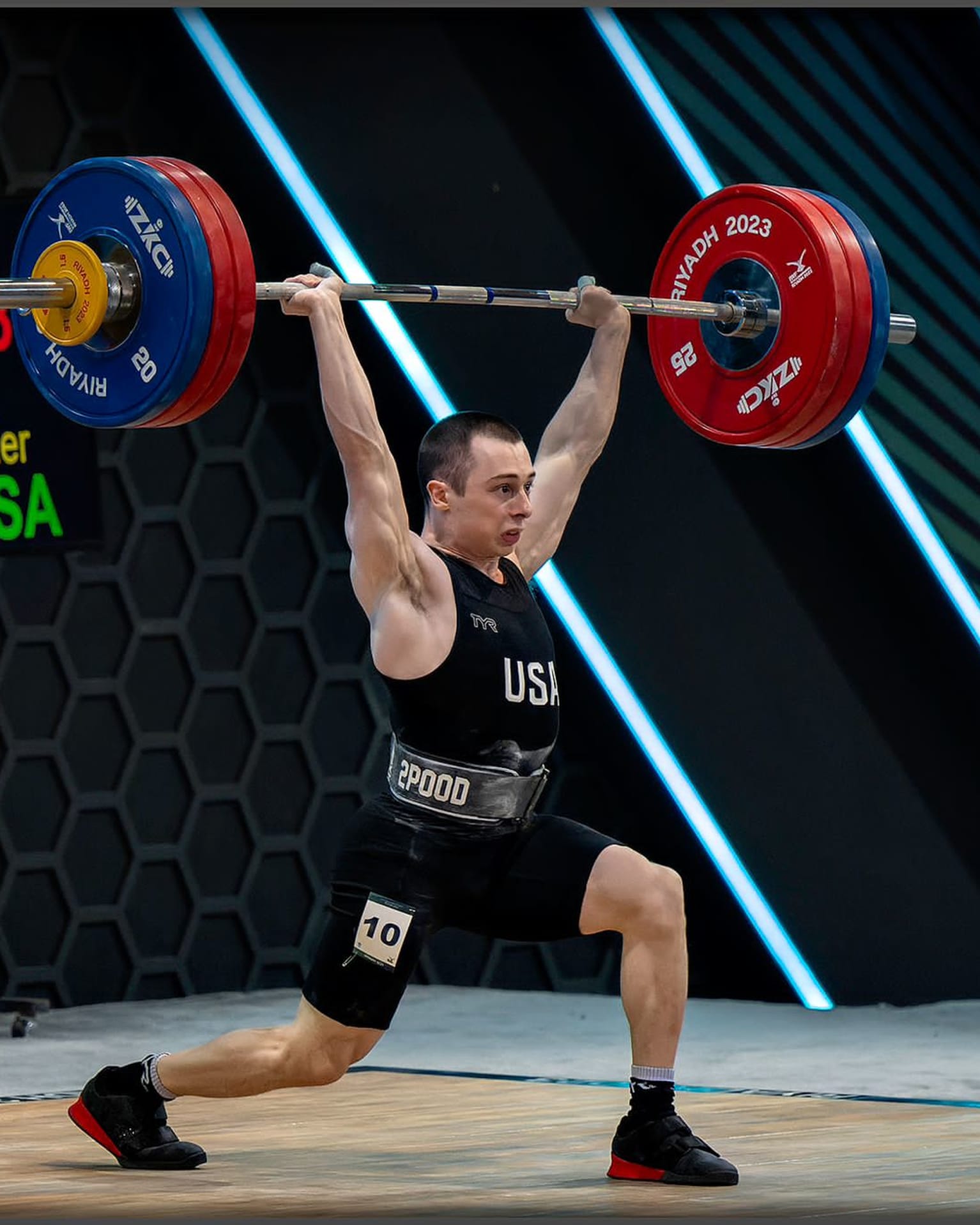
Are Olympic weightlifters the strongest athletes on earth? Many people assume that bodybuilders, football players, wrestlers, and powerlifters possess greater strength, but competitive weightlifting has long made a compelling case for producing some of the strongest and most powerful athletes in sports.

Bodybuilders and the Appearance of Strength

Accomplished bodybuilders have large, well defined and symmetrically proportioned muscles. They represent the ultimate in the development of maximum muscle size with minimum bodyfat. They are strong people, far stronger than athletes engaged in most other activities. Men like Reg Park, Bill Pearl, John Grimek and Dorian Yates (some of the strongest bodybuilders in history) are all extremely strong. Yet, with all of their strength and despite the amazing appearance of their muscles, they are simply no match for the best weightlifters in the world in terms of pure strength or power.

This is not meant to be a criticism of bodybuilders; their objective is to develop the appearance of their muscles as fully as possible. Their primary objective is not strength. Muscular development is the basis on which they are judged. If one bodybuilder’s appearance is only slightly better than another’s, and the one who looks slightly better is only half as strong as the other, the weaker bodybuilder will win. Strength delivers no advantage whatsoever in bodybuilding competitions.

Some incredibly strong athletes are to be found in the ranks of football, wrestling, field events and other sports in which strength plays a major role. But the strength performances of those athletes do not compare to the performances of elite weightlifters, whose special focus is on the development of pure strength and power (as compared with athletes who must focus more on the skills and all around conditioning needs of their respective sports than on strength and power development).

The Case for Powerlifting

Powerlifters are generally not quite as impressive in terms of muscular appearance as bodybuilders. Powerlifters may be very well developed in certain areas of the body, but they will seldom have the kind of balanced development of each muscle group that bodybuilders have. Bodybuilders have an incentive to achieve all around muscular development, since symmetry (well balanced muscular development throughout the body) is one of the bases on which they are judged. In some instances, the muscles of a powerlifter may be as large as those of a bodybuilder, but a powerlifter’s muscles are almost never as well defined as those of bodybuilders; since their bodyfat is not as low, their muscles cannot be seen as readily. Consequently, the powerlifter’s appearance is not as striking. What they give up in appearance, powerlifters more than make up for in terms of pure strength. Powerlifters are incredibly strong. They are undoubtedly among the strongest men walking the earth. But today, weightlifters, as a group, have the strength edge.

Many powerlifters will reject this notion out of hand. They will argue that weightlifting involves technique and powerlifting does not. They will argue that this distinction has three important consequences. First, since powerlifting only requires pure strength, the training of powerlifters is concentrated in that area. It makes sense, they reason, that training concentrated in a given area will lead to superior results. Second, the powerlifts themselves are designed to measure only pure strength, whereas the events that comprise the sport of weightlifting involve technique as well. Therefore, the champion weightlifter may not even be the strongest man in his sport, let alone the world. Finally, powerlifters will argue, powerlifting competitions consist of three events as compared with weightlifting’s two, therefore powerlifters must have greater all around strength than weightlifters.

The Case for Weightlifting

While these arguments have merit, none is as telling as it first appears, and all are refutable. Moreover, there are a number of arguments that can be made for the superiority of weightlifters that are not so easily dismissed.

For example, while the training for powerlifting is oriented more toward strength development than is the training for weightlifting, the argument about concentrated training fails on three grounds. First, while powerlifters concentrate on the development of strength, many powerlifters devote considerable training time to bodybuilding exercises to improve the support that some muscle groups give others during the performance of the powerlifts. For instance, many powerlifters argue that increasing the size of the biceps muscle will have a positive affect on one’s bench press, because when the arms are folded up in preparation for beginning the bench press, a muscular cushion will be provided by the biceps. Many powerlifters also bodybuild for the sake of appearance and because they believe that increased muscular size will contribute toward the ultimate development of muscular strength. Regardless of the rationale, a large percentage of powerlifters (like weightlifters) devote at least some of their training to goals other than the development of pure strength. Second, even if it were true that weightlifters devoted a larger percentage of their training time to exercises other than those used for pure strength development, it would not prove that powerlifters spend more time on the development of strength. This is because top weightlifters train much longer and harder that top powerlifters—probably at least two to three times longer and in many cases four to five times longer. For example, Eastern European weightlifters generally train six days a week and most train at least twice a day. The average lifter squats at least once a day, while many top powerlifters squat once a week! Clearly, frequency of training is not proof of its effectiveness, but the argument that powerlifters devote more energy to strength development is patently false.

Finally, let us look at the percentage of training time spent on strength development. Top weightlifters spend almost no training time on bodybuilding exercises. There is virtually no one in the sport of weightlifting who argues that the leverage needed for weightlifting is improved by the development of certain muscles, that muscle size developed through bodybuilding will improve strength or that appearance should be achieved at the expense of developing non-functional muscles. More importantly, it is a myth that top weightlifters spend any significant degree of time on pure technique development. Most top weightlifters develop their technique at an early stage in their training. Once they have advanced from the novice ranks, they devote very little time to pure technique. It is true that top lifters spend a great deal of time practicing the lifts they perform in competition. In fact, the lifters from some countries, most notably Bulgaria, spend more of their time doing the competitive exercises (i.e., the snatch and clean and jerk) than anything else. However, they are not performing these exercises solely for the purpose of developing technique (although they always perform the lifts with the best technique possible and make every effort to improve upon their execution of the lifts at every opportunity). Rather, they choose to do the snatch and clean and jerk (C&J) because they believe that these are the best exercises available for developing functional strength in the competitive lifts. Like many powerlifters who perform the bench press, squat and deadlift with the best form possible when they practice the lifts, weightlifters’ primary objective in performing these exercises is to develop strength.

What about the arguments that the snatch and clean and jerk involve more technique than the powerlifts and that the strongest weightlifter does not always win? It is true that weightlifting involves considerably more technical skill than the powerlifts. In fact, as was noted earlier, one of the great sources of satisfaction in weightlifting, beyond the development of incredible strength, is that of the mastery of a difficult skill.

However, this skill tends to be developed at an early stage in a lifter’s career, and by the time a lifter has reached the advanced level, it is nearly second nature. Consequently, at a high level of competition, most competitors are relatively equally matched in terms of technique. Therefore, victory goes to the stronger and more determined athlete. Similarly, at advanced levels of powerlifting, the technique differences tend to be small, and the stronger and more determined athlete will tend to be the victor. Naturally, at the very highest levels of competition, even small differences in technique can mean the difference between success and failure.

This is true in powerlifting as well as weightlifting. In powerlifting there is the added technical consideration of who has the better bench shirt or knee wraps, items that support lifters while they perform. No comparable supportive items are permitted or are even of any use in weightlifting. Therefore, in powerlifting, the strongest lifter may not always win either. However, overall, in both sports, the strongest athletes tend to win.

Comparing the Lifts

The argument that powerlifting is a better measure of strength than weightlifting because it consists of three events is also unconvincing for a number of reasons. First, weightlifting really consists of three (arguably four) separate tests of strength: the pull (which can be further subdivided into the snatch pull and the clean pull); the recovery from the deep squat position (more of a challenge from the low position in the clean than from the low position in the snatch;) and the jerk. Each event requires different kinds of strength in differing degrees.

The test of leg strength in powerlifting is the squat; in weightlifting, it is recovering from the deep position in the clean. In squatting, heavier weights are handled than in cleaning. However, the squat performed in powerlifting is not nearly as low as the squat position in the clean, so recovery from the lowest position in the squat in powerlifting is much easier than recovery from the low position in powerlifting. In addition, the bar is not in as favorable position on the body in the clean as it is in the squat (i.e., while squatting with the weight behind the neck, on the shoulders or below, considerable weight can be shifted toward the back so that the strain on the legs is far less).

Finally, it is not possible for weightlifters to wear the kinds of supportive devices that powerlifters do (e.g., power suits and belts) because they would be unable to move as quickly and as freely as is necessary in the sport of weightlifting. All things considered, the recovery from the deep squat position in the clean is at least as great , if not a better, test of pure leg strength as the squat performed in powerlifting competition. Both the squat in powerlifting and the recovery from the low clean position in weightlifting are ultimate tests of leg strength.

The second event in powerlifting competitions is the bench press. The bench press is the best all around test of a lifter’s strength in the muscles in the chest (pectorals), in the back of the arms (triceps) and in the front of the shoulder (the anterior deltoids). A heavy bench is an awesome display of upper body power. However, in weightlifting, upper body power is tested in a different direction (overhead) by the jerk. In the jerk, the legs and arms combine to drive the bar upwards from the shoulders, then the triceps and deltoids (not just the anterior part, as in bench pressing, but the medial and even the posterior parts as well) take over to help secure the bar overhead. (The same muscles are used in holding a snatch overhead as well.) Overhead lifting does not tax the chest muscles in the way that the bench press does, so the bench press has the clear advantage in that respect, but it does tax muscles (in addition to the side and rear deltoids) that are not tested at all in the bench press. In holding a weight overhead, all of the supportive muscles of the trunk (e.g., the abdominals and obliques) are tested to the extreme. Getting a weight overhead and bringing it under control are also displays of awesome strength in the upper body. However, just as there is no guarantee that the strength garnered from overhead lifting will translate into the bench press, so there is no assurance that an accomplished bench presser will have significant overhead strength. Therefore, both the bench press and the jerk test the muscles of the upper body to the extreme. Who has a more powerful upper body overall, the powerlifter or the weightlifter? In a way, it is really like comparing apples to oranges; both sports are wonders of nature and both are sweet to those who partake in them. Similarly, both sports are to be admired and respected.

Finally, let’s compare the deadlift in powerlifting with the pull in weightlifting. Both involve lifting the barbell from the same position on the floor. In powerlifting, the object is merely to straighten up with the load. In weightlifting, it is to impart enough force to the bar so that it will go high enough, with sufficient speed, to permit the lifter to catch it on the shoulders (in the clean) or overhead (in the snatch). The mechanical positions used in the deadlift as opposed to the snatch and clean are somewhat different because of the ultimate purpose of the lifts; for example, in the deadlift the back is generally permitted to “round” or hunch, at least somewhat, while in weightlifting it is generally kept arched or at least quite straight. In weightlifting the muscles of the upper back (and sometimes even the arms) are used more than they are in powerlifting, because the bar is being lifted much higher. Which lift is a greater test of back strength? It is hard to judge. Both test the muscles of the back and hips to the maximum, but in somewhat different ways. Clearly, no other sports test the back and hips nearly as much.

Are Weightlifters the Strongest Athletes on Earth?

Overall, which sport is a better test of strength? Obviously, there is no clear answer. Both weightlifting and powerlifting are wonderful tests of human strength. The athletes of both sports are admired and respected by everyone in the iron game. However, for the athlete seeking the ultimate challenge in terms of competition, overall athletic ability and physical courage, weightlifting has the clear advantage. Weightlifting today presents the superior challenge. How can such a sweeping statement be made? Let’s look at a few telling points.

First, there are far more athletes training for weightlifting today than powerlifting (probably at least 10 to 20 times as many and perhaps many more) and they are training in many more countries of the world. Not only are the number and distribution of athletes in weightlifting much greater than in powerlifting, but there are also far more full time weightlifters in the world than powerlifters, so the real differences in terms of the number who are training seriously (i.e., under professional conditions) are even greater than the ratios of 10 or 20 to 1 suggest. In addition, weightlifting is a much older sport, so it is far more developed in terms of technique and training methods. Finally, no top flight powerlifter has ever become a truly top weightlifter (among the current group of powerlifters, Shane Hamman looks like someone with the potential break that barrier). In contrast, weightlifters, even some who were not at all exceptional in weightlifting, have become successful powerlifters (several have become world champions). Therefore, I think there is little question that when the title of the world’s strongest man is awarded today, it clearly belongs to the world champion in weightlifting, not powerlifting.

None of the above is meant to demean the sport of powerlifting. Powerlifters are heroic athletes, men and women who are building a new sport devoted to testing strength in a different way from the sport of weightlifting. Someday the level of competition and performance in powerlifting may rival or even surpass that of weightlifting, but that day is still a long way off, and it may never come. I truly wish powerlifting well in its struggle for advancement and recognition. However, the fact remains that today, for the athlete who is looking for the ultimate challenge in the world of strength competition as well as all around athletic ability, weightlifting has no rival.

This is not to say that an individual powerlifter may not be as strong as his or her counterpart in weightlifting at a particular moment in time. For example, Ed Coan is an incredibly strong man, who, in his strongest condition, might have been stronger than the best 100 kg. weightlifter in the world at the time. But overall, comparing the best weightlifters in the world with be best powerlifters (the latter without wraps and other supportive devices and performing comparable  movements to the weightlifters – e.g., full squats) the weightlifters will win.

Strength vs. Power

The superiority of weightlifters over powerlifters in terms of power is even more pronounced. It should be noted that while laymen often use the terms strength and power interchangeably, from the scientific standpoint, power and strength are entirely different concepts. Strength has been defined in many ways, but in the context of athletics it can be defined as the maximum force which muscles can develop. In the laboratory it is often measured directly as the amount of force an athlete can generate against resistance. In the gym, it is generally measured by the amount of weight an athlete can lift one time (and no more than one time) in a given exercise.

Power is formally defined as the rate at which work is performed. For example, if athlete A requires one second to deadlift 250 pounds, while athlete B requires two seconds to perform the lift, athlete A would be considered twice as powerful as athlete B. In short, power is a measure of speed and strength.

Because powerlifters move heavy weights slowly, they develop relatively low levels of power when they perform. In fact, powerlifting is a poor name for that sport; it would be more appropriate to refer to it as strength lifting. Weightlifters, in contrast, lift weights as rapidly as possible (for technical reasons that will described in later chapters of this book). In contrast to powerlifters, they develop incredible rates of power when they perform—among the highest rates ever measured by sports scientists. There is absolutely no comparison between powerlifters and weightlifters with respect to power outputs; the weightlifters are far superior in terms of developing power when they lift.

When athletes are measured on a combined basis of strength and power, weightlifters are without question the winners. Powerlifters may come close to weightlifters in the area of strength, sprinters and weight throwers (e.g., shot-putters and discus-throwers) may come close to weightlifters in terms of the power outputs that they are capable of, but no athletes in any other sport possess the combination of strength and power of competitive weightlifters. They are hands down the strongest and most powerful athletes on earth.

Interested in learning more? Read the complete Weightlifting Encyclopedia by Arthur Drechsler for free on Weightlifting.org. The encyclopedia covers Olympic weightlifting technique, training programs, competition strategy, biomechanics, and the history of the sport.
Why Bigger Muscles Aren’t Always Stronger

Intuitively, people believe that bigger “muscles” (what they can observe merely by looking at a person) are stronger muscles. Exercise physiologists acknowledge that larger muscle fibers are able to contract more forcibly than smaller muscle fibers. Logic therefore suggests that the athlete with the biggest muscles is the strongest athlete. Unfortunately, this simple rule of thumb is simply untrue.

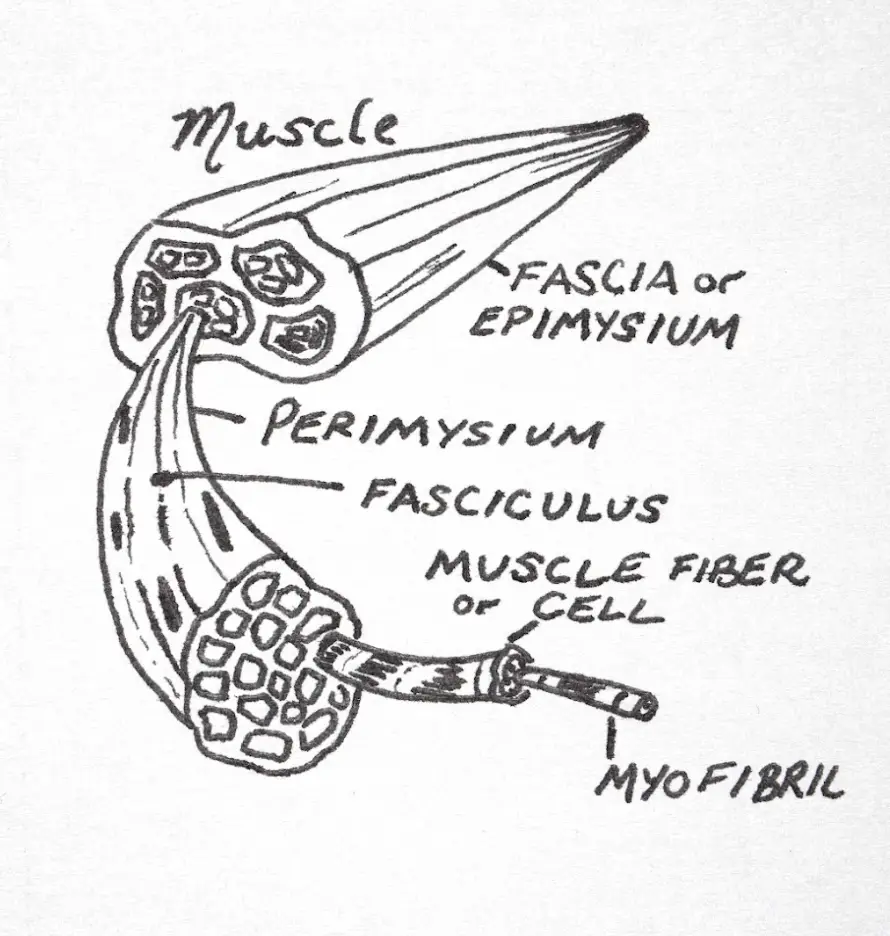
When you look at what we commonly refer to as a “muscle” with the naked eye, what you see is a combination of muscle fibers; tissue and chemical substances that are involved in energy storage and transport within the muscles; blood vessels; and fat. Those tissues are surrounded by several layers of skin and connective tissue.

While you can get a limited sense of the degree of fat that is underneath your skin by a visual inspection, there is no way to tell how much of what remains is attributable to true muscle tissue versus the other types of tissue. Fortunately, research done by exercise physiologists can help us to understand the rest.

The research merely confirms and explains what experts in the area of weight training have known for many years—that there is little correlation between visible “muscle” size and muscle strength. Moreover, there is a fundamental difference between the large, unnatural looking, muscles of bodybuilders and those of weightlifters. Science has helped to explain that difference as well.

It seems that the high volume and relatively high intensity (terms that will be explained later in the book) training that most bodybuilders do tends to stimulate more muscle fiber types than the training that weightlifters perform. (Muscle fiber types, some of which are better suited for intense efforts and others suited for repetitive efforts are discussed fully in Appendix 2.) In addition, the kind of training that bodybuilders do increases the blood supply going to the muscles (capillarization), as well as the effectiveness of the portion of the muscle tissue that furnishes energy to the muscles.

Stated rather crudely, under a weightlifter’s skin are maximally developed muscle fibers of the type that are best suited for all out efforts of muscular contraction when supplied with enough energy for brief and intense efforts and just enough blood circulation to make this all happen. (Not visible is the ability that the weightlifter has developed through specialized training to contract more muscle fibers in a highly coordinated way to accomplish higher results with the same muscle fibers than could an athlete without such training.) In contrast, under a bodybuilder’s skin is a combination of highly developed muscle fibers of different types and energy transport tissue richly supplied with blood, ready to do great deal of work over an extended period of time but not as well equipped to explode as quickly or forcefully as the muscles of a weightlifter. Therefore, while the muscles of a bodybuilder may appear larger and more well developed than those of a weightlifter (although the muscles of a weightlifter can also be very large), the greater size visible in bodybuilders is due to greater development of muscle fiber types that are not of great help in maximum efforts, capillarization of the muscle tissue and more effective energy transport systems. Consequently, the muscles of two athletes can appear to be very similar in development yet have a very different functional capacity. So, in the usual sense of the phrase, bigger muscles are not necessarily stronger muscles (although, all other things being equal, an increased diameter in muscle fibers themselves leads to an increase in their contractile power).

Interested in learning more? Read the complete Weightlifting Encyclopedia by Arthur Drechsler for free on Weightlifting.org. The encyclopedia covers Olympic weightlifting technique, training programs, competition strategy, biomechanics, and the history of the sport.
What Is Olympic Weightlifting?

What Olympic Weightlifting Is All About — It May Not Be What You Think!

Weightlifting is a sport that challenges its participants in a way that no other sport can—making them strong mentally as well as physically. Yet weightlifting is one of the most misunderstood sports in the world.

Mention the word “weightlifting” to anyone you meet and that person will probably affirm that he or she knows what weightlifting is. However, in my experience, most people do not understand the difference between those who participate in the actual sport of weightlifting and the millions of people who lift weights for a variety of other reasons. Moreover, an even larger majority of people harbor at least one major fallacy regarding the sport of weightlifting. Therefore, it is appropriate to begin this book by briefly explaining what weightlifting is, why one would want to participate in it and what major fallacies people often hold about the sport.

What Is Weightlifting?

Weightlifting is a sport that involves lifting a barbell overhead. Formally, the sport has existed on an international level in something resembling its current form for more than 100 years. Today, the sport is practiced in more than 130 countries around the world. It is the only event involving the use of heavy weights that is part of the Olympic Games (which is why the sport is often called “Olympic Lifting”).

The sport of weightlifting consists of two events (which is why it is sometimes referred to as a biathlon). The first event, the snatch, involves lifting a barbell from the floor to arm’s length overhead in one continuous motion. It is one of the most difficult, explosive and elegant events in sport. The second event is called the clean and jerk (C&J). It involves lifting a barbell from the floor to the shoulders in one continuous motion and then, in a second motion, bringing the weight to arm’s length overhead. It is by far the single greatest test of strength in all of organized athletics (see Figs. 3 & 4 on for examples of the snatch and C&J, respectively).

Olympic Weightlifting: A Sport That Is As Wonderful As It Is Misunderstood

There may be no sport ever conceived by the mind of man or woman that is as misunderstood or underappreciated as the sport of Olympic-style Weightlifting – the sport that tests how much weight a man or a woman can lift from the ground to arm’s length above his or her head.

That the strongest men and woman in the world compete in weightlifting is understood by some people (although many still believe a falsehood—that other athletes are stronger than weightlifters). But most people think weightlifting is far more dangerous than it is, underestimate the speed, flexibility and coordination that is required to be a champion weightlifter, and are completely unaware of the sheer pleasure that there is in mastering the technique of weightlifting.

There is literally no other sport that challenges your strength, skill and mental powers more fully than weightlifting. All of these factors and others make weightlifting the uniquely fascinating and unbelievably rewarding sport that it is for men and women of all sizes and ages.

Interested in learning more? Read the complete Weightlifting Encyclopedia by Arthur Drechsler for free on Weightlifting.org. The encyclopedia covers Olympic weightlifting technique, training programs, competition strategy, biomechanics, and the history of the sport.

Tommy Kono’s Thoughts on the Weightlifting Encyclopedia

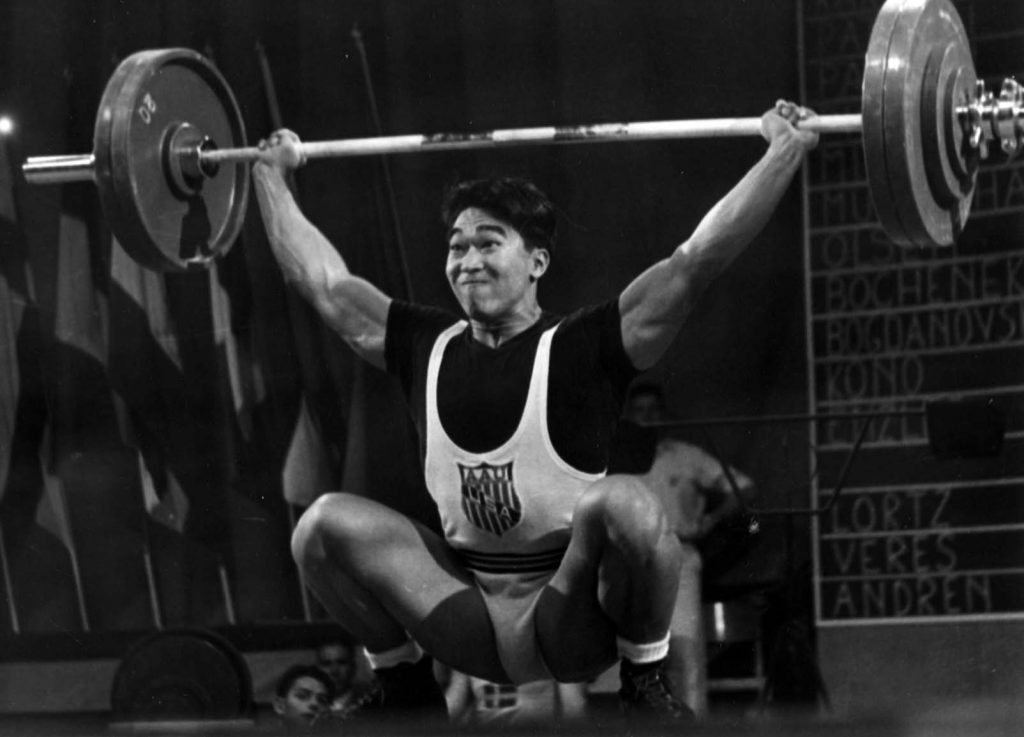
Tommy Kono performs a snatch during Olympic weightlifting competition. Kono is widely regarded as one of the greatest weightlifters of all time and a pioneer of modern weightlifting technique.

The following is Tommy Kono’s foreword to Arthur Drechsler’s The Weightlifting Encyclopedia, one of the most influential books ever written in Olympic-style weightlifting:

“My acquaintance with the author, Artie Drechsler, dates back over a quarter of a century. Little did I suspect this teenager, who I first met at Lost Battalion Hall in New York in 1968, would become so intensely interested in the sport of weightlifting that he would groom himself to establish world records shortly thereafter.

Artie is a rare type of person, unique among all my friends. He likes and accepts challenges. When he was told he could not be a good weightlifter, it made him all the more determined to succeed.

He lived and breathed weightlifting and read all of the weightlifting journals and books he came across. He collected back issues of the sport’s magazines, so he became knowledgeable about the history of weightlifting. He wanted to capture the essence of the sport, not just the veneer that most lifters see.

And, when he could no longer continue in weightlifting competition, he spent much of his spare time researching and combining that research with his experiences so that he could write the first encyclopedia on Olympic weightlifting!

While he was conducting research for his book, Artie spent time compiling the 16 mm movie films made of weightlifting during the 1940s through the 1960s; he created a series of video tapes that is now available to all weightlifting enthusiasts.

A man of great patience and thoroughness, Artie took more than seven years to write this book that you are about to read. It is the most comprehensive book in the English language on Olympic weightlifting that I have seen. It covers all aspects of Olympic weightlifting, from the novice to the world-class level, from technique to training programs.

It is a “must” book for coaches and elite athletes to have. I also recommend it highly for novices who want to understand the finer points of training and lifting and to shorten the time it takes for them to reach their full potential.

Read, study, and apply the information you find within these covers and you will be richly rewarded with rapid improvement on your Olympic lifts. I wish this book had been available when I started the sport of weightlifting!”

Interested in learning more? Read the complete Weightlifting Encyclopedia by Arthur Drechsler for free on Weightlifting.org. The encyclopedia covers Olympic weightlifting technique, training programs, competition strategy, biomechanics, and the history of the sport.