Most women lifters I know wear a sport bra during training. While not absolutely essential, such a bra offers support and tends to flatten the breast tissue somewhat, which most women find comfortable and which can make it easier to keep the bar close to the body during the pull.
Briefs and Shorts
Athletic Supporters
Although there is no evidence that athletic supporters prevent hernia (which, contrary to popular belief, are rare among lifters) or any other injury, many male weightlifters feel more comfortable wearing them or some kind of brief that offers support.
Briefs Under Lifting Suits
Most men and women wear some kind of brief under their lifting suit. Such a brief is handy during the weigh-in, makes most athletes feel more comfortable and, in the unlikely event of a shift in the suit or a split seam during a lift, the brief will serve to maintain a level of privacy for the lifter.
In addition, wearing a support brief will make it more comfortable to pull the bar close to the body.
Shorts & Competition Rules
Some athletes wear shorts over their lifting suit in competition and/or sweatpants in training. This is permissible in competition as long as the shorts fit the body closely (baggy gym or boxer shorts are not permitted).
Some referees interpret the rules as requiring that the shorts be worn under the uniform. The nature and purposes of bicycle shorts has already been discussed.
Lifting Suit for Weightlifting
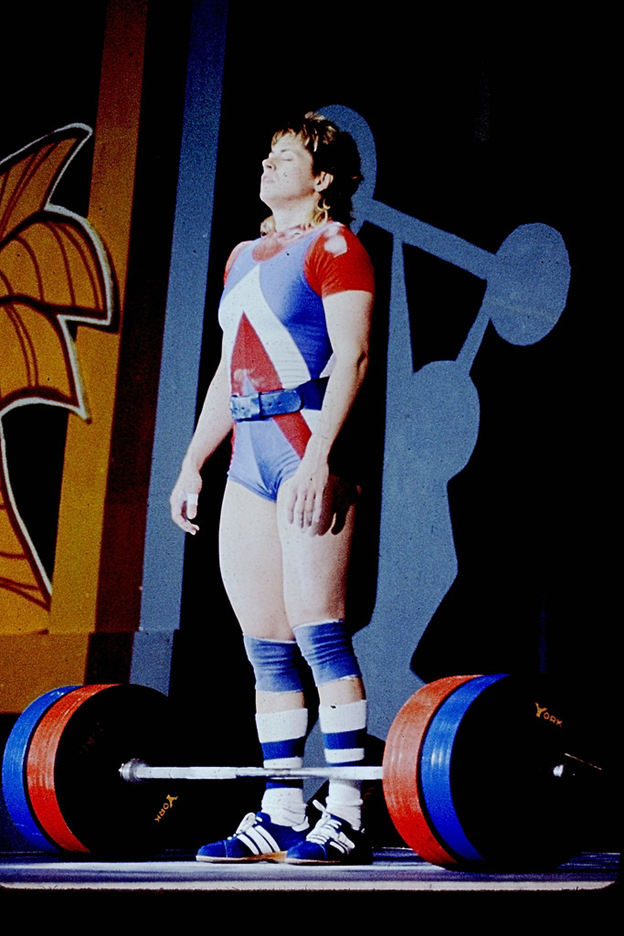
All lifters are required to wear a weightlifting suit (also known as a “singlet”) in competition, The suit looks very much like the one that is used in wrestling competition (see the sequence photos in Chapter 1 for examples of lifting suits). It covers at least a portion of the lifter’s hips and all of the waist and then emerges into suspender like shoulder straps.
It the past, weightlifting suits were not permitted to cover a substantial portion of the lifter’s thighs. Recently the technical rules of weightlifting were modified to permit suits to cover the thighs down to a point just above the knees. This is a significant advantage for lifters because longer length suits protect the lifter from abrasions that can arise as a result of contact between the bar and the lifter’s thighs. In addition, if the suit is made of the appropriate material, it can lessen the friction that is normally created between the bar and the skin of the thighs during the pull. This lessening of friction facilitates the upward progress of the bar during the pull. Longer suits (which cover the thighs) are becoming available, and lifters are permitted to wear bicycle shorts under their suits to create the same effect as a longer suit.
The material used in the weightlifting suit is stretchable and non-supportive (in contrast to the highly supportive “super suits” that are used in powerlifting to increase the lifter’s ability to rise out of a squat). A supportive suit is not specifically proscribed by the rules, but it would be inappropriate. Freedom of movement and speed in descending into a full squat position are of great importance to the weightlifter. The negative aspects of a constraining garment would outweigh any advantages it might offer in terms of support.
Since the weightlifting suit is not supportive, it has no function in training. It is therefore rarely worn except in competition. An exception to this generalization is the workouts immediately prior to competition. Some lifters like to accustom themselves to the feel of the suit and lifting the bar with it on prior to competition day. Most lifters find this unnecessary, but others feel it essential.
Selecting Weightlifting Equipment And Using It Safely And Effectively
Weightlifting is not an expensive sport to get started in. You need some basic personal equipment and a gym in which to train. Most people already own, or can very inexpensively obtain, much of the personal equipment they require.
When it comes to a training facility, you can either join an appropriately equipped gym or purchase equipment and create your own training space.
Another very important resource in weightlifting is a coach. While athletes have reached very high levels in the sport with limited coaching support, a lack of guidance from an experienced coach or lifter can certainly be a drawback. No book or article can completely replace the feedback that an experienced coach can provide.
Personal Weightlifting Equipment
There is a certain amount of personal equipment that every weightlifter should use or at least own so that it is available should the need arise. Other items are optional or are needed only by athletes in particular situations.
Some equipment is used only in training, other equipment is typically used only in competition, and still other equipment is used in both training and competition.
The following guides explain the kinds and purposes of personal weightlifting equipment, along with information on selecting, using and maintaining each item:
- Lifting Suit
- Sweatsuits and T-shirts
- Socks
- Briefs and Shorts
- Sport Bras
- Straps
- Lifting Belts
- Weightlifting Shoes
- Tape
- Talcum Powder and Other Lubricants
- Magnesium Carbonate (Chalk) and Rosin
- Knee Wraps
- Wrist Wraps
- Hip Pads
- Soap and the First Aid Kit
- Gloves
- The Well Equipped Gym Bag
Gym Equipment
In addition to personal equipment, weightlifters need a gym in which to train. When it comes to a training facility, you can either join an appropriately equipped gym or buy equipment, build some other equipment, and start your own gym.
The equipment used in a weightlifting gym should be selected carefully. Some pieces are essential to Olympic-style weightlifting, while others can improve the safety, effectiveness, and versatility of the training environment.
Explore each piece of gym equipment below for more information on selecting, using, and maintaining it safely and effectively:
- Bar
- Plates
- Collars
- Platform
- Squat Racks
- Power Rack
- Jerk Boxes
- Pulling Blocks
- A Block to Stand On
- Using “The Ropes”
- Grip Development Devices
- Height Gauge
- The Training Facility
The Frog-Leg Style in Olympic Weightlifting
From the 1960’s through the mid 1970’s seven Japanese lifters set a total of 30 world snatch records. Two of those lifters, Yoshinobu Miyake and Masashi Ohuchi, astounded the weightlifting world with their prowess in the snatch: Miyake with eleven world records and Ohuchi by snatching a world record in the 82.5 kg. class weighing only a little above the 75 kg. class limit!. The Japanese lifters of this era used the “frog” style in the pull—the most distinctive characteristic of which is a starting position with the lifter’s heels together and the toes and knees at an angle of approximately 75 degrees or more in relation to one another. In this position the hips are closer to the bar at the start of the pull than in the conventional style. Figure 12 illustrates the frog leg position in the snatch (the angle of the feet is normally greater in the snatch) than the clean).
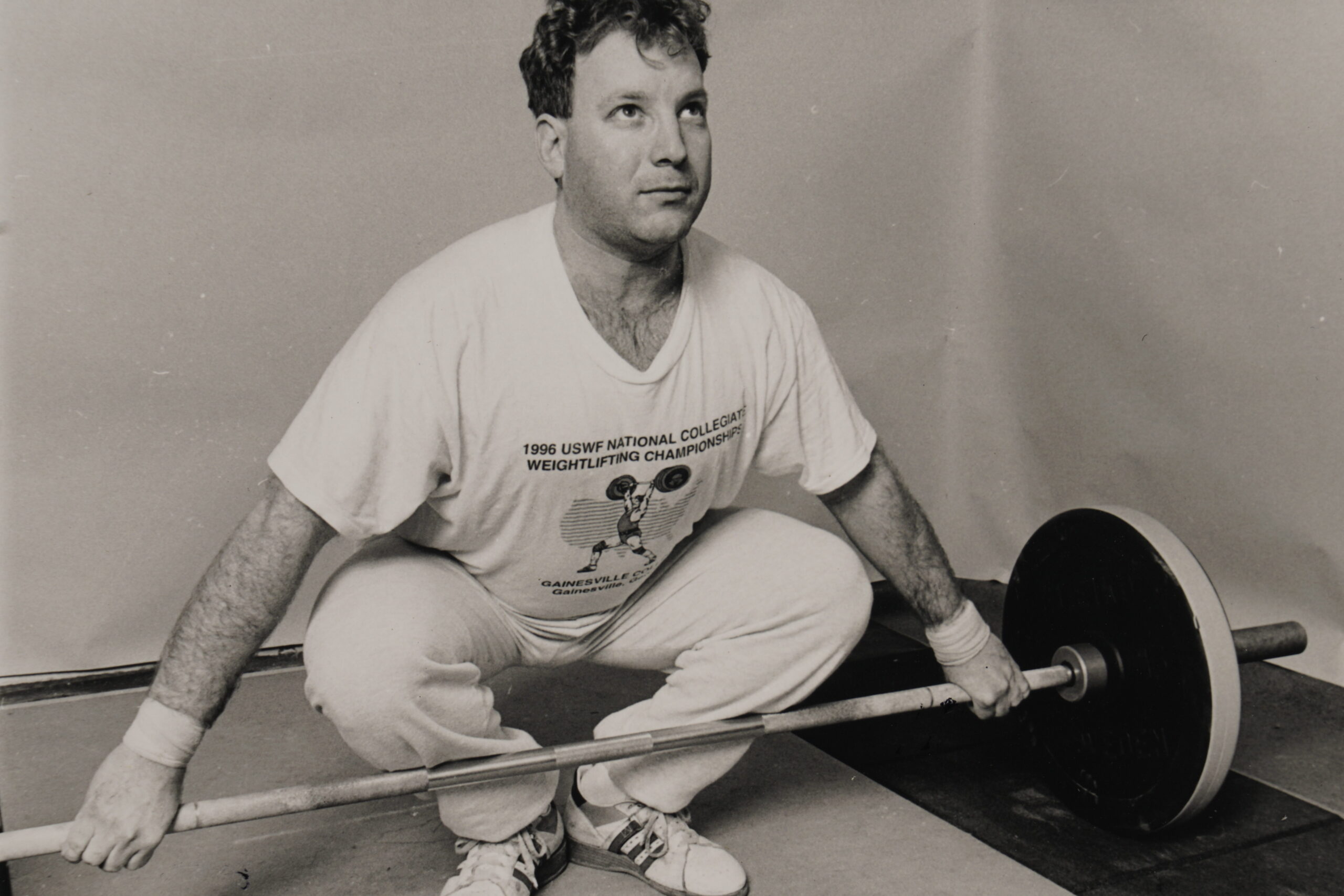
Most of the frog style lifters (Miyake in particular) started their pulls with their hips lower than was typical in their day. (Miyake’s habit of sitting with his hips in a low position in preparation for the pull and then raising them as he applied force to lift the bar from the platform made the starting position of his hips appear to be even lower than it really was.) In addition, they held their torsos at a greater angle to the platform (i.e., in a more upright position) than did their contemporaries, who used a conventional pulling style. It was from this unusual starting position, which has some resemblance to the position in which a frog sits, that the style probably got its name.
From their starting position, most of the frog stylists drop their hips momentarily and then, while rebounding slightly from this low position, begin their pull (many froggers pull as hard as possible from the start, although there are some who pull more slowly). The combined weight of the bar and lifter is felt on the middle of the foot or even slightly forward of the middle. The Japanese frog stylists suggest that the angle of the back should remain the same during the pull from the floor to the knees and that the hips should move upward and not back. Once the bar has passed the knees, the hips are driven forward toward the bar. Advocates of the frog style generally recommend beginning the final explosion of the pull with the bar at or above the height of the middle of the thigh. They recognize that the foot position assumed during the first stage of the pull inhibits the forward drive of the hips during the final explosion but feel that there is an offsetting advantage in that the hips move more directly upward, yielding a straighter final pull. In addition, the froggers feel that because they begin their final explosions in the pull later than most lifters, the chance of “swing” (a horizontal as well as vertical movement of the bar) is reduced.
The Soviets studied the style during the 1970s and concluded that: a) it was suited for the peculiarities of the “oriental physique” more than the occidental; and b) the turned-out feet meant that the anterior/posterior balance point on the foot was smaller than in the conventional style, making the pull less stable and reducing the athlete’s ability to use the back muscles properly during the pull. By the time this analysis was made, the Japanese lifters and their defenders had faded from the international scene, and the long dominance of the Eastern Europeans had begun. Just as the frog may have received too much attention when Miyake, Ohuchi and other Japanese were breaking records, it may have been too quickly dismissed once they departed the competitive platform.
Two criticisms of the Soviet analysis are apparent today. First, the analysis was primitive by today’s standards. Therefore, any conclusions reached at that time bear some re-examination in a more modern era. After all, it was during this same period that many Soviet theorists predicted the “modern” (post-press) lifter would be leaner and more athletic in appearance than the lifters of earlier years. The days of the stocky little man were over, they said. (Fortunately, the great World and Olympic Champion, Naim Suleymanoglu, was either unaware of or unwilling to accept such a hypothesis). The linking of an “oriental” body type to the frog was a crude explanation even then. Any observer could have seen that Miyake’s and Ohuchi’s body types were quite different (as were the bodies of other Japanese lifters). Consequently, the effectiveness of the style was not related to one body “type,” at least as defined by the analysts who made the claim.
Second, the arguments that the frog style is more precarious than the conventional style because of the athlete’s foot position or that the back muscles can be used less while employing the frog style are a classic case of oversimplification. Such oversimplification arises out of the focus on one or two aspects of technique to the exclusion of all others. It is true that the athlete has a smaller base of support when pulling with the frog style, but the frog has advantages that tend to offset that disadvantage. Since the knees are spread wider in the frog style than in the conventional style, partly due to the foot position that is used in the frog style, the bar can pass the knees with less need for the knees to move backward and then forward. The result is that less fore-aft instability is produced during the pull, and the length of the transitional phase of the pull can be shortened. Hence the body is able to balance in a smaller area. In addition, since the back works differently in the frog than in the conventional style, the need for strength in the muscles that straighten the torso is diminished in the frog style.
The success of the Japanese lifters with the frog does not necessarily prove the efficacy of that style. Champion lifters can certainly be wrong about technique, and they often are. However, the frog style does have some special things to recommend it. First is the outstanding ability of the Japanese who mastered it. Beyond the famous ones, there are several reports of even more remarkable feats performed with the frog-leg style by less well known lifters, including cases of Japanese lifters who improved dramatically when they converted to the frog style from the conventional style.
There have been many success stories from American lifters who have tried the frog style as well. Eight-time United States national champion Mike Karchut had significant success with the style, as did Chuck Nootens, a former American record holder in the snatch. Former World Champion Joe Dube, who for many years struggled with a relatively poor snatch, became a multi-time American record holder and world class snatcher when he switched to the frog. On a more personal note, while hardly known as a great snatcher, I used both the frog and various more conventional styles during my career and was more consistent with the frog. Even if I abandoned the frog style for years at a time (which I did several times during my career), I was always able to snatch as much or more with the frog as with the conventional style on my first try (not a wise practice, but it did prove a point to me).
None of this is to say that everyone, or even anyone, should go out and master the frog tomorrow. Today’s conventional style is well proven, likely to be better coached and probably better suited for most lifters. Instead, the evidence regarding the frog style suggests that the style may have been inappropriately dismissed and that at least some new research (focusing on more aspects of the lift than the balance on the feet) should be conducted. It is a style that clearly has value for at least some lifters. In addition, the story of the frog style offers us all a valuable lesson about style. All that can be known about style has not yet been learned, and some of what we have learned along the way may have been forgotten as fashions changed. Alternative techniques that are superior to anything that is used today may still be out there. Neither the coach nor the athlete should assume there is no need to think about or to experiment with new techniques. The science of weightlifting is still young.
Foot Spacing for the Pull When Weightlighting
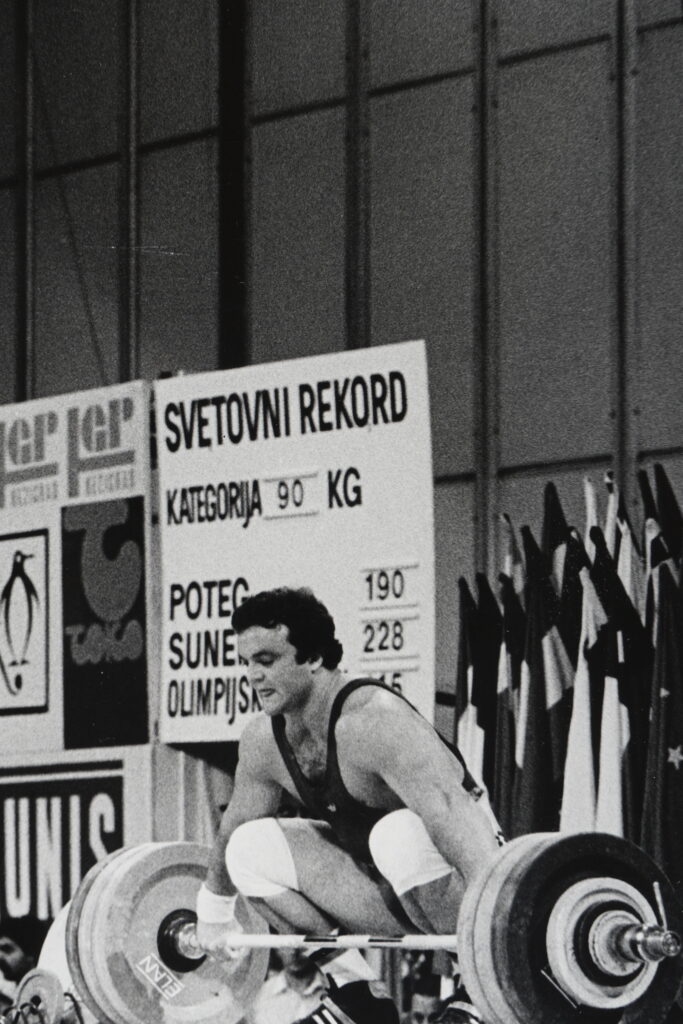
Athletes will often ask about the correct foot stance for the pull. The answer given by most coaches is that the best stance is the one from which the athlete can jump the highest since, they argue, the final explosion in the pull is like a jump. There is a lot to be said for such advice. The final explosion in the pull is like a jump in many ways, and position that is functional for a jump may well be best for executing the final explosion in the pull. In addition, the jumping position (which is generally with the feet spaced at approximately at shoulders’ width) permits the lifter to assume his or her full height when standing. In contrast, if the lifter stands with the feet wider, he or she will be slightly shorter. This will result in the bar being at a lower position than is usual when the lifter is performing the final explosion or assuming the extended position. Consequently, the bar will need to travel higher in relation to the position of the body with a stance that is wider than shoulders’ width.
Despite the advantages of pulling with the feet in a jumping position, some lifters will find it hard to assume a correct starting position in the pull with the feet so placed. Their flexibility and body proportions may cause them to round their backs, to raise the hips faster than the shoulders, or to make some other important error in the start of the pull If the trade-offs a lifter must make in order to keep his or her feet in a jumping position are too great, any advantages of such a position are overcome by the disadvantages. If a lifter has trouble finding a strong starting position in the pull, widening the stance and/or turning the toes out more than usual will often help. Something may be given up in the explosion, but that may be worth giving up in order to gain a correct and secure position at the start or in any of the first three phases of the pull. Only the coach and lifter can decide this, and it must be done case by case. The main point is that blind obedience to the generalities of technique can result in less than optimal performance for at least some athletes.
Foot Spacing for the Jerk in Weightlifting

Most lifters assume a foot position in the jerk that is similar to the one they use in the pull. The most common position is the so called “jumping” position, the same position that the lifter would assume in order to achieve a maximum standing-jump height (usually about the width of the hips with a minor turning out of the toes). This position may promote application of maximum force during the explosion phase of the jerk, but, in the jerk as in the pull, some lifters will find this position ineffective overall.
For example, in the jerk some lifters have a tendency to lean forward at the torso when they are dipping with a jumping stance. This can often be corrected by shortening the lifter’s dip and asking the lifter to focus on a strictly vertical dip. Despite these efforts, the lifter may persist in dipping forward. In such a case, many lifters will find it easier to keep the back in an arched position and to dip straight with a wider and/or more turned-out foot position (particularly if the knees travel over the toes during the dip). If the lifter uses such a position, something may indeed be given up in terms of the power developed in the drive, but improved control over the direction of the drive may well make such a loss acceptable.
Proper Breathing While Weightlifting
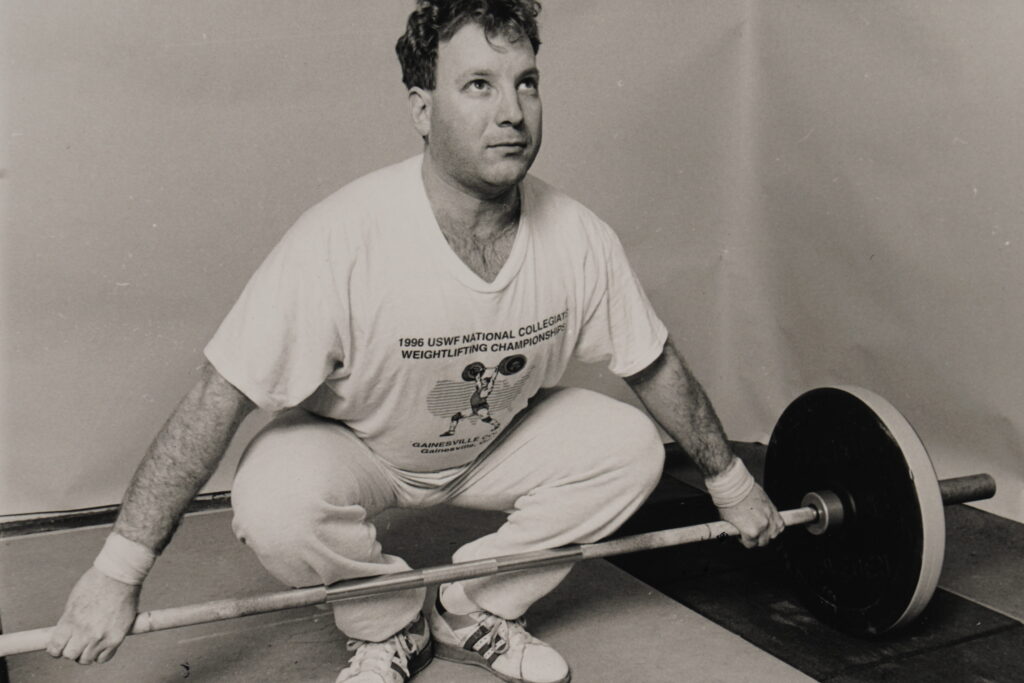
While not technically part of the subject of weightlifting technique, proper breathing is an important part of weightlifting. Although weightlifting is considered to be an anaerobic activity, it does increase the body’s need for oxygen far more than most activities that are considered to be aerobic. What makes it anaerobic is that the activity of weightlifting is not sustained for a long enough period to use up the body’s anaerobic energy supply. Therefore, a lifter could simply not breathe at all during a lift and still execute it without difficulty most of the time. Consequently, there is a tendency for some athletes to attempt to hold their breath throughout a lift. This should be avoided for at least two reasons.
One reason is that if a lift takes a long time to complete, the lifter may run out of oxygen, much in the same way a resting person holding his or her breath for a minute without exercising might do. An example of this would be a C&J during which the lifter struggled for balance in the squat position, remaining there for several seconds, then arose from the squat position, took some time with the weight at the chest preparing for the jerk and then struggled to control the jerk overhead; this process could all take from 15 to 30 seconds and would result in one very breathless lifter. Another example would be a lifter who was doing several repetitions or “reps” (lifting the weight several times in succession without resting) in a simpler exercise.
Another important reason to breathe properly is to avoid unnecessary increases in blood pressure when lifting. There can be a twofold or greater increase in blood pressure when the major muscle groups of the body are involved in a substantial muscular effort. However, at least one group of researchers has found that this increase is due as much to the lifter’s making an effort to expel air against a closed glottis (a portion of the larynx through which air flows during breathing) as to the exertion itself. Therefore, proper breathing can reduce this component of the increase in the pressure.
There is considerable evidence that the overall issue of elevated blood pressure during exertion should not cause great concern. Empirically there have not been any instances of strokes occurring during weightlifting competitions. (I know of at least one instance in which a lifter over the age of forty had a heart attack while warming up for a competition, but this athlete had existing coronary artery disease of which he was apparently unaware.) If heightened blood pressure were a very significant risk, we would expect to see more evidence of it when the strain was greatest.
On a more scientific level, researchers have argued that a difference in pressure across the walls of the heart and its large blood vessels can occur. This is because the pressure outside increases at least as much as the pressure inside. The brain is protected in a similar fashion in that any increase in intrathoracic pressure is transmitted to the cerebrospinal fluid, counteracting the increase in the pressure within the blood vessels that supply the brain. The peripheral vessels are more subject to the increased pressure, but their smaller diameter makes them more able to accept the increased pressure. There is actually more concern among some researchers about breathing too deeply and frequently (hyperventilation) before a heavy exertion than about breathing too little. This is because it has been discovered that hyperventilation before heavy exercise can lead to convulsions or even fainting. In short, extremes in breathing patterns are to be avoided.
As a general rule, proper breathing consists of inhaling just before or as a weight is lowered and breathing out while it is raised. During complex motions like the snatch and C&J, there are actually several points where breathing generally occurs. In the snatch there is usually some exhalation during the pull, particularly in conjunction with the final explosion of that pull. The lifter often does not inhale again until he or she recovers from the squat or split position but may exhale the rest of the air that was not expelled during the pull as the recovery to a standing position occurs. However, if the lifter remains in the low position for more than a few seconds, he or she may inhale at the low position and then exhale during the recovery to a standing position.
In the C&J, as in the snatch, there is often a partial exhalation during the pull, with the remaining exhalation occurring during the recovery from the low position. If the lifter remains in the low position for some time, there may be some breathing while in that position and exhalation during the recovery, but this is unusual. After the recovery from the clean, the lifter generally takes several quick breaths in preparation for the jerk, then ceases breathing during the actual dip for the jerk, sometimes exhaling as he or she lowers the body to catch the bar at arm’s length. Some lifters move so quickly into the jerk that they do not take any additional breaths after the clean, but this is the exception rather than the rule.
In preparation for any lift (the snatch, clean, or jerk), the lifter should at least partially inflate the lungs and use the air that has been taken in to thrust the chest out just before the lift begins. This elevation and expansion of the rib cage give the lifter important assistance in achieving the rigidity of the torso that is so necessary during the pull and jerk. It is certainly not necessary to expel air with a great deal of force or an accompanying shout while lifting, but some lifters feel that such an action improves their concentration and power.
When the lifter performs exercises other than the snatch and C&J (or related movements), the general rule for breathing is to breathe in just before lowering the weight or while it is being lowered and to exhale toward the completion of the lift. For instance, when one is squatting, one typically takes one or more shallow breaths before the squat, then lowers the body into the squat position. A partial exhalation occurs as the lifter rises, at or just past the most difficult part of the squat.
Hand Spacing for the Clean
The common advice given to the beginning lifter with respect to grip width in the clean is that the grip should be “shoulder width.” This generally means a grip that is wide enough to position the inside of the hand just outside the shoulders when the bar is resting on the lifter’s shoulders. Individual grip widths vary from approximately 16″ to 26″ between the insides of the hands (with most lifters being between 17″ and 22”), although there have been some international level lifters who have used grips that were even wider or narrower. Most lifters execute the clean and the jerk with the same grip width, but there have been some very successful lifters who have switched their grip widths after the clean, almost invariably widening the grip after the clean.
As noted earlier, a narrower grip (up to the point of being shoulder width) generally makes it easier for the lifter to start the bar from the floor. In general it also tends to make bar contact with the thighs and body steadier during the lift. Most lifters find it easier to place their elbows in a high position when they receive the weight on the shoulders in the clean with a narrower grip. A wider grip in the clean leads to greater difficulty for the lifter in taking the bar from the floor than does a narrower grip, but the bar is generally more easily lifted to a greater height with a wider grip. A wider grip will also force the lifter to lean forward at the torso during the pull to a greater extent than happens with a narrow grip. This places a greater strain on the muscles of the spine an the hip extensors, with the result that the lifter will have a greater tendency to shift the body further back toward the heels and perhaps to straighten the torso prematurely during the pull than he or she would with a narrow grip. This results in the lifter’s pulling and jumping back. Most lifters find it somewhat more difficult to get the elbows up in the bottom position of the clean with a wide grip (a problem that can be overcome to a certain extent by pushing in as well as up when whipping the elbows (a tip I learned from a very analytical coach and lifter named Mark Gilman).
The Basics of the Technique of the Snatch and the Clean and Jerk
We will begin our analysis of weightlifting technique with an explanation of what the athlete is doing when he or she performs two Olympic lifts, the snatch and the clean and jerk (C&J). These are the lifts performed in weightlifting competitions (the winner being the athlete who lifts the most weight in both lifts combined). The snatch is a one stage lift and the C&J a two stage lift in which greater amounts can be added.
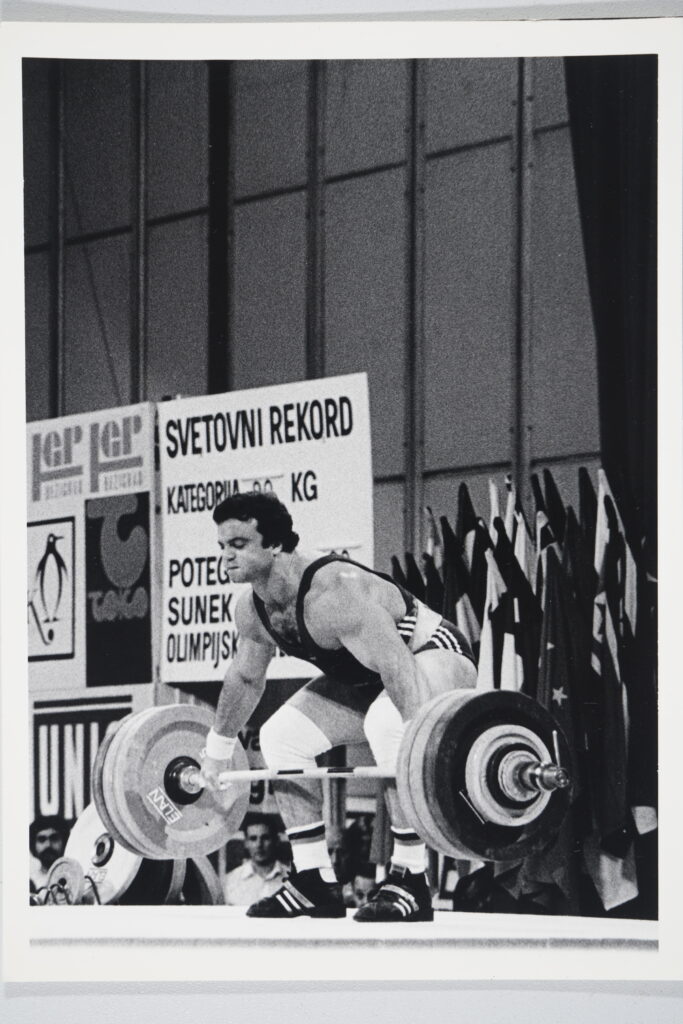
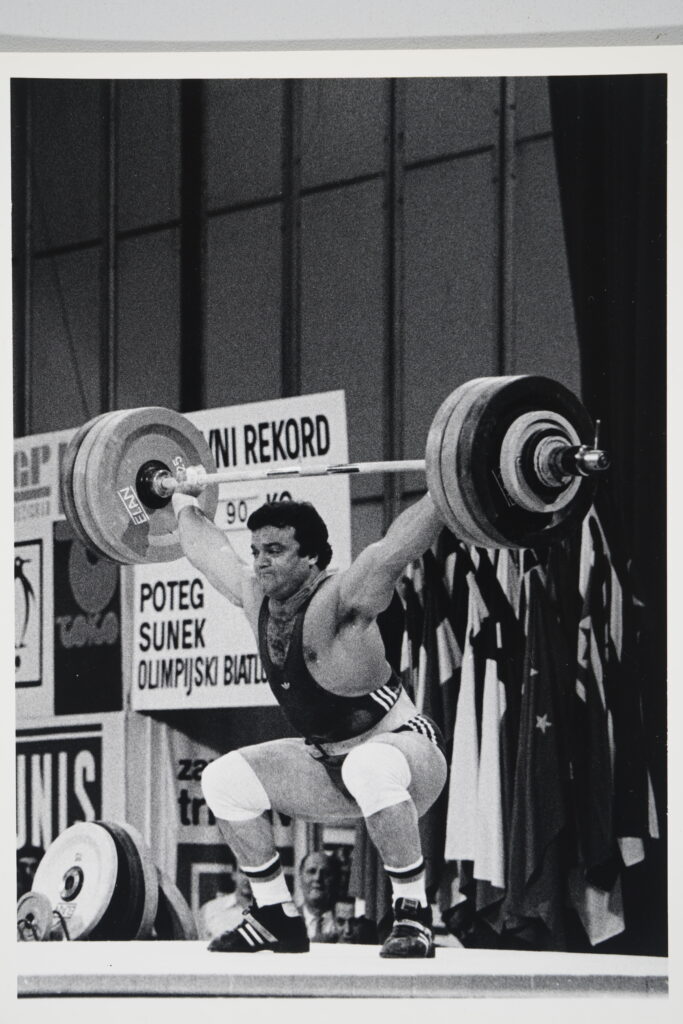
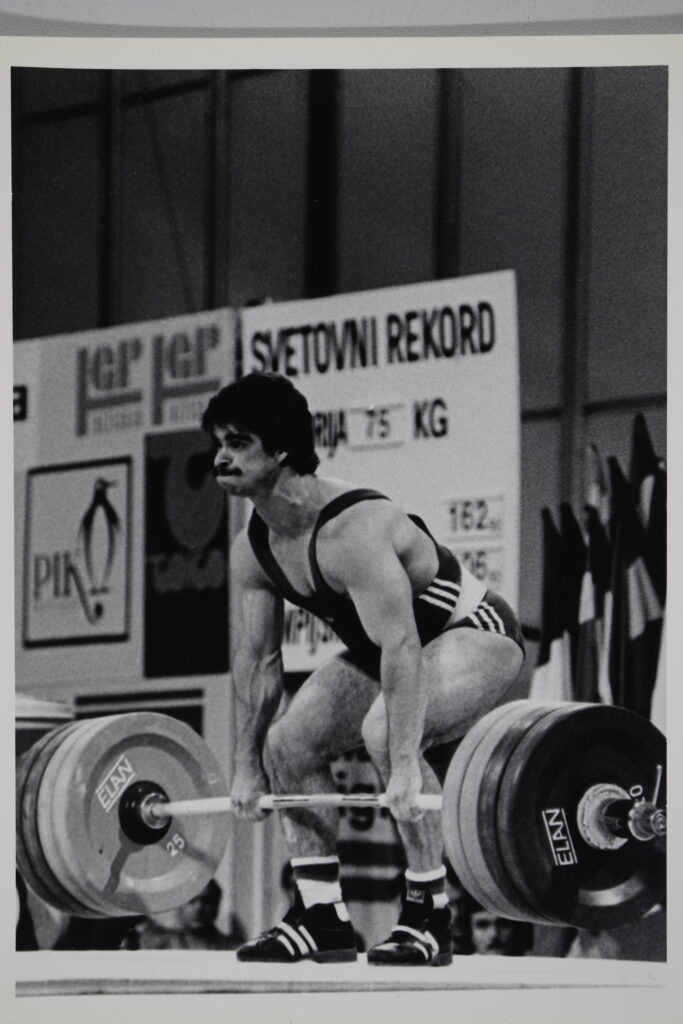
This overview will be more easily understood if you examine the sequence photographs that appear in Fig. 3 and Fig. 4 before reading further and then refer to them freely as you read descriptions of the lifts. (Fig. 4 omits the starting position from the floor and the “recovery” from the split position in which the athlete takes one step back with the front foot and then a step forward with the rear foot to bring the feet in line with one another and complete the lift).
As can be seen in the first photo of the snatch sequence, the lifter begins by gripping the bar with the hands significantly wider than the shoulders. From this position the lifter uses the muscles of the legs to lift the bar from the floor and then uses the muscles of the legs, hips and back in an extremely powerful (i.e., explosive) fashion to accelerate the upward motion of the bar. When the bar has been lifted to a level approximately at the height of the lifter’s hips (at which point the lifter has generally extended his or her legs and risen somewhat on the balls of his or her feet.) the lifter begins to descend under the bar while the bar continues to rise, primarily as a result of the explosive force that the lifter has applied to the bar before the descent commenced. The lifter then “catches” the bar at arm’s length and allows the legs to continue to bend after the catch to absorb the downward force exerted by the bar in much the same way a fielder in baseball “gives” with his or her glove as a ball is received. Finally the lifter stands up from the low squat position that was assumed in order to catch the bar. (Catching the bar in a low position means that it does not have to be lifted as high and that more weight can therefore be lifted.)
Methods similar to those used in the snatch are used to lift the bar in the clean and jerk. The lifter initially raises the bar through the use of the leg muscles; then, as the bar rises to the level of the knees, the lifters uses the muscles of the legs, hips and back to straighten the body in an explosive fashion, accelerating the upward motion of the bar.
Once the bar is approximately at hip level, the lifter begins to descend under the bar in order to catch it when it reaches its highest point. (The bar continues to rise because of the explosive effort the lifter made with the legs, hips and back.) The lifter permits the legs to bend further after catching the bar in order to absorb the force of the downward descent of the bar. The lifter then stands up and prepares for the jerk.
In order to propel the bar overhead during the jerk portion of the lift, the athlete bends his or her legs into a position similar to one that would be used to jump vertically. The legs are then very forcefully extended in order to thrust the bar upward.
Snatch Sequence (Figure 3)




C&J Sequence (Figure 4)


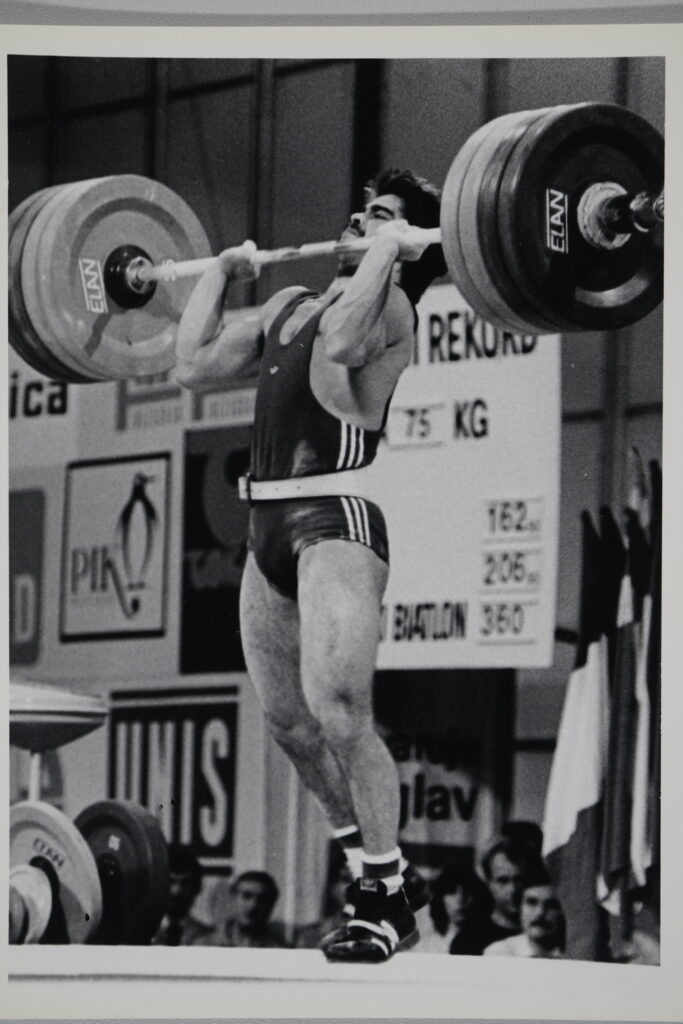
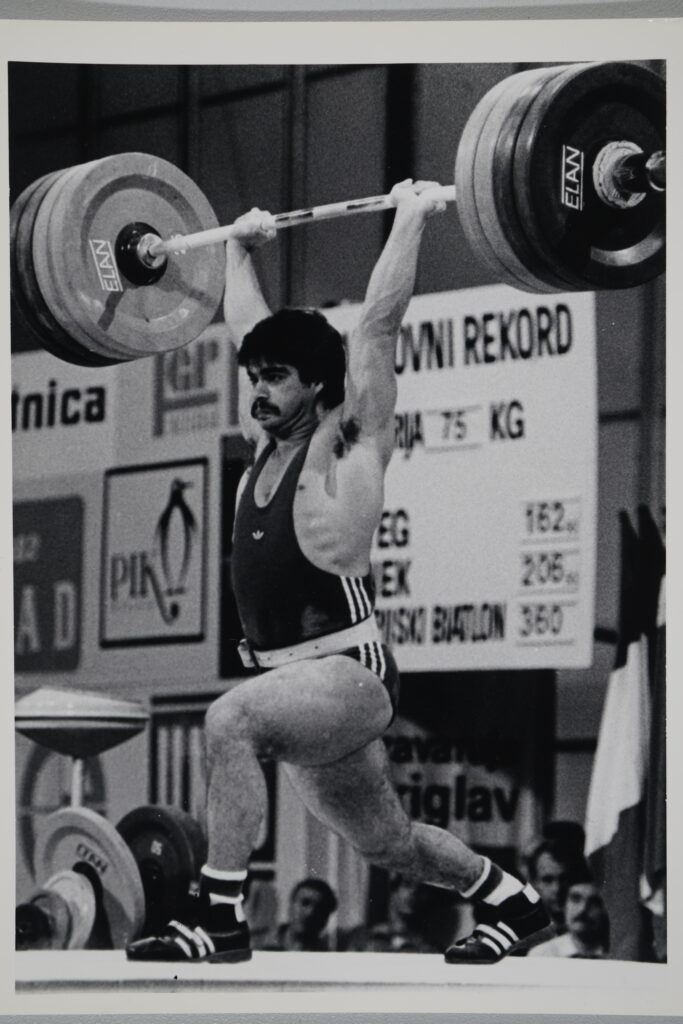
Just after the bar leaves the lifter’s shoulders as a result of the leg drive the lifter has generated, the lifter typically moves one foot forward and the other foot backward in order to lower the body as the bar is rising and to prepare to catch the bar at arm’s length. The front foot is placed flat on the floor and the back foot is balanced on the ball of the foot and the toes. This “split” position gives the lifter both stability and the ability to move forward or backward slightly to maintain balance. After the bar has been brought to a stop, the lifter returns to a standing position, first bringing the front foot back a step and then bringing the back foot forward until the feet are in line with one another.
Two important principles can be learned from the preceding discussion together with careful study of the photos. First, contrary to what most people think when they see Olympic-style lifting for the first time, the process is not merely one of lifting the bar. It involves a combination of raising the bar and lowering the body quickly enough to catch the bar at nearly the maximum height to which the lifter has been able to raise it. In order for the lifter to catch the bar successfully, the bar must have acquired enough upward speed to continue to travel upward for that very brief period while the lifter is moving under the bar (otherwise, as soon as the lifter tried to descend under the bar, the bar would fall and the lifter could never catch up to it). It is important to understand that the lifter does not lift the bar to its maximum height and then, when the bar stops, jump under it. Rather, the movements of raising the bar and lowering the body are taking place simultaneously. Consequently, the lifter must possess sufficient power to throw the bar, not just lift it. In addition, the lifter must possess considerable finesse in order to catch a heavy moving object at its maximum vertical height.
Second, the role of the arms in lifting is much smaller than you might initially assume. The arms do not lift the bar to its maximum height. Instead, the muscles of the legs, hips and back are primarily responsible for this action, generating an explosive force that creates upward velocity of the bar sufficient to cause it to continue to rise for at least a portion of the time the lifter is descending under the bar, permitting the lifter to catch the bar successfully. This is not to minimize the role of the muscles of the arms and shoulders. These muscles do interact with the bar, applying force to it as the lifter descends under and catches the bar. Moreover, strong arms and shoulders are needed to support the bar overhead. However, the role of the arms is not primary. The strength and explosive power of the lifter’s leg, hip and back muscles, the strongest muscles in the body, form the foundation for championship lifting.