Why Bigger Muscles Aren’t Always Stronger

Intuitively, people believe that bigger “muscles” (what they can observe merely by looking at a person) are stronger muscles. Exercise physiologists acknowledge that larger muscle fibers are able to contract more forcibly than smaller muscle fibers. Logic therefore suggests that the athlete with the biggest muscles is the strongest athlete. Unfortunately, this simple rule of thumb is simply untrue.

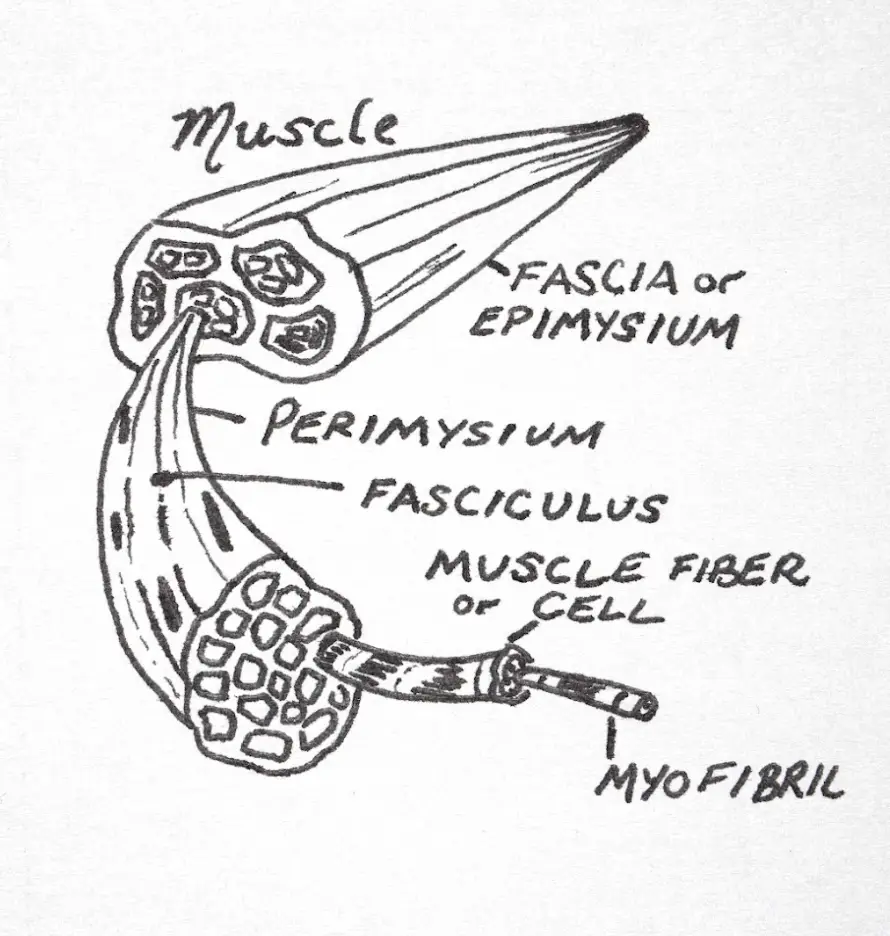
When you look at what we commonly refer to as a “muscle” with the naked eye, what you see is a combination of muscle fibers; tissue and chemical substances that are involved in energy storage and transport within the muscles; blood vessels; and fat. Those tissues are surrounded by several layers of skin and connective tissue.

While you can get a limited sense of the degree of fat that is underneath your skin by a visual inspection, there is no way to tell how much of what remains is attributable to true muscle tissue versus the other types of tissue. Fortunately, research done by exercise physiologists can help us to understand the rest.

The research merely confirms and explains what experts in the area of weight training have known for many years—that there is little correlation between visible “muscle” size and muscle strength. Moreover, there is a fundamental difference between the large, unnatural looking, muscles of bodybuilders and those of weightlifters. Science has helped to explain that difference as well.

It seems that the high volume and relatively high intensity (terms that will be explained later in the book) training that most bodybuilders do tends to stimulate more muscle fiber types than the training that weightlifters perform. (Muscle fiber types, some of which are better suited for intense efforts and others suited for repetitive efforts are discussed fully in Appendix 2.) In addition, the kind of training that bodybuilders do increases the blood supply going to the muscles (capillarization), as well as the effectiveness of the portion of the muscle tissue that furnishes energy to the muscles.

Stated rather crudely, under a weightlifter’s skin are maximally developed muscle fibers of the type that are best suited for all out efforts of muscular contraction when supplied with enough energy for brief and intense efforts and just enough blood circulation to make this all happen. (Not visible is the ability that the weightlifter has developed through specialized training to contract more muscle fibers in a highly coordinated way to accomplish higher results with the same muscle fibers than could an athlete without such training.) In contrast, under a bodybuilder’s skin is a combination of highly developed muscle fibers of different types and energy transport tissue richly supplied with blood, ready to do great deal of work over an extended period of time but not as well equipped to explode as quickly or forcefully as the muscles of a weightlifter. Therefore, while the muscles of a bodybuilder may appear larger and more well developed than those of a weightlifter (although the muscles of a weightlifter can also be very large), the greater size visible in bodybuilders is due to greater development of muscle fiber types that are not of great help in maximum efforts, capillarization of the muscle tissue and more effective energy transport systems. Consequently, the muscles of two athletes can appear to be very similar in development yet have a very different functional capacity. So, in the usual sense of the phrase, bigger muscles are not necessarily stronger muscles (although, all other things being equal, an increased diameter in muscle fibers themselves leads to an increase in their contractile power).

Interested in learning more? Read the complete Weightlifting Encyclopedia by Arthur Drechsler for free on Weightlifting.org. The encyclopedia covers Olympic weightlifting technique, training programs, competition strategy, biomechanics, and the history of the sport.
What Is Olympic Weightlifting?

What Olympic Weightlifting Is All About — It May Not Be What You Think!

Weightlifting is a sport that challenges its participants in a way that no other sport can—making them strong mentally as well as physically. Yet weightlifting is one of the most misunderstood sports in the world.

Mention the word “weightlifting” to anyone you meet and that person will probably affirm that he or she knows what weightlifting is. However, in my experience, most people do not understand the difference between those who participate in the actual sport of weightlifting and the millions of people who lift weights for a variety of other reasons. Moreover, an even larger majority of people harbor at least one major fallacy regarding the sport of weightlifting. Therefore, it is appropriate to begin this book by briefly explaining what weightlifting is, why one would want to participate in it and what major fallacies people often hold about the sport.

What Is Weightlifting?

Weightlifting is a sport that involves lifting a barbell overhead. Formally, the sport has existed on an international level in something resembling its current form for more than 100 years. Today, the sport is practiced in more than 130 countries around the world. It is the only event involving the use of heavy weights that is part of the Olympic Games (which is why the sport is often called “Olympic Lifting”).

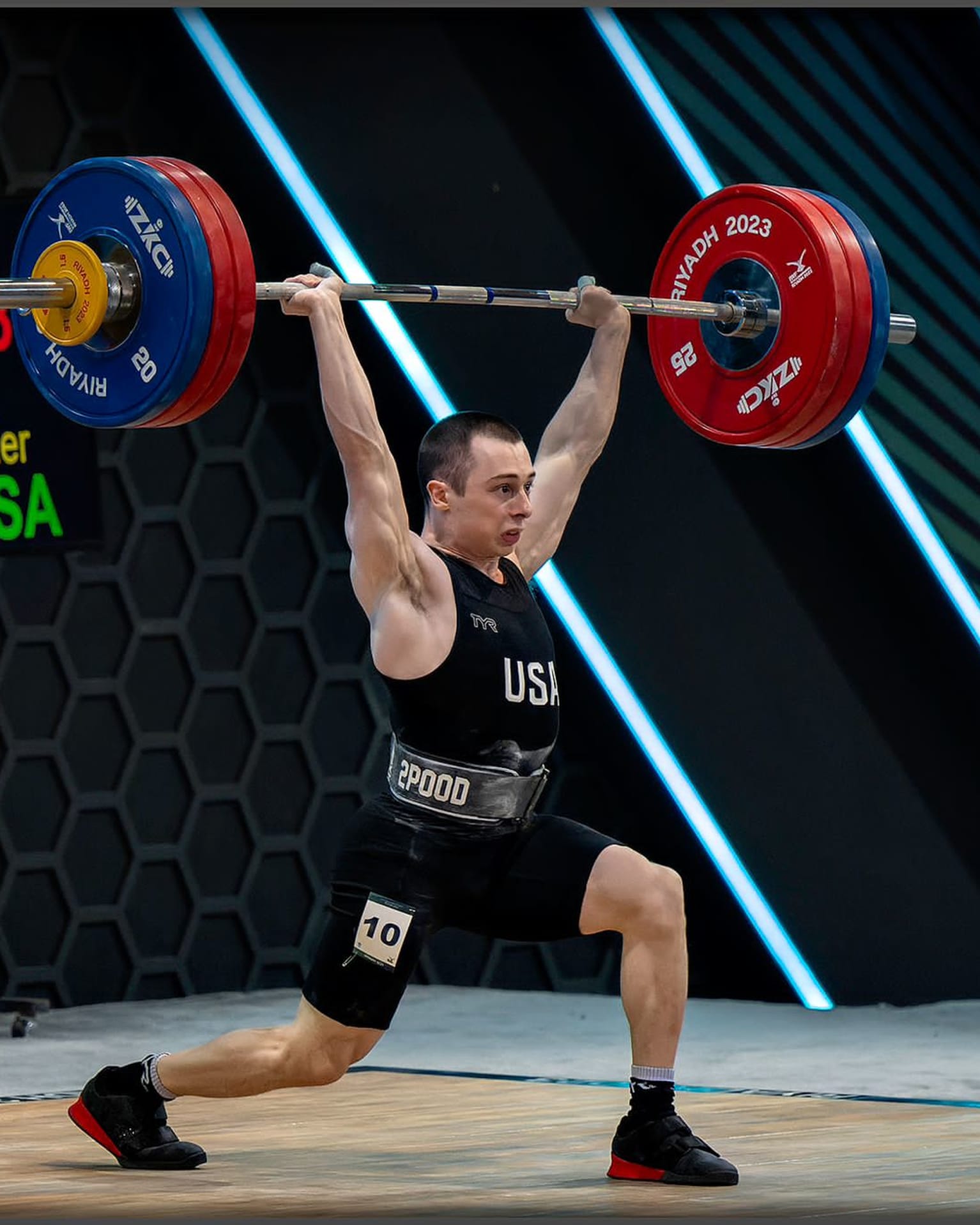
The sport of weightlifting consists of two events (which is why it is sometimes referred to as a biathlon). The first event, the snatch, involves lifting a barbell from the floor to arm’s length overhead in one continuous motion. It is one of the most difficult, explosive and elegant events in sport. The second event is called the clean and jerk (C&J). It involves lifting a barbell from the floor to the shoulders in one continuous motion and then, in a second motion, bringing the weight to arm’s length overhead. It is by far the single greatest test of strength in all of organized athletics (see Figs. 3 & 4 on for examples of the snatch and C&J, respectively).

Olympic Weightlifting: A Sport That Is As Wonderful As It Is Misunderstood

There may be no sport ever conceived by the mind of man or woman that is as misunderstood or underappreciated as the sport of Olympic-style Weightlifting – the sport that tests how much weight a man or a woman can lift from the ground to arm’s length above his or her head.

That the strongest men and woman in the world compete in weightlifting is understood by some people (although many still believe a falsehood—that other athletes are stronger than weightlifters). But most people think weightlifting is far more dangerous than it is, underestimate the speed, flexibility and coordination that is required to be a champion weightlifter, and are completely unaware of the sheer pleasure that there is in mastering the technique of weightlifting.

There is literally no other sport that challenges your strength, skill and mental powers more fully than weightlifting. All of these factors and others make weightlifting the uniquely fascinating and unbelievably rewarding sport that it is for men and women of all sizes and ages.

Interested in learning more? Read the complete Weightlifting Encyclopedia by Arthur Drechsler for free on Weightlifting.org. The encyclopedia covers Olympic weightlifting technique, training programs, competition strategy, biomechanics, and the history of the sport.

Tommy Kono’s Thoughts on the Weightlifting Encyclopedia

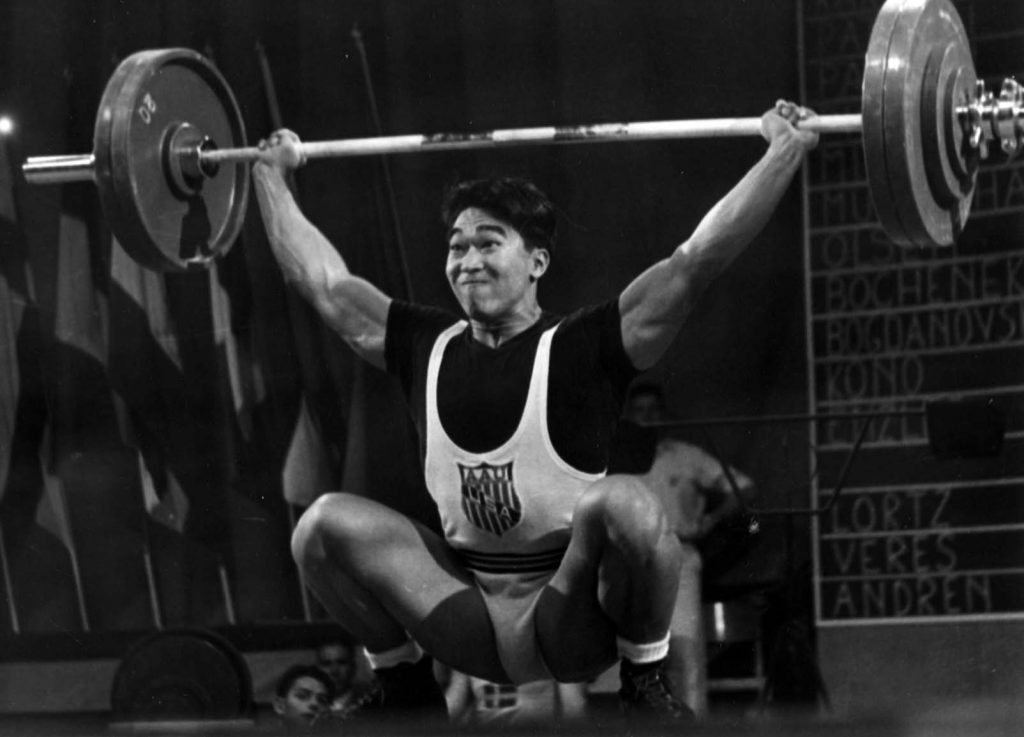
Tommy Kono performs a snatch during Olympic weightlifting competition. Kono is widely regarded as one of the greatest weightlifters of all time and a pioneer of modern weightlifting technique.

The following is Tommy Kono’s foreword to Arthur Drechsler’s The Weightlifting Encyclopedia, one of the most influential books ever written in Olympic-style weightlifting:

“My acquaintance with the author, Artie Drechsler, dates back over a quarter of a century. Little did I suspect this teenager, who I first met at Lost Battalion Hall in New York in 1968, would become so intensely interested in the sport of weightlifting that he would groom himself to establish world records shortly thereafter.

Artie is a rare type of person, unique among all my friends. He likes and accepts challenges. When he was told he could not be a good weightlifter, it made him all the more determined to succeed.

He lived and breathed weightlifting and read all of the weightlifting journals and books he came across. He collected back issues of the sport’s magazines, so he became knowledgeable about the history of weightlifting. He wanted to capture the essence of the sport, not just the veneer that most lifters see.

And, when he could no longer continue in weightlifting competition, he spent much of his spare time researching and combining that research with his experiences so that he could write the first encyclopedia on Olympic weightlifting!

While he was conducting research for his book, Artie spent time compiling the 16 mm movie films made of weightlifting during the 1940s through the 1960s; he created a series of video tapes that is now available to all weightlifting enthusiasts.

A man of great patience and thoroughness, Artie took more than seven years to write this book that you are about to read. It is the most comprehensive book in the English language on Olympic weightlifting that I have seen. It covers all aspects of Olympic weightlifting, from the novice to the world-class level, from technique to training programs.

It is a “must” book for coaches and elite athletes to have. I also recommend it highly for novices who want to understand the finer points of training and lifting and to shorten the time it takes for them to reach their full potential.

Read, study, and apply the information you find within these covers and you will be richly rewarded with rapid improvement on your Olympic lifts. I wish this book had been available when I started the sport of weightlifting!”

Interested in learning more? Read the complete Weightlifting Encyclopedia by Arthur Drechsler for free on Weightlifting.org. The encyclopedia covers Olympic weightlifting technique, training programs, competition strategy, biomechanics, and the history of the sport.